

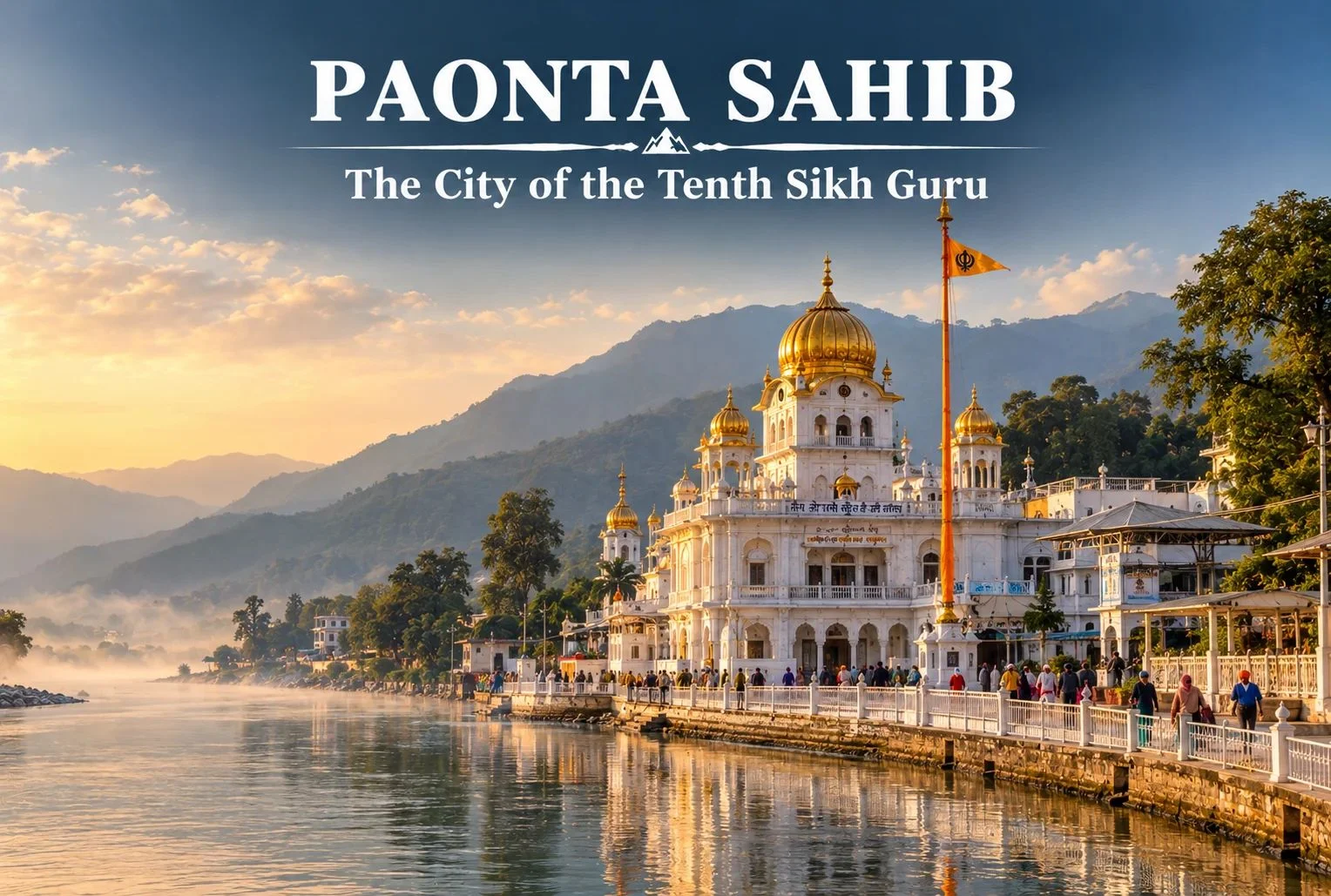
Himachal Pradesh is also known as “The land in the lap of the snowy Himalayas”, is one of the most famed hill stations in India. Himachal is not only famous for its snowy mesmerizing topography, Paonta Sahib the town of tenth Sikh guru, Sri Guru Gobind Singh Ji, also resides here. Paonta sahib blends the lineage sense of spirituality, natural beauty and the richness of color making it peaceful and timeless. Paonta Sahib geographically lies on the border of Uttarakhand and Himachal Pradesh. Paonta Sahib is the southern part in Himachal Pradesh of Sirmaur district. Beside Paonta sahib is the watercourse of Yamuna.
Travelers who want to continue into the nearby Uttarakhand hills can look at Explore Hills’ Chakrata Adventure Tour.
Table of Contents
The Historic Event Of Paonta Sahib
The town was founded by the Shri Guru Govind Singh in November 1685. The original and old name of Paonta Sahib is Paontika. Paontika is derived from the Hindi word Paon (feet) and Tilak(Stable). The history of the Gurudwara is that, Guru Gobind Sing’s horse stopped by the river, Guru Gobind Singh was so captivated by the beauty of the serene picturesque, he dismounted from horse and established his foothold which eventually gave the town its unique name, Paonta Sahib. It is said that Shri Guru Gobind Singh ji came to the town and moved to this region on the royal invitation of Raja Medani Prakash of Nahan.
The period became one of the most important periods for the Sikh religion, as it has great significance of literary and spiritual activity. The battle of Bhangani in 1688 is the historical event that is remembered today when Guru Gobind Singh ji is mentioned. The battle was fought between the forces of Raja Fateh Shah and his allies with Guru Gobind Singh ji. The battle became one of the corroboration of Guru Gobind Singh’s leadership and development of Sikhi leaders. After the departure of Guru Govind Singh ji, the place continued to be remembered in his name. The history of Paontika now stands as the religious landmark which attracts devotees from all over India.

Architectural Features Of Paontika
Paontika reflects the blend of Indo-Islamic Sikh architectural style, which shows the influence of Mughal Era The architecture is made of white marble with gold leaf like domes.
● Local sandstone has been used as sandstone’s natural insulation properties to keep the area cool during large gatherings.
● The architecture includes the domes, arches, decorative details, and a bright exterior and Yamuna river beside it.
Walk Through Paontika
The Guru Granth Sahib ji is respected and placed in the main principal prayer hall that is Darbar Sahib.
● The Guru Granth Sahib Ji, the central and eternal spiritual scripture of Sikhism, to which Sikhs regard them as the supreme spiritual authority and the living Guru. The hall is an open space where the devotees can sit and feel the energy of spirituality through Gurbani and Kirtans.
● The other most important feature of Gurudwara is the religious flag of Sikhs, the Nishan Sahib which is displayed in the Gurudwara complex. The Nishan Sahib helps in identifying the gurudwara and also shows the faith of Sikhs.
● The complex of Gurudwara also includes the langar hall and community spaces. This space is where the visitors can eat and participate in community work regardless of their religions.
Devotees can witness the sacred river Yamuna from here. It is said that the Yamuna river’s rushing sound used to intervene in the Kavi darbar. The Guru asked Yamuna to flow quietly, so that the divine poetry and spiritual discourse can be heard with clarity. Since then the gushing sound of the river cannot be heard from Gurudwara.
Best Time to Visit Gurudwara
Gurudwara Paonta Sahib ji can be visited throughout the year. Paontika is seen being visited by devotees all year, but for better sightseeing and pilgrimage, the best time is said to be spring and autumn. For current visitor information, you can refer to the Himachal Pradesh Tourism Department, the state government’s official tourism body.
Conclusion
Paonta Sahib is a place where spirituality meets history. Gurudwara has a great significance in the history of sikhs. Gurudwara Paonta Sahib is a living evidence of sikhs leadership and military development. Gurudwara is a peaceful natural beauty which resides along the river of the sacred river Yamuna.
It is a place that serves as a spiritual gateway that will bridge the cultural heritage with nature. Since Dehradun is the nearest major city, many visitors pair this stop with Explore Hills’ Mussoorie-Rishikesh-Haridwar Trip.
Frequently asked questions
How far is Paonta Sahib from Dehradun?
Paonta Sahib is on the borders of Uttarakhand and Himachal Pradesh, which is well connected by road. Paonta Sahib is approximately 45 to 50 km from Nahan and Dehradun which makes it 1.5 to 2 hours of drive.
Is Paonta Sahib a hilly area?
Paonta Sahib is situated in the valley area. Paontika is considered as a foothill area. It is in Sirmaur district of Himachal Pradesh.
Why is Paontika famous?
Paontika is mainly famous for its history of guru Govind Singh. Shri Guru Gobind Singh ji came to the town and moved to this region on the royal invitation of Raja Medani Prakash of Nahan.
What was the original name of Paonta Sahib?
The original and old name of Paonta Sahib was Paontika. Paonta Sahib is derived from the Hindi word Paon (feet) and Tilak(Stable). Later it was named as Paonta Sahib because of its deep association with guru Govind Singh Sahib.
Which city is located nearest to the Gurudwara Paonta Sahib?
The closest city from Gurudwara . Dehradun to Paonta Sahib is roughly 50km away from Gurudwara. Dehradun is in Uttarakhand which also serves the major railway station and airport which is Jolly grant.