



Table of Contents
Search for Naina Devi and you will land on two very different places. One is a hilltop shrine in Himachal Pradesh, where a cable car climbs a ridge above a vast reservoir. The other is a lakeside temple in Uttarakhand, tucked beside the busy Mall of Nainital. Both are Shakti Peeths, both are tied to the same legend and both draw thousands of devotees every Navratri.
This article is built around that overlap. It starts with the shrine in Himachal Pradesh, which most readers mean, then crosses to Nainital, and it finishes with practical advice for planning either visit.
Which Naina Devi Do You Mean?
| Himachal Pradesh | Uttarakhand | |
|---|---|---|
| Place | Naina Devi town, Bilaspur district | Nainital, northern shore of Naini Lake |
| Setting | Hilltop above Gobind Sagar | Naina hill beside the lake |
| Timings (listed) | About 5:00 AM to 9:00 PM | About 6:00 AM to 10:00 PM |
| Peak crowds | Navratri and Shravan Ashtami | Navratri and Nanda Devi Mela |
| Access from | Chandigarh, about 100 km | Kathgodam and Delhi |
The Legend of the Goddess’s Eyes
Both shrines draw on the story of Sati, the daughter of King Daksha. After she died in the sacrificial fire, a grief-stricken Shiva carried her body across the heavens, and Vishnu divided it with his Sudarshan Chakra so that the world could return to balance. The places where her body parts fell became the Shakti Peeths, and the place where her eyes (naina) fell was named Naina Devi.
Sources differ on the details. Wikipedia says the right eye fell at the Himachal site, while other pages say both eyes. The Himachal shrine is also called Mahishapeeth, since the goddess is said to have defeated the demon Mahishasura there. Whatever the version, the name carries the meaning: this is the goddess of the eyes.
Naina Devi Temple in Himachal Pradesh
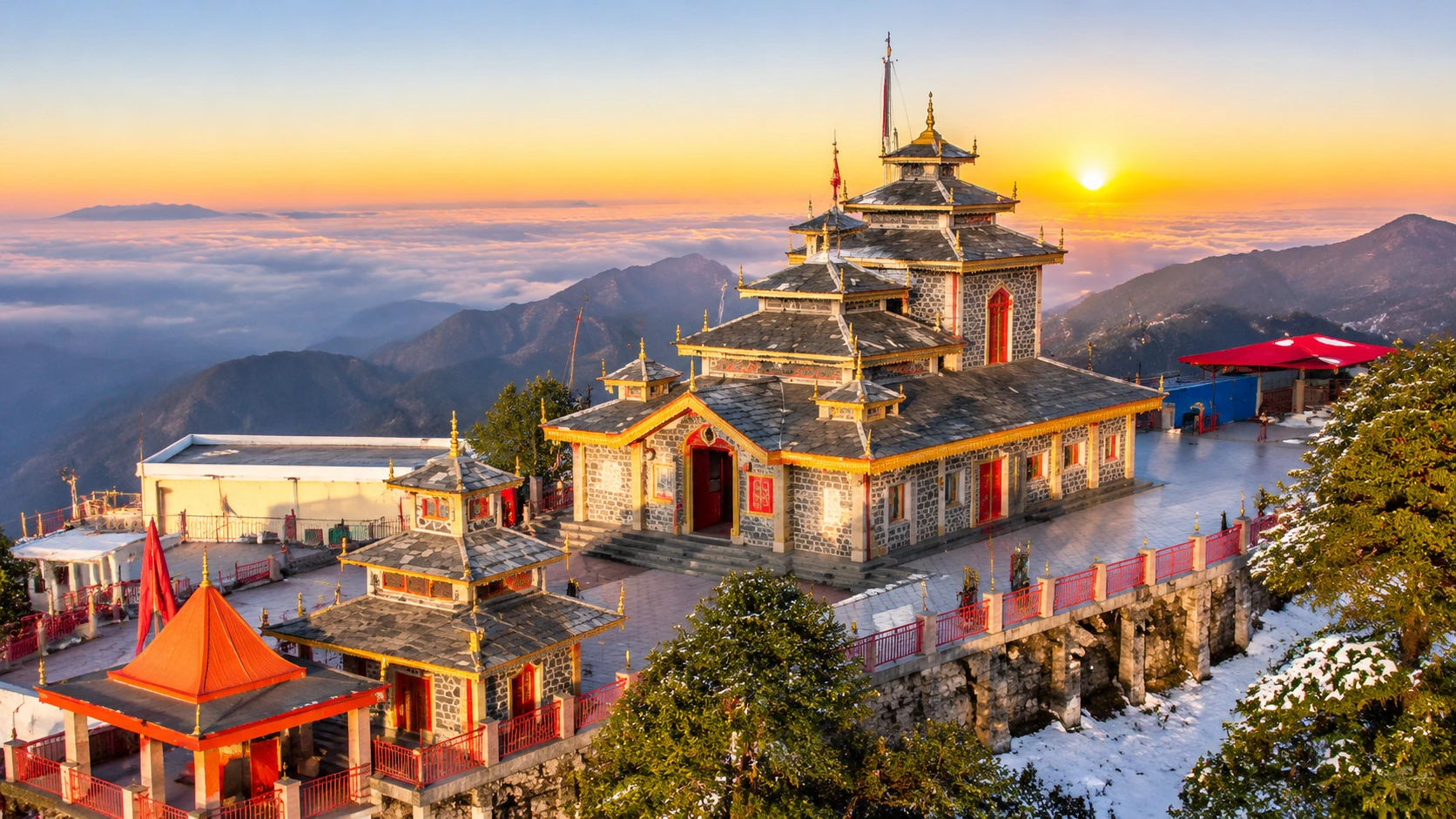
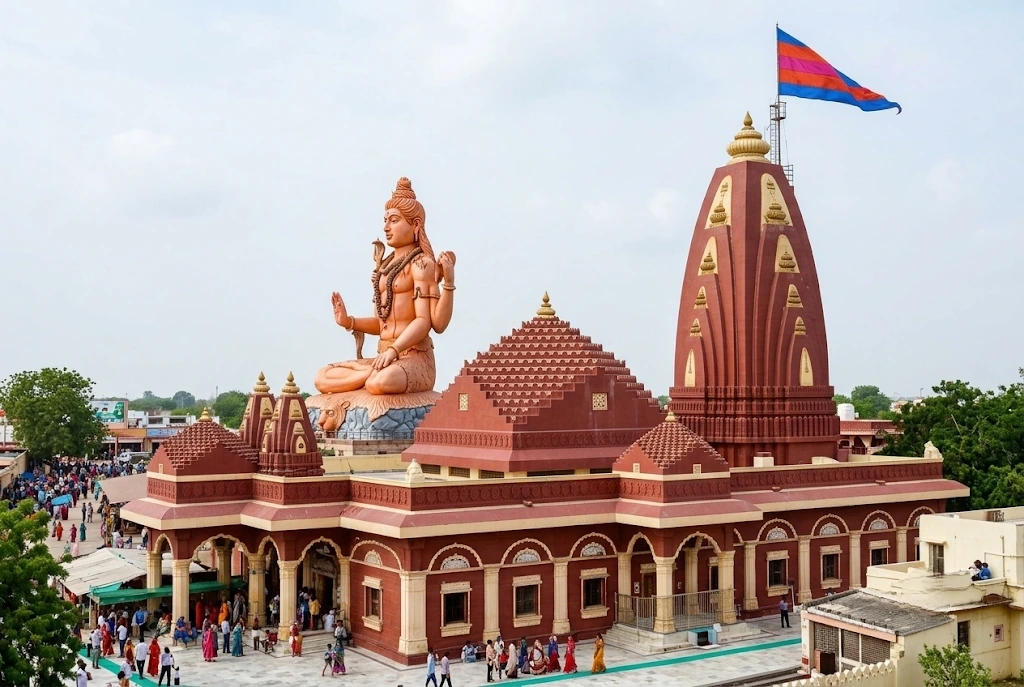
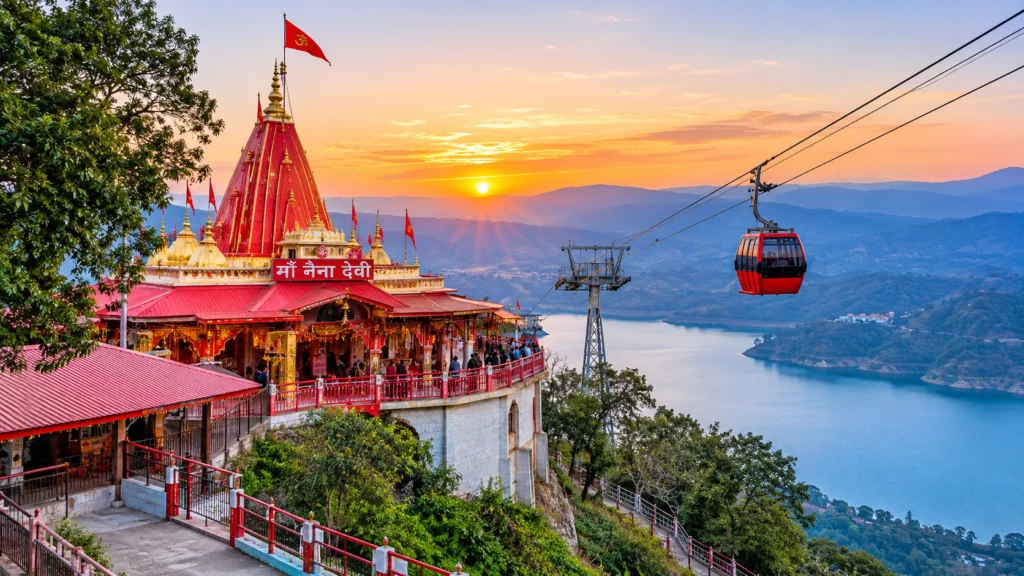
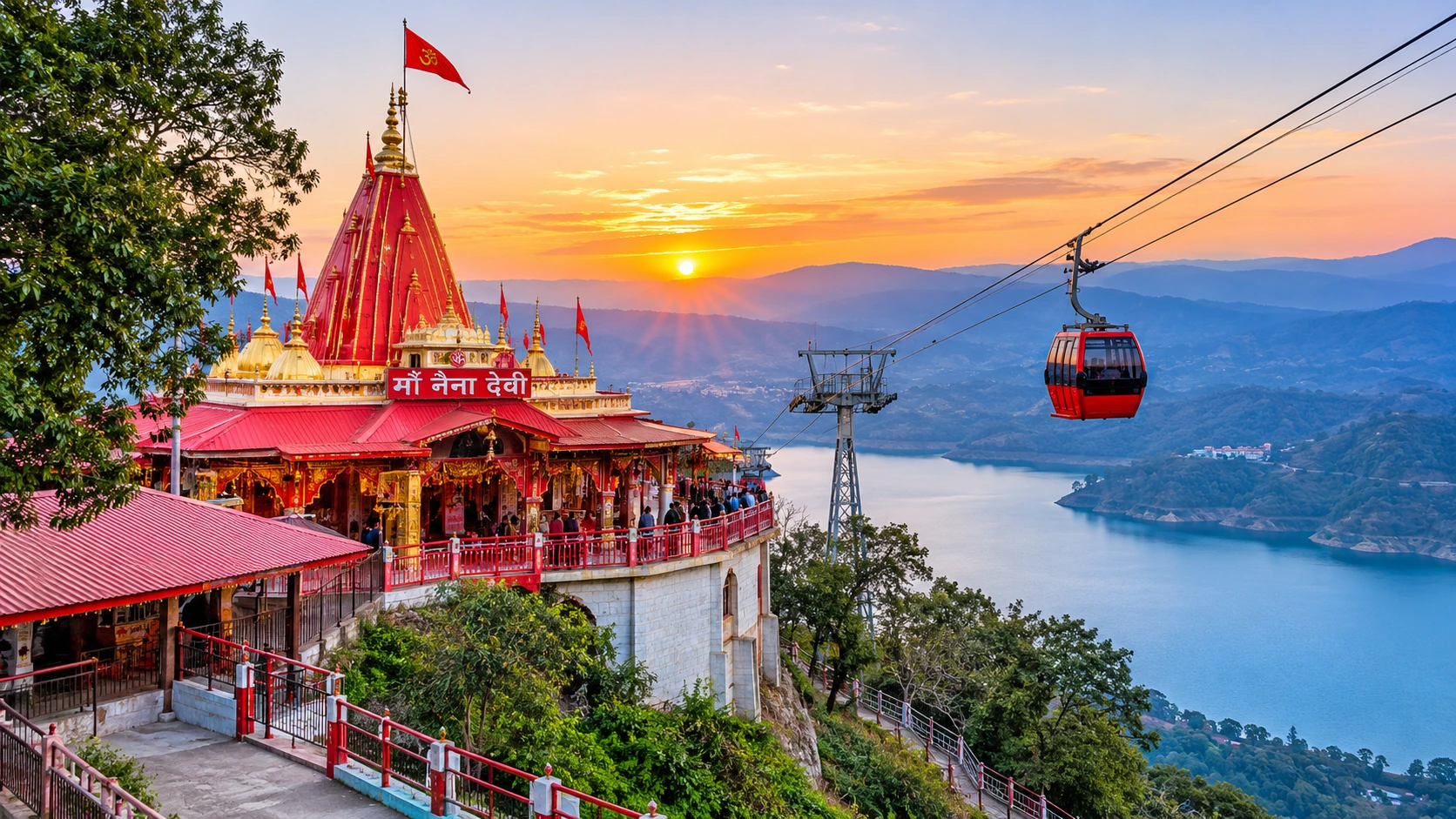
The Naina Devi Temple in Himachal Pradesh crowns a hill in the town of Naina Devi, in Bilaspur district. The temple sits on a hilltop beside National Highway 21, and the surrounding Naina Devi hills look down on Gobind Sagar, the reservoir created by the Bhakra-Nangal Dam. A road winds up the hill, followed by concrete steps, and a cable car carries pilgrims from the base to the top.
Local tradition tells how the temple was found again. After the original shrine was lost, a Gurjar boy saw a white cow letting milk fall on a stone. In a dream, the goddess told him the stone was her pindi, her sacred form. The ruler of Bilaspur, Raja Bir Chand, then built a temple on the spot and named it after Naina. This account is told locally and in tourism writing, and it should be read as tradition, not documented history.
Reaching the Himachal Shrine
The shrine is about 100 km from Chandigarh, which is also the nearest airport, and about 350 km from Delhi. Anandpur Sahib is the nearest railway station, listed at between about 20 km and 30 km depending on the source. Frequent state buses connect the town with cities in Punjab and Himachal Pradesh. Incredible India lists darshan from 5:00 AM to 9:00 PM, though timings change during fairs.
The Fairs and Crowd Safety
The Chaitra, Shravan and Ashwin Navratras bring pilgrims from Punjab, Haryana, Delhi and Uttar Pradesh, and Shravan Ashtami is another peak day. These crowds are the reason for caution. On 3 August 2008, a panic during the Navratri fair caused a stampede, and accounts of the toll range from about 123 to 146. Since then, crowd-management systems have been put in place, but it is still wise to avoid peak days, follow queue rules and keep children close.
Naina Devi Temple in Uttarakhand: The Lakeside Shrine

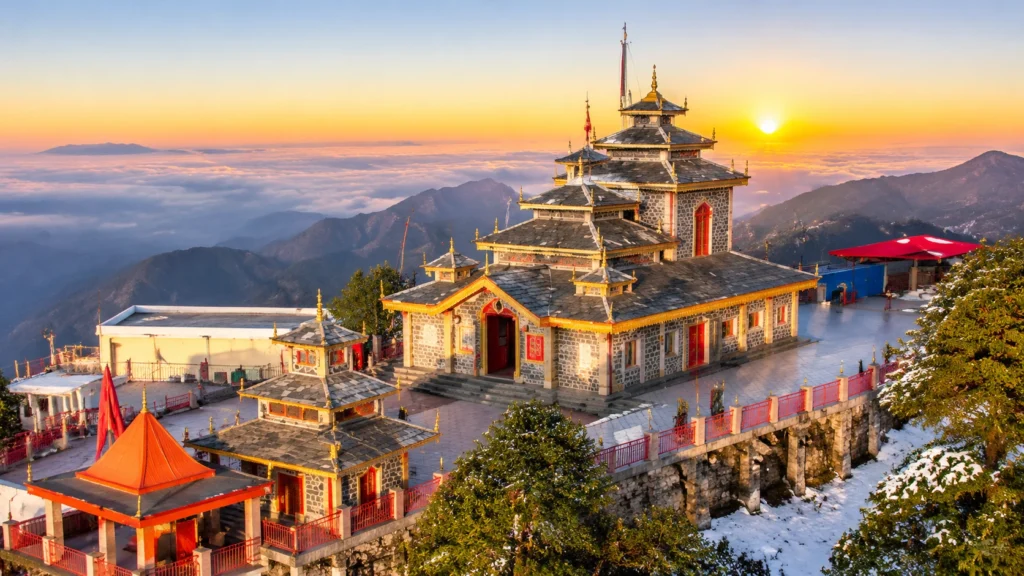
The second Naina Devi stands in Nainital, at the northern end of Naini Lake in the Mallital area, on the Naina hill. It is one of the town’s best-known landmarks, and the story goes that the town takes its name from the goddess: Nainital means “the lake of the eyes,” and the lake is often called the Naina Devi lake in local speech.
Records differ on its age. One page dates the site to the 15th century, while another says a devotee, Moti Ram Shah, set up the idol in 1842. A landslide destroyed the temple in 1880, and it was rebuilt in 1883. Inside, the goddess is worshipped in the form of two eyes, two stone lions guard the entrance and a peepal tree stands in the compound.
The temple is open from about 6:00 AM to 10:00 PM at no charge, with morning aarti between roughly 7:00 and 8:00 AM and evening aarti between 7:00 and 8:00 PM. In August and September, the Nanda Devi Mela fills the streets around it with music, processions and craft stalls. The best time to visit the Naina Devi Temple in Nainital is early morning, before the Mall fills up.
Nearby Stops and the Best Time to Go
Near the Himachal shrine, Anandpur Sahib is the usual base. This major Sikh pilgrimage town lies roughly 18 to 30 km away, depending on the route and the source, and Kiratpur Sahib station is about 30 km away. Shimla’s small airport is about 170 km from Naina Devi. From the hill, the long arm of Gobind Sagar makes a calm backdrop after the climb.
In Nainital, the temple sits within easy walking distance of the lake and the Mall, so it pairs naturally with a boat ride and a slow evening stroll. Hotels fill quickly in summer, so book ahead.
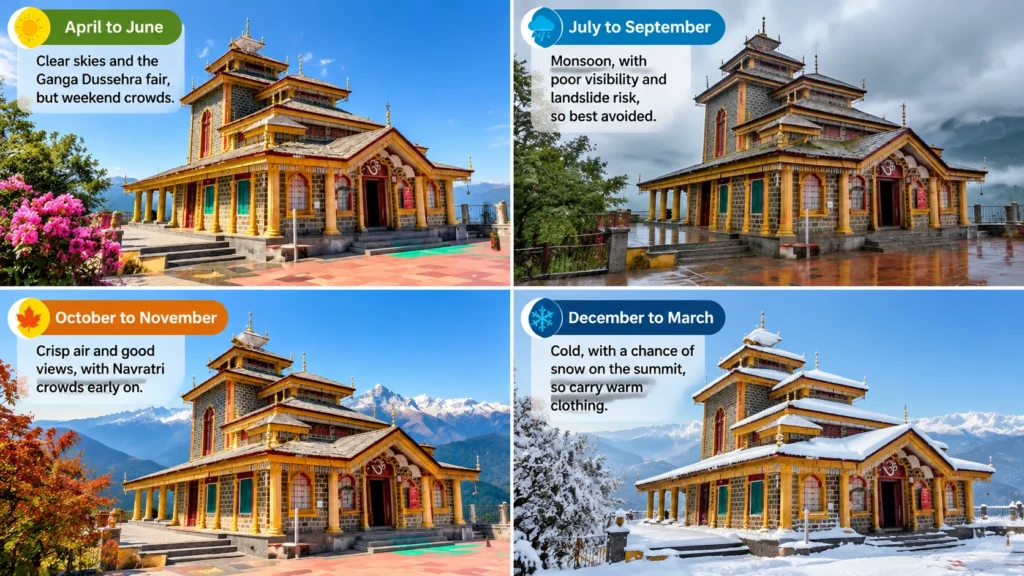
For both shrines, March to June and September to November are generally the comfortable months. The monsoon, which also includes Shravan Ashtami, brings rain and the chance of landslides on hill roads. Winters are cold in Nainital, and the Naina Devi Temple in Himachal sees its biggest crowds during the Chaitra and Ashwin Navratras, so choose a quieter weekday if you prefer calm.
Turning a Temple Visit into a Trek
Nainital is a gateway to the Kumaon hills, so a temple visit can easily become the first step of a longer trip. If you want a walk with more altitude than the Mall offers, browse our Uttarakhand trek packages for guided routes across the state’s high-altitude trails. Himachal visitors can do the same on the Himachal side with our trek packages from the Himachal Treks category on the site.
For a quieter side trip from Nainital, our Pangot article covers a birding village just a short drive away.
Practical Tips for Either Shrine
- Go early. Both temples are calmer before 9:00 AM and the light is best for photographs.
- Avoid festival days if you dislike crowds, and expect long queues during Navratri.
- Dress modestly and carry only a small bag, since security checks are common.
- Carry cash for offerings, prasad and parking.
- Check timings and ropeway hours on the day, because both change around festivals.
- Plan your transport. Chandigarh is the easiest gateway for the Himachal shrine, while Kathgodam is the closest railhead for Nainital, with buses and taxis available onward in both cases.
- Wear grippy shoes. The Himachal shrine involves steps, and the Nainital approach is steep in places.
For official information about the Himachal shrine, see the Bilaspur district administration’s page on Sri Naina Devi Ji, published by the Government of Himachal Pradesh.
Frequently Asked Question’s
Where is Naina Devi located?
The most visited Naina Devi shrine is in Bilaspur district, Himachal Pradesh, and another famous one is in Nainital, Uttarakhand.
What is the legend of Naina Devi?
The temple marks the spot where Sati’s eye or eyes are said to have fallen, making it a Shakti Peeth.
How far is Naina Devi Temple from Chandigarh?
The Himachal shrine is about 100 km from Chandigarh, which is also the nearest airport.
What are the Naina Devi Temple timings?
Listings give about 5:00 AM to 9:00 PM in Himachal Pradesh and about 6:00 AM to 10:00 PM in Nainital, but confirm on the day.
Is there a ropeway at Naina Devi Temple?
Yes. In Himachal Pradesh, a cable car carries pilgrims from the base of the hill to the top.
Which is the best time to visit Naina Devi?
Navratri is the most festive time at both shrines but also the most crowded, so early mornings on non-festival days are quieter.
The two shrines are separated by about 450 kilometres and the Himalayan foothills, yet they share a name and a belief. Wherever you go, the practice is the same: climb a little, bow your head and look out at the view the goddess is said to be watching.