


Kinnaur Kailash

Explore articles related to this topic from ExploreHills.

Explore by Category

2 articles
Kinnaur Kailash
Temples and Spiritual Places

Kinnaur Kailash: The Shivling That Changes Colour at 19,850 Feet

Kinnaur Kailash is one of the strangest sights in the Himalayas. High above the Sutlej valley in Himachal Pradesh, a slender, 79-foot-tall pillar of rock stands on a ridge, and devotees say it shifts colour from pale to golden to deep red…
November 3, 20268 min read

Panch Kailash: Five Sacred Peaks, Five Stories, One Himalayan Pilgrimage

Panch Kailash

Hindus do not say that Shiva lives on one mountain. They say he has five homes. Four of them sit inside India, and the fifth is across the border in Tibet. Together they are known as the Panch Kailash, and each has its own height, its own hardship and its own story.

This guide treats the five peaks like a set of field cards. First comes a comparison table, then one card per peak with its speciality and the historic event tied to it, and finally a short guide to choosing where to begin. Where sources disagree, the article says so.

The Panch Kailash at a Glance

PeakWhereHeightKnown for
Mount KailashTibet, China6,638 mThe original abode, sacred to four faiths
Adi KailashPithoragarh, Uttarakhand5,945 mJolingkong lake and the Om Parvat confusion
Shrikhand Mahadev KailashKullu, Himachal PradeshAbout 5,200 mA towering Shivling and a 32 km climb
Kinnaur KailashKinnaur, Himachal PradeshAbout 6,050 mA 79-ft natural pillar
Manimahesh KailashChamba, Himachal Pradesh5,653 mA holy lake and an unclimbed summit

What the Panch Kailash Names Mean

The Panch Kailash names follow a simple idea: panch means five, and Kailash is the Himalayan home of Shiva and Parvati. The usual list, in the order most sources give, is Mount Kailash, Adi Kailash, Shrikhand Mahadev Kailash, Kinnaur Kailash and Manimahesh Kailash. Tradition varies on the order, and the Himachal Tourism Development Corporation’s page, for example, ranks Manimahesh fifth and Shikhar Kailash third. Treat the order as a convention rather than a rule.

Mount Kailash
Mount Kailash
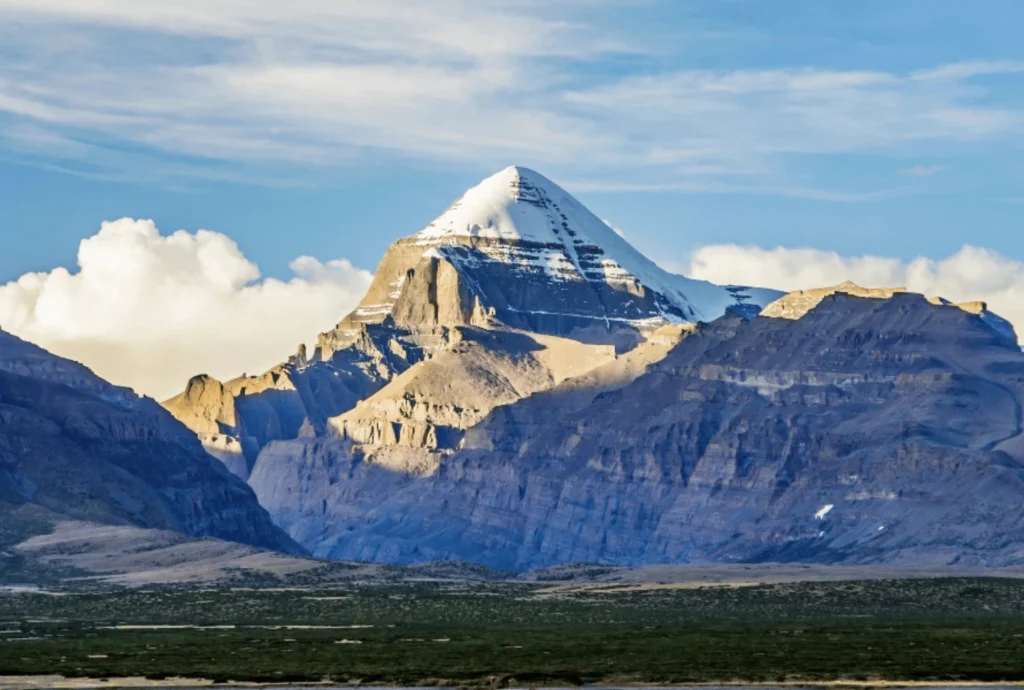
  • Height and place: Mount Kailash rises to 6,638 metres in the Tibet Autonomous Region of China.
  • Speciality: Hindus see Mount Kailash as the home of Shiva and Parvati. Buddhists, Jains and followers of Bon hold it sacred too, which makes it one of the few peaks revered by four traditions. Pilgrims walk the circuit, or parikrama, from Darchen through Diraphuk, Dolma La and Zuthulphuk.
  • Historic event: India’s Kailash Manasarovar Yatra, run by the Ministry of External Affairs, was suspended from 2020 and resumed in summer 2025. The 2026 season was planned for June to August, using the Lipulekh and Nathu La routes. The Lipulekh route has been in use since 1954.
  • Note: Pilgrims circle Mount Kailash but do not climb it. It is treated as a place of worship, not a summit to be conquered.

Adi Kailash
Adi Kailash
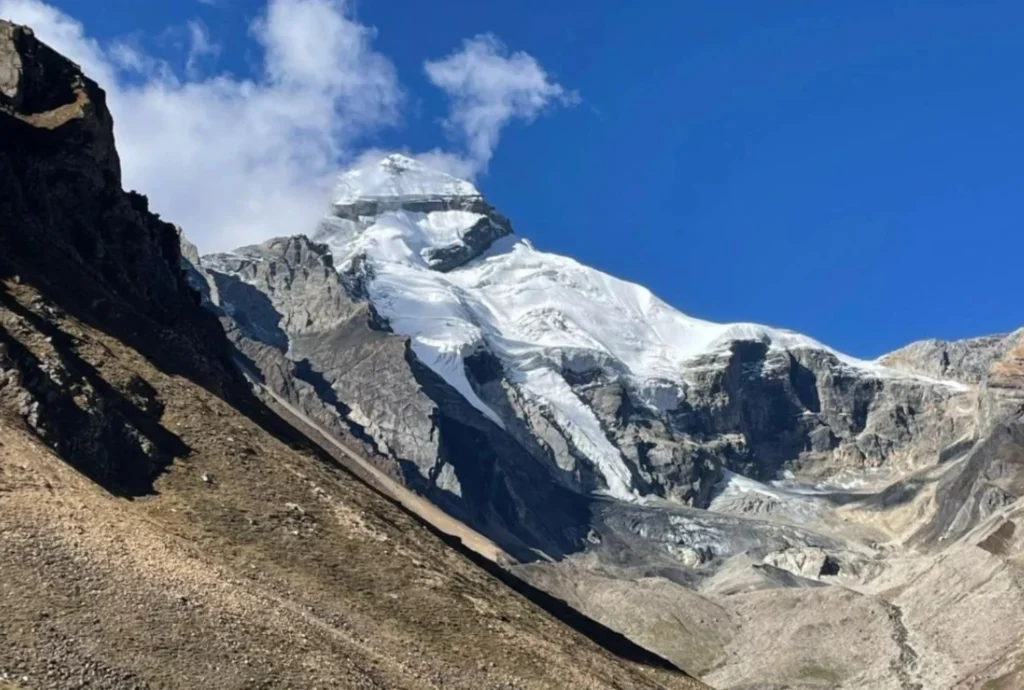
  • Height and place: Adi Kailash stands at about 5,945 metres (19,505 feet) in Pithoragarh district, Uttarakhand, in the Kuthi Yankti valley near the Indo-China border.
  • Speciality: Base camp for Adi Kailash is beside Jolingkong, also called Gauri Kund, a sacred lake with a small Shiva temple on its bank. The route forks at Gunji, where one road goes towards Kailash-Manasarovar and the other to Adi Kailash. Permits are issued at Dharchula.
  • Common confusion: Adi Kailash is often mixed up with Om Parvat, but the two are different. Om Parvat lies near Nabhi Dhang on the Kailash–Manasarovar route.
  • Historic event: A mixed international team attempted Adi Kailash in 2002 and turned back about 200 metres short. The first successful ascent came on 8 October 2004, when a British-Scottish-American team climbed it but stopped just short of the final few metres out of respect for its sanctity. A new 80-km road from Dharchula to Lipulekh, opened in May 2020, cut the trek dramatically.

Shrikhand Mahadev Kailash
Shrikhand Mahadev kailash
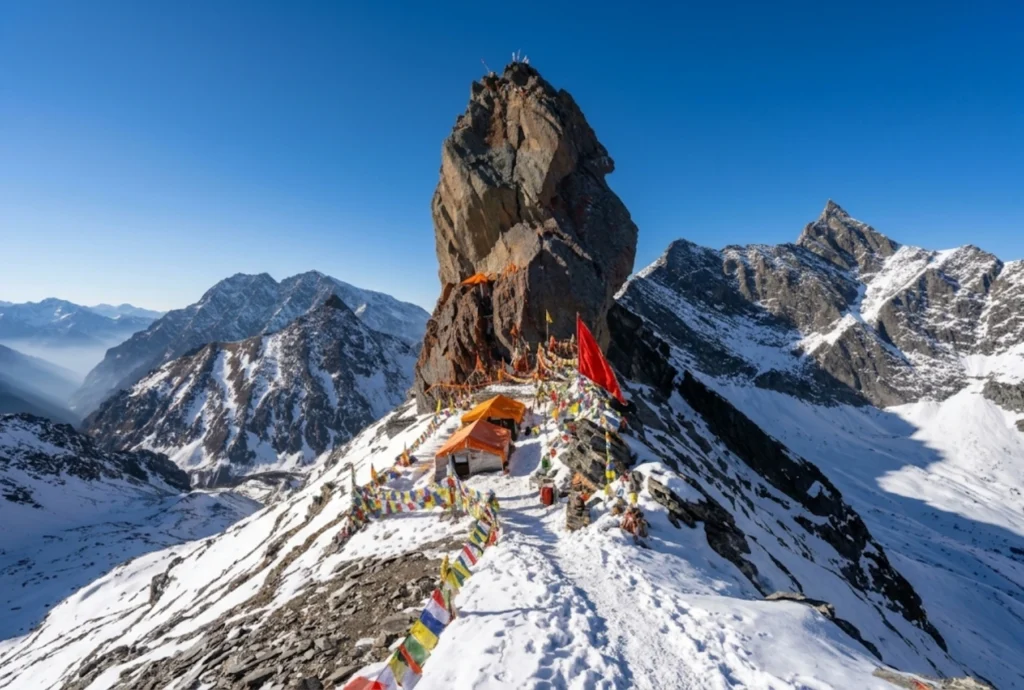
  • Height and place: Sources disagree. They give figures from about 5,155 m to 5,227 m, and some list 18,570 feet. Shrikhand Mahadev Kailash lies in the Nirmand area of Kullu district, Himachal Pradesh. The Shivling formation is described as about 75 feet tall.
  • Speciality: The trek to Shrikhand Mahadev Kailash is roughly 32 to 35 km one way from Jaon, usually over five to six days, passing Singhgad, Thachru, Kali Ghati, Bhimdwar and Parvati Bagh, a flower meadow said to be planted by Parvati. Nain Sarovar, a glacial lake, is said to have formed from Parvati’s tears. A smaller peak behind the Shivling is dedicated to Kartikeya.
  • Legend: Pilgrims at Shrikhand Mahadev Kailash recall the tale of Bhasmasur, a demon blessed with the power to turn anyone to ash who then tried it on Shiva himself. Another tradition says Ravana performed penance here, and the name Srikhand is linked to that story.
  • Historic event: In late June 2026, the Kullu administration suspended the yatra until further orders. An expert team from the Atal Bihari Vajpayee Institute of Mountaineering declared the routes unsafe, especially between Bhimdwar and Parvati Bagh.

Kinnaur Kailash
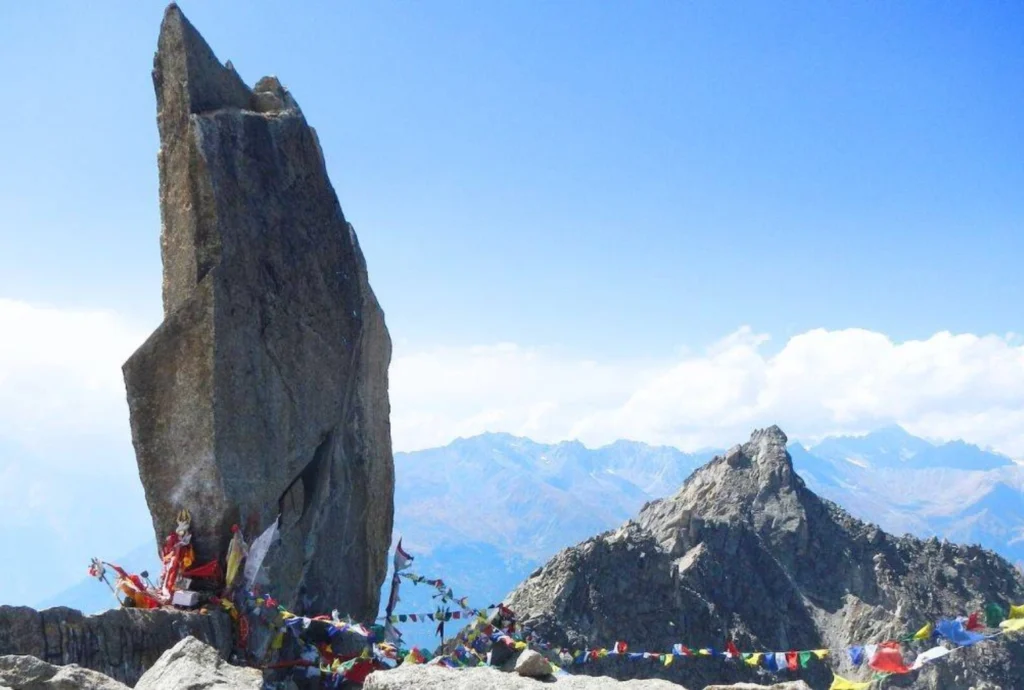
Kinnaur kailash
  • Height and place: Kinnaur Kailash rises to about 6,050 metres (roughly 19,850 feet) in Kinnaur district, Himachal Pradesh, visible from Kalpa across the Sutlej valley.
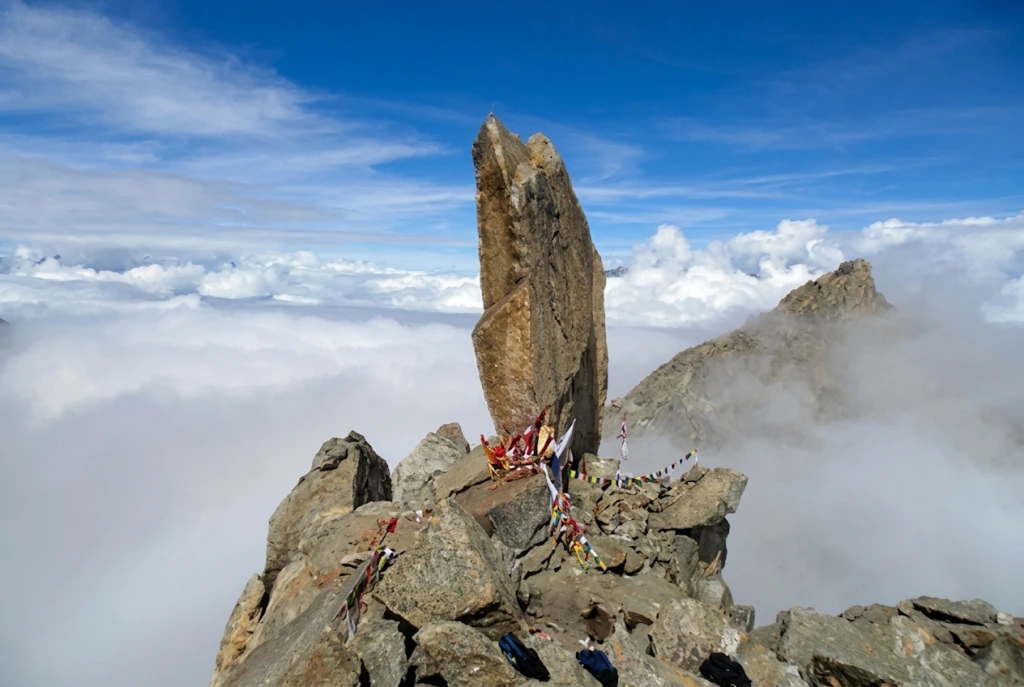
  • Speciality: Kinnaur Kailash is known for a natural rock pillar about 79 feet tall at around 4,800 metres, said to change colour through the day. Our own Kinnaur Kailash article covers the trek stages, distance and yatra rules in detail.
  • Legend: Devotees call Kinnaur Kailash the winter abode of Shiva. Local oral tradition links the region to the Pandavas, but this is tradition rather than documented history.
  • Historic event: The 2026 yatra became a story in itself. A district notice announced dates in August, yet reports in late June said the yatra had been suspended after a scouting team found large glaciers and fresh rockfall near the route. Check the latest status with the Kinnaur district administration.

Manimahesh Kailash
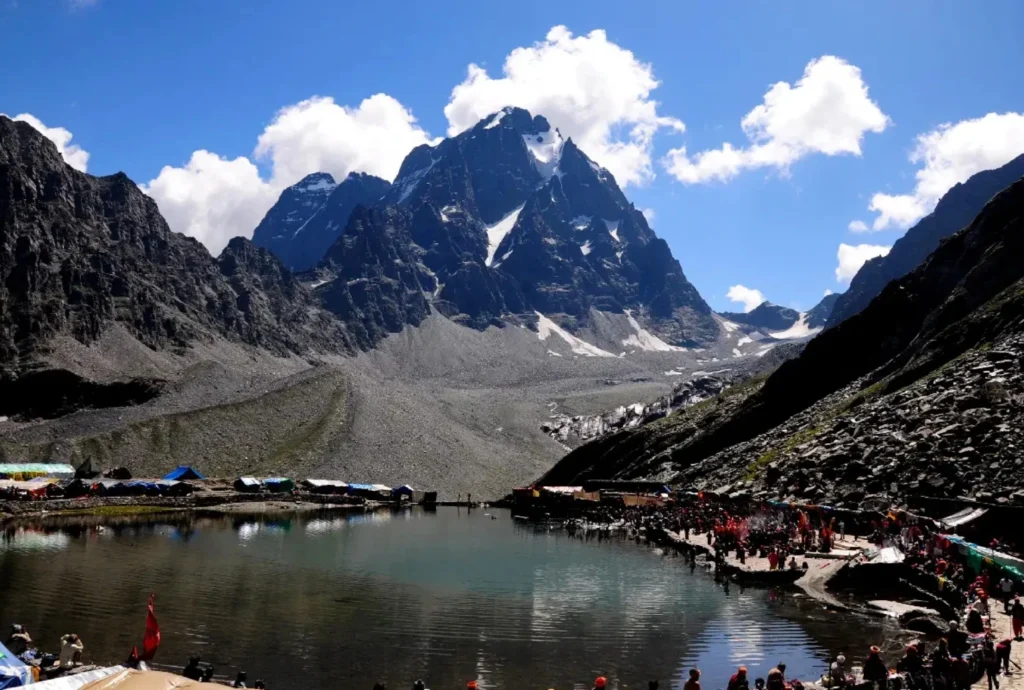
Manimahesh Kailash
  • Height and place: Manimahesh Kailash rises to 5,653 metres (18,547 feet) in the Bharmour area of Chamba district, Himachal Pradesh, above Manimahesh Lake at roughly 4,000 metres.
  • Speciality: Manimahesh Kailash has never been successfully summited, and an Indo-Japanese attempt in 1968 was aborted. The pilgrimage from Hadsar to the lake is about 13 km, ending with a dip in the glacial water.
  • Legend: Shiva is said to have created Manimahesh Kailash after marrying Parvati. Another story tells of a Gaddi shepherd who tried to climb the peak with his flock and turned to stone, and the small surrounding peaks are believed to be his remains.
  • Historic event: The yatra runs between Krishna Janmashtami and Radhashtami. In 2025, heavy rain and landslides struck it, and reports at its close put the toll at 16 with thousands rescued. A Geological Survey of India study also found the glacier at Manimahesh Kailash receded about 1,075 metres over 37 years.

Doing the Panch Kailash Yatra

Completing the whole Panch Kailash yatra is rare, because the five peaks fall under different governments, seasons and rules. Three are in Himachal Pradesh, one is in Uttarakhand and one is in Tibet. Most pilgrims treat it as a lifetime goal and complete it one peak at a time.

A sensible order for beginners to the Panch Kailash follows difficulty:

  1. Manimahesh: The shortest trek at about 13 km, in the August to September window.
  2. Adi Kailash: Now far easier by road, though it still needs permits and acclimatisation.
  3. Kinnaur Kailash: Hard, high and exposed, with strict group rules.
  4. Shrikhand Mahadev: The toughest of the Indian peaks, with a long and steep trail.
  5. Mount Kailash: Only through the official yatra or a licensed operator, and only when the season is open.

Whichever you pick, read the current district or ministry notice first. Dates, daily quotas and even the safety status of routes have changed within a single season. For an official overview of Manimahesh and its neighbours, see the Himachal Pradesh Tourism Development Corporation page on Manimahesh Kailash, published by the state government’s tourism undertaking. For another sacred high peak, our Nanda Devi article is a useful companion.

Staying Safe on Any Kailash Route

  • Acclimatise, because every one of these treks goes above 4,000 metres.
  • Register and carry the medical certificate, since most yatras require it.
  • Travel in groups, and avoid walking at night.
  • Treat weather and landslide warnings as final.

Frequently Asked Question’s

  1. What are the Panch Kailash?

    They are Mount Kailash, Adi Kailash, Shrikhand Mahadev Kailash, Kinnaur Kailash and Manimahesh Kailash, five peaks regarded as the abodes of Shiva.

  2. Which of the Panch Kailash is in Tibet?

    Mount Kailash, at 6,638 metres, lies in the Tibet Autonomous Region of China. The other four are in India.

  3. Which of the Panch Kailash is the easiest to visit?

    Manimahesh Kailash has the shortest trek at about 13 km, though the weather can turn dangerous during the yatra.

  4. Has anyone climbed these peaks?

    Adi Kailash was climbed in 2004 by a team that stopped short of the top. Manimahesh remains unclimbed, and Mount Kailash is not climbed at all.

  5. When is the Panch Kailash yatra done?

    The Indian yatras usually run in summer, from July to September, while the Mount Kailash yatra ran from June to August in 2026.

  6. Do I need a permit for these yatras?

    Yes. Most need registration, a medical certificate and, near the border, an Inner Line Permit.

The Panch Kailash are five mountains, five legends and five ways of being humbled. What they share is the idea that the climb matters less than the humility with which you make it.
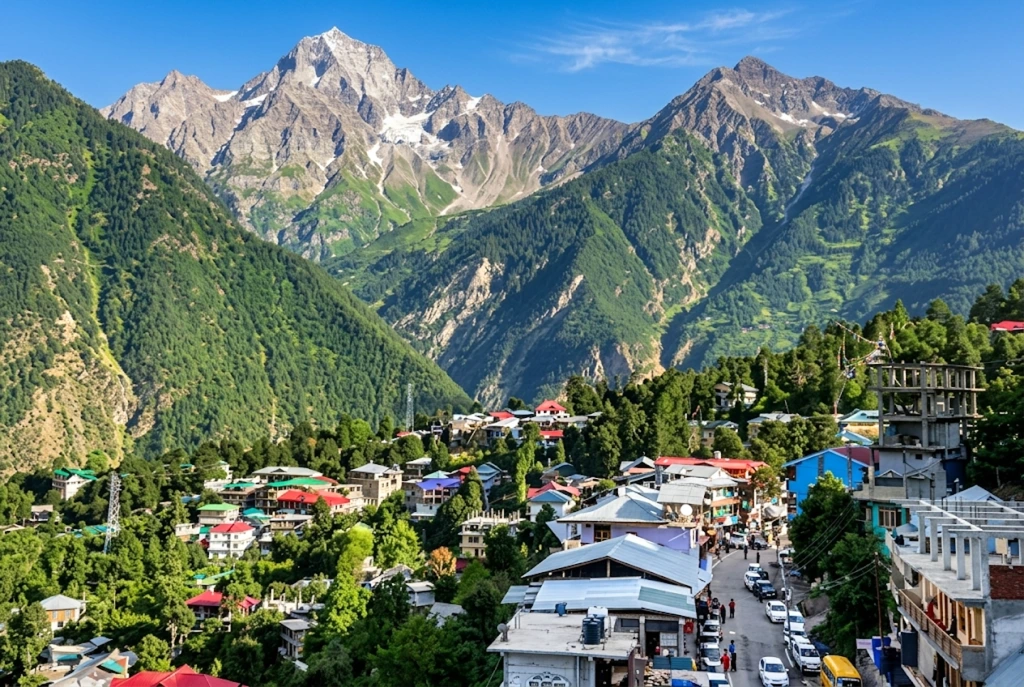
Kinnaur Kailash: The Shivling That Changes Colour at 19,850 Feet

Kinnaur Kailash

Kinnaur Kailash is one of the strangest sights in the Himalayas. High above the Sutlej valley in Himachal Pradesh, a slender, 79-foot-tall pillar of rock stands on a ridge, and devotees say it shifts colour from pale to golden to deep red as the sun moves across the sky. For Hindus it is the winter home of Shiva. For trekkers it is a hard, high, exposed walk that demands respect.

This article is written as a practical reference rather than a travelogue. It starts with a quick-facts table, then covers the legend, the route, the yatra rules and the season, so you can decide whether and when to go to Kinnaur Kailash.

Quick Facts

DetailWhat to know
LocationKinnaur district, Himachal Pradesh, near Reckong Peo and Kalpa
Peak heightAbout 6,050 metres (roughly 19,850 feet)
The ShivlingA rock pillar about 79 feet (24 metres) tall, at around 4,800 metres
Trek lengthRoughly 12 to 14 km one way from the Tangling side
DifficultyHard, with steep, rocky and exposed sections
SeasonSummer, with dates set each year by the district administration

Where Is Kinnaur Kailash and How Big Is It?

If you are asking where is Kinnaur Kailash, the answer is the Kinnaur district of Himachal Pradesh, in the upper Sutlej valley close to the border region with Tibet. Kinnaur Kailash rises above the district’s headquarters at Reckong Peo, and the famous Shivling formation can be seen from the village of Kalpa on a clear day, directly across the valley.

The Kinnaur Kailash height in feet is about 19,850, which is roughly 6,050 metres. The Shivling itself stands lower, on a shoulder of the mountain at about 4,800 metres, so the trek ends at the pillar rather than the summit. Do not confuse it with the Kailash near Lake Manasarovar in Tibet. This is a separate peak and a separate pilgrimage, sometimes spelled Kinner Kailash, and local people regard it as one of the five Kailash peaks of the Himalayas.

The Kinnaur Kailash Story

The best-known Kinnaur Kailash story is that the Shivling is the winter abode of Lord Shiva, who is said to spend part of the year here. Devotees believe the rock formation changes colour through the day, with the light playing across its surface, and many describe seeing it glow at sunrise.

Local tradition adds more. People in Kinnaur link the region to the Pandavas of the Mahabharata, who are said to have spent part of their exile in these valleys, and to the wider Shaiva traditions of the area, where Shiva and Parvati are honoured in village temples and festivals. These accounts are passed on orally and vary by village, so treat them as living tradition rather than documented history.

What is certain is that the Kinnaur Kailash pillar is a real and remarkable formation. Even if you arrive as a sceptic, the way the vertical rock stands against the sky at 4,800 metres is hard to forget.

Reaching the Base: Routes and Distances

Reckong Peo

The road journey is long. The traditional start of the Kinnaur Kailash trek is the village of Tangling, about 250 kilometres from Shimla, a drive of roughly eight to nine hours on the Hindustan-Tibet road through Rampur and Reckong Peo. Many people break the journey at Kalpa or Reckong Peo, where the views and the altitude help acclimatisation.

Shimla is the main hub. It is connected by road to Delhi and Chandigarh, and by a small airport and the Kalka-Shimla railway, while the nearest larger airport is at Bhuntar near Kullu. Buses and taxis run from Shimla to Reckong Peo. Your onward travel from there depends on the yatra arrangements for the year, so confirm the starting point with the district administration before you set out.

If you are combining this with other Himachal journeys, our Rohtang Pass guide and our Atal Tunnel article cover the routes into the northern part of the state.

The Trek, Stage by Stage

The classic Kinnaur Kailash trek distance is roughly 12 to 14 kilometres each way, and most itineraries take two to three days on foot. Sources give slightly different figures, which is normal for a route that has been realigned over the years. The stages below follow the traditional route.

  1. Tangling to the halting point (about 6 km). A steep climb through forest and then open meadow, usually taking five to six hours. Many groups camp near the meadow known as Ashiqui Park.
  2. Halting point to the Shivling and back (about 12 km round trip). This is the hardest day. The path gets rocky and exposed, and the final stretch is a boulder-strewn climb in thin air. It typically takes eight to ten hours.
  3. Return to Tangling (about 6 km). The descent is easier on the lungs and harder on the knees.

The Kinnaur Kailash route is not technical in the climbing sense, but it needs fitness, warm layers and steady pacing. Previous trekking experience is strongly recommended.

Kinnaur Kailash Yatra: Rules and Why They Change

The Kinnaur Kailash yatra is regulated by the district administration, and the rules change from year to year. In 2026, officials postponed and then rescheduled the pilgrimage after flagging risks such as active glaciers, falling rocks and landslide-prone stretches on the route. Reports from different sources give different dates and starting points for the revised yatra, which tells you how fluid the situation is.

Common features of the system include:

  • Registration: Pilgrims register with the yatra organising committee, either online or at a camp in the starting village, on a first-come basis with daily limits.
  • Medical check: A medical fitness certificate or an on-site health check is compulsory.
  • Fees: A green tax is charged, and one source puts it at around 200 rupees.
  • Group travel: You must travel with the group, follow the guide and stay on the designated route, and not walk at night or take shortcuts.
  • Safety rules: No littering, no loud music, no fires and no intoxicants.

Because the dates, daily limits and even the starting point have varied, rely on the district’s own notice, not on a travel blog. The Kinnaur district administration publishes the current yatra notice on its official website, linked below.

Best Time to Visit Kinnaur Kailash

The best time to visit Kinnaur Kailash depends on what is allowed in a given year. The official yatra normally runs in the summer, around July and August, once the snow has retreated, though weather and safety reviews can shift it. Some trekking sources describe May to June and September to October as comparatively favourable, but access always depends on permission and conditions.

The monsoon is the main concern. Heavy rain can cause landslides on the approach road, and rockfall is a recurring risk on the upper stretches. Winter is closed to pilgrims and trekkers because of deep snow. Whatever your dates, check the weather and the notice the week before you travel, and carry a buffer day.

Staying Safe at Altitude

The upper stretch is above 4,000 metres, where altitude sickness is a real risk even for fit people.

  • Ascend slowly and rest often.
  • Drink plenty of water and avoid alcohol and heavy meals.
  • Learn the warning signs: persistent headache, nausea, dizziness and breathlessness at rest.
  • Descend if symptoms get worse, since descending is the only reliable treatment.
  • Carry waterproofs, gloves, a warm hat and sunscreen, because the sun at this height is strong.

Police and home guard teams are usually stationed at key points during the yatra, but facilities are limited, so self-reliance matters.

What Else to See Nearby

Kinnaur rewards slow travel. Kalpa has apple orchards and old wooden temples, Reckong Peo is a useful supply stop and Sangla and Chitkul are among India’s most scenic border villages. For official information on the yatra, see the Kinnaur district administration’s yatra notice, published by the Government of Himachal Pradesh.

Frequently Asked Question’s

  1. What is the height of Kinnaur Kailash?

    Kinnaur Kailash is about 6,050 metres, or roughly 19,850 feet, and the Shivling pillar stands at about 4,800 metres.

  2. How long is the Kinnaur Kailash trek?

    It is roughly 12 to 14 kilometres each way, usually done over two to three days, depending on the route and arrangements for the year.

  3. Do you need a permit for the Kinnaur Kailash yatra?

    Yes. Pilgrims must register with the organising committee, complete a medical check and follow the group rules set each year by the district administration.

  4. What is the story behind Kinnaur Kailash?

    It is regarded as the winter abode of Lord Shiva, and the Shivling is said to change colour with the light.

  5. When is the best time to visit Kinnaur Kailash?

    The yatra usually runs in summer, around July and August, but dates change yearly, so check the district notice before planning.

Kinnaur Kailash stays with people not because it is easy or comfortable, but because it is neither. You climb for a day, thin of breath, towards a pillar of rock that looks almost too straight to be natural, and the effort becomes part of the meaning. Go prepared, go with the group and go when the mountain allows.