

Temples and Spiritual Places

Explore India’s famous temples, sacred destinations, pilgrimage routes, and spiritual places. Find travel guides covering temple history, religious significance, darshan timings, how to reach, nearby attractions, accommodation, and essential travel information for planning a spiritual journey.

Explore by Category

60 articles
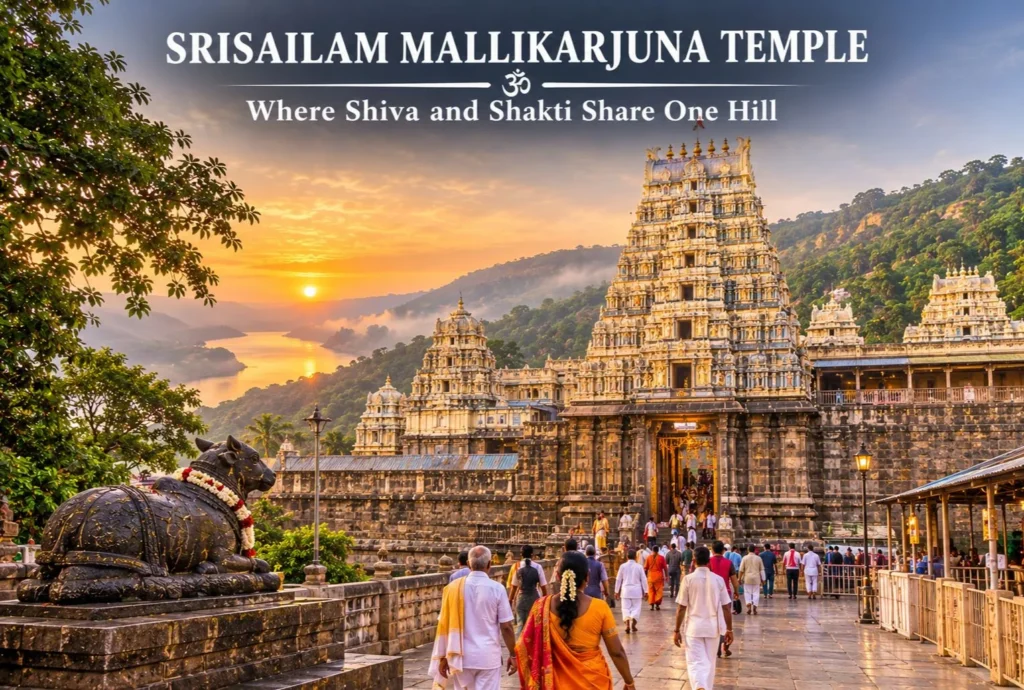
Srisailam Mallikarjuna Temple
Temples and Spiritual Places

Srisailam Mallikarjuna Temple: Where Shiva and Shakti Share One Hill

On a forested plateau of the Nallamala hills, above the Krishna river, one temple complex holds both a Jyotirlinga and a Shakti Peetha. The Srisailam Mallikarjuna Temple is among the most important Shiva shrines in South India, and it draws pilgrims who…
November 5, 20265 min read
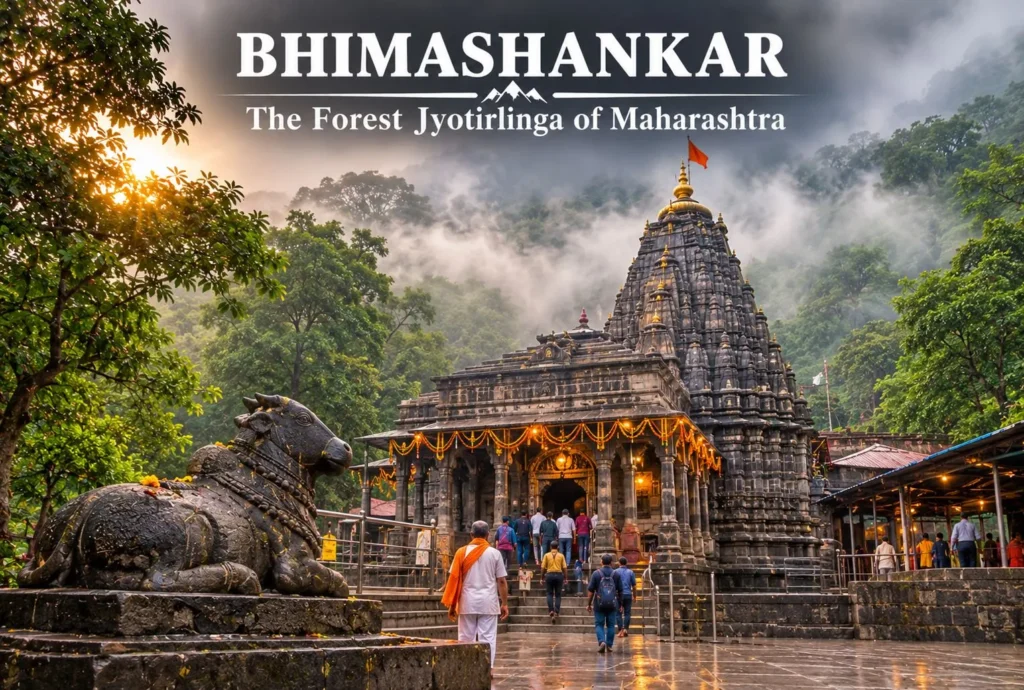
Bhimashankar Mandir
Temples and Spiritual Places

Bhimashankar Mandir: The Forest Jyotirlinga of the Sahyadris

Most Jyotirlinga journeys end at a temple gate. At Bhimashankar, the journey starts in the forest. The temple sits high in the Sahyadri hills, often wrapped in mist during the monsoon, and many pilgrims remember the drive and the greenery as much…
November 5, 20266 min read
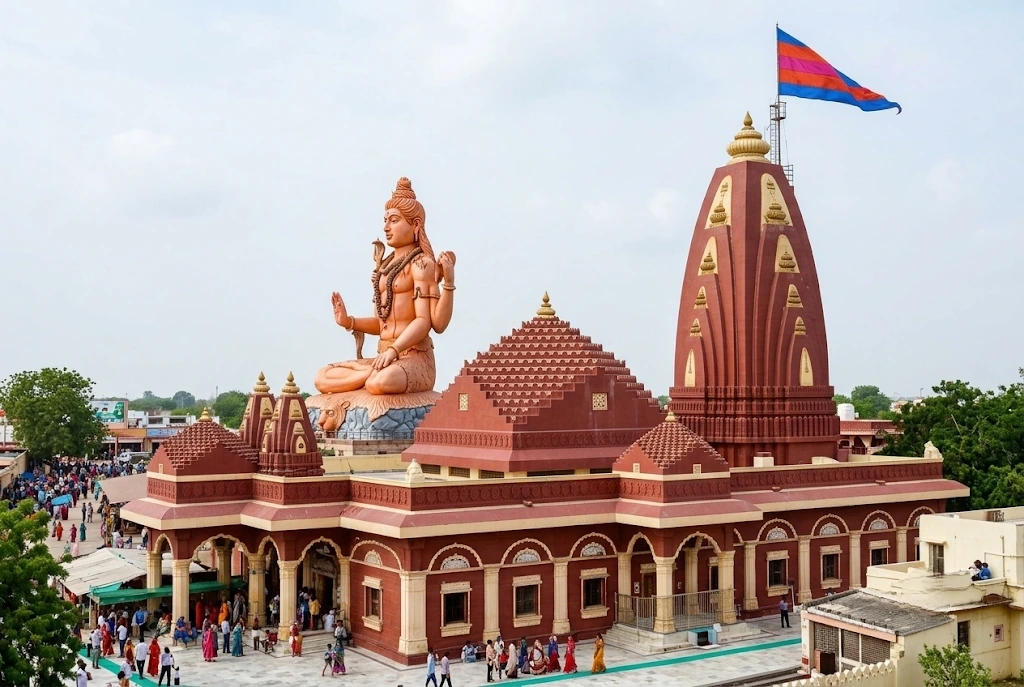
Nageshwar Jyotirlinga
Temples and Spiritual Places

Nageshwar Jyotirlinga: The Shrine of the Serpent Lord in Darukavana

Between the town of Dwarka and the ferry point for Bet Dwarka, a 25-metre statue of a seated Shiva rises above a quiet stretch of the Gujarat coast. Beneath it, in a sanctum set below ground level, stands one of the twelve…
November 4, 20268 min read
Amarnath Temple
Temples and Spiritual Places

Amarnath: The Ice Lingam

Amarnath is a holy cave associated with Lord Shiva. The shrine is a tall ice stalagmite that gradually builds up on the cave floor as water drips and freezes from the roof of the cave. Devotees believe that this natural ice formation…
November 4, 20267 min read
Kinnaur Kailash
Temples and Spiritual Places

Kinnaur Kailash: The Shivling That Changes Colour at 19,850 Feet

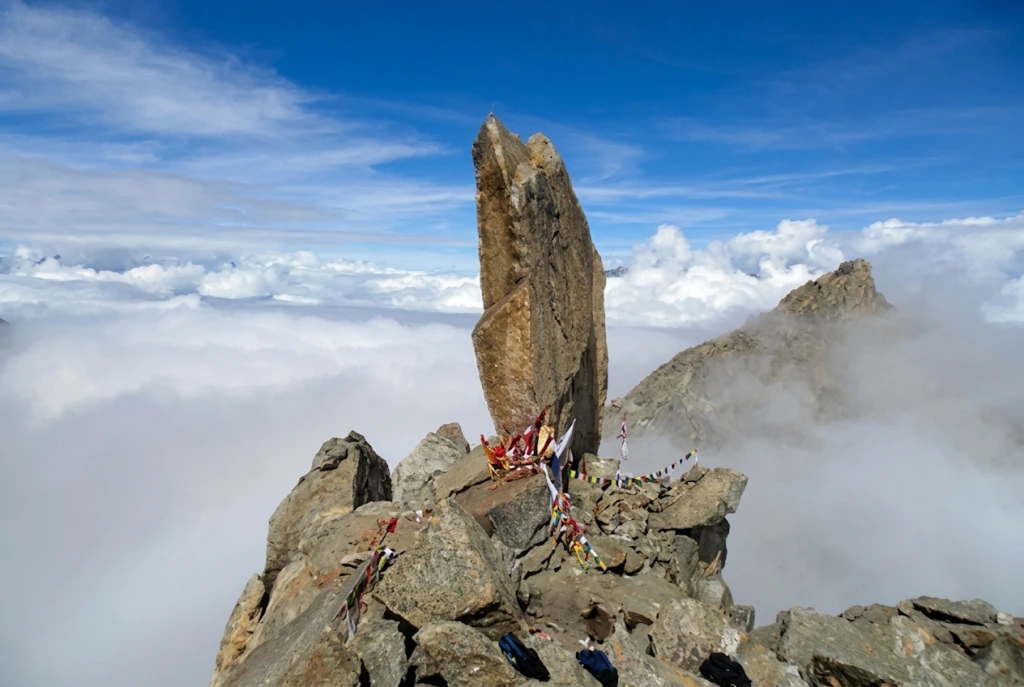
Kinnaur Kailash is one of the strangest sights in the Himalayas. High above the Sutlej valley in Himachal Pradesh, a slender, 79-foot-tall pillar of rock stands on a ridge, and devotees say it shifts colour from pale to golden to deep red…
November 3, 20268 min read

Grishneshwar Temple: The Last of the Twelve Jyotirlingas, Beside the Caves of Ellora

Grishneshwar Jyotirlinga

Most pilgrims who reach the last of India’s twelve Jyotirlingas arrive with a sense of completion. The shrine sits in a quiet village in Maharashtra, a short walk from some of the greatest rock-cut architecture in the world, and it carries one of the gentlest legends in Shaiva tradition: a story about forgiveness rather than destruction. Grishneshwar is also known as Ghrishneshwar and Ghushmeshwar, and the different spellings you will see on signboards and maps all point to the same place.

This guide covers where the temple stands, its legend, the history of its rebuilding, the rules for darshan and the road distances from the other Maharashtra Jyotirlingas, so you can plan a visit without confusion.

Where Is Grishneshwar Jyotirlinga

If you are asking where is Grishneshwar Jyotirlinga, the answer is Verul (also written Vellur), a village in the Chhatrapati Sambhajinagar district of Maharashtra, formerly known as Aurangabad. The temple stands about 30 kilometres northwest of the city and just over a kilometre from the Ellora Caves, a UNESCO World Heritage Site, so the two are easily combined in a single day.

Getting there is simple. The nearest airport is Chhatrapati Sambhajinagar Airport, about 30 to 37 kilometres away, and Aurangabad railway station is around 27 to 30 kilometres from the temple. The drive from either takes about 45 minutes to an hour, and state buses and taxis run regularly towards Ellora. Mumbai is roughly 300 kilometres away by road.

The Grishneshwar Legend: A Story of Forgiveness

The legend of this Grishneshwar Jyotirlinga temple appears in the Shiva Purana and other texts. It is the story of two sisters, Sudeha and Ghushma, who were married to the same Brahmin, Sudharma. Sudeha had no children, and so she arranged for Ghushma to marry him. Ghushma was deeply devoted to Shiva, and each day she made 101 small lingas, worshipped them and immersed them in a lake.

When Ghushma had a son, Sudeha grew jealous and, in a moment of rage, killed the boy and threw his body into the same lake. Ghushma did not abandon her worship. As she immersed her lingas, her son returned to life. Shiva appeared, ready to punish Sudeha, but Ghushma asked him to forgive her sister instead. Moved by her compassion, Shiva agreed and promised to remain at the site as a Jyotirlinga, known as Ghushmeshwar, “the lord of Ghushma.”

Different texts vary in the details, and the name itself is explained in more than one way, including as a reference to Ghushma or to saffron. A rarer form, Ghrineshwara, is translated as “lord of compassion,” which suits the story.

Grishneshwar Temple History

The Grishneshwar Temple has been destroyed and rebuilt more than once. One expert suggests the original foundations date to around the Yadava period in the 12th century, though early records are missing. The Delhi Sultanate attacked the temple in the 13th and 14th centuries, and it suffered further damage during the later Mughal and Maratha conflicts.

Its restoration is tied to the Bhosale family of Verul, the ancestors of Chhatrapati Shivaji Maharaj. Maloji Bhosale, Shivaji’s grandfather, is credited with restoring the temple, and an inscription in the complex is said to name members of the family. The shrine was rebuilt again in the 18th century under the Holkars of Indore, with Ahilyabai Holkar widely credited, though one account names Gautama Bai Holkar for the rebuilding. The Holkar queens rebuilt several famous temples across India, which is why the same name appears at Kashi, Somnath and elsewhere.

Architecture and What You Will See
Grishneshwar Temple

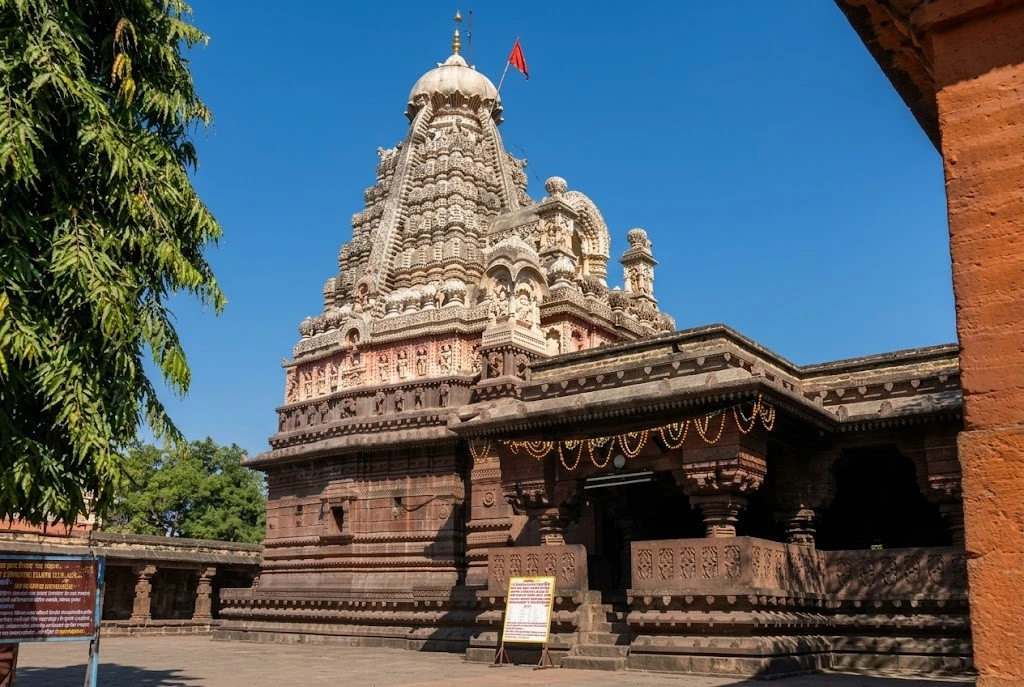
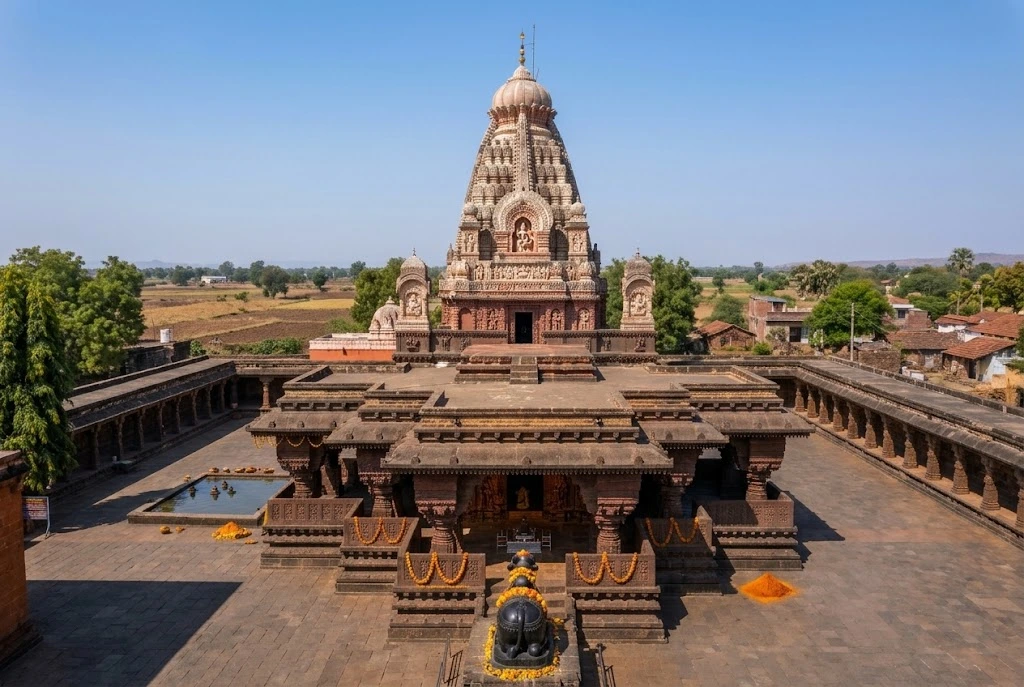
The temple is built mostly of local red stone, with a multi-tiered tower topped by plaster sculptures of gods, scenes from the Ramayana and Mahabharata and the incarnations of Vishnu. Its design does not match the large towers of North or South India, which gives it a regional character of its own. The complex covers about 44,000 square feet.

Inside, the assembly hall has carved pillars showing hunting scenes and fantastic composite figures, and a large Nandi statue sits in front of the main door, facing the inner sanctum. The Jyotirlinga stands in the garbhagriha, the innermost chamber, and the walls around it have fine carvings. Grishneshwar is smaller than some other pilgrimage centres, which makes it quieter and easier to take in.

Our Trimbakeshwar Temple article covers another Maharashtra Jyotirlinga with a very different setting, on the slopes of the Sahyadri hills near the source of the Godavari.

Grishneshwar Temple Timings and Rules

Popular listings give the Grishneshwar temple timings as 5:30 AM to 9:30 PM, with morning darshan until about noon and an evening session from around 4:00 PM. Timings change on festival days and during the month of Shravan, so check on the day.

Dress rules matter here. Men are expected to remove their shirts before entering the sanctum, and women are advised to wear modest traditional clothes, such as a saree or salwar kameez. The outer premises have no such restriction. Queues are usually shorter on weekdays and mornings, and much longer on Mondays, during Shravan and on Mahashivratri, when thousands visit.

Combining the Temple with Ellora and Daulatabad

One advantage of Grishneshwar is that it sits beside something extraordinary. The Ellora Caves, a short distance away, hold Buddhist, Hindu and Jain monuments carved from solid rock, including the huge Kailasa Temple. They are open six days a week and closed on Tuesdays, with separate entry fees for Indian and foreign visitors. Daulatabad Fort, the old Deogiri fortress, is also nearby on the road back to Aurangabad. Most visitors spend the morning at Grishneshwar and the rest of the day at Ellora, or the other way round.

If you are building a longer Jyotirlinga circuit across central India, our Omkareshwar guide covers another of the twelve on the Narmada.

Best Time to Visit and Practical Tips

October to March is the most comfortable season, with temperatures around 15 to 30 degrees Celsius. Summers are hot, and the monsoon brings green hills and heavy crowds at Ellora. Shravan, the holy month, and Mahashivratri are the most spiritually significant times but also the busiest.

  • Carry minimal luggage, since bags may have to be left at the cloakroom.
  • Keep cash for offerings and local meals.
  • Wear easy-to-remove clothing and footwear.
  • Allow at least half a day for the temple and a full day if you add Ellora.
  • For official information about the temple, see the Maharashtra Tourism page on Ghrishneshwar, published by the Government of Maharashtra.

Frequently Asked Question’s

  1. Where is Grishneshwar Jyotirlinga located?

    It is in Verul village, about 30 kilometres from Chhatrapati Sambhajinagar (Aurangabad) in Maharashtra, close to the Ellora Caves.

  2. Why is Grishneshwar the last Jyotirlinga?

    It is commonly counted as the twelfth and last of the Jyotirlingas in traditional lists, and many pilgrims treat it as the final stop of their circuit.

  3. What are the Grishneshwar temple timings?

    Listings give 5:30 AM to 9:30 PM daily, though it is wise to confirm during festivals and Shravan.

  4. What is the Trimbakeshwar to Grishneshwar distance?

    It is roughly 180 to 200 kilometres by road, a drive of about four to five hours.

  5. What is the Bhimashankar to Grishneshwar distance?

    It is around 300 to 320 kilometres, roughly six to seven hours by road, depending on the route.

  6. Is there a dress code at Grishneshwar?

    Yes. Men remove their shirts to enter the sanctum, and women are advised to wear modest traditional clothing.

The temple is small, but its story is among the kindest in the Jyotirlinga tradition: a woman who forgave the person who wronged her, and a god who stayed because of it. That, more than the carvings or the crowds, is why this last of the twelve tends to feel like a quiet ending to a long pilgrimage.
Mahakaleshwar: The South-Facing Jyotirlinga Where Shiva Rules Time Itself

Mahakaleshwar Temple

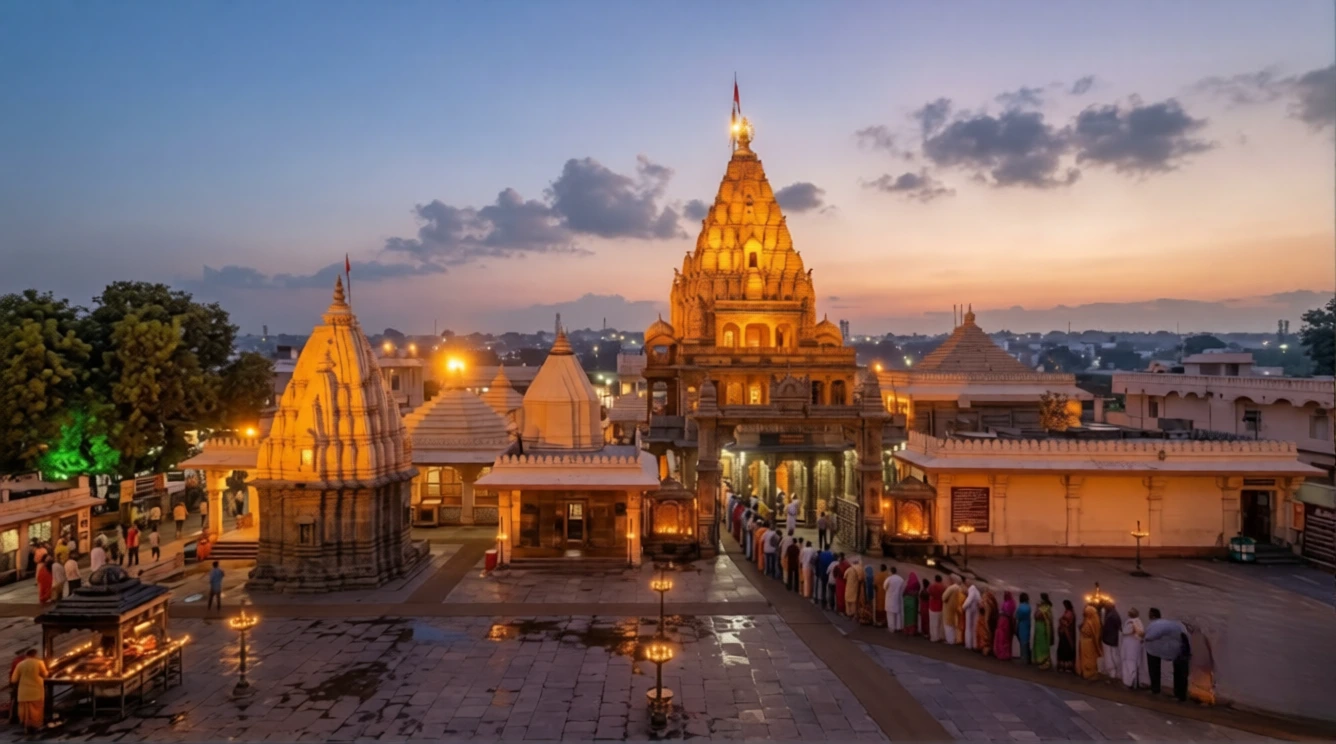
Before dawn in Ujjain, while most of the city is still dark, a line of devotees in plain clothes waits outside a temple gate. Inside, priests are preparing for a ritual that happens nowhere else in quite this way: the lingam is bathed, adorned and covered with sacred ash as the first lamps are lit. This is the Bhasma Aarti at Mahakaleshwar, and it is one of the reasons this shrine has been called the most unusual of all twelve Jyotirlingas.

This guide covers what pilgrims and travellers most often ask about Mahakaleshwar: where the temple stands, the story behind it, its long and turbulent history, what makes the lingam special, and how to plan a visit around the daily schedule.

Where Is Mahakaleshwar Temple

If you are asking where is Mahakaleshwar Temple, the answer is Ujjain, a historic city in the Malwa region of Madhya Pradesh, on the banks of the Shipra (Kshipra) river. The temple stands beside the Rudra Sagar lake in the heart of the old city, and the shrine is part of a larger complex that has grown around it over the centuries.

Getting there is straightforward. Ujjain Junction railway station is only about two kilometres away, and the nearest airport is Devi Ahilyabai Holkar Airport in Indore, around 58 kilometres by road. Taxis, buses and trains run regularly between Indore and Ujjain, so most visitors arrive the day before and stay in the city. The Varaha Purana is cited as placing the earth’s central point at Ujjain, and the city’s old role as a centre of astronomy and time-keeping makes the idea feel fitting for a temple dedicated to Lord Shiva as the master of time.

The Mahakaleshwar Story: A Boy, a King and a Demon

The best-known Mahakaleshwar story takes place in ancient Ujjain, when the city was ruled by King Chandrasena, a devoted worshipper of Shiva. Enemy kings, helped by a demon named Dushan, attacked the city, and the people had no means to defend themselves. Two devotees, a young boy named Shrikhar and a priest named Vridhi, prayed to Shiva for protection.

Shiva appeared as Mahakala, the fierce form that destroys evil, and defeated the attackers. When the devotees asked him to stay and guard the city for ever, he agreed, and the lingam that rose in Ujjain became the Shri Mahakaleshwar Jyotirlinga. The name itself means “Lord of Time and Death,” which explains why people visit to ask for protection from untimely death and for a long life.

There are variations of the tale, including versions in which the demon is destroyed along with other asuras, but all of them share the idea that Shiva chose to live here as Ujjain’s protector.

Mahakaleshwar Temple History

The long Mahakaleshwar Temple history stretches across more than two thousand years. Puranic accounts credit Prajapita Brahma with founding the shrine, and historians note that the temple was already established by the 6th century BC, when a ruler named Chanda Pradyota is said to have appointed a prince, Kumarasena, to look after it. Punch-marked coins from Ujjain, dating to the 4th and 3rd centuries BC, show Shiva, which suggests the deity’s importance was long recognised.

The temple was reconstructed in the 12th century by rulers such as Udayaditya and Naravarman, but its worst blow came in the 13th century. In 1234 to 1235, the Delhi sultan Iltutmish attacked Ujjain and destroyed the temple complex. Later rulers, including the Khaljis, attacked it again, and for centuries the shrine was damaged and reduced.

Its revival began in the 18th century under the Marathas. Ranoji Shinde, a commander serving under Peshwa Bajirao I, took control of Ujjain, and his minister, Ramachandra Baba Sukthankar, is widely credited with rebuilding the temple around the 1730s. The structure standing today largely reflects that Maratha-era rebuilding, with later additions.

Why This Jyotirlinga Is Different

Many temples claim a unique feature, but Mahakaleshwar has several that are well documented:

  • It faces south. The idol is Dakshinamurti, or dakshinamukhi, and it is considered the only south-facing lingam among the twelve Jyotirlingas. South is the direction associated with Yama, the god of death, which links the shrine to Shiva’s role as conqueror of death.
  • It is self-manifested. The lingam is regarded as swayambhu, meaning it arose on its own and draws its power from within, rather than from mantras used to install it.
  • It has the Bhasma Aarti. The pre-dawn ritual, in which the lingam is decorated with sacred ash, is one of the most distinctive ceremonies in India.
  • It has several levels. The temple has five levels, one of them underground.

Other Jyotirlinga pilgrimages in India tell different stories. Our Kashi Vishwanath Temple guide covers another of the twelve, set on the Ganga in Varanasi.

The Bhasma Aarti

The Bhasma Aarti at Mahakaleshwar begins at around 4:00 AM, when the lingam is awakened. It is decorated with a silver crown, a serpent and jewels, and is covered with holy ash. Phones and photography are generally restricted, and dress and conduct rules apply, so it is not a casual sightseeing stop.

Because the number of places is limited, an advance online pass is mandatory, and slots fill weeks or even months ahead, especially around festivals. If you want to attend, book through the official temple channels as early as possible and avoid third-party agents who charge extra. If you cannot get a pass, the regular morning, midday and evening aartis offer a quieter way to see the temple in worship.

Architecture and the Levels of the Temple

The Mahakaleshwar Temple’s design reflects the history of its rebuilding. It blends Maratha, Bhumija and Chalukya influences, with a tall, layered spire rising above the sanctum. The Sabha Mandap and the Garbha Griha, the inner chamber, carry carved figures of deities and scenes from mythology.

The main lingam sits below, while the idol of Omkareshwar is installed in the sanctum above it. On the third storey is Nagchandreshwar, which opens to devotees only once a year, on Nag Panchami. Images of Ganesha, Parvati and Kartikeya are placed around the sanctum, with Nandi to the south.

A few hours’ drive away, Omkareshwar on the Narmada is another of the twelve Jyotirlingas, and our Omkareshwar guide covers it for those planning a longer Madhya Pradesh circuit.

Festivals, Sawari and Mahakal Lok

Mahakal Lok corridor

The calendar at Mahakaleshwar is full. Maha Shivaratri draws huge crowds, with all-night worship and a large fair. During the monsoon months of Shravan and Bhadrapada, the Mahakal Ki Sawari procession carries the deity through the streets of Ujjain to the Shipra ghat, and it is one of the city’s most striking events. Ujjain also hosts the Simhastha Kumbh Mela once every twelve years, with the next one expected in 2028.

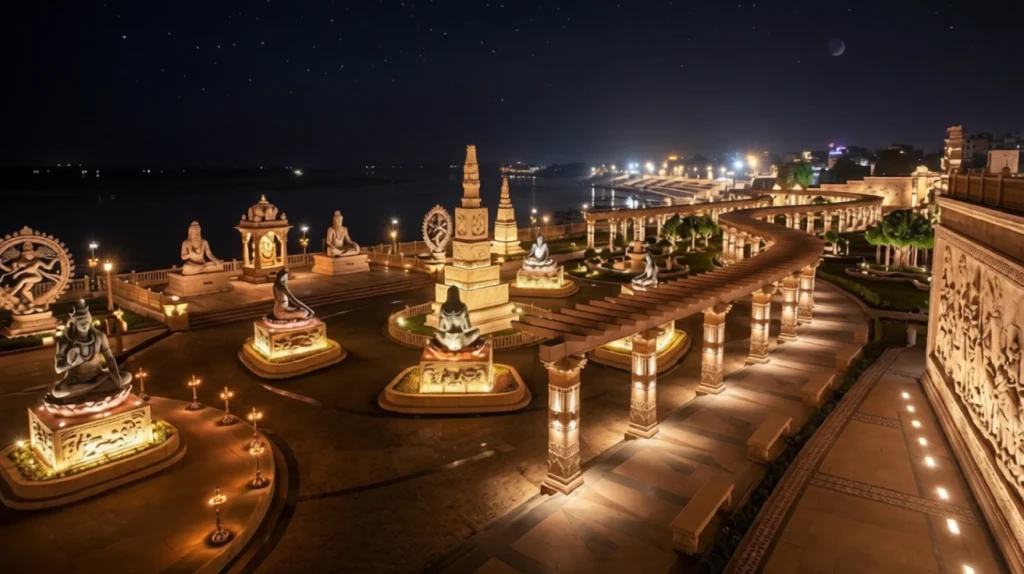
In October 2022, the Mahakal Lok corridor was opened, a large redevelopment that created a walkway, sculptures and lit installations leading to the temple. It has changed how the area looks and increased visitor numbers, though some pilgrims prefer the older, quieter approach.

Timings and Practical Tips

According to Madhya Pradesh Tourism, darshan runs from 4:00 AM to 11:00 PM. Other listings say the gates close slightly earlier, at around 10:00 PM, so confirm the closing time on the day. A typical schedule includes:

  • Bhasma Aarti: about 4:00 to 6:00 AM, with an advance pass.
  • Morning and midday aarti: around 7:00 and 10:00 AM, open to the general queue.
  • Sandhya Aarti: around 5:00 PM, with an advance pass.
  • Shayan Aarti: around 10:30 PM, with an advance pass.

Afternoons usually have shorter queues at Mahakaleshwar Temple. Dress modestly for Mahakaleshwar, carry only essentials, and expect security checks. Mobile phones and bags may need to be left in lockers outside, so check the current rules at the gate. Winter and festival periods change timings by up to half an hour. If you are travelling with family, plan at least half a day for the Shri Mahakaleshwar darshan, since queues, security checks and the walk through the corridor all take time. Many visitors combine the visit with the ghats on the Shipra and other temples in the old city, so a two-day stay in Ujjain works well.

The cooler months, from October to March, are the most comfortable, while April to June can be very hot. For official visitor information, see the Madhya Pradesh Tourism page on Mahakaleshwar Temple, the Madhya Pradesh government’s official tourism portal.

Frequently Asked Question’s

  1. Where is Mahakaleshwar Temple located?

    It is in Ujjain, Madhya Pradesh, on the banks of the Shipra river, about two kilometres from Ujjain Junction railway station.

  2. Why is Mahakaleshwar special among the twelve Jyotirlingas?

    It is the only south-facing Jyotirlinga, it is considered self-manifested and it hosts the pre-dawn Bhasma Aarti.

  3. What is the Mahakaleshwar story?

    Shiva appeared as Mahakala to protect Ujjain and King Chandrasena from invaders and a demon, at the prayer of the boy Shrikhar and a priest, and agreed to stay in the city for ever.

  4. What are the Mahakaleshwar Temple timings?

    Darshan is listed from 4:00 AM to 11:00 PM, though gate timings can differ slightly, so confirm before you go.

  5. Is booking required for the Mahakaleshwar Bhasma Aarti?

    Yes. An advance online pass is mandatory, and slots often fill weeks ahead.

  6. Who rebuilt Mahakaleshwar Temple?

    The Marathas rebuilt it in the 18th century under Ranoji Shinde, with his minister Ramachandra Baba Sukthankar widely credited.

What stays with most visitors is not a single detail but the rhythm. The temple wakes before sunrise, ends its day close to midnight, and has done so, with interruptions, for over two thousand years. In a country full of ancient shrines, Mahakaleshwar still feels like a place where time is treated with respect.

Patal Bhuvaneshwar: The Underground Cave Temple of Kumaon

Patal Bhuvaneshwar

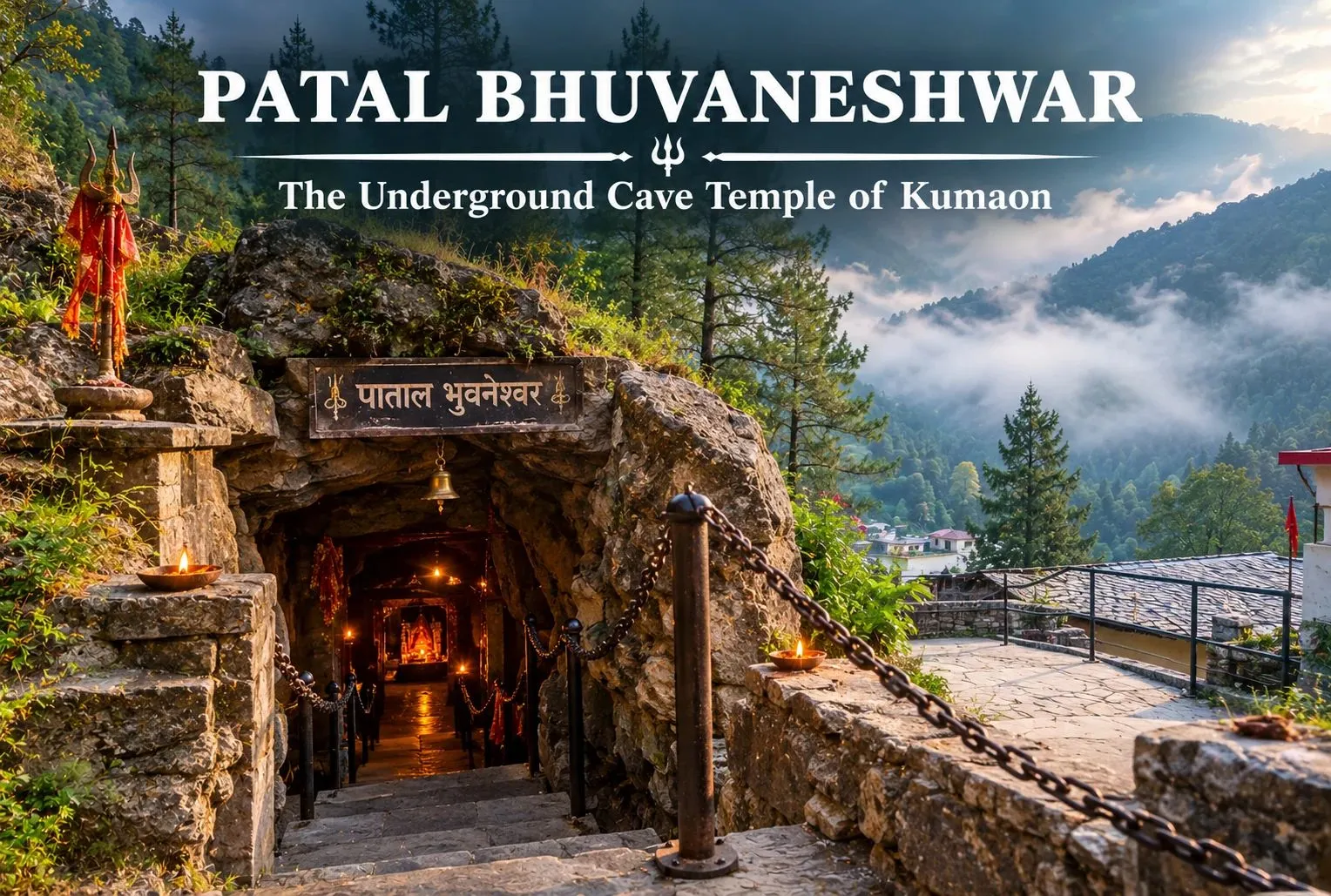
Most pilgrimage sites in the Himalayas ask you to climb. Patal Bhuvaneshwar asks you to go down. A narrow passage in a quiet Kumaon village leads into a limestone world of rock formations that devotees associate with Shiva, Ganesha, and countless other deities.

What Is the Patal Bhuvaneshwar Cave Temple?

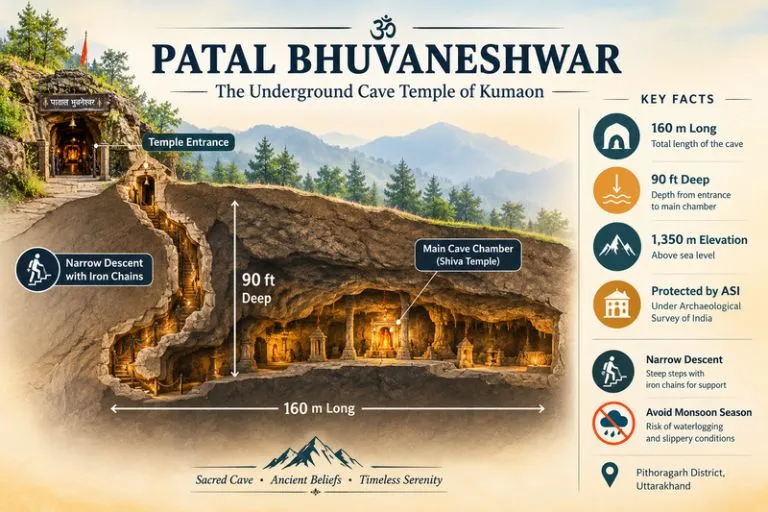
The Patal Bhuvaneshwar cave temple is a Hindu cave temple 14 km from Gangolihat in Pithoragarh district. The site is a limestone cave about 160 metres long and 90 feet deep, at an elevation of 1,350 metres, and it is protected by the Archaeological Survey of India. It is dedicated mainly to Shiva, and legend says the cave enshrines Shiva and thirty-three crore gods.

Legend and History

The cave is described in tradition and in text. Patal Bhuvaneshwar is described in the Manas Khand of the Skanda Purana. According to belief, King Rituparna of the Surya dynasty discovered the cave in the Treta Yuga, and Adi Shankaracharya’s visit began the modern pilgrimage history. Sources give different years for his visit, and 1191 AD is the date cited most often, so treat the exact date as uncertain. The priestly Bhandari family has performed rites here since Shankaracharya’s time, for more than 20 generations.

Patal Bhuvaneshwar Cave

Patal Bhuvaneshwar Cave Mystery

The Patal Bhuvaneshwar cave mystery is mostly a matter of belief. Devotees see rock formations as forms of Sheshnag, Kaal Bhairav, Ganesha, and many other gods and goddesses, along with Shiva. A popular belief holds that the cave is connected by an underground route to Mount Kailash. There is no verified evidence for that link, so it is best read as faith rather than fact. Geologists would explain the shapes as natural limestone formations, which is part of why many visitors find the cave striking whichever way they look at it.

What the Descent Is Like

The way in is narrow. The path runs through a long, narrow tunnel. The journey inside is made in dim light, holding protective iron chains. Expect a steep, slippery climb down, and take it slowly. If you have knee problems, breathing issues, or a fear of tight spaces, think carefully before going in.

Patal Bhuvaneshwar Weather

Patal Bhuvaneshwar weather follows the cool Kumaon hill climate, with chilly mornings and evenings even in summer and cold winters. The cave interior feels cooler and damp. It is advisable to avoid visiting the cave during the monsoon. March to June and September to November are generally the most comfortable windows, but please check the local forecast and road conditions before you leave, since hill roads can be affected by rain.

Timings

Travel guides commonly list timings of 8 a.m. to 6 p.m. in summer and 9 a.m. to 5 p.m. in winter. Hours can change, and photography rules and entry arrangements can differ, so please confirm them locally before you travel.

How to Reach Patal Bhuvaneshwar

The cave lies near Gangolihat, about 35 km from Pithoragarh, on the way to Berinag. It can be reached from Almora, Bageshwar, Chaukori, Gangolihat, Champawat, or Lohaghat, and the nearest bus station is Gangolihat, 14 km away. Kathgodam is the main railhead and Pantnagar the main airport for the region, and the rest of the journey is by road. Road times vary with weather, so allow extra hours.

Extending Your Trip

Pithoragarh is the gateway to some of Uttarakhand’s most remote routes. Explore Hills’ Adi Kailash Om Parvat Yatra is a natural next trip for pilgrims, and the Darma Valley Panchachuli Base Camp Trek suits trekkers who want to stay in the Kumaon Himalayas.

For official information on the cave and the region, you can refer to the Kumaon district administration page on Patal Bhuwaneshwar, a government of Uttarakhand source.

What to Keep in Mind Before Visiting

  • Wear shoes with strong grip and clothes you can move in
  • Carry a small torch if allowed, and follow the guides’ instructions inside
  • Avoid the monsoon and check road conditions after rain
  • Respect the shrine, and follow local rules on photography

Conclusion

Patal Bhuvaneshwar combines faith, folklore, and a real limestone cave in one compact visit. Whether you come for the legends or for the experience of walking underground in the Himalayas, plan around the weather, check the timings, and give yourself time on the descent.

Frequently Asked Questions

Where is the Patal Bhuvaneshwar cave located?

It is in Bhuvaneshwar village, 14 km from Gangolihat in Pithoragarh district, Uttarakhand.

What is special about the Patal Bhuvaneshwar cave temple?

It is a limestone cave where devotees see formations linked to Shiva, Ganesha, Sheshnag, and many other deities. It is described in the Skanda Purana and protected by the Archaeological Survey of India.

What is the Patal Bhuvaneshwar cave mystery?

The mystery is mostly belief-based, including the tradition that the cave is connected to Mount Kailash underground. This is not verified, and the formations are natural limestone.

What is the Patal Bhuvaneshwar weather like?

The area has a cool hill climate. It is advisable to avoid visiting during the monsoon, and March to June and September to November are generally comfortable.

What are the Patal Bhuvaneshwar cave timings?

Travel guides list 8 a.m. to 6 p.m. in summer and 9 a.m. to 5 p.m. in winter, but please confirm locally.

How deep is Patal Bhuvaneshwar?

The cave is about 160 meters long and 90 feet deep.

Karni Mata Temple Bikaner: The Rat Temple of Deshnoke

Karni Mata Temple

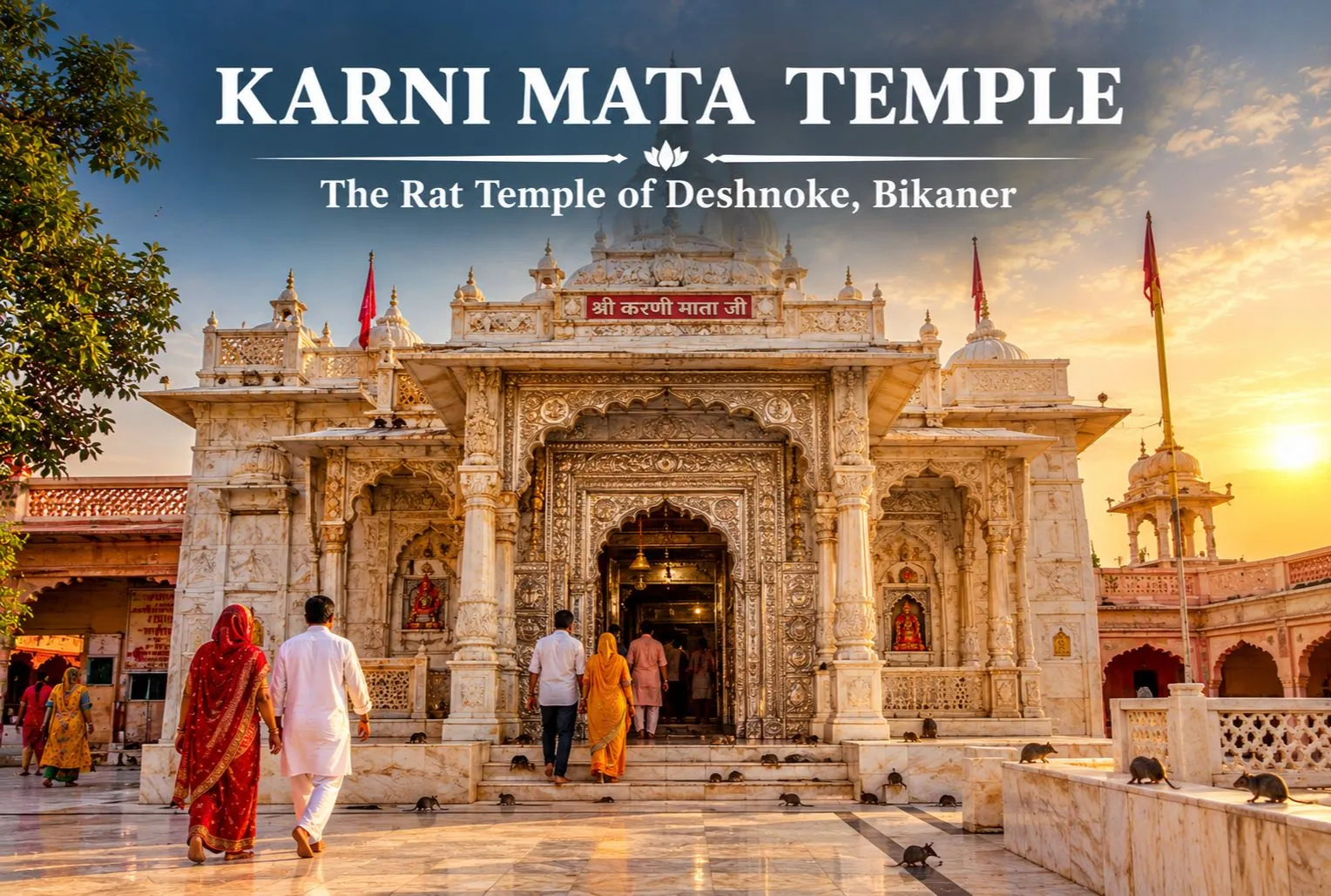
Few shrines in India raise as many eyebrows as the one where thousands of rats scurry across the floor and visitors treat them as sacred. The Karni Mata Temple Bikaner draws pilgrims and curious travelers alike, and behind the unusual sight lies a story of devotion that locals take very seriously.

Where Is the Karni Mata Temple Bikaner?

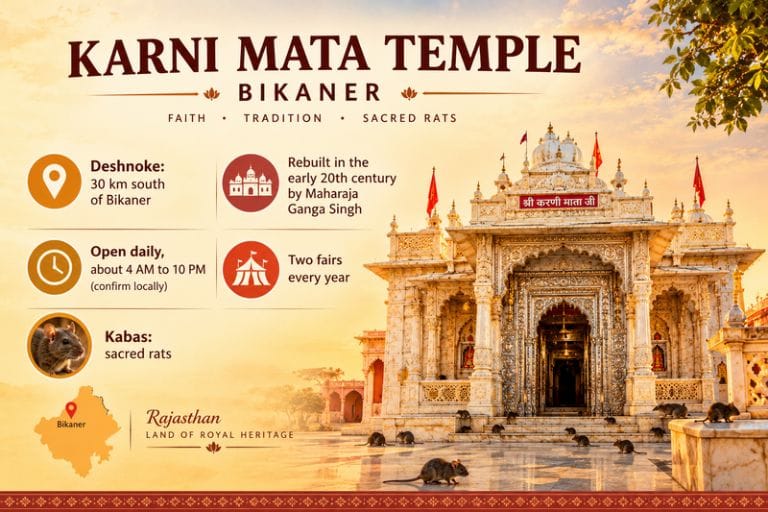
The Karni Mata Temple, also called Madh Deshnoke, is in the town of Deshnoke, about 30 km south of Bikaner in Rajasthan, and is dedicated to Karni Mata. Devotees regard Karni Mata as a form of Shakti. The temple sits on the highway from Bikaner, so most visitors reach it as a half-day trip from the city.

Karni Mata Temple History

Karni Mata Temple history blends tradition and documented renovation. The temple was originally set up around 1530, after the passing of Karni Mata. Later rulers of Bikaner added to it over the centuries. Maharaja Ganga Singh of Bikaner rebuilt the temple in the early 20th century into the form that stands today. Some sources describe the temple as dating to the 15th century, so dates vary, and a local guide is the best way to confirm the version the temple follows.

Karni Mata Temple Bikaner

The Legend of the Sacred Rats

The rats, called kabas, are central to the temple’s identity. According to the legend, a stepson of Karni Mata drowned, and Yama promised that members of her family would be reborn as rats and return to live safely at the temple. Devotees believe the white rats are manifestations of Karni Mata herself and her four sons. Estimates of how many rats live here vary from source to source, generally ranging from around 20,000 to 25,000.

This is a devotional tradition rather than a documented historical event, and visitors approach it with respect.

Karni Mata Temple Timings

Karni Mata Temple timings are usually listed as open every day, from about 4 AM to 10 PM, with changes possible on special days. Another source also advises that timings vary by season and special occasions, so travelers should confirm locally before travelling. Early morning is the quietest time, and aarti schedules can change during fairs.

Karni Mata Fair and Best Time to Visit

The temple holds fairs twice a year, when it receives its largest crowds. These fairs are linked to Navratri in tradition. If you prefer a calmer visit, October to March is more comfortable than the Rajasthan summer, and weekdays are quieter than weekends.

Visitors are asked to enter barefoot and treat the rats with respect and care. Expect crowds, damp floors, and rats moving around your feet, so shuffle your steps and wear socks if the temple allows them. Food nibbled by the rats is treated as prasad by devotees, but visitors should follow the temple’s own guidance on what to eat or avoid.

How to Reach Deshnoke

By Train

Deshnok railway station is a short walk from the temple and is served by trains from Bikaner Junction.

By Road

Regular buses and taxis run from Bikaner City to Deshnoke, taking roughly 45 minutes to an hour.

By Air

Bikaner’s airport is the nearest, and one source lists it at about 42 km from the temple. Please check current flights and distances before booking.

Extending Your Pilgrimage

If this visit has you thinking about a longer spiritual trip, Explore Hills’ Uttarakhand Yatra packages cover several sacred stops in the Himalayas, and the Do Dham Yatra offers a shorter option for travelers who want to visit two of Uttarakhand’s main shrines.

For official information on the temple, you can refer to the Rajasthan Tourism page on Karni Mata Temple, the state government’s official tourism portal.

What to Keep in Mind Before Visiting

  • Remove footwear before entering and follow the temple’s rules on socks
  • Walk slowly, and treat the rats with respect
  • Avoid peak fair days if you prefer a calmer visit
  • Carry only essentials and keep your valuables secure in the crowd

Conclusion

The Karni Mata Temple Bikaner is unusual, but its devotion is real. Between the legend of the kabas, the rebuilding by Maharaja Ganga Singh, and a steady stream of pilgrims, it gives visitors a close look at a living tradition in Rajasthan. Check the current timings, dress comfortably, and go with an open mind.

Frequently Asked Questions

Where is the Karni Mata Temple in Bikaner located?

It is in Deshnoke, about 30 km south of Bikaner in Rajasthan.

What are the Karni Mata Temple timings?

Listings commonly give about 4 AM to 10 PM, but timings can change on special days, so please confirm locally.

What is Karni Mata Temple history in brief?

The temple was originally set up around 1530, and Maharaja Ganga Singh rebuilt it in the early 20th century.

Why are there rats in the Karni Mata Temple?

According to tradition, family members of Karni Mata are reborn as rats and live safely at the temple.

How do I reach Karni Mata Temple Bikaner by train?

Deshnok railway station is a short walk from the temple, with trains from Bikaner Junction.

When is the best time to visit Karni Mata Temple?

October to March is comfortable, while the fairs held twice a year bring the largest crowds.

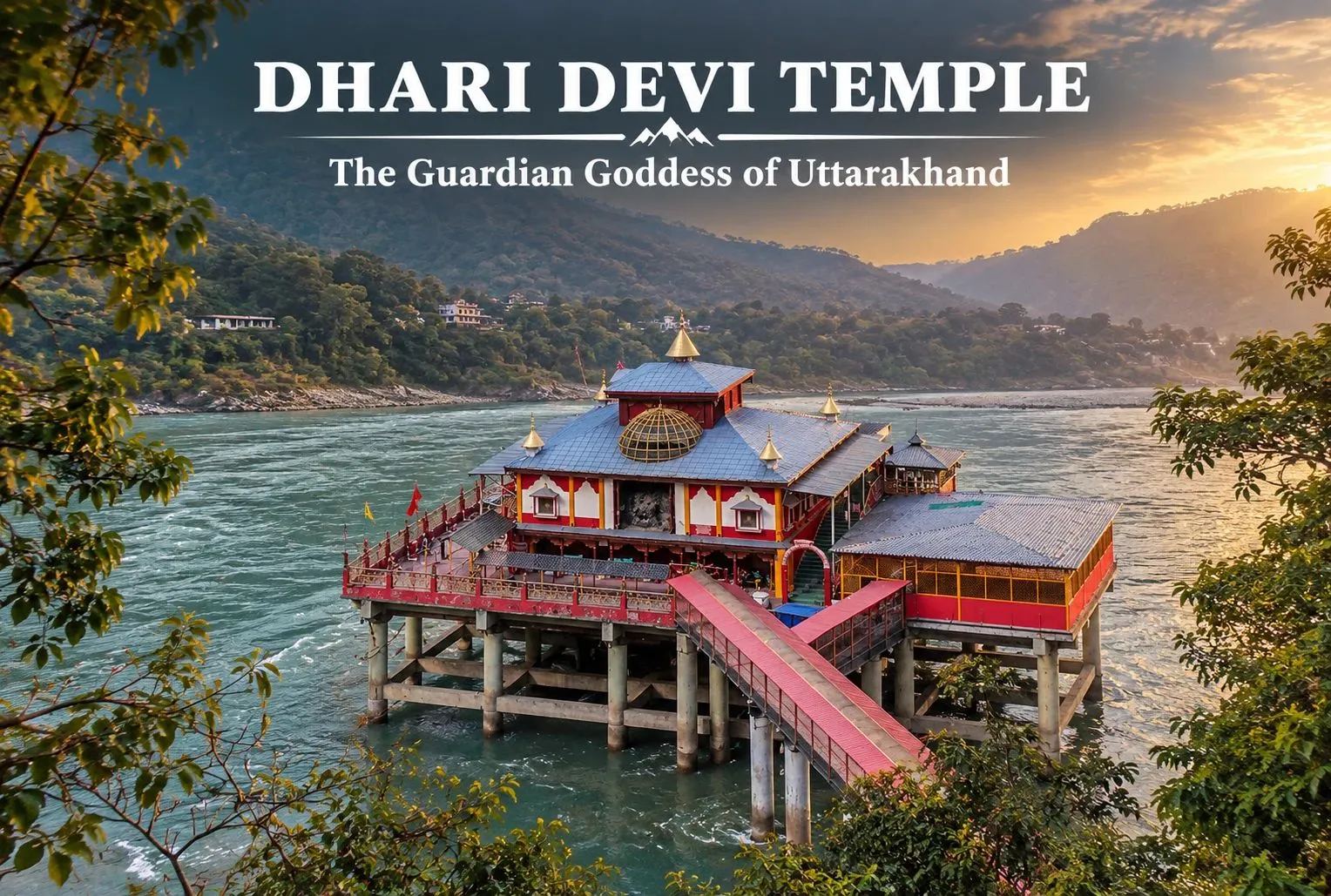
An Insider of The Dhari Devi Temple

Dhari Devi Temple

Dhari Devi Temple is a sacred Hindu shrine to the goddess Dhari, a form of Kali, located on the banks of the Alaknanda River at Kalyasaur near Srinagar in Pauri Garhwal district, Uttarakhand. The temple, located at the riverside, is traditionally revered as one of the 108 Shakti Pithas and guardian of Uttarakhand’s Char Dham. It holds the upper half of the idol of the goddess Dhari, while the lower half of the idol is located in Kalimath. Devotees walk through a short paved path which leads to the shrine and an ancient cave lies nearby, many visitors arrive during Navaratri.

According to local legend, the goddess’s idol was discovered near the river and became an important place of worship. The temple also attracted attention when the idol was relocated in 2013 due to a hydroelectric project.

Another interesting belief related to the temple is that the goddess’s facial appearance changes throughout the day, from that of a young girl to a woman and then an elderly woman. All these traditions and beliefs make Dhari Devi Mandir an important pilgrimage site for devotees and visitors.

Dhari Devi Temple History

There is no clear evidence of the origin and construction of the first temple of Dhari Devi. However, the construction of this temple is deeply rooted with a mythological story. As per the folklore, Maa Dhari Devi was the youngest sister among seven brothers. After the death of their parents, her brothers took good care of her and she also loved them a lot. After some time, an astrologer visited her home and told her brothers that her presence will bring misfortune to their house.

After a series of misfortunes in their house, the brothers decided to kill her. They slaughtered her in two parts and threw her in the river. It is believed that the upper half drifted and reached Kalyasaur village, where this temple is now located and spotted by a washerman. He got the instruction to put the upper half on a rock, where the temple was later on created, while the lower half floated toward the place where the modern Kalimath temple is located.

Dhari Devi Temple - The Guardian Goddess Of Uttarakhand

Best Time to Visit Dhari Devi Temple

Maa Dhari Devi Temple of Srinagar, remains open to visitors for most of the day. Devotees can visit the temple from 6:00 AM everyday till the closure of the temple at 7:00 PM with a short break of 2 hours from 12:00 to 2:00 PM. One can visit the temple throughout the year, however, the best time to visit the Maa Dhari temple is March to June (spring and summer) and September to November (autumn). The months outside the main monsoon period are often more comfortable for travelling through the Garhwal region.

For official travel and accommodation information across Garhwal, you can refer to Garhwal Mandal Vikas Nigam, the Uttarakhand government tourism undertaking.

Religious Significance of Maa Dhari Devi

Maa Dhari Devi holds an important position in the cultural and religious traditions of Uttarakhand. Devotees worship Maa as a form of Goddess Kali and believe that she protects the region from negative forces and difficulties. She is also regarded by many local people as a guardian deity of the Garhwal region. The temple becomes especially important during Navratri and other religious festivals. During these times devotees worship the goddess with great devotion. During these occasions, the atmosphere becomes more spiritual as people in huge numbers gather to offer prayers and participate in religious activities.

The Mystery Behind Dhari Devi Face Changes

Local folklore suggests that an individual perceives Dhari Devi’s idol in three appearances: that of a pure child (innocence), a dignified adult (maturity), and a sagacious elder (wisdom). Certain individuals suggest that the alteration in appearance relates to the time of day, the sun’s position, and so on.

Additionally, there is an ‘angry face’ that some people report having observed. The ‘angry expression’ signifies that a significant catastrophe is imminent. It likely relates to the intention behind a believer’s approach to Dhari Devi, whether it’s to seek forgiveness for sins, express gratitude for a particular blessing, or simply wish for overall well-being! Additionally, the Devi is believed to have originated from Goddess Kali, the fierce and wrathful embodiment of Ma Shakti.

Travelers who want to pair this stop with a longer Garhwal circuit can explore Explore Hills’ Kedarnath Tungnath Tour.

Famous Places Near Maa Dhari Temple

1. Kedarnath

  • About 110- 110 kms from the Dhari Temple, Kedarnath is located in Rudraprayag district in the midst of Uttarakhand.
  • One of the twelve Jyotirlingas of Lord Shiva.
  • One of the the four Char Dham Shrines.

2. Gaurikund

  • Located in Rudraprayag district of Uttarakhand. Gaurikund is about 90–95 km from Dhari Devi Temple depending on the route.
  • It is famous for being the traditional starting point of the Kedarnath trek.

3. Guptkashi

  • Located in Rudraprayag district of Uttarakhand. Guptakashi is about 60–65 km from Dhari Devi Temple by road.
  • Guptkashi is an important pilgrimage stop on the route to Kedarnath.

4. Tungnath Temple

  • Located near the Chopta village in the midst of the Garhwal Himalayas. Tungnath Temple resides around 40-50 kms from the Dhari Devi Temple.
  • It is the highest Shiva Temple in the world.

Trekkers who want to continue from Tungnath to the summit can look at Explore Hills’ Chopta Tungnath Chandrashila Trek.

Frequently Asked Questions

Where is Dhari Devi Temple located?

Dhari Devi temple resides on the banks of the Alaknanda River in Kalyasaur near Srinagar in Pauri Garhwal district, Uttarakhand.

What is the best time to visit Dhari Devi Temple?

Summer and autumn are considered the best seasons to visit the temple in the year between the months March to June and September to November.

What is the belief about Dhari Devi’s changing face?

According to the local belief, the idol of Dhari Devi changes its facial form three times a day and appears as a young girl in the morning, a radiant young woman at midday, and an elderly woman by the evening.

Was the idol of Dhari Devi relocated?

Yes, the idol was relocated in 2013 due to a hydroelectric project on the Alaknanda River. The relocation became a widely discussed event because of the temple’s religious importance and local beliefs surrounding the goddess.

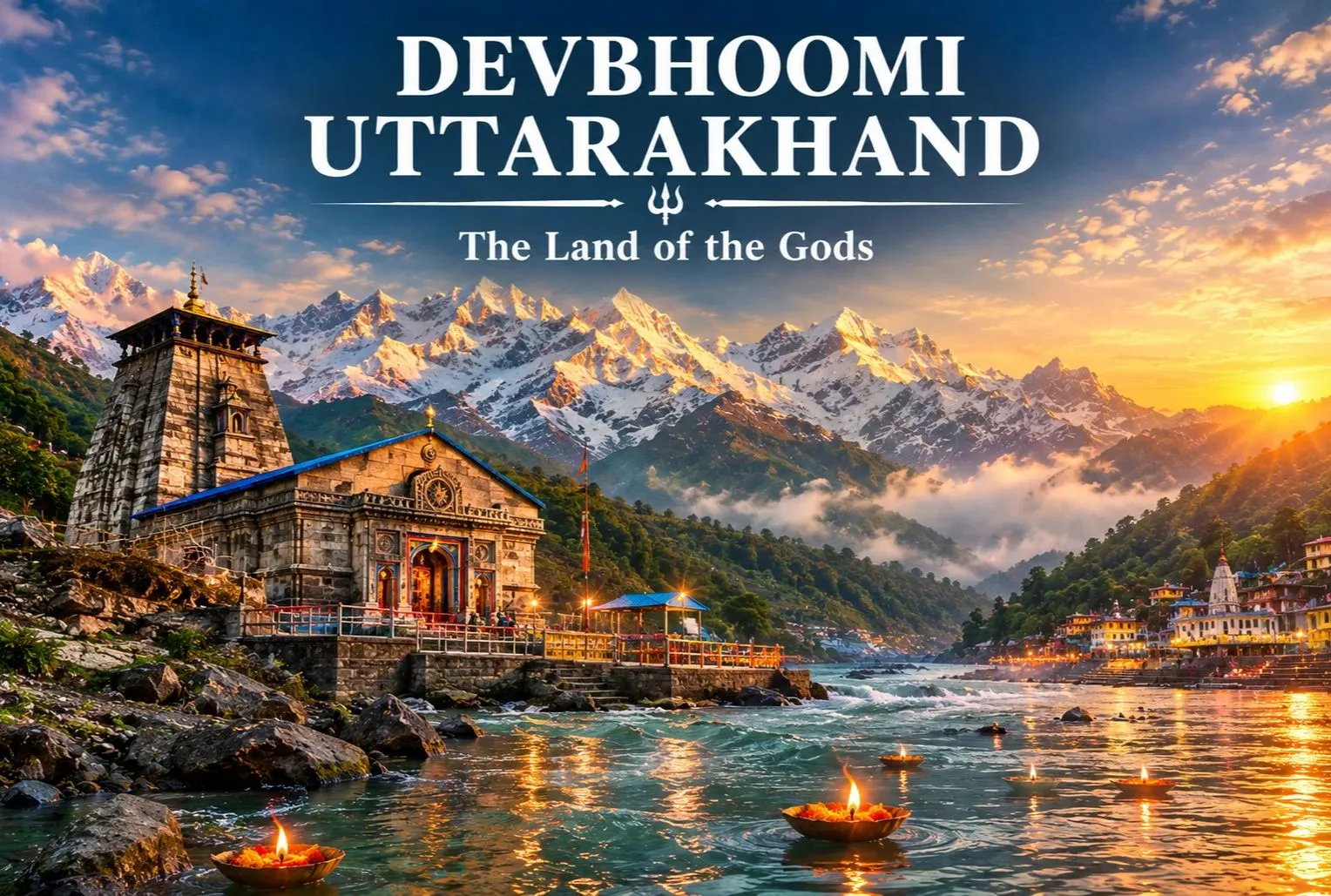
Why Uttarakhand Is Called Devbhoomi

Devbhoomi Uttarakhand

Uttarakhand is one of the most beautiful states in North India, known for its green valleys, holy temples, and riverine landscapes. Often called Devbhoomi, which means “Land of Gods,” this state holds a special place in Indian culture and spirituality. It attracts devotees, travelers, nature lovers, and Thrill-seekers who want to behold the majesty of the Himalayas. From the peaceful hill stations of Mussoorie and Nainital sites to the famous Char Dham pilgrimage, the area provides something for every visitor. Whether you want to enjoy mountain views, explore different temples, or learn more about local culture, Uttarakhand is a great place to start your journey.

What Does Devbhoomi Mean?

The word “Devbhoomi” is made up of two words. “Dev” means god, and “Bhoomi” means land, so it simply means “land of the gods.”

In ancient texts, this area was known as Manaskhand (Kumaon) and Manaskhand (Garhwal). The state is quite young. It was separated from Uttar Pradesh on 9 November 2000 and became India’s 27th state, with its capital as Dehradun.

In Hindu tradition, the Himalayas are linked with gods with sages who came here to meditate, many people believe that:

  • Lord Shiva lives in the Himalayas.
  • The origin of holy rivers like the Ganga.
  • Countless sages found peace in these mountains.
  • The location of Hinduism’s most important pilgrimage sites.

Because of all this, the state is called Devbhoomi. Many famous religious towns are loud and crowded. Here, the feeling is quieter and closer to nature.

Uttarakhand Devbhoomi

The Char Dham Yatra Begins in Uttarakhand

If anyone asks why Uttarakhand is called Devbhoomi, the first answer is Char Dham Yatra. This ancient pilgrimage includes four holy shrines high in the Himalayas:

  • River Ganga linked with, Gangotri.
  • The source of the river Yamuna, Yamunotri.
  • Badrinath, dedicated to Lord Vishnu.
  • Kedarnath, dedicated to Lord Shiva.

The journey is not that much easy. Roads are steep, the weather can change quickly, and some areas need a long walk. Yet, thousands of devotees make the trip every year.

For many of them, the grind is part of the draw. Long drive through the peak, the sound of temples and flowing rivers carry you away from the rush of city life.

Travelers who want to cover two of these shrines in a guided trip can look at Explore Hills’ Kedarnath Tungnath Badrinath Yatra.

The Holy Pull of the Rivers

The Rivers are at the heart of life here. At Yamunotri the yamuna start, and the Ganga begins as the Bhagirathi near the Gangotri glacier. For many devotees, these are not just water sorces.

Rishikesh and Haridwar are known for much and more for tourism. They are the center of tradition, meditation and yoga. The evening Ganga aarti at Triveni Ghat in rishikesh and Har ki Pauri in Haridwar is one of the most moving sights in the state. Lamps float down the river while slogans fill the air. Even those who visit for the first time frequently experience it as both spiritual and tranquil.

Trekkers who want to walk to the glacier source itself can explore Explore Hills’ Gaumukh Tapovan Trek.

Spiritual learning of Yoga and Mindfulness

In recent years, Uttarakhand has become popular with tourists from around the world who want to learn meditation and yoga, Rishikesh is the best place for all those people. In Rishikesh Visitors usually come for:

  • Meditation centres.
  • Himalayan wellness and healing.
  • Spiritual classes and ashram stays.
  • Yoga retreats.

There is a reason this works so well. When you are surrounded by fresh air and quiet peaks, your mind quiets down naturally. There are no distractions, so you notice your own thoughts more clearly. Certain individuals come seeking adventure but find themselves sitting next to a river for hours in the end without looking at the clock.

How Faith Shapes Daily Life

In Uttarakhand, faith is not just that we find inside temples. It’s woven into daily life. Across countless villages, locals still worship community gods, celebrate changing seasons, and gather at lively temple fairs that bring everyone closer.

You can notice it in small moments:

  • Morning worship at a village temple.
  • Devotional music playing softly from a small temple.
  • People folding their hands before starting a journey.

In large cities, traditions may turn into swift actions. In the hills, they remain within ordinary routines. That is why many travellers remember minor details, such as a bell heard from far away, a conversation with a vendor, or a tea stop on a winding road.

Reasons Why Travelers Experience a Strong Connection Here

Ask visitors of Uttarakhand, what stays in their mind, and many will tell it is a feeling that is hard to explain. Some will say, it is the habitat, tranquil mountains, temple sounds and a more relaxed lifestyle. But it is not only the temples or the myths. It is the whole mood of the location.

Best Time to Visit Uttarakhand for Spiritual Journeys

Uttarakhand is lovely year-round, but the most enjoyable months for a spiritual journey are between March to June and September to November. In these months:

  • The weather is pleasant.
  • Temple paths are easier to walk.
  • Mountain roads are more secure.
  • Visiting attractions is more laid-back.

Remember that the Char Dham temples are open only for a certain part of the year, usually from spring to autumn, and dates change every year.

For official yatra registration and tourist information before you plan, you can refer to the Uttarakhand Tourism Registration and Tourist Care portal, the state government’s official platform.

Conclusion

Uttarakhand is called Devbhoomi for multiple reasons: old shrines, holy rivers, mountains, and a calm that is difficult to find in other places. Mythology and devotion play a role, but so is the simple feeling of being somewhere peaceful. Many people go home taking that peace with them. No matter if you visit for a trip, for meditation, or just to enjoy the Himalayas, Devbhoomi Uttarakhand has a way of making you feel connected.

Frequently Asked Questions

Why is Uttarakhand named Devbhoomi?

Uttarakhand is named Devbhoomi, or “land of the gods,” because it has Char Dham shrines, the origin of the Yamuna and Ganga, ancient temples and many old stories.

What is the meaning of Devbhoomi?

“Dev” means god, and “Bhoomi” means land. Together, it means “land of the gods.”

Which locations make up the Char Dham in Uttarakhand?

The Char Dham is the primary nationwide circuit of India. The Char Dham locations in Uttarakhand consist of Gangotri, Yamunotri, Badrinath, and Kedarnath.

When is the good time to explore religious places in Uttarakhand?

From March to June and September to November are the most comfortable months. Because in these months the weather is pleasant and the roads and trails are easier.

Is Rishikesh a good location to learn yoga?

Yes. Rishikesh is famous all over the world for its yoga, meditation and ashrams, attracting many visitors who want to learn and relax.


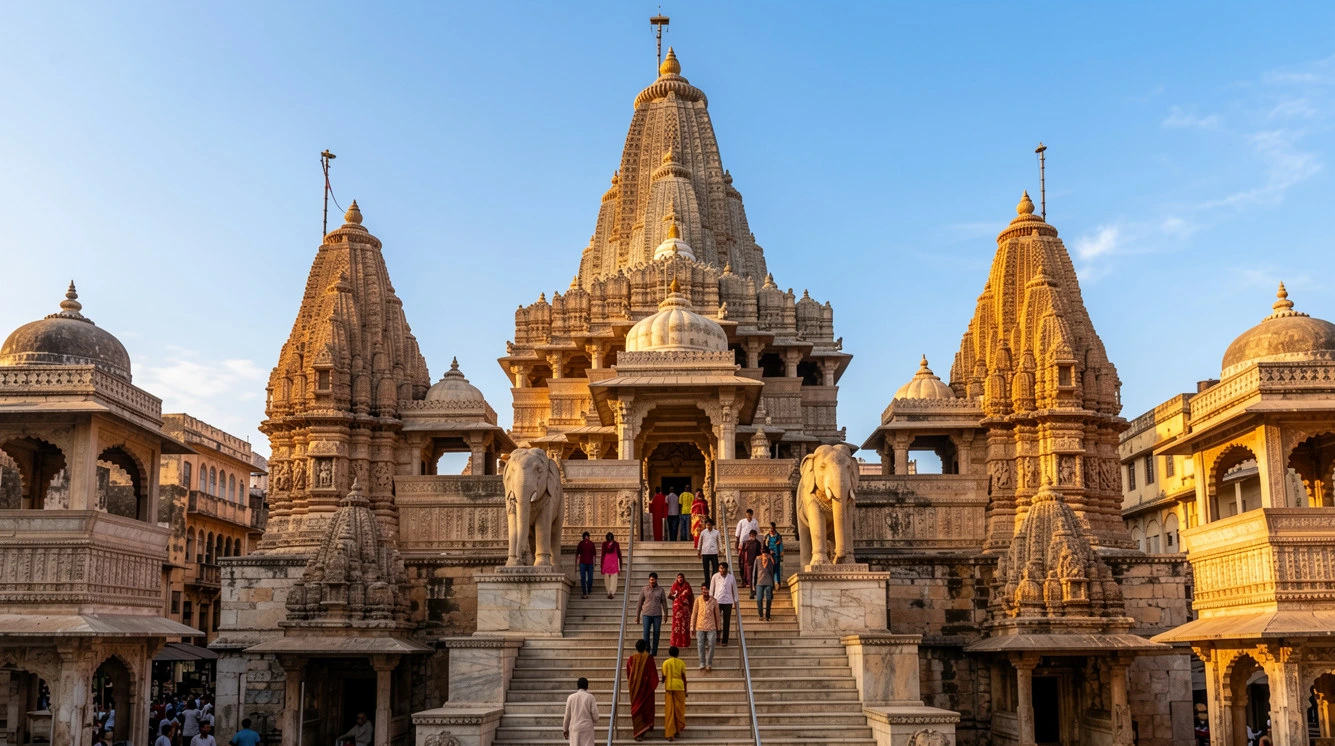
Jagdish Temple: Udaipur’s Black-Stone Jagannath and the 32 Marble Steps

Jagdish Temple

Walk up from the lanes of Udaipur’s old city, past stalls of silver jewellery and miniature paintings, and the street suddenly lifts into a flight of white marble steps guarded by two stone elephants. At the top stands a spire so densely carved that it looks less like a building and more like a sculpture. This is Jagdish Temple, a seventeenth-century shrine that has been in continuous worship since the day it opened, and one of the most photographed religious sites in Rajasthan.

Most visitors treat Jagdish Temple as a quick stop between the City Palace and Lake Pichola. That is a shame, because the temple carries a story of royal devotion, a dream, a Mughal-era battle and a distinctive building style. This guide covers where it stands, who built it, what to look for on the carvings, and how to plan around the daily schedule.

Where Jagdish Temple Stands

Jagdish Temple sits in the heart of Udaipur’s old city, just outside the royal palace complex and a short walk from the City Palace. That position is deliberate. Jagdish Temple was built by the Mewar rulers as a royal place of worship, close enough to the palace to be reached on foot during festivals, yet open to the public from the start. Lake Pichola lies a few minutes away in one direction, and the busy bazaar streets run in the other, which makes the temple easy to combine with a day of old-city sightseeing.

The nearest airport is Maharana Pratap Airport, about 22 kilometres from the city, and Udaipur City railway station is the closest rail link. From either, an auto-rickshaw or taxi can drop you near the bottom of the steps, since the lanes around the temple are narrow and best covered on foot.

Jagdish Temple Udaipur History: A Dream and a King

The tradition most often repeated about Jagdish Temple Udaipur history begins with a dream. According to one account, Maharana Jagat Singh I was directed in a dream to build a shrine to Lord Vishnu at this exact spot, and he began work soon after. Jagat Singh ruled Mewar in the mid-seventeenth century, a period of relative stability, and his reign left Udaipur with several lasting buildings.

Jagdish Temple was completed in 1651, though a board at the site gives 1652, which is a small difference you will see mentioned in different sources. The cost is recorded as roughly 1.5 million rupees, an enormous sum for the time. Originally called the temple of Jagannath Rai, it is now known by the shorter name Jagdish-ji, a form of Jagadish, meaning “Lord of the Universe.”

Its worship has continued without a break since. Few temples of this age in Rajasthan can say as much, because many were damaged, closed or rebuilt during the turbulent decades that followed.

The Defence of 1680

The site also has a battle story. A painting and a board inside the complex describe how the temple was defended during a Mughal advance on Mewar around 1680. The account credits Naruji Barhat, a Charan warrior, and twenty companions with holding the temple against the attackers, at the cost of their lives. Historians differ on the details, and the board represents local memory rather than a detailed chronicle, but the event is part of how the temple is remembered in Udaipur. Visitors can still see the painting that commemorates it.

A Temple Built in the Māru-Gurjara Style

Architecture is where Jagdish Temple really stands apart. It follows the Māru-Gurjara tradition, also described as Indo-Aryan, a style found in the Maru and Gujarat regions and known for tall towers, elaborate pillared halls and layered sculpture.

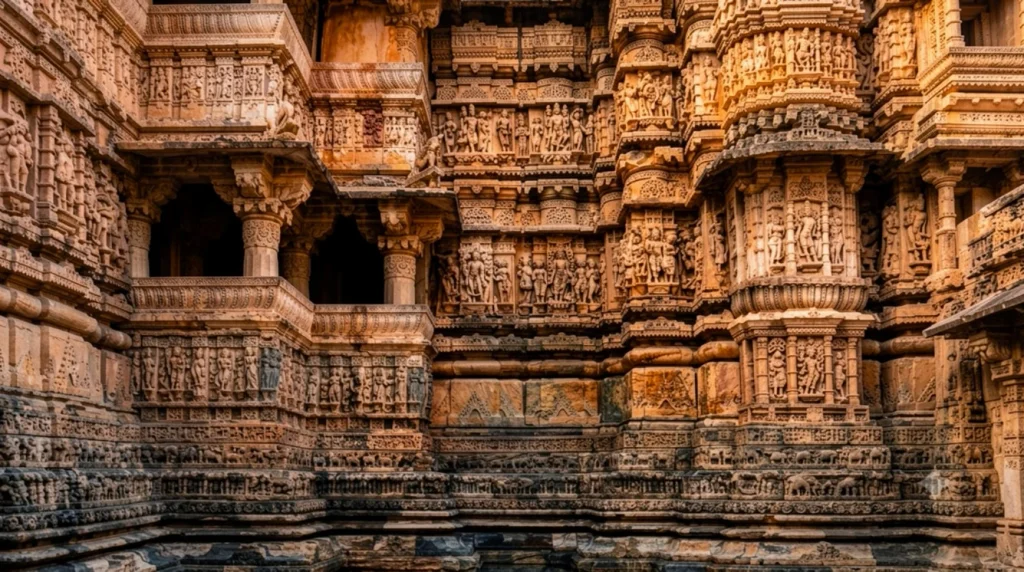
The temple rises on a high terrace, with a double-storey hall in front of a sanctum topped by a spire about 79 feet high. It is crowned by a tower that, from below, looks like several storeys, though a few of those levels are purely decorative. Every wall is covered with hand-carved figures: elephants in procession, dancers, musicians and divine figures, including an instrument that resembles a rudra veena. Once you start looking, the carving keeps revealing new detail, so give yourself time at the foot of the steps before climbing. The overall effect, designed to be read from below as you climb, is of a sacred mountain rising out of the street.

Climbing the 32 Steps

The approach itself is part of the experience. Thirty-two marble steps lead up to the main entrance, flanked by two large stone elephants, and at the top, facing the sanctum, stands a brass image of Garuda, the eagle-mount of Vishnu. Garuda always faces the god he serves, which is why he is positioned here, gazing at the main idol in the inner chamber.

Many travellers sit on the steps of Jagdish Temple in the evening, because the view over the old city rooftops and the sound of temple bells gives the place a quiet atmosphere compared with the busy street below.

Inside: The Black-Stone Jagannath

Inside the sanctum stands the central idol, a four-armed figure carved from a single piece of black stone. It is a form of Vishnu worshipped here as Jagannath, though local tradition also links it to Krishna. The dark stone and the jewelled decoration used on festival days give the image a striking presence, especially under the glow of oil lamps.

Four smaller shrines stand around the main one, dedicated to Ganesha, Surya, Shakti and Shiva, following the pancha-ayatana pattern in which several deities are honoured around a principal one. Those shrines are quieter than the main sanctum and worth a short stop. At Jagdish Temple, as in most Vaishnava temples, the day is organised around a cycle of rituals and aarti, which visitors can watch from the hall in front of the sanctum.

If this style of worship interests you, our Jagannath Temple guide covers the great Puri temple that gives this form of Vishnu its name.

Festivals at the Temple

Jagdish Temple’s busiest period comes during major festivals. The annual Rath Yatra is its most notable event, when the deity is taken out in procession through the old city. Janmashtami, Diwali and Holi also bring special prayers, music and decoration, and crowds grow considerably on those days. Visiting during a festival is rewarding but busy, so come early and expect a longer wait.

Jagdish Temple Timings and Visiting Tips

According to the Government of India’s tourism portal, the Jagdish Temple timings are 4:30 AM to 1:00 PM and 5:00 PM to 8:00 PM, with a midday closure. Other travel listings give slightly different hours, so it is sensible to confirm at the gate, especially during festivals, when schedules often change.

A few practical points:

  • Entry is generally free, though it is customary to leave a small offering.
  • Dress modestly and remove footwear before climbing the steps, since you will walk barefoot on marble that gets hot by midday in summer.
  • Photography inside the sanctum is usually restricted, and professional equipment is generally not allowed. Ask before you shoot.
  • Early morning and evening are the best times, with softer light and fewer tour groups.
  • October to March is the most comfortable season, while April to June can be very hot.

What to See Nearby

Few places are as well placed as Jagdish Temple Udaipur for a full day of sightseeing. The City Palace is next door, Bagore Ki Haveli is a short walk away and hosts evening cultural shows, and Lake Pichola offers boat rides with views of the Lake Palace. Saheliyon Ki Bari, a garden built for the royal ladies, is a little further out. If your trip continues across Rajasthan, our Chittorgarh Fort guide covers the great Mewar fortress that preceded Udaipur as the kingdom’s capital.

For verified visitor details, see the Incredible India page on Jagdish Temple, the Government of India’s official tourism portal.

Frequently Asked Question’s

  1. Who built Jagdish Temple?

    Maharana Jagat Singh I of Mewar built it, completing the temple in 1651, though a board at the site gives 1652.

  2. Where is Jagdish Temple located?

    It stands in the old city of Udaipur, Rajasthan, just outside the City Palace complex and a few minutes’ walk from Lake Pichola.

  3. Which deity is worshipped at Jagdish Temple?

    The main idol is Jagannath, a four-armed form of Vishnu carved from a single piece of black stone.

  4. How many steps lead up to Jagdish Temple?

    There are 32 marble steps, flanked by two stone elephants, leading to the entrance and the brass Garuda image.

  5. What are the Jagdish Temple timings?

    Official tourism listings give 4:30 AM to 1:00 PM and 5:00 PM to 8:00 PM, though it is wise to confirm locally during festivals.

  6. What architectural style is Jagdish Temple?

    It is built in the Māru-Gurjara, or Indo-Aryan, style, with a tall carved spire, pillared halls and richly sculpted walls.

What makes Jagdish Temple memorable is not one detail but the layering: a king’s dream, a black-stone god, a wall of carved elephants and a daily rhythm of bells that has barely changed in centuries. Give it an hour at either end of the day and you will see why Udaipur’s residents still treat it as the heart of the old city.

Thiruchendur Murugan Temple: The Seashore Abode of Lord Murugan

Thiruchendur Murugan Temple

Most of Lord Murugan’s famous abodes stand on hilltops. The Thiruchendur Murugan Temple stands where land meets the Bay of Bengal’s waves, and that coastal setting is a large part of what makes it unusual.

What Is the Thiruchendur Murugan Temple?

The temple is also called the Arulmigu Subramaniya Swamy Temple. It is in Thiruchendur, in Thoothukudi district, Tamil Nadu, and is maintained by the Hindu Religious and Charitable Endowments Department of the Government of Tamil Nadu. It belongs to the Six Abodes of Murugan (Arupadai Veedu), a set of foremost sacred temples dedicated to Murugan. Unlike the others, Tiruchendur is the only one of the six on the seashore, while the rest stand on hilltops.

Thiruchendur Murugan Temple - Key Facts & Highlights

Thiruchendur Murugan Temple History and Legend

Thiruchendur Murugan temple history is told mainly through mythology. The story holds that Murugan killed Tarakasura and Simhamukha and then faced Surapadma in the final battle at Tiruchendur. Devotees see the temple as the place where that victory restored order, and the coastal setting is often read as a symbol of Murugan’s battle against evil.

The exact age of the present structure and the sequence of rebuilding are harder to pin down than the legend. If you want specifics, the temple office or a local scholar is a better source than general guides. One recent milestone is well reported: the temple’s maha kumbhabhishekam took place in July 2025, drawing lakhs of devotees. It had last been performed 16 years earlier.

Skanda Sashti and Soorasamharam

The festival that brings the largest crowds is Skanda Sashti, which marks Murugan’s victory over Surapadman. It is usually observed in October or November, and the dates shift each year with the calendar. If you want a quiet darshan, avoid this period. If you want the festival atmosphere, book accommodation well ahead.

Thiruchendur Murugan Temple Timings

Thiruchendur Murugan temple timings include early-morning poojas, daytime darshan, and evening rituals, and the exact schedule can change. Recent reports say the temple has introduced cut-off times for entering the evening darshan queues to manage heavy crowds, and these may be revised on festival days and special occasions. Because of that, please check the temple’s official announcements or the HR&CE portal before you travel, especially if you plan to arrive in the evening.

Some practical points about a typical visit:

  • Arrive early in the day for shorter queues and cooler weather
  • Weekends, school holidays, and festival days draw far larger crowds
  • Special darshan and pooja tickets are usually handled through the HR&CE system, so check the official site for current options

Best Time to Visit

October to March is generally the most comfortable window for the Tamil Nadu coast, with milder temperatures. Summers are hot and humid, and the northeast monsoon can bring heavy rain in the late-year months. Many pilgrims choose their dates around Skanda Sashti or the Tamil month festivals.

How to Reach the Thiruchendur Murugan Temple

By Train

Tiruchendur railway station is about 1 km from the temple, and Tuticorin (Thoothukudi) station is about 40 km away. oneindia

By Air

The nearest airports are generally Thoothukudi and Madurai, with onward travel by road. Flight schedules change, so check current connections and distances on a live map.

By Road

Tiruchendur is connected by road to major towns in southern Tamil Nadu, and buses and taxis run regularly from nearby cities.

Extending Your Pilgrimage

If you are planning a longer spiritual trip beyond Tamil Nadu, Explore Hills’ Yatra Packages collection brings several pilgrimage routes together, and the Kedarnath Tungnath Badrinath Yatra covers a wider Himalayan circuit for travelers who want to add a mountain pilgrimage.

For official information on temple services, bookings, and announcements, you can refer to the Tamil Nadu Hindu Religious and Charitable Endowments Department, the state government body that administers the temple.

What to Keep in Mind Before Visiting

  • Follow the temple’s dress code, which is usually traditional and modest
  • Keep an eye on official announcements for special-day schedules
  • Be careful near the sea if you plan to bathe, and follow local instructions
  • Carry cash and keep valuables secure in the crowds

Conclusion

The Thiruchendur Murugan Temple combines a powerful legend with a rare coastal setting. Check the latest darshan timings, plan around Skanda Sashti if crowds worry you, and give yourself enough time for a calm visit.

Frequently Asked Questions

Where is the Thiruchendur Murugan Temple located?

It is in Thiruchendur, Thoothukudi district, Tamil Nadu.

What are the Thiruchendur Murugan temple timings?

Timings include morning and evening poojas, but they can change on festival days, and the temple has introduced evening queue cut-offs. Please check the official announcements before you go.

What is Thiruchendur Murugan temple history in brief?

It is linked to the legend of Murugan’s final battle with Surapadma, and it is one of the six sacred abodes of Murugan. Murugan faced Surapadma in the final battle at Tiruchendur.

Why is the Thiruchendur Murugan Temple special?

It is the only one of the six Arupadai Veedu temples on the seashore.

What is the nearest railway station to the temple?

Tiruchendur railway station is about 1 km away.

When is the best time to visit the Thiruchendur Murugan Temple?

October to March is comfortable for most visitors, while Skanda Sashti brings the biggest crowds.

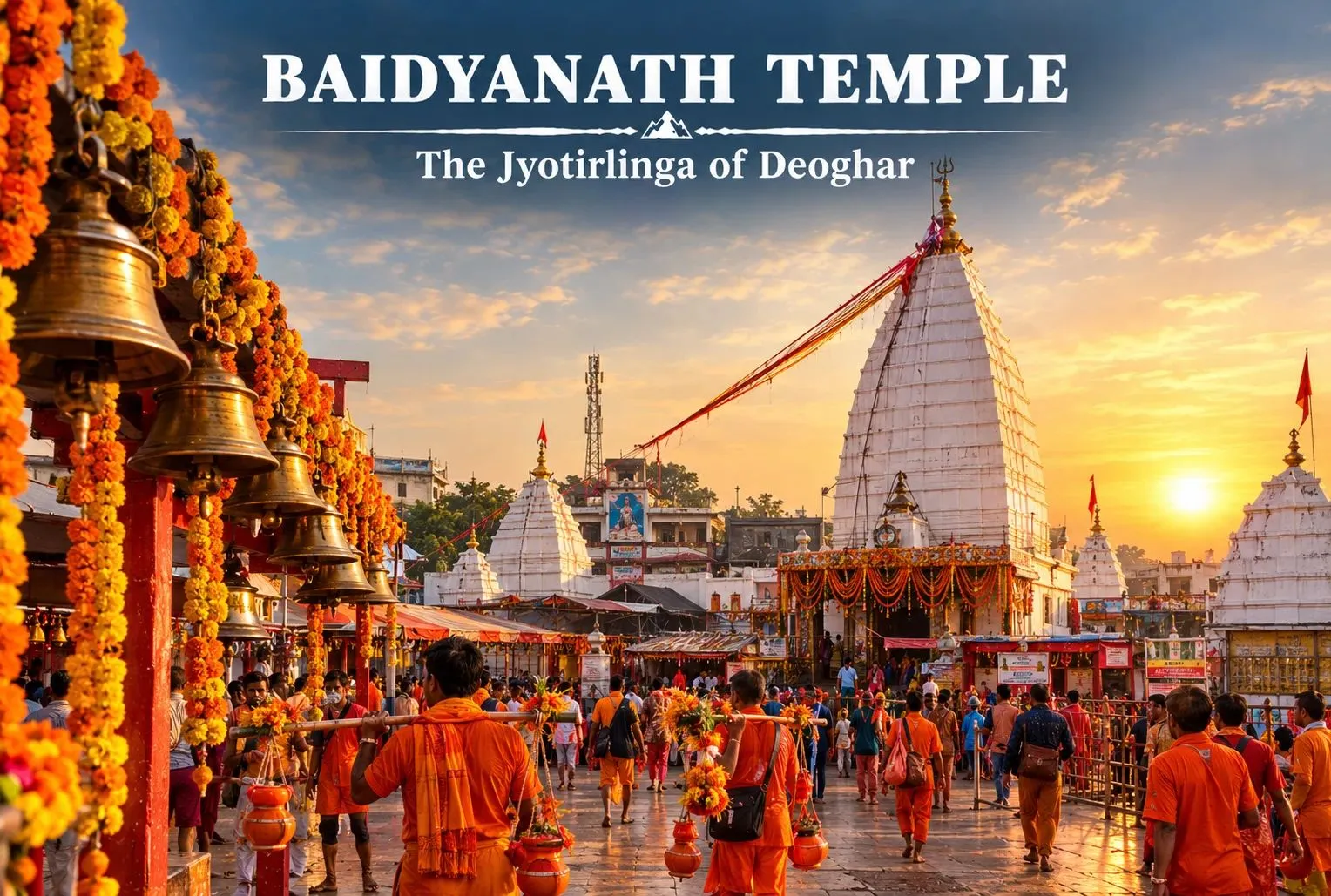
Baidyanath Temple: The Jyotirlinga at the Heart of Deoghar

Baidyanath Temple

Every monsoon, a river of saffron-clad pilgrims walks across eastern India with water carried from the Ganga. Their destination is the Baidyanath Temple in Deoghar, Jharkhand, one of the most visited Shiva shrines in the country and a stop on many Jyotirlinga circuits.

What Is the Baidyanath Jyotirlinga Temple?

The Baidyanath Jyotirlinga temple, also called Baidyanath Dham or Baba Dham, is part of a complex of 22 temples in Deoghar, and the main Baidyanath shrine is the tallest of them at 72 feet, housing one of the twelve revered Jyotirlingas. Deoghar sits roughly 243 km from the state capital Ranchi. Devotees also know the shrine as Kamana Linga, the one believed to grant wishes.

Baidyanath Temple History and the Ravana Legend

Baidyanath temple history is anchored in tradition more than in a single dated record. The best-known account says Ravana was carrying Shiva toward Sri Lanka on the condition that he would not stop, but he halted here, and the Lord remained rooted at this spot. That legend is the usual explanation for the shrine’s origin and its name. Exact construction dates and the sequence of later rebuilding are less firmly documented, so a temple guide or the local trust is the best source for specifics.

Baidyanath Temple - Shravan Pilgrimage

A Note on Other Vaidyanath Claims

The Vaidyanath Jyotirlinga name is claimed by more than one temple. Tradition-based accounts also point to Parli Vaijnath in Maharashtra and, in some versions, a temple in Himachal Pradesh. Devotees sincerely follow each tradition, and this guide covers the Deoghar shrine, which Jharkhand’s tourism authority presents as the Jyotirlinga site.

What to See at Baidyanath Dham

  • The main shrine: The central Jyotirlinga, where jal abhishek is offered.
  • The wider complex: Smaller temples dedicated to other deities, within the same walled area.
  • Naulakha Mandir: A well-known temple nearby, often visited on the same day.
  • Basukinath: The pilgrimage is considered complete with a visit to Basukinath, almost 43 km from Deoghar.

Shravani Mela and the Kanwar Yatra

The busiest season is Shravan. Countless devotees walk about 100 km from Ajgaibinath (Sultanganj) to offer holy water to Baba Baidyanath. The mela runs from July to August and draws millions of devotees. If you want a calmer darshan, plan outside this period, and expect long queues and crowd controls if you travel during it.

Timings

Shiva temples usually have early-morning openings, aarti at fixed times, and a break, and the schedule changes during Shravan and festivals. Please confirm current timings with the temple management or local sources before you travel.

Best Time to Visit

October to March is the most comfortable for sightseeing in this part of Jharkhand. Summers are hot, and Shravan is spiritually special but very crowded.

How to Reach Baidyanath Temple

By Air

Deoghar has its own domestic airport, Baba Baidyanath Airport. Flight availability changes, so check current schedules.

By Train

Baidyanathdham railway station is about 1.5 km from the temple area, and Jasidih Junction is about 7.7 km away.

By Road

The nearest bus stand in Deoghar is about 2 km from the temple. Regular buses and taxis connect Deoghar with nearby cities in Jharkhand, Bihar, and West Bengal.

Extending Your Shiva Pilgrimage

If you are building a longer Shiva circuit, Explore Hills’ Kedarnath Tungnath Tour covers two of the Himalayas’ most important Shiva shrines, and the Kalpeshwar Rudranath Trek adds two more Panch Kedar shrines for trekkers.

For official visitor information on the shrine and how to reach it, you can refer to Jharkhand Tourism, the state government’s official tourism portal.

What to Keep in Mind Before Visiting

  • Dress modestly and remove footwear before entering the temple complex
  • Expect long queues in Shravan and on Mondays
  • Be cautious of touts and carry only the offerings you need
  • Carry cash, as card use can be limited near temple shops

Conclusion

The Baidyanath Temple pairs a deep legend with one of India’s most visible pilgrim traditions. Whether you come for the Jyotirlinga, the Ravana story, or the Shravan walk from Sultanganj, planning your dates and checking local details will make the visit smoother.

Frequently Asked Questions

Where is Baidyanath Temple located?

It is in Deoghar, Jharkhand, about 243 km from the state capital Ranchi.

Is Baidyanath Jyotirlinga Temple one of the twelve Jyotirlingas?

Jharkhand’s tourism authority describes it as housing one of the twelve revered Jyotirlingas. Other temples also claim the Vaidyanath name in their own traditions.

What is Baidyanath temple history in brief?

Tradition links the shrine to the Ravana legend, in which Shiva stayed rooted here after Ravana stopped on his journey. Exact construction dates are less firmly documented.

What is the best time to visit Baidyanath Temple?

October to March is comfortable for sightseeing, while Shravan, usually July to August, is the festival season with very large crowds.

What is the nearest railway station to Baidyanath Temple?

Baidyanathdham station is about 1.5 km away, and Jasidih Junction is about 7.7 km away.

Why do devotees visit Basukinath after Baidyanath Temple?

The pilgrimage is deemed complete with homage paid at Basukinath.

Deviramma Temple: Trekking in the Midst of the Clouds

Deviramma Temple

The Deviramma temple is the hill top shrine, that can be visited during the time of Diwali/ Deepawali on Naraka Chaturdasi. Naraka Chaturdasi is the first day of Diwali when devotees climb the hill to seek blessings from Goddess Deviramma. The main deity of the temple is reputed to be the manifestation of the respected Goddess, Ma Durga or Chamundeshwari. The temple is the blend of nature, spirituality and adventure. The main temple is located in Chandra Drona hill range near Chikkamagalur which is in Karnataka, Western Ghats. Every year, the temple witnesses hundreds of trekkers and devotees who climb the hill to visit the Goddess.

The Origin of the Temple

The devotees in the locality regards the Deviramma Betta as an ancient temple. According to the temple’s information domain created by the government of Karnataka, the Sri Deviramma Temple is located in Mallenahalli, Chikkamagaluru, and the information provided by the priests leads to its establishment in the 13th century. According to the source mentioned above, it is also revealed that no inscription or historical reference marking the origin of the temple has been found. As a result, the accurate date of the temple’s construction and the names of people who made it are unknown.

Worship of Goddess Deviramma has been held important for generations in this area. Many stories can be heard in the community. The location and their way of worship depend on the yearly festivals. It is important that we distinguish between the historical facts and religious ideas when writing about the temple’s history. In this manner, the guests will become familiar with the religion and culture.

Deviramma Temple - Two Temples One Divine Blessings

Mythological Story of Goddess Deviramma

The mythology of Goddess Deviramma is closely associated with Goddess Durga and Chamundeshwari. The deity of Deviramma Betta represents divine feminine power, courage and protection against evil. According to mythological beliefs, Goddess Chamundeshwari fought a fierce battle with an Asur, Mahishasura. He used to perform severe penance to please Lord Brahma. Mahishasura was granted a boon from Lord Brahma that no man or god should be able to kill him, underestimating the power of Ma Durga.

Mahishasura after being granted the boon he became arrogant and attacked heaven and defeated the gods. The Gods to defeat Mahishasura, combined their powers and manifested the divine, courageous and fearless form of Ma Durga. As boon didn’t include protection from woman, Ma Durga defeated Mahishasura and was named Mahishasuramardini which mean the slayer of Mahishasura. This victory is now celebrated as Navratri and Vijayadashami. This incident is connected to Goddess Deviramma, as it is said that goddess travelled to the hills to calm her fierce form.

Trekking in Belur/Chikkamagaluru

Depending on your approach, the Deviramma Betta hiking distance is roughly 8 to 9 kilometers, which is one single trip from the base near Belur or Chikmagalur. With its steep climbs, stone steps, and picturesque vistas of the verdant valleys, the trail is somewhat difficult. The walk in Deviramma Betta is an amazing experience one can have, as it passes through lush forests and coffee farms. If you enjoy hilltop temple treks, Explore Hills’ Chopta Tungnath Trek is a well-loved Himalayan counterpart that ends at a mountain shrine.

Safety tips for trekking in Deviramma Betta

  • Athletic and well-gripped trekking kick.
  • small snacks and plenty of water, at least 2 L per person.
  • Observe the official schedule and route guidelines.
  • Trekking at night is strictly prohibited.

For official guidance on forest-area access and trekking rules in Karnataka, you can refer to the Karnataka Forest Department, the state government body that manages these protected areas.

Best Time to Visit Deviramma Temple

Deviramma Betta can be visited throughout the year, but the best time to visit the temple is during Diwali on Naraka Chaturdashi. The hilltop shrine is traditionally open for the annual Darshan on Naraka Chaturdashi, but for the base temple, devotees can visit anytime of the year which is suitable and preferred by the forest department. For safety of people and conservation of the area, the forest department often only permits hiking during this period.

  • October to February: With cooler temperatures and ideal circumstances for sightseeing, this time of year is generally good for visiting the Chikkamagaluru region.
  • The best time to witness the temple’s traditional ceremonies and yearly pilgrimage is around Deepavali.
  • The monsoon season, which runs from June to September, brings with it an abundance of vegetation, but it can also make steep trekking routes hazardous due to heavy rain.

Trekkers who prefer a short, easy weekend climb at other times of the year can also look at Explore Hills’ Nag Tibba Trek.

Frequently Asked Questions

How many days does Deviramma Temple open?

There are two different temples, one is the hill top shrine and the other is the base temple or foothill temple. The hill top shrine is named as Deviramma Betta and the foothill temple is named as Mallenahalli/Bindiga. You can visit Mallenahalli/Bindiga throughout the year, whereas Deviramma Betta can be visited once a year, which is Naraka Chaturdashi during Deepavali.

How far is the trek to Deviramma Temple?

The trek to Deviramma Betta located in Chandra Drona hill range near Chikkamagalur which is in Karnataka, is approximately 8 to 9 km one way. The round trip of the temple is 16-18km. The ascent time is approximately 4hours and descent time is 2hours depending you the speed respectively.

Who is the deity in Deviramma Betta?

The Goddess of Deviramma Betta is closely associated with Ma Durga and Ma Chamundeshwari. The mythological incidents are said to be interconnected as said that the deity travelled to the hills to calm her fierce form.

What is the religious belief and rituals local follow in Deviramma Betta?

The deity, Goddess Deviramma, is thought by the temple’s residents to protect the region from the elements. In keeping with the customs, devotees ascend the hill barefoot each year during the Deviramma Yatre, reciting hymns and bringing offerings to create a vibrant and spiritual atmosphere around the temple.

Does the Deviramma Temple hike require registration in advance?

The conditions of registration can change, particularly during Diwali as it’s the time where Deviramma betta opens for annual Darshan. Before departing, confirm the most recent directives from the local government.

Is photography prohibited in Deviramma Temple?

Deviramma Betta is an ancient temple just like some other ancient temple there might be restrictions for the photography, therefore asking temple authorities for permission is best options. This way you are not violating the temple rules.