

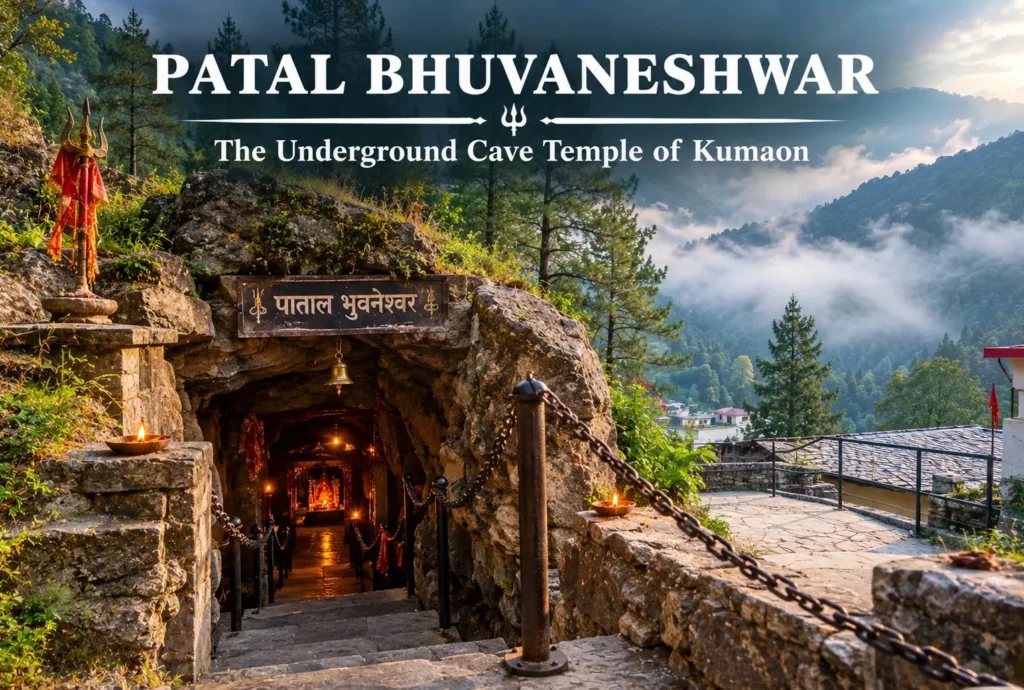
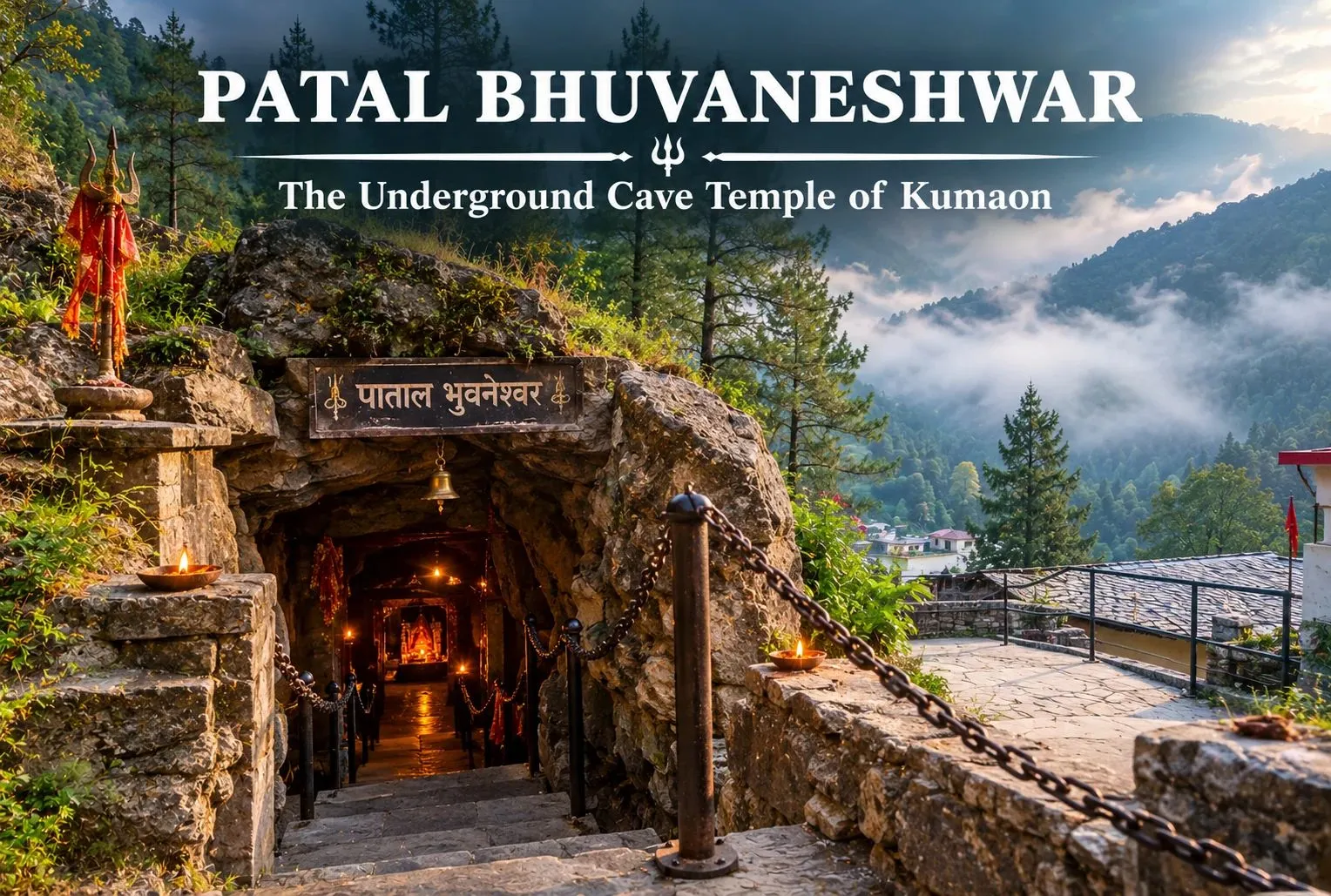
Most pilgrimage sites in the Himalayas ask you to climb. Patal Bhuvaneshwar asks you to go down. A narrow passage in a quiet Kumaon village leads into a limestone world of rock formations that devotees associate with Shiva, Ganesha, and countless other deities.
Table of Contents
What Is the Patal Bhuvaneshwar Cave Temple?
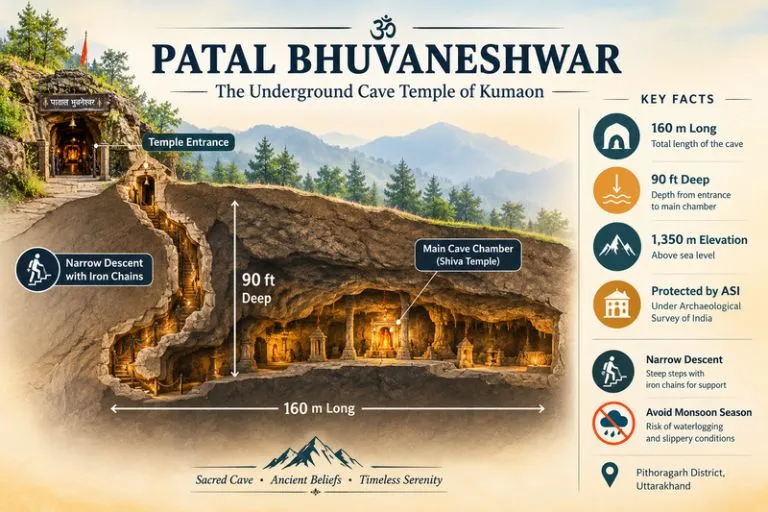
The Patal Bhuvaneshwar cave temple is a Hindu cave temple 14 km from Gangolihat in Pithoragarh district. The site is a limestone cave about 160 metres long and 90 feet deep, at an elevation of 1,350 metres, and it is protected by the Archaeological Survey of India. It is dedicated mainly to Shiva, and legend says the cave enshrines Shiva and thirty-three crore gods.
Legend and History
The cave is described in tradition and in text. Patal Bhuvaneshwar is described in the Manas Khand of the Skanda Purana. According to belief, King Rituparna of the Surya dynasty discovered the cave in the Treta Yuga, and Adi Shankaracharya’s visit began the modern pilgrimage history. Sources give different years for his visit, and 1191 AD is the date cited most often, so treat the exact date as uncertain. The priestly Bhandari family has performed rites here since Shankaracharya’s time, for more than 20 generations.
Patal Bhuvaneshwar Cave Mystery
The Patal Bhuvaneshwar cave mystery is mostly a matter of belief. Devotees see rock formations as forms of Sheshnag, Kaal Bhairav, Ganesha, and many other gods and goddesses, along with Shiva. A popular belief holds that the cave is connected by an underground route to Mount Kailash. There is no verified evidence for that link, so it is best read as faith rather than fact. Geologists would explain the shapes as natural limestone formations, which is part of why many visitors find the cave striking whichever way they look at it.
What the Descent Is Like
The way in is narrow. The path runs through a long, narrow tunnel. The journey inside is made in dim light, holding protective iron chains. Expect a steep, slippery climb down, and take it slowly. If you have knee problems, breathing issues, or a fear of tight spaces, think carefully before going in.
Patal Bhuvaneshwar Weather
Patal Bhuvaneshwar weather follows the cool Kumaon hill climate, with chilly mornings and evenings even in summer and cold winters. The cave interior feels cooler and damp. It is advisable to avoid visiting the cave during the monsoon. March to June and September to November are generally the most comfortable windows, but please check the local forecast and road conditions before you leave, since hill roads can be affected by rain.
Timings
Travel guides commonly list timings of 8 a.m. to 6 p.m. in summer and 9 a.m. to 5 p.m. in winter. Hours can change, and photography rules and entry arrangements can differ, so please confirm them locally before you travel.
How to Reach Patal Bhuvaneshwar
The cave lies near Gangolihat, about 35 km from Pithoragarh, on the way to Berinag. It can be reached from Almora, Bageshwar, Chaukori, Gangolihat, Champawat, or Lohaghat, and the nearest bus station is Gangolihat, 14 km away. Kathgodam is the main railhead and Pantnagar the main airport for the region, and the rest of the journey is by road. Road times vary with weather, so allow extra hours.
Extending Your Trip
Pithoragarh is the gateway to some of Uttarakhand’s most remote routes. Explore Hills’ Adi Kailash Om Parvat Yatra is a natural next trip for pilgrims, and the Darma Valley Panchachuli Base Camp Trek suits trekkers who want to stay in the Kumaon Himalayas.
For official information on the cave and the region, you can refer to the Kumaon district administration page on Patal Bhuwaneshwar, a government of Uttarakhand source.
What to Keep in Mind Before Visiting
- Wear shoes with strong grip and clothes you can move in
- Carry a small torch if allowed, and follow the guides’ instructions inside
- Avoid the monsoon and check road conditions after rain
- Respect the shrine, and follow local rules on photography
Conclusion
Patal Bhuvaneshwar combines faith, folklore, and a real limestone cave in one compact visit. Whether you come for the legends or for the experience of walking underground in the Himalayas, plan around the weather, check the timings, and give yourself time on the descent.
Frequently Asked Questions
Where is the Patal Bhuvaneshwar cave located?
It is in Bhuvaneshwar village, 14 km from Gangolihat in Pithoragarh district, Uttarakhand.
What is special about the Patal Bhuvaneshwar cave temple?
It is a limestone cave where devotees see formations linked to Shiva, Ganesha, Sheshnag, and many other deities. It is described in the Skanda Purana and protected by the Archaeological Survey of India.
What is the Patal Bhuvaneshwar cave mystery?
The mystery is mostly belief-based, including the tradition that the cave is connected to Mount Kailash underground. This is not verified, and the formations are natural limestone.
What is the Patal Bhuvaneshwar weather like?
The area has a cool hill climate. It is advisable to avoid visiting during the monsoon, and March to June and September to November are generally comfortable.
What are the Patal Bhuvaneshwar cave timings?
Travel guides list 8 a.m. to 6 p.m. in summer and 9 a.m. to 5 p.m. in winter, but please confirm locally.
How deep is Patal Bhuvaneshwar?
The cave is about 160 meters long and 90 feet deep.