
Explore Hills
Checkout +91-9456580306

Char Dham Yatra: The Ultimate Guide to Uttarakhand’s Sacred Pilgrimage

Char Dham Yatra

Tucked into the folds of the Garhwal Himalayas, the Char Dham Yatra is one of Hinduism’s most revered pilgrimage circuits, drawing lakhs of devotees to four sacred shrines every year. The journey takes pilgrims through Yamunotri, Gangotri, Kedarnath, and Badrinath — each set against a backdrop of snow-capped peaks, glacial rivers, and centuries of devotion. For many, completing this circuit isn’t just a trip; it’s a spiritual milestone.

If you’re planning your own Char Dham Yatra, our Char Dham Yatra package covers the complete route, but before you set out, here’s a detailed guide to help you understand the significance, route, and everything else you’ll need to know.

What Is Char Dham Yatra?

The term “Char Dham” translates to “four abodes,” referring to four sacred sites in Uttarakhand: Yamunotri, Gangotri, Kedarnath, and Badrinath. The Char Dham Yatra is often called the “Chota Char Dham” to distinguish it from the original, pan-India Char Dham established by the philosopher-saint Adi Shankaracharya, which includes Badrinath in the north, Dwarka in the west, Puri in the east, and Rameswaram in the south. While the two circuits share the name and the site of Badrinath, most people today, when referring to this journey, mean the Uttarakhand version.

Each of the four shrines holds distinct religious significance. Yamunotri is dedicated to the goddess Yamuna and marks the source of the Yamuna River. Gangotri honours the goddess Ganga at the origin point of the sacred Ganges. Kedarnath is one of the twelve Jyotirlingas of Lord Shiva, and Badrinath, the final stop, is dedicated to Lord Vishnu. Together, these four shrines form a journey that touches on multiple strands of Hindu devotion within a single circuit.

The Traditional Route and Order

The Char Dham Yatra follows a fixed, traditional sequence. Pilgrims begin at Yamunotri, move on to Gangotri, then Kedarnath, and finally conclude at Badrinath — a west-to-east, roughly clockwise route through the Garhwal Himalayas. This order isn’t arbitrary; it also helps the body acclimatise gradually as pilgrims move toward the higher-altitude shrines of Kedarnath and Badrinath later in the journey.

Most pilgrims begin and end their trip from Haridwar, Rishikesh, or Dehradun, which serve as the main gateway cities. From there, the route typically flows through Barkot (base for Yamunotri), Uttarkashi (base for Gangotri), Guptkashi (base for Kedarnath), and Joshimath (en route to Badrinath), before looping back toward Haridwar via Rudraprayag and Devprayag.

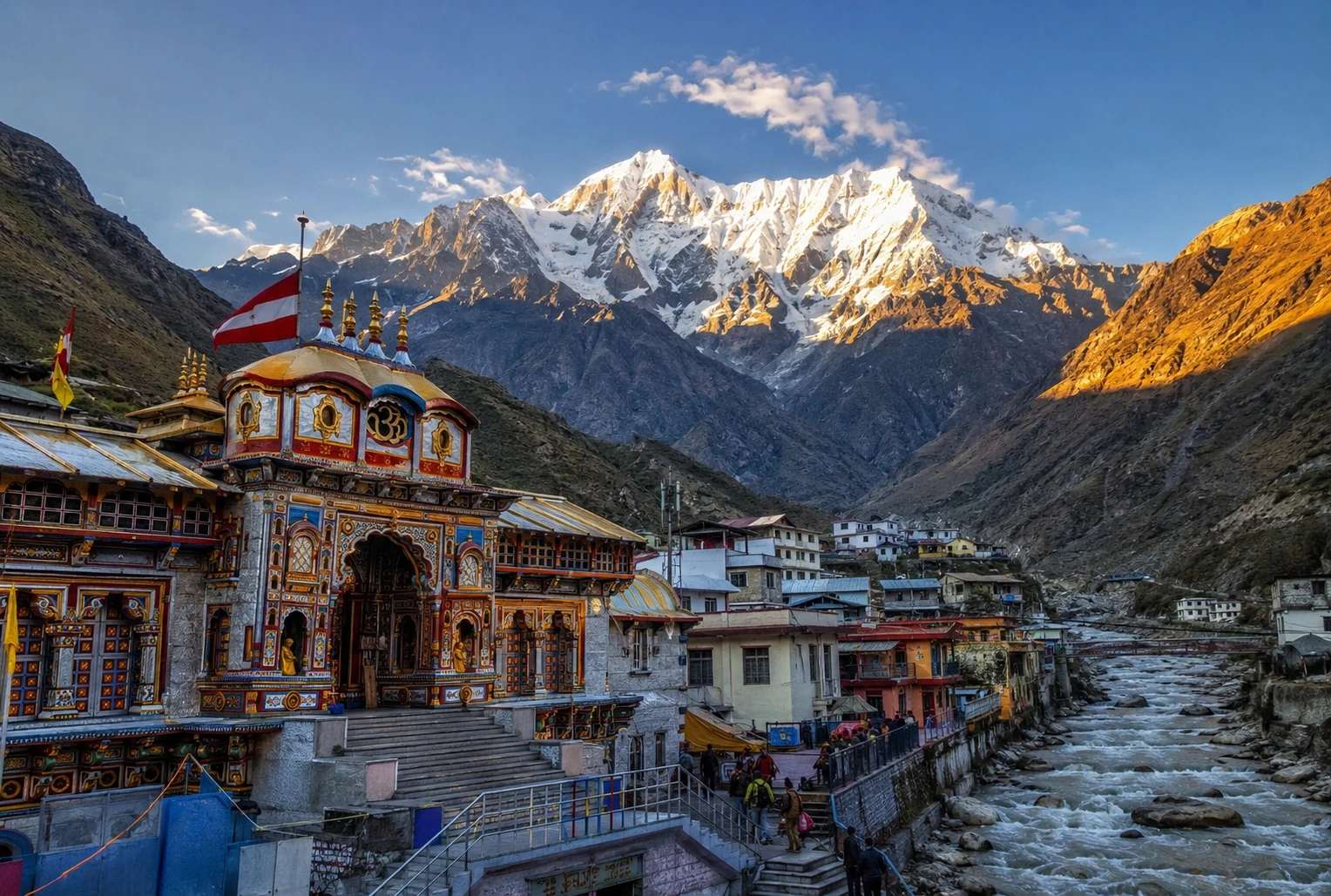
The Four Shrines in Detail
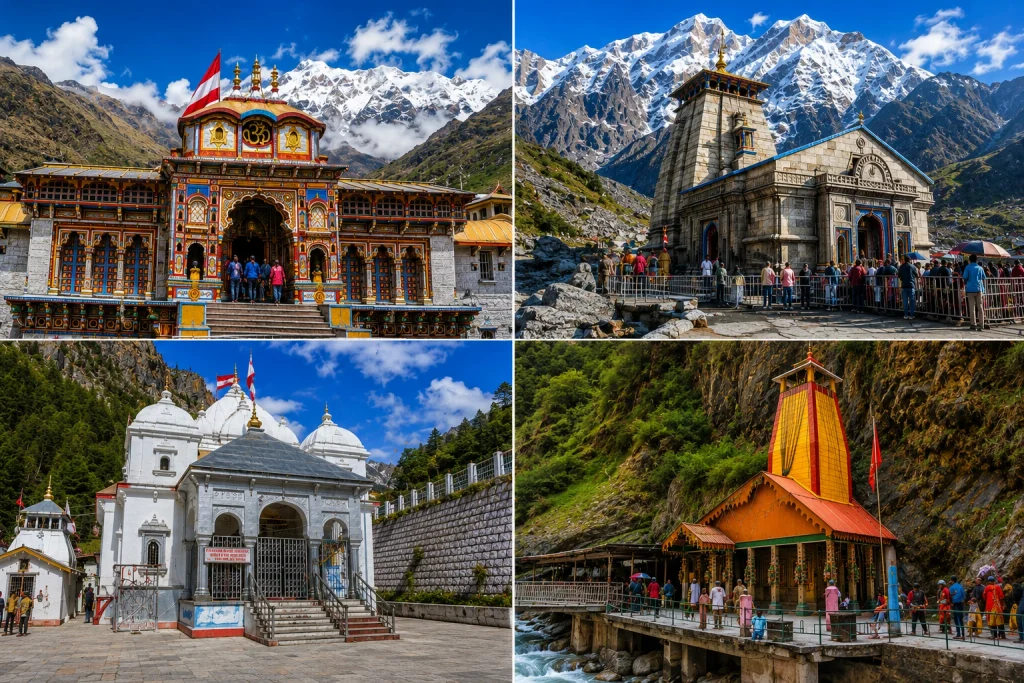
Yamunotri requires a final stretch of trekking, typically 5 to 6 km from Janki Chatti, with ponies and palanquins available for those who prefer not to walk the full distance.

Gangotri is comparatively easier to reach, being directly connected by road via Uttarkashi, making it one of the more accessible stops on the route.

Kedarnath is widely regarded as the most physically demanding leg. Pilgrims travel by road up to Gaurikund and then undertake a steep 16 to 18 km trek to reach the temple. A helicopter service is also available, though bookings must go through IRCTC’s official portal.

Badrinath, the final destination, is the easiest of the four to access, since the road leads directly to the temple. This makes it especially suitable for elderly pilgrims or those with limited mobility.

For travellers who’d like a shorter, more focused pilgrimage instead of the full Char Dham Yatra circuit, our Kedarnath Yatra package is a great alternative that covers one of the most significant shrines in the journey.

Best Time for the Pilgrimage

The most favourable window for the Char Dham Yatra falls between May and June, offering clear skies and comfortable temperatures. A second good window opens from September to October, after the monsoon clears. The monsoon months are best avoided, as landslides and road blockages are common in the hill sections during this period.

The four shrines only remain open for a limited season each year, typically opening between April and May and closing around October or November as winter sets in. For 2026, Yamunotri and Gangotri opened on April 19, Kedarnath on April 22, and Badrinath on April 23, with all four shrines expected to close by mid-November ahead of the winter snowfall.

Registration and Permits

Registration is mandatory for all pilgrims undertaking the Char Dham Yatra, regardless of whether you’re travelling by road or helicopter. The registration process is free but compulsory, and typically opens in early March through the official Uttarakhand government portal. Pilgrims are advised to carry a printed yatra pass along with a valid government-issued photo ID, such as an Aadhaar card or passport.

In recent years, several additional rules have also come into effect, including mandatory medical check-ups for pilgrims above 55 years of age or with pre-existing health conditions, along with real-time tracking systems and expanded medical support across the route. It’s worth checking the latest guidelines closer to your travel dates, since rules and requirements can be updated from year to year.

Duration and Budget

A full Char Dham Yatra by road typically takes 10 to 12 days, while helicopter packages can shorten the journey to around 5 to 6 days, making them a popular option for pilgrims short on time or looking to avoid the physically demanding treks. Budgets can vary widely depending on the mode of travel and comfort level chosen, ranging from more modest road-trip packages to significantly higher-cost helicopter itineraries covering all four shrines.

If you’d prefer to explore a smaller, equally meaningful circuit before attempting the full Char Dham Yatra, our Do Dham Yatra package is worth considering as a shorter introduction to Uttarakhand’s sacred geography.

Tips for a Smooth Char Dham Yatra

  • Book accommodation early: Guesthouses in Barkot, Uttarkashi, Guptkashi, and Joshimath fill up weeks in advance during peak season
  • Pack for variable weather: Even in summer, temperatures near the shrines can drop sharply, especially early morning and evening
  • Carry essential documents: Yatra pass, photo ID, and medical certificates if applicable
  • Stay physically prepared: The Kedarnath trek in particular requires reasonable fitness
  • Respect entry guidelines: Certain temples have specific rules around entry and photography, so it helps to check current guidelines beforehand

For the latest registration details and official updates, you can visit the Uttarakhand government’s official registration portal, the authorised source for Char Dham Yatra registration.

Frequently Asked Question’s

  1. What is the correct order to complete the Char Dham Yatra?

    The traditional order is Yamunotri, followed by Gangotri, Kedarnath, and finally Badrinath.

  2. Is registration compulsory for the Char Dham Yatra?

    Yes, registration is mandatory for all pilgrims and is free to complete through the official Uttarakhand government portal.

  3. What is the best time of year for the Char Dham Yatra?

    May to June and September to October are considered the most favourable months, offering clearer weather and safer road conditions.

  4. How long does the full circuit take?

    By road, the journey typically takes 10 to 12 days, while helicopter packages can shorten it to around 5 to 6 days.

  5. Which shrine is the most physically demanding to reach?

    Kedarnath is generally considered the toughest, requiring a 16 to 18 km trek from Gaurikund, though helicopter services are available as an alternative.
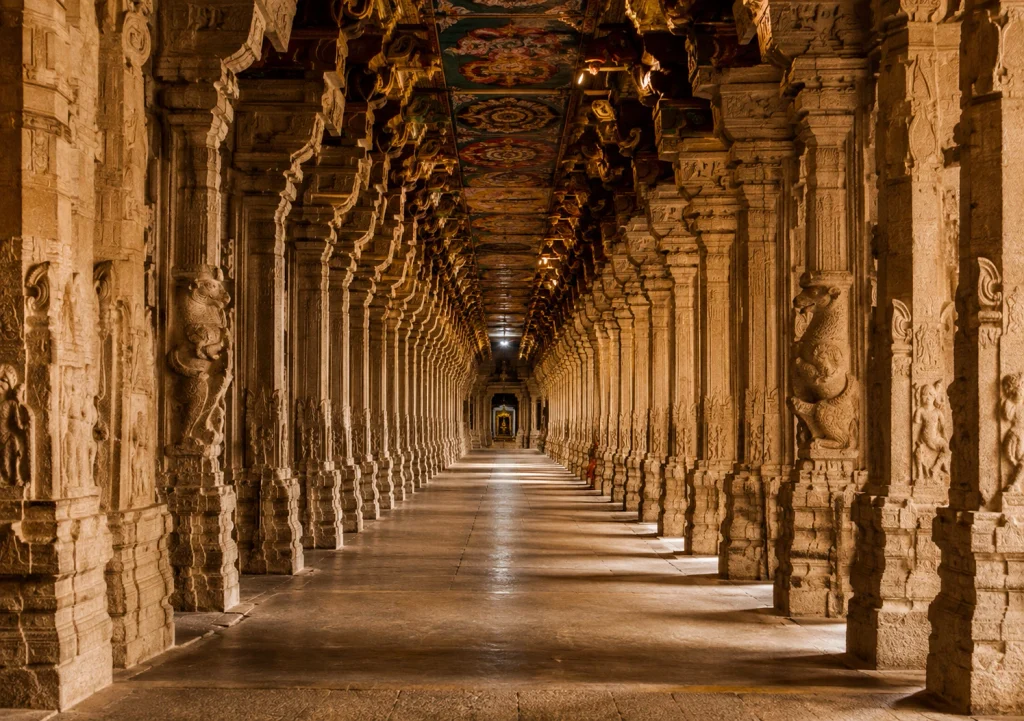
Ramanathaswamy Temple Rameswaram: The Sacred Story Behind India’s Iconic Shiva Shrine

Ramanathaswamy Temple

At the southernmost tip of India, on the sacred island of Rameswaram in Tamil Nadu, stands the magnificent Ramanathaswamy Temple — one of the holiest and most awe-inspiring Shiva shrines in the country. Home to the longest temple corridor in the world and steeped in the mythology of the Ramayana, this temple draws millions of pilgrims and travellers every year, each seeking a glimpse of its spiritual grandeur and architectural brilliance.

Rameswaram holds a special place in Hindu pilgrimage tradition as one of the four sacred Char Dhams, much like the Himalayan shrines covered in our Char Dham Yatra guide. If ancient temples and sacred journeys move you, Ramanathaswamy Temple deserves a place at the very top of your travel list.

In this guide, we’ll walk through the complete Ramanathaswamy temple history, who built it, everything about its architecture, and practical information to help you plan your visit.

About Ramanathaswamy Temple

The Ramanathaswamy Temple is dedicated to Lord Shiva and is one of the twelve revered Jyotirlinga shrines in India, where Shiva is worshipped in the form of a self-manifested lingam of light. Located on Rameswaram island, connected to mainland India by the engineering marvel of the Pamban Bridge, the temple is considered one of the most sacred sites for both Shaivites and Vaishnavites — a rare confluence of the two major Hindu traditions.

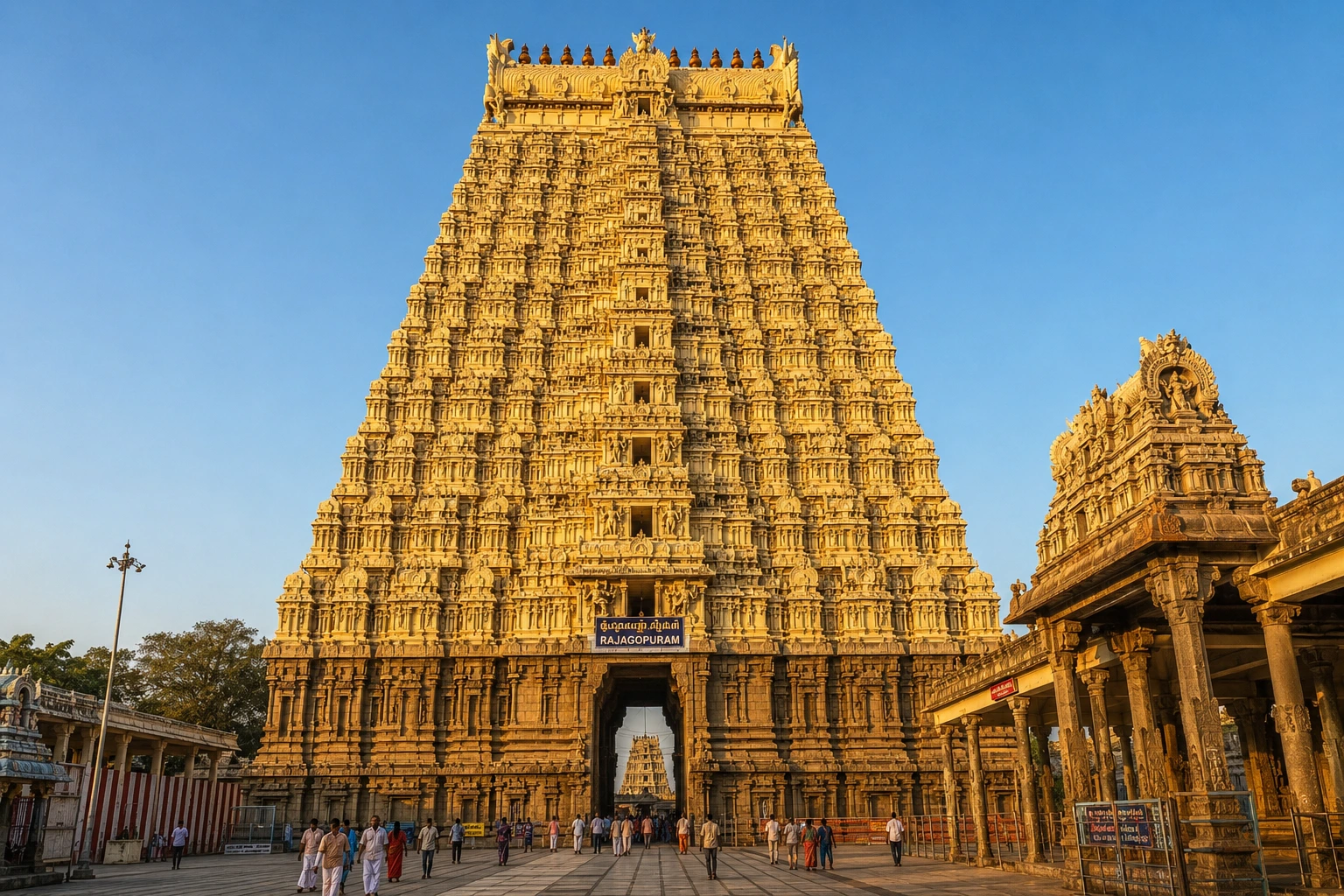
What makes Ramanathaswamy truly remarkable is its scale. The temple is famous for having the longest corridor of any temple in the world, stretching an astonishing 197 metres from east to west and 133 metres from south to north. This third corridor, lined with hundreds of intricately carved pillars, creates a mesmerising play of light and shadow that leaves every visitor spellbound. The temple complex is also crowned by a towering 38-metre gopuram, or gateway tower, visible from a considerable distance across the island.

Built primarily in the Dravidian architectural style using granite and limestone, the temple houses two significant lingams inside its sanctum — the Ramalingam, said to have been created from sand by Goddess Sita, and the Vishwalingam, believed to have been brought from Mount Kailash by Lord Hanuman. Both are worshipped daily, a practice unique to this temple. The complex is also home to 22 sacred wells, or Theerthams, where devotees bathe as part of ritual purification, along with shrines to Goddess Parvatavardhini and other deities.

Ramanathaswamy Temple History

The history of Ramanathaswamy Temple is deeply rooted in the Ramayana. According to legend, after defeating the demon king Ravana in Lanka, Lord Rama wished to worship Lord Shiva to atone for having killed Ravana, who was a Brahmin. He sent Hanuman to bring back a sacred lingam from Mount Kailash, but as Hanuman’s journey took longer than expected, Sita is said to have fashioned a smaller lingam out of sand so that the auspicious hour for worship would not pass. When Hanuman returned, both lingams were installed and consecrated together — a tradition that continues at the temple to this day.

While the temple’s mythological origins trace back to the Ramayana era, the physical structure standing today evolved gradually over many centuries. The earliest known construction was a modest brick and thatch shrine, which was gradually expanded and rebuilt in stone by successive dynasties. The first stone structure is believed to have been built by the Chola kings in the 12th century, with the sanctum sanctorum developed further under the patronage of Parakramabahu I, a king of Polonnaruwa in present-day Sri Lanka, around the same period.

Over the following centuries, the Pandya dynasty and the rulers of the Vijayanagara Empire made substantial contributions to the temple’s expansion. Notably, the celebrated Vijayanagara emperor Krishna Deva Raya visited the temple in 1513 after his campaigns and made generous endowments toward its upkeep. The temple also drew the attention of spiritual figures across history — Swami Vivekananda is recorded to have offered prayers here in 1897, reflecting the site’s enduring significance well into the modern era.

Who Built Ramanathaswamy Temple

Unlike many Indian temples attributed to a single ruler, the Ramanathaswamy Temple was built and expanded over several centuries by multiple dynasties, each contributing to what stands today as one of the finest examples of Dravidian architecture.

The Chola kings are credited with constructing the first stone temple in the 12th century, while further architectural development of the inner sanctum took place under Sri Lankan king Parakramabahu I during the same era. In later centuries, the Pandya dynasty and the Vijayanagara rulers added significant structural elements, including shrines, mandapams, and decorative work.

The most influential period in the temple’s construction history, however, came under the Sethupathi dynasty, who ruled the Ramnad region from the 17th century onward. It was King Kizhavan Sethupathi and successive Sethupathi rulers who commissioned the construction of the temple’s iconic long corridors, including the record-breaking third corridor. The Sethupathis, regarded as the traditional guardians of the temple, are largely responsible for shaping the grand structure that pilgrims and visitors experience today.

Ramanathaswamy Temple Information for Visitors

If you’re planning a pilgrimage or visit, here’s some essential Ramanathaswamy temple information to help you prepare:

  • Location: Rameswaram Island, Ramanathapuram District, Tamil Nadu, on India’s southeastern coast
  • Best time to visit: October to April, when the weather is relatively cooler and more comfortable for temple visits
  • Nearest airport: Madurai International Airport, approximately 175 km away
  • Nearest railway station: Rameswaram Railway Station, about 1.3 km from the temple
  • Significance: One of the twelve Jyotirlinga shrines and one of the four Char Dham pilgrimage sites in Hinduism
  • Famous feature: The temple’s third corridor is recognised as the longest temple corridor in the world
  • Nearby attractions: Pamban Bridge, Dhanushkodi Beach, and the Dr. A.P.J. Abdul Kalam Memorial
  • Rituals: Pilgrims often take a holy dip in the 22 Theerthams within the temple complex before entering the sanctum

Visiting early in the morning helps avoid the peak pilgrim rush, especially during major festivals like Maha Shivaratri, when the temple sees an enormous influx of devotees. Modest, traditional attire is expected, and photography inside the sanctum is generally restricted, so it’s best to check current guidelines before your visit.

For verified visitor information, temple timings, and official details, you can refer to the listing on Incredible India, the Government of India’s official tourism portal.

A Journey Beyond Rameswaram

While Ramanathaswamy Temple reflects the spiritual and architectural richness of South India, the Himalayas hold an equally profound collection of sacred shrines. Travellers drawn to temples steeped in mythology and devotion often find themselves equally captivated by high-altitude pilgrimage sites like the one detailed in our Kedarnath sacred shrine guide, or the broader network of yatra routes we curate across Uttarakhand. India’s spiritual geography rarely ends at just one destination — each sacred site tends to lead the traveller toward the next.

Frequently Asked Question’s

  1. Who built the Ramanathaswamy Temple?

    The temple was built and expanded over centuries by multiple dynasties, including the Cholas, Pandyas, and Vijayanagara rulers, with the Sethupathi dynasty responsible for its iconic long corridors from the 17th century onward.

  2. How old is the Ramanathaswamy Temple?

    While the site’s mythological origins trace back to the Ramayana era, the earliest stone structure dates to the 12th century, making the current temple structure roughly 800 to 900 years old, with major additions continuing through the 17th century.

  3. Why is Ramanathaswamy Temple famous?

    It is famous for housing the longest temple corridor in the world, being one of the twelve Jyotirlinga shrines, and its deep connection to the Ramayana and Lord Rama’s worship of Shiva.

  4. What is the best time to visit Ramanathaswamy Temple?

    October to April is ideal, offering more comfortable weather for exploring the temple and the surrounding island.

  5. How much time do I need to explore the temple?

    Most visitors spend two to three hours exploring the temple complex and its corridors, though pilgrims performing rituals at the 22 Theerthams may need additional time.

Kedarnath: A Traveler’s Guide to India’s Sacred Himalayan Shrine

Kedarnath - Sacred Himalayan Shrine

Nestled in the lap of Garhwal Himalayas, it is one of the most divine and deeply honored jyotirlingas in Hinduism. Every year hundreds of thousands devotees come here to receive the blessing of Lord Shiva. Some come for faith, some to explore and some to discover the powerful connection with nature and Himalayas. Before you plan your next journey, make sure you know what’s so special about this beautiful and divine trek. Travelers looking to combine Kedarnath with the wider Himalayan pilgrimage circuit can explore Explore Hills’ Char Dham Yatra package.

The history behind the temple

The story of the temple can be traced back to Mahabharata. The Pandavas were plagued by remorse after the war that they had slained their own kin, and were seeking Shiva for forgiveness. Shiva was not to be found he changed into a bull and left his hump in the mountains. The Pandavas finally found him and when he was trying to disappear into the ground, he appeared again in five different places also known as Panch Kedar. This is the most important site considering that his hump lies here at Kedarnath. Later on, temples were erected at all five places; however, the great temple at Kedarnath still stands.

It is one of the four Chota Char Dham sites (with Badrinath, Gangotri and Yamunotri), and is also the highest-altitude of the twelve recognised jyotirlinga sites all over India. For those wanting to visit all five Panch Kedar shrines, Explore Hills’ Panch Kedar Trek covers the complete circuit.

Where is Kedarnath Located?

Kedarnath is located in the midst of Garhwal Himalayas, in the district of Rudraprayag, Uttarakhand. Seated on the bank of Mandakini river and Chorabari Glacier at an elevation of 3,583 metres (11,755 feet). This pilgrimage receives heavy snow leading to route blockage and zero-temperature. As you draw closer to this spiritual place you faith grows much deeper.

When does the Kedarnath Temple open and close?

Because it follows the Hindu lunar calendar, the exact opening date shifts a bit year to year, but the pattern is fairly consistent:

  • Opens on the first day of Vaishakh usually late April into early May
  • Closes around Diwali, on the first day of Karthik (October or November)
  • Once winter sets in, snow makes the whole area inaccessible and the shrine shuts down completely

On a normal day, darshan runs from 4 AM to 3 PM, breaks, then picks back up from 5 to 9 PM. Morning aarti happens between 4 and 7 AM; evening aarti runs roughly 6 to 7:30 PM.

Kedarnath Weather & Temperature: What to Expect Each Season?

Don’t trust a single forecast here the temperature can swing wildly within the same day thanks to the altitude.

SeasonRough TemperatureWhat to Expect
May–June5°C to 18°CNice by day, cold once the sun drops
July–August (monsoon)8°C to 16°CHeavy rain, real landslide risk
September–October2°C to 15°CClear skies, the best visibility of the year
November onwardSub-zeroSnowed in, temple closed

Bring proper woollens and waterproof layers no matter which month you go. Even in June, once the sun’s gone, it gets cold fast.

Kedarnath Trek Route

How to Reach Kedarnath: Getting There

Your first real destination is Guptakashi it’s the last town with proper hotel infrastructure before things get rural.

  • Fly into Jolly Grant Airport in Dehradun
  • Or take a train to Rishikesh (Haridwar works too as a backup)
  • From either, grab a taxi, tempo traveller, or state bus heading toward Guptakashi, then on to Sonaprayag

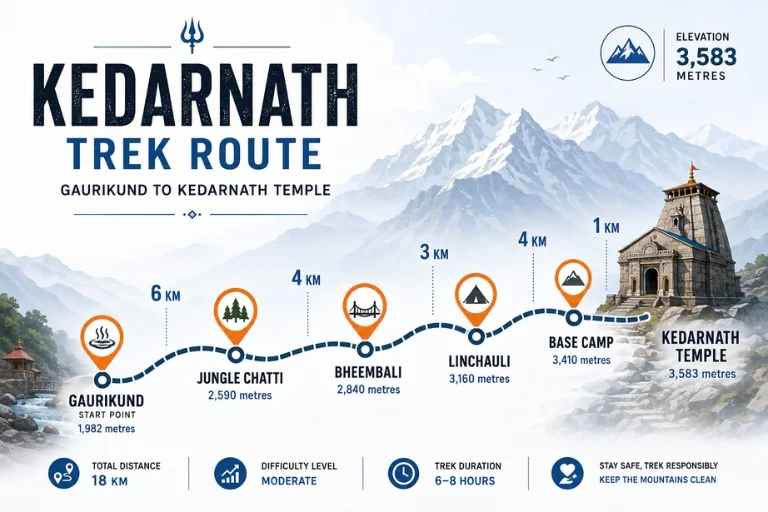
Kedarnath Trek from Gaurikund

This is the classic route, the one pilgrims have walked for generations. A short shared jeep ride from Sonaprayag drops you at Gaurikund, and that’s where the actual climb starts.

Roughly, the trail breaks down like this:

  1. Gaurikund to Jungle Chatti — 6 km
  2. Jungle Chatti to Bheembali — 4 km
  3. Bheembali to Linchauli — 3 km
  4. Linchauli to Kedarnath Base Camp — 4 km
  5. Base Camp to the temple — 1 km

That’s about 18 km one way, and it’s no casual stroll even if you’re in decent shape. Ponies, palanquins, and porters (locally called “pitthu”) are available if walking the whole thing isn’t realistic for you, though rates climb fast once peak season hits. If you’d rather combine Kedarnath with the nearby Tungnath temple trek, check out Explore Hills’ Kedarnath-Tungnath Tour.

Kedarnath Helicopter Service: Booking, Bases & Important Tips

If time is tight or the trek just isn’t an option, flying in has become the go-to alternative. Helicopters run out of three bases near Guptakashi Phata, Sersi, and Guptakashi town operated by a handful of licensed private companies. Pricing depends on which base you fly from, and it climbs noticeably during high season and around festivals. Slots typically open about a month out and disappear within minutes, so book through the official government portal the moment it opens, or go through a local agent you trust. Bookings can be made directly through the official IRCTC Heli Yatra portal, the government-authorized platform for Char Dham helicopter services.

A few things worth knowing before you fly:

  • Show up at the helipad at least two hours before your slot
  • Weather grounds flights often always have a backup plan
  • Round-trip charters from Dehradun cost a lot more than a straight joyride from Guptakashi

CONCLUSION

Kedarnath tests you as much as it moves you. Between the mythology behind it, the scale of the mountains around it, and the sheer physical effort it takes to get there, it leaves a mark that’s hard to shake. Plan around the opening dates, lock in your transport and stay early, and pack for weather that won’t cooperate do that, and the Himalayas will give you something worth the trip. If you are serious about visiting this spiritual and divine place, start your reservation now. Explore Hills’ Kedarnath Yatra package handles the full journey end-to-end.

Frequently Asked Question’s

How many days are considered to be an optimum duration for a Kedarnath tour?

Approximately 3-5 days are often considered appropriate to complete the Kedarnath Trek.

Will the Kedarnath trek be hard for the beginners?

Due to the tough pathway, this trek is often considered risky for beginners.

Do I have to get permission to visit Kedarnath?

Yes, you should book your slot before visiting Kedarnath.

Is it possible to go to Kedarnath during winter?

Due to heavy snowfall, traveling to Kedarnath can often be risky.