

Table of Contents
At the southernmost tip of India, on the sacred island of Rameswaram in Tamil Nadu, stands the magnificent Ramanathaswamy Temple — one of the holiest and most awe-inspiring Shiva shrines in the country. Home to the longest temple corridor in the world and steeped in the mythology of the Ramayana, this temple draws millions of pilgrims and travellers every year, each seeking a glimpse of its spiritual grandeur and architectural brilliance.
Rameswaram holds a special place in Hindu pilgrimage tradition as one of the four sacred Char Dhams, much like the Himalayan shrines covered in our Char Dham Yatra guide. If ancient temples and sacred journeys move you, Ramanathaswamy Temple deserves a place at the very top of your travel list.
In this guide, we’ll walk through the complete Ramanathaswamy temple history, who built it, everything about its architecture, and practical information to help you plan your visit.
About Ramanathaswamy Temple
The Ramanathaswamy Temple is dedicated to Lord Shiva and is one of the twelve revered Jyotirlinga shrines in India, where Shiva is worshipped in the form of a self-manifested lingam of light. Located on Rameswaram island, connected to mainland India by the engineering marvel of the Pamban Bridge, the temple is considered one of the most sacred sites for both Shaivites and Vaishnavites — a rare confluence of the two major Hindu traditions.
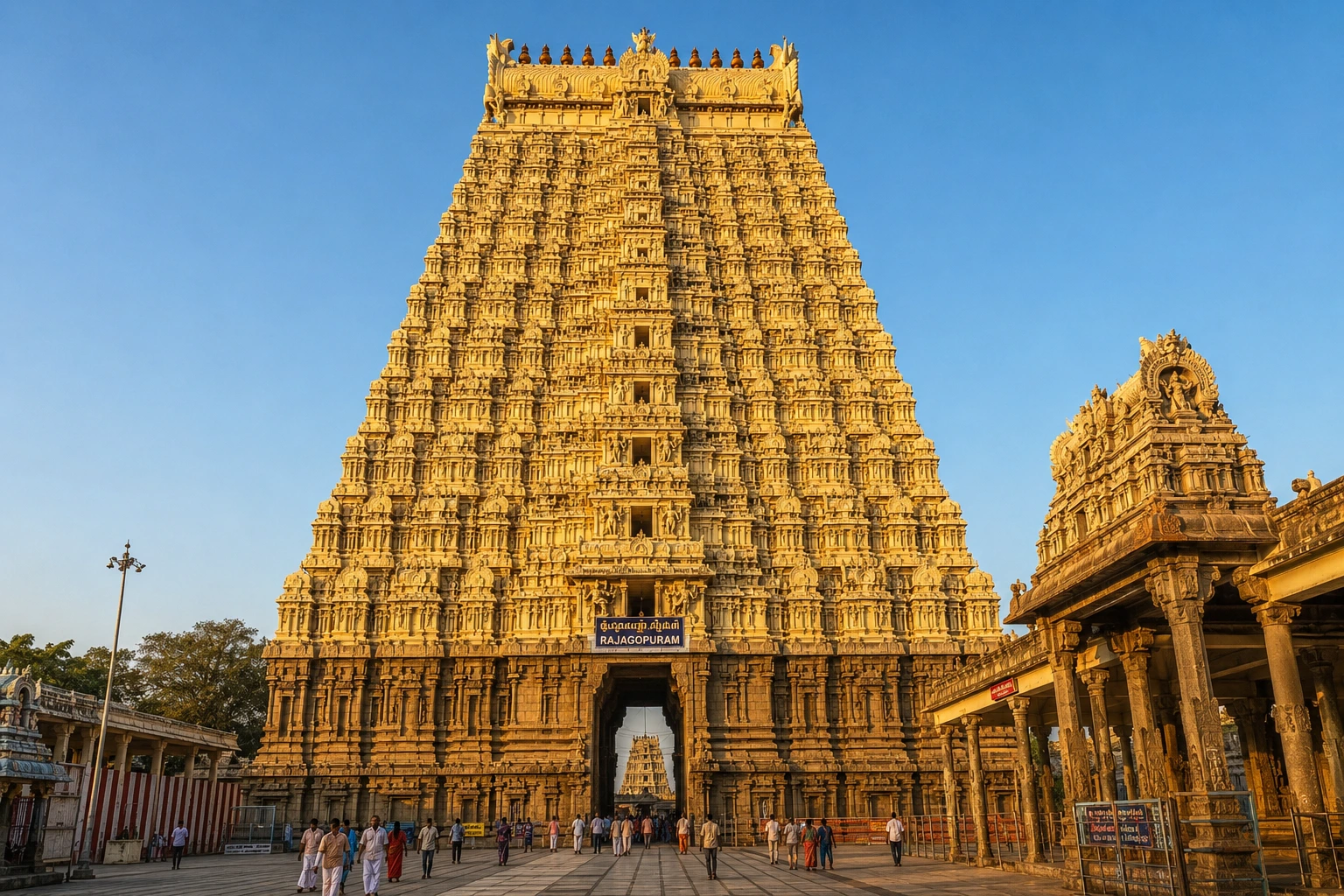
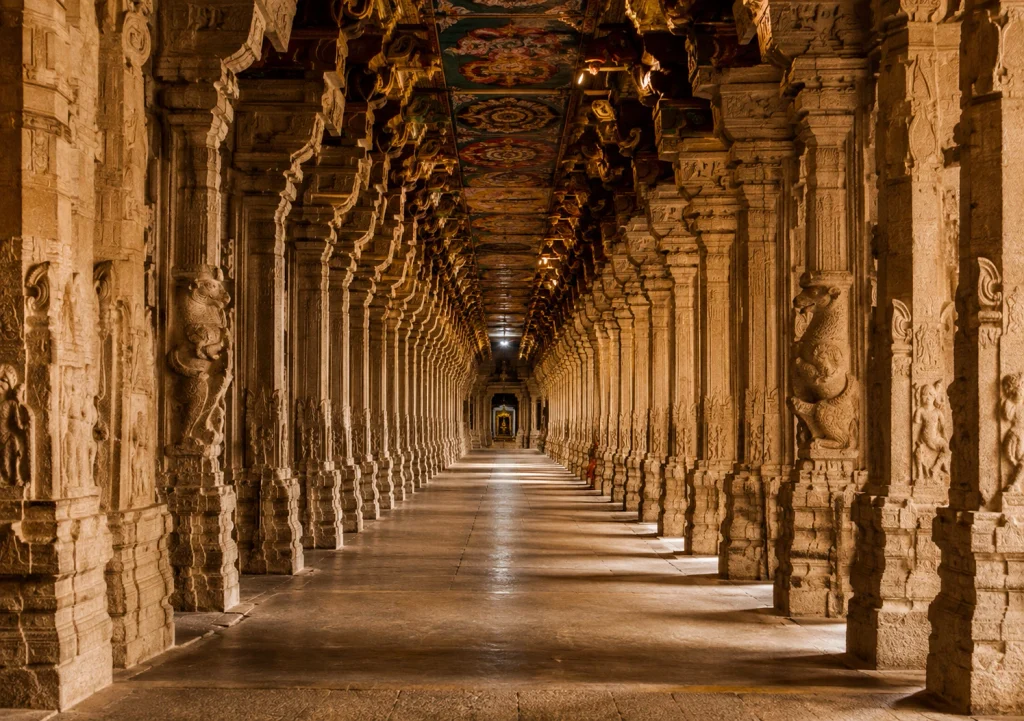
What makes Ramanathaswamy truly remarkable is its scale. The temple is famous for having the longest corridor of any temple in the world, stretching an astonishing 197 metres from east to west and 133 metres from south to north. This third corridor, lined with hundreds of intricately carved pillars, creates a mesmerising play of light and shadow that leaves every visitor spellbound. The temple complex is also crowned by a towering 38-metre gopuram, or gateway tower, visible from a considerable distance across the island.
Built primarily in the Dravidian architectural style using granite and limestone, the temple houses two significant lingams inside its sanctum — the Ramalingam, said to have been created from sand by Goddess Sita, and the Vishwalingam, believed to have been brought from Mount Kailash by Lord Hanuman. Both are worshipped daily, a practice unique to this temple. The complex is also home to 22 sacred wells, or Theerthams, where devotees bathe as part of ritual purification, along with shrines to Goddess Parvatavardhini and other deities.
Ramanathaswamy Temple History
The history of Ramanathaswamy Temple is deeply rooted in the Ramayana. According to legend, after defeating the demon king Ravana in Lanka, Lord Rama wished to worship Lord Shiva to atone for having killed Ravana, who was a Brahmin. He sent Hanuman to bring back a sacred lingam from Mount Kailash, but as Hanuman’s journey took longer than expected, Sita is said to have fashioned a smaller lingam out of sand so that the auspicious hour for worship would not pass. When Hanuman returned, both lingams were installed and consecrated together — a tradition that continues at the temple to this day.
While the temple’s mythological origins trace back to the Ramayana era, the physical structure standing today evolved gradually over many centuries. The earliest known construction was a modest brick and thatch shrine, which was gradually expanded and rebuilt in stone by successive dynasties. The first stone structure is believed to have been built by the Chola kings in the 12th century, with the sanctum sanctorum developed further under the patronage of Parakramabahu I, a king of Polonnaruwa in present-day Sri Lanka, around the same period.
Over the following centuries, the Pandya dynasty and the rulers of the Vijayanagara Empire made substantial contributions to the temple’s expansion. Notably, the celebrated Vijayanagara emperor Krishna Deva Raya visited the temple in 1513 after his campaigns and made generous endowments toward its upkeep. The temple also drew the attention of spiritual figures across history — Swami Vivekananda is recorded to have offered prayers here in 1897, reflecting the site’s enduring significance well into the modern era.
Who Built Ramanathaswamy Temple
Unlike many Indian temples attributed to a single ruler, the Ramanathaswamy Temple was built and expanded over several centuries by multiple dynasties, each contributing to what stands today as one of the finest examples of Dravidian architecture.
The Chola kings are credited with constructing the first stone temple in the 12th century, while further architectural development of the inner sanctum took place under Sri Lankan king Parakramabahu I during the same era. In later centuries, the Pandya dynasty and the Vijayanagara rulers added significant structural elements, including shrines, mandapams, and decorative work.
The most influential period in the temple’s construction history, however, came under the Sethupathi dynasty, who ruled the Ramnad region from the 17th century onward. It was King Kizhavan Sethupathi and successive Sethupathi rulers who commissioned the construction of the temple’s iconic long corridors, including the record-breaking third corridor. The Sethupathis, regarded as the traditional guardians of the temple, are largely responsible for shaping the grand structure that pilgrims and visitors experience today.
Ramanathaswamy Temple Information for Visitors
If you’re planning a pilgrimage or visit, here’s some essential Ramanathaswamy temple information to help you prepare:
- Location: Rameswaram Island, Ramanathapuram District, Tamil Nadu, on India’s southeastern coast
- Best time to visit: October to April, when the weather is relatively cooler and more comfortable for temple visits
- Nearest airport: Madurai International Airport, approximately 175 km away
- Nearest railway station: Rameswaram Railway Station, about 1.3 km from the temple
- Significance: One of the twelve Jyotirlinga shrines and one of the four Char Dham pilgrimage sites in Hinduism
- Famous feature: The temple’s third corridor is recognised as the longest temple corridor in the world
- Nearby attractions: Pamban Bridge, Dhanushkodi Beach, and the Dr. A.P.J. Abdul Kalam Memorial
- Rituals: Pilgrims often take a holy dip in the 22 Theerthams within the temple complex before entering the sanctum
Visiting early in the morning helps avoid the peak pilgrim rush, especially during major festivals like Maha Shivaratri, when the temple sees an enormous influx of devotees. Modest, traditional attire is expected, and photography inside the sanctum is generally restricted, so it’s best to check current guidelines before your visit.
For verified visitor information, temple timings, and official details, you can refer to the listing on Incredible India, the Government of India’s official tourism portal.
A Journey Beyond Rameswaram
While Ramanathaswamy Temple reflects the spiritual and architectural richness of South India, the Himalayas hold an equally profound collection of sacred shrines. Travellers drawn to temples steeped in mythology and devotion often find themselves equally captivated by high-altitude pilgrimage sites like the one detailed in our Kedarnath sacred shrine guide, or the broader network of yatra routes we curate across Uttarakhand. India’s spiritual geography rarely ends at just one destination — each sacred site tends to lead the traveller toward the next.
Frequently Asked Question’s
Who built the Ramanathaswamy Temple?
The temple was built and expanded over centuries by multiple dynasties, including the Cholas, Pandyas, and Vijayanagara rulers, with the Sethupathi dynasty responsible for its iconic long corridors from the 17th century onward.
How old is the Ramanathaswamy Temple?
While the site’s mythological origins trace back to the Ramayana era, the earliest stone structure dates to the 12th century, making the current temple structure roughly 800 to 900 years old, with major additions continuing through the 17th century.
Why is Ramanathaswamy Temple famous?
It is famous for housing the longest temple corridor in the world, being one of the twelve Jyotirlinga shrines, and its deep connection to the Ramayana and Lord Rama’s worship of Shiva.
What is the best time to visit Ramanathaswamy Temple?
October to April is ideal, offering more comfortable weather for exploring the temple and the surrounding island.
How much time do I need to explore the temple?
Most visitors spend two to three hours exploring the temple complex and its corridors, though pilgrims performing rituals at the 22 Theerthams may need additional time.