

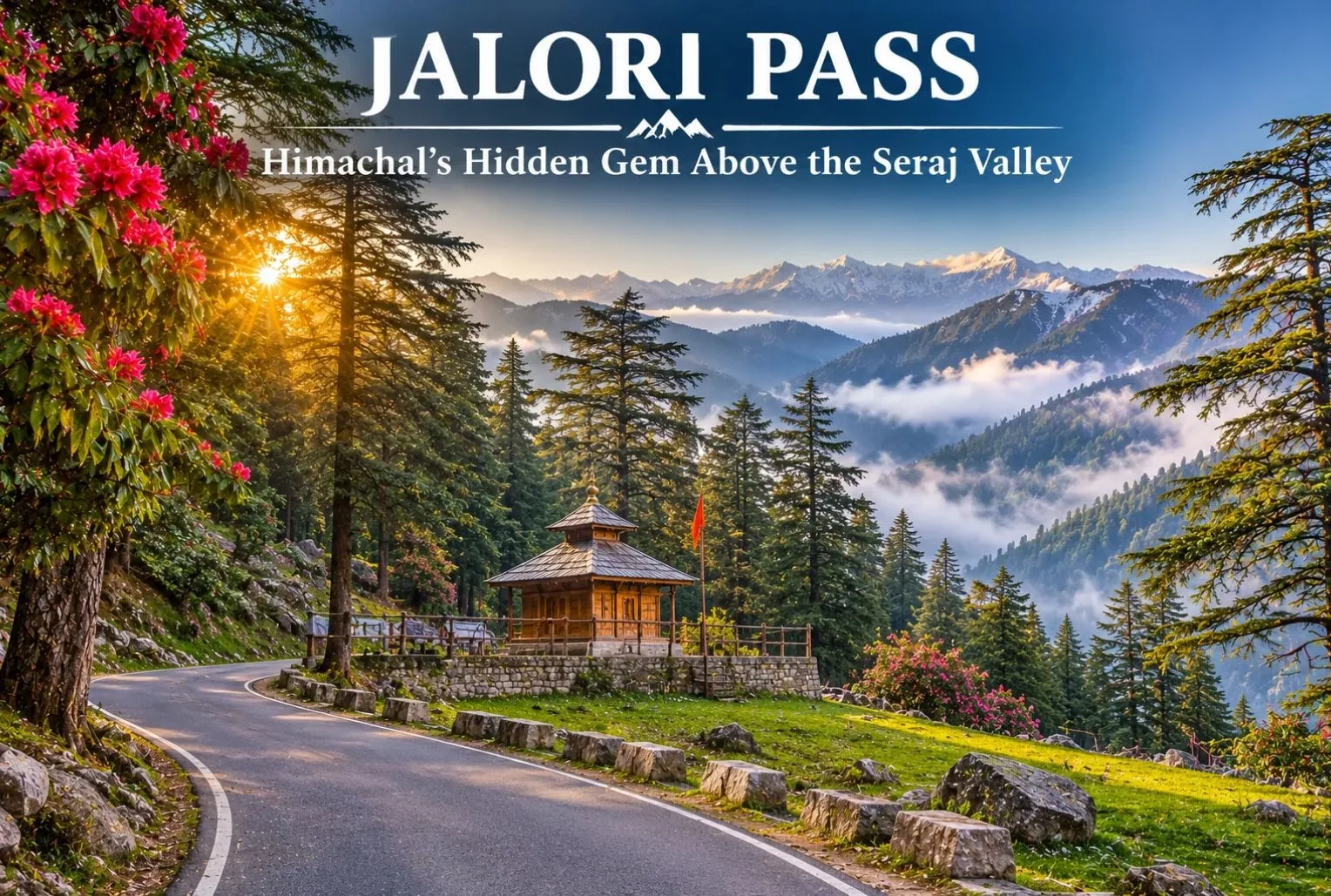
Jalori Pass is a beautiful mountain destination in Himachal Pradesh. The pass is known for its peaceful forests and panoramic Himalayan views. It is locally known as Jalori Jot, which is the traditional word for a mountain pass. The pass sits in the Kullu region of Himachal at an elevation of about 3,120 m (10,236 feet) above sea level. Away from the busy tourist centers, it offers a refreshing view of the mountains. Here you can find oak, deodar, blue pine, and rhododendron. Jalori Pass has scenic routes and lush green forests, and it is perfect for nature lovers and adventure enthusiasts. Photographers will love it too.
Table of Contents
Reason Behind the Popularity of Jalori Pass
Jalori Pass is well known for its natural beauty and peaceful ambience. It is one of the well-known high mountain passes of the Kullu region in Himachal Pradesh, India. The landscape around the pass changes with the season, offering natural attractions like:
- Walks in nature, amidst dense forests of oak, fir, and rhododendron.
- A trek to the sacred Serolsar Lake.
- Beautiful views of meadows and the ancient ruins of Raghupur Fort.
- A snowy landscape during the cold months.
The pass is a popular place for nature lovers and adventure seekers, as it offers a beautiful mountain region with great trekking opportunities.
Development of the Pass
Jalori Pass is a pass in the Seraj region of Himachal Pradesh. It connects the Banjar Valley on the Kullu side with the Anni region, which lies toward Shimla. Unlike monuments and forts, the pass was not constructed. It is a natural mountain crossing that has been used for generations to travel between the valleys.
Before a proper road was built, the route was a major challenge for travelers. Locals often had to rely on pack animals or trek through rocky terrain. The route was also essential for local trade, administration, and access to markets in the surrounding areas. Over the years, trails and roads were improved to strengthen the link between Outer and Inner Seraj and to make travel between Anni and the Kullu Valley easier.
How to Reach Jalori Pass
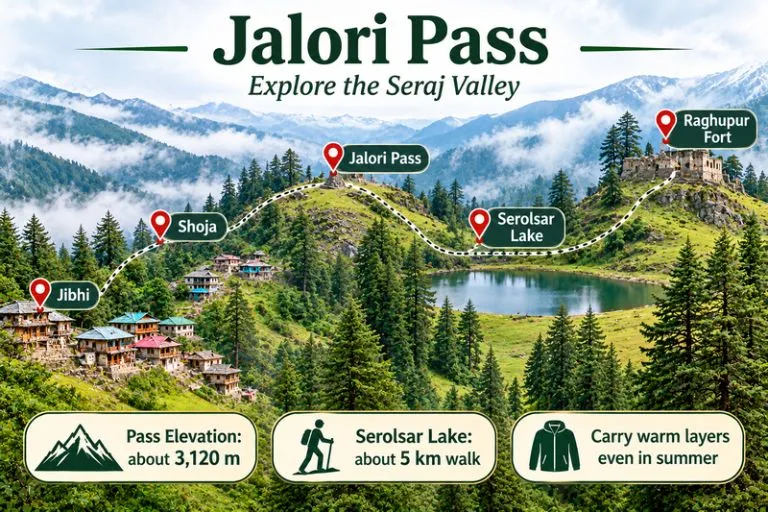
Jalori Pass is about 5 km from Shoja, 20 km from Banjar, 73 km from Kullu, and 79 km from Mandi. It can be reached by road from the Kullu side through Banjar and Jibhi, or from the Shimla side through the Anni region. The road to the pass is typically open between April and November, but conditions can change with weather, so check that the road is accessible before you leave. Taxis and local transport are available from Banjar and Jibhi, and mobile network coverage is limited on the way.
For official tourism information on Himachal Pradesh, you can refer to Himachal Pradesh Tourism, the state government’s official tourism body.
Best Time to Visit Jalori Pass
Most travellers visit between April and November, when the road is usually open. June and October are popular for treks, with clear views and pleasant daytime weather. The monsoon months of July and August bring heavy rain, slippery trails, and a risk of landslides. In winter the area gets snow, which can close the road, so it is best for experienced travellers who check conditions first.
Tips to Keep in Mind When Traveling to Jalori Pass
While travelling to Jalori Pass, a few things will help you have a smooth trip.
- Check that the road is accessible before you start.
- Pack warm clothes even in summer, as the weather turns cold once you reach the top.
- Avoid driving on unknown mountain roads after dark.
- Carry water, snacks, and a waterproof jacket, and make sure your phone is fully charged.
- If there is thunder, heavy rain, or low visibility, it is better to avoid trekking.
- Respect local religious beliefs near Serolsar Lake and take all of your rubbish with you.
Things to Do Around Jalori Pass
Jalori Pass offers lots of exciting options for adventure and nature lovers. You can trek through the beautiful forested landscape towards Serolsar Lake. The walk to the lake is about 5 km one way and takes roughly 1.5 to 2 hours, and day hikes to the lake or Raghupur Fort usually take about 3 to 4 hours in total.
- The serene atmosphere around this holy lake is a great place to unwind from a busy schedule.
- If you are interested in history, Raghupur Fort has ancient structures to explore.
- The open meadows provide amazing views of the Himalayan mountains.
- Drive along the twisty mountain roads, take photos of the green forests, and keep an eye out for local birdlife and animals.
- There are also several villages nearby, including Jibhi and Shoja.
Relax in a café, try some local Himachali food, and get a taste of the traditional mountain lifestyle. Some popular attractions include the forest walk to Serolsar Lake and the views from Jalori Pass and Raghupur Fort.
Since Jibhi and Shoja sit in the Tirthan area, Explore Hills’ Tirthan Valley Trek is a natural next trek for travelers who want more forest and river scenery.
Conclusion
Jalori Pass is not a constructed monument. It developed from an old mountain crossing that connects the Kullu Valley with Anni and the Outer Seraj region. It is a destination for travelers who want to experience the quiet and natural side of Himachal Pradesh. The weather at Jalori Pass is unpredictable, so it is advised to plan your trip carefully. The pass gets its cultural and spiritual touch from the sacred Serolsar Lake and the nearby Budhi Nagin temple. While Manali and Shimla are other famous destinations in Himachal Pradesh, Jalori Pass retains an untouched, offbeat charm.
If you would like to see more of Himachal after Jalori, Explore Hills’ Shimla Kalpa Sangla Chitkul Trip covers Shimla and the Kinnaur villages in one journey.
Frequently Asked Question’s
How difficult is Jalori Pass?
The Jalori Pass trek is easy to moderate. At an elevation of about 3,120 m (10,236 feet), some beginners may feel mildly breathless.
What is the cost of the Jalori trek?
The cost depends on whether you go independently or with a local guide, how long you stay, and which facilities you include. Day hikes are generally inexpensive, so please confirm current guide charges locally.
How many days are enough to explore Jalori Pass?
One day is usually enough to visit the pass and do a nearby trail. If you also want to explore Jibhi, Shoja, and the surrounding valleys, plan two to three days.
Are there options for accommodation near Jalori Pass?
Homestays and guesthouses are available in the local villages.
What should a traveller carry when visiting Jalori Pass?
Carry warm clothing, comfortable trekking shoes, drinking water, snacks, a raincoat, a first-aid kit, and a fully charged phone. It is also a good idea to download offline maps, because mobile connectivity can be unreliable in the mountains.