

Table of Contents
What Is Lakshman Jhula?
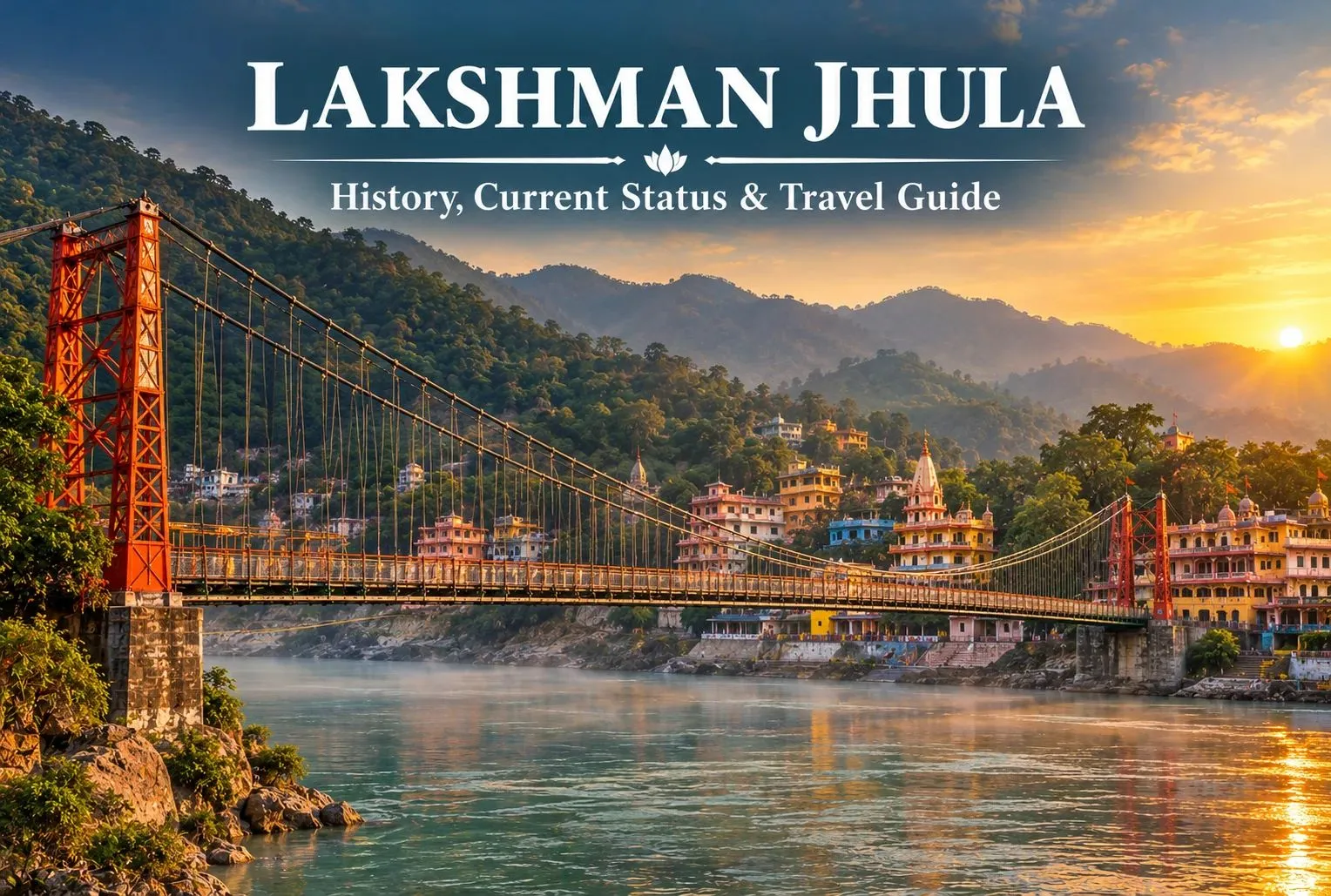
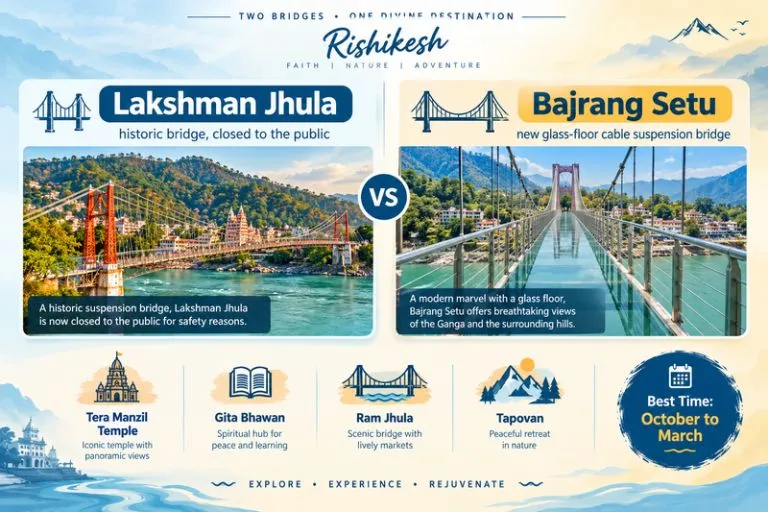
Lakshman Jhula is a well-known landmark of Rishikesh, Uttarakhand, popular for its religious as well as historical significance and breathtaking views of the Ganga River. The old bridge is no longer accessible to the public but travelers can visit temples, ashrams, cafés, and shops located in the area. The newly constructed Bajrang Setu brings the design some contemporary twist.
History and Religious Significance
- Local tradition holds that Lord Lakshman, who is younger brother of Lord Rama from the Ramayana story, used jute ropes to cross the River Ganga at this point. The existing iron suspension bridge was constructed during the 20th century.
- Uttarakhand Tourism indicates that the construction of the bridge took place in 1939 and its length is about 137 metres. Thus, the Lakshman Jhula can be regarded as an engineering landmark and a spiritual one as well, situated in Rishikesh.
Neighborhood of the Lakshman Jhula has become a busy area including:
- Hindu temples and shrines.
- Ashrams and Yoga centres.
- Ghat of the River Ganga.
- Small stores and markets.
- Coffee shops and restaurants.
- Guesthouses and hotels.
- Viewpoints of the River Ganga.
The Lakshman Jhula area is convenient for tourists interested in spiritual life, photography, architecture and culture of Rishikesh.
Bajrang Setu: The New Bridge Near Lakshman Jhula
- In connection with the closure of the Lakshman Jhula bridge, there is a necessity of constructing a new bridge in this part of Rishikesh. The new bridge Bajrang Setu has been constructed in close proximity to Lakshman Jhula.
- According to the news from 2026 about Bajrang Setu, it is a cable suspension bridge with glass floor sections. It has been opened for visitors in 2026 and allows viewing the Ganga River from above.
They will not visit the old bridge, but instead:
- Visit the historic part of Lakshman Jhula.
- Take photos of the historic bridge from specific viewpoints.
- Visit the nearby temples and riverside places.
- Cross the new bridge if necessary.
- Move on to Tapovan and further.
There might be some restrictions concerning the glass parts of the Bajrang Setu. Travellers should know the latest information about this attraction.
Things to See Near Lakshman Jhula
1. Tera Manzil Temple
- Tera Manzil Temple, also called Trayambakeshwar Temple, is one of the recognized temples around Lakshman Jhula.
- This multi-story place is notable for many temples near the Ganga River and can be regarded as an interesting place for those who want to observe Hindu architecture while walking around.
2. Ganga Riverside
- Ganga River is very important for Rishikesh’s identity and at the same time the riverside of Lakshman Jhula is a good place for taking photos, strolling around and looking at religious ceremonies.
- In the morning, the atmosphere is special, while in the evening the ghats, shops, and temples become busier.
- However, it is essential to be careful near the river due to high waves and sudden changes of water levels.
3. Gita Bhawan
- Gita Bhawan is one of the places located near Lakshman Jhula that serves as a center of cultural and religious activities.
Best Time to Visit Lakshman Jhula
The best time to visit Lakshman Jhula and nearby places in Rishikesh is determined by the type of experience you want.
- The months of October through March: These are generally good months to enjoy sightseeing as well as walking and shopping in the markets and temples. These months are especially suitable for those who want to combine their visit to Rishikesh with other places in Uttarakhand.
- The months of April through June: These months can be hot and crowded, especially during the day; however, it is possible to do some sightseeing. When visiting during this time of the year, it is imperative that you be hydrated, and plan any outdoor activities according to the weather conditions.
- The months of July through September: These months will see heavy rains in Uttarakhand, sometimes causing severe changes to river conditions. Rain may therefore limit tourists’ ability to participate in some outdoor activities.
For current weather forecasts and rainfall alerts before you travel, you can refer to the India Meteorological Department, the Government of India’s official weather agency.
How to Reach Lakshman Jhula
Rishikesh can be accessed through various transportation means such that it is easily connected via road transport such as buses, taxis and through personal vehicles. The nearest railway station for traveling to Rishikesh would be the Rishikesh railway station and Haridwar. It is also accessible via Jolly Grant Airport that is located 20 km away from Rishikesh. Transportations for travel within the city include the use of local taxis, auto-rickshaws and bikes.
Travelers who want to combine Rishikesh with other parts of the state can explore Explore Hills’ Uttarakhand Tour Package for a wider itinerary.
Lakshman Jhula Travel Tips for Visitors
A bit of forethought can help a lot while visiting the region.
- Ensure that the bridges are open before coming. Don’t think that the conditions will be the same as those seen in the old pictures or books. The historic Lakshman Jhula bridge is at present closed to public access.
- Choose comfortable shoes. This region has markets, temples, lanes and river walks. Wearing comfortable shoes can come in handy while visiting the places.
- Respect the holy sites. Most of the places near Lakshman Jhula are active religious sites. It is recommended to dress accordingly and follow the instructions of the locals while taking pictures.
- Take precautions near Ganga. Although the Ganges River may look quite calm in certain spots, there might be fast currents in some areas. Don’t enter into the restricted zones.
- Visit during the early morning hours. One can visit the region in the early hours of the morning to enjoy the peaceful ambiance and also to get good pictures.
Why Is Lakshman Jhula Important to Rishikesh?
Known for its cultural, historical, and religious importance, Lakshman Jhula is one of the most visited landmarks in Rishikesh. While traffic is now prohibited on the old bridge, it is possible to visit different temples, ashrams, riverside places, markets, and restaurants in the vicinity.
Conclusion
Despite the fact that the old bridge is currently out of bounds for general usage, Lakshman Jhula continues to serve as a major landmark for Rishikesh. The historical significance of the bridge, along with its surroundings that include the Himalayas, the River Ganga and temples, make this an important inclusion while planning a trip to Rishikesh.
The best strategy for a trip to this place in 2026 would be to plan the trip keeping Laxman Jhula in mind as a landmark rather than considering it to be a bridge. The neighborhood surrounding this bridge and other places like Bajrang Setu or Ram Jhula may be considered for river crossings, as the case may be.
This is an easy entry point for any person visiting Uttarakhand. Since Rishikesh is also the starting point for many Himalayan pilgrimages, Explore Hills’ Kedarnath Yatra is a natural next step for travelers who want to go deeper into the mountains.
Frequently Asked Questions
Is Lakshman Jhula open in 2026?
The original Lakshman Jhula continues to be closed to public use. Tourists can still explore the local neighborhood and see the historic bridge. There is also a new bridge called Bajrang Setu located near Lakshman Jhula, which allows modern-day pedestrians to cross the river. Operating conditions of Bajrang Setu may apply.
Why is Lakshman Jhula famous?
The most common reason for the popularity of Lakshman Jhula is the historic suspension bridge itself, religious significance in connection with Lord Lakshmana and the Ramayana as well as its location above the Ganga River in Rishikesh.
What has taken the place of Laxman Jhula?
Near the historic Laxman Jhula, there is a new bridge called Bajrang Setu that offers modern river crossing. Bajrang Setu has a glass floor and offers tourists a completely new bridge experience.
What places can I visit around Lakshman Jhula?
The local attractions include Tera Manzil Temple, Gita Bhavan, Ram Jhula, the riverside of Ganga, the Tapovan area attractions as well as the Beatles Ashram. Neer Garh Waterfall and other Rishikesh attractions can also be visited as part of a larger itinerary.