

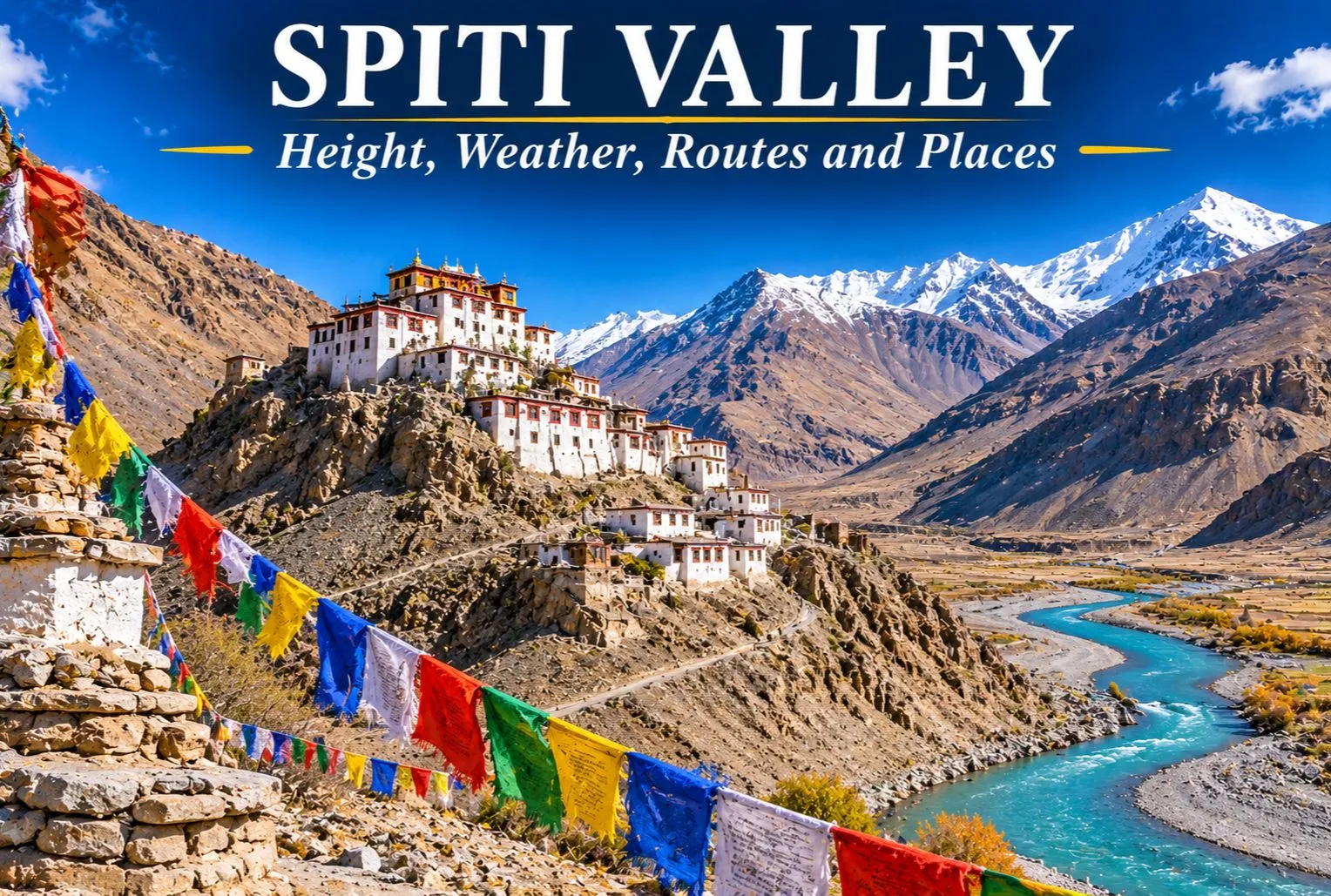
Barren mountains, ancient monasteries, and a sky that feels close enough to touch: Spiti Valley is one of the most dramatic cold-desert regions in India. It rewards careful planning, because the weather, the roads, and the altitude all shape how a trip goes. This guide answers the questions travellers ask most, from where it is and how high it sits to routes, seasons, and places to see.
Table of Contents
Where Is Spiti Valley?
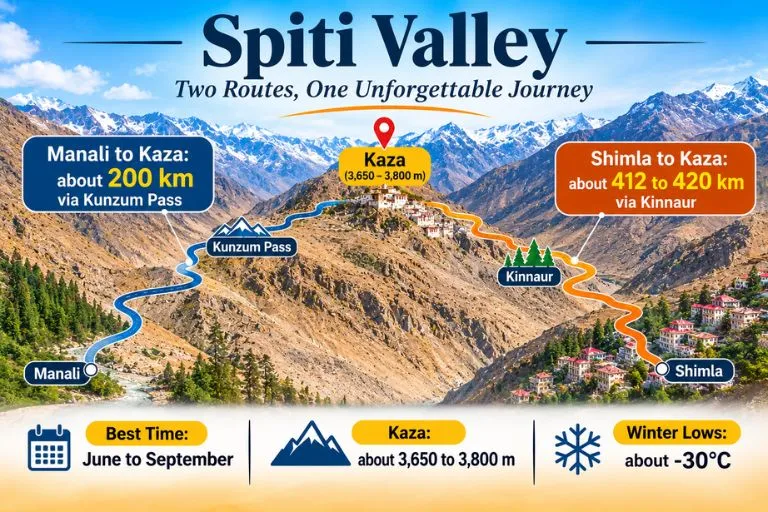
Many first-time visitors ask where is Spiti Valley. It lies in the Lahaul and Spiti district of Himachal Pradesh, in the western Himalayas, close to the Tibetan border. Kaza is the main town and the sub-divisional headquarters. The valley is a trans-Himalayan cold desert, which explains the sparse greenery and the stark landscape. The district connects to the rest of Himachal through two road approaches: one through Kinnaur via Shimla, and the other through Manali via the Kunzum Pass.
Spiti Height and Spiti Valley Height
The Spiti height depends on where you stand. Guides place Kaza at roughly 3,650 to 3,800 metres above sea level, and the district as a whole is listed at about 3,350 metres. The Spiti Valley height rises much higher in places: the Kunzum Pass, the entrance from Lahaul, is about 4,551 metres, and villages such as Langza, Hikkim, and Komic sit higher than Kaza. At these altitudes, altitude sickness is a real risk, so give your body a day or two to adjust before heading to higher villages.
Spiti Weather and Temperature by Season
Spiti weather is extreme and changes quickly. The Spiti temperature swings sharply between day and night, and the Spiti Valley temperature in winter is among the lowest in India. January is typically the coldest month, with lows reaching about −30°C, while July is the warmest, with an average around 15°C and nights that can still dip to freezing. Guides give summer daytime figures of about 15 to 25°C.
| Season | Months | Approximate temperature | What to expect |
|---|---|---|---|
| Summer | June to September | about 15 to 25°C by day, near freezing at night | Both routes open, clear skies |
| Shoulder | May and October | about 10 to 20°C by day | Manali route opening or closing |
| Winter | November to March | about −15 to −30°C | Only the Shimla route, snow, very cold |
Best Time to Visit Spiti Valley
For most travellers, the best time to visit Spiti Valley is from June to September, when both road routes are usually open and the days are mild. May and October can work too, but road access is less reliable. Winter is for experienced travellers who are ready for deep cold, closed roads, and limited services. The Manali side closes in winter because snow blocks the Kunzum Pass, and the Shimla side is the winter approach.
How to Reach Spiti Valley
If you are wondering how to reach Spiti Valley, there is no airport or railway station in the valley. The nearest airport is Bhuntar in Kullu, and the nearest railheads are Joginder Nagar, Shimla, and Chandigarh. From there, you travel by road to Kaza. Planning how to reach Spiti also means choosing between two routes, and each has a different feel.
Manali to Spiti Distance
The Manali to Spiti distance is about 200 km to Kaza via the Atal Tunnel, Gramphu, Batal, and the Kunzum Pass. Guides give the Manali to Spiti Valley distance as roughly 8 to 12 hours of driving, depending on the road. This route is open only in the warmer months, and the road can close in winter.
Shimla to Spiti Distance
The Shimla to Spiti distance is longer, about 412 to 420 km via Rampur, Kinnaur, Nako, and Tabo. The official district listing places Kaza about 412 km from Shimla and notes that it takes more than a day of driving, so plan an overnight halt. This route is open for most of the year and gives a more gradual climb in altitude.
| Route | Approximate distance | Typical travel time |
|---|---|---|
| Manali to Kaza | about 200 km | 8 to 12 hours |
| Shimla to Kaza | about 412 to 420 km | 2 to 3 days with stops |
Only two petrol pumps serve the whole district, at Tandi and at Kaza, so fill your tank before the long stretches.
Places to Visit in Spiti Valley
The places to visit in Spiti Valley are spread across monasteries, villages, and high-altitude landscapes:
- Key Monastery: One of the largest monasteries in the valley, built into a hillside near Kaza.
- Kibber, Langza, Hikkim, and Komic: High villages with sweeping views, fossils, and a famous post office.
- Dhankar Monastery: Known for its wall murals and its dramatic cliffside position.
- Tabo Monastery: One of the oldest monasteries in the region.
- Pin Valley National Park: A cold-desert reserve and home to wildlife such as the ibex.
- Chandratal: A high-altitude lake reached over the Kunzum Pass in the open months.
Spiti Tour Package: What to Look For
Many travellers choose a Spiti tour package because the roads, altitude, and distances make independent planning difficult. A good Spiti Valley tour package usually covers transport, stays, meals, and a sensible itinerary that allows time to acclimatise. When you compare Spiti Valley packages, check which route they use, how many nights are planned at altitude, what safety and medical arrangements are included, and what the cancellation policy says. Itineraries that rush the climb are a warning sign.
Extending Your Trip
If you want a structured journey through the valley, Explore Hills’ Spiti Valley Tour covers the region’s main monasteries and villages. Trekkers who want to cross between Kinnaur and Spiti on foot can also look at the Pin Bhaba Pass Trek.
For official route information, road status, and travel advice, you can refer to the Lahaul and Spiti district website, the district administration’s official portal.
Packing and Safety Tips
- Layered clothing, including a down jacket even in summer
- Sunscreen, sunglasses, and lip balm, as the sun is strong at altitude
- Personal medicines and a plan for altitude sickness
- Cash, as ATMs are limited
- Check road status before you travel, as routes can change quickly
Conclusion
Spiti Valley is a place that rewards slow travel. Choose the right season, understand the distances and altitude, and give yourself time to adjust. Whether you travel on your own or use a package, planning around the weather and the road is what makes the journey safe and memorable.
Frequently Asked Questions
Where is Spiti Valley located?
Spiti Valley is in the Lahaul and Spiti district of Himachal Pradesh, in the western Himalayas near the Tibetan border, with Kaza as its main town.
What is the Spiti height?
Kaza is roughly 3,650 to 3,800 metres above sea level, and the valley rises higher near passes and villages.
What is the Spiti Valley height at its highest points?
The Kunzum Pass, the entrance from Lahaul, is about 4,551 metres, and several villages sit above Kaza.
What is the Spiti temperature in winter?
Winter temperatures can fall to about −15 to −30°C, with January usually the coldest month.
What is the Spiti Valley temperature in summer?
Summer days are often about 15 to 25°C, but nights can still drop to freezing.
What is the Spiti weather like in the monsoon?
Spiti sits in a cold desert and gets little rain, but landslides on the approach roads can still disrupt travel, so check conditions.
What is the best time to visit Spiti Valley?
June to September is the usual best window, when both routes are generally open.
What is the Shimla to Spiti distance?
It is about 412 to 420 km to Kaza, so plan at least one overnight halt on the way.
What is the Manali to Spiti distance?
It is about 200 km to Kaza, usually taking 8 to 12 hours depending on the road.
How long is the Manali to Spiti Valley distance in travel time?
Most travellers plan one long day of driving, and the route is only open in the warmer months.
How to reach Spiti from Delhi?
Travel to Manali or Shimla first, then continue by road to Kaza, since there is no airport or railway station in Spiti.
How to reach Spiti Valley in winter?
The Shimla route through Kinnaur is the usual winter approach, since the Manali route closes when snow blocks the Kunzum Pass.