

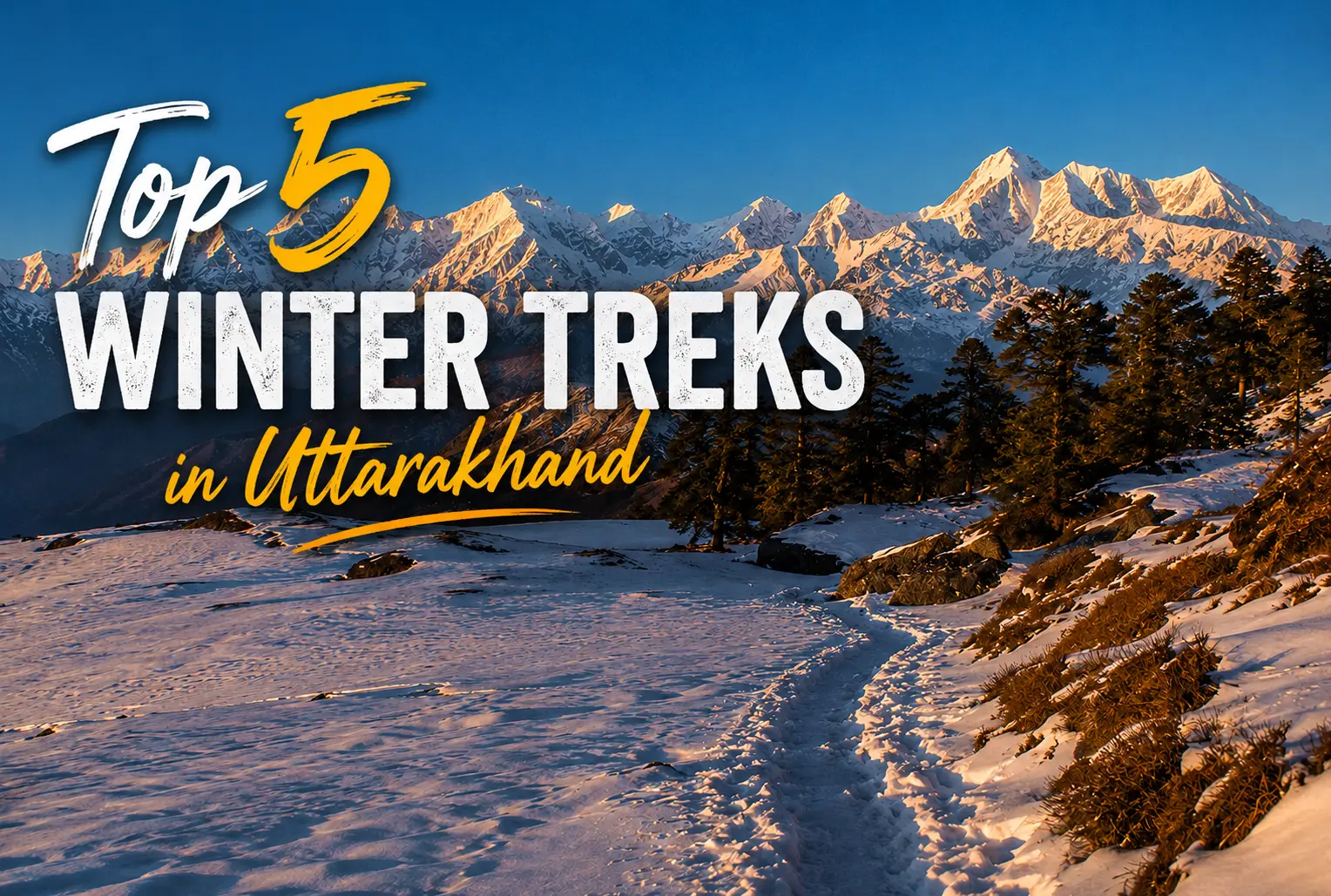
Winter changes Uttarakhand into something you have to see to actually believe. The trails turn white, the ridgelines go quiet, and the whole state slows down into this crisp, still version of itself. If you’ve ever wanted to walk through snow with nothing but mountain air and your own footsteps for company, this is the season and the place for you. Uttarakhand sits right in the lap of the Himalayas, and it doesn’t hold back when it comes to winter trekking options.
There’s something here whether you’ve never strapped on a pair of trekking shoes or you’ve already got a few summits under your belt alpine meadows buried under fresh snow, ridge walks with views that stop conversations, and sunrises over peaks that make the 5 a.m. wake-up calls feel worth it. Here’s a real breakdown of the winter treks worth your time.
Table of Contents
Chopta Chandrashila Tungnath Trek
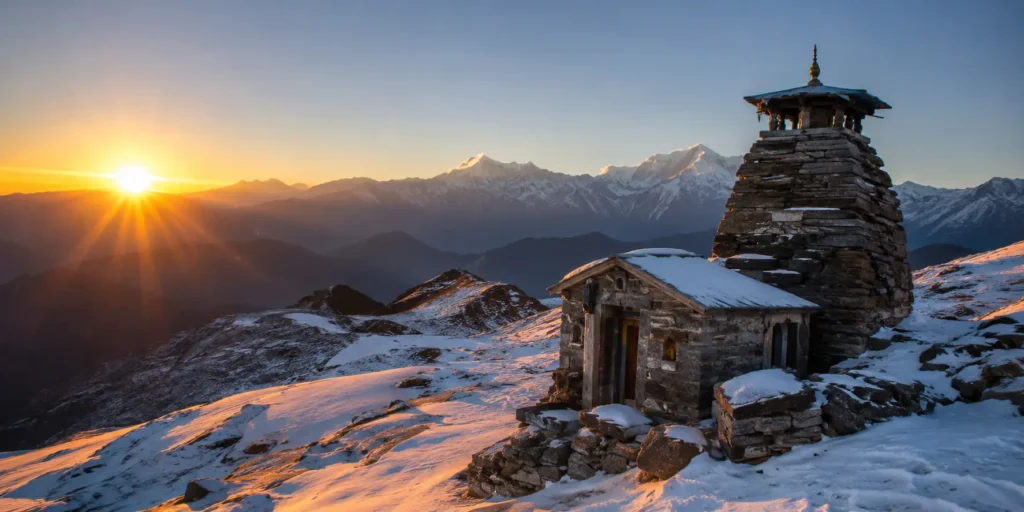
If you are looking for winter treks in Uttarakhand, this is one that is much often recommended. At a stretch this route strings together covers four very different experiences — Chopta, Tungnath, Chandrashila and Deoriatal each having unique scenic expertise. The exuberant moments like the sunrise from Chandrashila summit, with the first rays of the sun beautifully commenting on the snow that turns golden and orange in colour. On the clear mornings the you can see the Nanda Devi, Chaukhamba, Trishul and Kedar Dome from the top, which is a lot of Himalayan royalty in one frame.
On the way up you’ll pass through Tungnath Temple, the highest Shiva temple in the world and one of the Panch Kedar shrines. Deoriatal adds another layer to this trek with a clear alpine lake that mirrors the Chaukhamba range on a still day surrounded by a dense forest. Expect long stretches of rhododendron and pine, quiet meadows and in case if you are lucky, you will have a glimpse of the Himalayan Monal darting the undergrowth.
Dayara Bugyal Trek
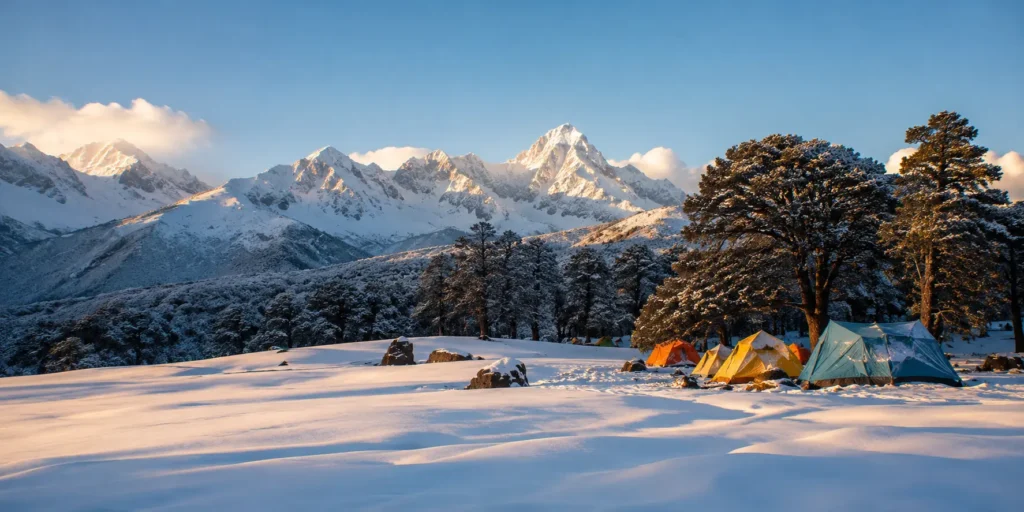
Dayara Bugyal has a reputation as one of the more forgiving treks in the Garhwal Himalayas, and it mostly lives up to it. The trail moves through thick alpine forest and small villages before opening into some of the biggest meadows you’ll find anywhere in Uttarakhand. Come in winter, though, and those same meadows vanish under snow — the whole landscape turns white and goes strangely quiet. Come back in spring or summer and it’s a completely different trip: the same ground fills with wildflowers instead. Same trail, two very different experiences depending on the season.
From Dayara Top, the views stretch out to Bandarpoonch, Srikanth, Jaonli, the Gangotri Range, and Draupadi Ka Danda II — an impressive lineup for a trek that’s genuinely manageable for most fitness levels. Along the route, campsites like Natin Village, Gui, Chilapada, and Nayata each have their own feel, tucked between the forest edge and open snowfields. It’s an easy one to recommend to first-timers, but plenty of experienced trekkers come back too — usually just for those meadow views.
Brahmatal Trek
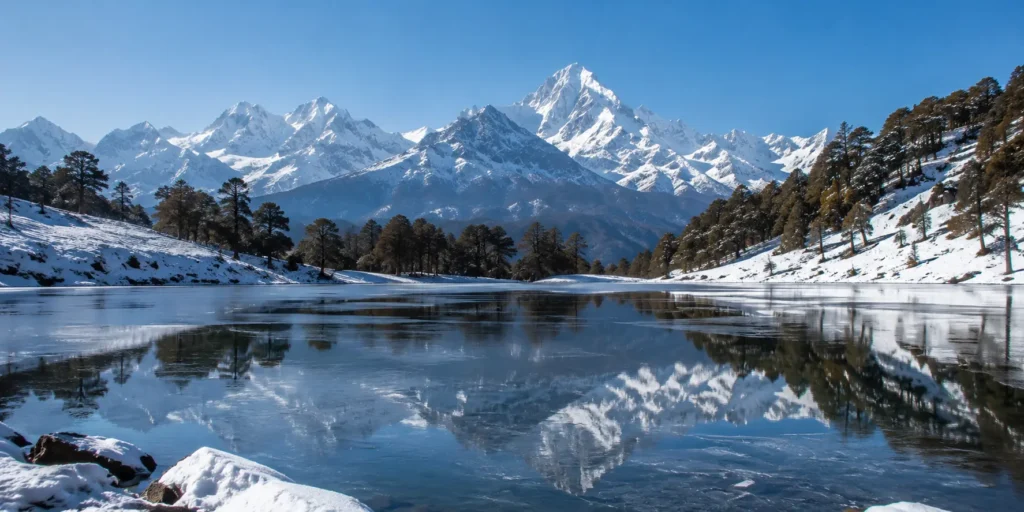
Brahmatal shows up on pretty much every “best winter treks in India” list, and once you’ve walked it, that’s not hard to understand. Snow-covered trails, frozen lakes, wide-open Himalayan views — it all comes together in a way that almost feels staged. The two lakes on this route, Brahmatal and Bekaltal, freeze solid by winter. There’s something oddly calming about standing next to a lake that’s gone completely still under a layer of ice.
The best views, though, come from Tilandi Top and Jhandi Top, where Trishul, Nanda Ghunti, Mrigthuni, and Maiktoli line up across the horizon. Between the viewpoints, the trail cuts through oak and rhododendron forest, past the Gujreni campsite, and across meadows that are worth slowing down for — great for photos, or just for sitting and watching the light shift. There’s some local mythology tied to the place too: Brahmatal Lake is said to be where Lord Brahma once meditated, which is a nice bit of backstory to have in mind while you’re up there. Difficulty-wise, it sits comfortably in the middle — doable for a determined beginner, still rewarding if you’ve already done a dozen treks.
Kuari Pass Trek
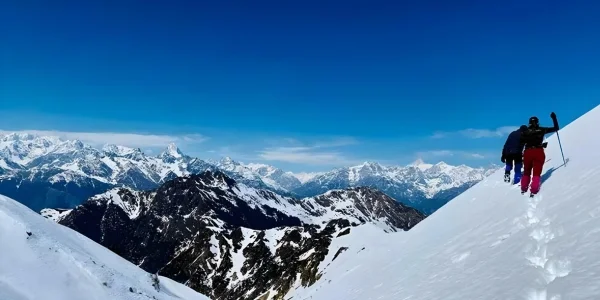
Kuari Pass follows the old Curzon Trail, and that history shows in the route — you move through Garhwal villages like Tugasi, dense oak and pine cover, open snowfields, and eventually into the Nanda Devi Biosphere Reserve, which is a UNESCO World Heritage Site. In the winter the Tali lake freezes making it a good rest stop, and the campsites along the way giving you clearer skies most of the nights. The true beauty is the Kauri Pass itself which is close to a 280-degree sweep of the Himalayas with Nanda devi, Dronagiri, Chaukhamba, Kamet, Changabang, Neelkanth, Hathi Parbat, and Kunti Bhandar all visible at once.
Once you come down through Gorson Bugyal’s snow covered meadows near Auli, Nanda devi stays in view the whole way, rising above everything else on the skyline. This kind of view will make you stop in the mid of the trek regardless of how many time you have seen mountain in your lifetime. These views are worth capturing and serial.
Kedarkantha Trek
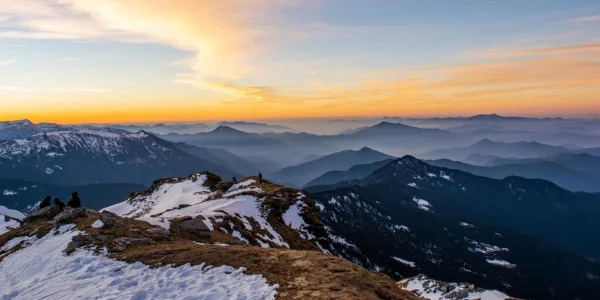
Kedarkantha gets called the “Queen of Winter Treks,” and it earns the title — this is probably the most popular winter trek in India, and it delivers on nearly every count. Starting from Sankri, the trail winds through pine, oak, maple, and rhododendron forest before the snow really takes over. Juda Ka Talab, a small lake with its own Shiva mythology attached, freezes over in winter and makes for a memorable early stop.
Higher up, the Kedarkantha Base and Hargaon campsites are known for genuinely dark, light-pollution-free skies — the kind of stargazing that’s hard to find closer to home. The summit tops out at 12,500 feet, with a full 360-degree view: Swargarohini, Bandarpoonch, Black Peak, and Draupadi Ka Danda, with the Har Ki Dun and Rupin valleys stretching out below. One thing worth knowing before you go — the trek enters a no-network zone past Sankri, so you’re properly cut off for the duration. For a lot of trekkers, that’s not a downside at all; it’s kind of the point.
Frequently Asked Question’s
Which is the best winter trek for beginners?
Kedar Kantha and Dayara Bugyal are best winter treks in Uttarakhand that are highly recommended for beginners.
When is the best time to see snow?
The best time to witness snow is from December to February as these months receives the heaviest snowfall, that covers the alpine meadows and leaves the high-altitude lake like Brahmatal
completely frozen.
What should I pack for a winter trek in Uttarakhand?
The Winter might be freezing and you must dress up properly to stay safe. It is very important to dress up in multiple layers. You must carry thermal innerwear, heavy insulated or down jacket,
balaclava, waterproof trekking pants, UV protected sunglasses and fleece gloves.
Is prior trekking experience required?
No, beginner-friendly winter treks like Kedarkantha and Brahmatal don’t require prior experience, but good fitness is essential, while tougher treks like Kuari Pass are better suited for experienced
trekkers.
Are these treks safe for solo travelers?
Yes, these treks are safe for solo travelers when undertaken with proper guidance and support. Joining a trusted trekking organization like Explore Hills makes the journey much safer, more comfortable, and hassle-free, with experienced trek leaders, well-planned itineraries, and assistance throughout the trek.