

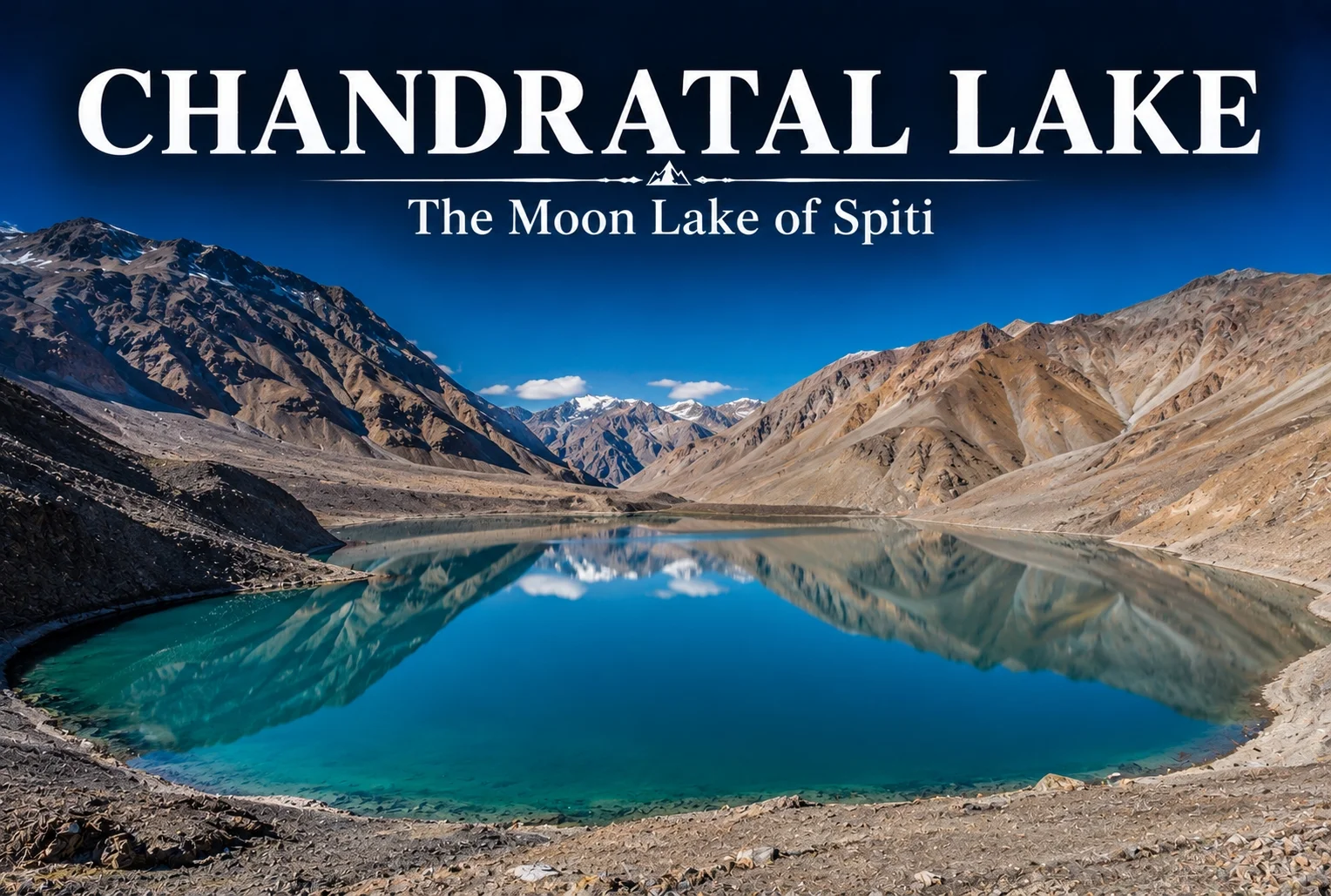
At nearly 4,300 meters, tucked into the cold desert landscape of Himachal Pradesh’s Spiti region, there’s a lake so perfectly crescent-shaped that its name literally translates to “Moon Lake.” That’s Chandratal Lake — and once you see the water’s shifting color against the barren mountains around it, the name stops feeling like poetic exaggeration.
Table of Contents
Where Is Chandratal Located?
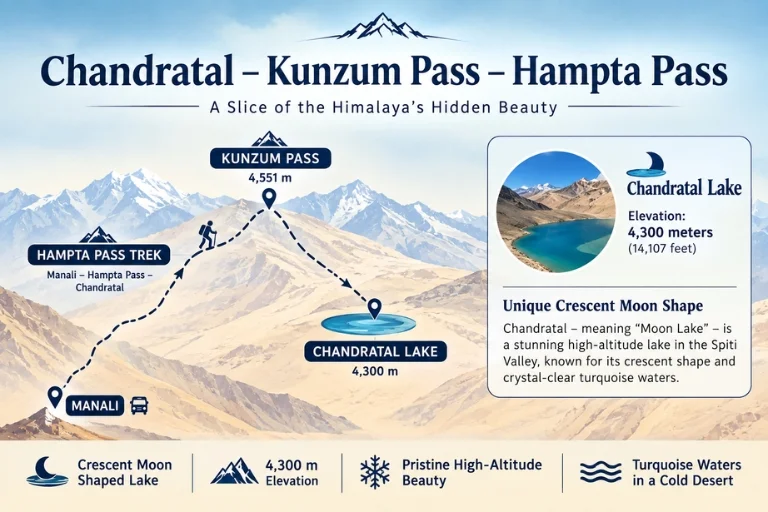
Chandratal sits in the Lahaul and Spiti district of Himachal Pradesh, close to the Kunzum Pass, roughly midway between the Kullu and Spiti valleys. The lake’s crescent shape gives it the name “Moon Lake,” and its remote, high-altitude setting is exactly what makes the drive and trek to reach it feel like entering an entirely different landscape from the green valleys most people associate with Himachal.
Chandratal Trek: Getting There
Reaching this lake usually happens one of two ways — by road, via a motorable track from the Kunzum Pass side, or on foot, through the Chandratal trek, a shorter but genuinely rewarding walk that most trekkers pair with the broader Hampta Pass route. The trek itself is relatively short, typically completed in a day from the roadhead, but the high altitude means acclimatization matters more than distance. Many travelers extend their Spiti circuit into this route, since Chandratal often serves as an extension point rather than a standalone destination. Explore Hills’ Hampta Pass Trek includes this lake as part of its extended itinerary for trekkers who want both landscapes in one trip.
Best Time to Visit Chandratal
Timing here matters more than almost anywhere else in Himachal. The best time to visit Chandratal is between mid-June and early October, when the Kunzum Pass road is open and accessible. Outside this window, heavy snowfall cuts the region off entirely, and the roads remain closed through winter and much of spring. Within that season, late June and September tend to offer the clearest water reflections and the fewest crowds, while July and August bring more travelers but also greener surrounding slopes.
Why the Lake’s Color Keeps Changing
One of the most talked-about details about Chandratal is how dramatically its color shifts throughout the day — from a deep turquoise in the morning light to a more muted grey-blue by evening. This happens due to the mineral content in the glacial water combined with how sunlight hits the lake at different angles, and it’s part of why photographers often plan to spend a full day here rather than a quick stop.
Camping by the Lake
Camping directly on the lake’s edge used to be common, though environmental regulations have since pushed designated campsites slightly further away to protect the fragile ecosystem. Even with that shift, spending a night near Chandratal remains one of the most memorable parts of a Spiti trip—clear night skies, near-total silence, and a level of stargazing that’s hard to match closer to any city. Travelers looking to combine this experience with a broader Spiti itinerary can check out Explore Hills’ Spiti Valley Tour, which covers the wider region beyond just the lake.
For official permit requirements and updated road conditions in the Lahaul-Spiti region, you can refer to the Himachal Pradesh Tourism Department, the state government body overseeing this area.
Conclusion
Chandratal doesn’t need much dressing up — a crescent lake, a barren cold-desert backdrop, and water that changes mood with the light throughout the day. Whether you reach it by road or via the trek, it’s the kind of stop that tends to outlast the memory of everything else on a Spiti trip.
Frequently Asked Questions
What is the best time to visit Chandratal?
The best time to visit Chandratal is between mid-June and early October, when the Kunzum Pass road is open and the region is accessible.
How difficult is the Chandratal trek?
The trek is relatively short and moderate in difficulty, though the high altitude means proper acclimatization is important before attempting it.
Why is Chandratal called the Moon Lake?
Chandratal gets its name from its distinct crescent moon shape, which is especially visible from higher viewpoints around the lake.
Can you camp near Chandratal Lake?
Yes, though camping is now restricted to designated sites slightly away from the lake’s edge to help protect the surrounding ecosystem.