

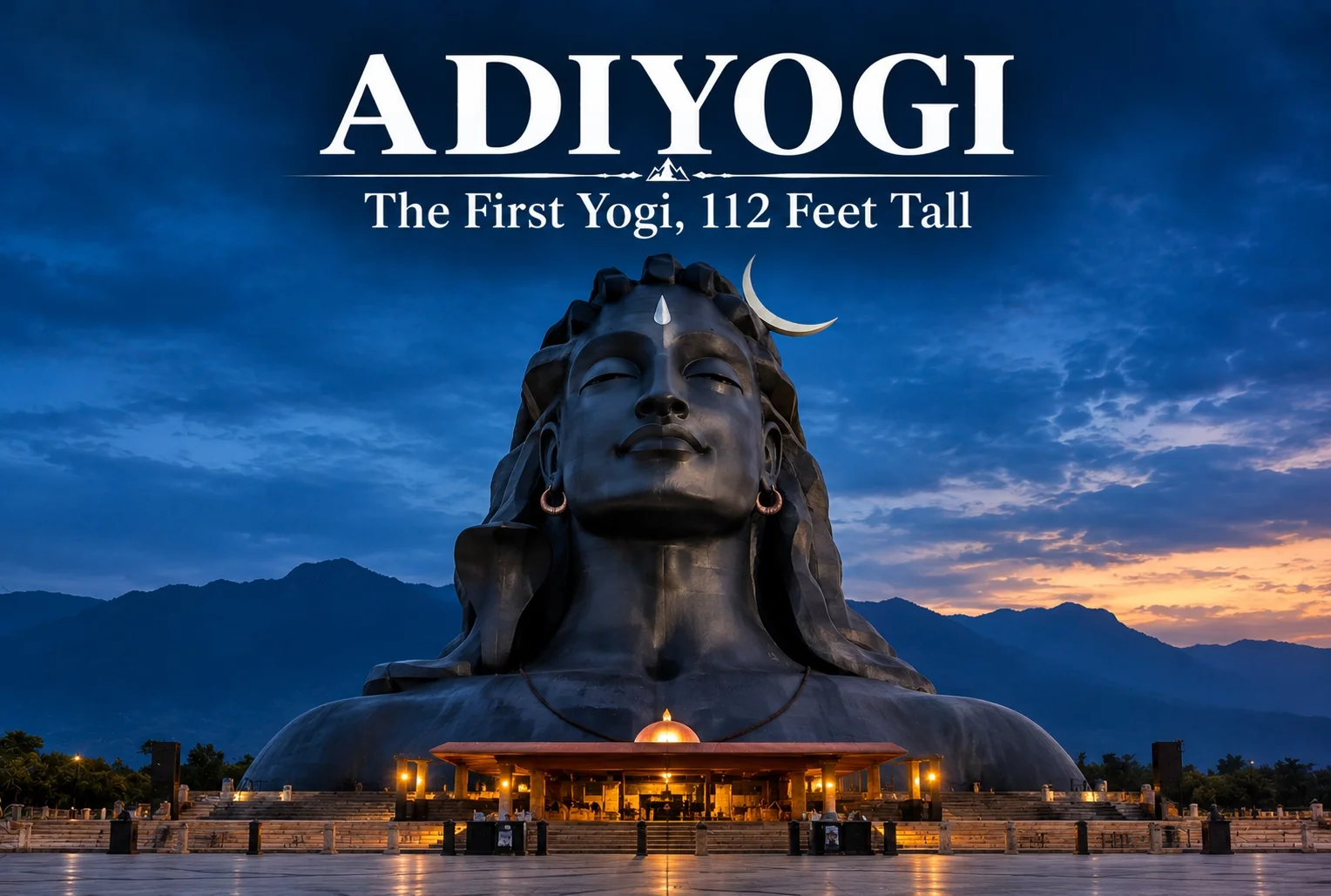
At 112 feet tall, there’s a face carved into the landscape near Coimbatore that’s visible from kilometers away — and once you’re standing beneath it, the scale genuinely stops most visitors mid-sentence. This is Adiyogi, and it’s become one of South India’s most recognized modern spiritual landmarks in a remarkably short span of time.
Table of Contents
What Is the Adiyogi Statue?
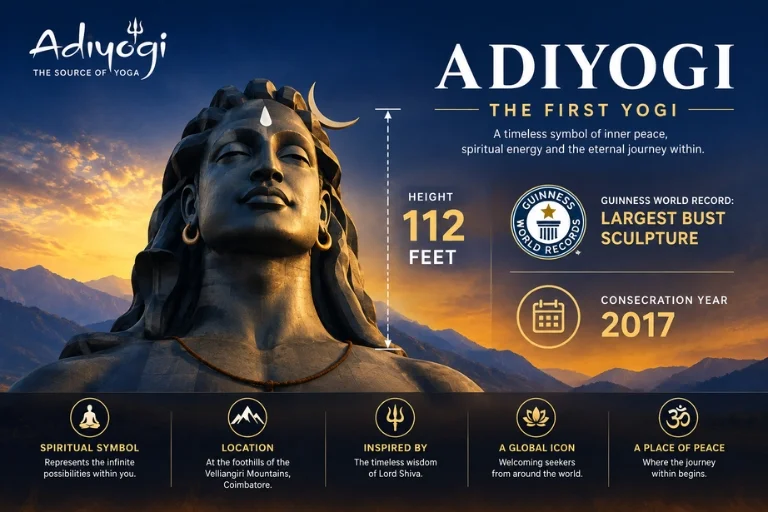
The Adiyogi statue is a massive bust depicting Lord Shiva as the “first yogi” — the primordial source of yogic wisdom in Indian tradition. Built at the Isha Yoga Center in Coimbatore, Tamil Nadu, the statue was consecrated in 2017 and stands at 112 feet, a height deliberately chosen to represent the 112 methods of self-transformation described in yogic scripture. It’s constructed from steel and holds the Guinness World Record for the largest bust sculpture in the world.
The Adiyogi Temple Complex
Surrounding the statue is the Adiyogi temple complex, which includes the Dhyanalinga, a meditative shrine considered one of the most powerful energy spaces at the Isha center, along with several other consecrated spaces designed for meditation and yogic practice. Unlike a conventional temple built around ritual worship, this space is designed primarily around meditation and stillness, drawing visitors who come specifically to sit and experience the space rather than perform traditional puja.
Why 112 Feet? The Significance Behind the Number
The height isn’t arbitrary. In yogic tradition, the number 112 represents the total pathways available for a human being to transcend physical limitations, according to teachings associated with the Isha Foundation. The statue’s face is also intentionally designed to be visible from a significant distance, symbolizing Shiva’s watchful presence over the surrounding Velliangiri foothills.
Best Time to Visit
The site is open year-round, though the most comfortable months to visit fall between October and February, when Coimbatore’s weather is noticeably cooler than the peak summer months of April and May. Evenings are particularly popular, since the statue is illuminated after dark and hosts a light-and-sound show that draws large crowds, especially around Maha Shivaratri, when the site sees its highest footfall of the year.
How to Reach
Coimbatore International Airport is the nearest airport, roughly 30 km from the Isha Yoga Center, and Coimbatore Junction serves as the primary railway station for visitors arriving by train. From either point, the center is easily reached by taxi or local transport. For travelers whose Himalayan pilgrimage circuit already includes other major Shiva shrines, Explore Hills’ Kedarnath Yatra offers a very different but equally significant Shiva pilgrimage experience in the high Himalayas, and the Panch Kedar Trek covers all five sacred Kedar shrines in one extended journey.
For official tourism information and travel advisories for the Coimbatore region, you can refer to the Tamil Nadu Tourism Department, the state government body overseeing tourist infrastructure in the area.
Conclusion
Adiyogi isn’t an ancient monument, but it’s already carved out a permanent place among India’s most striking spiritual landmarks. Between the sheer scale of the statue, the symbolism packed into its design, and the surrounding meditative spaces, it’s a site that manages to feel both modern and deeply rooted in tradition at the same time.
Frequently Asked Questions
What is the height of the Adiyogi statue?
The Adiyogi statue stands at 112 feet, a height chosen to represent the 112 methods of transformation described in yogic tradition.
Where is the Adiyogi temple located?
It is located at the Isha Yoga Center in Coimbatore, Tamil Nadu, at the foothills of the Velliangiri mountains.
When was the Adiyogi statue consecrated?
The statue was consecrated in 2017 and has since become a recognized Guinness World Record holder for the largest bust sculpture globally.
What is the best time to visit the Adiyogi statue?
October to February is considered the most comfortable period, thanks to cooler weather compared to the peak summer months.