

If you want to experience the most magical Autumn Treks in India in the Himalayas, then the Spring and the Autumn seasons are the best for you. As the Monsoon bids farewell it marks the beginning of the Autumn season. The clear blue sky, peaks that were hidden behind the clouds now show their appearance, rhododendrons starts blooming across the hills in the vibrant shades of red and pink. These best autumn seasons trek is a complete bliss and offers a treat to your eyes. Here are a few recommendations of the bet autumn season treks that you should experience once in a life time.
Table of Contents
Gaumukh Tapovan Trek
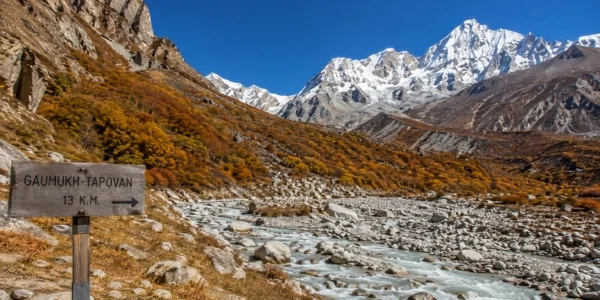
The trek to Gaumukh-Tapovan is not similar to most of the trekking routes in the Himalayas. This journey is a total bliss to your eyes connecting your inner self too spiritually and naturally. The journey of this holy pilgrimage begins from Gangotri where every pilgrim from all across the India visits the holy temple. This trek is an 8 day Himalayan expedition that begins at Gangotri, leads past the sacred source of the Rive Ganga at Gaumukh, ending at the alpine meadows of Tapovan. Standing at the peak altitude of 14,203 to 14,600 feet this trek is a pure bliss to Himalayan expedition leaving you breathless.
Kuari Pass Trek
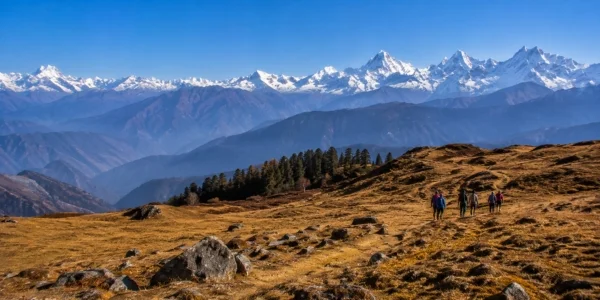
If you want a trek that’s basically a highlight reel of the Garhwal Himalayas, Kuari Pass delivers. Also called the Curzon Trail (after the British viceroy who once used it), this is a six-day, roughly 22-km route through Chamoli district that mixes dense oak-and-pine forest with open snow meadows the kind that make the trail feel like it belongs in a different season entirely. There’s history baked into this one too, which makes the walking feel a bit less routine. You’ll pass Tali Lake, frozen solid most winters, camp under skies where the stars feel unusually close, and get a proper look at Auli along the way.
But the real reward is standing at the pass itself, where the view opens up across roughly 280 degrees of skyline Nanda Devi, Dronagiri, Chaukhamba, Kamet, Changabang, Neelkanth, Hathi Parbat, Kunti Bhandar, one after another. The trail also cuts through the edge of the Nanda Devi Sanctuary, a UNESCO World Heritage site, before dropping down through the snow meadows of Gorson Bugyal and somehow the views only get better from there, with Nanda Devi towering over the whole descent. Few things compare to being that close to Uttarakhand’s tallest peak.
Gaumukh Gangotri Trek
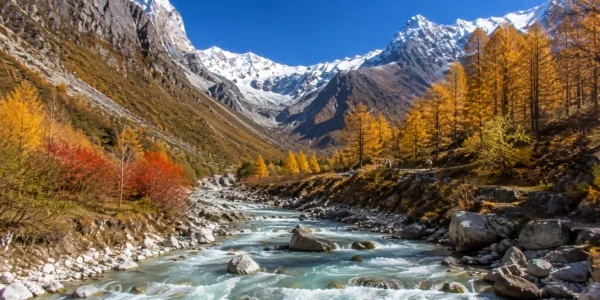
There’s a reason Gaumukh keeps pulling trekkers back: it’s not really about the summit, it’s about the source. The trail starts at Gangotri, one of the four Char Dham sites, and threads through the Uttarkashi district following the Bhagirathi River all the way to Gaumukh the snout of the Gangotri Glacier, where the river quite literally begins. For a country where rivers hold deep spiritual weight, reaching the birthplace of one of the Ganga’s main headstreams is something else entirely.
Along the way you’ll pass through Chirbasa’s pine forest and camp at Bhojbasa, ringed by birch trees with the Himalayas opening up around you. Bhagirathi I, II, and III rise up on one side, Meru on the other. It’s a gentle, well-worn trail as far as Himalayan treks go, which is why it draws such a wide mix of people including plenty of trekkers in their 50s who’ve been waiting to make this particular walk. Glaciers, river, mountain, and a strong dose of faith that combination is what makes Gaumukh linger in memory long after you’re backing home.
Buran Ghati Trek
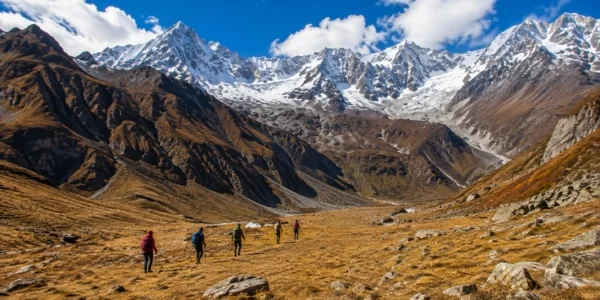
Buran Ghati isn’t a trek you do just for fun instead it’s a lot more than that. You start out under thick cover of birch, maple, pine, and oak, and for a while it’s just you, the crunch of the trail, and whatever birds happen to be around that day, until the trees fall away and Dayara Meadows opens up in front of you, this huge stretch of grassland with horses wandering around and snow peaks sitting right there in the distance, the kind of view that makes people stop walking for a second.
Along the route you’ll also pass through Janglik and Barua, a couple of old villages that still feel untouched in a lot of ways, timber houses, fruit orchards, life moving at its own pace, worth slowing down for. Then things get serious at Buran Ghati Pass itself, sitting at around 15,000 feet, steep and tiring, and if you happen to catch it early season, there’s a snow wall you can actually rappel down, not something that comes up on most treks.
From there the trail leads down to Chandranahan Lake, a glacial lake set in stark, dramatic terrain that holds real spiritual meaning for locals, and before it’s all over there’s Litham, a campsite sitting right where two valleys meet, with waterfalls pouring down from the Chandranahan glacier close by, a hard place to leave, honestly. Add in the views of the Dhauladhar range and a string of remote peaks scattered along the way, and it’s easy to see why people who’ve done this trek keep bringing it up long after they’re back home.
Har Ki Dun Trek
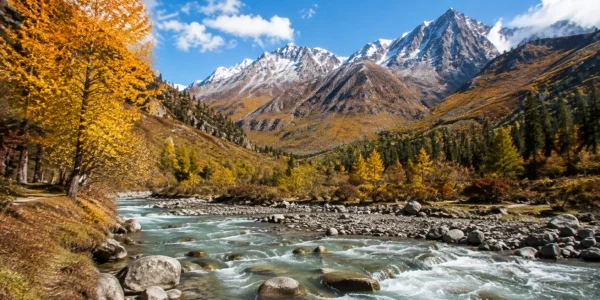
Har Ki Dun is one of those treks that stays with you locals often call it the “Valley of Gods,” and once you’re there, it’s easy to see why. There’s real mythology attached to this trail: legend has it the Pandavas walked this very path on their way to heaven, and that story trails alongside you the whole way, giving the trek a weight that goes beyond the scenery, good as the scenery is. You start from Sankri, a small village that already feels miles removed from anything urban. From there the trail moves through thick forest, open meadow, and streams clear enough that you’ll want to stop just to look at them.
You’ll pass through Osla and Seema too, villages where day-to-day life hasn’t shifted much in generations. Osla especially is worth slowing down for; the old wooden houses are striking, and there’s a temple there once dedicated to Duryodhana, now home to Lord Someshwar a small but telling reminder of how layered this region’s history is. The Supin River stays with you for most of the walk, and every so often the tree line breaks just enough to reveal Swargarohini I and II, Bandarpoonch, the dark bulk of Kala Nag (Black Peak), and eventually the Jaundar Glacier.
There’s also a modest Mahadev temple tucked along the route easy to walk past if you’re not paying attention, but worth the pause. Between the birdsong, the wind, and the sound of water the whole way, Har Ki Dun is an easy-to-moderate trek that suits beginners looking for both scenery and a bit of quiet spirituality.
Ranthan Kharak Trek
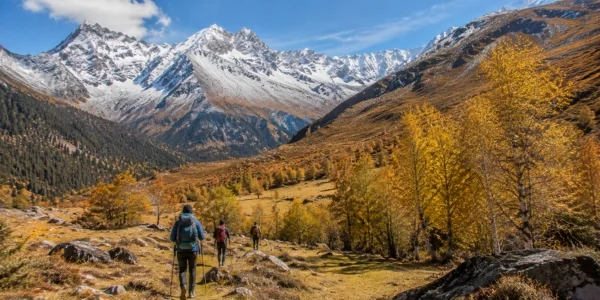
For trekkers who’d rather skip the crowded routes, Ranthan Kharak is a good find tucked into the lesser-explored Kumaon region, it’s got green meadows, dense oak and rhododendron forest, and Himalayan views without the usual foot traffic. Come spring, the rhododendrons bloom red and pink across the hillsides, turning the whole trail into something out of a painting. The trek starts from Gogina, a small village where you get a real feel for Kumaoni life before heading into the hills. From there it’s forest trails, river crossings, and open clearings locally called kharaks that make up most of the journey.
The standout moment is the ridge walk up to Ranthan Top, which opens up views of Nanda Devi, Sunanda Devi, Nanda Kot, Mt. Mrigthuni, Trishul, and the Panchachuli range, all at once. Balchan Kund, a quiet lake ringed by forest and birdsong, adds another peaceful stop along the way, and the Bajimanian Kharak campsite is about as good as it gets for stargazing. If you’re after untouched trails and don’t mind doing a bit more research to get there, this is one of the better-kept secrets in Uttarakhand.
Dayara Bugyal Trek
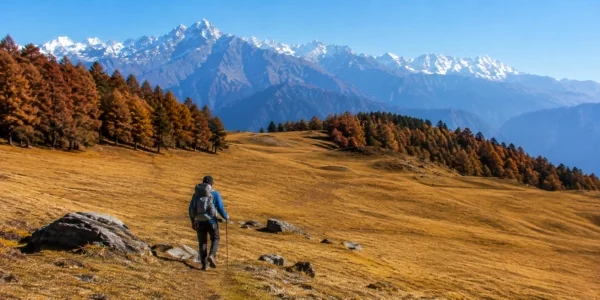
Dayara Bugyal is often recommended as a first Himalayan trek where you can witness some of the best meadows in Uttarakhand. During the Autumn season you can witness the crisp blue skies, clean air and sharp edgy mountain peaks. The views are often hard to beat: Bandarpoonch, Srikanth, Jaonli, the Gangotri Range and Draupadi Ka Danda 2 all show up along the horizon at different points on the trail. The trek begins in Natin, a village that gives a good first taste of Himalayan life before the climb starts in earnest.
This trek begins in Natin, a village that gives a beautiful taste of the Himalayan life. The campsite at Gui and Chilapada sit right in the middle of forest and meadow and the night skies that are worth staying up for. Dayara Tip itself is the payoff – an open, snow-covered expanse with mountains on every side. Not only this but this trail runs through the maple and rhododendron forest, past Barnala Lake and through the quiet Nayata campsite. So, weather it is your first trek or the 15th one, the Dayara Bugyal ha the lot more to offer you.
Frequently Asked Question’s
Which Autumn Treks in India are for beginners?
If you’re just starting out, Dayara Bugyal and Har Ki Dun are both solid picks. They’re not too demanding, but you still get that classic Himalayan feel meadows, forests, mountain views without needing prior experience.
What’s the best time for spring trekking?
Generally, March through May is when spring treks are at their best. The snow starts melting, trails become more accessible, and the weather is pleasant enough to enjoy the views without freezing.
Which trek offers the best Himalayan views?
Kuari Pass is hard to top for this. The panoramic views you get up there peaks stretching out in every direction are honestly one of the best payoffs for the effort.
Do I need prior trekking experience?
Not necessarily. It really depends on which trek you pick. A lot of the spring treks are designed with beginners in mind, so if it’s your first time, you can still find something manageable.
What should I pack for a spring trek?
Good trekking shoes are non-negotiable, and it’s worth carrying something for rain since mountain weather can flip quickly. Beyond that, just the usual essentials: water, snacks, a basic first-aid kit, and a headlamp.