

Table of Contents
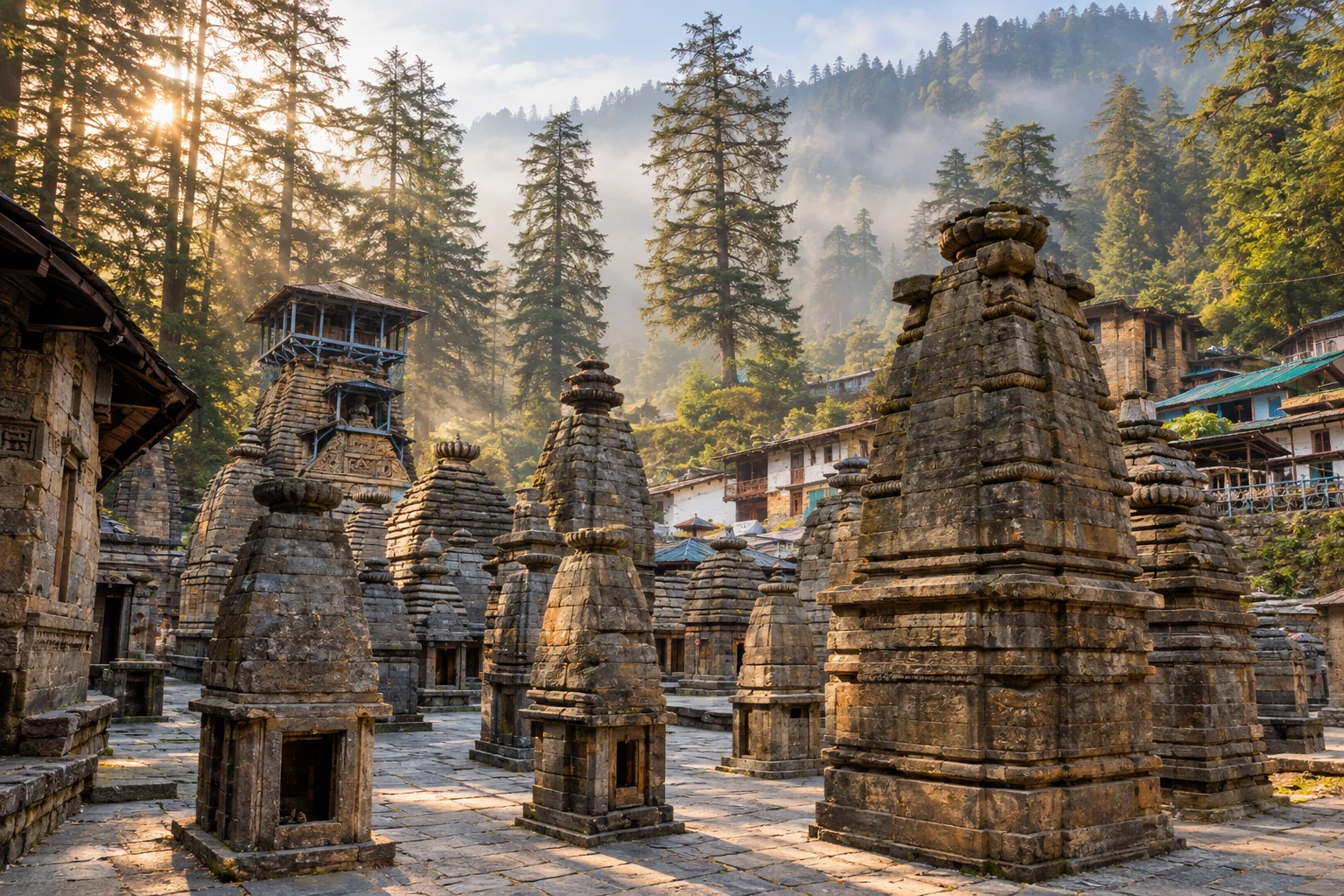
Hidden inside a forest of towering deodar trees in Uttarakhand’s Kumaon region lies one of India’s most remarkable clusters of ancient architecture — Jageshwar Dham. Unlike most pilgrimage sites built around a single grand structure, this destination is an entire valley of stone shrines, with over a hundred temples packed into one serene, forested clearing beside a gently flowing stream. For history lovers, architecture enthusiasts, and devotees of Lord Shiva alike, few places in the Himalayas offer quite this density of heritage in one spot.
If you’re planning a visit to Jageshwar Dham, this guide covers everything worth knowing — the temple’s history, its Jyotirlinga status, the story of Vridh Jageshwar, and practical details for your trip.
What Is Jageshwar Dham?
Jageshwar, often referred to as Jageshwar Dham, is a temple town located in the Almora district of Uttarakhand, roughly 35 to 37 km from Almora city. The site is home to a complex of approximately 124 large and small stone temples, most dating between the 7th and 14th centuries, with many built during the reign of the Katyuri dynasty who established much of what stands as Jageshwar Dham today.
The two largest clusters within the complex are locally known as the Dandeshwar group, comprising 15 temples, and the Jageshwar group itself, comprising 124 temples. Of the 124 main shrines, 108 are dedicated to Lord Shiva, making this one of the densest concentrations of Shiva temples found anywhere in India. The temples follow the Nagara style of architecture, recognisable by their tall, curved spires and finely carved stone doorways, and many are protected today by the Archaeological Survey of India.
Set against a backdrop of thick deodar forest, with the Jata Ganga stream flowing quietly behind the complex, Jageshwar Dham has long been considered one of the most spiritually significant and visually striking sites in the Kumaon region, drawing pilgrims and history lovers who come specifically to walk through Jageshwar Dham’s forested temple lanes.
Jageshwar Temple: A Jyotirlinga of Debated Status
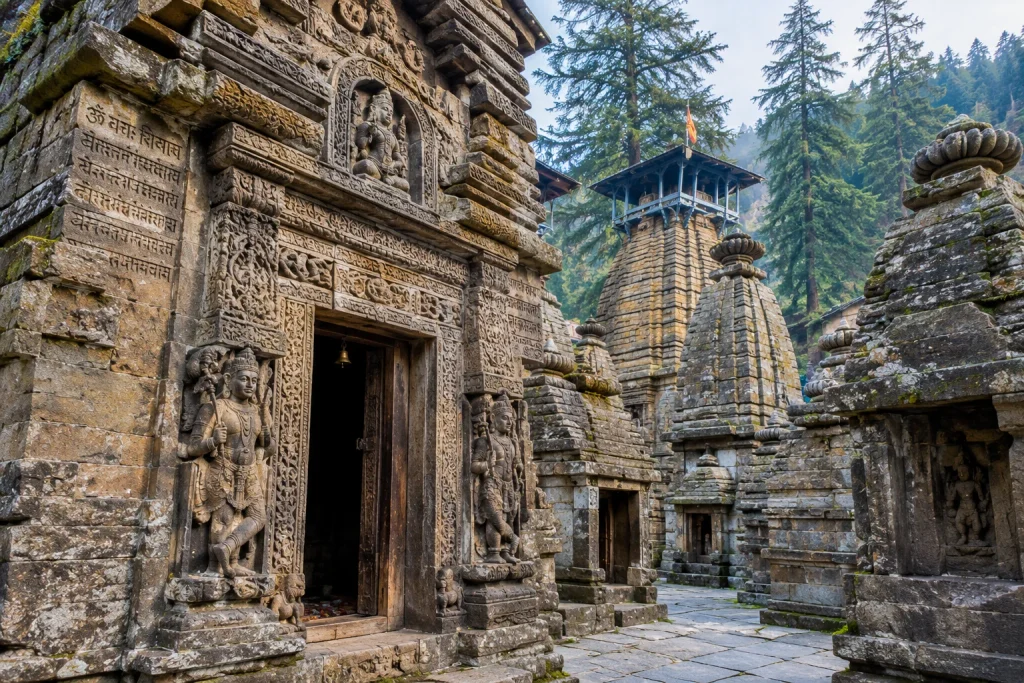
The central shrine, known as the Jageshwar Temple or Jageshwar Mahadev, holds a special place in Hindu tradition. According to many scriptural references, Jageshwar is counted among the twelve Jyotirlingas of Lord Shiva, specifically identified with Nagesha, associated with the sacred forest of Daruka-vana mentioned in the Shiva Purana. This identification isn’t universally agreed upon among scholars and other claimant sites, but for the millions who visit each year, the temple’s Jyotirlinga status is central to its draw.
Inside the main sanctum sits a distinctive Shivalinga, said by local tradition to be uniquely shaped, and the temple is guarded at its entrance by figures of Nandi and Skanda. Legend holds that this is where Lord Shiva once meditated alongside the Saptarishis, the seven sages, and that the worship of the Shiva Linga itself originated at this very site.
The Legend of Vridh Jageshwar
A short distance up the surrounding hillside sits another significant shrine: Vridh Jageshwar, meaning “Old Shiva,” as distinct from the main temple below, which is associated with Bal Jageshwar, or Child Shiva.
According to local tradition, Lord Shiva came to this forest to meditate, and when the women of the village learned of his presence, they left their household duties to seek his darshan. The men of the village, angered by this, are said to have confronted the ascetic figure who had so captivated their wives, unaware of who he truly was. This story is central to how the temple complex is understood locally, with the “old” and “young” forms of Shiva reflecting different stages of the same divine presence across the valley.
Vridh Jageshwar sits on higher ground overlooking the main complex, offering a quieter, less crowded alternative for those wanting a more contemplative visit away from the main pilgrim crowds.
Other Temples Worth Visiting
Beyond the two principal shrines, the wider Jageshwar Dham complex includes several other significant structures. The Mrityunjaya Temple is considered the oldest stone shrine on the site, while the Dandeshwar Temple, part of the separate 15-temple cluster near the entrance to the valley, is the largest single structure in the complex. Other notable shrines include the Kuber Temple, the Navagraha Temple dedicated to the nine celestial bodies, the Chandi-ka Temple, and a small temple to Nanda Devi.
Walking through the complex, visitors will also find intricate carvings and inscriptions in Brahmi and Sanskrit scripts etched into pillars and walls, offering a tangible link to the artisans and dynasties who shaped this site over multiple centuries.
Best Time to Visit and Festivals
Jageshwar Dham remains open throughout the year, and its forested setting makes it a pleasant destination in almost any season. That said, two periods stand out for travellers. Maha Shivratri draws thousands of devotees for elaborate celebrations centred on the main temple, while the Jageshwar Monsoon Festival, held in July and August, adds cultural performances and festivities to the pilgrimage experience.
For those who enjoy snowfall, mid-December to the end of January can bring light snow to the valley, adding a different character to the site’s already atmospheric setting. Summer months, from March to June, offer the most comfortable trekking and walking weather for exploring the wider complex at a relaxed pace.
How to Reach Jageshwar Dham
The nearest major town to Jageshwar Dham is Almora, roughly 35 km away, well connected by road to other parts of Uttarakhand. The nearest railway stations are Kathgodam and Haldwani, both a few hours’ drive away, while Pantnagar Airport serves as the closest airport, with regular flights connecting to Delhi.
Our Kedarnath Yatra package offers a similarly profound Shiva pilgrimage experience for travellers looking to combine multiple sacred sites across Uttarakhand in a single trip.
For official heritage information and travel details, you can refer to the Almora district administration’s official tourism page, a government resource for the region.
Frequently Asked Question’s
What is Jageshwar Dham known for?
Jageshwar Dham is known for its cluster of roughly 124 ancient stone temples, most dating from the 7th to 14th centuries, and its status as one of the twelve Jyotirlingas of Lord Shiva. Jageshwar Dham also draws visitors for its serene, forested setting.
What is the difference between Jageshwar Temple and Vridh Jageshwar?
The main Jageshwar Temple is associated with Bal Jageshwar, or Child Shiva, while Vridh Jageshwar, located on higher ground nearby, represents Old Shiva, according to local legend.
How far is Jageshwar from Almora?
Jageshwar Dham is located approximately 35 to 37 km from Almora city in Uttarakhand’s Kumaon region.
Is Jageshwar considered a Jyotirlinga?
According to several traditional scriptures, Jageshwar is counted among the twelve Jyotirlingas, though its status is debated among scholars, as other sites also claim this identification.
What is the best time to visit Jageshwar Dham?
The site is open year-round, but Maha Shivratri and the Jageshwar Monsoon Festival in July-August are particularly significant times to visit for cultural and religious experiences.