

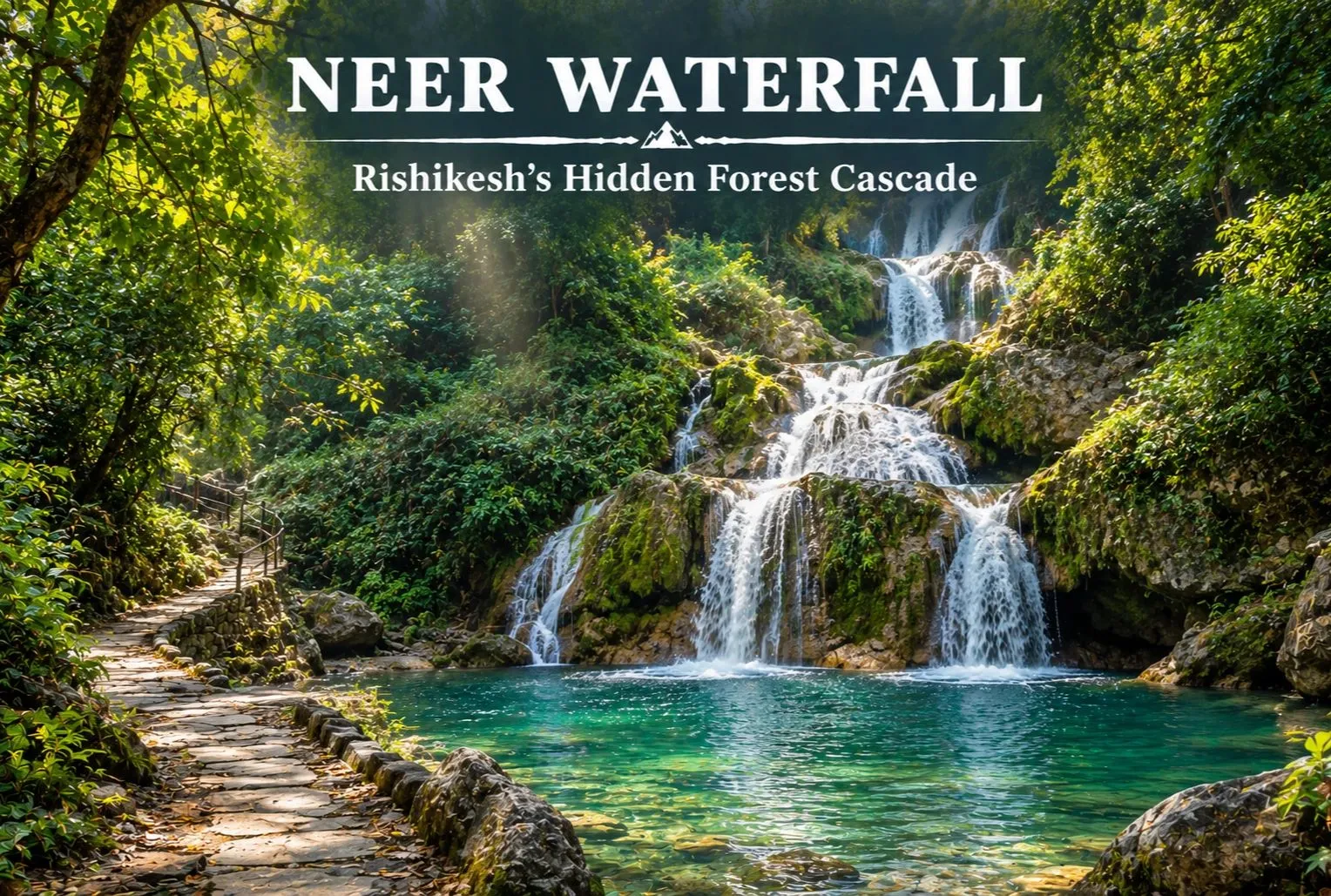
Rishikesh is better known for its bridges, ghats, and rafting, but a quieter option sits just outside town. Neer Waterfall, also called Neer Garh Waterfall, is a cascade you reach by walking through forest and along a stream. This guide covers how to get there, the best season, and the safety points to keep in mind.
Table of Contents
About Neer Waterfall
Neer Waterfall is a multi-tiered cascade near Rishikesh in Uttarakhand, fed by a hill stream that runs down forested slopes. Visitors come for the pools, the cool spray, and the walk itself. “Neer” means water in Hindi, and Neer Garh refers to the local stream. It works well as a half-day outing after you have seen the main Rishikesh sights.
Quick Facts
| Detail | Information |
|---|---|
| Location | Rishikesh area, Uttarakhand |
| Also known as | Neer Garh Waterfall |
| Walk | About 1 to 2 km each way (approximate) |
| Best season | October to March |
| Avoid | Heavy rain and the monsoon |
These figures are approximate, so confirm them locally before you go.

How to Reach Neer Waterfall
Most visitors start from the Laxman Jhula side of Rishikesh. Commonly cited distances run from roughly 5 to 10 km depending on the starting point. A taxi or auto can take you to the trailhead, and you walk the rest. Rishikesh and Haridwar are the nearest railheads, and Jolly Grant Airport near Dehradun is the nearest airport. Routes and distances can change, so check them before you set out.
The Trail and What to Expect
The path runs beside the stream, with stone steps and a few spots where you cross the water, so it can be slippery. There are several tiers and pools along the way. A small entry ticket is often charged, but fees and opening hours change, so check at the gate. Most visitors spend a couple of hours here, including the walk.
Best Time to Visit Neer Waterfall
October to March is the most comfortable season, with cool weather and a gentle, steady flow. April to June is warm and the stream runs lower. The monsoon, from July to September, makes the falls look their fullest but is the riskiest time, since flash floods and landslides can occur on hill streams. Follow any local closures. For official weather advisories, you can refer to the India Meteorological Department, the Government of India’s official weather agency.
Safety Tips
- Avoid the stream and the falls during or just after heavy rain
- Wear shoes with good grip, since the rocks are slick
- Do not climb the cascades or jump into pools you have not checked
- Keep children close and stay on the marked path
- Carry your waste back out
- Go early in the day and plan to leave well before dark
Nearby Places in Rishikesh
- Laxman Jhula and Ram Jhula: the two suspension bridges over the Ganga
- Triveni Ghat: known for the evening Ganga aarti
- Neelkanth Mahadev Temple: a forest-ringed Shiva shrine, a longer drive from town
What to Pack
- Comfortable shoes or sandals with grip
- A change of clothes and a small towel
- A reusable water bottle and a light snack
- A rain jacket in the monsoon months
- A waterproof pouch for your phone
- Some cash for entry or parking
Conclusion
Neer Waterfall is a simple, rewarding stop for anyone who wants a quiet walk and a cool pool in Rishikesh. Go in the dry season, stay on the path, and treat the monsoon with respect. If you are planning a Himalayan trip beyond Rishikesh, Explore Hills’ Harsil Valley Trek and Kedarnath Tungnath Tour are good places to start.
Frequently Asked Questions
Where is Neer Waterfall located?
It is in the Rishikesh area of Uttarakhand and is usually reached from the Laxman Jhula side, followed by a short walk.
What is the best time to visit Neer Waterfall?
October to March is the most comfortable season, while the monsoon is best avoided for safety.
How long is the walk to the falls?
It is commonly described as about 1 to 2 km each way, but confirm locally before you go.
Is there an entry fee for Neer Waterfall?
A small ticket is often charged, but fees and timings change, so check at the gate.
Is it safe to visit in the rainy season?
It can be risky because of flash floods and slippery rocks, so avoid it during heavy rain.