

Table of Contents
High in the Garhwal Himalayas of Uttarakhand, Tungnath stands as one of the most awe-inspiring pilgrimage and trekking destinations in India. As the highest Shiva temple in the world, it draws pilgrims seeking spiritual blessings and trekkers chasing some of the most breathtaking Himalayan views accessible on a relatively short trail. Set against a backdrop of snow-capped peaks and alpine meadows, this ancient shrine is as much a natural wonder as it is a sacred one.
If you’re planning a visit, our own Chopta Tungnath Trek package covers the complete journey, but before you set out, here’s everything worth knowing about Tungnath — its temple, height, distance from Chopta, trekking difficulty, and the best time to visit.
What Is Tungnath?
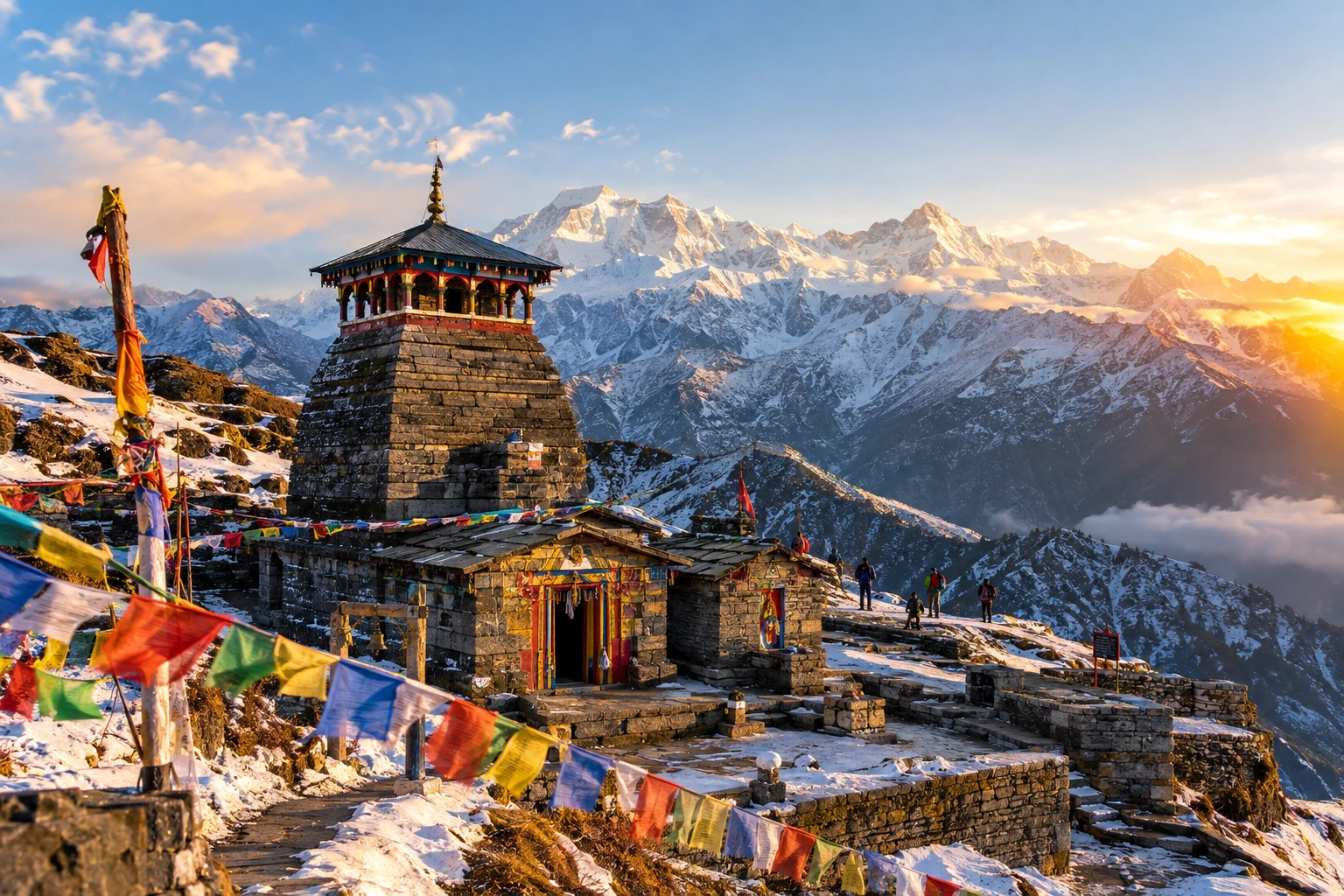
This ancient Hindu temple is dedicated to Lord Shiva and located in the Rudraprayag district of Uttarakhand. It holds the unique distinction of being the highest Shiva temple in the world and is also considered the highest among the five Panch Kedar temples scattered across the Garhwal Himalayas. According to mythology, this is where Lord Shiva’s arms are believed to have appeared after he took the form of a bull to avoid the Pandavas — a legend shared across the entire Panch Kedar circuit.
Believed to be well over a thousand years old, the shrine has stood through centuries of harsh Himalayan weather, drawing devotees who make the trek not just for its religious significance, but also for the sense of peace and scale that comes from standing at such a remote, high-altitude location.
Tungnath Temple: History and Significance
The Tungnath temple is built in the traditional North Indian Nagara architectural style, using stone construction suited to withstand extreme mountain conditions. Unlike the more heavily visited Kedarnath, it offers a quieter, more contemplative pilgrimage experience, largely because of its relative remoteness and shorter trekking season.
Devotees believe that worshipping here completes an essential part of the broader Panch Kedar pilgrimage, which also includes Kedarnath, Rudranath, Madhyamaheshwar, and Kalpeshwar. The temple’s priesthood traditionally comes from the Maithili Brahmin community, a practice that has continued for generations. During the harsh winter months, when the shrine closes and access becomes nearly impossible due to heavy snowfall, the symbolic deity is moved to Mukumath village, where worship continues until it reopens in spring.
Tungnath Height and Altitude
One of the most frequently asked questions by trekkers is the exact Tungnath height above sea level. The temple is situated at an altitude of approximately 3,680 metres (around 12,073 feet), making it a genuine high-altitude destination despite the relatively short trekking distance required to reach it.
This altitude is significant because it means trekkers should take basic precautions against altitude-related discomfort, even though the trail itself is short. Staying hydrated, pacing your ascent, and carrying warm layers are all recommended, since temperatures at this height can drop sharply, particularly in the early morning and evening.
For those continuing further, the nearby Chandrashila Peak rises even higher, to around 3,860–4,000 metres, offering one of the most complete 360-degree Himalayan panoramas in the entire region, including views of Nanda Devi, Trishul, and the Chaukhamba massif on clear days.
Chopta to Tungnath Distance
The trek begins from the small village of Chopta, often nicknamed the “Mini Switzerland of India” for its lush meadows and cool climate. The Chopta to Tungnath distance is approximately 3.5 kilometres one way, making it one of the shortest routes to any high-altitude Himalayan temple in the country.
Most trekkers complete this stretch in around 2 to 4 hours, depending on fitness level and pace. The trail is well-defined, largely paved with stone steps, and passes through a mix of forested sections and open alpine meadows before reaching the shrine. For those wanting to extend the journey, an additional 1.5 km climb beyond it leads to the summit of Chandrashila Peak, adding roughly another 1 to 2 hours to the round trip.
Tungnath Trek: Route and Difficulty
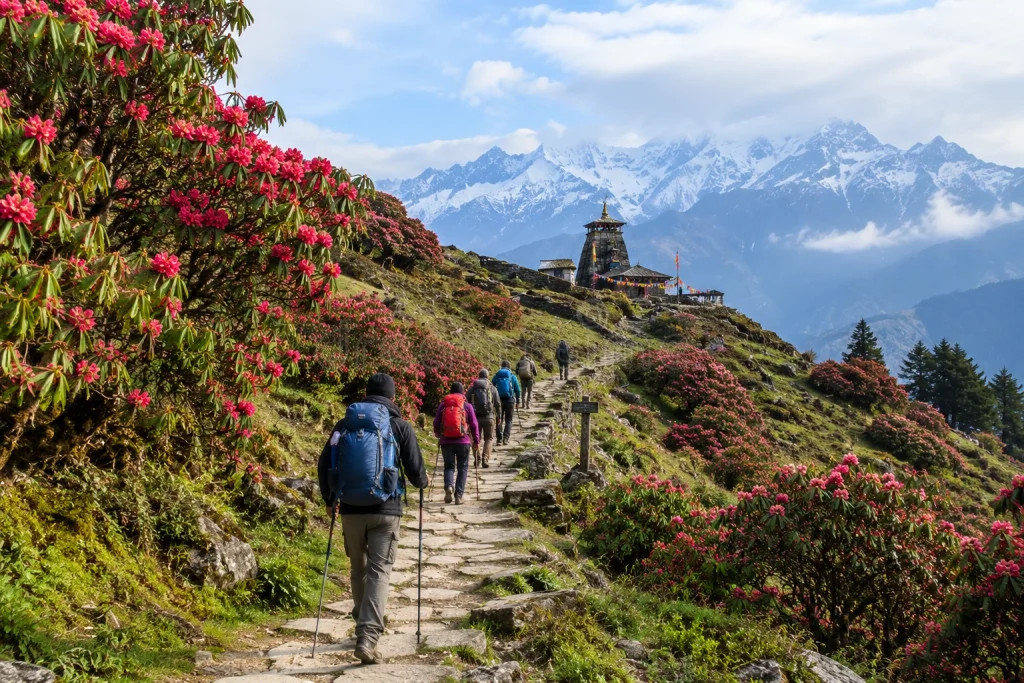
The Tungnath trek is widely regarded as easy to moderate in difficulty, making it one of the most accessible high-altitude treks in the entire Himalayan region. Unlike many multi-day treks that demand technical skills or advanced fitness, this route is manageable for beginners, families, and even senior citizens with reasonable stamina.
That said, the altitude does add a layer of difficulty that shouldn’t be underestimated. While the trail isn’t technically challenging, the final stretch can feel steeper and more tiring than expected due to thinning air at this elevation. Beginners are advised to walk at a steady pace, take short breaks as needed, and avoid rushing the ascent.
For trekkers looking for a slightly longer and more immersive itinerary that combines this destination with its neighbouring summit and surrounding meadows, our Chopta Tungnath Chandrashila Trek package extends the journey for those seeking a bigger challenge and even more expansive views.
Best Time to Visit Tungnath
Figuring out the best time to visit Tungnath depends largely on the kind of experience you’re looking for. The peak season runs from April to June, when the weather is pleasant, rhododendrons are in full bloom along the trail, and the path is generally clear of snow. This window is ideal for first-time trekkers, families, and anyone prioritising comfort and easier trail conditions.
September to November offers a second excellent window, with crisp autumn air and some of the clearest, most dramatic mountain views of the year, once the monsoon clouds have fully cleared.
Winter, spanning December to March, transforms the trek into a snow-covered adventure best suited for experienced trekkers comfortable with cold-weather conditions and the additional gear it requires. During this period, the temple itself remains closed, typically shutting by early November and reopening around April or May. The monsoon months of July and August are generally best avoided altogether, since the trail can become slippery, and cloud cover often obscures the very views that make the trek worthwhile.
How to Reach
Since there’s no direct railway station or airport at Chopta, most trekkers begin their journey from Rishikesh, Haridwar, or Dehradun. The nearest major railhead is Rishikesh, while the nearest airport is Jolly Grant Airport in Dehradun. From either point, the drive to Chopta covers roughly 200 to 215 km and takes approximately 8 to 9 hours by road, passing through towns like Rudraprayag and Ukhimath along the way.
Most travellers choose to break the journey with an overnight stay near Chopta before beginning the trek early the next morning, allowing enough daylight to comfortably complete the ascent and descent, especially if extending the trip to Chandrashila Peak.
Planning Your Trip
- Base village: Chopta, accessible by road from Rishikesh, Haridwar, and Dehradun
- Trek distance: Approximately 3.5 km one way from Chopta
- Altitude: 3,680 metres (12,073 feet)
- Difficulty level: Easy to moderate
- Ideal duration: A single day is enough for the temple alone; 2 to 3 days if combined with Chandrashila Peak and nearby Deoriatal Lake
- What to carry: Sturdy trekking shoes, warm layers, sufficient water, and basic first-aid essentials
- Temple closure: Typically closes by early November and reopens around April or May
For official travel advisories and up-to-date trekking conditions in the region, you can refer to the Uttarakhand Tourism Department, the state government’s official tourism portal.
Frequently Asked Question’s
What is the height of Tungnath?
It sits at an altitude of approximately 3,680 metres, or around 12,073 feet, making it the highest Shiva temple in the world.
What is the Chopta to Tungnath distance?
The trek covers approximately 3.5 kilometres one way from Chopta to the Tungnath temple, taking around 2 to 4 hours depending on pace.
How difficult is the Tungnath trek?
The trek is considered easy to moderate, with a well-defined, stone-paved trail suitable for beginners, families, and experienced trekkers alike.
What is the best time to visit Tungnath?
April to June and September to November are considered the best months, offering pleasant weather and clear mountain views. Winter offers a snow trekking experience for those prepared for colder conditions.
Is Tungnath temple open throughout the year?
No, the temple typically closes by early November and reopens around April or May, with the deity moved to Mukumath village during the winter closure.