

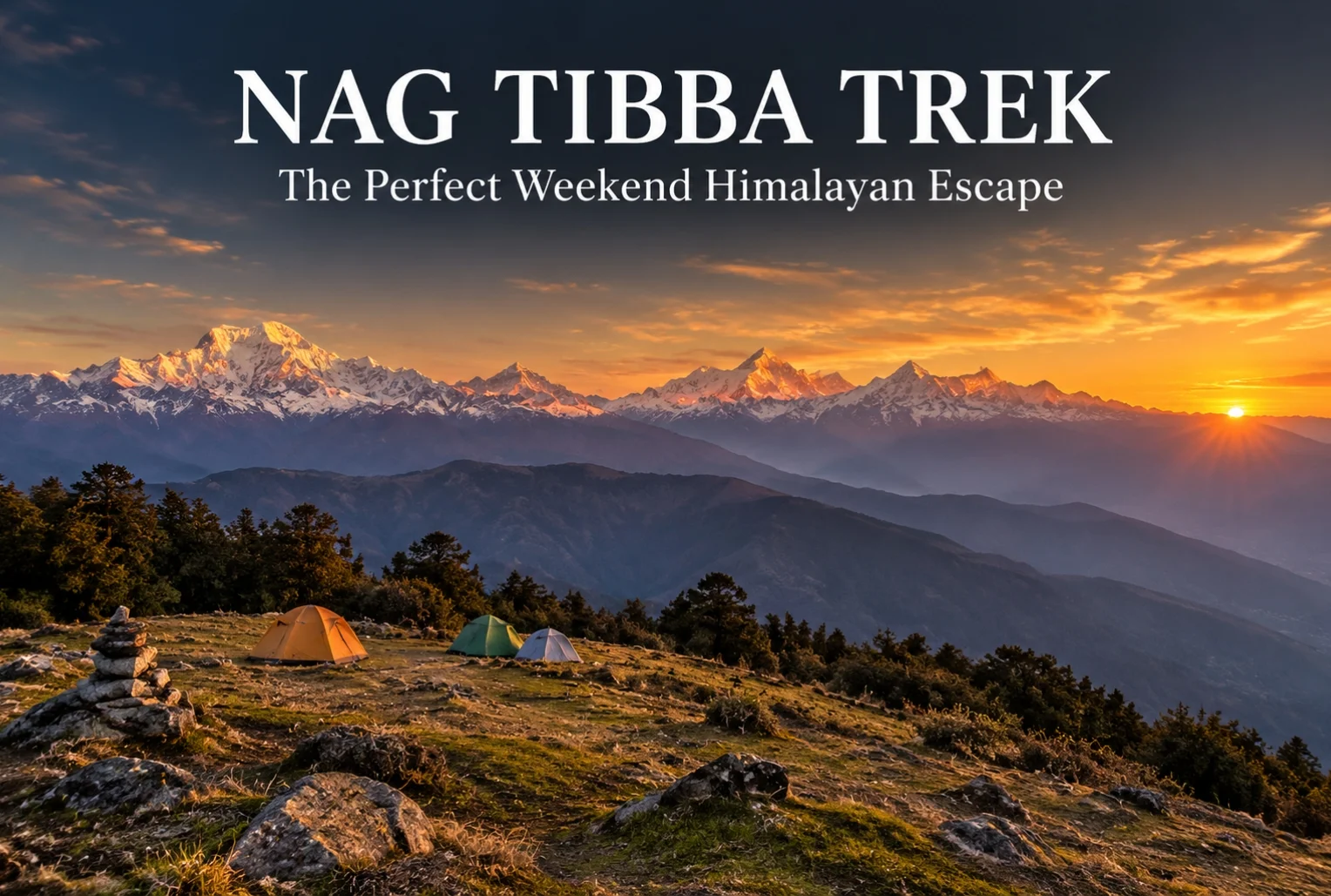
For anyone stuck choosing between a proper Himalayan trek and the limits of a two-day weekend, Nag Tibba solves that problem better than almost any other route in Uttarakhand. It’s close enough to Dehradun and Mussoorie to fit into a short trip, yet it delivers views and terrain that don’t feel scaled down at all.
Table of Contents
What Is the Nag Tibba Range?
The Nag Tibba range is part of the Garhwal Himalayas, sitting close to Mussoorie, and it’s one of the most accessible high-altitude trekking zones near Dehradun. The name translates roughly to “Serpent’s Peak,” tied to local legend and the Nag Tibba Temple that sits near the summit, dedicated to the serpent god worshipped by villages across this belt of the Garhwal hills.
Nag Tibba Height
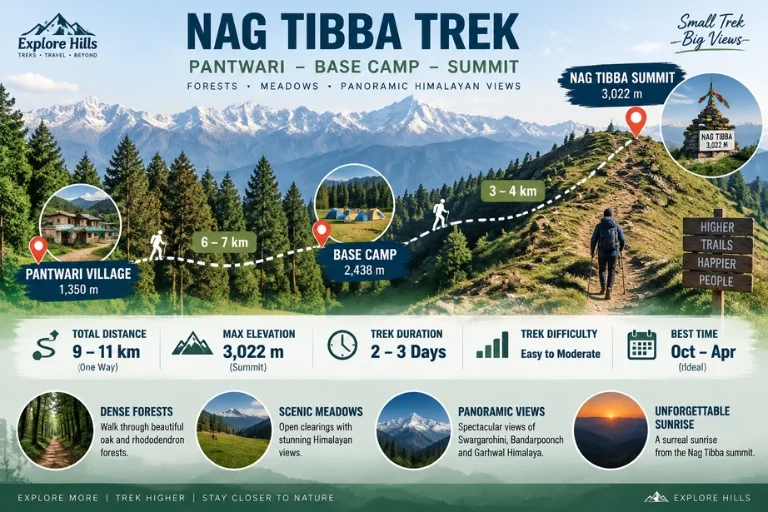
The summit reaches an elevation of approximately 3,022 meters (around 9,915 feet), making it one of the more approachable high-altitude points in the region without requiring the extended acclimatization schedule that higher treks demand. That height still delivers a genuine alpine payoff—panoramic views of Bandarpoonch, Swargarohini, Nanda Devi, Gangotri, and Jaonli line up across the horizon from the top.
Nag Tibba Trek Distance
The Nag Tibba trek distance covers roughly 15-16 km round trip from Pantwari village, typically completed over a 2-day weekend itinerary, which is exactly what makes this trek so popular among trekkers with limited time off. The initial climb from Pantwari to the campsite covers most of the elevation gain, while the final summit push on day two is a shorter, steeper stretch completed before sunrise for the best views.
| Trek Segment | Approximate Distance | Terrain |
|---|---|---|
| Pantwari to Base Camp | 6-7 km | Forest trail, moderate incline |
| Base Camp to Summit | 3-4 km | Steep final stretch, best done pre-dawn |
| Return (Summit to Pantwari) | 6-7 km | Descent, same route |
Nag Tibba Weather
Nag Tibba weather shifts noticeably across the year, and choosing the right season changes the entire character of the trek.
| Season | Approximate Temperature | Conditions |
|---|---|---|
| March–June | 10°C to 22°C (daytime) | Mild, clear skies, rhododendron blooms |
| July–September | Cooler, heavy rainfall | Slippery trails, generally avoided |
| October–November | 5°C to 18°C (daytime) | Crisp air, excellent visibility |
| December–February | Sub-zero at summit | Snow-covered, popular winter trek |
Winter (December to February) transforms this into a proper snow trek, drawing a different crowd than the greener summer months, while October and November tend to offer the clearest long-distance mountain views of the year.
The Trail Experience
Starting from the peaceful village of Pantwari, the trail passes through dense oak and rhododendron forest, open meadows, and well-established campsites before reaching the summit. Along the way, trekkers get the chance to visit the historic Nag Tibba Temple, and the summit itself offers unforgettable sunset and sunrise views along with clear stargazing conditions once night falls, thanks to minimal light pollution in this stretch of the Garhwal valleys.
Nag Tibba Trek Package: What’s Usually Included
A typical Nag Tibba trek package bundles transport from Dehradun or Mussoorie, camping equipment, meals, and a guide for the full 2-day itinerary, which removes most of the planning friction for first-time trekkers. Since this trek is often chosen specifically for its short duration, most packages are built around a Saturday-Sunday format that fits neatly around a regular work week.
How to Reach the Trailhead
By Air
The nearest airport is Jolly Grant Airport in Dehradun, roughly 65 km from Pantwari village.
By Train
Dehradun Railway Station is the nearest major railhead, well-connected to Pantwari by road via Mussoorie.
By Road
Pantwari is accessible by road from Mussoorie, roughly 45-50 km away, with local taxis and shared transport available for reaching the trailhead directly.
Extending the Trip
Since this route is often chosen as a shorter alternative to longer Himalayan treks, many trekkers pair it with a visit to nearby Mussoorie for a combined weekend trip. Explore Hills’ Mussoorie-Rishikesh-Haridwar Trip works well for travelers wanting to combine sightseeing with the trek itself. For those looking for a longer high-altitude route in the same broader region, Explore Hills’ Kedarkantha Trek offers a similar accessible-but-rewarding winter trekking experience.
For official weather forecasts and travel advisories for the Dehradun and Mussoorie region, you can refer to the India Meteorological Department, the Government of India’s official weather agency.
What to Pack
- Sturdy trekking shoes with solid grip for forest and rocky stretches
- Layered clothing, since temperatures drop sharply after sunset
- A headlamp for the pre-dawn summit push
- Rain protection outside the winter and summer windows
- Basic first-aid essentials and personal medication
- A warm sleeping bag if camping overnight at the base camp
Conclusion
Nag Tibba proves that a short trek doesn’t have to mean a lesser one. Between the manageable distance, genuine alpine views, and a range of seasonal experiences from spring rhododendrons to winter snow, it’s easy to see why this remains one of the most recommended weekend treks near Mussoorie and Dehradun.
Frequently Asked Questions
What is the Nag Tibba trek distance?
The round trip covers roughly 15-16 km from Pantwari village, typically completed over a 2-day weekend itinerary.
What is the Nag Tibba height at the summit?
The summit reaches approximately 3,022 meters, or around 9,915 feet above sea level.
What is Nag Tibba weather like in winter?
Winter (December to February) brings sub-zero temperatures at the summit and consistent snowfall, making it a popular winter trek option.
What does the Nag Tibba range offer besides the main summit?
The range includes dense oak and rhododendron forest, open meadows, and the historic Nag Tibba Temple along the trail.
What is usually included in a Nag Tibba trek package?
Most packages include transport from Dehradun or Mussoorie, camping gear, meals, and a guide for the full 2-day trip.
Is the Nag Tibba trek suitable for beginners?
Yes, it’s considered one of the more beginner-friendly high-altitude treks near Dehradun, given its manageable distance and moderate terrain.