

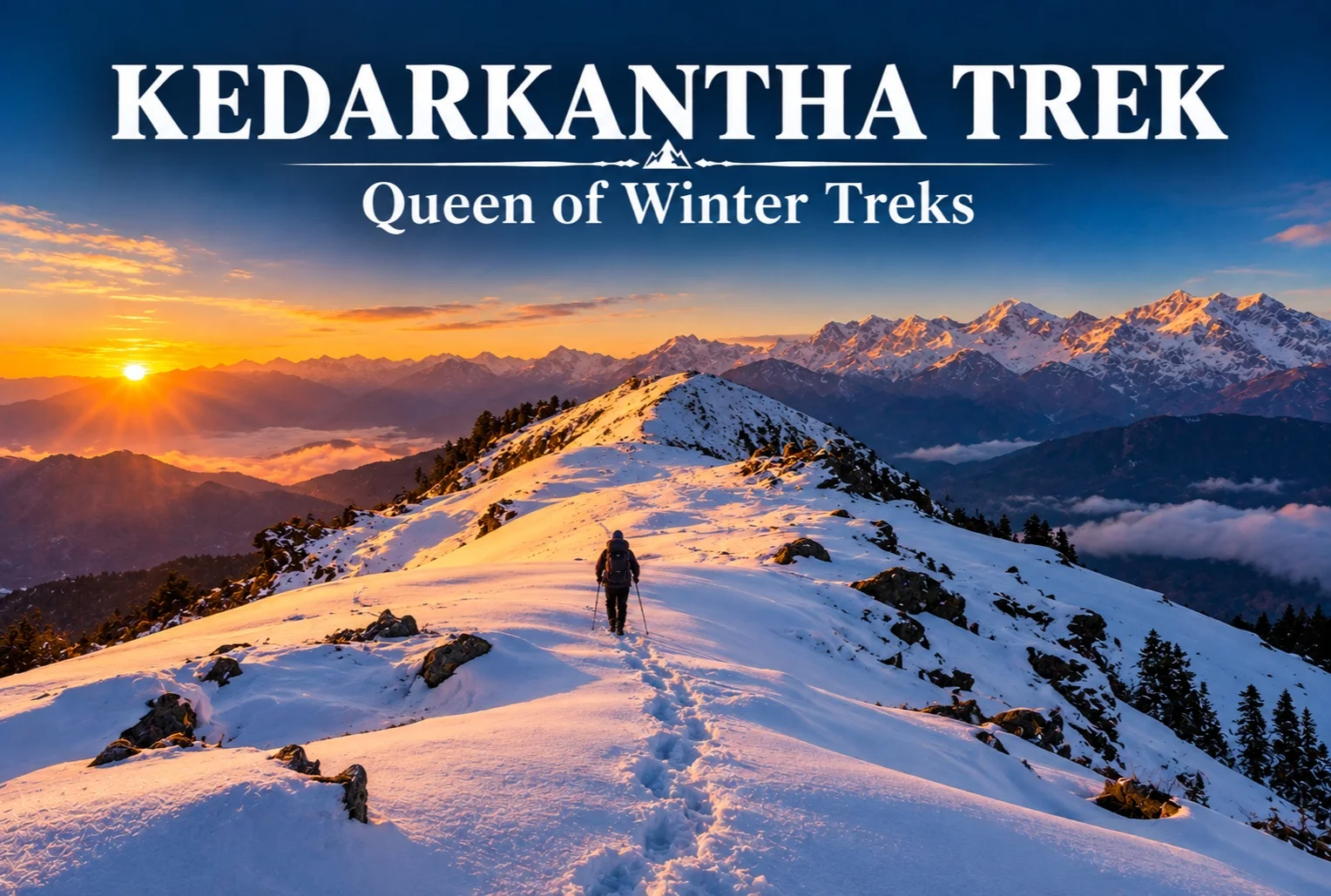
Ask any Indian trekker how they got into winter trekking, and there’s a good chance the story starts here. Kedarkantha has become something close to a rite of passage — the trek that convinced thousands of first-timers that snow-covered Himalayan trails weren’t just for seasoned mountaineers.
Table of Contents
What Makes This Trek So Popular?
Starting from Sankri, the trail winds through pine, oak, maple, and rhododendron forest before the snow really takes over higher up. Juda Ka Talab, a small lake with its own Shiva mythology attached, freezes over in winter and makes for a memorable early stop along the way. It’s this gradual build — forest, then snow, then summit — that makes the whole experience feel accessible without feeling watered down.
Kedarkantha Trek Height
The summit tops out at 12,500 feet, delivering a full 360-degree view: Swargarohini, Bandarpoonch, Black Peak, and Draupadi Ka Danda, with the Har Ki Dun and Rupin valleys stretching out below. That height is high enough to feel genuinely alpine, but not so extreme that it demands serious mountaineering experience.
Kedarkantha Trek Distance
The total round-trip distance covers roughly 20 km, completed over the course of the standard itinerary from Sankri and back. It’s a manageable distance for a determined beginner with reasonable fitness, especially since the route is broken into shorter daily stretches rather than one long push.
Best Time for Kedarkantha Trek
The ideal window falls between December and April, with peak snow conditions typically seen from late December through February. Early season visits (December) offer fresh powder snow, while later months (March-April) bring milder temperatures with patchy snow still visible at higher altitudes. Anyone specifically chasing deep snow should aim for the January-February stretch, when the entire trail transforms into a proper winter landscape.

Kedarkantha Trek Itinerary
A standard itinerary runs across 5-6 days, structured roughly like this:
- Arrival in Sankri, acclimatization
- Sankri to Juda Ka Talab
- Juda Ka Talab to Kedarkantha Base Camp
- Summit day — Base Camp to summit and back to Hargaon
- Hargaon to Sankri
- Departure
Higher up, the Base and Hargaon campsites are known for genuinely dark, light-pollution-free skies, the kind of stargazing that’s hard to find closer to home. One thing worth knowing before you go — the region enters a no-network zone past Sankri, so you’re properly cut off for the duration. For a lot of trekkers, that’s not a downside at all; it’s kind of the point.
Extending the Trip
Since Sankri also serves as the base for several other Himalayan routes, many travelers extend their trip with a second trek in the same region. Explore Hills’ Har Ki Dun Trek shares the same base village and offers a completely different valley-and-mythology experience for those with extra days to spare. For travelers who’d rather explore a broader Uttarakhand circuit around this trip, Explore Hills’ Uttarakhand Tour Package covers additional regional highlights beyond just this one route.
For official weather forecasts and road conditions for the Sankri and Govind Wildlife Sanctuary region, you can refer to the India Meteorological Department, the Government of India’s official weather agency.
Conclusion
This winter trek earns its reputation honestly — a manageable distance, a genuinely rewarding summit view, and a season window flexible enough to suit both deep-snow chasers and milder-weather trekkers. Whether it’s your first Himalayan trek or your fifteenth, it’s easy to see why it remains one of the most recommended winter routes in the country.
Frequently Asked Questions
What is the Kedarkantha trek distance?
The trek covers roughly 20 km round trip from Sankri, typically completed over 5-6 days including acclimatization.
What is the Kedarkantha trek height at the summit?
The summit reaches 12,500 feet, offering a 360-degree view of surrounding peaks like Swargarohini and Bandarpoonch.
What is the best time for the Kedarkantha trek?
December through April is ideal, with December-January offering the heaviest snow and April offering milder, more accessible conditions.
What does a typical Kedarkantha trek itinerary look like?
A standard itinerary spans 5-6 days, moving from Sankri to Juda Ka Talab, then to Base Camp, followed by a summit day and return via Hargaon.