

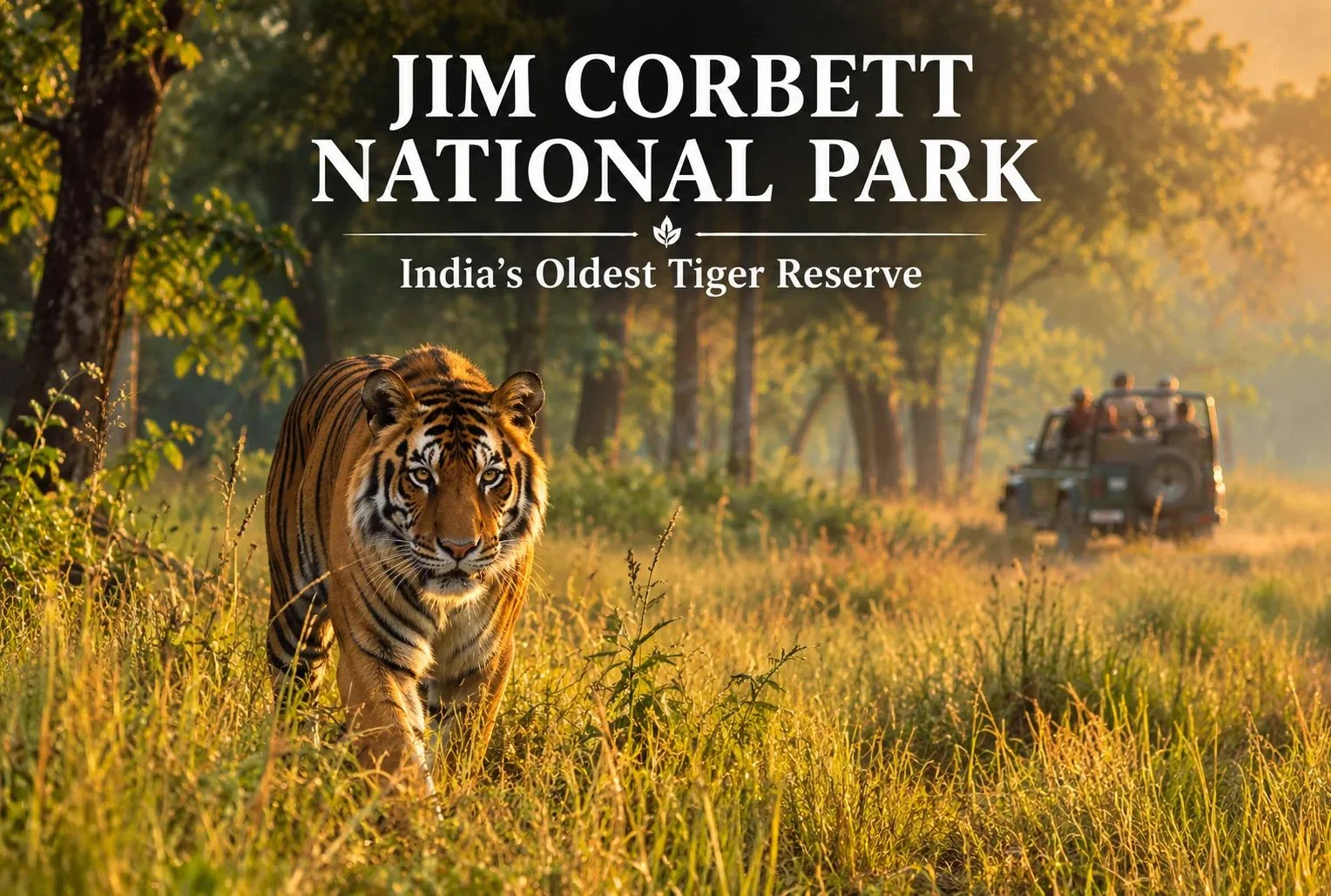
Long before “tiger reserve” became a common phrase in Indian conservation, one park quietly set the template for what wildlife protection could look like at scale. Jim Corbett National Park was India’s first national park, and it remains one of the country’s most reliable places to spot a wild Bengal tiger in its natural habitat.
Table of Contents
Where Is Jim Corbett National Park?
Where is Jim Corbett National Park is a question first-time visitors often ask, and the answer places it firmly in the Nainital district of Uttarakhand, spread across the Ramnagar area at the foothills of the Himalayas. The park sits along the banks of the Ramganga River, with terrain that shifts between dense sal forest, grasslands, and riverine belts, giving it one of the more varied landscapes among India’s major wildlife reserves.
Jim Corbett National Park Uttarakhand: A Brief History
Jim Corbett National Park Uttarakhand was established in 1936, originally named Hailey National Park, making it the oldest national park in India. It was later renamed in honor of Jim Corbett, the hunter-turned-conservationist whose writings and efforts played a significant role in early Indian wildlife protection. In 1973, the park became the first site under Project Tiger, India’s flagship tiger conservation initiative, cementing its role as a cornerstone of the country’s conservation history.
Wildlife You Can Spot
Beyond the Bengal tiger, which draws most visitors, the park is home to elephants, leopards, various deer species, over 600 bird species, and a healthy population of gharials and mugger crocodiles along the Ramganga River. The sheer range of wildlife here means even visitors who don’t spot a tiger on a given safari still tend to leave with a memorable experience.
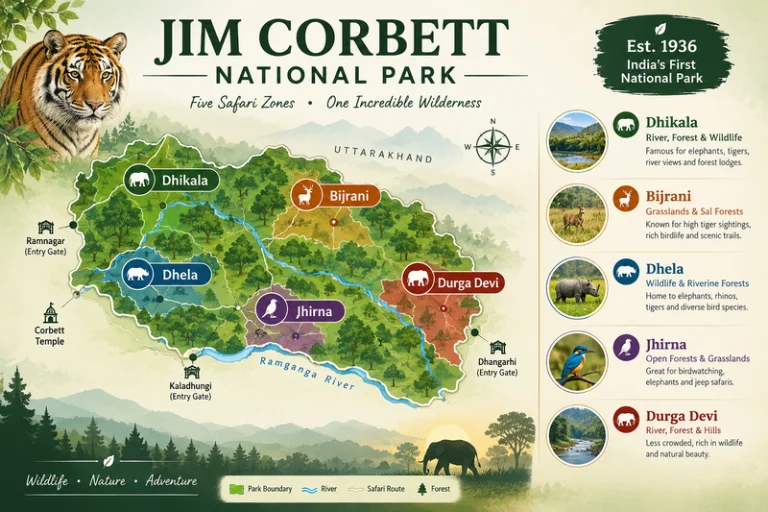
Safari Zones Inside the Park
The park is divided into several safari zones, each with a different character:
| Zone | Known For |
|---|---|
| Dhikala | Largest zone, best tiger sighting chances, requires overnight stay |
| Bijrani | Popular day-safari zone, closer to Ramnagar |
| Jhirna | Open year-round, including monsoon months |
| Dhela | Newer zone, less crowded, good for first-time visitors |
| Durga Devi | Known for birdwatching along the river |
Jim Corbett National Park Ticket: Booking and Costs
A Jim Corbett National Park ticket typically needs to be booked in advance, especially for popular zones like Dhikala and Bijrani, since daily visitor numbers are capped to protect the ecosystem. Ticket costs vary by zone, vehicle type, and whether you’re an Indian or foreign national, with additional charges for guides and vehicle entry. Booking through the official forest department portal well ahead of your visit is strongly recommended during peak season, since slots for popular zones fill up quickly.
Best Time to Visit
The park typically operates from mid-November to mid-June, with the Dhikala zone often closing earlier due to monsoon restrictions, while Jhirna remains open through most of the year. Winter months (November to February) offer pleasant weather but slightly lower tiger visibility, since the dense vegetation hasn’t dried out yet. Summer months (April to June), despite the heat, tend to offer better tiger sightings since animals gather more predictably near water sources.
How to Reach
By Air
The nearest airport is Pantnagar Airport, roughly 50 km from Ramnagar, the main gateway town to the park.
By Train
Ramnagar Railway Station is the nearest railhead, directly connected to Delhi and well-suited for weekend trips from the capital.
By Road
Ramnagar is well-connected by road from Delhi (roughly 260 km) and Nainital (roughly 65 km), with regular buses and private taxis available.
Extending Your Trip
Since Ramnagar sits along a broader Kumaon and Garhwal travel circuit, many visitors combine their Jim Corbett trip with other regional destinations. Explore Hills’ Nag Tibba Trek offers a nearby Himalayan trekking option for travelers wanting to pair wildlife viewing with a short mountain trek, and the broader Uttarakhand Tour Package can help combine Jim Corbett with other regional highlights in a single itinerary.
For official ticket booking, zone availability, and current park regulations, you can refer to the Uttarakhand Forest Department, the government body managing this reserve.
What to Pack
- Neutral-colored clothing to avoid startling wildlife during safaris
- Binoculars for birdwatching and distant sightings
- Sunscreen and a hat for open-vehicle safaris
- A basic first-aid kit and personal medication
- A good camera with a zoom lens, since sightings can happen at a distance
Conclusion
Jim Corbett National Park holds a unique place in India’s conservation story, and that history is part of what makes a visit here feel different from a typical wildlife trip. Between the varied safari zones, the density of wildlife, and the park’s role as the birthplace of Project Tiger, it remains one of the most significant and rewarding national parks in the country to visit.
Frequently Asked Questions
Where is Jim Corbett National Park located?
It is located in the Nainital district of Uttarakhand, near the town of Ramnagar, at the foothills of the Himalayas.
How do I book a Jim Corbett National Park ticket?
Tickets should be booked in advance through the official forest department portal, especially for popular zones like Dhikala and Bijrani during peak season.
What makes Jim Corbett National Park in Uttarakhand historically significant?
It was India’s first national park, established in 1936, and became the first reserve under Project Tiger in 1973.
What is the best time to visit Jim Corbett National Park?
November to June is the main operating season, with summer months often offering better tiger sightings despite the heat.
Which safari zone offers the best tiger sighting chances?
Dhikala is generally considered the best zone for tiger sightings, though it requires an overnight stay within the park.