

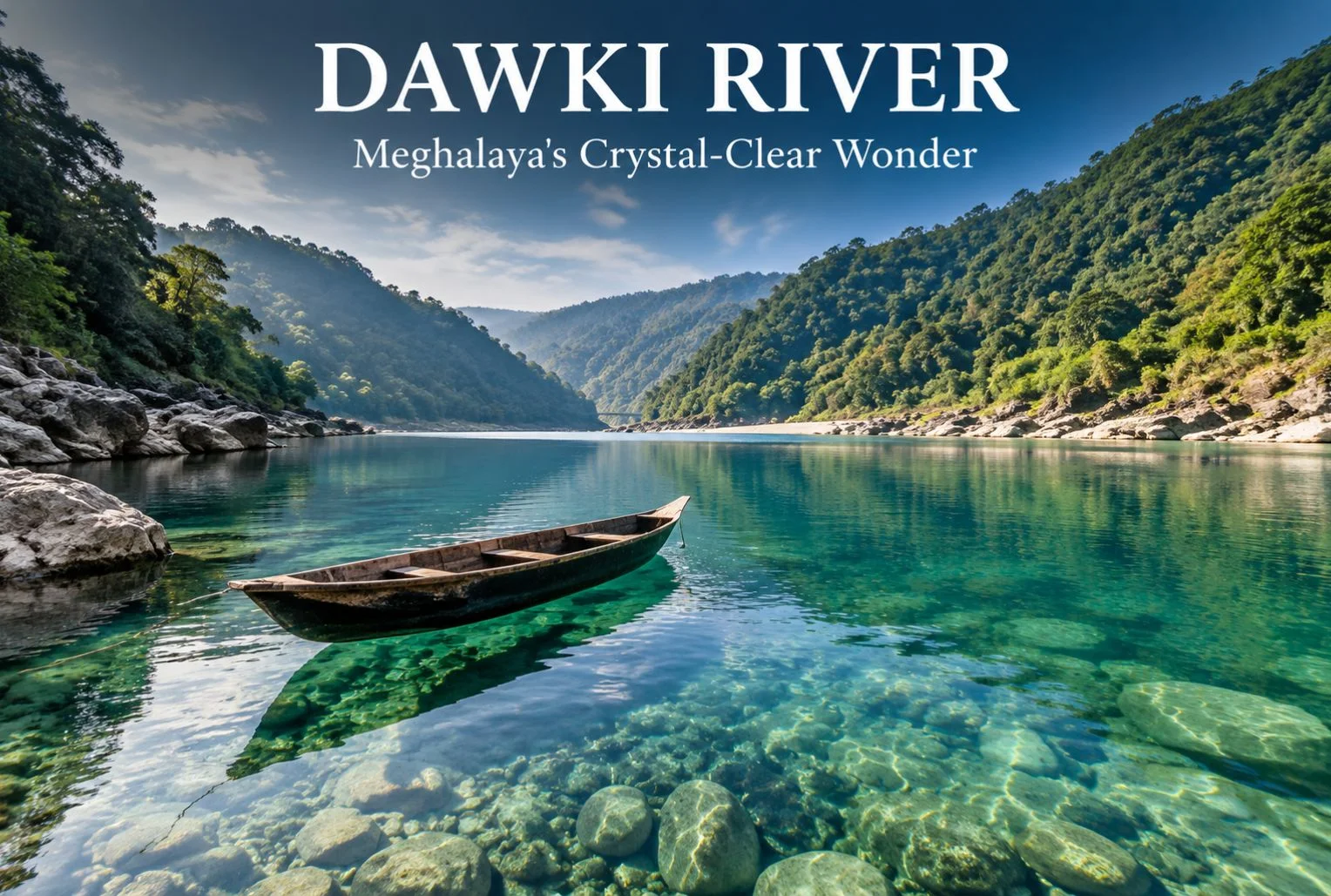
The Dawki River sits at the edge of Meghalaya, right where India meets Bangladesh, and it’s known for something most rivers in the country can’t claim: water so clear that boats appear to float in mid-air. This guide covers everything you need to plan a trip to Dawki River — where it is, when to go, how to get there, what to do once you arrive, and where to stay. By the end, you’ll have a practical route from “I want to see this” to “I’ve booked my trip.”
Table of Contents
Dawki isn’t a large town, and that’s part of its charm. Most visitors come for a day or two, spend a few hours on the water, and leave with photographs that look edited even though they aren’t. If you’re building a Meghalaya itinerary around Shillong and Cherrapunjee, Dawki fits neatly into a longer northeastern circuit, or it can be a standalone weekend trip if you’re short on time.
Geography and Location of Dawki River
Dawki River is actually the local name for a section of the Umngot River, which flows through the West Jaintia Hills district of Meghalaya before crossing into Bangladesh. The town of Dawki sits directly on the India-Bangladesh border, and the river itself forms part of that international boundary here.
The Dawki River is located roughly 82 km south of Shillong, Meghalaya’s capital, and about 96 km from the district headquarters at Jowai. Guwahati, the largest city in the region and the main transit hub for Northeast India, is around 170 km away.
A stretch of the Umngot near the town — wide, still, and glassy — is what most tour operators and visitors refer to as Dawki Lake. It isn’t a separate lake in the geological sense; it’s a calm pool section of the same river, formed where the current slows before the water narrows again downstream. This is the part of the Dawki river Meghalaya is best known for, since it’s where the water clarity is most dramatic and where nearly all the boating happens.
The Dawki Bridge, built by the British in 1932, spans the river and connects the town to the road leading toward the Bangladesh border checkpoint. It’s a working bridge, not a tourist structure, but it offers one of the better vantage points for photographing the water below.
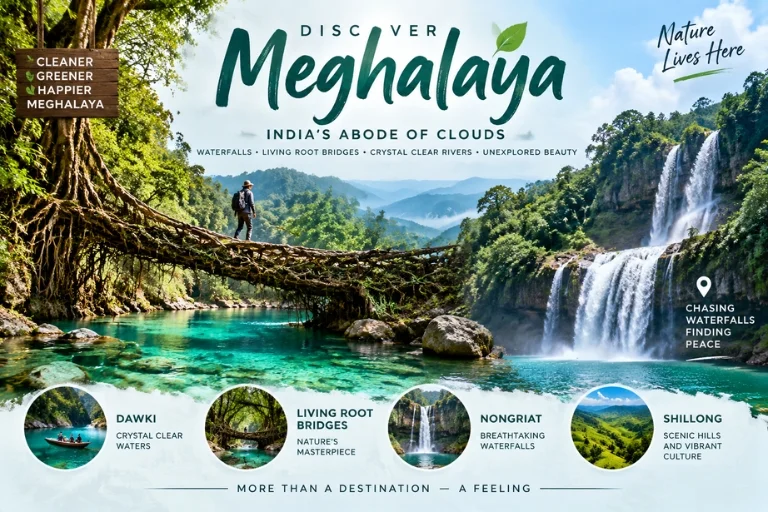
Quick Facts: Dawki River
| Information | Details |
| Location | West Jaintia Hills district, Meghalaya |
| Also known as | Umngot River |
| Distance from Shillong | Approx. 82 km |
| Distance from Guwahati | Approx. 170 km |
| Nearest Airport | Shillong Airport (Umroi); Guwahati (Lokpriya Gopinath Bordoloi International Airport) for wider connectivity |
| Nearest Railway Station | Guwahati Railway Station |
| Best Known For | Crystal-clear water, boating, India-Bangladesh border views |
| Best Time to Visit | October to March |
Best Time to Visit Dawki River and Dawki Lake
October to March is the best window to visit Dawki River. During these months, rainfall is low, the current settles, and the water reaches its clearest state — the effect that makes Dawki Lake photographs look almost unreal.
Winter (December to February) brings cool, comfortable weather and calmer water, making it the most popular season for boating and photography. Mornings can be chilly, so carrying a light jacket is worth it even though Meghalaya’s plains don’t see the kind of cold found in the Himalayan states.
Monsoon months (June to September) bring heavy rainfall to Meghalaya, one of the wettest regions in the world. The Umngot River turns brown and fast-moving during this period, and the clarity that draws people to Dawki disappears almost entirely. Boating is also frequently suspended for safety reasons when the current is strong. If clear water is the main reason for your visit, avoid this season.
Shoulder months like April, May, and early October offer a middle ground — fewer crowds than peak winter, warmer weather, and generally decent water clarity, though this can vary depending on recent rainfall.
Season Comparison
| Season | Weather | Water Clarity | Crowd Level | Recommended For |
| Winter (Dec–Feb) | Cool, dry | Excellent | High | Boating, photography, first-time visitors |
| Post-Monsoon (Oct–Nov) | Mild, occasional showers | Very good | Moderate | Balanced weather and clarity |
| Summer (Mar–May) | Warm, humid | Good, variable | Moderate | Shoulder-season travel |
| Monsoon (Jun–Sep) | Heavy rainfall | Poor, muddy water | Low | Not recommended for river activities |
How to Reach Dawki
Getting to Dawki River generally means routing through Shillong or Guwahati first, since Dawki itself has no airport or railway station.
By Air
The nearest airport is Shillong Airport at Umroi, though flight frequency is limited. Guwahati’s Lokpriya Gopinath Bordoloi International Airport has significantly more domestic and a few international connections, and most travelers fly into Guwahati before continuing by road.
By Train
Guwahati Railway Station is the nearest major rail hub, well connected to cities across India. From Guwahati, the journey to Dawki continues by road.
By Road
From Guwahati, it’s roughly a 170 km drive to Dawki, typically taking around 5 to 6 hours depending on road conditions and stops. From Shillong, the drive is shorter — about 82 km, usually covering in 2.5 to 3 hours. The route from Shillong passes through Pynursla and offers scenic stretches through the Jaintia Hills.
Shared taxis and private cabs run regularly from Shillong to Dawki, and this is the most common way travelers make the trip. Self-driving is also an option if you’re comfortable with hill roads, which have sharp turns but are generally in reasonable condition outside of monsoon season, when landslides can cause temporary closures.
There is no direct rail or air link into Dawki itself, so budget travel time accordingly, especially if you’re arriving from outside the Northeast.
Things to Do at Dawki River
Boating on Dawki Lake
Boating is the main draw. Local boatmen operate small wooden or plastic boats that glide across the still water, and because the river bed is often visible even at depth, it creates the illusion that the boats are suspended in air. Boats are usually rented for a fixed time slot, and rates are set by local boatmen’s associations — confirm current pricing on arrival, since it can shift with season and demand.
Photography and Scenic Viewpoints
The Dawki Bridge offers a strong elevated view of the river below, particularly in the early morning when the light is soft and the water hasn’t been disturbed by boat traffic. The riverbank near Shnongpdeng, a village upstream from Dawki town, is another well-known spot for photographs and has become a hub for river-based tourism in its own right.
Adventure Activities
Shnongpdeng has developed into something of an adventure base over the past several years, offering activities like cliff jumping, kayaking, and scuba diving in select spots. Camping along the riverbank here is popular, with several operators setting up tented stays. Confirm safety standards and equipment with any operator before booking, since regulation of adventure activities in the region is still developing.
Border Viewing and Local Villages
The India-Bangladesh border crossing near Dawki is a point of curiosity for many visitors, and the border pillar area can be viewed (though not crossed) with appropriate caution and respect for restricted zones. Nearby, Mawlynnong — often cited as one of the cleanest villages in Asia — makes for a worthwhile detour if you have an extra half-day, and it pairs naturally with a Dawki visit given the short distance between them.
If you enjoy the idea of combining river days with wider regional exploration, Explore Hills’ popular destinations page is a useful place to see how a Northeast itinerary might fit alongside other trips on your list.
Accommodation Options Near Dawki
Dawki town itself has limited lodging, so most visitors either stay in Shillong and day-trip to the river, or base themselves in Shnongpdeng, which has grown a small but functional tourism infrastructure.
- Riverside camps in Shnongpdeng: Several operators run tented camps directly along the Umngot River, offering a closer experience to the water and often bundling boating or kayaking into the stay.
- Budget guesthouses: Basic guesthouses in and around Dawki town cater to travelers who want to stay near the river without camping.
- Homestays: Homestays in nearby Jaintia Hills villages offer a quieter, more local experience, though amenities are typically simple.
- Shillong hotels: For travelers who prefer more comfort and amenities, Shillong has a much wider range of hotels, and Dawki can be covered as a day trip from there.
Booking ahead is advisable during peak winter weekends, when demand for riverside camps in particular can outpace supply.
Food and Local Cuisine
Meghalayan food centers around rice, pork, and freshwater fish, often prepared with minimal spice and a focus on smoked or fermented flavors.
- Jadoh: A Khasi rice dish cooked with pork or other meat, often considered a staple comfort food in the region.
- Tungrymbai: A fermented soybean preparation, distinct in flavor and commonly served as a side dish.
- Smoked pork: A regional specialty, often cooked with bamboo shoot for added tang.
- Freshwater fish: Given the proximity to the Umngot River, fish dishes are common in local eateries around Dawki and Shnongpdeng.
Options directly in Dawki town are limited to small local eateries and dhaba-style stalls, so don’t expect an extensive restaurant scene. If you’re particular about food variety, Shillong offers considerably more choice, from Khasi cuisine to more familiar North Indian and Chinese options.
Safety and Travel Tips
- Life jackets: Always wear a life jacket during boating, even though the water often looks shallow and calm — depth can be deceptive.
- Border zone etiquette: Since Dawki sits on an international border, follow all posted restrictions near the border pillar and checkpoint areas, and carry identification at all times.
- Weather checks: Avoid river activities during or immediately after heavy rain, when the current strengthens and clarity drops sharply.
- Road conditions: The Shillong-Dawki route can be affected by landslides during monsoon; check conditions before traveling in July, August, or September.
- Cash access: ATMs are limited once you’re outside Shillong, so carry sufficient cash for boating fees, food, and camp stays.
- Respect local communities: Much of the land around the river is community-owned under local Khasi and Jaintia customary systems. Stick to designated access points and avoid littering or disturbing the riverbank.
- Plastic waste: Carry reusable bottles where possible. The clarity of the Umngot River is part of what makes it worth visiting, and local communities have worked to keep it that way.
Plan Your Dawki River Trip
Dawki River earns its reputation honestly — there aren’t many places in India where you can watch a boat appear to float on nothing. Between the river itself, the border-town setting, and nearby stops like Shnongpdeng and Mawlynnong, it’s a destination that rewards even a short visit with a lot to see and photograph. Time it right, between October and March, and you’ll get the river at its clearest.
If this has you thinking about a broader Northeast India trip or want help structuring a longer travel itinerary around Meghalaya, Explore Hills’ upcoming trek packages and weekend packages are worth browsing for ideas on pairing this trip with other routes.
Frequently Asked Questions
What is the best time to visit Dawki River?
October to March offers the clearest water and most comfortable weather. Winter (December–February) is peak season for boating and photography.
How far is Dawki River from Shillong?
Dawki is approximately 82 km from Shillong, a drive that typically takes 2.5 to 3 hours by road.
Is Dawki River the same as Dawki Lake?
Not exactly. Dawki Lake is the local nickname for a wide, still stretch of the Umngot River near Dawki town — it’s the same river, not a separate water body.
How do I reach Dawki from Guwahati?
Guwahati to Dawki is about 170 km by road, usually taking 5 to 6 hours depending on traffic and road conditions.
Is boating safe for children and elderly travelers?
Boating is generally manageable for most age groups when life jackets are worn and boats are hired from registered local operators, but check individual comfort levels with water activities beforehand.
Can I cross the border into Bangladesh from Dawki?
The border checkpoint near Dawki handles official trade and immigration; it isn’t a casual tourist crossing point, so plan to view the border area rather than cross it unless you have the appropriate travel documentation and purpose.
What should I pack for a Dawki River trip?
Light layers, a change of clothes in case you get wet, sunscreen, a reusable water bottle, and cash for local expenses.
Is Shnongpdeng worth visiting separately from Dawki town?
Yes. Shnongpdeng has more developed camping and adventure activity options and is often considered the better base for a longer stay near the river.