

Explore Hills
Checkout +91-9456580306

Fontainhas Quarter: A Complete Guide to Goa’s Latin Quarter

Fontainhas Quarter

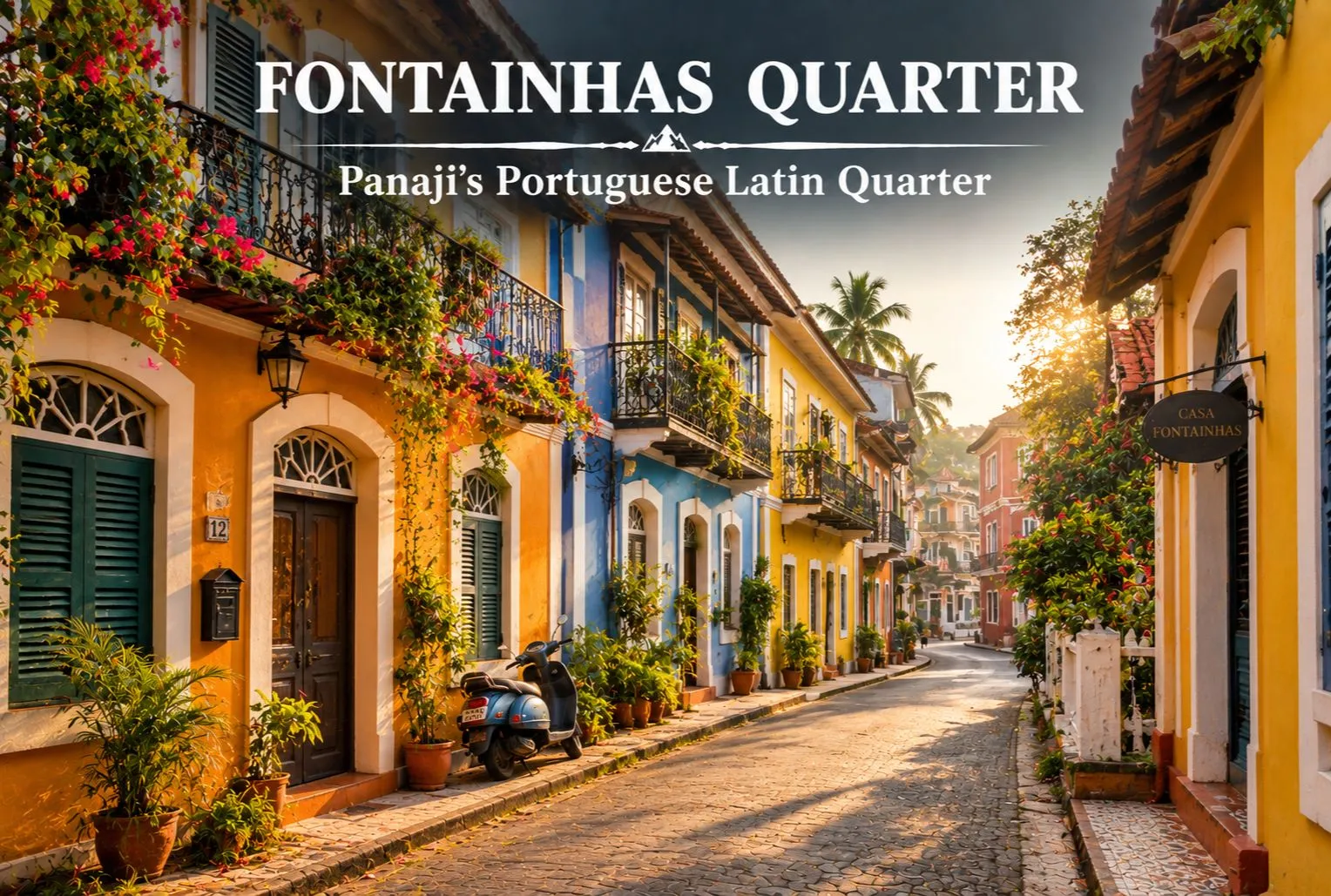
Tucked into the heart of Panaji, Fontainhas Quarter is a cluster of narrow lanes lined with ochre, blue, and mustard-yellow houses that still carry the imprint of nearly four centuries of Portuguese rule. It’s one of the few urban neighborhoods in India where the streetscape hasn’t been swallowed by modern construction, and that’s largely why it draws photographers, architecture enthusiasts, and travelers looking for a slower side of Goa. This guide covers the fontainhas quarter’s location, how to get there, what to see once you arrive, and when to plan your visit.

Unlike Goa’s beach towns, Fontainhas rewards a slow walk rather than a checklist. There isn’t a single blockbuster monument here — the neighborhood itself is the attraction. Give yourself two to three hours to wander without a fixed plan, and you’ll likely stumble onto more than any itinerary could promise.
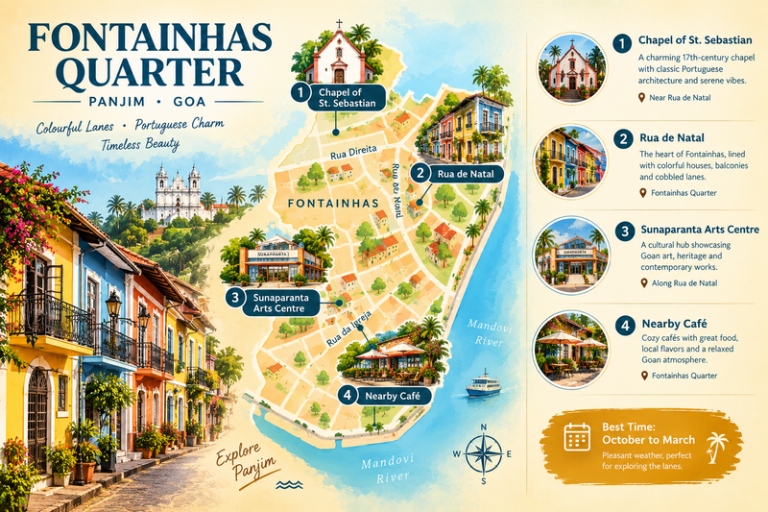
Fontainhas Quarter : Panjim Goa

Where Is Fontainhas Quarter Located?

Fontainhas quarter’s location sits on the eastern edge of Panaji (also called Panjim), the capital city of Goa, bordered by the Ourem Creek. The area was developed in the late 18th and early 19th centuries after a landslide from the nearby Altinho hill created fresh ground for settlement, and Portuguese residents moved in soon after, building homes in a distinctly Iberian style.

The quarter takes its name from the Fonte Phoenix, a natural spring that once supplied water to the area (Fontainhas roughly translates to “little fountains”). Today, it’s recognized as a protected heritage zone by INTACH (Indian National Trust for Art and Cultural Heritage), one of the reasons the original architecture has survived largely intact.

Fontainhas is compact — you can walk from one end to the other in about 15 minutes — but the density of old houses, chapels, and art spaces packed into that small footprint is what makes it worth the visit.

Quick Facts: Fontainhas Quarter

InformationDetails
LocationPanaji (Panjim), North Goa district
Also known asLatin Quarter of Panaji
DevelopedLate 18th to early 19th century, Portuguese colonial era
Recognized byINTACH, as a protected heritage precinct
Nearest AirportManohar International Airport, Mopa (approx. 35 km); Goa International Airport, Dabolim (approx. 30 km)
Nearest Railway StationKarmali Railway Station (approx. 12 km)
Best Known ForPortuguese-era houses, narrow lanes, art galleries, Chapel of St. Sebastian
Best Time to VisitOctober to March

Fontainhas Goa Directions: How to Reach the Quarter

Reaching Fontainhas is straightforward since it sits inside Panaji, Goa’s capital and a well-connected transport hub.

By Air

Goa is served by two airports. Manohar International Airport at Mopa, which opened in 2023, is the newer of the two and lies roughly 35 km from Panaji. Goa International Airport at Dabolim, the older and more established airport, is around 30 km away. Prepaid taxis and app-based cabs run from both airports into the city.

By Train

If you’re looking for the nearest Goa station to Fontainhas, Karmali Railway Station is your best option — it’s about 12 km from Panaji and handles regular Konkan Railway services. Madgaon (Margao) Railway Station, roughly 33 km away, is the larger junction with wider connectivity across India and is worth checking if Karmali doesn’t have a convenient train for your route.

By Road

Once you’re in Panaji, Fontainhas is a short local ride away — most parts of the city center are within 10 to 15 minutes by auto-rickshaw or taxi. Since the quarter’s lanes are narrow and largely pedestrian-friendly, it’s best to park at the edge of the neighborhood (near the Panaji Municipal Garden or the Secretariat area) and explore on foot from there.

If you’re driving in from other parts of Goa, following fontainhas goa directions is easiest with a map app — search for “Fontainhas, Panaji” rather than a specific street, since the quarter itself is the landmark.

Things to Do in Fontainhas Quarter

Walk the Heritage Lanes

The main appeal of Fontainhas is simply walking its streets — Rua de Natal, Rua 31 de Janeiro, and the lanes around Emidio Gracia Road are lined with two-story houses featuring oyster-shell windows, wrought-iron balconies, and tiled roofs. Morning light works best for photography, before the streets fill up with parked scooters.

Visit the Chapel of St. Sebastian

The Capela de São Sebastião is Fontainhas’ most recognizable landmark. According to local tradition, the crucifix inside originally stood in the Palace of the Inquisition in Old Goa and was moved here after the Inquisition ended — with its eyes reportedly kept open, unlike most crucifixes of the period. This detail is part of local lore rather than a verified historical record, but it’s one of the stories guides commonly share on walking tours.

Explore Art Galleries and Cultural Spaces

Fontainhas has become something of an informal arts district. Fundação Oriente and Sunaparanta – Goa Centre for the Arts both host exhibitions in restored Portuguese-era buildings, giving you a reason to step inside a heritage house rather than just admire it from the street.

Stop at a Local Café

Cafés like Viva Panjim and Cafe Bodega serve Goan-Portuguese dishes — think prawn balchão, sorpotel, or a simple bebinca for dessert — in settings that match the neighborhood’s old-world character.

Time Your Visit with the Festa

If your travel dates allow it, the annual Fontainhas Festival (also called the Festival of Fontainhas) typically takes place in the quarter each year, with the streets decorated, cultural performances, and local art on display. Exact dates shift annually, so confirm current scheduling with Goa Tourism before planning around it.

Best Time to Visit Fontainhas Quarter

October to March is the ideal window to explore Fontainhas Quarter. The weather is dry and comfortable for walking, and the quarter’s lanes — which can turn slippery and puddled during heavy rain — are easiest to navigate on foot during these months.

Season Comparison

SeasonWeatherWalking ConditionsRecommended For
Winter (Oct–Feb)Pleasant, dry, mild humidityExcellentFirst-time visitors, photography
Summer (Mar–May)Hot and humidManageable, best in early morningEarly-morning walks, fewer crowds
Monsoon (Jun–Sep)Heavy rainfall, lush greenerySlippery lanes, some galleries closeNot ideal for walking tours

Winter mornings, particularly between 8 and 10 a.m., offer the best combination of soft light and quieter streets before tour groups arrive.

Is Fontainhas Worth Visiting for a Day Trip?

Fontainhas suits both a standalone half-day outing and a stop within a broader Panaji itinerary. If you’re staying along Goa’s beaches, it’s an easy addition to a day that also includes the Church of Our Lady of the Immaculate Conception and the Panaji riverfront, both a short drive from the quarter.

Pair Fontainhas with a visit to the Goa State Museum or a walk along the Mandovi riverfront to round out a full day in Panaji without needing to travel far.

Responsible Visiting Tips

  • Respect private property: Many of the houses in Fontainhas are still private residences. Admire and photograph from the street rather than entering courtyards uninvited.
  • Keep noise levels down: The quarter is a residential area, not a commercial tourist strip, and local families live here year-round.
  • Support local businesses: Cafés, galleries, and small shops in Fontainhas depend on tourism revenue that stays within the neighborhood.
  • Watch your step: Narrow lanes and uneven stone paving mean comfortable walking shoes are worth packing, especially outside the dry season.
  • Carry cash: Smaller cafés and shops in the quarter may not always accept cards.

For more detail on how Goa’s heritage sites fit within India’s broader cultural landscape, resources from the Directorate of Tourism, Government of Goa are a reliable reference point for current opening hours and event schedules.

Planning Your Fontainhas Visit

Fontainhas isn’t a place you rush through — it’s a place you wander, camera in hand, letting one colorful lane lead to the next. Between its heritage architecture, its small art spaces, and the story behind its chapel, it offers a side of Goa that has little to do with beaches and everything to do with the state’s layered history.

If you’re planning a longer trip through India’s heritage and cultural landmarks beyond Goa, Explore Hills’ popular destinations page is worth browsing for ideas on where to head next.

Frequently Asked Questions

What is Fontainhas Quarter famous for?

Fontainhas Quarter is known for its well-preserved Portuguese-era houses, narrow winding lanes, and its status as a protected heritage precinct within Panaji, Goa.

Where is Fontainhas Quarter located?

The fontainhas quarter location is in Panaji (Panjim), the capital of Goa, along the banks of the Ourem Creek.

How do I reach Fontainhas from the airport?

From Manohar International Airport at Mopa, it’s approximately 35 km to Panaji; from Dabolim’s Goa International Airport, it’s around 30 km. Both routes are served by prepaid taxis.

What is the nearest Goa station to Fontainhas?

Karmali Railway Station, about 12 km from Panaji, is the closest station. Madgaon Railway Station, roughly 33 km away, offers wider rail connectivity if you’re arriving from farther afield.

Is Fontainhas Quarter worth visiting for a day?

Yes. Two to three hours is generally enough to walk through the main lanes, visit the Chapel of St. Sebastian, and stop at a café, making it easy to fit into a broader Panaji day trip.

What is the best time to visit Fontainhas Quarter?

October to March offers the most comfortable walking conditions, with dry weather and lower humidity compared to the summer and monsoon months.

Is Fontainhas Quarter safe to walk around at night?

The quarter is generally quiet and residential, and many visitors walk it in the evening for a different view of the lit-up lanes, though it’s sensible to stick to well-lit main streets after dark, as with any unfamiliar neighborhood.

Can I combine a Fontainhas visit with other Panaji attractions?

Yes. The Church of Our Lady of the Immaculate Conception, the Goa State Museum, and the Mandovi riverfront are all a short drive from Fontainhas and pair well with it for a full day in the city.
Panjim: A Complete Travel Guide to Goa’s Capital City

Panjim

Quick Answer: Panjim (Panaji) is Goa’s capital city, set along the Mandovi River, known for the pastel-colored Fontainhas quarter, the Church of Our Lady of the Immaculate Conception, and a riverfront promenade lined with cafes and casinos. It works well as a 1-2 day base for exploring Old Goa’s churches, Miramar Beach, and the Goa State Museum, and is best visited between November and February when the weather is cool and dry.

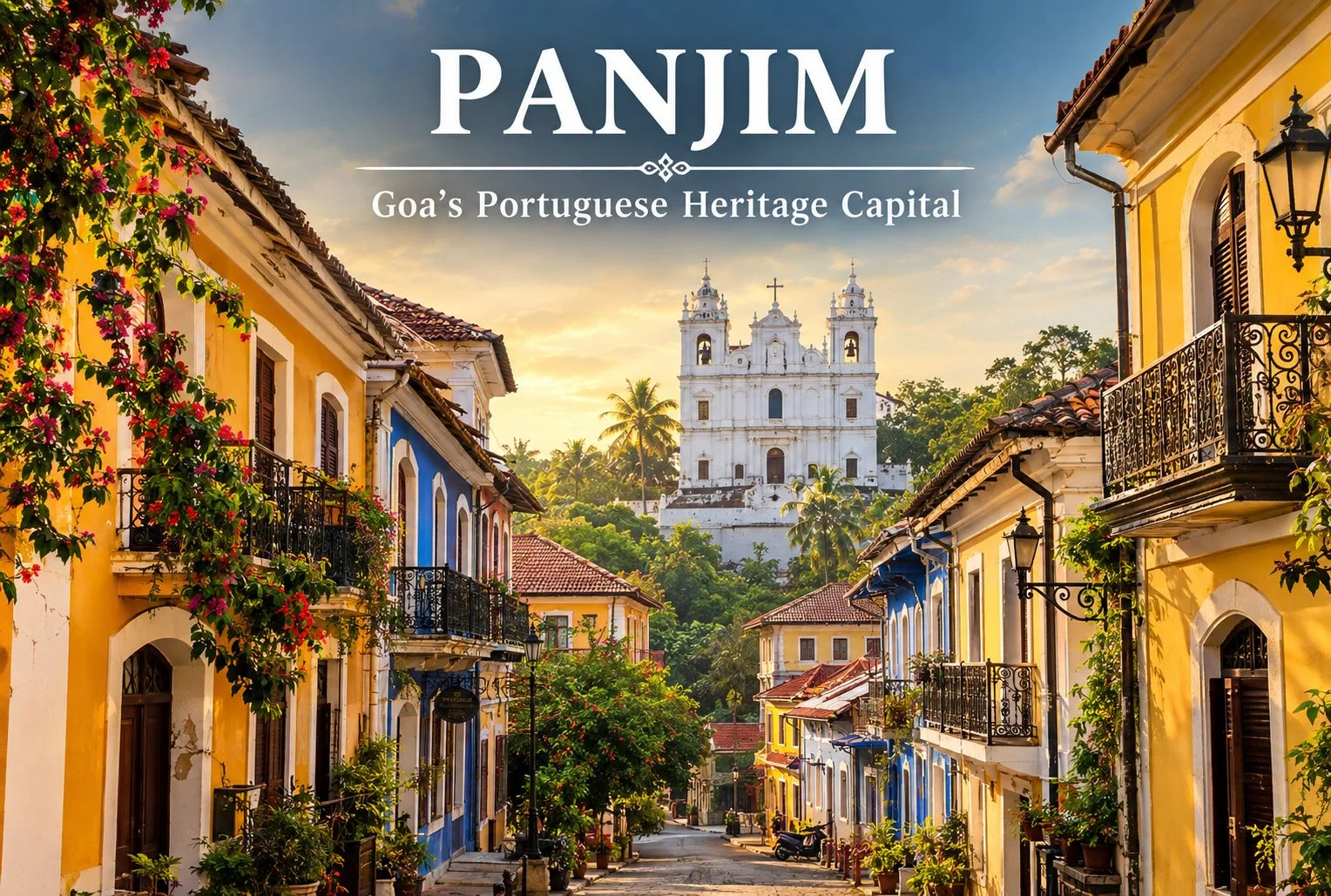
Panjim doesn’t get the same spotlight as Goa’s beach belts further south, but it deserves a proper stop on any Goa itinerary. This is the state’s capital, and it carries more than 400 years of Portuguese influence in its architecture, its street names, and even its food. Walk through the Fontainhas quarter in the morning and you’ll pass laterite-walled houses painted in ochre, blue, and yellow, with balconies that wouldn’t look out of place in Lisbon.

This guide covers what actually matters for planning a trip to Panjim: the best time to go, how to get there, the places to visit in Panjim that are worth your time, and a few practical notes on packing and responsible travel. Whether you’re stopping here for a day between beach hops or basing your whole Goa trip in the city, this should give you everything you need.

Panjim Quick Facts

InformationDetails
LocationNorth Goa, on the south bank of the Mandovi River
Also known asPanaji
StateGoa, India
Best Time to VisitNovember to February
Nearest AirportGoa International Airport, Dabolim (approx. 30 km) / Manohar International Airport, Mopa (approx. 35 km)
Nearest Railway StationKarmali Railway Station (approx. 12 km)
LanguageKonkani, Marathi, Hindi, English
Known ForPortuguese-era architecture, Fontainhas, riverfront cafes and casinos
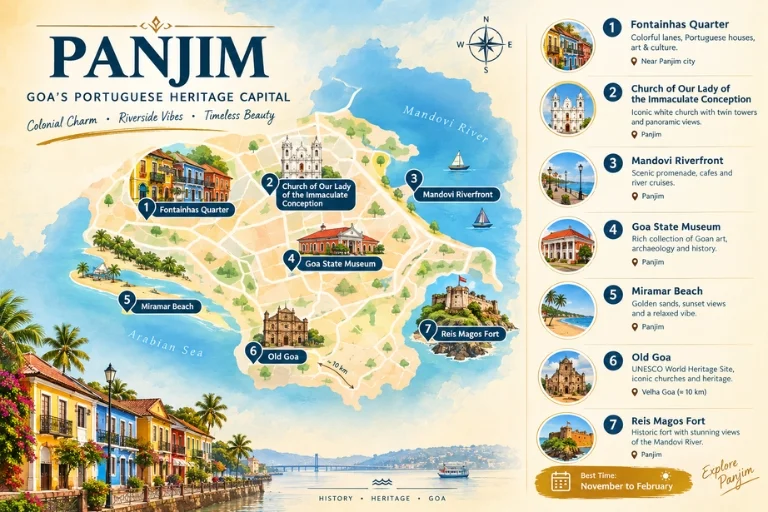
Panjim Goa 's Portuguese Heritage Capital

Where Is Panjim and Why Does It Matter to Goa’s History?

Panaji sits on the southern bank of the Mandovi River in North Goa, and it has served as Goa’s capital since 1843, when the Portuguese shifted their administrative seat here from Old Goa. That move happened partly because Old Goa’s population had been decimated by repeated epidemics, and the riverside location of Panjim offered a healthier, more accessible base.

The Portuguese ruled Goa until 1961, and that history is still visible everywhere in Panaji. Street names are in Portuguese, churches follow Portuguese Baroque and neoclassical styles, and the old residential quarters still use the original layout of narrow lanes and courtyard houses. If you’re interested in how colonial history shaped a city rather than just left a few landmarks behind, Panaji one of the more complete examples of it in India.

What Are the Best Places to Visit in Panjim?

The places to visit in Panjim are compact enough to cover on foot, which makes it an easy city to explore without a rigid schedule.

Fontainhas Quarter

Fontainhas is Panaji Latin Quarter, and it’s the most photographed part of the city for good reason. The neighborhood dates back to the late 18th century and is recognized as a heritage precinct, with narrow lanes running past houses painted in bright ochres, blues, and greens. Many of these homes still belong to the same families that built them generations ago.

Walking through Fontainhas in the early morning, before the heat sets in, is the best way to see it. You’ll pass small chapels, art galleries, and cafes tucked into converted heritage homes.

Church of Our Lady of the Immaculate Conception

This whitewashed church sits at the top of a sweeping staircase in the center of Panjim and functions as the city’s most recognizable landmark. Built in 1541 and renovated over the following centuries, it was originally the first stop for sailors arriving from Lisbon, who would visit to give thanks for a safe voyage before heading further to Old Goa. The church’s zigzag staircase and twin bell towers make it one of the more distinctive religious structures in the state.

Panaji Riverfront (Mandovi Riverfront)

The Mandovi riverfront runs along the edge of the city and is where much of Panaji evening life happens. It’s lined with cafes, seafood restaurants, and floating casinos that light up after dark. A river cruise from here is a popular way to see the city from the water, and some cruises include live Goan folk music and dance performances.

Goa State Museum

Located in the Patto area, the Goa State Museum holds a collection of Hindu, Jain, and Christian sculptures, along with traditional crafts, coins, and artifacts that trace the state’s layered history. It’s a useful stop if you want context on Goa beyond its beaches and nightlife, particularly the pre-Portuguese period that gets less attention in most Goa itineraries.

Miramar Beach

Miramar sits at the point where the Mandovi River meets the Arabian Sea, just a short drive from central Panaji. It’s not the quietest beach in Goa — its proximity to the city means it draws crowds, especially in the evening — but it’s convenient if you’re staying in Panjim and want a beach walk without traveling far. The Bishop’s Palace and a small fort are both nearby.

Old Goa

Technically a separate settlement about 10 km from Panjim, Old Goa is close enough that most visitors combine the two. It’s home to the Basilica of Bom Jesus, which holds the remains of St. Francis Xavier, and the Se Cathedral, one of the largest churches in Asia. Both are recognized UNESCO World Heritage Sites under the “Churches and Convents of Goa” listing.

Reis Magos Fort and Church

Across the river from Panjim, Reis Magos Fort offers one of the better views of the city skyline and the Mandovi River. The fort dates to the 16th century and has been restored in recent years, with the adjoining church holding the tombs of several Portuguese viceroys.

What Are the Best Things to Do in Panjim?

Beyond sightseeing, there’s a fair range of things to do in Panjim depending on what kind of trip you’re after.

  • Take a Mandovi river cruise: Evening cruises typically run for about an hour and include live music, and some operators run dinner cruises as well.
  • Walk through Fontainhas on a heritage trail: Several local operators run guided walks through the Latin Quarter that cover its architecture and history in more depth than you’d get wandering alone.
  • Visit a casino: Panaji riverfront is home to several offshore casinos, a legal and fairly unique feature of Goa compared to the rest of India.
  • Eat at a Goan-Portuguese restaurant: Panjim has some of the best Goan food in the state, from café-style eateries in Fontainhas to established restaurants serving dishes like xacuti, vindaloo, and bebinca.
  • Browse the Municipal Market: Panjim’s main market is a good spot for spices, cashews, and local produce, and it gives you a look at daily life beyond the tourist areas.
  • Catch the Panaji Church steps at sunset: The steps of the Church of Our Lady of the Immaculate Conception are a popular, low-key spot to sit and watch the evening light change over the city.

When Is the Best Time to Visit Panjim?

SeasonWeatherCrowd LevelExperienceRecommended For
Winter (November–February)Cool, dry, pleasant daysHighIdeal sightseeing conditions, peak festival seasonFirst-time visitors, families
Summer (March–May)Hot and humidModerateFewer crowds but uncomfortable for long walksBudget travelers avoiding peak rates
Monsoon (June–September)Heavy rainfallLowLush greenery, river cruises may pause, some flooding on low-lying streetsTravelers who don’t mind rain, photographers
Post-Monsoon (October)Warm, occasional showersLow to ModerateTransitional season with clearer skies by late OctoberEarly-season travelers

November to February remains the most reliable window for visiting Panjim, since the weather stays dry and comfortable enough for walking through Fontainhas or sitting out along the riverfront in the evening. If you’re coming for Goa’s famous Christmas and New Year celebrations, book accommodation well in advance, since this is peak season across the state.

How Do You Reach Panjim?

By Air

Panjim is served by two airports. Goa International Airport at Dabolim is about 30 km away, while the newer Manohar International Airport at Mopa is roughly 35 km from the city. Both have prepaid taxi counters, and travel time to central Panjim runs around 45 minutes to an hour depending on traffic.

By Train

Karmali Railway Station, about 12 km from Panaji, is the closest railhead and is well connected to major cities including Mumbai, Delhi, and Bengaluru. Margao’s Madgaon Junction, further south, is another option for long-distance trains with a larger number of connections.

By Road

Panjim connects to Mumbai (approximately 590 km) and Bengaluru (approximately 560 km) via national highways, and both government and private overnight buses run these routes regularly. If you’re already elsewhere in Goa, local buses and taxis make Panaji easy to reach from anywhere in the state within an hour or two.

Local Transport

Once in the city, Panjim is compact enough to explore on foot, particularly around Fontainhas and the riverfront. For longer distances, auto-rickshaws, taxis, and rental scooters are all widely available.

What Should You Pack for Panjim?

  • Light, breathable cotton clothing, since Panaji stays warm and humid for most of the year
  • A light rain jacket or umbrella if traveling during the monsoon months
  • Comfortable walking shoes for exploring Fontainhas and the riverfront on foot
  • Sunscreen and a hat, especially if visiting between March and May
  • A reusable water bottle to stay hydrated in the heat
  • Modest clothing for visiting churches, covering shoulders and knees
  • A power bank, since sightseeing days can run long between the city and Old Goa

What Should You Know About Responsible Tourism in Panjim?

  • Respect church etiquette by dressing modestly and keeping noise levels down during services, especially at active places of worship like the Church of Our Lady of the Immaculate Conception.
  • Avoid littering along the riverfront and in Fontainhas, where narrow lanes and heritage buildings make cleanup harder.
  • Support local, family-run cafes and shops in Fontainhas rather than defaulting only to larger chains, since tourism income directly benefits the families who’ve maintained these heritage homes for generations.
  • Use registered taxi services or app-based cabs where available, and agree on fares upfront with auto-rickshaws.
  • Be mindful around residential parts of Fontainhas — many of the colorful houses are still private homes, not public attractions.

Planning Your Goa Trip Around Panjim

Panjim works best as a cultural counterpart to Goa’s beaches — a place to slow down, walk through history, and eat well before heading back to the coast. Its compact size means you don’t need more than a day or two here, but it’s worth building into any Goa itinerary rather than treating it as a pass-through city on the way to Dabolim airport.

If you’re planning a broader trip across India’s heritage destinations beyond Goa, Explore Hills’ popular destinations page covers more culturally rich stops worth adding to your travel list.

Frequently Asked Question’s

What is Panjim known for?

Panjim is known for its Portuguese colonial architecture, particularly the Fontainhas Latin Quarter, along with the Church of Our Lady of the Immaculate Conception and its riverfront setting on the Mandovi River.

Is Panjim the same as Panaji?

Yes. Panaji and Panaji refer to the same city — Panaji is the official name, while Panjim is the more commonly used colloquial and historical name.

How many days do you need in Panjim?

One to two days is enough to cover Panaji main sights, including Fontainhas, the riverfront, and the Church of Our Lady of the Immaculate Conception, with an extra half-day if you want to include Old Goa.

What is the best time to visit Panjim?

November to February is the best time to visit Panaji, with cool, dry weather that makes walking tours and evening river cruises far more comfortable than the humid summer months.

How far is Panjim from the beaches?

Miramar Beach is just a few kilometers from central Panaji, while the more popular beach belts like Calangute, Baga, and Candolim are 15 to 20 km away by road.

Is Panjim good for a family trip?

Panaji works well for families, thanks to its walkable heritage areas, museum, and easy access to nearby beaches, without the heavier nightlife scene found in North Goa’s beach towns.

Do you need to visit Old Goa separately from Panjim?

Old Goa is about 10 km from Panaji and is usually visited as a half-day add-on rather than a separate trip, since it’s close enough to combine with a Panjim itinerary.