



Lodhi Garden sits in the middle of Delhi, in Lutyens’ Delhi. This marvellous recreational spot, with its well-designed lawns, lush green trees and calm natural surroundings, attracts travellers from across the world. Lodhi Garden takes you down memory lane with its monumental tombs and gumbads (domed buildings), which are surviving testaments to India’s glorious past. It is more than just a typical city park, offering a great mix of flora and fauna alongside ancient architecture and beautiful landscape. Since the buildings here date back to the Sultanate era of the 1400s and 1500s, the garden draws everyone from history buffs and photographers to casual visitors.
Table of Contents
A Walk Through Time: Lodhi Garden History
Lodhi Garden is a historic park that showcases Delhi’s rich heritage through monuments from the Sultanate, Mughal and British colonial periods.
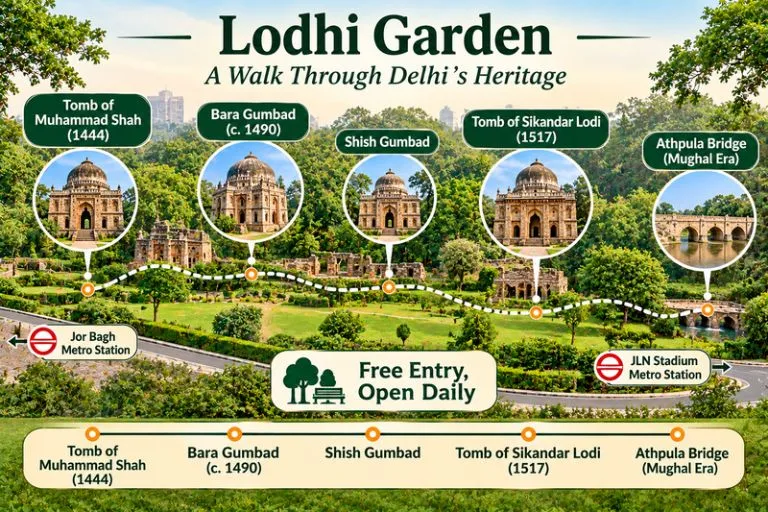
- Sayyid Dynasty (1444): The Tomb of Muhammad Shah was constructed, marking one of the earliest monuments in the garden.
- Lodi Dynasty (Late 15th–Early 16th Century): The area became a royal necropolis, with the construction of Bara Gumbad, Shish Gumbad and the Tomb of Sikandar Lodi.
- Mughal Period (16th Century): The Athpula Bridge was added during Emperor Akbar’s reign.
- Post-Sultanate Period – Village of Khairpur: The area gradually developed into a rural settlement surrounded by gardens and orchards.
- British Colonial Period (1936): Khairpur village was relocated, and Lady Willingdon developed a landscaped park around the historic monuments. It was named Lady Willingdon Park.
- Post-Independence (1947): Following India’s independence, the park was renamed Lodhi Garden.
- Modern Redesign (1968): American architect Joseph Allen Stein redesigned parts of the garden, introducing pathways, landscaped areas and water features while preserving its historic character.
Must-See Spots Inside the Garden
There are four key historical spots one should definitely check out:
| Monument Name | Built Around / Period | Key Highlight |
|---|---|---|
| Bara Gumbad | Around 1490–1494 AD | The “Big Dome” stands right in the middle of the park. It was built as a gateway to the attached three-domed mosque or to a large walled enclosure, and its exact purpose is still debated. |
| Shish Gumbad | 15th Century | The name means “glazed dome,” after the glazed tiles used in its construction. It holds graves whose occupants are not clearly identified, which makes it an intriguing historical mystery. |
| Tomb of Sikandar Lodi | 1517 AD | It is often described as India’s first enclosed garden-tomb, a design that later Mughal tombs developed further. |
| Athpula Bridge | Mughal Era | The eight-pier bridge was built during the reign of Mughal emperor Akbar. |
Lodhi Garden Location & How to Reach
The park is located in Central Delhi on Lodhi Road, near the Safdarjung Tomb and right next to Khan Market.
Among public transport options, the Delhi Metro is the best way to get here. You have a few good options depending on which line is easier for you:
- Jor Bagh Metro Station (Yellow Line): This is the nearest metro station. From here, the garden is about a 1 km walk, or you can take a quick auto-rickshaw to save time.
- Khan Market or JLN Stadium Metro Stations (Violet Line): Both of these stations are also close, a short walk or auto ride from the park gates.
If you prefer to drive your own car or take a cab, you can simply enter the park into your GPS. Public street parking is available near the main entrance gates.
For official visitor information, you can refer to the Delhi Tourism page on Lodi Tomb, the Delhi government’s official tourism portal.
Lodhi Garden Timings & Entry Fee
The park is open every day of the week, with operating hours shifting slightly by season. Timings can change, so please check before you go.
| Detail | Information |
|---|---|
| Opening Days | Monday – Sunday |
| Summer Timings (April – September) | 5:00 AM – 8:00 PM |
| Winter Timings (October – March) | 6:00 AM – 8:00 PM |
| Entry Fee | Free for all visitors |
If a city walk makes you want a longer break in the hills, Explore Hills’ Delhi Chakrata Adventure Tour is an easy escape that starts from Delhi.
Conclusion
Spread over about 90 acres, Lodhi Garden is both an archaeological site and a green escape in the heart of Delhi. Whether you come to admire its Sultanate-era tombs, enjoy a peaceful walk among old trees, or take photographs for social media, it is a must-visit spot. Here you can enjoy fresh air, birdlife, and rich heritage, all in one quiet, free-to-enter park.
For a longer weekend away from Delhi, Explore Hills’ Mussoorie-Rishikesh-Haridwar Trip combines a hill station with two of Uttarakhand’s best-known towns.
Frequently Asked Questions
What is the location of Lodhi Garden?
Lodhi Garden is situated between Khan Market and Safdarjung’s Tomb on Lodhi Road in India’s capital, New Delhi.
Which is the closest metro station to Lodhi Garden?
Jor Bagh Metro Station on the Yellow Line is the nearest metro station, about 1 km from the garden.
Is there an entry fee for visiting the garden?
Entry to Lodhi Garden is completely free for everyone.
What are the official Lodhi Garden timings?
The garden is open every day of the week, but hours change with the seasons. In summer it is open from 5:00 AM to 8:00 PM, and in winter from 6:00 AM to 8:00 PM. Please check before you go, as timings can change.