

Table of Contents
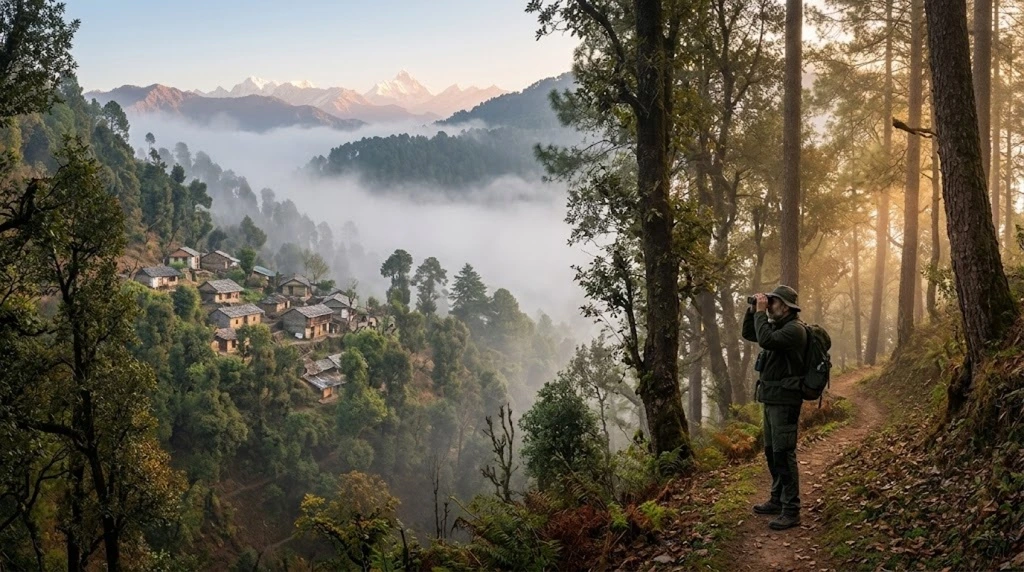
Most people go to Nainital for the lake, the boats and the crowded Mall Road. A short drive uphill, the picture changes completely. The road climbs through oak and pine, the traffic thins out, and you arrive at a small village where the loudest sounds are birdsong and wind in the trees. That village is Pangot, and for birdwatchers it has become one of the most rewarding places in Uttarakhand.
This article covers what you need to know: where it is, the Nainital to Pangot distance, Pangot weather in each season, how the Pangot Bird Sanctuary and Kilbury Bird Sanctuary fit together, which birds to look for and how to plan your stay.
Where Is Pangot
Searches for Pangot Nainital lead to a small village in the Nainital district of Kumaon, Uttarakhand, at roughly 1,950 to 1,980 metres (about 6,300 to 6,510 feet) above sea level. It lies about 13 to 15 kilometres from Nainital town, on the slopes below Naina Peak, also known as Cheena Peak, and sits within a belt of oak, pine and rhododendron forest. Sources differ slightly on the exact altitude and distance, which is common for hill villages, but all agree it is a short and scenic drive from the lake town.
Unlike larger hill stations, the village has no market square or cluster of hotels. It is a scatter of homes, farm terraces and a handful of small lodges, which is exactly why birders prefer it. The forest begins almost at your doorstep.
Nainital to Pangot Distance and How to Reach
The Nainital to Pangot distance is around 13 to 15 kilometres, and the uphill drive takes about 30 to 45 minutes. The road leaves Nainital via the Cheena Peak side, passes pine forest with views of a deep gorge below, and ends in a narrow, winding stretch into the village. Shared taxis and private cabs run from Nainital, and many visitors simply arrange a pickup through their lodge.
Other approaches:
- By rail: The nearest railway station is Kathgodam, about 35 kilometres from Nainital and roughly 48 kilometres from Pangot, a drive of about two hours.
- By air: The nearest airports are Pantnagar, around 95 kilometres away, and Bareilly. From either, you continue by road.
- From Delhi: It is roughly 300 to 340 kilometres by road via NH 9 and NH 87, usually seven to eight hours depending on traffic. Another route reaches Pangot via Kaladhungi.
Public transport does not go directly to the village, so plan your last leg by taxi or lodge transfer.
Pangot Weather by Season
The weather changes sharply with the seasons, and the right time depends on what you want to do.
- Summer (March to June): Pleasant, with daytime temperatures of roughly 10 to 25 degrees Celsius. March and April bring rhododendron blooms across the hillsides.
- Monsoon (July to September): Cool and humid, around 12 to 22 degrees, with heavy rain, slippery trails and leeches. Landslides can close roads, and trekking is not recommended.
- Autumn (October and November): Clear skies, crisp air and excellent visibility of the Himalayan peaks. Migratory birds start to arrive.
- Winter (December to February): Cold, with temperatures falling to around zero and occasionally below, and a chance of snow, especially in January. Warm clothing is essential.
The best overall windows are March to June and September to November, with late October often cited as a favourite by birders. If you want snow, go in January and be prepared for cold nights.
Pangot Bird Sanctuary: What It Actually Is
The term bird sanctuary is used widely, but the legal status is slightly different. The area falls within the Naina Devi Himalayan Bird Conservation Reserve, which was established in May 2015 and covers about 111.9 square kilometres at altitudes from roughly 1,000 to 2,600 metres. It is run by the Uttarakhand Forest Department and the Nainital Forest Division. Visitors often still call it a sanctuary, and the Government of India’s tourism portal lists it as “Pangot and Kilbury Bird Sanctuary,” giving timings of 6:00 AM to 5:00 PM.
The forest here includes oak, rhododendron and fir at higher levels, with several oak species mixed with pine lower down. That variety of habitats is what supports so many birds in such a small area.
Kilbury Bird Sanctuary and the Naina Peak Trek
Kilbury Bird Sanctuary is the name usually given to the forest to the north of the village, centred on a forest rest house. Some sources treat it as part of the same birding area, while others describe it as a separate site a few kilometres away at around 2,200 metres, and the two names are often used together.
The classic route is a walk from the village through oak and deodar forest, passing Naina Peak at about 2,611 metres. The Kilbury forest rest house lies a few kilometres below the peak. It is an easy-to-moderate trek of around eight kilometres one way, taking five to six hours round trip. There are no shops on the trail, so carry water and snacks. On clear days you may see Nanda Devi, Trishul and Nanda Ghunti from the ridge.
Birds You Can Actually See
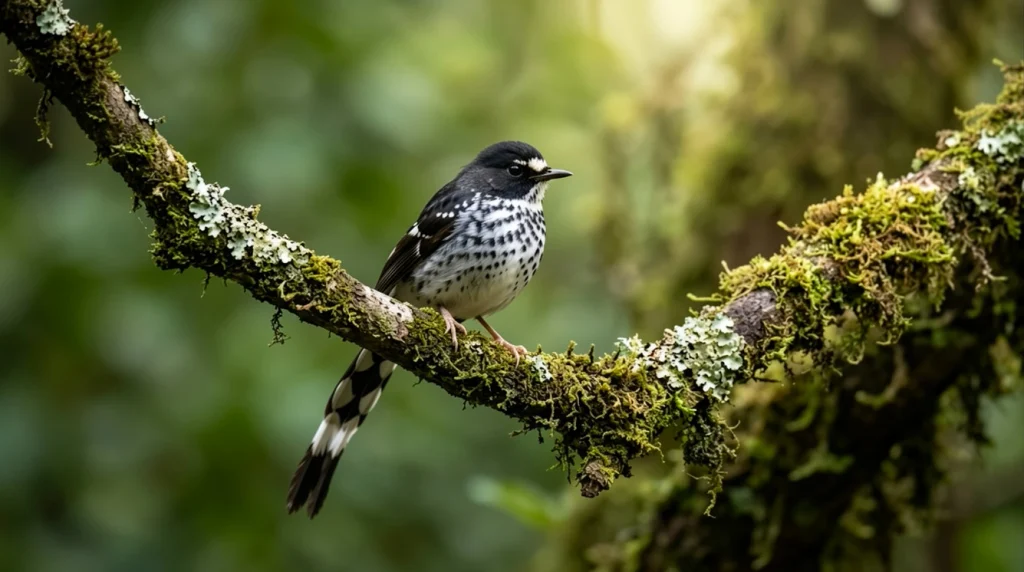
Estimates of the bird count vary. The tourism portal mentions more than 580 species recorded in the wider area, including migratory and endemic birds, while other guides put the number nearer 250 for the village and its immediate surroundings. Either way, the list is impressive.
Species often mentioned include:
- Pheasants: Kalij, Koklass and, with luck, the rare Cheer pheasant.
- Raptors: Himalayan Griffon and the Bearded Vulture, also known as the Lammergeier.
- Forest birds: Spotted Forktail, Rufous Sibia, Blue-winged Minla, Rufous-bellied Niltava and Great Barbet.
- Other highlights: Hill Partridge, Himalayan Woodpecker and, occasionally, the Himalayan Monal near Kilbury.
Early mornings are best, between about 6:00 and 9:00, when birds are most active. Migratory birds are most noticeable from November to February. A local guide greatly improves your chances, since many species are heard long before they are seen.
The forest also shelters mammals such as leopards, barking deer, yellow-throated martens and Himalayan goral, though sightings are rare and you should never walk alone at dusk.
Beyond Birds: Corbett and Nearby Sights
Birding is the main draw, but there is more to see. Naina Peak is a straightforward hike with wide Himalayan views, and Snow View Point, the Eco Cave Gardens and the quiet Sariyatal are all within reach. Nainital’s lake, zoo and temples are a short drive back down the road.
History enthusiasts can add the Jim Corbett Museum at Kaladhungi, about ten kilometres from Pangot, which displays photographs and belongings of the famous hunter-turned-conservationist. A multi-day trek from the village to the Corbett landscape is also possible for experienced hikers, though you should arrange it with a local operator and check current forest rules.
Where to Stay and Practical Tips
Accommodation in Pangot ranges from simple village homestays to nature lodges with guided walks. Book ahead for October to November and March to May, since the number of rooms is limited. Many places serve home-cooked Kumaoni meals, and a few include birding walks.
A few tips:
- Bring binoculars, a field guide and layered clothing.
- Wear sturdy shoes, since trails can be steep and damp.
- Keep noise low and stay on paths, which helps both birds and other visitors.
- Fill your fuel tank and carry cash in Nainital, as facilities are limited in the village.
- If you are planning a longer Uttarakhand trip, our Chopta Tungnath guide covers the world’s highest Shiva temple, and our Kuari Pass guide covers a classic ridge walk in the Garhwal Himalayas.
- For official visitor information, see the Incredible India page on Pangot and Kilbury Bird Sanctuary, the Government of India’s tourism portal.
Frequently Asked Question’s
Where is Pangot located?
It is a village in the Nainital district of Uttarakhand, around 13 to 15 kilometres from Nainital, at about 1,950 metres above sea level.
What is the Nainital to Pangot distance?
It is roughly 13 to 15 kilometres, and the drive takes about 30 to 45 minutes, depending on traffic and road conditions.
What is the best time to visit Pangot?
March to June and September to November are generally best, with migratory birds especially visible from November to February.
How many bird species are found at Pangot?
Tourism sources mention over 580 species in the wider area, while some guides report around 250 near the village, so the figure depends on the area counted.
Is Pangot Bird Sanctuary the same as Kilbury Bird Sanctuary?
The two names are often used together. Both lie within the Naina Devi Himalayan Bird Conservation Reserve, though some sources treat Kilbury as a separate forest area a few kilometres from the village.
Does it snow in Pangot?
Light snow is possible in winter, especially in January, and temperatures can fall to around zero or below.
The charm of the village is not in what it offers but in what it leaves out: no big hotels, no shopping crowds, no rush. You wake to birdsong, walk into the forest by sunrise and spend the day listening. For many people, that is the whole point of the trip.