

Table of Contents
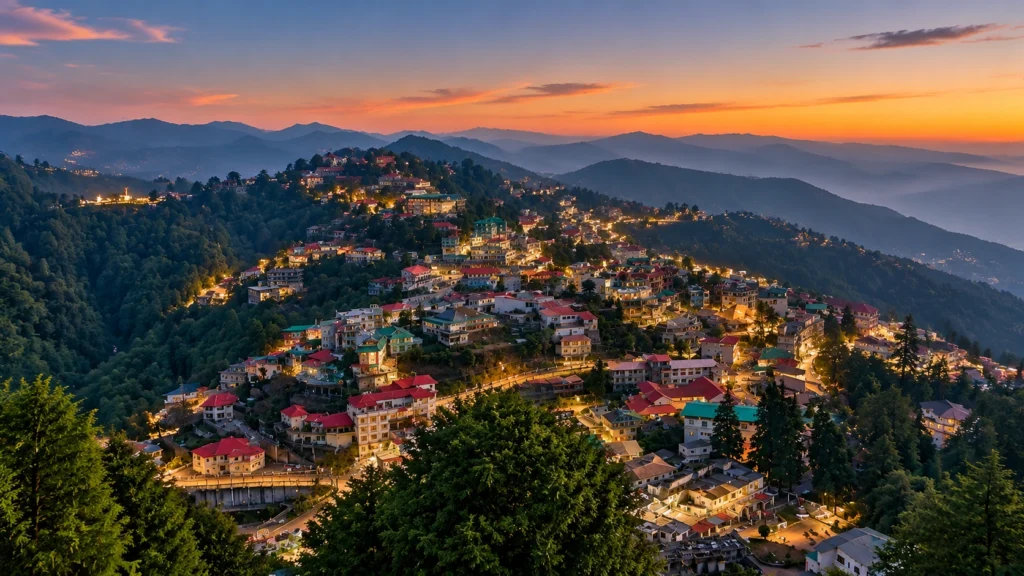
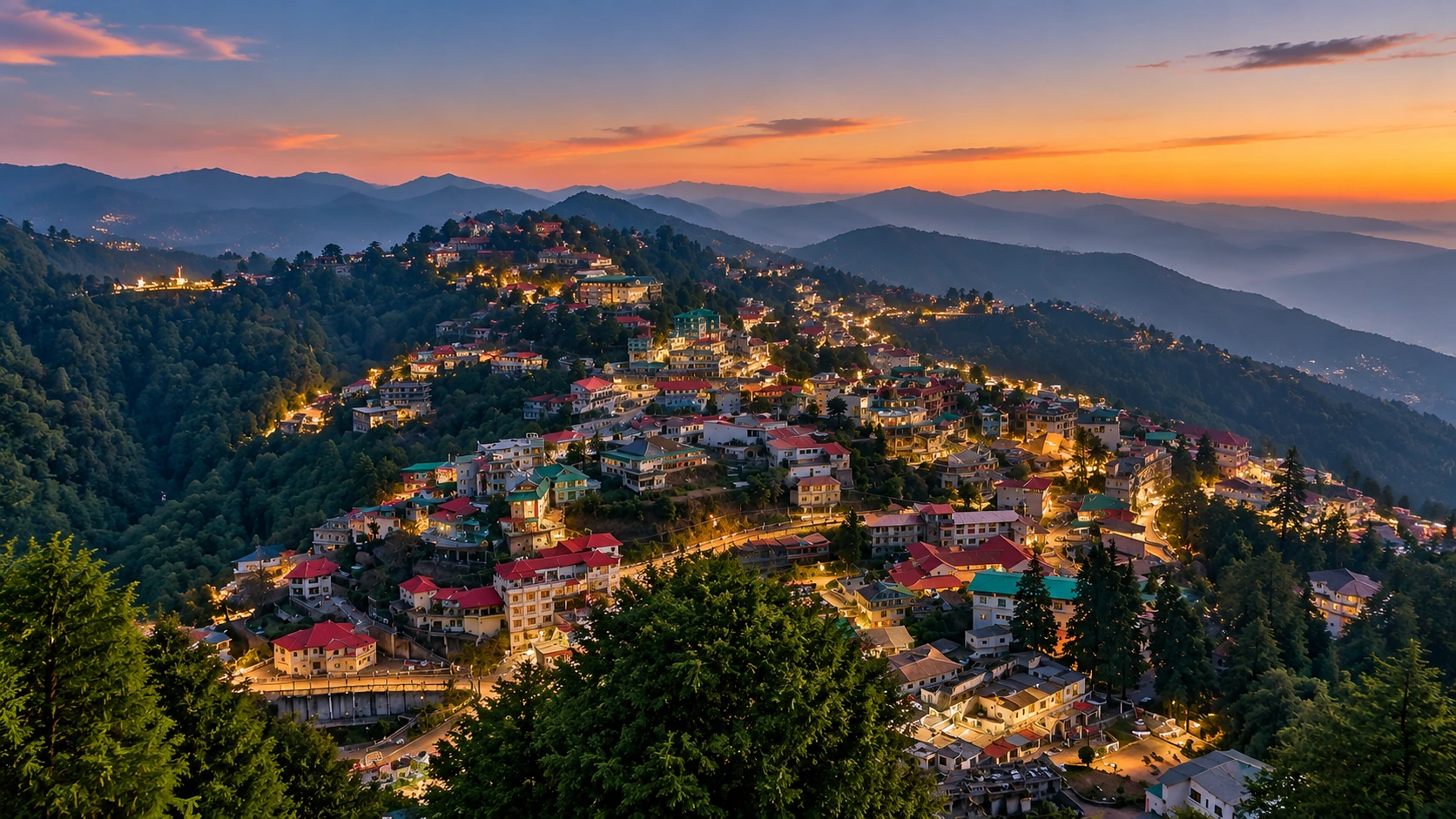
Mussoorie sits about 38 kilometres from Dehradun, on a ridge that looks down on the Doon Valley and across to the snow ranges. Its name is said to come from the mansoor shrub that once grew thickly on the slopes. The hill station grew after a British officer, Captain Frederick Young, reached the ridge in the late 1820s (sources give 1826 or 1827) and built a shooting lodge there.
If you are building a list of places to visit in Mussoorie, the good news is that most of them are close together. The better news is that the best ones are not all on the busy Mall. This guide to the places to visit in Mussoorie runs from the big names to the quieter corners, with distances, timings and a plan.
Mall Road Mussoorie: Start Where Everyone Does
This promenade holds the town together. It is lined with shops, cafes, game parlours and old buildings, and it looks out over the Doon Valley and, on clear days, the Himalaya. Kulri Bazaar and the Library end are close by, and so is the Picture Palace, described locally as the first cinema hall in the country to run on electricity.
Go in the late afternoon, when the light turns gold and the crowd thins slightly. Of all the places to visit in Mussoorie, it is the one where simply walking is the activity.
Best Places to Visit in Mussoorie: The Heritage Trio
Three names come up in almost every list of places to visit in Mussoorie, and each of these Mussoorie famous places has a real story behind it.
Sir George Everest’s House
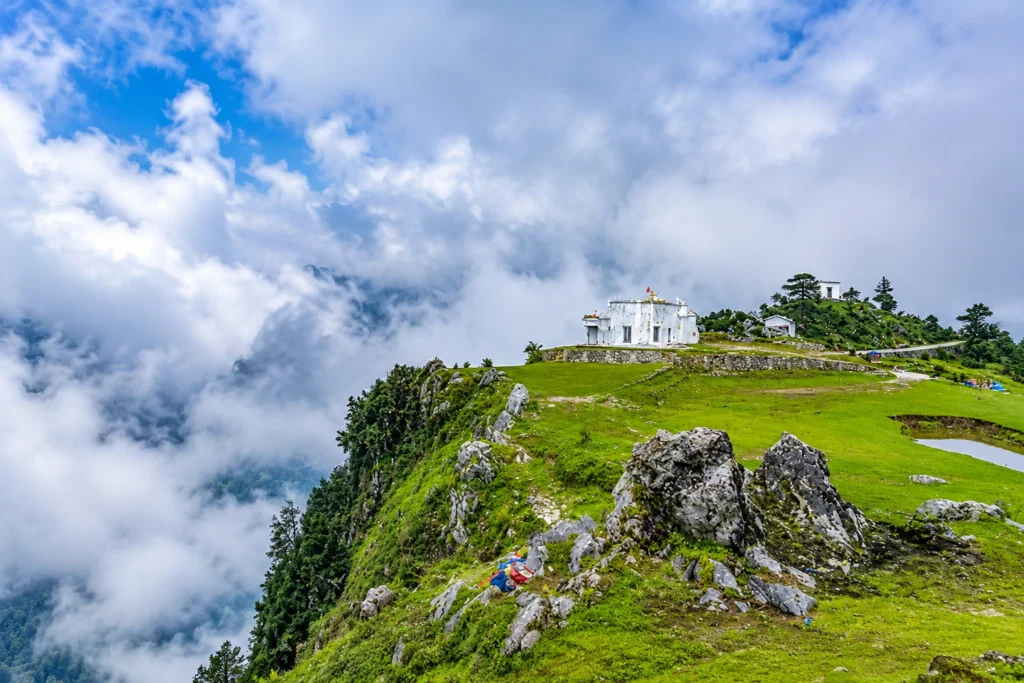
Perched on a cliff above the valley, the house on Park Estate, one of the most rewarding places to visit in Mussoorie, was the home, observatory and laboratory of Sir George Everest, the Surveyor General of India. Listings date it to 1832 and say he lived there for eleven years. Mount Everest was named in his honour, and the house is now treated as a museum. The views stretch to the Doon Valley on one side and the Aglar river valley on the other, with the high Himalaya to the north. Visiting hours are listed as 9:00 AM to 6:00 PM, and a short climb from the base leads to the house, where stalls sell momos and tea.
Cloud’s End
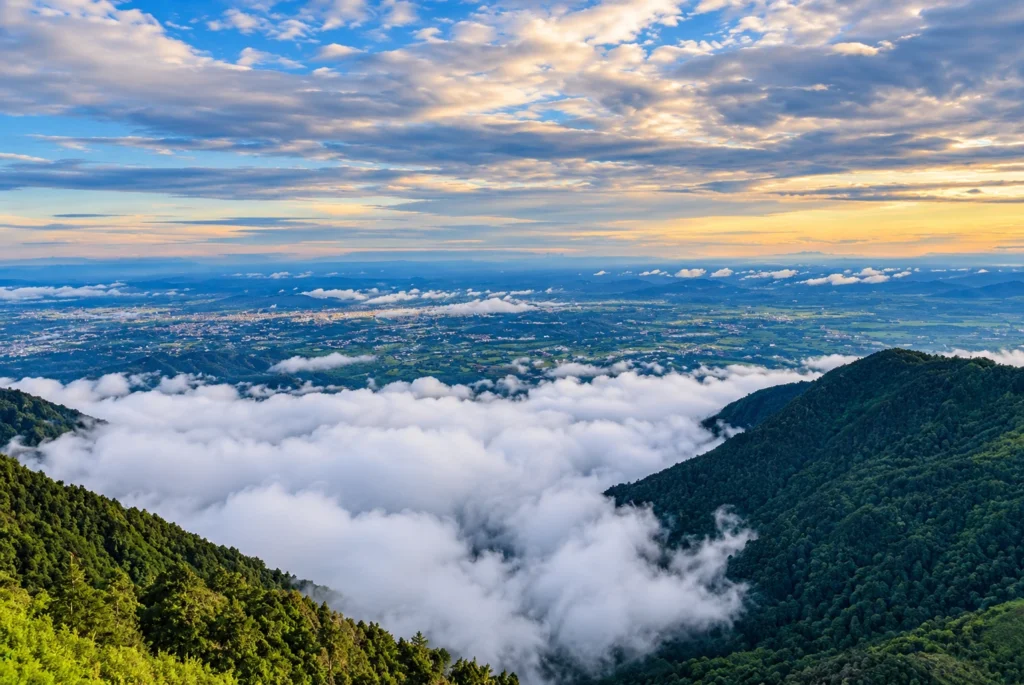
Cloud’s End sits at the western edge of town, among oak and deodar forest at about 2,225 metres. A bungalow built here in 1838 by Major Swetenham still stands and now runs as a heritage forest resort. The point is far enough from the Mall to feel quiet, and mist often sweeps through the trees. One guide mentions a roughly 2 km trail towards the Benog Wildlife Sanctuary, though access is sometimes limited, so ask locally before you go.
The Savoy
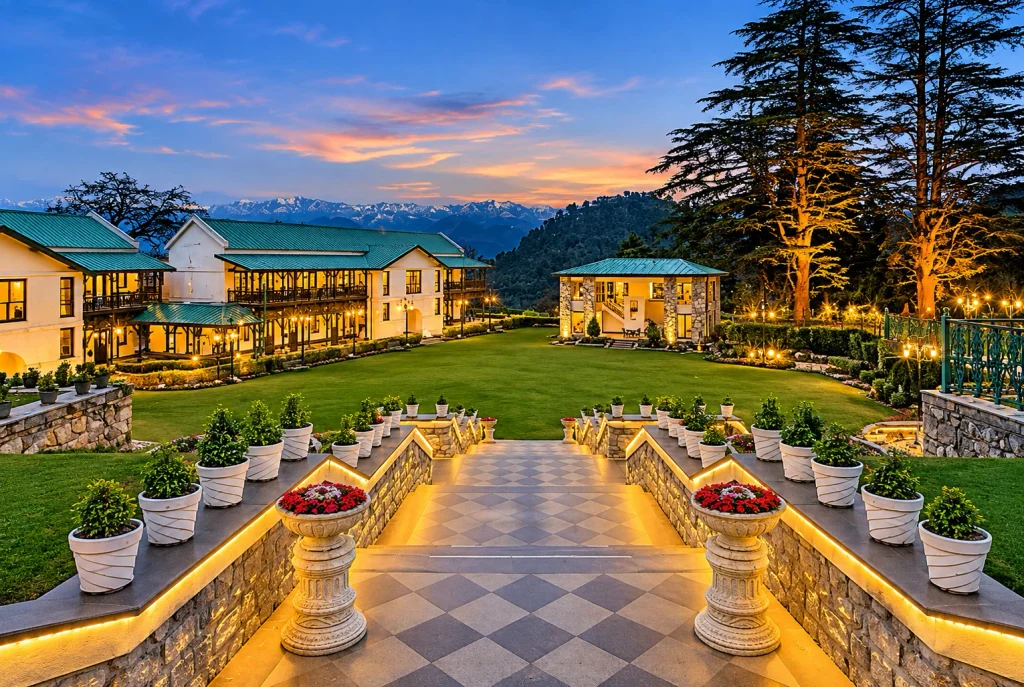
Cecil D. Lincoln, an Irish barrister from Lucknow, built the Savoy Hotel Mussoorie in the early 1900s, and it opened around 1902. It stands on The Mall and is one of the oldest heritage places to visit in Mussoorie. A popular tradition links a Mussoorie hotel with the plot of Agatha Christie’s first novel, though accounts differ on which one, so treat that as lore.
Dalai Hills and Happy Valley
Few places to visit in Mussoorie carry as much quiet history as the Dalai Hills. The area above the Lal Bahadur Shastri National Academy of Administration has a Buddha statue, a Buddhist temple, walking trails and sunset views, about 4 km from the town centre. Happy Valley lies to its west.
The name connects to 1959. The young Dalai Lama arrived in Happy Valley in April 1959 and stayed until April 1960, when he left for Dharamshala with about eighty officials of the government in exile. Many Tibetans stayed on, and an estimated 5,000 still lived here as of 2016. The Shedup Choepelling temple and the Tibetan-style homes make this a quiet, thoughtful stop after the Mall.
Viewpoints, Gardens and Waterfalls
For classic Mussoorie sightseeing, these spots make up the standard circuit of places to visit in Mussoorie:
- Gun Hill: The second-highest point in town, at about 2,122 metres, reached by ropeway. It gives views of the Bandarpunch, Srikantha and Gangotri ranges.
- Lal Tibba: On Depot Hill in Landour, about 2 km from the centre and often called the highest point in Mussoorie. A telescope points at distant peaks such as Kedarnath and Nilkantha.
- Camel’s Back Road: A roughly 4 km walking and horse-riding road known for its sunrise and sunset views, and close to where Captain Young’s first shooting lodge is said to have stood.
- Bhatta Falls: A smaller waterfall and picnic spot close to town, with a quieter feel than Kempty.
- Company Garden: A municipal garden about 2 km from the centre, with seasonal flowers and a small boating pond.
- Mussoorie Lake: A developed picnic spot, about 1 km out of town, with paddle boating.
- Kempty Falls: The best-known waterfall, on the Yamunotri road. Guides place it between about 5 and 15 km from town, so confirm with your driver.
- Jharipani Falls: About 4 km from the centre, reached by a roughly 30-minute walk downhill through forest.
Landour and the Old-Town Walks
Landour is among the most atmospheric places to visit in Mussoorie. This quiet cantonment sits above the Mall and holds Lal Tibba, the Char Dukan tea stalls, the clock tower and winding lanes that have long drawn writers, with Ruskin Bond its best-known resident. Christ Church, which one local handbook calls the oldest church in North India, adds a heritage stop on the way. Pair Landour with the Camel’s Back Road for an easy half-day on foot.
Slow Hours Beyond the Checklist
Among the things to do in Mussoorie, the slow ones are often best. Walk the Camel’s Back Road at sunrise. Take a cup of tea in Landour, which has a calmer, old-world feel than the Mall. Spend an evening in the Tibetan quarter of Happy Valley, or follow forest paths to a viewpoint where nobody else is around.
Day Trips Outside the Town
If you have an extra day, several places to explore in Mussoorie lie just beyond the municipal limits. Dhanaulti is about 24 km away and is known for deodar forest and snow-peak views. Nagtibba, a trekking destination, is about 34 km away. The Bhadraj Temple, about 15 km away and dedicated to Lord Bal Bhadra, gives wide views over the Doon Valley. The Surkanda Devi temple, at about 3,030 metres, is a short trek from Kaddukhal and draws large crowds at its fair around Ganga Dussehra. The nearby Benog Mountain Quail Sanctuary, set up in 1993 and covering 339 hectares, is named for a bird last recorded in 1876.
If you enjoy Uttarakhand’s quieter hill stations, our Pangot article covers a birding retreat near Nainital, and our Vasuki Tal guide covers a high-altitude lake trek above Kedarnath.
Where to Stay
Because most places to visit in Mussoorie cluster near the Mall, staying there saves effort for first-time visitors. Hotel Mosaic Mussoorie, for example, is listed near the Picture Palace on Mall Road and about 1 km from Gun Hill, with amenities such as an indoor pool and spa, though you should check current rates and reviews. The Savoy offers a heritage stay, while Landour and Cloud’s End suit travellers who want quiet over convenience.
Mussoorie in Winter
Winter, from December to February, is cold and clear. Average lows are around 2 to 4 degrees Celsius, with a rare record low near minus 6. Snow falls on the higher hills such as Landour and Dhanaulti, but it is not guaranteed in the town itself, so do not book solely on a snowfall forecast. Most places to visit in Mussoorie stay open, though some roads and trek routes close briefly. Winter is also a good time to visit Cloud’s End and the Dalai Hills, since the air is crisp and the views are long.
Best Time to Visit and How to Reach
Summer, from March to May, is the busiest season for the places to visit in Mussoorie, and hotels and taxis fill up, so book early. The monsoon is misty and quiet, though landslides can occasionally block roads. October and November are calm and good for budget travellers.
The nearest airport is Jolly Grant in Dehradun, and the nearest railway station is Dehradun, about 36 km away. Buses and taxis run to Mussoorie from both, and from Delhi. For an official overview, see the Dehradun district administration’s page on Mussoorie, published by the Government of Uttarakhand.
A Simple Two-Day Plan
This plan covers the main places to visit in Mussoorie in two days.
- Day 1 morning: Sir George Everest’s House, then Gun Hill by ropeway.
- Day 1 afternoon: Camel’s Back Road, then an evening walk on the Mall.
- Day 2 morning: Cloud’s End or Kempty Falls, depending on the weather.
- Day 2 afternoon: Dalai Hills and Happy Valley, then Lal Tibba for sunset.
Frequently Asked Question’s
Which are the main places to visit in Mussoorie?
Mall Road, Gun Hill, Lal Tibba, Camel’s Back Road, Kempty Falls, Sir George Everest’s House, Cloud’s End and the Dalai Hills are the most popular stops.
What is special about Sir George Everest’s House?
It was the home and observatory of the Surveyor General of India after whom Mount Everest is named, and it offers wide valley views.
Why are the Dalai Hills famous?
The Dalai Lama arrived in nearby Happy Valley in April 1959, and the area has a Buddhist temple, a Buddha statue and a Tibetan community.
Does it snow in Mussoorie?
Snow falls on the higher hills in December to February, but it is not guaranteed in the town itself.
How far is Mussoorie from Dehradun?
It is about 38 km by road, and the railway station is about 36 km away.
Where is the Savoy Hotel?
It stands on The Mall in Mussoorie and opened around 1902.
The places to visit in Mussoorie reward people who slow down. The Mall is fun, but the best hours here are usually spent at a cliff-edge house, a misty forest gate or a Tibetan temple at sunset, with nothing planned afterwards.