

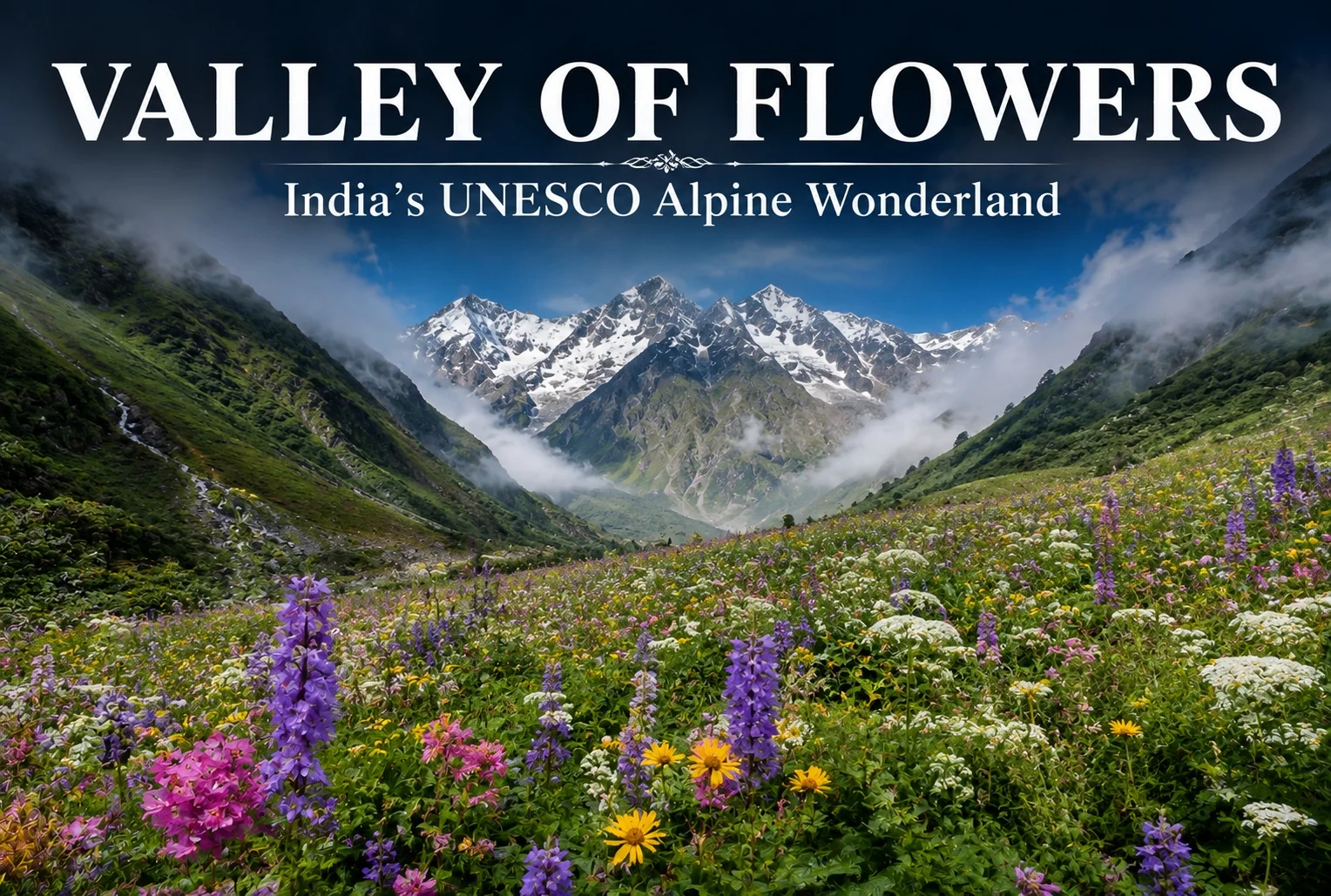
Tucked deep inside Uttarakhand’s Nanda Devi Biosphere Reserve is a place that only fully reveals itself for a handful of weeks each year — a valley so densely packed with wildflowers that early explorers genuinely struggled to describe it without sounding like they were exaggerating. This is the Valley of Flowers, and once you’ve seen it in bloom, the reputation makes complete sense.
Table of Contents
What Makes the Valley of Flowers So Special?
This high-altitude meadow is a UNESCO World Heritage Site, and it earns that status honestly. Over 500 species of alpine flowers carpet the valley floor during peak season, including rare finds like the Brahma Kamal and the Himalayan Blue Poppy, both of which are difficult to spot almost anywhere else in the world. The valley sits at an elevation of around 3,658 meters, ringed by snow-capped peaks that make the whole basin feel sealed off from everything else.
Best Time to Visit
The window here is narrow and unforgiving. The park typically opens in June and closes by early October, but the real bloom — the version worth traveling for — peaks between mid-July and mid-August, right in the middle of monsoon season. That timing surprises a lot of first-time visitors, since most Himalayan treks avoid the monsoon entirely. Here, it’s the opposite: the rain is what brings the flowers out.
The Trek Itself
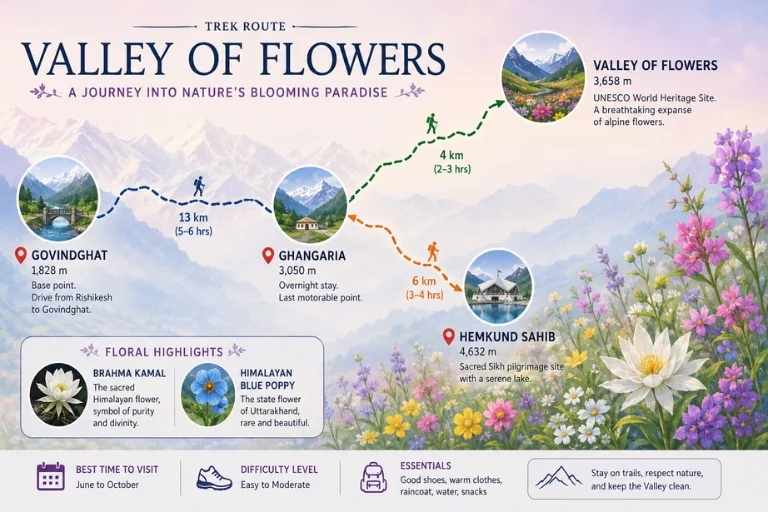
Getting there starts at Govindghat, from where the trail leads to Ghangaria, the small base camp that serves both the valley and the nearby Hemkund Sahib. From Ghangaria, it’s a further trek into the valley itself, through forest, past streams, and alongside waterfalls tumbling down from the surrounding ridgelines before the meadow opens up. Most travelers combine the two destinations into one trip, since Ghangaria works as the shared base camp for both. Explore Hills’ Valley of Flowers Trek package covers the full route, including the Hemkund Sahib extension for those who want to take on both in a single journey.
Hemkund Sahib: The Spiritual Add-On
Most people who make the trip to this valley also walk up to Hemkund Sahib, one of the highest Gurudwaras in the world, sitting beside a glacial lake at over 4,300 meters. It’s a steep, demanding climb on its own, but combining it with the valley trek is the standard itinerary for most pilgrims and trekkers alike.
Wildlife and Ecology
Because it sits inside the Nanda Devi Biosphere Reserve, the valley is home to more than just flowers. The region shelters species like the Himalayan musk deer, blue sheep, and snow leopard, though sightings of the larger animals are rare given the terrain. Birdwatchers tend to have better luck, with sightings of pheasants and high-altitude songbirds fairly common along the trail. For travelers who enjoy this kind of meadow-and-wildlife combination, Explore Hills’ Ali Bedni Bugyal Trek offers a similar alpine grassland experience elsewhere in the Garhwal Himalayas.
For official conservation status, permit rules, and biosphere reserve details, you can refer to the Uttarakhand Forest Department, the government body responsible for managing this protected area.
What to Pack
Since the trek falls during monsoon season, waterproof gear is non-negotiable — a good rain jacket, a poncho for the backpack, and quick-drying layers underneath. Trekking poles help on the wetter, more slippery stretches, and a basic first-aid kit is worth carrying given how remote the valley is once you’re inside it.
Conclusion
The Valley of Flowers isn’t a trek you do for the summit or the adrenaline — it’s one you do for a few weeks of the year when a remote Himalayan basin turns into something closer to a living painting. Between the UNESCO status, the rare flora, and the nearby pilgrimage at Hemkund Sahib, it’s a trip that rewards patience with the calendar more than fitness on the trail.
Frequently Asked Question’s
What is the best time to visit the Valley of Flowers?
Mid-July to mid-August is the peak bloom period, though the park stays open from June through early October.
How difficult is the trek to the Valley of Flowers?
It’s considered a moderate trek, manageable for reasonably fit beginners, with the main challenge being the monsoon-season trail conditions rather than altitude or technical terrain.
Can the Valley of Flowers be combined with Hemkund Sahib?
Yes, both share Ghangaria as a base camp, and most itineraries combine the two into a single trip.
Is prior trekking experience required for this trek?
No, it’s considered beginner-friendly, though good fitness and proper monsoon gear are recommended given the wet trail conditions.