
Explore Hills
Checkout +91-9456580306

Exploring Brahmatal: The Himalayas’ Hidden Winter Gem

Brahmatal trek

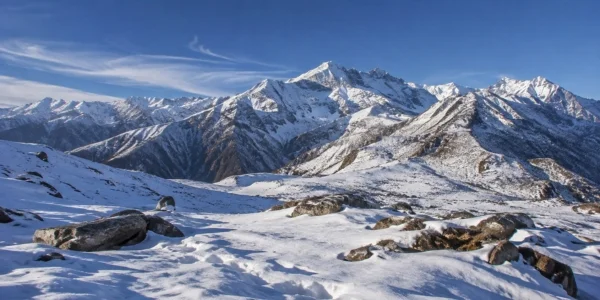
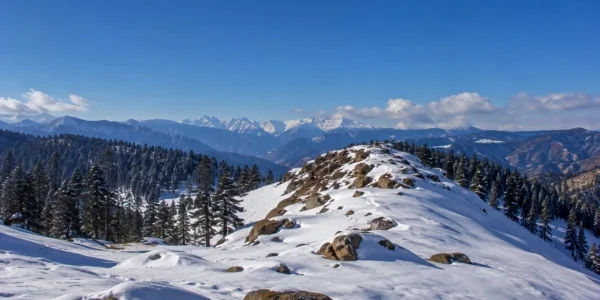
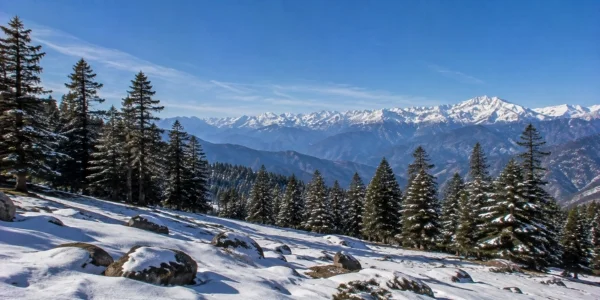
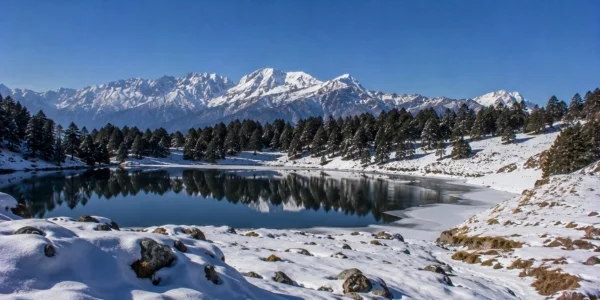
Tucked away in the Chamoli district of Uttarakhand, Brahmatal has quietly become one of the most sought-after winter treks in the Indian Himalayas. Known for its snow-laden meadows, frozen alpine lakes, and unobstructed views of Mt. Trishul and Mt. Nanda Ghunti, this trek offers a rare combination of accessibility and dramatic mountain scenery, making it a favourite among both beginners and seasoned trekkers.

If you’re planning to take on this trail, our own Brahmatal Trek package covers the complete journey, but here’s everything worth knowing before you go — the distance, altitude, difficulty, and the best time to experience it.

What Makes Brahmatal Special

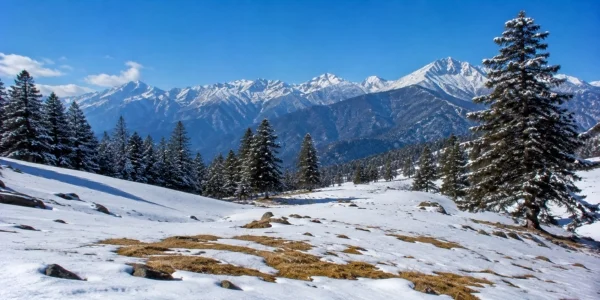
The trek takes its name from local legend, which holds that Lord Brahma once meditated beside the lake that shares the same name, lending the site a quiet spiritual significance alongside its natural beauty. It’s particularly beloved for its variety — trekkers pass through dense oak and rhododendron forests, open meadows, and eventually snow-covered ridgelines, all within a relatively short and manageable route.

Unlike many high-altitude treks that demand weeks of preparation, this one is accessible to trekkers with only moderate fitness levels, which is part of why it has become such a popular entry point into winter Himalayan trekking.

Brahmatal Trek Distance

One of the most important details for anyone planning this journey is the Brahmatal trek distance, which typically covers approximately 22 to 24 kilometres for the full round trip, starting and ending at the base village of Lohajung. Most itineraries spread this distance across 4 to 6 days, depending on the pace and number of rest or acclimatisation days built into the schedule.

The route passes through key stops including Bekaltal, a frozen lake surrounded by forest, followed by Jhandi Top and the campsite itself, before the final ascent to the top. Daily distances are generally manageable, averaging around 5 to 7 kilometres, which keeps the trek from feeling overly strenuous despite the elevation gain involved.

Altitude and Difficulty

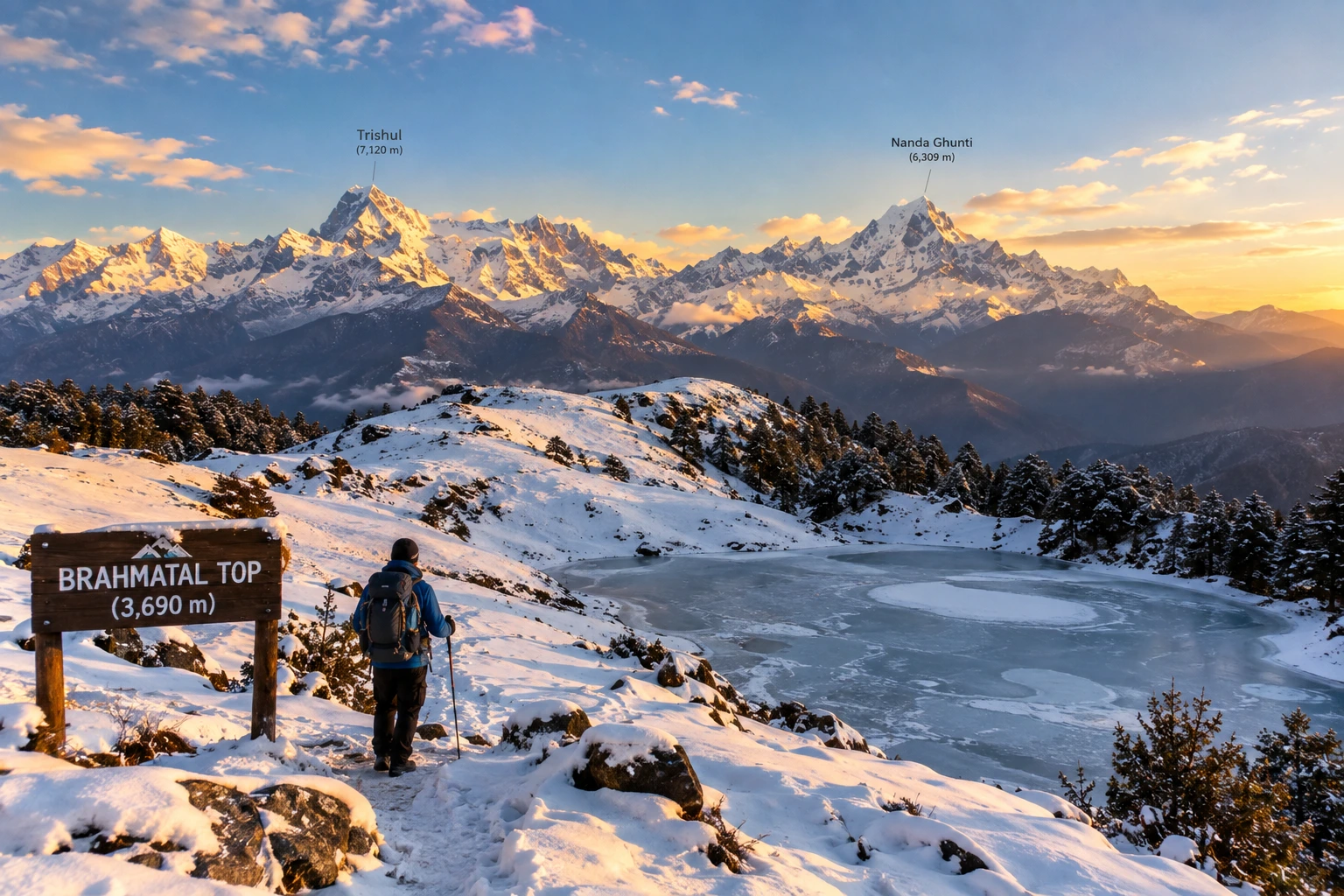
The highest point of the trek, Brahmatal Top, sits at an elevation of approximately 3,734 metres, or around 12,250 feet, offering sweeping panoramic views of the Himalayan range, including Mt. Trishul, Mt. Nanda Ghunti, and on clear days, even distant peaks like Chaukhamba.

Starting from Lohajung at roughly 2,300 metres, the total elevation gain works out to around 4,650 feet, achieved gradually over several days rather than in a single steep push. This is what places the trek firmly in the easy-to-moderate difficulty category, suitable for reasonably fit beginners as well as more experienced trekkers looking for a shorter winter adventure. Trekking in snow does add a layer of challenge, particularly during peak winter months, so appropriate gear and a steady pace are essential.

For those wanting to compare this route with another popular winter trek in the region, our Kedarkantha Trek offers a similarly accessible high-altitude experience with its own distinct charm.

Brahmatal Trek Best Time
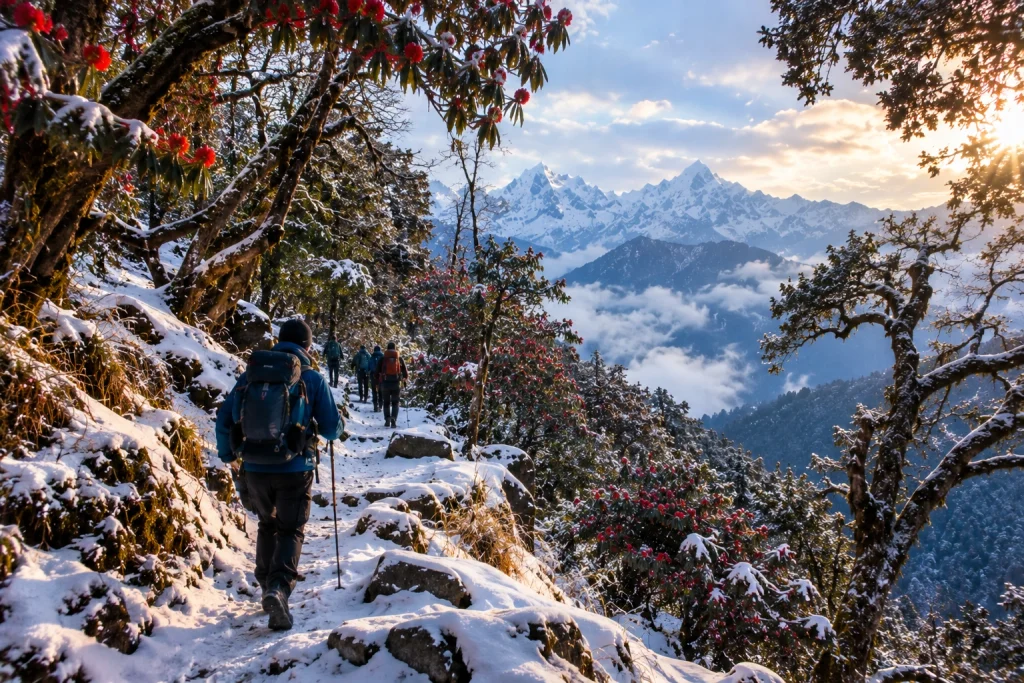
Understanding the Brahmatal trek best time is essential to choosing the kind of experience you want. The trek is unique in that it remains accessible for a large part of the year, but the conditions vary significantly by season.

December to March is widely considered the most popular window, transforming the trail into a snow-covered winter wonderland complete with frozen lakes and frost-laden forests — ideal for trekkers specifically chasing a snow trekking experience. April to June offers a different but equally rewarding alternative, with melting snow giving way to blooming rhododendrons and clearer trail conditions, better suited to those who prefer milder weather. The monsoon months from July to September are best avoided, as the lower sections of the trail become slippery and prone to leeches.

How to Reach Lohajung

The trek begins at Lohajung, a small village well connected by road from major towns in Uttarakhand. Most trekkers travel via Rishikesh or Haridwar, both of which serve as convenient starting points, with the drive to Lohajung taking approximately 9 to 11 hours depending on road conditions. Alternatively, Kathgodam serves as another accessible railhead for those approaching from the Kumaon side, with a slightly shorter onward road journey.

Practical Trip Information

  • Starting point: Lohajung, Chamoli district, Uttarakhand
  • Altitude: Approximately 3,734 metres (12,250 feet) at Brahmatal Top
  • Trek distance: 22 to 24 km round trip
  • Duration: 4 to 6 days
  • Difficulty: Easy to moderate
  • Best season: December to March (snow trekking) and April to June (milder conditions)
  • Nearest railway stations: Haridwar, Rishikesh, or Kathgodam
  • Nearest airport: Jolly Grant Airport, Dehradun

For official travel advisories and updated regional trekking guidelines, you can refer to the Uttarakhand Tourism Department, the state government’s official tourism portal.

Tips for a Smooth Trek

  • Pack for cold weather: Even during milder months, temperatures near Brahmatal Top can drop sharply, especially at night
  • Carry proper snow gear: Gaiters, insulated jackets, and sturdy waterproof boots are essential during winter months
  • Acclimatise gradually: Despite the relatively short distance, altitude gain should be respected with steady pacing
  • Travel with an experienced guide: Especially useful for navigating snow-covered trails safely
  • Stay hydrated: Cold weather can mask dehydration, so it’s important to drink water regularly throughout the trek
  • /

Frequently Asked Questions

  1. What is the Brahmatal trek distance?

    The full round trip typically covers approximately 22 to 24 kilometres, completed over 4 to 6 days depending on the itinerary.

  2. What is the altitude of Brahmatal Top?

    Brahmatal Top sits at an elevation of approximately 3,734 metres, or around 12,250 feet above sea level.

  3. What is the Brahmatal trek best time to visit?

    December to March is ideal for a snow trekking experience, while April to June offers milder weather with blooming rhododendrons along the trail.

  4. Is this trek suitable for beginners?

    Yes, the trek is generally classified as easy to moderate, making it accessible to trekkers with reasonable fitness, even those attempting their first high-altitude trek.

  5. Where does the trek begin?

    The trek begins and ends at Lohajung, a small village in the Chamoli district of Uttarakhand.
Best Treks in December

Best Treks in December

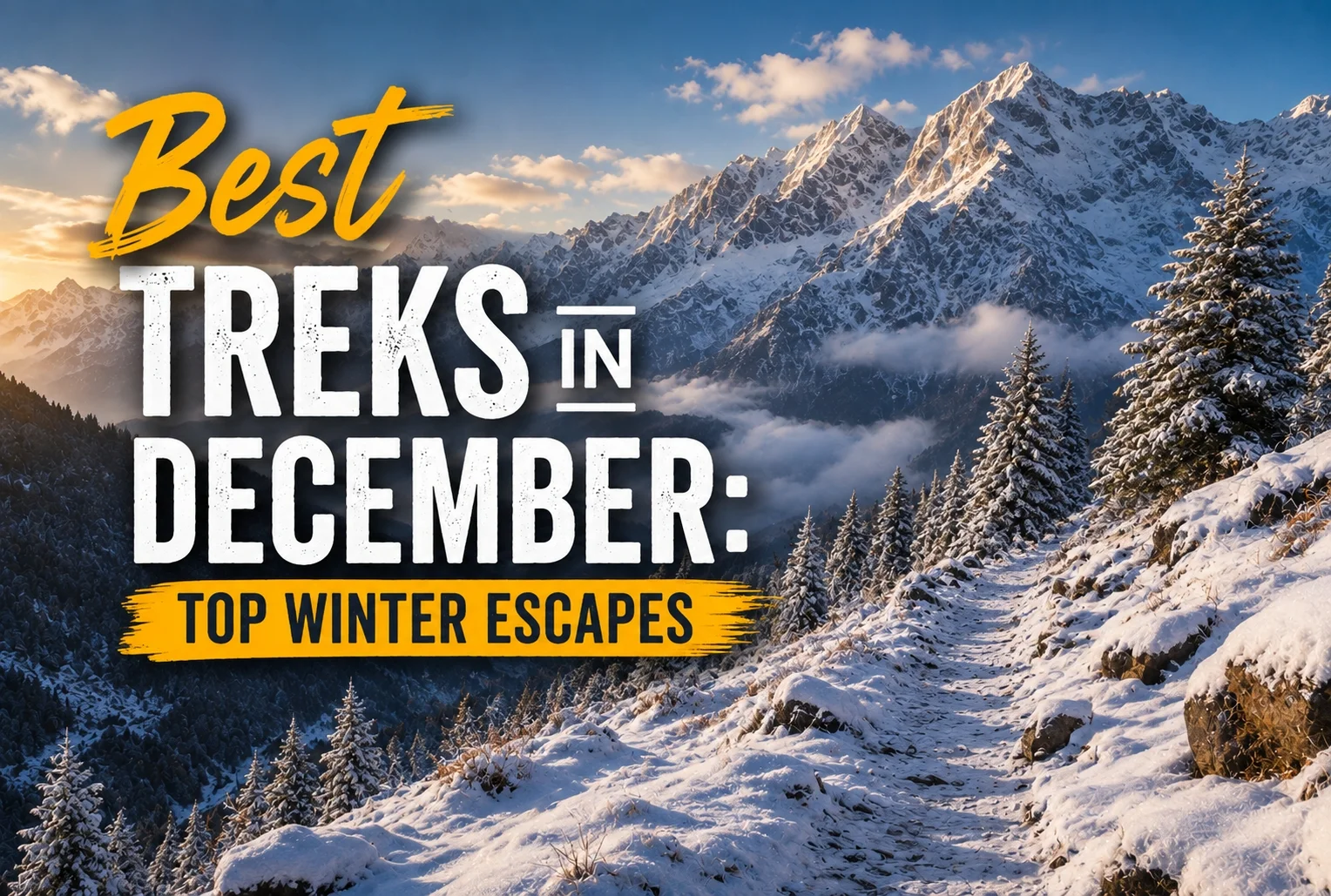
A cloak of winter snow, ice upon the branches and snow upon the ground, where days turn into nights and perfect stillness calms the view. Treks in December carry that kind of magic the sort that stays with you long after you’re back home. Here are a few December treks worth putting on your list.

Panwali Kantha Trek

Panwali Kantha Trek

The Panwali Kantha trek is a trek which is less talked about. The trek passes through oak and rhododendron woods, pine and deodar, crosses some icy little streams and dips between villages that feel untouched by time before going out into meadows, so wide you can’t help but lose track of where they end. But what remains is the peaks of Chaukhamba, Nanda Devi, Kedar Dome, Neelkanth, Trishul, Thalaysagar and the long ridgelines which head towards Kedarnath, Badrinath and Gangotri. They can be caught at dawn or dusk and the entire range is gilded for several minutes. There’s history in this walk too.

Local legend says it’s connected to the last day of the Pandavas and you will pass by the Kedarnath and Gangotri temples on the way, so it is not only a walk through scenic beauty but with a spiritual load as well. The wildflowers, the strange shepherd’s hut, the foothills of the Himalayas and the ability to see the Milky Way through the night sky, plus campsites for those who want to get away from the city for a bit, rather than just the pictures of it, make this trek perfect for anyone who wants to get away from the city.

Deoban Weekend Trek

Deoban Weekend Trek

or those who don’t have a week to spare, but still want to experience some cold and clean mountain air, Deoban is the answer. It’s close to the hill town of Chakrata, which becomes a snowy wonderland in the winter, and the drive in itself is worth it; past the waterfalls and the crumbled valleys. Once you are on the trail however, there is little noise except your own footsteps and the Himalayan ranges can be seen through the trees.

A particular attention is required here for the bird lovers: Deoban is a place where sightings of the Himalayan Monal and Kalij Pheasant are not uncommon; there are several species, which are not found anywhere else. The slow pace, snow, birds and the short drive makes it an excellent choice for novices, families and those who simply want to take a break from a long voyage.

Chirbatiya Weekend Trek

Chirbatiya Weekend Trek

Chirbatiya is a small village in Rudraprayag district and, truth be told, this trek should be better known. You pass through thickets of rhododendron, oak, deodar trees, waterfalls, open fields and terraced fields, where you can observe the lifestyle and agriculture of local residents. Patangnia meadow is the high point with view of Nanda Devi, Chaukhamba, Kedarnath, Trishul, Dronagiri, Neelkanth and Chang Bang all in a go. It’s an easy grade, so it’s suitable for the first trek or the fiftieth, and for most of the Himalayan trails, it’s walkable year-round with rhododendrons in bloom in summer, and snow covering the trails in winter.

In the process you get to meet locals, enjoy authentic Garhwali cuisine and get a chance to sleep under the open sky. For those who wish to have a quick introduction to the trekking experience in the Himalayas without sacrificing the scenery, this may be a good choice.

Binsar Weekend Trek

Binsar Weekend Trek

Binsar is located in the wildlife sanctuary of Almora district and it is a convenient weekend getaway due to its 2-day format. During November to February the place is an actual winter wonderland with snow-covered forest, biting cold and crisp views up to Nanda Devi, Trishul and the Panchachuli range. There is also a possibility of wildlife sightings since the trail passes through a sanctuary, as well as barking deer, leopards (from afar, please) and many other species of birds, making it a birders delight. It’s hidden away but not too hard to get.

Whether it’s for the families or the first-time trekkers or someone who has been trekking in the Himalayas for a long time, the trekking in Binsar is truly worth chasing for.

Brahmatal Trek

Brahmatal Trek

Brahmatal shows up on pretty much every “best winter treks in India” list, and once you’ve walked it, that’s not hard to understand. Snow-covered trails, frozen lakes, wide-open Himalayan views it all comes together in a way that almost feels staged. The two lakes on this route, Brahmatal and Bekaltal, freeze solid by winter. There’s something oddly calming about standing next to a lake that’s gone completely still under a layer of ice. The best views, though, come from Tilandi Top and Jhandi Top, where Trishul, Nanda Ghunti, Mrigthuni, and Maiktoli line up across the horizon.

Between the viewpoints, the trail cuts through oak and rhododendron forest, past the Gujreni campsite, and across meadows that are worth slowing down for great for photos, or just for sitting and watching the light shift. There’s some local mythology tied to the place too: Brahmatal Lake is said to be where Lord Brahma once meditated, which is a nice bit of backstory to have in mind while you’re up there. Difficulty-wise, it sits comfortably in the middle doable for a determined beginner, still rewarding if you’ve already done a dozen treks.

Kedarkantha Trek

Kedarkantha Trek 3

Kedarkantha gets called the “Queen of Winter Treks,” and it earns the title this is probably the most popular winter trek in India, and it delivers on nearly every count. Starting from Sankri, the trail winds through pine, oak, maple, and rhododendron forest before the snow really takes over. Juda Ka Talab, a small lake with its own Shiva mythology attached, freezes over in winter and makes for a memorable early stop. Higher up, the Kedarkantha Base and Hargaon campsites are known for genuinely dark, light-pollution-free skies the kind of stargazing that’s hard to find closer to home.

The summit tops out at 12,500 feet, with a full 360-degree view: Swargarohini, Bandarpoonch, Black Peak, and Draupadi Ka Danda, with the Har Ki Dun and Rupin valleys stretching out below. One thing worth knowing before you go the trek enters a no-network zone past Sankri, so you’re properly cut off for the duration. For a lot of trekkers, that’s not a downside at all; it’s kind of the point.

Frequently Asked Question’s

What are the best treks in December?

The best treks to go on in December include the Kedarkantha trek, the Brahmatal trek, the Dayara Bugyal trek, the Kuari Pass trek, and the Nag Tibba trek, all characterized by snow-covered trails, beautiful views and perfect itineraries.

Are December treks suitable for beginners?

Yes, December treks are suitable for beginners as the Kedarkantha, Brahmatal and Dayara Bugyal are the treks that offer less difficulty level, all you need is decent fitness level.

What is the temperature in December on treks?

Usually, during the day time the temperature is around 5°C to 12°C under clear skies but during night it drops drastically to -5°C to -15°C, depending on weather conditions.

What makes the Kedarkantha trek special in December?

The perfect beauty, snow-covered mountains, frozen Juda ka Talab, beautiful sunrise and sunset make this place truly worth visiting.