
Explore Hills
Checkout +91-9456580306

Kuari Pass Trek: Discover the Historic Trail Through the Garhwal Himalayas

Kuari Pass

Long before it became one of Uttarakhand’s most loved trekking routes, this trail was carved out by British surveyor Lord Curzon himself, who traced a path through the Garhwal Himalayas that continues to captivate trekkers over a century later. Known today as Kuari Pass, the route winds through dense oak and rhododendron forests, wide alpine meadows, and remote mountain villages, all while keeping some of the highest peaks in the Himalayas in constant view.

Part of what makes Kuari Pass so enduringly popular is its balance — it offers all the grandeur of a high-altitude Himalayan trek without demanding technical climbing skills, which is exactly why it continues to attract both first-time trekkers and seasoned mountain enthusiasts year after year.

If you’re planning to take on this trail, our own Kuari Pass Trek package covers the complete journey, but here’s a detailed look at what makes it one of the most rewarding treks for both beginners and experienced hikers alike.

A Trail With History
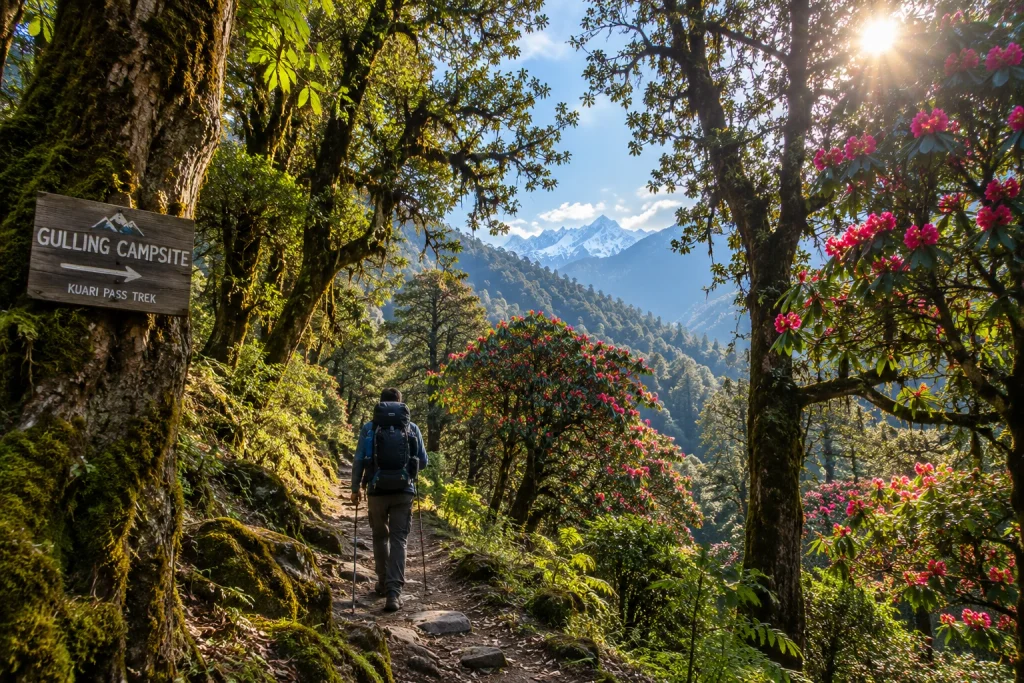
Kuari Pass has a backstory that most Himalayan treks can’t claim. In 1905, Lord Curzon, then Viceroy of India, trekked this very route, which is why it’s still occasionally referred to as the “Curzon Trail.” That historical footnote adds a layer of intrigue to what is already one of the most visually rewarding treks in the Garhwal region.

The Kuari Pass journey typically begins from Joshimath, a small town in the Chamoli district that also serves as the gateway to several other well-known Himalayan destinations, including Auli and the Valley of Flowers. From there, the trail winds through villages like Tugasi and Dhak, before climbing steadily through forest and meadow terrain toward the high pass itself.

Along the Kuari Pass route, trekkers pass through campsites like Gulling and Khullara, each offering its own distinct character — from dense forest clearings to open, wind-swept ridgelines with unobstructed mountain views. This variety in scenery is one of the reasons the trail rarely feels repetitive, even across several days of walking.

How Long Is the Trek?

One of the most searched details for anyone researching this route is the Kuari pass trek distance, which typically ranges between 30 to 35 kilometres for the full round trip, depending on the exact itinerary and route variation chosen by different trek operators. Some itineraries incorporate additional detours through Gorson Bugyal or the Auli meadows, which can extend the overall distance slightly.

Most trekking groups complete the Kuari Pass journey over 5 to 6 days, allowing time for gradual acclimatisation, rest days at key campsites, and enough flexibility to adjust for weather conditions along the way.

Altitude and Elevation Gain

At its highest point, the Kuari pass height reaches roughly 3,650 metres, or about 12,000 feet above sea level, rewarding trekkers with sweeping panoramic views of some of the tallest peaks in the Indian Himalayas, including Nanda Devi, Dronagiri, Chaukhamba, and Kamet.

Despite the significant elevation gain, the Kuari Pass ascent is largely gradual rather than steep, which is part of why this route has earned a reputation as one of the more beginner-friendly high-altitude treks in Uttarakhand. That said, proper acclimatisation, steady pacing, and adequate hydration remain essential at this height, as with any Himalayan trek above 3,000 metres.

Difficulty Level and Terrain

The overall difficulty of Kuari Pass falls into the easy-to-moderate category, making it accessible to first-time trekkers with reasonable fitness, while still offering enough of a physical challenge to satisfy more experienced hikers. The trail includes a mix of forest paths, open meadows, and a few steeper, rocky stretches, particularly closer to the summit.

Trekkers should be prepared for some narrow, occasionally exposed sections near Gorson Bugyal on the Kuari Pass trail, along with the possibility of navigational difficulty if fog rolls in unexpectedly. None of these challenges require technical climbing skills, but a reasonable level of physical preparation and sturdy trekking gear go a long way toward making the experience smoother.

For those looking for a slightly different but equally scenic alternative in the same region, our Brahmatal Trek offers a similarly moderate winter trek with its own set of spectacular Himalayan viewpoints, making it worth considering if Kuari Pass isn’t in season during your planned travel dates.

Best Time to Attempt This Trek

Timing plays a big role in shaping the overall Kuari Pass experience. The ideal windows fall between April and June, and again from September to November, when skies are generally clear and temperatures remain manageable for trekking.

Winter months, from December through February, transform the landscape into a snow-covered wonderland, drawing trekkers who specifically seek out snow trekking experiences, though this comes with added cold and the need for appropriate gear such as gaiters and insulated layers. Monsoon months are best avoided altogether, given the risk of slippery trails, leeches in the lower forested sections, and reduced visibility that can obscure the very views the trek is known for.

Practical Kuari Pass Trip Information

  • Starting point: Joshimath, Chamoli district, Uttarakhand
  • Altitude: Approximately 3,650 metres (12,000 feet)
  • Trek distance: Roughly 30 to 35 km round trip
  • Duration: 5 to 6 days
  • Difficulty: Easy to moderate
  • Best season: April to June and September to November
  • Nearest railway station: Rishikesh, approximately 250 km away
  • Nearest airport: Jolly Grant Airport, Dehradun, approximately 205 km away

For updated travel advisories and regional trekking guidelines, you can refer to the Uttarakhand Tourism Department, the state government’s official tourism portal.

Tips for a Smooth Trekking Experience

  • Prioritise acclimatisation: Take rest days as planned and avoid rushing the ascent
  • Layer your clothing: Temperatures can shift dramatically between day and night
  • Carry sufficient water: Staying hydrated helps reduce the risk of altitude-related discomfort
  • Break in your footwear beforehand: Sturdy, well-fitted trekking shoes make a significant difference on uneven terrain
  • Check weather updates regularly: Fog and sudden weather shifts are common at higher elevations
  • Travel with experienced guides: Local trek leaders familiar with the route can help navigate tricky sections safely, especially in foggy conditions

Frequently Asked Question’s

  1. How far is the full round trip?

    The total distance typically ranges between 30 to 35 kilometres for the full round trip, depending on the specific route and itinerary chosen.

  2. How high is the pass above sea level?

    It sits at approximately 3,650 metres, or around 12,000 feet, offering sweeping views of major Himalayan peaks.

  3. Is this route suitable for beginners?

    Yes, thanks to its gradual ascents and well-marked trail, it is considered accessible for first-time trekkers with reasonable fitness levels.

  4. What is the best time of year to attempt Kuari Pass?

    April to June and September to November offer the most favourable conditions, with clear skies and comfortable trekking temperatures.

  5. Why is it also called the Curzon Trail?

    The route earned this nickname after Lord Curzon, the British Viceroy of India, trekked the same path in 1905.
Top 6 Best Spring Treks in India

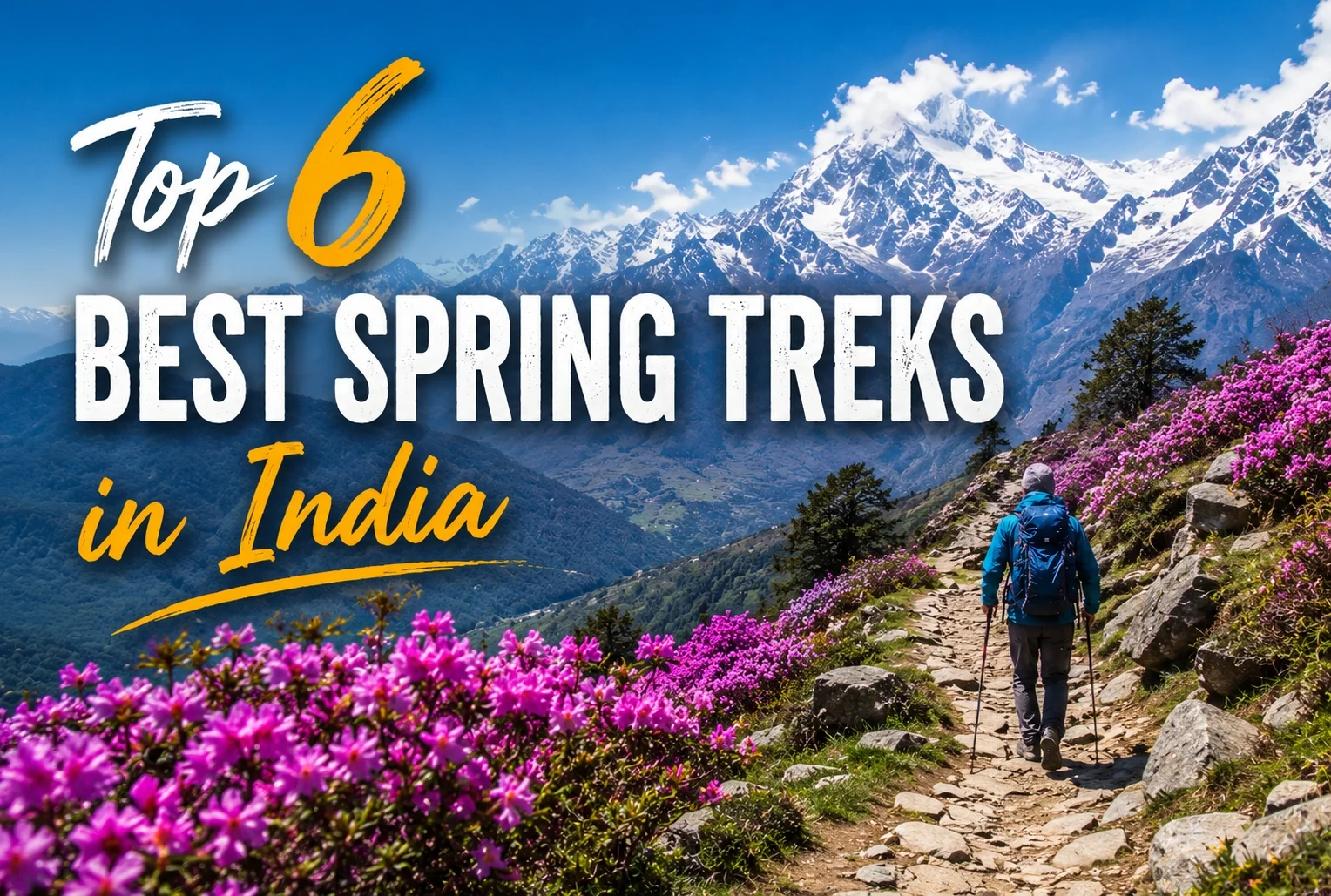
Top 6 Best Spring Treks in India

When the winters begin to end and the snow starts to melt, spring emerges as one of the most rewarding seasons to explore the Himalayas. The Beautiful meadows that are green, the rhododendrons that blossom and the sky marking the arrival of the beautiful vibrant-floral season.  Whether you are a first time trekker or a seasoned hiker watching these serial views are worth every step. Here are some of the best spring treks in India to add to your list this season that will make your journey worth remembering.

Chopta Chandrashila Tungnath Trek 

Chopta Chandrashila Tungnath Trek 2

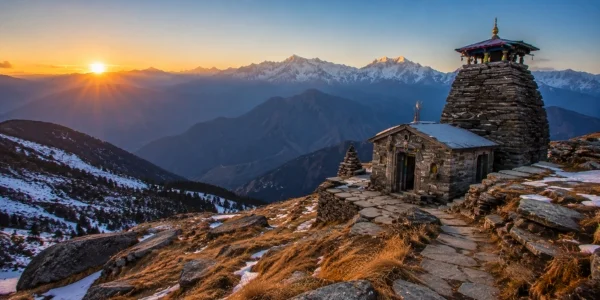
Are your looking for the best spring treks in Uttarakhand? Chopta Chandrashila Tungnath Trek is the one for you. At a stretch this route strings together four very different experiences Chopta, Tungnath, Chandrashila and Deoriatal each having unique scenic expertise. The exuberant moments like the sunrise from Chandrashila summit, with the first rays of the sun beautifully commenting on the snow that turns golden and orange in colour. On the clear mornings you can see the Nanda Devi, Chaukhamba, Trishul and Kedar Dome from the top, which is a lot of Himalayan royalty in one frame.

On the way up you’ll pass through Tungnath Temple, the highest Shiva temple in the world and one of the Panch Kedar shrines. Deoriatal adds another layer to this trek with a clear alpine lake that mirrors the Chaukhamba range on a still day surrounded by a dense forest. Expect long stretches of rhododendron and pine, quiet meadows and in case if you are lucky, you will have a glimpse of the Himalayan Monal darting the undergrowth.

Dodital Darwa Top Trek

Dodital Darwa Top Trek 2

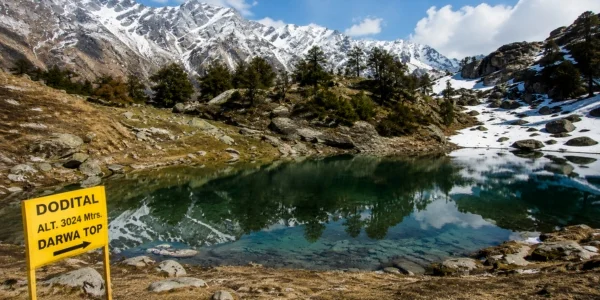
If you want a trek in the Himalayas without the requisite mountaineer’s skills, but still a little winded, then make sure to add Dodital to your list. The walk concludes at a quiet lake whose emerald green water framed by a dense deodar, oak and rhododendron forest. It’s a place that seems a lot further away than the trek difficulty suggests. The journey begins at Sangamchatti, a small village close to Uttarkashi, and passes through a series of tiny hamlets in the Himalayas – Agoda, Bebra, Manjhi; the river, the Asi Ganga, follows for much of the way.

It’s not excessively steep, but it’s not something you’d want to knock yourself out for, either, so it’s a popular choice for those who are just starting out in the Himalayas. It is still popular, however, among seasoned trekkers simply for the beauty. The lake also has its fair share of mythology, too; it is said to be the birthplace of Lord Ganesha, and there’s a small temple on its banks to commemorate that fact. Residents also speak about the Himalayan trout that is found here – the “Dodi”, which is how the lake came by its name. Birdwatchers will overstay their welcome.

Watch for sightings of the Himalayan Monal, pink finches, whistling thrushes, grey shrikes, bush robins and tree pies; sightings of these birds are relatively common with patience. Those who want to go the extra mile can travel to the Darwa Pass about 4200 metres, which is an extension. A good attempt, but a broad open vista of the Greater Himalayan range which most people miss on the basic trek.

The walk is quite different in the different seasons. Summer has an abundance of green foliage and pleasant weather, and then winter transforms the entire landscape to white and much more dramatic – colder, quieter, and really pretty if you’re up for the cold. But, no matter which way you look at it, Dodital is still a wonderful place to enjoy forest, wildlife, a dash of legend, and real mountain views – without relying on technical climbing skills – and it continues to appear on folks’ “first big trek” lists.

Kuari Pass Trek

Kuari Pass Trek2

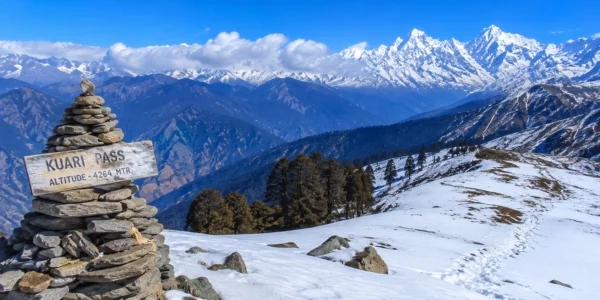
Excited for a thrill? Well, Kuari pass trek has got you covered. Packed with panoramic views, stunning landscape, old trade routes and mountain villages this trek has got you covered. The Kuari Pass trek also known as the Curzon Trails is 6 day-22km expedition in the Chamoli District, Uttarakhand covered with a dense oak and pine forest, snow-covered meadows that transform the trails into magical wonderlands. There’s a bit of history under your boots along with the snow, one of the most scenic stretches you’ll ever find in Uttarakhand.

The payoff comes at the top. On the way you’ll pass Tali Lake (it freezes over most winters), camp somewhere the stars actually feel close, and get a good look at Auli. But the real attention seeker is the  Kuari Pass itself,  from where you can get a proper 280 degree view Nanda Devi, Dronagiri, Chaukhamba, Kamet, Changabang, Neelkanth, Hathi Parbat, Kunti Bhandar, all lined up across the skyline. Not only this, in this journey you will come across the remarkable Nanda Devi Sanctuary, a UNESCO World heritage site known for  its rich heritage and biodiversity.

Then comes the descent through Gorson Bugyal’s snow-covered meadows and somehow these panoramic views takes you through the stunning mountains of the Nanda Devi towering over everything.    Getting close to Uttarkahand’s highest peak isn’t something you will forget easily.

Har Ki Dun Trek

Har Ki Dun Trek 2

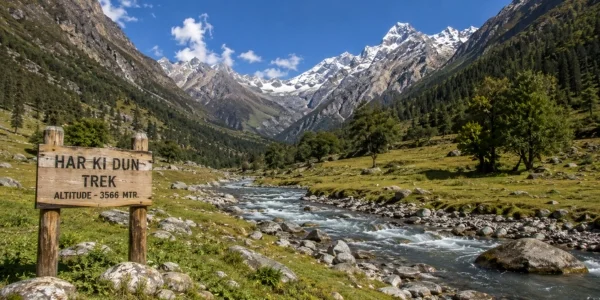
Har Ki Dun is one of those treks that stay in your core memory often known as the “Valley of Gods” by the localities. It’s got everything good stories, real mountain culture, and views that genuinely earn all the hype. Local legend says this was the very path the Pandavas walked on their journey to heaven, and that bit of mythology follows you the whole way, giving the trek a weight that goes beyond just the scenery. You set off from Sankri, a small village that already feels like a world away from anything urban. From there, the trail winds through thick forest, open meadows, and streams so clear you’ll want to stop and just look at them.

You’ll pass through villages like Osla and Seema too, places where daily life hasn’t really changed much in generations. Osla in particular is worth slowing down for the old wooden houses are striking, and there’s a temple there, once dedicated to Duryodhana, now home to Lord Someshwar. It’s a small, quiet reminder of how layered this region’s history really is. The Supin River basically becomes your walking companion for most of the trek, and every so often the trees part just enough to give you a glimpse of what’s ahead Swargarohini I and II, Bandarpoonch, the imposing Kala Nag (Black Peak), and eventually the Jaundar Glacier.

There’s also a small Mahadev temple along the route, tucked away, easy to miss if you’re not paying attention, but worth the pause. What really sets Har Ki Dun apart is its rich culture and spiritually. Get your ears feel blessed by the sounds of birds chirping, wind blowing and water babbling. This trek is an easy to moderate trek that is perfect for the beginners who wants to seek spirituality and natural beauty all at once.

Kedarkantha Trek

Kedarkantha Trek 2

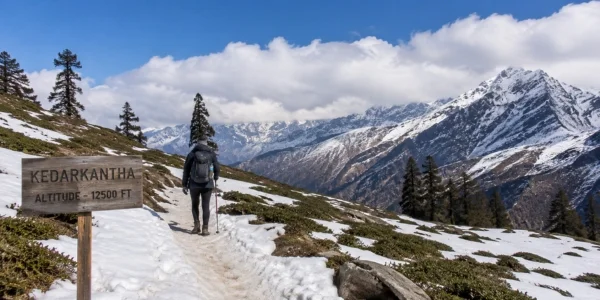
Kedarkantha gets called the “Queen of Winter Treks,” and it earns the title this is probably the most popular winter trek in India, and it delivers on nearly every count. Starting from Sankri, the trail winds through pine, oak, maple, and rhododendron forest before the snow really takes over. Juda Ka Talab, a small lake with its own Shiva mythology attached, freezes over in winter and makes for a memorable early stop. Higher up, the Kedarkantha Base and Hargaon campsites are known for genuinely dark, light-pollution-free skies the kind of stargazing that’s hard to find closer to home.

The summit tops out at 12,500 feet, with a full 360-degree view: Swargarohini, Bandarpoonch, Black Peak, and Draupadi Ka Danda, with the Har Ki Dun and Rupin valleys stretching out below. One thing worth knowing before you go the trek enters a no-network zone past Sankri, so you’re properly cut off for the duration. For a lot of trekkers, that’s not a downside at all; it’s kind of the point. 

Ali Bedni Bugyal Trek

Ali Bedni Bugyal Trek 2

Wanting to see what a Himalayan meadow trek looks like at its best? Well, Ali Bedni Bugyal is the one for you.  This trek covers two of  the Uttarakhand’s  most beautiful high-altitude grassland Ali Bugyal and Bedni Bugyal located away in the Garhwal Himalayas with views that stretch out towards  Trishul, Nanda Ghunti, Chaukhamba and Neelkanth. You start out under the cover of oak and rhododendron  forest and then almost  without warning, the trees fall away and the meadows open up in front  of you rolling, endless and framed by a sky that feels bigger than usual. 

Come in spring or summer and it’s all green grass and wildflowers. Come in winter and the whole place turns white and still, which honestly might be the best time to go the AMS risk stays relatively low here even at altitude, so it’s a good pick if you want a winter trek without the usual worry. Somewhere along the trail you’ll reach Bedni Kund, a small alpine lake that locals consider sacred, and it’s got its own set of stories attached to it. In winter it freezes over completely, snow and all. In the warmer months, it turns into a mirror, catching the peaks around it the kind of spot that’s genuinely hard to photograph badly.

There are old temples scattered along the route too, and parts of the trail actually follow the historic Nanda Devi Raj Jat Yatra path, which adds a nice layer of history to what’s already a beautiful walk. Along the way you’ll probably run into local shepherds grazing their animals in the bugyals, and if you get talking to them, you’ll pick up a little of the culture and rhythm of life in this part of Garhwal something you won’t find in a guidebook. What makes this trek work for almost anyone is the balance.

It’s got serious mountain views without being a technically hard trek, so beginners can manage it, and experienced trekkers still come away impressed. Add in the sacred lake, the old pilgrimage route, and meadows that change character with every season, and it’s easy to see why Ali Bedni Bugyal keeps showing up on people’s “must-do” lists photographers, nature lovers, and casual trekkers alike.

Frequently Asked Question’s

Which trek is Best Spring Treks in India for beginners?

The following are the best treks for the beginners Kedarkantha, Chopta-Tungnath- Chandrashila and Dodital.

When’s the best time to trek in Uttarakhand?

The best time to trek in Uttarakhand’s includes are the sweet spots for must routes. If you want snow, aim for December through Februray.

Do I need prior trekking experience?

Not really. A number of these treks are built with beginners in mind just make sure you’re reasonably fit before you go.

Which is the best trek in April?

Deoriatal Chandrashila, Har Ki Dun, and Sar Pass is considered as the best treks in April offering you better spring blooms and clear mountain views.