

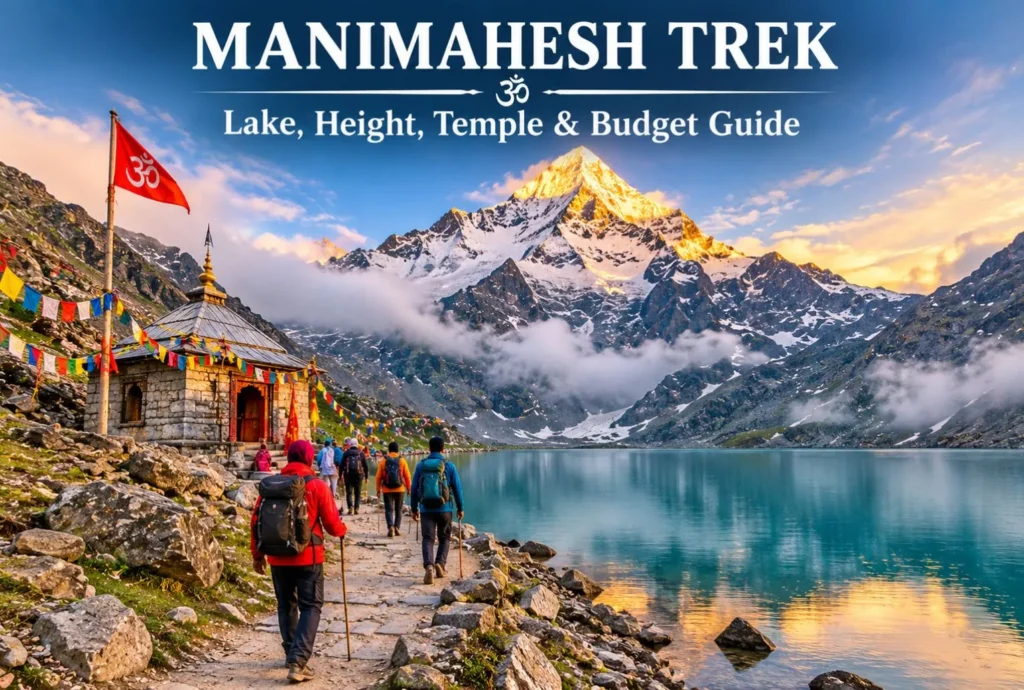
Manimahesh is a sacred Lord Shiva pilgrimage located in Himachal Pradesh, and the good news is that you don’t need a big wallet to visit it. Manimahesh Lake sits high in the Pir Panjal mountains of Chamba district, and the journey is powered mostly by your own legs, not your money. In this guide, we explain the Manimahesh height, the Manimahesh temple, the trek route, and simple ways to keep your total trip cost low.
Table of Contents
What Is Manimahesh?
Manimahesh means “the jewel of Lord Shiva.” The holy lake lies in Budhil Valley near Bharmour in front of the snowy peak known as Manimahesh Kailash, which is believed to be the home of Lord Shiva by devotees. It is part of Panch Kailash, the five mountain peaks that are associated with Lord Shiva in Hindu religion. Every year visitors from around the world come here to seek the blessings of Lord Shiva and see the breathtaking view of the Himalayan peak. A small temple is built on the shore of the Manimahesh Lake, where the Lord Shiva idol is worshipped.
How High Is the Lake?
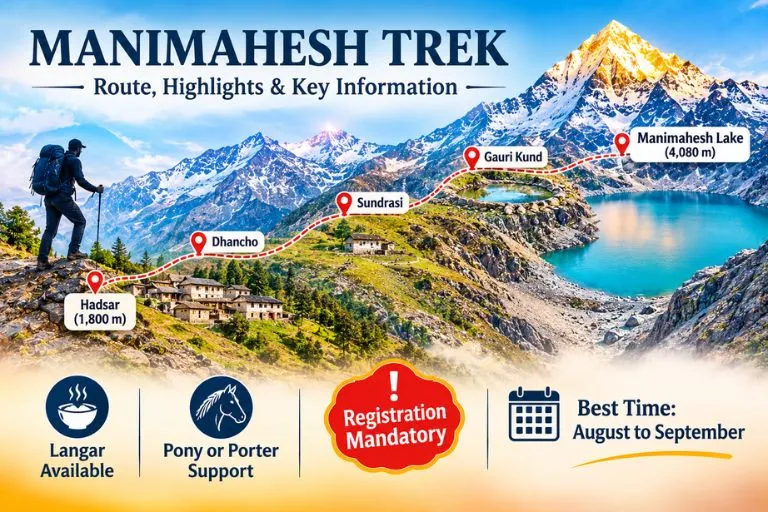
The lake is situated at a height of 4080 meters, which is around 13400 feet above sea level. The trek starts from Hadsar town, which is at the height of 1800 meters. The combined distance to cover during the trek is 24 km, including reaching the town. The oxygen level drops at this height, which can cause headaches, dizziness, and difficulty in breathing. The Kailash Peak behind the lake is approximately 5656 meters high.
Manimahesh Temple and the Story Behind It
According to the Hindu religion, pilgrims believed Manimahesh was the divine abode of Lord Shiva. When Lord Shiva got married to Goddess Parvati, he created the Manimahesh lake with the water flowing from his head, which filled the entire lake with divine water. Pilgrims worship the four-faced Shivling and dip into the lake to wash out their bad deeds. In Bharmour, inside the old Chaurasi complex of 84 temples, there is another shrine. The culture and tradition of Bharmour town are worth exploring with the beauty of Himalayan mountains.
Manimahesh Trek Route: Hadsar to the Lake
The usual trek starts at Hadsar village, reached by road from Bharmour.
- Hadsar—Trek starting point: Reach Hadsar by road from Bharmour. The base starting point to reach the Manimahesh
- Dhancho—First major halt: The trail will take you toward Dhancho, specially known for its mountain scenery, waterfalls, and camping stops.
- Sundrasi—Mountain trail: A high-altitude section along the route, where trekkers may find temporary pilgrimage facilities during the yatra season.
- Gauri Kund—Sacred stop: A religiously significant water body associated with Goddess Parvati, located near the final approach to the lake.
- Manimahesh Lake—Final destination: Reach the sacred lake beneath Mount Manimahesh Kailash, offer prayers, and enjoy the spectacular Himalayan views.
The route to the lake is not easy, it requires less budget but good physical and mental strength to cover.
Best Time to Visit and Rules to Know
The best time to visit the Manimahesh Lake is the months of August and September; during this time the snow is melted and the route is cleared for the trekking. The weather is cold, and the frozen lake starts to convert into the real form.
According to news reports, in 2026 the Chamba administration made an online registration rule compulsory for all the tourists, and the limit of 5000 pilgrims is set. The old route to the lake through Kungti village is restricted. The dates of Yatra change every year, so it is better to check the official Chamba district website before booking anything.
For official yatra details and updates, you can refer to the Manimahesh Yatra page on Utsav, the Ministry of Culture’s official events portal, which lists the Chamba district administration as the organizer.
How to Complete the Trek on Budget?
- Use public transport— Reach Chamba or Bharmour via public bus; avoid private taxis to save money.
- Take your own items— Carry your wearables like jacket, raincoat, snacks, water bottle, and medicine with you. Buying this during the trek can cost much more than the actual price.
- Compare packages— Before booking a tour, always compare various packages from different operators and find the best and cheapest, and if possible, try to go on your own.
- Eat at langars— The religious community offers free food to the tourist as a selfless service during Yatra season, but carry your own lunch or snacks with you, as langars are not available every time.
If you enjoy lake treks, the Kareri Lake trek is another lake walk in Himachal Pradesh worth adding to your list.
Three-Day Plan to Reach the Manimahesh Lake
- Day 1: Begin your journey from Pathankot or Chamba and reach Bharmour; take a shared taxi to Hadsar. Trek toward the Dhancho by walking.
- Day 2: Start your trek early and reach the Gaurikund, stay in Gaurikund, or continue the journey to the lake.
- Day 3: The next day, come back to the Hadsar and reach Chamba via local taxis.
Trekkers who want another high-altitude Himachal route can also look at Explore Hills’ Chanderkhani Pass Trek.
Tips for Making a Trip Easy
- Complete the registration for the trek and carry your ID along with you.
- Don’t forget to check the weather before travelling.
- Wear sturdy shoes with good grip and proper trekking shoes.
- Keep cash with you; online payment is not an option because of fewer mobile signals and internet facilities.
- Traveling in a group can cut the cost and make the trek less costly.
Conclusion
The Manimesh trek is more than just a holiday trip; it is more about the religious beliefs and the tale of legends that make a place more important for the Hindu pilgrims. The glacial water from the Manimahesh Peak fills out the lake with water when the snow of the glacier melts down. This trek could be a remarkable experience for you if you love the mountains and want to see the scenic beauty of the Himalayas.
Frequently Asked Questions
Is the trek to Manimahesh difficult?
No, it is a 14 km long trek, which can be categorized as a moderate- to high-level trek.
How many days to complete the trek?
If you start from Delhi, it will take around 3 to 5 days to complete the trek.
When is the trek opened for tourists?
The trek is opened for tourists in the month of August, when snow melts, and closed in the month of October.
What are the ways to cover the trek on a low budget?
If you want to cover the trek on a low budget, then carrying your own meal, using your private transit, and organizing your own tour package would be a budget-friendly option.