

Explore Hills
Checkout +91-9456580306

Dwarkadhish Temple: Gujarat, THE GUIDE

Dwarkadhish Temple

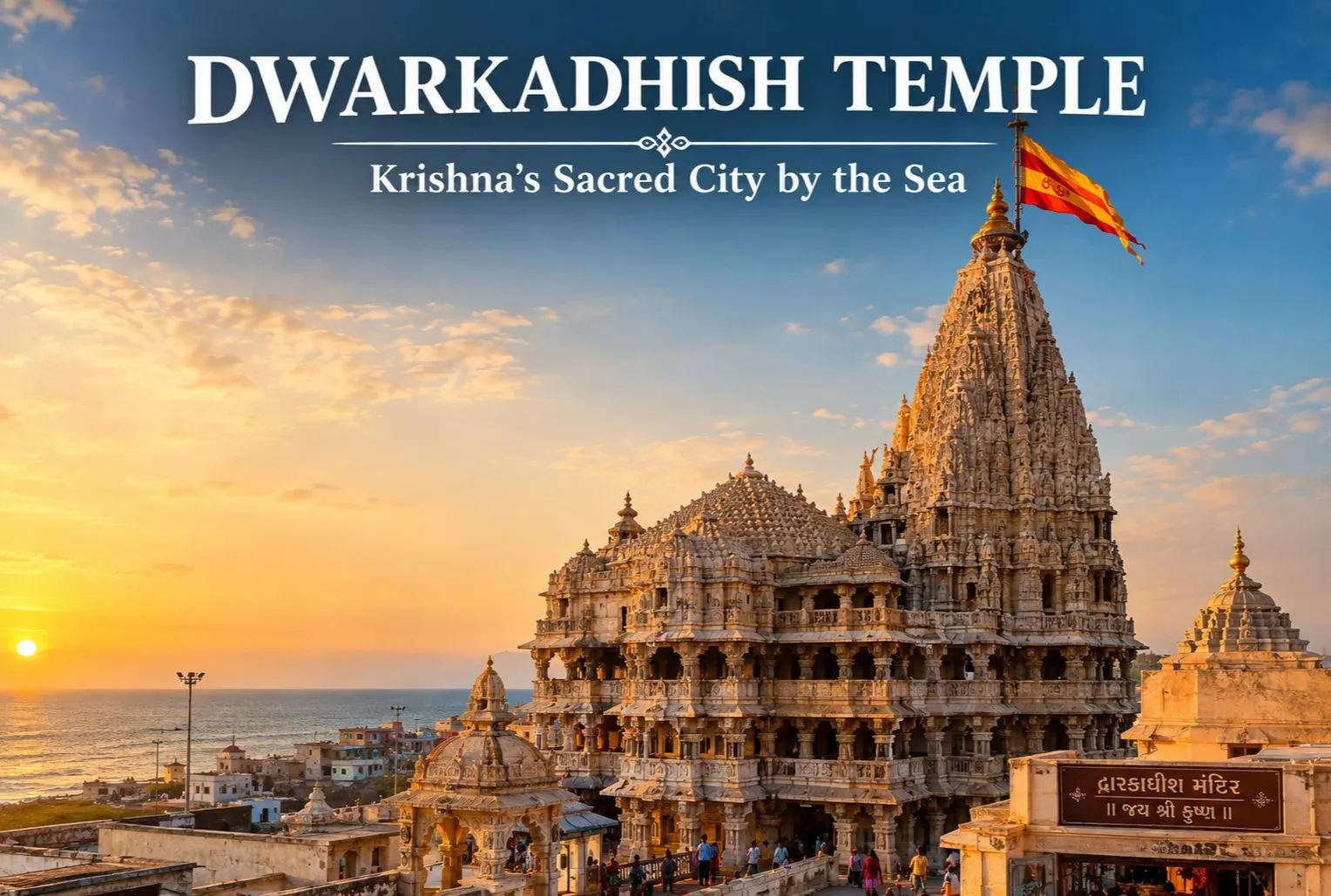
Dwarka, in Gujarat, is a place where faith lives in scriptures: felt in the heart, heard in the temple bells. Here resides the heart of Dwarka, the Jagat Mandir, the Dwarkadhish temple. Dwarkadhish Temple is dedicated to one of the most beloved and widely worshipped deities in Hinduism, Krishna, respected by millions of devotees for his teachings, compassion, wisdom, and divine presence. Dwarkadhish means, the lord of Dwarka, Krishna being the lord of dwarka and a temple dedicated to him explains everything to us. Dwarka, the legendary capital that lies under the water in Arabian sea, was established by Lord Krishna, after he left Mathura.

It is believed that when lord Krishna was departing the world, the dwarka city submerged beneath the sea. The ancient town beside Dwarka however remains above the water on the Gujarat coast and is the most famous pilgrim site among the devotees. For pilgrims planning a broader Krishna and Char Dham circuit across India, Explore Hills’ Char Dham Yatra covers four of Uttarakhand’s most significant Himalayan shrines as a separate but equally revered pilgrimage.

DWARKADHISH TEMPLE: The Architecture

The architectural form of the temple reflects the essence of centuries of faith, religious belief and architectural activity. The temple was built and developed over a period of time rather than being constructed in a single phase. The temple is built on the basic principle but crucially, it is developed to meet the traditional expectations of devotees. The temple has Grabhagrah, the heart of temple where sits our deity, lord Krishna. Pilgrims have to go through Moksha Dwar and Swarg Dwar which are the gates of the temple.

The gates are followed by Mandapas. Mandapas are the halls and gathering spaces where religious activities are held. Pilgrims have to pass through these Mandapas to get to the Grabhgrah where lord Dwarkadhish waits to meet his beloved devotees.

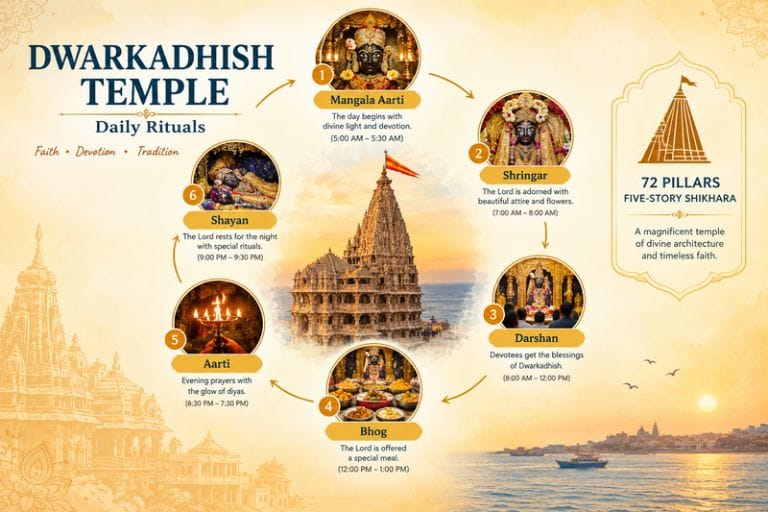
Then comes the shikhara towering the Grabhgrah, it is the architectural element of the temple that marks the inner shrine. The five story shrine is supported by 72 pillars that contribute to the temple’s symmetry, rhythm of the temple.

The Dwarkadhish flag which flies high above the temple towering shikhara, is not just a decorative piece but has a symbolic role in traditions of the temple. The flag not only represents the devotion and divine presence but also defines the victory of dharma.
Dwarkadhish Temple: Daily Rituals

RELIGIOUS TRADITIONS AND DAILY WORSHIP RITUALS

In dwarkadhish temple, lord Krishna, the king of Dwarka is worshipped. Krishna in dwarkadhish temple is worshipped as a ruler, a protector and a respected king who loved his people.

Krishna is dressed and decorated differently every day and is offered flowers, sweet, offerings and aarti. Clothing, ornaments, flowers, and other offerings can vary according to the particular festival.

The daily ritual of the Dwarkadhish temple traditionally is:

  • Mangala Aarti.
  • Shringar.
  • Darshan.
  • Bhog.
  • Aarti.
  • Shayan.

Mangala Aarti is the early morning worship puja that marks the beginning of the day. Here pujari ji performs a ceremonial offering of lamp which is always accompanied by prayers and devotional singings. In the mangala aarti devotees gather to get the first glimpse of lord Krishna. Mangala Aarti usually takes two hours from aarti to darshan, estimating the timing to be from 6:30am to 8am. After mangala aarti comes Shringar where lord krishan is decorated with beautiful clothing and ornaments which captures the heart of devotees. Pilgrims interested in another major Krishna-linked shrine in North India can also explore Explore Hills’ Yatra Packages collection covering several regional pilgrimage routes.

FESTIVALS CELEBRATED IN DWARKADHISH

Festivals are an important part of life, they bring joy to our lives. Dwarkadhish being the temple dedicated to Krishna, all festivals that include Krishna are celebrated with joy here.

Festivals that are celebrated here are Janmashtami, which is observed as the birthday of lord Krishna. In Janmashtami, the temple is decorated and lord Krishna is also dressed in beautiful dresses and ornaments. At midnight the real celebration begins as it is the time associated with Krishna’s birth. Special prayers and offerings are done, the atmosphere of the temple is pure and devotional.

Then comes Holi which is traditionally marked with Krishna playing in Vrindawan and Braj. People play with flowers and colors. Artists are called to perform an act which is dedicated to lord Krishna. Diwali is also one of the festivals that is celebrated in Dwarkadhish temple. Diwali is said to be the festival of lights. The temple is illuminated with lights and pilgrims visit dwarkadhish and seek blessings from lord Krishna.

Sharad Purnima is an autumn full moon festival. Sharad Purnima is celebrated as it is associated with the Raas leela of Krishna with gopis of vrindawan. Other festivals related to lord Vishnu, lord Krishna and Vaishnava are celebrated in Dwarkadhish as a contribution to their respect.

HOW TO REACH DWARKADHISH

Dwarkadhish is located in Dwarka, Devbhumi Dwarka district, Gujarat which is on the Gomti creek at the western tip of Gujarat in the ancient coastal city of Dwarka in India. The pilgrims can reach dwarkadhish to seek blessings by airways, roadways and railways.

The nearest airport is in Porbandar and Jamnagar which are 95 and 145km away from Dwarka respectively. For official current travel advisories and temple visiting guidelines, pilgrims can refer to the Gujarat Tourism Department, the official state government tourism body.

BEST TIME TO VISIT DWARKADHISH TEMPLE

Dwarkadhish temple is a holy place and the best time to visit lord Krishna is throughout the year. But, for comfortable sightseeing and pilgrimage, it is from November to February.

As July to September is observed to be monsoon hence it may hinder the beautiful sightseeing for the pilgrims. Whereas March to June is summers, which makes the climate hot, therefore during summers pilgrims prefer early morning and evening for exploring the place.

For accommodation, pilgrims have wide options from dharamshala to hotels, whereas food options, they can expect a wide variety of vegetarian restaurants and food vendors. Food options like Gujarati thali, khichdi, roti, sabzi, and farsan are always available for pilgrims.

CONCLUSION

Dwarkadhish temple is one for the Char Dhams of India. It is a magnificent temple with great history connected to spirituality. Whether you want to explore history and architecture, or simply want to experience the peaceful atmosphere of a sacred coastal town, Dwarka has something memorable to offer. Take your time, walk through the streets and its sacred shrine and witness the beautiful morning and evening aarti. Travelers whose pilgrimage circuit includes the Himalayan Char Dham as well can explore Explore Hills’ Kedarnath Yatra, one of the most significant Shiva shrines in the Uttarakhand pilgrimage circuit.

Frequently Asked Questions

Where is Dwarkadhish Temple located?

Dwarka, the legendary capital that lies under the water in Arabian sea, the ancient town beside Dwarka however remains above the water on the Gujarat coast and is the most famous pilgrim site among the devotees. Dwarkadhish is located in Dwarka, Devbhumi Dwarka district, Gujarat which is on the Gomti creek at the western tip of Gujarat in the ancient coastal city of Dwarka in India.

Who built Dwarkadhish Temple?

The Dwarkadhish temple was built by the great grandson of lord Krishna, Vajranabh, over Krishna’s residential palace.

Who is Kuldevi of Dwarkadhish?

The kuldevi of Dwarkadhish, who is called the family goddess of lord Krishna and Yaduvansh lineage is Harsiddhi Mata.

Who ruled Dwarka after Krishna died?

Krishna never ruled Dwarka; he was not the ruler, he was the guardian of administration and protector of the city. Krishna’s maternal grandfather was the ruler of Dwarka, and after the death of Krishna, his great-grandson, Vajranabh, ruled the Yaduvansh. Vajranabh was the king of surviving yaduvansh.

Who found Dwarka underwater?

Dwarka lies underwater in the Arabian Sea, which was excavated in 1983 and 1990 by marine archaeologist Dr. S.R. Rao and the Marine Archaeology Unit of the National Institute of Oceanography (NIO).

Is Lord Krishna’s family still alive?

Lord Krishna’s family, the only survivor of the submergence of Dwarka, was Vajra, whom Arjuna placed on the throne. Lord Krishna’s immediate family and the clan perished at the end of the Dvapara Yuga. The end of the clan was due to mutual infighting and the curse of Gandhari.

Jim Corbett National Park: India’s Oldest Tiger Reserve

jim corbett national park

Long before “tiger reserve” became a common phrase in Indian conservation, one park quietly set the template for what wildlife protection could look like at scale. Jim Corbett National Park was India’s first national park, and it remains one of the country’s most reliable places to spot a wild Bengal tiger in its natural habitat.

Where Is Jim Corbett National Park?

Where is Jim Corbett National Park is a question first-time visitors often ask, and the answer places it firmly in the Nainital district of Uttarakhand, spread across the Ramnagar area at the foothills of the Himalayas. The park sits along the banks of the Ramganga River, with terrain that shifts between dense sal forest, grasslands, and riverine belts, giving it one of the more varied landscapes among India’s major wildlife reserves.

Jim Corbett National Park Uttarakhand: A Brief History

Jim Corbett National Park Uttarakhand was established in 1936, originally named Hailey National Park, making it the oldest national park in India. It was later renamed in honor of Jim Corbett, the hunter-turned-conservationist whose writings and efforts played a significant role in early Indian wildlife protection. In 1973, the park became the first site under Project Tiger, India’s flagship tiger conservation initiative, cementing its role as a cornerstone of the country’s conservation history.

Wildlife You Can Spot

Beyond the Bengal tiger, which draws most visitors, the park is home to elephants, leopards, various deer species, over 600 bird species, and a healthy population of gharials and mugger crocodiles along the Ramganga River. The sheer range of wildlife here means even visitors who don’t spot a tiger on a given safari still tend to leave with a memorable experience.

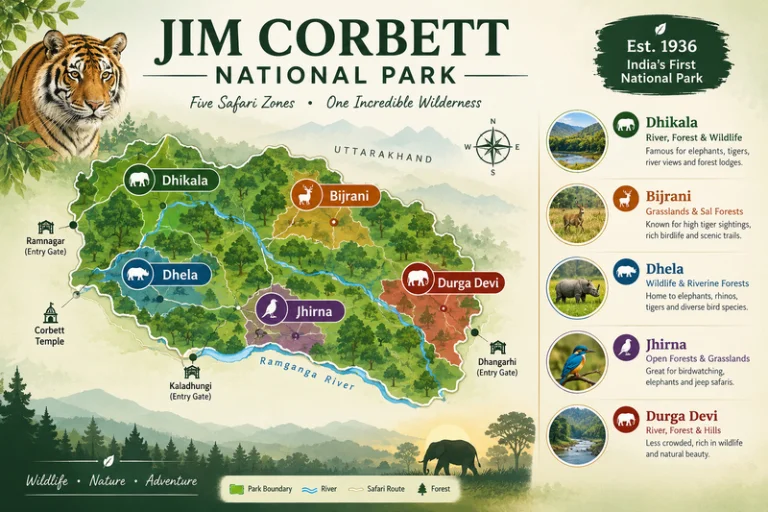
Jim Corbett National Park Five Safari Zones

Safari Zones Inside the Park

The park is divided into several safari zones, each with a different character:

ZoneKnown For
DhikalaLargest zone, best tiger sighting chances, requires overnight stay
BijraniPopular day-safari zone, closer to Ramnagar
JhirnaOpen year-round, including monsoon months
DhelaNewer zone, less crowded, good for first-time visitors
Durga DeviKnown for birdwatching along the river

Jim Corbett National Park Ticket: Booking and Costs

A Jim Corbett National Park ticket typically needs to be booked in advance, especially for popular zones like Dhikala and Bijrani, since daily visitor numbers are capped to protect the ecosystem. Ticket costs vary by zone, vehicle type, and whether you’re an Indian or foreign national, with additional charges for guides and vehicle entry. Booking through the official forest department portal well ahead of your visit is strongly recommended during peak season, since slots for popular zones fill up quickly.

Best Time to Visit

The park typically operates from mid-November to mid-June, with the Dhikala zone often closing earlier due to monsoon restrictions, while Jhirna remains open through most of the year. Winter months (November to February) offer pleasant weather but slightly lower tiger visibility, since the dense vegetation hasn’t dried out yet. Summer months (April to June), despite the heat, tend to offer better tiger sightings since animals gather more predictably near water sources.

How to Reach

By Air

The nearest airport is Pantnagar Airport, roughly 50 km from Ramnagar, the main gateway town to the park.

By Train

Ramnagar Railway Station is the nearest railhead, directly connected to Delhi and well-suited for weekend trips from the capital.

By Road

Ramnagar is well-connected by road from Delhi (roughly 260 km) and Nainital (roughly 65 km), with regular buses and private taxis available.

Extending Your Trip

Since Ramnagar sits along a broader Kumaon and Garhwal travel circuit, many visitors combine their Jim Corbett trip with other regional destinations. Explore Hills’ Nag Tibba Trek offers a nearby Himalayan trekking option for travelers wanting to pair wildlife viewing with a short mountain trek, and the broader Uttarakhand Tour Package can help combine Jim Corbett with other regional highlights in a single itinerary.

For official ticket booking, zone availability, and current park regulations, you can refer to the Uttarakhand Forest Department, the government body managing this reserve.

What to Pack

  • Neutral-colored clothing to avoid startling wildlife during safaris
  • Binoculars for birdwatching and distant sightings
  • Sunscreen and a hat for open-vehicle safaris
  • A basic first-aid kit and personal medication
  • A good camera with a zoom lens, since sightings can happen at a distance

Conclusion

Jim Corbett National Park holds a unique place in India’s conservation story, and that history is part of what makes a visit here feel different from a typical wildlife trip. Between the varied safari zones, the density of wildlife, and the park’s role as the birthplace of Project Tiger, it remains one of the most significant and rewarding national parks in the country to visit.

Frequently Asked Questions

Where is Jim Corbett National Park located?

It is located in the Nainital district of Uttarakhand, near the town of Ramnagar, at the foothills of the Himalayas.

How do I book a Jim Corbett National Park ticket?

Tickets should be booked in advance through the official forest department portal, especially for popular zones like Dhikala and Bijrani during peak season.

What makes Jim Corbett National Park in Uttarakhand historically significant?

It was India’s first national park, established in 1936, and became the first reserve under Project Tiger in 1973.

What is the best time to visit Jim Corbett National Park?

November to June is the main operating season, with summer months often offering better tiger sightings despite the heat.

Which safari zone offers the best tiger sighting chances?

Dhikala is generally considered the best zone for tiger sightings, though it requires an overnight stay within the park.

Khatu Shyam Ji Temple: The Rajasthan Shrine That Draws Millions

Khatu Shyam Ji Temple

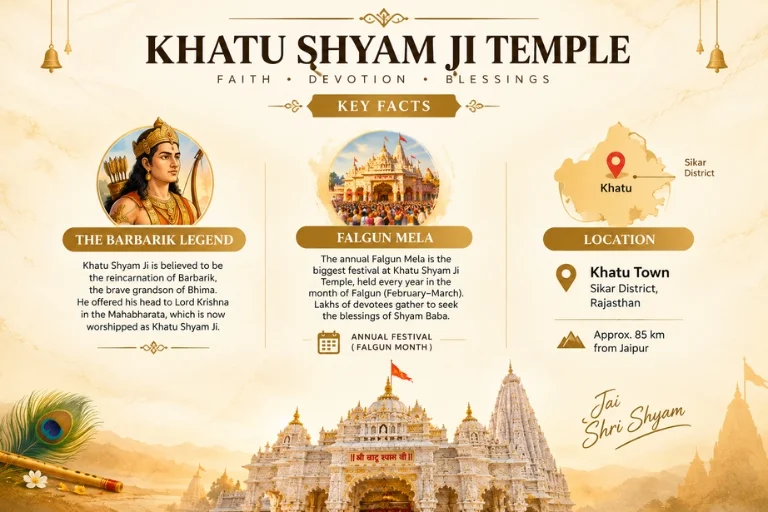
Few pilgrimage sites in North India pull in the sheer volume of devotees this temple does, especially during its annual fair, when the small town around it swells into one of the busiest religious gatherings in Rajasthan. This is Khatu Shyam Ji Temple, and its story is as compelling as the crowds it draws.

What Is Khatu Shyam Ji Temple?

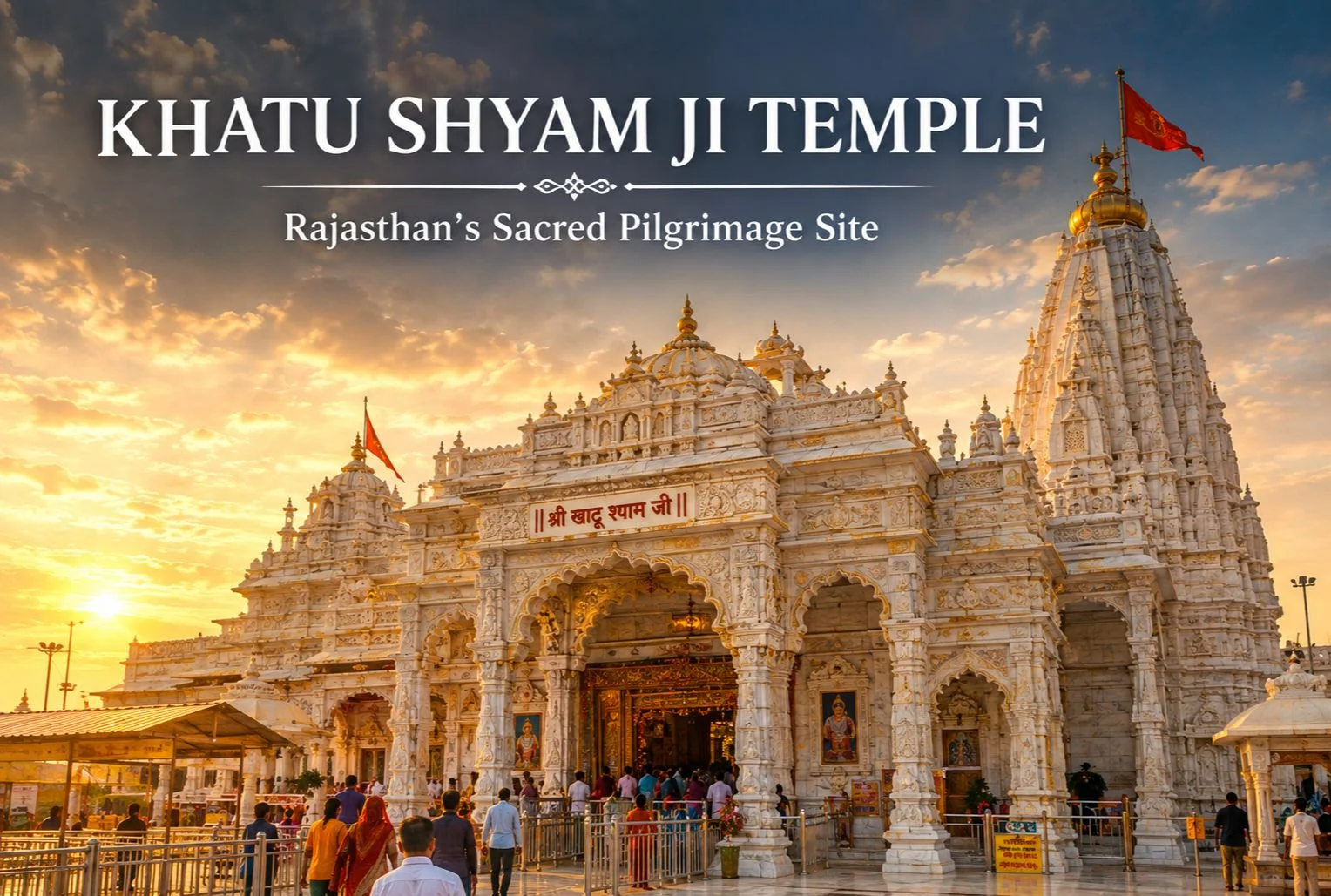
Khatu Shyam Ji Temple is located in the town of Khatu, in Sikar district, Rajasthan, dedicated to Khatu Shyam Baba, worshipped as a form of Lord Krishna. The temple’s popularity has grown enormously over recent decades, drawing pilgrims not just from Rajasthan but from across North India, particularly during major festival periods.

Khatu Shyam Ji Temple - History

The Legend Behind Khatu Shyam Baba Temple

The story behind Khatu Shyam Baba Temple traces back to the Mahabharata and the warrior Barbarik, grandson of Bhima. According to legend, Barbarik possessed extraordinary combat skills and vowed to fight on the side of the weaker army in the Kurukshetra war. To test his resolve and prevent the war from ending too quickly, Lord Krishna asked for his head as alms (shirdaan), which Barbarik gave willingly. Pleased by this sacrifice, Krishna granted him a boon that he would be worshipped in the Kali Yuga under the name Shyam, which is how the deity came to be known as Khatu Shyam Baba, with Khatu being the town where his head is believed to be enshrined.

Khatu Shyam Temple: Architecture and Significance

The Khatu Shyam temple structure reflects Rajasthani temple architecture, with a prominent shikhara and detailed marble work throughout the complex. The main sanctum houses the deity’s image, and the temple complex includes additional structures like Shyam Kunj, considered significant for devotees performing specific rituals during their visit.

Khatu Shyam Temple Timings

Khatu Shyam temple timings generally follow a structured daily schedule, though visitors should confirm details locally given how much footfall the temple sees, especially during peak season.

Time SlotApproximate Hours
Morning darshan (Mangala Aarti)4:30 AM – 12:00 PM
Afternoon break12:00 PM – 4:00 PM
Evening darshan and Aarti4:00 PM – 10:00 PM

These timings can shift significantly during the Falgun Mela and other major festival periods, so confirming the current schedule with temple management or an official source shortly before traveling is strongly recommended.

The Falgun Mela: Khatu’s Biggest Event

The Falgun Mela, held annually around the Hindu month of Falgun (typically February-March), is when the temple sees its highest footfall of the year, with lakhs of devotees arriving over several days. Roads leading into Khatu get significantly congested during this period, and planning around it—either to join the festivities or to avoid the crowds entirely—makes a real difference to the visit experience.

Best Time to Visit

Outside the Falgun Mela, the temple sees steady but more manageable crowds year-round, with weekdays generally quieter than weekends. Winter months (October to February) offer more comfortable travel weather for the Rajasthan region overall, avoiding the intense summer heat that builds up by April and May.

How to Reach Khatu

By Air

The nearest airport is Jaipur International Airport, roughly 80 km from Khatu.

By Train

Ringas Railway Station is the nearest railhead, roughly 17 km from the temple, well-connected to Jaipur and other major Rajasthan cities.

By Road

Khatu is well-connected by road from Jaipur, Sikar, and Ringas, with regular bus and taxi services available, particularly during the Falgun Mela when additional transport options are arranged.

Extending Your Pilgrimage

For travelers whose pilgrimage plans extend beyond Rajasthan into the Himalayas, Explore Hills’ Kedarnath Yatra covers one of India’s most significant mountain pilgrimages, and the Char Dham Yatra bundles four of Uttarakhand’s most sacred shrines into a single extended journey for those planning a broader multi-region pilgrimage circuit.

For official visitor information and travel advisories for the Sikar district and Falgun Mela arrangements, you can refer to the Rajasthan Tourism Department, the official state government tourism body.

What to Keep in Mind Before Visiting

  • Dress modestly, with shoulders and knees covered
  • Expect long queues during peak hours and especially during the Falgun Mela
  • Footwear isn’t permitted inside the temple sanctum
  • Carry cash for offerings, as card acceptance is inconsistent in smaller shops around the temple town

Conclusion

Khatu Shyam Ji Temple isn’t just a regional pilgrimage stop—it’s become one of the most visited Krishna-related shrines in North India, driven by a legend that resonates deeply with devotees. Whether you visit during the intensity of the Falgun Mela or on a quieter weekday, it’s a temple that leaves a strong impression on nearly everyone who makes the trip.

Frequently Asked Questions

What is Khatu Shyam Ji Temple famous for?

It is famous as the shrine of Khatu Shyam Baba, associated with the Mahabharata warrior Barbarik, and is one of North India’s most visited pilgrimage sites.

What are the current Khatu Shyam temple timings?

The temple generally follows morning and evening darshan slots, though timings can shift significantly during the Falgun Mela, so confirming locally before travel is advised.

What is the legend behind Khatu Shyam Baba Temple?

According to the Mahabharata, warrior Barbarik offered his head to Lord Krishna as alms and was granted a boon to be worshipped as Shyam in the Kali Yuga.

When is the best time to visit Khatu Shyam Temple?

Winter months (October to February) offer comfortable weather, though many devotees specifically plan around the Falgun Mela in February-March for the festival experience.

How do I reach Khatu Shyam Ji Temple?

The nearest railway station is Ringas, roughly 17 km away, and the nearest airport is Jaipur International Airport, about 80 km from Khatu.

Somnath Temple: India’s First Jyotirlinga on the Shores of the Arabian Sea

Somnath Temple

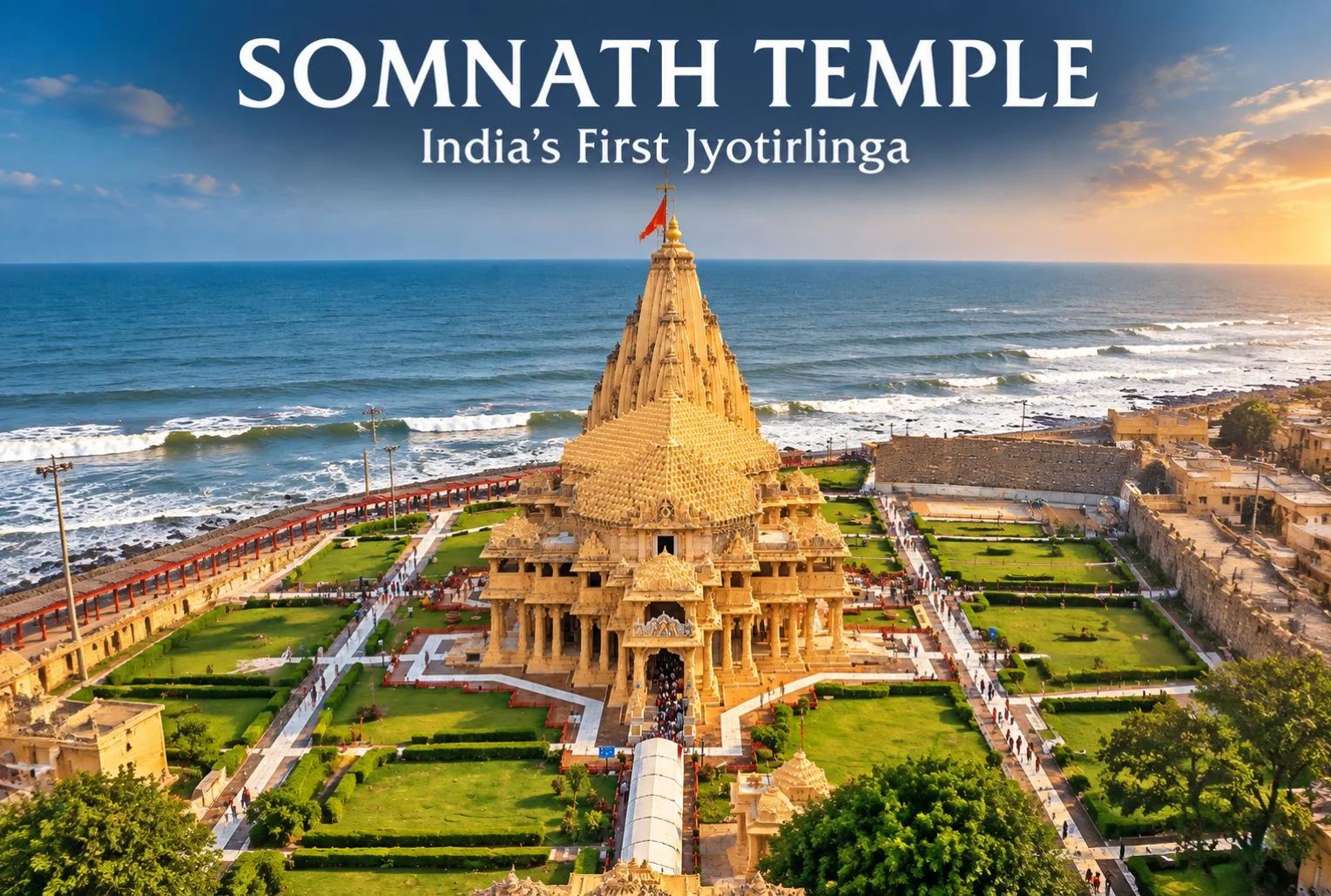
Few temples in India carry a history as layered as this one — destroyed and rebuilt across centuries, standing today as both a place of worship and a symbol of resilience. Somnath Temple sits on the Gujarat coast, and its story is as significant as the shrine itself.

What Is Shree Somnath Temple?

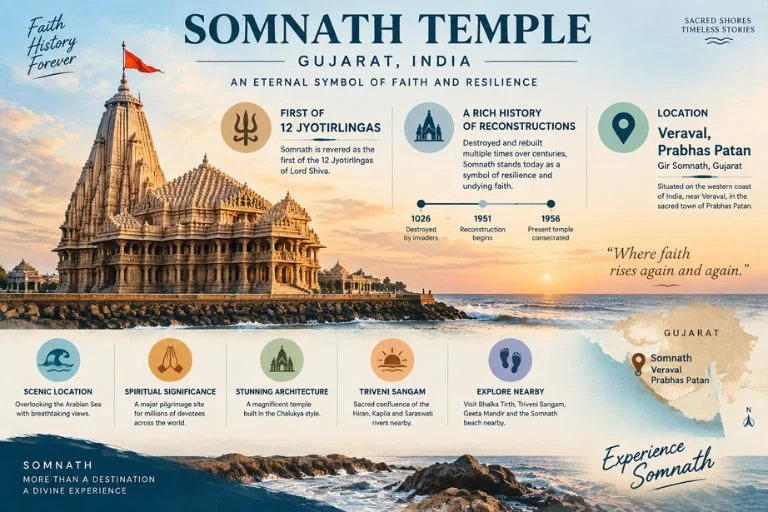
Shree Somnath Temple is dedicated to Lord Shiva and is considered the first among the twelve Jyotirlingas in India, located at Prabhas Patan near Veraval in Gujarat, right along the Arabian Sea coastline. Its location — where temple architecture meets open ocean — has made it one of the most visually striking pilgrimage sites on India’s western coast.\

Somnath Temple - History

Somnath Jyotirling Temple: Why It Holds the First Position

The Somnath Jyotirling temple is regarded in Hindu tradition as the foremost of the twelve Jyotirlingas, sacred shrines believed to be self-manifested forms of Lord Shiva. This ranking gives the temple a significance that extends well beyond Gujarat, drawing pilgrims from across India who specifically plan their Jyotirlinga circuit starting or ending at this coastal shrine.

Somnath Temple History

The Somnath temple history is one of repeated destruction and reconstruction, spanning centuries of invasions and rebuilding efforts. The temple was destroyed and rebuilt multiple times through history, with the most significant modern reconstruction beginning after India’s independence, championed by Sardar Vallabhbhai Patel, who saw the temple’s rebuilding as a symbol of national restoration. The current structure, completed in the mid-20th century, reflects Chaulukya-style architecture and stands as the temple most visitors see and photograph today.

Somnath Temple Timings

Somnath temple timings generally follow a structured daily schedule, though visitors should always confirm details locally before traveling.

Time SlotApproximate Hours
Morning darshan6:00 AM – 12:00 PM
Afternoon darshan12:00 PM – 6:00 PM
Evening darshan and aarti6:00 PM – 9:00 PM
Light and sound showEvening, timing varies seasonally

These timings can shift around major festivals, Shivaratri, and temple maintenance periods, so it’s worth confirming the current schedule with temple management or an official source shortly before your visit.

Best Time to Visit Somnath Temple

October to March is generally considered the most comfortable period, covering Gujarat’s coastal winter when temperatures stay moderate and humidity is lower than the summer months. Summer (April to June) brings intense heat, while monsoon (July to September) brings heavy rainfall that can affect outdoor sightseeing around the temple complex, though the temple itself remains open year-round.

Nearest Station to Somnath Temple

The nearest station to Somnath temple is Veraval Railway Station, located roughly 7 km from the temple complex, well-connected to major Gujarat cities and other parts of the country. For air travel, Diu Airport, roughly 60 km away, and Rajkot Airport, further out, serve as the nearest airports, with road transport required to complete the journey to the temple.

The Temple Complex and Surroundings

Beyond the main shrine, the complex includes a museum displaying artifacts and sculptures recovered from earlier iterations of the temple, giving visitors a tangible sense of its long history. The nearby Triveni Sangam, where three rivers are believed to meet before joining the sea, is also considered a significant spot for ritual bathing among pilgrims visiting the area.

Extending Your Pilgrimage

For travelers whose interest in Jyotirlinga and major Shiva shrines extends to the Himalayas, Explore Hills’ Kedarnath Yatra covers one of the most significant Himalayan Shiva pilgrimages in the country, and the Char Dham Yatra bundles four of Uttarakhand’s most sacred shrines into a single extended journey for those planning a broader multi-region pilgrimage circuit.

For official visitor information, current darshan timings, and travel advisories, you can refer to the Gujarat Tourism Department, the official state government tourism body.

What to Keep in Mind Before Visiting

  • Dress modestly, with shoulders and knees covered, as is standard at Hindu temple complexes
  • Footwear isn’t permitted inside the sanctum; carrying a small bag for shoes helps
  • The evening light and sound show is worth timing your visit around, if schedules allow
  • Weekends and major festival days bring noticeably larger crowds

Conclusion

Somnath isn’t just another stop on a Jyotirlinga circuit—it’s a temple whose very existence today reflects centuries of resilience. Between its coastal setting, its historical weight, and its place as the first of the twelve Jyotirlingas, it remains one of the most significant pilgrimage destinations in the country for those willing to make the journey to Gujarat’s shoreline.

Frequently Asked Questions

What is Shree Somnath Temple famous for?

It is famous as the first of the twelve Jyotirlingas dedicated to Lord Shiva and for its dramatic coastal location along the Arabian Sea.

What is the history behind Somnath Temple history and its reconstructions?

The temple has been destroyed and rebuilt multiple times through history, with the current structure completed in the mid-20th century under efforts led by Sardar Vallabhbhai Patel.

What are the current Somnath temple timings?

The temple generally follows morning, afternoon, and evening darshan slots, though timings can shift around festivals, so confirming locally before travel is recommended.

What is the nearest station to Somnath Temple?

Veraval Railway Station, located roughly 7 km away, is the nearest railway station to the temple.

Why is Somnath Jyotirling Temple considered the first among the twelve Jyotirlingas?

Hindu tradition places it first in the sequence of Jyotirlingas, giving it particular significance for pilgrims undertaking the full Jyotirlinga circuit.

What is the best time to visit Somnath Temple?

October to March offers the most comfortable weather, avoiding both the summer heat and monsoon rains along the Gujarat coast.

Veerabhadra Swamy Temple: The Mystery Pillar That Defies Gravity

Veerabhadra Swamy Temple

Not every ancient temple needs mythology to leave visitors stunned — some do it with pure engineering. The Veerabhadra Swamy Temple in Lepakshi, Andhra Pradesh, is one of those rare places where architecture itself has become the main attraction, alongside centuries of devotion to Lord Shiva in his fierce Veerabhadra form.

Where Is the Veerabhadra Swamy Temple Located?

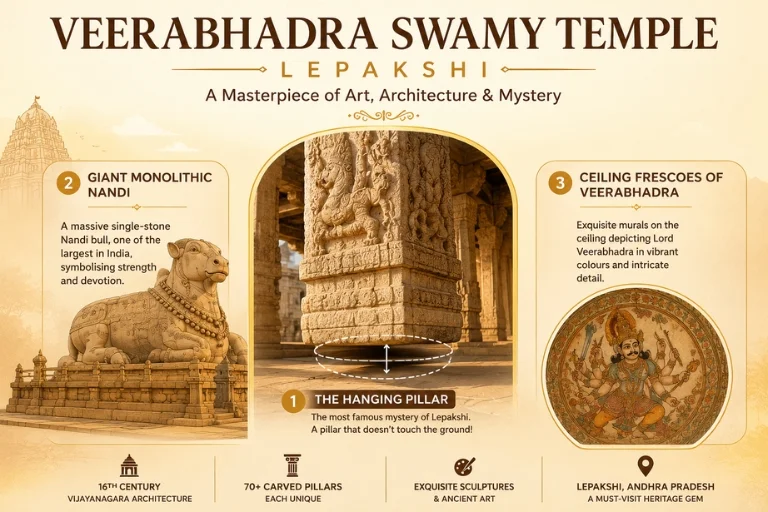
This temple sits in the small town of Lepakshi in Anantapur district, Andhra Pradesh, roughly 15 km from Hindupur and about 120 km from Bengaluru. Built during the Vijayanagara Empire in the 16th century, it’s often described as one of the finest surviving examples of Vijayanagara-era temple architecture, and it draws history enthusiasts and pilgrims in almost equal numbers.

The Story Behind Sri Veerabhadra Swamy Temple

According to legend, the site takes its name from the moment Lord Rama is said to have told Sita “le pakshi” — meaning “rise, bird” — after finding the wounded vulture Jatayu here following his battle with Ravana in the Ramayana. The Sri Veerabhadra Swamy Temple itself, however, is dedicated to Veerabhadra, the fierce warrior form of Lord Shiva created from his rage after the death of Sati. The temple complex also houses shrines to Shiva, Vishnu, and Durga, making it a broader pilgrimage stop rather than a single-deity shrine.

The Hanging Pillar: Lepakshi’s Famous Mystery

Veerabhadra Swamy Temple History

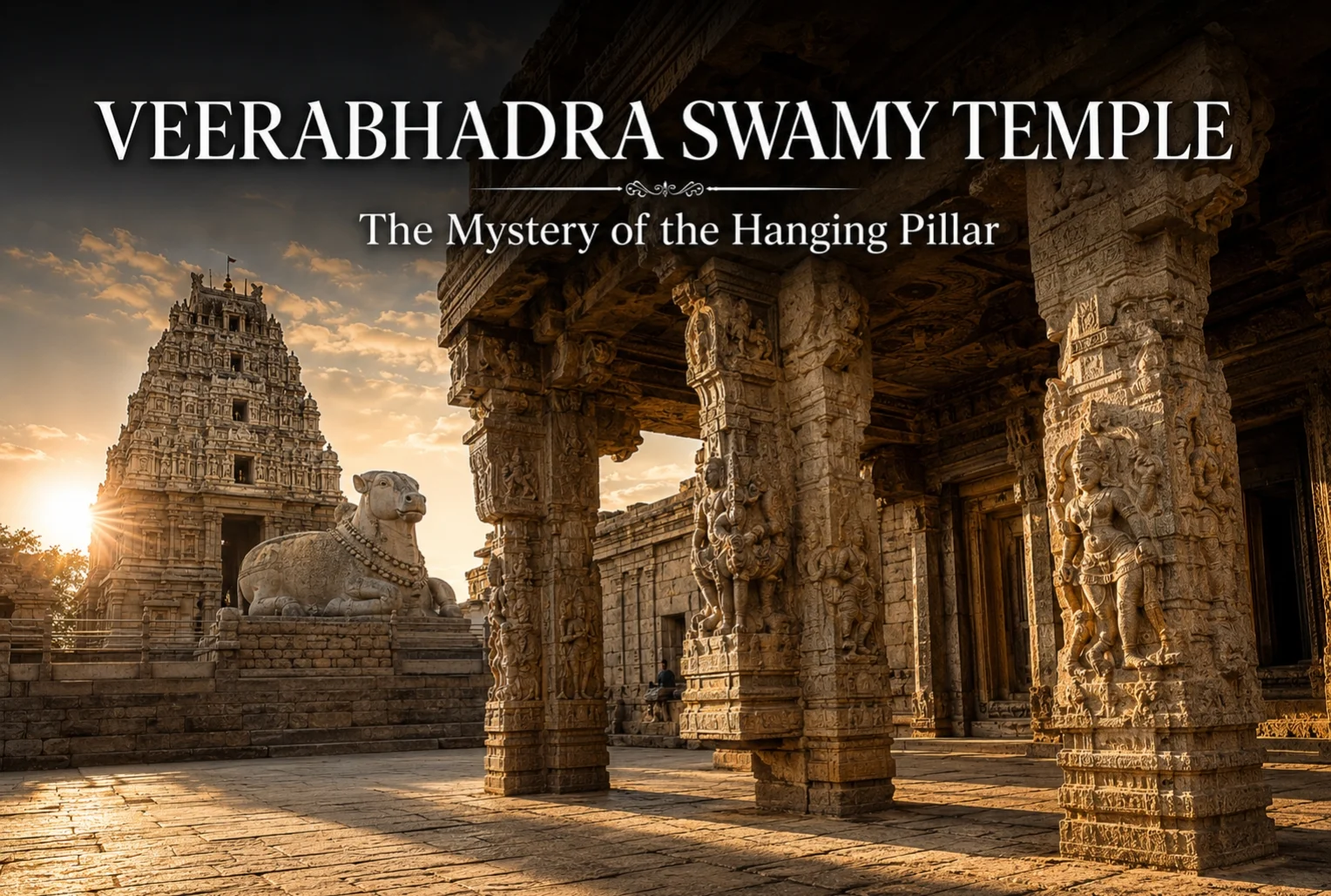
Among the temple’s 70 carved pillars, one doesn’t touch the ground at all — it hangs, suspended just slightly above its base, and generations of visitors have slid objects underneath to prove it isn’t resting on anything. Colonial-era engineers reportedly tried to move it to study the technique and inadvertently shifted it slightly, though it remains standing exactly as it has for centuries. No one has definitively explained how 16th-century builders achieved this level of precision without modern tools.

Other Highlights Inside the Veerabhadra Temple

Beyond the hanging pillar, the Veerabhadra temple complex holds several other remarkable features. A massive monolithic Nandi bull, carved from a single granite block, sits just outside the main complex and is among the largest of its kind in India. Inside, the ceiling above the main shrine features a giant fresco of Veerabhadra himself, considered one of the largest surviving murals from the Vijayanagara period. There’s also an unfinished kalyana mandapam (marriage hall) with intricately carved pillars, believed to have been left incomplete after the sudden fall of the Vijayanagara Empire.

Best Time to Visit

The temple is open year-round, but the most comfortable months to visit are between October and February, when daytime temperatures stay mild. Summers in this part of Andhra Pradesh can get intensely hot, so an early morning visit is generally recommended regardless of season.

How to Reach

The nearest airport is in Bengaluru, roughly a 3-hour drive away, while Hindupur serves as the closest railway station, about 15 km from the temple. Most visitors combine a trip here with a broader South India temple circuit. For travelers who enjoy pairing ancient temple architecture with high-altitude pilgrimage routes, Explore Hills’ Kedarnath Yatra offers a very different but equally compelling temple experience in the Himalayas, and the Char Dham Yatra covers four of Uttarakhand’s most sacred shrines in a single journey.

For official heritage information and conservation details on this site, you can refer to the Archaeological Survey of India, the Government of India body responsible for protecting monuments like this one.

Conclusion

The Veerabhadra Swamy Temple isn’t just another stop on a South India temple trail — it’s a place where 16th-century builders left behind a puzzle that’s never fully been solved. Between the hanging pillar, the giant fresco, and the sheer scale of the carved Nandi outside, it’s a site that rewards slow, unhurried exploration rather than a quick walkthrough.

Frequently Asked Question’s

What is special about the Veerabhadra Swamy Temple?

The temple is best known for its hanging pillar, which appears suspended without touching the ground, along with a massive monolithic Nandi bull and a giant ceiling fresco.

Where is the Sri Veerabhadra Swamy Temple located?

It is located in Lepakshi, Anantapur district, Andhra Pradesh, about 120 km from Bengaluru.

Which deity is worshipped at the Veerabhadra temple?

The temple is primarily dedicated to Veerabhadra, the fierce form of Lord Shiva, though the complex also includes shrines to Vishnu and Durga.

How old is the Veerabhadra Swamy Temple?

The temple dates back to the 16th century, built during the reign of the Vijayanagara Empire.