

Explore Hills treks

Explore articles related to this topic from ExploreHills.

Explore by Category

22 articles
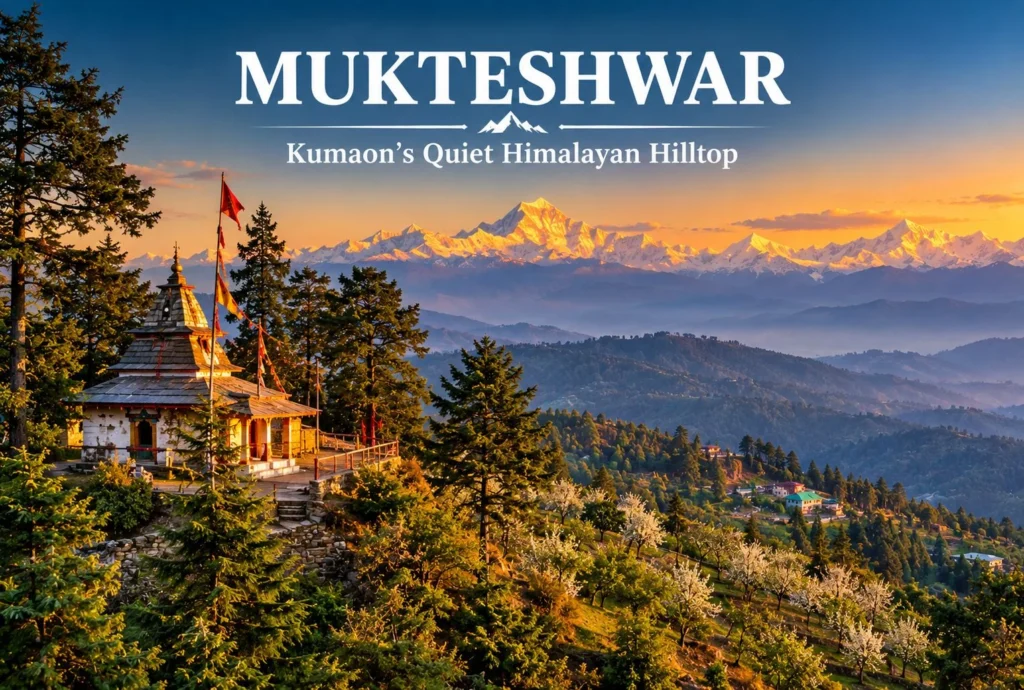
Mukteshwar
Hill Stations and Mountain Destinations

Mukteshwar: Kumaon’s Quiet Hilltop of Orchards, Temples and Himalayan Views

Not every Uttarakhand hill town needs a crowd to be worth the trip. Perched on a ridge above fruit orchards and pine forest, Mukteshwar offers a slower version of the Kumaon hills, with long mountain views, a hilltop Shiva shrine, and fewer…
October 14, 20266 min read
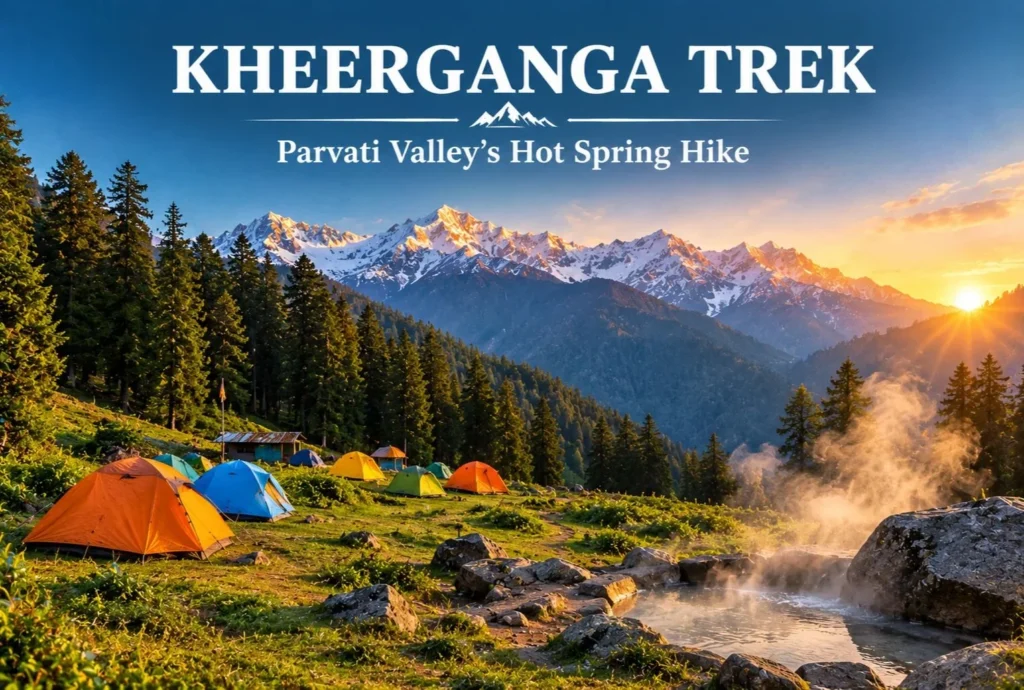
Kheerganga Trek
Nature, Lakes and Waterfalls

Kheerganga Trek: A Hot Spring Hike Through Parvati Valley

Few trails end with a soak in a natural hot spring surrounded by pine forest and snow peaks. That is a big reason the Kheerganga trek has become one of Himachal Pradesh’s most popular short routes. It starts near Kasol in the…
October 9, 20265 min read
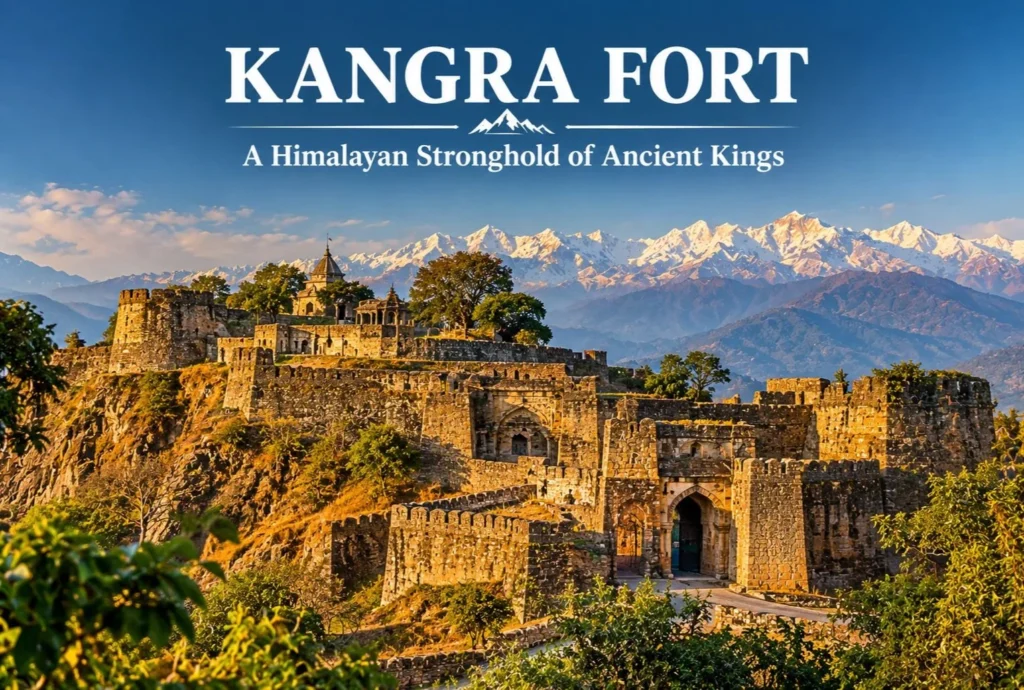
Kangra Fort
Heritage, Forts and Monuments

Kangra Fort: A Himalayan Stronghold That Outlasted Empires

Few forts in India have been attacked, looted, and rebuilt as many times as this one. Perched on a rocky ridge between two rivers, Kangra Fort is among the oldest and most contested strongholds in the Himalayan foothills, and its long record…
October 8, 20266 min read
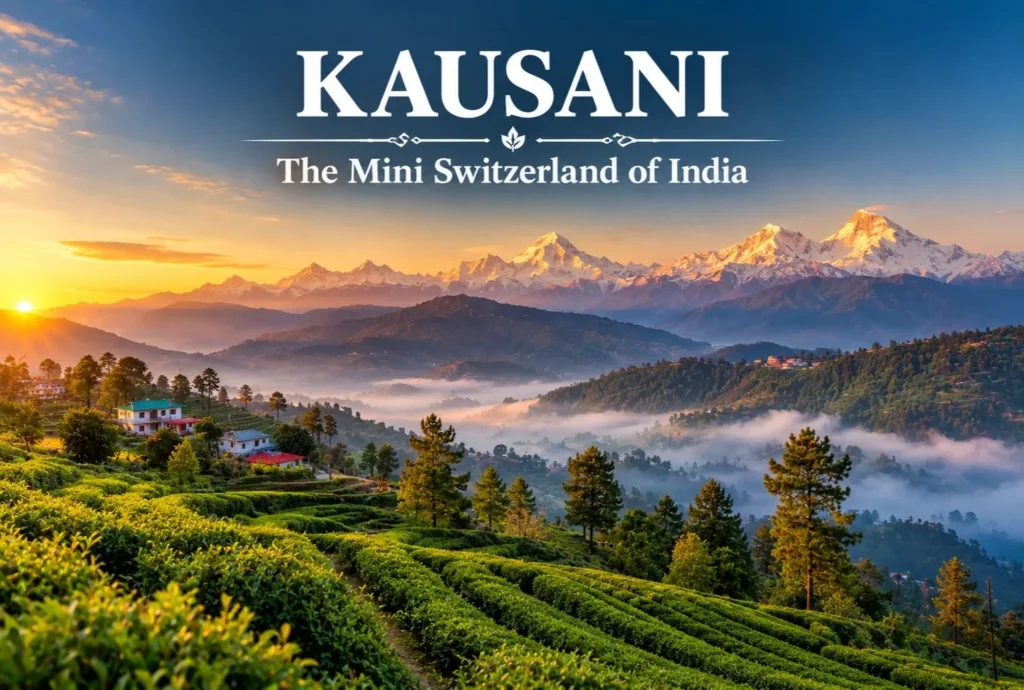
Kausani Uttarakhand
Hill Stations and Mountain Destinations

Kausani, Uttarakhand: The Himalayan Hill Town Gandhi Called Switzerland

Long before Khajjiar claimed the title in Himachal Pradesh, there was another hill town that earned a Swiss comparison from a far more unexpected source. Kausani has carried the nickname “Switzerland of India” since 1929, when Mahatma Gandhi himself used the phrase…
October 7, 20265 min read
Kudremukh
Nature, Lakes and Waterfalls

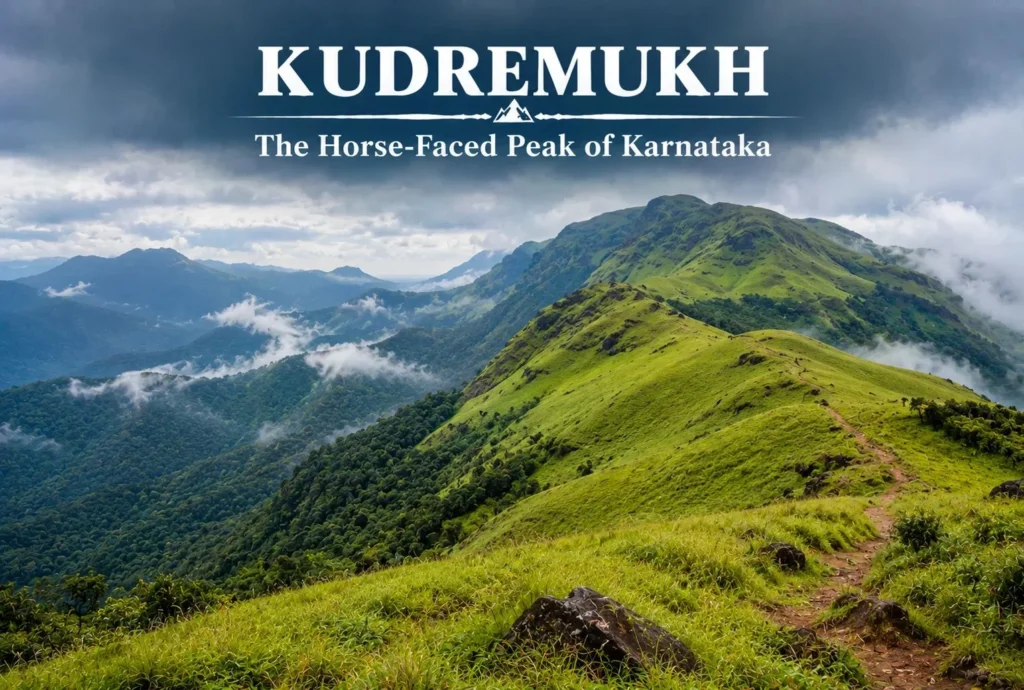
Kudremukh: The Horse-Faced Peak of the Western Ghats

Not every great Indian trek is in the Himalayas. Tucked into the lush, monsoon-fed hills of coastal Karnataka, Kudremukh offers a completely different kind of trekking experience — rolling grasslands, dense rainforest, and a peak shaped like a horse’s face that gives…
October 6, 20265 min read

Chandratal Lake: The Moon Lake of Spiti Valley

Chandratal Lake

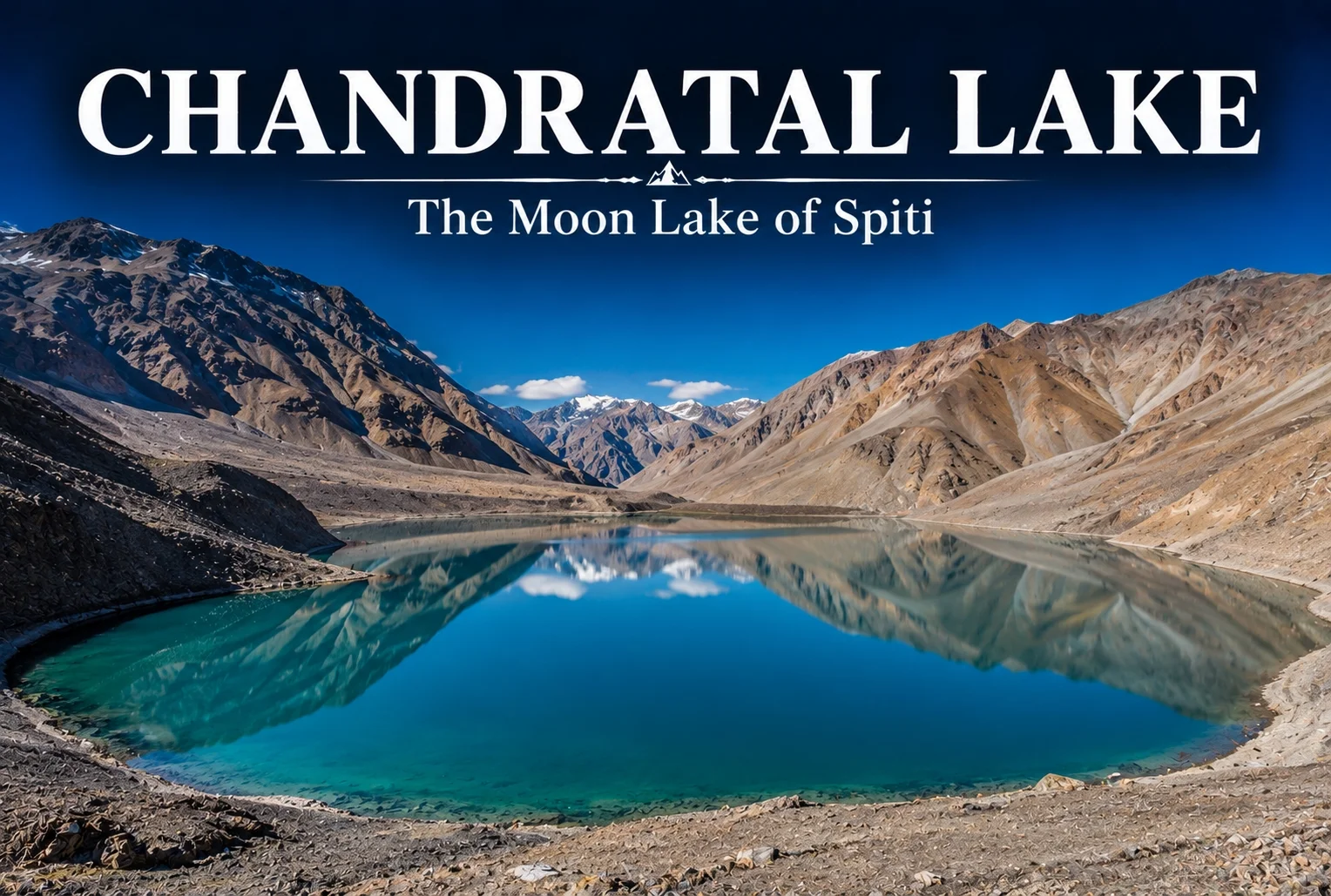
At nearly 4,300 meters, tucked into the cold desert landscape of Himachal Pradesh’s Spiti region, there’s a lake so perfectly crescent-shaped that its name literally translates to “Moon Lake.” That’s Chandratal Lake — and once you see the water’s shifting color against the barren mountains around it, the name stops feeling like poetic exaggeration.

Where Is Chandratal Located?

Chandratal sits in the Lahaul and Spiti district of Himachal Pradesh, close to the Kunzum Pass, roughly midway between the Kullu and Spiti valleys. The lake’s crescent shape gives it the name “Moon Lake,” and its remote, high-altitude setting is exactly what makes the drive and trek to reach it feel like entering an entirely different landscape from the green valleys most people associate with Himachal.
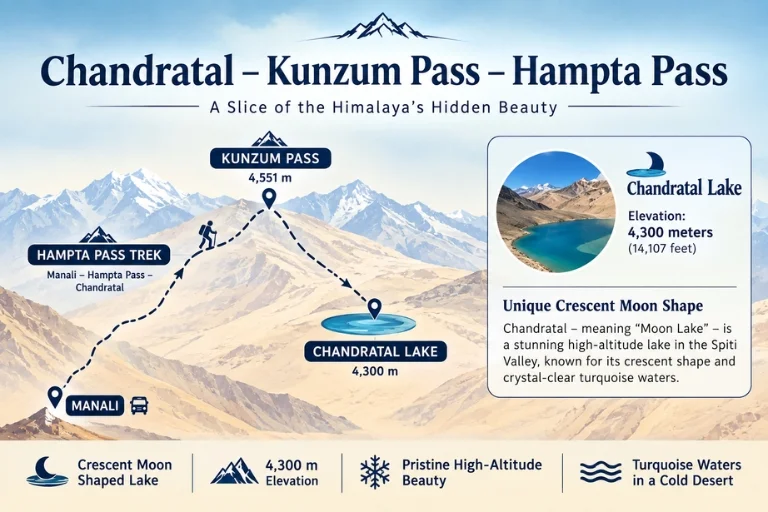
Chandratal - Kunzuma Pass - Hampta pass

Chandratal Trek: Getting There

Reaching this lake usually happens one of two ways — by road, via a motorable track from the Kunzum Pass side, or on foot, through the Chandratal trek, a shorter but genuinely rewarding walk that most trekkers pair with the broader Hampta Pass route. The trek itself is relatively short, typically completed in a day from the roadhead, but the high altitude means acclimatization matters more than distance. Many travelers extend their Spiti circuit into this route, since Chandratal often serves as an extension point rather than a standalone destination. Explore Hills’ Hampta Pass Trek includes this lake as part of its extended itinerary for trekkers who want both landscapes in one trip.

Best Time to Visit Chandratal

Timing here matters more than almost anywhere else in Himachal. The best time to visit Chandratal is between mid-June and early October, when the Kunzum Pass road is open and accessible. Outside this window, heavy snowfall cuts the region off entirely, and the roads remain closed through winter and much of spring. Within that season, late June and September tend to offer the clearest water reflections and the fewest crowds, while July and August bring more travelers but also greener surrounding slopes.

Why the Lake’s Color Keeps Changing

One of the most talked-about details about Chandratal is how dramatically its color shifts throughout the day — from a deep turquoise in the morning light to a more muted grey-blue by evening. This happens due to the mineral content in the glacial water combined with how sunlight hits the lake at different angles, and it’s part of why photographers often plan to spend a full day here rather than a quick stop.

Camping by the Lake

Camping directly on the lake’s edge used to be common, though environmental regulations have since pushed designated campsites slightly further away to protect the fragile ecosystem. Even with that shift, spending a night near Chandratal remains one of the most memorable parts of a Spiti trip—clear night skies, near-total silence, and a level of stargazing that’s hard to match closer to any city. Travelers looking to combine this experience with a broader Spiti itinerary can check out Explore Hills’ Spiti Valley Tour, which covers the wider region beyond just the lake.

For official permit requirements and updated road conditions in the Lahaul-Spiti region, you can refer to the Himachal Pradesh Tourism Department, the state government body overseeing this area.

Conclusion

Chandratal doesn’t need much dressing up — a crescent lake, a barren cold-desert backdrop, and water that changes mood with the light throughout the day. Whether you reach it by road or via the trek, it’s the kind of stop that tends to outlast the memory of everything else on a Spiti trip.

Frequently Asked Questions

What is the best time to visit Chandratal?

The best time to visit Chandratal is between mid-June and early October, when the Kunzum Pass road is open and the region is accessible.

How difficult is the Chandratal trek?

The trek is relatively short and moderate in difficulty, though the high altitude means proper acclimatization is important before attempting it.

Why is Chandratal called the Moon Lake?

Chandratal gets its name from its distinct crescent moon shape, which is especially visible from higher viewpoints around the lake.

Can you camp near Chandratal Lake?

Yes, though camping is now restricted to designated sites slightly away from the lake’s edge to help protect the surrounding ecosystem.
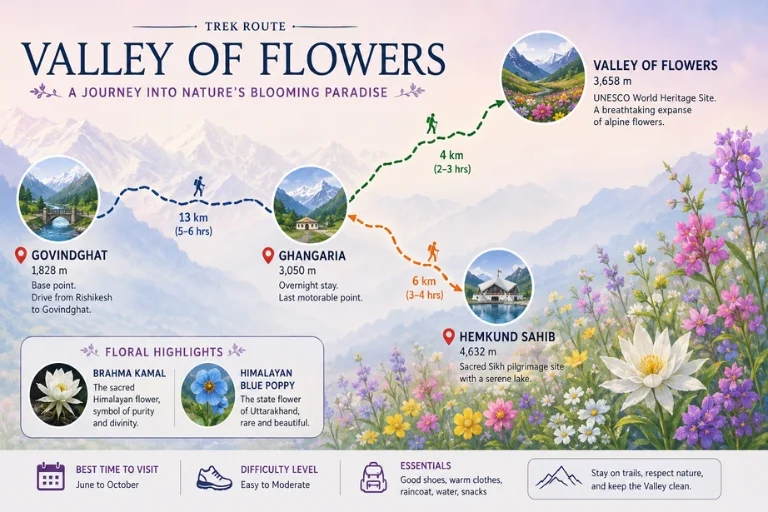
Valley of Flowers: India’s UNESCO-Listed Alpine Wonderland

Valley Of Flowers

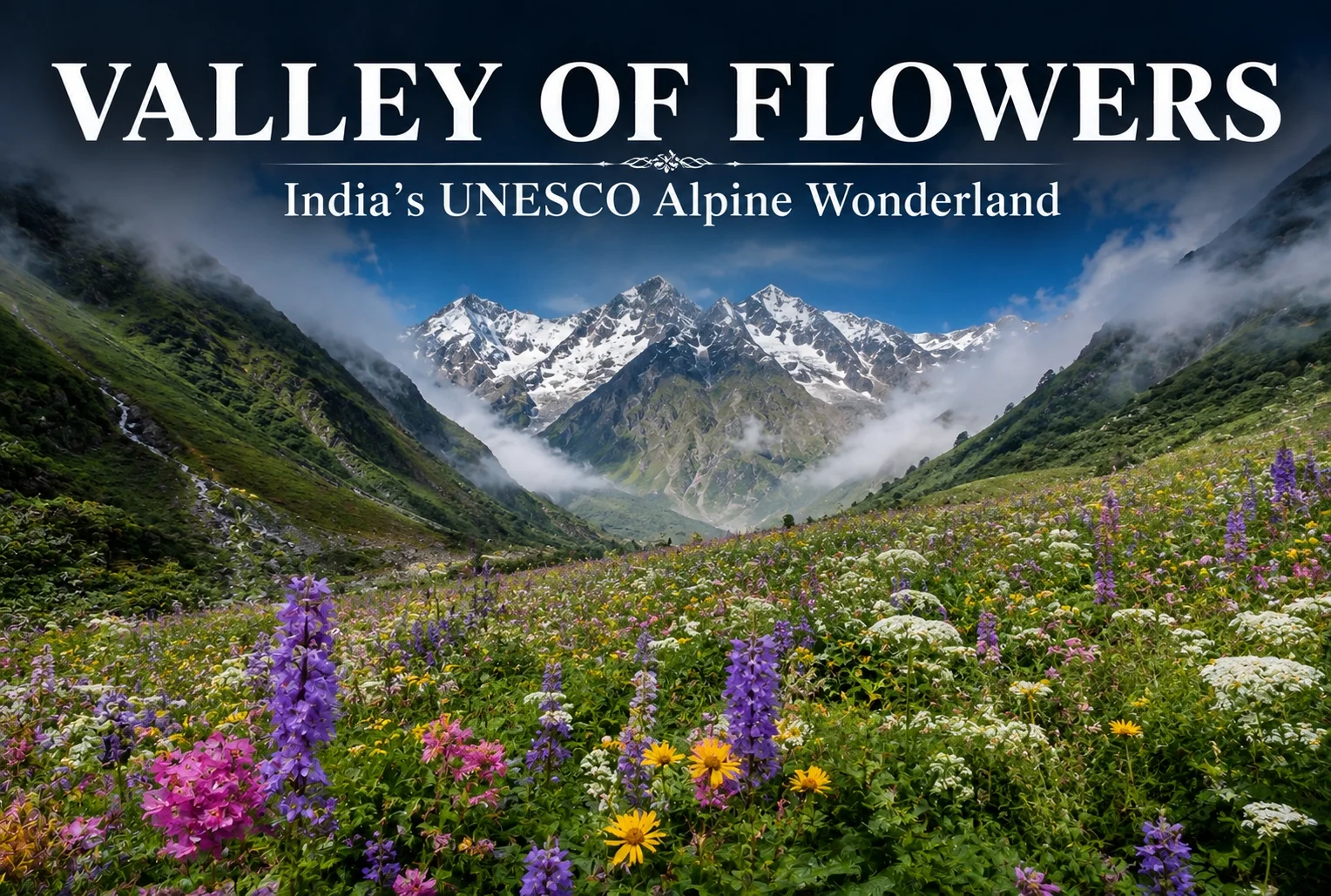
Tucked deep inside Uttarakhand’s Nanda Devi Biosphere Reserve is a place that only fully reveals itself for a handful of weeks each year — a valley so densely packed with wildflowers that early explorers genuinely struggled to describe it without sounding like they were exaggerating. This is the Valley of Flowers, and once you’ve seen it in bloom, the reputation makes complete sense.

What Makes the Valley of Flowers So Special?

This high-altitude meadow is a UNESCO World Heritage Site, and it earns that status honestly. Over 500 species of alpine flowers carpet the valley floor during peak season, including rare finds like the Brahma Kamal and the Himalayan Blue Poppy, both of which are difficult to spot almost anywhere else in the world. The valley sits at an elevation of around 3,658 meters, ringed by snow-capped peaks that make the whole basin feel sealed off from everything else.

Best Time to Visit

The window here is narrow and unforgiving. The park typically opens in June and closes by early October, but the real bloom — the version worth traveling for — peaks between mid-July and mid-August, right in the middle of monsoon season. That timing surprises a lot of first-time visitors, since most Himalayan treks avoid the monsoon entirely. Here, it’s the opposite: the rain is what brings the flowers out.

Valley Of Flowers Route

The Trek Itself

Getting there starts at Govindghat, from where the trail leads to Ghangaria, the small base camp that serves both the valley and the nearby Hemkund Sahib. From Ghangaria, it’s a further trek into the valley itself, through forest, past streams, and alongside waterfalls tumbling down from the surrounding ridgelines before the meadow opens up. Most travelers combine the two destinations into one trip, since Ghangaria works as the shared base camp for both. Explore Hills’ Valley of Flowers Trek package covers the full route, including the Hemkund Sahib extension for those who want to take on both in a single journey.

Hemkund Sahib: The Spiritual Add-On

Most people who make the trip to this valley also walk up to Hemkund Sahib, one of the highest Gurudwaras in the world, sitting beside a glacial lake at over 4,300 meters. It’s a steep, demanding climb on its own, but combining it with the valley trek is the standard itinerary for most pilgrims and trekkers alike.

Wildlife and Ecology

Because it sits inside the Nanda Devi Biosphere Reserve, the valley is home to more than just flowers. The region shelters species like the Himalayan musk deer, blue sheep, and snow leopard, though sightings of the larger animals are rare given the terrain. Birdwatchers tend to have better luck, with sightings of pheasants and high-altitude songbirds fairly common along the trail. For travelers who enjoy this kind of meadow-and-wildlife combination, Explore Hills’ Ali Bedni Bugyal Trek offers a similar alpine grassland experience elsewhere in the Garhwal Himalayas.

For official conservation status, permit rules, and biosphere reserve details, you can refer to the Uttarakhand Forest Department, the government body responsible for managing this protected area.

What to Pack

Since the trek falls during monsoon season, waterproof gear is non-negotiable — a good rain jacket, a poncho for the backpack, and quick-drying layers underneath. Trekking poles help on the wetter, more slippery stretches, and a basic first-aid kit is worth carrying given how remote the valley is once you’re inside it.

Conclusion

The Valley of Flowers isn’t a trek you do for the summit or the adrenaline — it’s one you do for a few weeks of the year when a remote Himalayan basin turns into something closer to a living painting. Between the UNESCO status, the rare flora, and the nearby pilgrimage at Hemkund Sahib, it’s a trip that rewards patience with the calendar more than fitness on the trail.

Frequently Asked Question’s

What is the best time to visit the Valley of Flowers?

Mid-July to mid-August is the peak bloom period, though the park stays open from June through early October.

How difficult is the trek to the Valley of Flowers?

It’s considered a moderate trek, manageable for reasonably fit beginners, with the main challenge being the monsoon-season trail conditions rather than altitude or technical terrain.

Can the Valley of Flowers be combined with Hemkund Sahib?

Yes, both share Ghangaria as a base camp, and most itineraries combine the two into a single trip.

Is prior trekking experience required for this trek?

No, it’s considered beginner-friendly, though good fitness and proper monsoon gear are recommended given the wet trail conditions.