

Tourist Places and City Guides

Discover the best tourist places and travel destinations across India with practical city and destination guides. Explore famous attractions, local experiences, sightseeing spots, things to do, travel itineraries, transportation information, and useful tips to make your journey easier and more enjoyable.

Explore by Category

30 articles
Ambrai Ghat
Tourist Places and City Guides

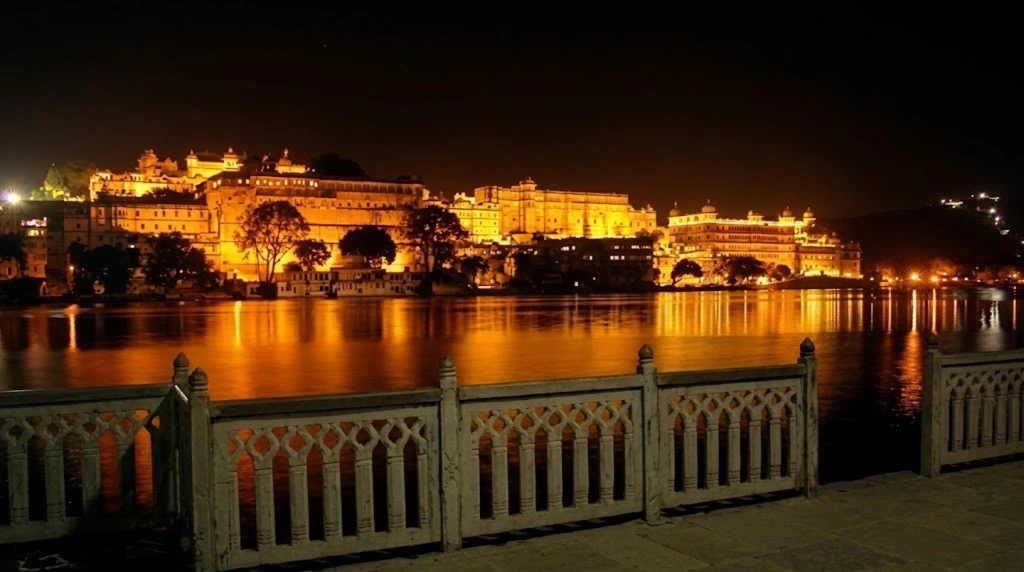
Ambrai Ghat Udaipur: History, Lake Views and Beautiful Sunsets

Ambrai Ghat lies on the tranquil beaches of Lake Pichola and It is one of the most beautiful lakeside destinations in Udaipur. Visitors can enjoy some pictorial views of City Palace and Lake Palace along with Aravalli mountains. Known locally as Manjhi…
October 27, 20268 min read
lakshman jhula
Tourist Places and City Guides

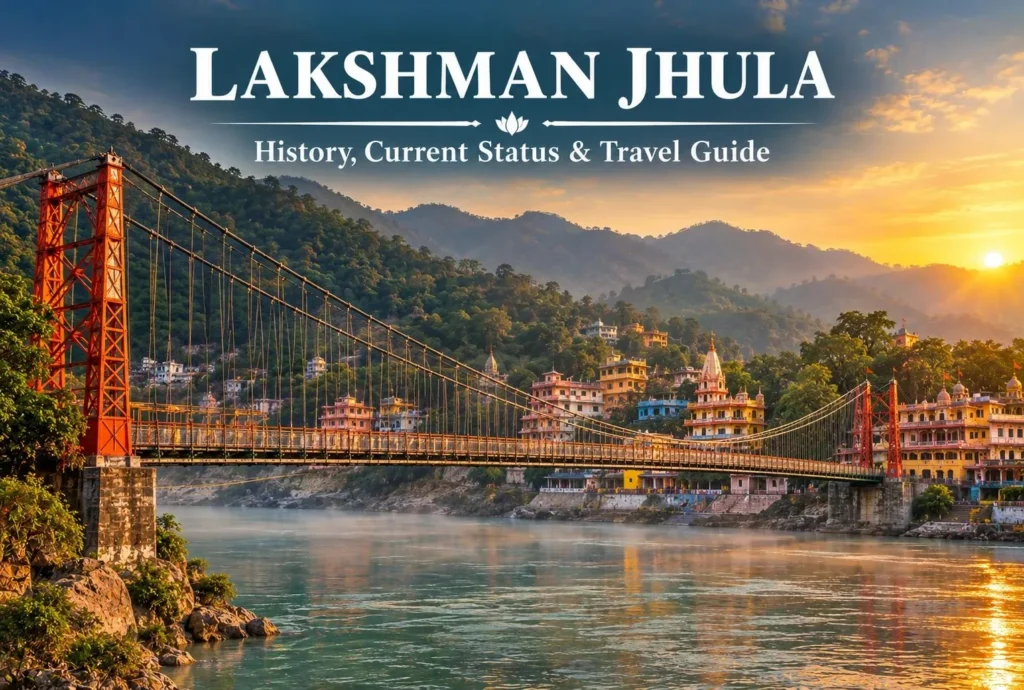
Lakshman Jhula Rishikesh: History, Current Status & Travel Guide

What Is Lakshman Jhula? Lakshman Jhula is a well-known landmark of Rishikesh, Uttarakhand, popular for its religious as well as historical significance and breathtaking views of the Ganga River. The old bridge is no longer accessible to the public but travelers can…
October 21, 20267 min read
Kaza Himachal
Tourist Places and City Guides

Kaza Himachal: A Complete Travel Guide to Spiti Valley’s Main Town

Kaza sits at the center of Spiti Valley, and if you’re planning a trip to this cold desert region of Himachal Pradesh, you’ll likely pass through it more than once. It’s the administrative headquarters of Lahaul and Spiti district, the largest town…
October 2, 202611 min read

Places to Visit in Manali: A Complete Travel Guide

Places to visit in Manali

Set along the Beas River at around 2,050 metres in Himachal Pradesh’s Kullu Valley, Manali has been drawing travellers for decades — and for good reason. Snow-capped peaks, ancient wooden temples, adventure sports, apple orchards, and a laid-back café culture all sit within a short radius of each other. Whether you’re chasing adrenaline or simply want a break from the heat of the plains, the places to visit in Manali cover an unusually wide range for a single hill town.

If you’re planning a trip, our Manali Kasol Adventure Trip package covers the region well, but here’s a closer look at the places to visit in Manali worth building your itinerary around.

1. Hadimba Devi Temple

Built in 1553 and tucked inside a thick forest of deodar cedars, the Hadimba Devi Temple is one of the oldest and most distinctive Manali famous places. Dedicated to Hadimba, wife of Bhima from the Mahabharata, the structure is built in a striking pagoda style with a multi-tiered wooden roof and intricately carved doorways.

The forest around it stays cool and shaded through the day, and the short walking paths beneath the pines are as much a draw as the temple itself. It sits roughly 2 km from the town centre, which makes it an easy first stop among the places to visit in Manali.

2. Solang Valley

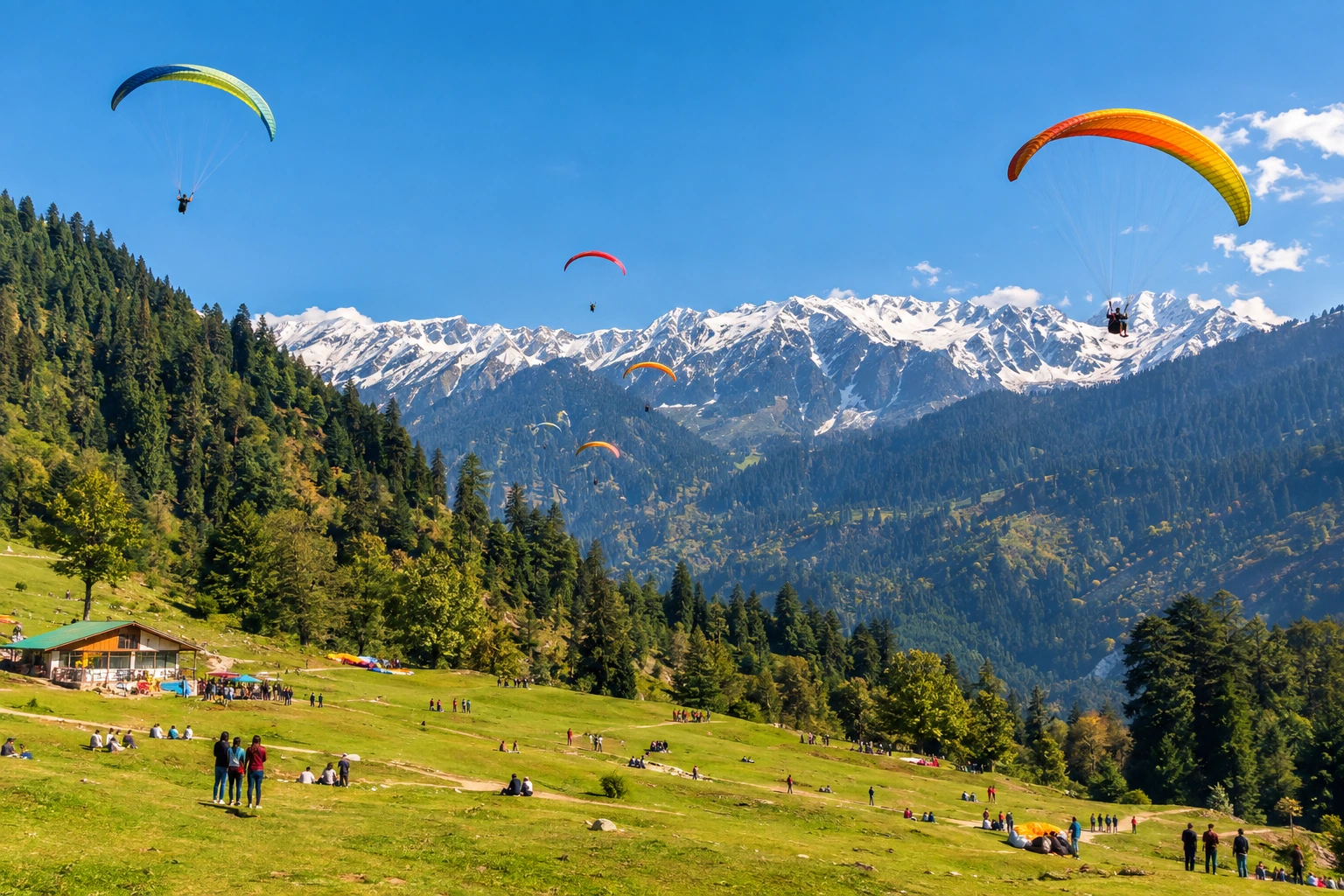
About 14 km from town, Solang Valley is the most adventure-focused of all the places to visit in Manali. In winter, the slopes fill with snow and become a hub for skiing and snowboarding, with beginner-friendly runs and equipment available locally. Once the snow clears, the valley switches over to paragliding, zorbing, quad biking, and ropeway rides.

Even if you skip the activities entirely, the panoramic views across the Pir Panjal range make the drive worthwhile.

3. Rohtang Pass

At 3,978 metres, Rohtang Pass is less a road and more an experience, and easily the highest of the places to visit in Manali. It connects the Kullu Valley to Lahaul and Spiti, and the route up offers views of glaciers, steep slopes, and wide mountain vistas. Note that permits are required and the pass opens seasonally depending on weather — it’s typically closed through the deepest winter months.

If Rohtang is shut, Gulaba serves as the official snow point for visitors, with sledging and snow play available on its slopes.

4. Old Manali

Across the river from the main town, Old Manali has a completely different rhythm. Narrow lanes lined with guesthouses, bakeries, and cafés spill down the hillside, and the pace slows considerably. It’s one of the few places to visit in Manali where travellers tend to linger longest, and it makes a good base if you’d rather avoid the bustle of Mall Road.

5. Vashisht Village and Hot Springs

A short drive from the centre, Vashisht is one of the more relaxing places to visit in Manali, known for its natural hot springs, long believed to carry medicinal properties. The temple here is dedicated to Sage Vashisht, one of the seven great sages of Hindu tradition. Separate bathing areas are available, and the village itself has a quieter, more traditional feel than Old Manali.

6. Mall Road

The commercial heart of the town, Mall Road is one of the most visited places to visit in Manali, where most travellers end up at least once. Woollens, Kullu shawls, handicrafts, and local food line the stretch, and it’s a pleasant place for an evening walk. It also anchors most Manali local sightseeing routes, since the main taxi stands and tour operators are based nearby.

7. Jogini Falls

Reached via a pleasant hour-long walk from Vashisht, Jogini Falls is one of the more active places to visit in Manali, tumbling down through forested terrain into pools at the base. The trail is straightforward and popular with day hikers looking for something active without committing to a full trek.

8. Manu Temple

Located in Old Manali, this temple is one of the more overlooked places to visit in Manali, dedicated to Sage Manu, believed in Hindu tradition to be the progenitor of humanity — and the figure the town is named after. It’s a modest structure compared to Hadimba, but the walk up through the old village and the views from the top make it worth the detour.

9. Atal Tunnel and Sissu
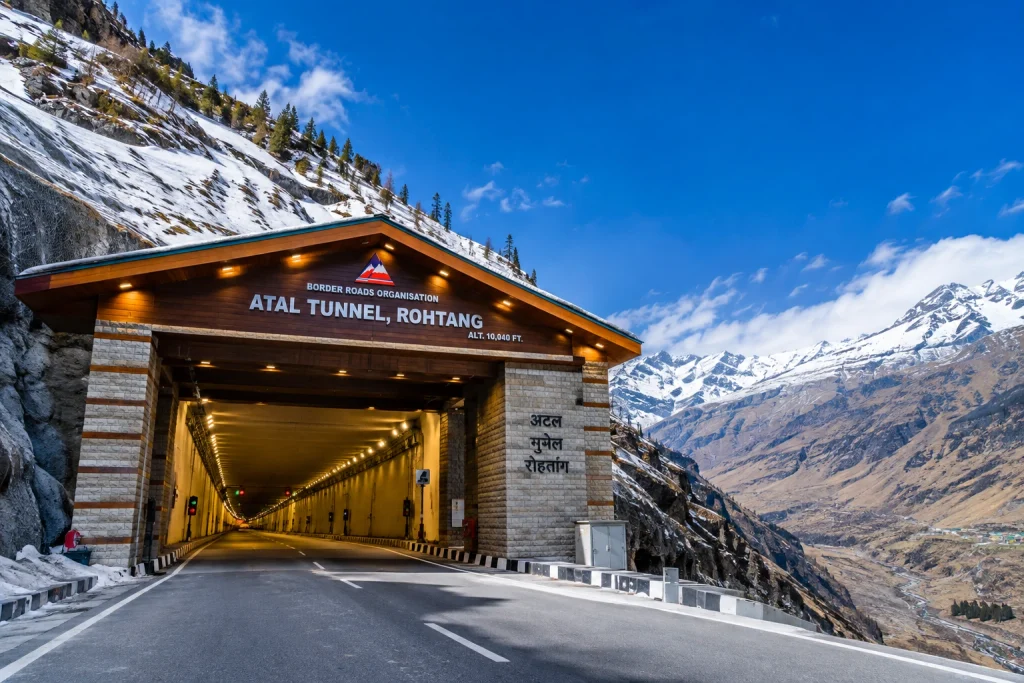
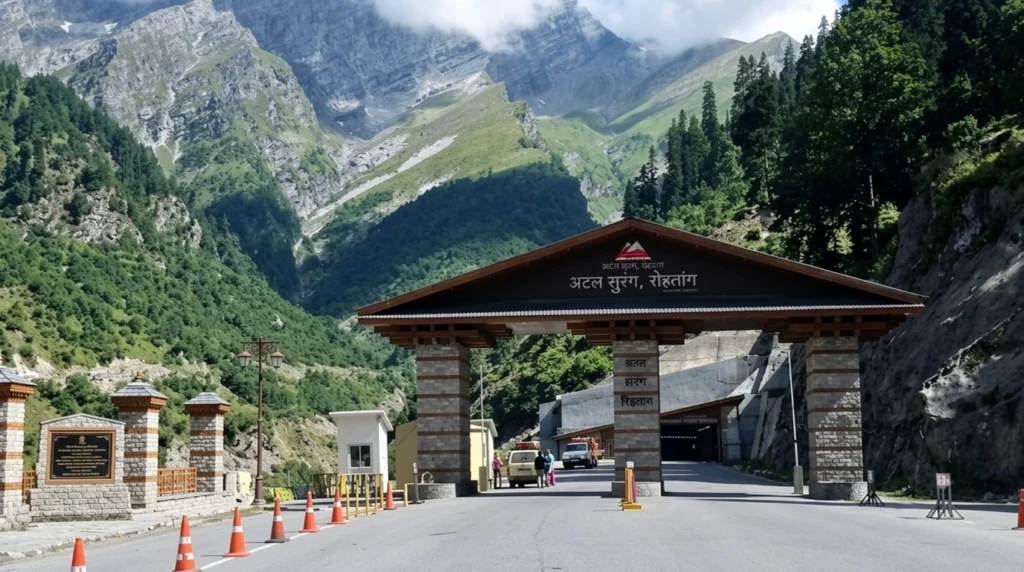
The 9.02 km Atal Tunnel cuts through the Pir Panjal range and has transformed access to Lahaul, turning what was once a seasonal journey into a year-round one. On the far side, Sissu offers a waterfall, an alpine lake, and a starkly different landscape from the green Kullu Valley, making it one of the more unusual places to visit in Manali for a half-day trip.

10. Naggar Castle

Around 20 km toward Kullu, Naggar Castle is one of the more historic places to visit in Manali, a 15th-century structure built in traditional Himachali stone-and-timber style. It served as a royal residence before becoming a heritage property, and the nearby Roerich Art Gallery adds a cultural dimension that most places to visit in Manali don’t offer.

Things to Do in Manali

Beyond sightseeing, the things to do in Manali lean heavily toward the outdoors:

  • Paragliding over Solang Valley
  • Skiing and snowboarding between December and February
  • River rafting on the Beas during the warmer months
  • Trekking — Beas Kund, Bhrigu Lake, and Hampta Pass all start nearby
  • Café hopping through Old Manali
  • Shopping for Kullu shawls and local woollens on Mall Road

For trekkers, Manali serves as the launch point for several excellent routes. Our Hampta Pass Trek is among the most popular, crossing from the green Kullu Valley into the stark desert landscape of Lahaul in a single dramatic day.

Planning Your Trip

Most places to visit in Manali sit within a 20 km radius of the town centre, which makes the itinerary easier to build than in many hill destinations.

  • Best time to visit: March to June for pleasant weather and adventure sports; December to February for snow
  • Ideal trip length: 3 to 5 days for first-time visitors
  • Nearest airport: Bhuntar Airport, roughly 50 km away
  • Nearest railway station: Joginder Nagar, though most travellers arrive via Chandigarh or Delhi by road
  • Getting around: Local taxis and buses cover most attractions; Rohtang requires a permit

For official travel advisories and verified attraction details, you can refer to Himachal Tourism, the state government’s official tourism portal.

Frequently Asked Question’s

  1. What are the top places to visit in Manali?

    Hadimba Devi Temple, Solang Valley, Rohtang Pass, Old Manali, Vashisht hot springs, and Mall Road are among the most visited spots.

  2. How many days are enough for a Manali trip?

    Three to five days is generally sufficient for first-time visitors. Those planning treks or day trips to Lahaul often stay longer.

  3. What is the best time to visit?

    March to June offers the most pleasant weather and full access to adventure activities, while December to February is best for snow.

  4. Do I need a permit for Rohtang Pass?

    Yes, permits are required and the pass is open seasonally depending on weather conditions. Gulaba serves as an alternative snow point when Rohtang is closed.

  5. Is Manali good for adventure activities?

    Yes, it’s one of India’s leading destinations for paragliding, skiing, river rafting, and trekking, with most activities based around Solang Valley.
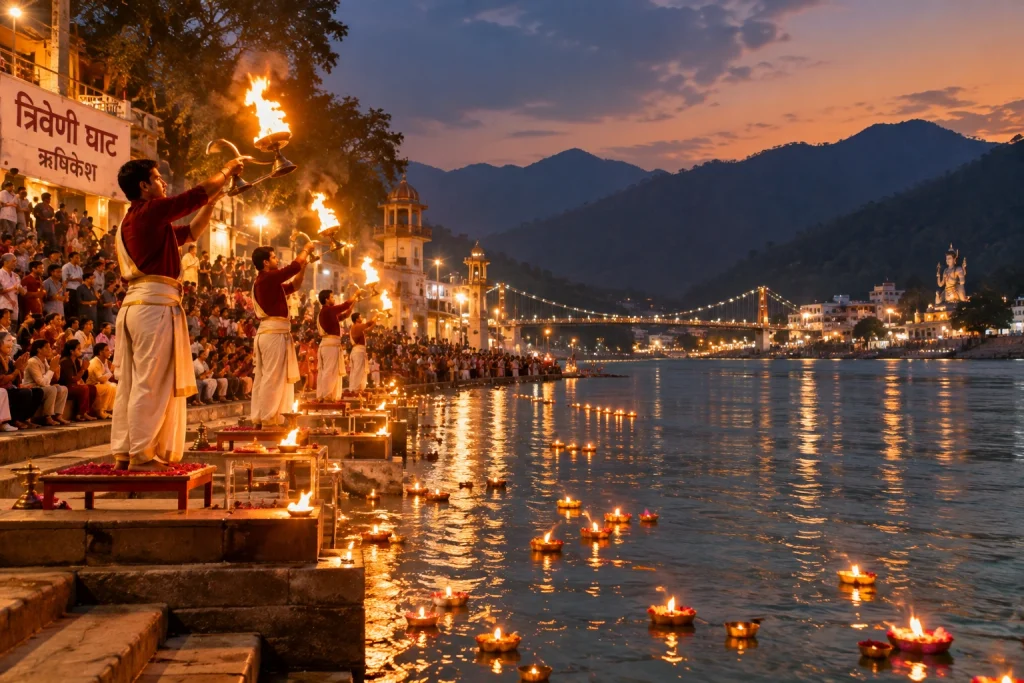
Tourist Places in Rishikesh: A Complete Guide to the Yoga Capital

Tourist Places in Rishikesh

Set along the banks of the Ganges where the Himalayan foothills begin, Rishikesh is a rare destination that manages to be spiritual, adventurous, and scenic all at once. Known worldwide as the Yoga Capital of the World, it draws seekers, backpackers, pilgrims, and adrenaline junkies in equal measure. Whether you’re here to meditate in an ashram, raft down river rapids, or simply watch the evening aarti by the water, the tourist places in Rishikesh offer something for every kind of traveller.

If you’re planning a trip, our Mussoorie, Rishikesh & Haridwar trip package covers the region comprehensively, but here’s a closer look at the tourist places in Rishikesh worth adding to your itinerary.

1. Laxman Jhula

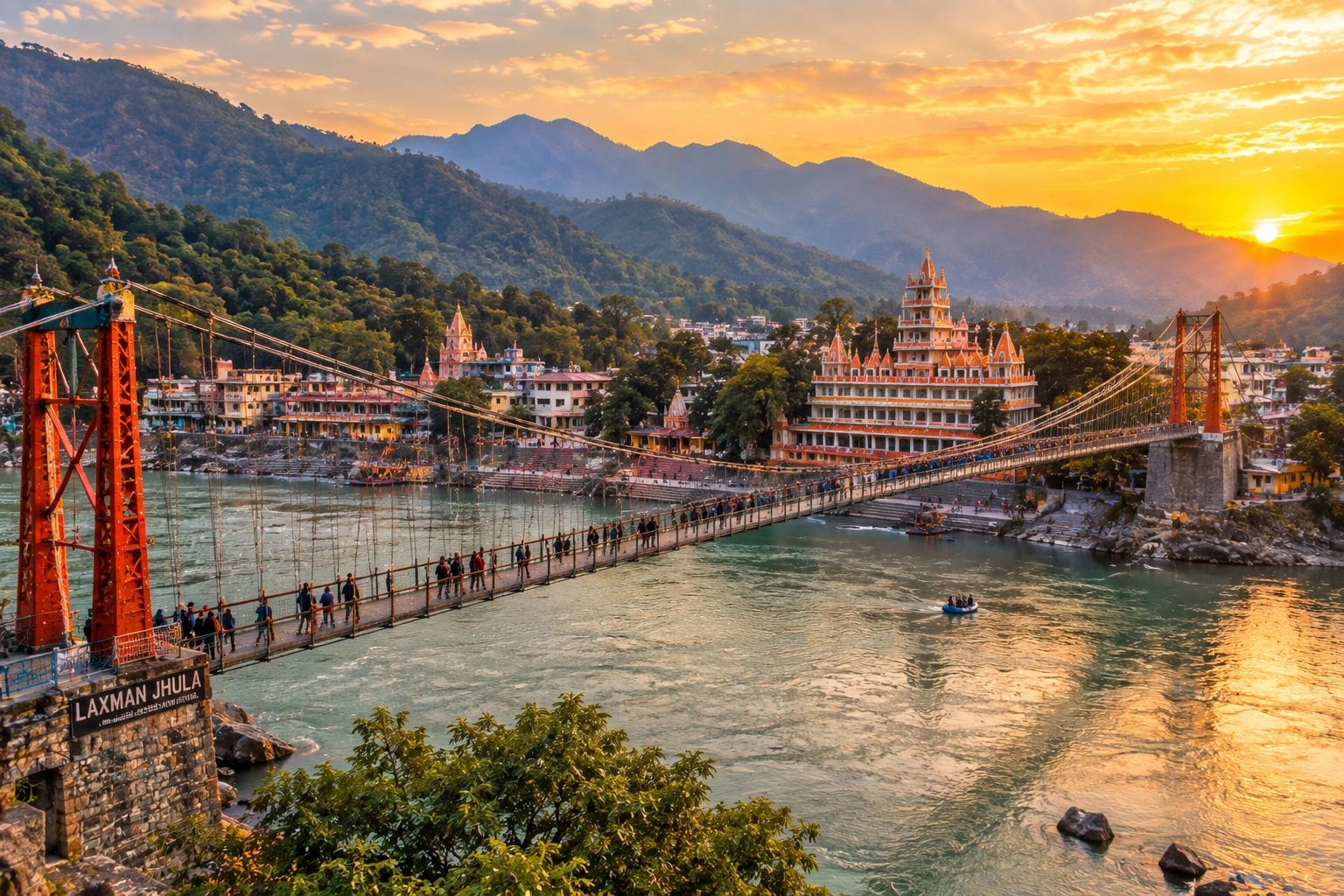
Perhaps the most recognisable of all tourist places in Rishikesh, Laxman Jhula is an iron suspension bridge stretching across the Ganges. According to legend, Lakshman crossed the river here using jute ropes, giving the bridge its name. Walking across it offers sweeping views of the river below, along with the temples and cafés lining both banks. The surrounding area is packed with small shops selling everything from rudraksha beads to handmade souvenirs, making it a great place to wander for an hour or two.

2. Ram Jhula

Slightly larger and less crowded than its counterpart, Ram Jhula connects Sivananda Nagar with Swarg Ashram and serves as a gateway to some of the city’s most important ashrams, including Geeta Bhavan and Parmarth Niketan. Many travellers come here at dusk simply to watch the sunset over the water and listen to temple bells drifting across the river.

3. Triveni Ghat

Triveni Ghat is the spiritual heart of the town and among the most visited tourist places in Rishikesh, best known for its evening Ganga Aarti. As the sun sets, priests perform the ritual with fire lamps while floating diyas drift downstream, creating one of the most memorable experiences among all the places to visit in Rishikesh. The ghat is believed to mark the confluence of the Ganges, Yamuna, and the mythical Saraswati, and is considered one of the most sacred bathing spots in the area.

4. The Beatles Ashram (Chaurasi Kutia)

Once the Maharishi Mahesh Yogi Ashram, this abandoned complex became world-famous after The Beatles stayed here in 1968 to study Transcendental Meditation. Today it’s a quietly atmospheric site filled with graffiti-covered meditation huts, murals, and forest trails, and remains one of the most unusual tourist places in Rishikesh. The Beatles Cathedral Gallery, with its psychedelic artwork, has become a popular stop for music fans and photographers alike.

5. Neelkanth Mahadev Temple

Located roughly 30 km from the main town, this hilltop temple is dedicated to Lord Shiva. Mythology holds that this is where Shiva consumed the poison churned from the cosmic ocean, turning his throat blue and earning him the name Neelkanth. The drive up is scenic, winding through forest and offering some of the most rewarding valley views in the region.

6. Kunjapuri Devi Temple

If you’re looking for the best Rishikesh view point, Kunjapuri is hard to beat. Perched at around 1,676 metres, this temple offers a stunning sunrise panorama that takes in the snow-capped peaks of Swargarohini, Bandarpunch, and Gangotri on one side, and the Doon Valley on the other. Most visitors make the early morning drive and short climb specifically to catch the sunrise from here.

7. Vashistha Gufa

This ancient meditation cave, located about 20 km from town along the Badrinath road, is where the sage Vashistha is believed to have meditated. The cave sits in a peaceful riverside setting, and the atmosphere inside is notably still and cool. It’s a favourite among those seeking quiet reflection, and one of the calmer tourist places in Rishikesh away from the busier ghats.

8. Parmarth Niketan

One of the largest ashrams in the region, Parmarth Niketan hosts a daily Ganga Aarti at its ghat that many consider even more elaborate than the one at Triveni Ghat. The ashram also offers yoga and meditation programmes, making it one of the few tourist places in Rishikesh where travellers often stay for days rather than hours.

9. Neer Garh Waterfall

Around 5 km from Laxman Jhula, this waterfall involves a short but pleasant trek through forest to reach. The cascading pools at the top are a refreshing spot during warmer months and a popular stop for couples and small groups looking for a break from the temples and ghats.

10. River Rafting at Shivpuri

No list of tourist places in Rishikesh would be complete without mentioning what put this town on the adventure map. The stretch from Shivpuri down to Rishikesh is one of India’s most popular white-water rafting routes, with rapids ranging from beginner-friendly to genuinely challenging. Certified operators run trips throughout the season, typically from September to June.

Planning Your Trip

Most of the tourist places in Rishikesh are clustered close enough together that you can cover several in a single day on foot or by short auto rides.

  • Best time to visit: February to May and September to November offer the most pleasant weather
  • Nearest airport: Jolly Grant Airport, Dehradun, approximately 20 km away
  • Nearest railway station: Rishikesh Railway Station, with Haridwar as a larger alternative
  • Ideal trip length: 2 to 4 days to comfortably cover the main attractions
  • Note: The town is a designated vegetarian and alcohol-free zone

For official travel advisories and verified attraction details, you can refer to the Uttarakhand Tourism Department, the state government’s official tourism portal.

If you’re planning to head further into the mountains afterward, our Chopta Tungnath Trek is a natural next step, taking you from the riverbanks up to the high Himalayan meadows.

Frequently Asked Question’s

  1. What are the top tourist places in Rishikesh?

    Laxman Jhula, Ram Jhula, Triveni Ghat, the Beatles Ashram, Neelkanth Mahadev Temple, and Kunjapuri Devi Temple are among the most visited spots.

  2. How many days are enough for a Rishikesh trip?

    Two to four days is generally sufficient to cover the main attractions, though those attending yoga or meditation programmes often stay longer.

  3. What is the best time to visit?

    February to May and September to November offer the most comfortable weather, with clear skies and moderate temperatures.

  4. Is Rishikesh good for adventure activities?

    Yes, it’s one of India’s leading destinations for white-water rafting, bungee jumping, cliff jumping, and camping along the Ganges.

  5. Which spot offers the best sunrise views?

    Kunjapuri Devi Temple is widely regarded as the best sunrise viewpoint, offering views of Himalayan peaks and the Doon Valley.

Top Coorg Tourist Places to Visit

coorg tourist places

Quick answer: Coorg (Kodagu) is a hill district in Karnataka, India, known for coffee plantations, misty peaks, waterfalls, and wildlife. Top Coorg tourist places include Abbey Falls, Raja’s Seat, Namdroling Monastery, Dubare Elephant Camp, and Talakaveri. The best time to visit Coorg is October through March.

Few destinations in South India pack as much variety into one region as Coorg. Officially known as Kodagu, this compact hill district in Karnataka sits at elevations between 900 and 1,750 meters, draped in coffee estates, spice gardens, dense forest, and a cultural identity unlike anywhere else in India. It’s the kind of place that draws first-time visitors for a weekend and keeps them coming back for years.

The challenge with planning a Coorg trip isn’t finding things to do — it’s choosing which places to visit in Coorg when the list keeps growing. This guide covers the most rewarding Coorg tourist places, from well-known viewpoints and waterfalls to quieter corners that most itineraries skip. You’ll also find practical advice on the best time to visit, how to get there, and what to expect on the ground.

Whether you’re planning three days or a full week, here’s everything you need to make the most of your time in the hills of Kodagu.

Top Coorg Tourist Places at a Glance

Before diving into the details, here’s a quick overview of the most popular Coorg sightseeing spots:

PlaceTypeBest For
Abbey FallsWaterfallNature, Photography
Raja’s SeatViewpointSunsets, Couples
Namdroling MonasteryReligious/CulturalArchitecture, Spirituality
Dubare Elephant CampWildlifeFamilies, Animal Lovers
TalakaveriPilgrimage/NatureTrekking, River Origin
Iruppu FallsWaterfall + TempleDay Trips
Madikeri FortHistoryHeritage, Culture
Pushpagiri Wildlife SanctuaryWildlifeBirding, Trekking
Tadiandamol PeakTrekkingAdventure, Views
Chelavara FallsWaterfallOff-beat, Photography

Places to Visit in Coorg: Detailed Guide

Abbey Falls — Coorg’s Most Photographed Waterfall

Located about 7 km from Madikeri town, Abbey Falls drops roughly 70 feet through a narrow gorge framed by coffee and spice plantations. A hanging bridge near the viewing platform adds to the experience. The waterfall is most impressive between July and October, when monsoon flow is at its peak. Even outside the monsoon, the surrounding greenery makes it one of the most scenic Coorg places to visit year-round.

Tip: Go early in the morning to avoid crowds. Entry requires a small fee, and the path from the parking area to the falls involves a short walk.

Raja’s Seat — Where the Kings Watched the Sunset

Raja’s Seat in Madikeri translates to “seat of the king” — and local tradition holds that the kings of Coorg chose this very spot to watch the sunset over the Western Ghats. The garden is well-maintained, with a toy train for children and a musical fountain that operates in the evenings. It’s one of the most easily accessible Coorg sightseeing spots and works well as a first stop when you arrive in Madikeri.

Namdroling Monastery — The Golden Temple of Coorg

The Namdroling Monastery in Bylakuppe is one of the largest Tibetan settlements in India and home to the famous Golden Temple, officially known as the Padmasambhava Buddhist Vihara. Three enormous golden statues — of Guru Padmasambhava, Buddha Amitayus, and Shakyamuni — dominate the main prayer hall. The monastery welcomes visitors and the surrounding Tibetan colony has its own cafes, shops, and monasteries worth exploring. Bylakuppe is about 35 km from Madikeri and makes for an easy half-day trip.

Dubare Elephant Camp — A Hands-On Wildlife Experience

Run jointly by the Karnataka Forest Department and Jungle Lodges & Resorts, Dubare Elephant Camp sits along the banks of the Cauvery River. Visitors can observe, feed, and bathe elephants under ranger supervision. Morning sessions (around 8–10 AM) are typically the most active. The camp also offers coracle rides on the Cauvery, which is particularly popular with families. Dubare is approximately 35 km from Madikeri and is best booked in advance, especially during peak season.

Talakaveri — The Sacred Source of the Cauvery River

Talakaveri, situated at an altitude of about 1,276 meters on the Brahmagiri Hills, is both a religious site and a trekking destination. According to Hindu tradition, the Cauvery River originates here from a sacred spring inside the main temple complex. A moderately challenging trek leads up to the Brahmagiri Peak, where views extend across the Western Ghats on clear days. The site is especially crowded during the Tula Sankramana festival in October, when the spring is said to overflow. For most other months, it’s relatively peaceful.

Madikeri Fort — History in the Heart of Coorg

Built originally in the 17th century and later renovated by Tipu Sultan and the British, Madikeri Fort now houses a museum, a church, and a small zoo within its walls. The fort’s architecture is a curious mix of Kodagu, Mysore, and British colonial styles. It’s not a large site, but it provides useful context for Coorg’s layered history and sits right in the center of Madikeri town — easy to include in any itinerary.

Iruppu Falls — Waterfall and Pilgrimage in One

Located near the Brahmagiri Wildlife Sanctuary, Iruppu Falls (also called Lakshmana Tirtha Falls) is both a scenic waterfall and a religious site associated with the Ramateertham Temple nearby. The falls are about 170 km from Mysore and close to the Nagarhole National Park boundary. A short trek through forest leads to the base of the falls, and the surrounding area offers good birdwatching opportunities.


Coorg Sightseeing Highlights You Shouldn’t Miss

If your time in Coorg is limited to two or three days, these are the non-negotiable Coorg sightseeing stops:

  • Harangi Dam — A large reservoir about 28 km from Madikeri, best visited during the monsoon when the dam gates are open
  • Omkareshwara Temple — An unusual temple in Madikeri town that blends Islamic and Gothic architectural styles, set beside a quiet pond
  • Coffee Estate Walk — Many resorts and homestays offer guided walks through working coffee estates, which is one of the most memorable Coorg experiences during harvest season (November to February)
  • Nisargadhama — A small island in the Cauvery River, accessible by a hanging bridge, featuring deer, peacocks, and bamboo groves

Kodagu Tourist Places Beyond the Mainstream

Most Coorg travel itineraries cover the same six or seven spots. These lesser-known Kodagu tourist places offer just as much reward with significantly fewer crowds.

Chelavara Falls

About 25 km from Madikeri near Ammathi, Chelavara Falls is one of those places that rewards travelers willing to take a short hike through coffee plantations. The waterfall isn’t as tall as Abbey Falls but the setting — with the Cauvery River running beneath and plantation canopy all around — is quieter and more immersive.

Mandalpatti Peak

Reachable by jeep from Abbey Falls Road, Mandalpatti is a highland plateau at roughly 1,400 meters that offers some of the most panoramic views in Coorg. On clear mornings, the clouds sit below the plateau, creating a sea of mist effect. The road is rough and jeep hire is mandatory, but the views make it one of the most photogenic Coorg places to visit for photography enthusiasts.

Pushpagiri Wildlife Sanctuary

Pushpagiri forms part of the Brahmagiri–Talakaveri–Pushpagiri mountain complex and is one of the least-visited protected areas in Kodagu. The sanctuary is home to sloth bears, leopards, lion-tailed macaques, and over 200 bird species. According to the Karnataka Forest Department, Pushpagiri is designated as part of the Brahmagiri–Nilgiris Elephant Reserve, making it ecologically significant beyond its tourism value.

Kakkabe and Padi Igguthappa Temple

Kakkabe is a small village at the base of Tadiandamol — Coorg’s highest peak at 1,748 meters — and makes an excellent base for trekking. The nearby Padi Igguthappa Temple is one of the most important Kodava shrines, dedicated to the rain deity Igguthappa. The temple’s architecture and the surrounding paddy fields give Kakkabe a distinctly local character rarely encountered on mainstream Coorg itineraries.


Best Time to Visit Coorg

places to visit in coorg

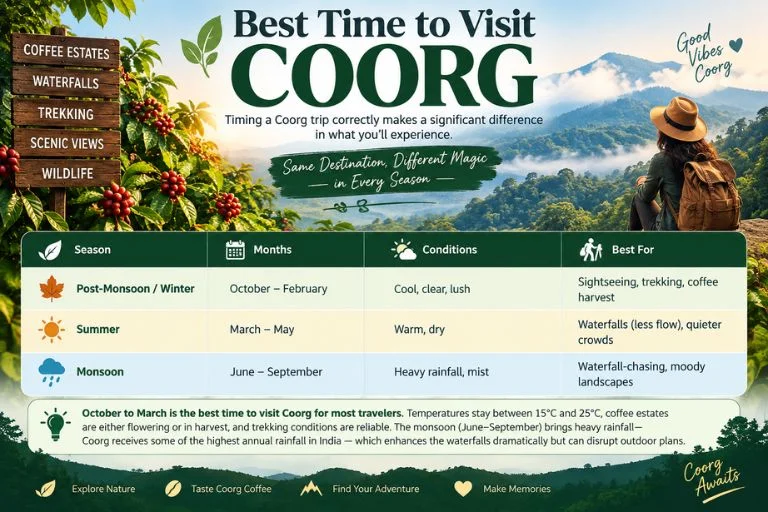
Timing a Coorg trip correctly makes a significant difference in what you’ll experience.

SeasonMonthsConditionsBest For
Post-Monsoon / WinterOctober – FebruaryCool, clear, lushSightseeing, trekking, coffee harvest
SummerMarch – MayWarm, dryWaterfalls (less flow), quieter crowds
MonsoonJune – SeptemberHeavy rainfall, mistWaterfall-chasing, moody landscapes

October to March is the best time to visit Coorg for most travelers. Temperatures stay between 15°C and 25°C, coffee estates are either flowering or in harvest, and trekking conditions are reliable. The monsoon (June–September) brings heavy rainfall — Coorg receives some of the highest annual rainfall in India — which enhances the waterfalls dramatically but can disrupt outdoor plans.


How to Reach Coorg

Coorg has no direct rail or air connectivity, so all access is by road.

ModeDetails
By AirMangalore Airport (135 km) and Mysore (120 km) are the nearest airports. Bangalore’s Kempegowda International Airport is approximately 265 km away.
By RailMysore Junction (120 km) is the most convenient railhead. From Mysore, frequent buses and taxis connect to Madikeri.
By RoadCoorg is well-connected by state highway from Bangalore (approx. 5–6 hours), Mysore (3 hours), and Mangalore (2.5 hours). KSRTC buses operate from all three cities.

Most travelers drive or take private taxis from Bangalore or Mysore. Within Coorg, renting a two-wheeler or hiring a local taxi is the most practical way to get between sightseeing spots, as distances between attractions can be significant.


Day Trips and Nearby Attractions

Coorg’s location in the Western Ghats puts several excellent day-trip destinations within reach.

  • Mysore (120 km): The Mysore Palace, Chamundi Hills, and Devaraja Market are all easily combined with a Coorg trip at either end of the journey
  • Nagarhole National Park (75 km from Madikeri): One of the best tiger reserves in South India, with excellent jeep safari infrastructure. Early morning safaris offer the highest chances of wildlife sightings
  • Wayanad, Kerala (80 km from Virajpet): The border between Coorg and Wayanad is porous, and many travelers cross over to visit Edakkal Caves or Chembra Peak

If you enjoy exploring hill destinations with a well-structured package, Explore Hills offers a Udaipur & Mount Abu Tour Package that brings a similar mix of heritage and hill scenery — worth considering if Rajasthan is on your radar for a future trip.


Travel Tips for Visiting Coorg

  • Book accommodation early: Coorg’s better homestays and resorts fill up fast from October to January, particularly on weekends. Book at least 4–6 weeks in advance for peak season.
  • Carry cash: ATM availability outside Madikeri town is limited, and many coffee estate homestays and smaller eateries don’t accept cards.
  • Hire a local driver: A local taxi driver who knows Coorg well will save significant time navigating between attractions. Uber and Ola coverage is unreliable outside Madikeri.
  • Pack for layering: Mornings and evenings can be significantly cooler than midday, especially between November and January. A light jacket is useful.
  • Respect wildlife sanctuary rules: Forest area covers a large portion of Kodagu. Stick to marked trails, carry out all waste, and avoid disturbing wildlife.
  • Try local Kodava food: Coorg’s cuisine is distinct from the rest of Karnataka. Pandi curry (pork), koli curry (chicken), and akki rotti are staples worth seeking out at local eateries.

Your Coorg Trip: What to Prioritize

With so many Coorg places to visit, it helps to have a simple framework for building your itinerary.

For a 2-day trip, focus on Madikeri town (Raja’s Seat, Fort, Omkareshwara Temple), Abbey Falls, and Dubare Elephant Camp.

For a 3–4 day trip, add Namdroling Monastery, Talakaveri, Mandalpatti Peak, and a coffee estate walk.

For 5+ days, explore Pushpagiri Wildlife Sanctuary, Kakkabe and Tadiandamol Trek, Iruppu Falls, and day trips to Nagarhole.

Coorg rewards slow travel. The more time you give it, the more it gives back — whether that’s a misty morning at Talakaveri, a coracle ride on the Cauvery, or a quiet afternoon on a coffee estate veranda watching the clouds roll in over the Western Ghats.


Frequently Asked Questions

What are the most popular Coorg tourist places for first-time visitors?

The most popular Coorg tourist places for first-time visitors are Abbey Falls, Raja’s Seat, Namdroling Monastery (Golden Temple) in Bylakuppe, Dubare Elephant Camp, and Talakaveri. These five cover the best combination of natural scenery, wildlife, and cultural heritage that Coorg has to offer.

How many days are enough to cover the main places to visit in Coorg?

Three to four days is enough to cover the main places to visit in Coorg comfortably. A two-day trip covers the Madikeri area highlights, while adding a third and fourth day allows for Bylakuppe, Talakaveri, and a trek or wildlife experience.

Is Coorg worth visiting during the monsoon season?

Yes, Coorg is worth visiting during the monsoon (June–September), especially if the goal is seeing waterfalls at peak flow or experiencing the dramatic mist-covered landscapes. However, outdoor treks become more challenging, some roads are prone to landslides, and leeches are common on forest trails. The post-monsoon months of October and November combine lush scenery with more stable conditions.

What is the best base for Coorg sightseeing?

Madikeri (also spelled Mercara) is the best base for Coorg sightseeing. As the district headquarters, Madikeri has the widest range of accommodation, restaurants, and transport options. For travelers focused on trekking or wildlife, Kakkabe (near Tadiandamol) or Virajpet are useful secondary bases.

Which Kodagu tourist places are best for families with children?

The best Kodagu tourist places for families with children include Dubare Elephant Camp (elephant interaction and coracle rides), Nisargadhama island (deer park and bamboo groves), Raja’s Seat (toy train and gardens), and Abbey Falls (short walk, scenic waterfall). All four are accessible and low on physical difficulty.

Is Coorg safe for solo travelers?

Coorg is generally considered safe for solo travelers, including solo women. The region is well-touristed, and most homestay and resort hosts are accustomed to independent travelers. Standard precautions apply, particularly on isolated forest trails where going with a guide or in a group is advisable.

What is Coorg known for besides tourism?

Coorg is known as the “Coffee Capital of India” — Kodagu district produces a significant portion of India’s total coffee output, according to the Coffee Board of India. The region is also known for its distinct Kodava community, with a warrior tradition, unique cuisine, and cultural festivals like Kailpodh and Kaveri Sankramana.

Best Places to Visit in Nainital for an Unforgettable Trip

places to visit in nainital

Quick answer: The best places to visit in Nainital include Naini Lake, Naina Devi Temple, Snow View Point, Tiffin Top, Naina Peak, The Mall Road, and Nainital Zoo. This hill station in Uttarakhand blends boating, mountain views, temples, and forest walks—perfect for families, couples, and solo travelers alike.

Nestled in the Kumaon foothills of Uttarakhand, Nainital wraps around a shimmering emerald lake ringed by seven hills. British settlers stumbled upon it in 1841, and it quickly became one of India’s most loved hill stations. Today, it draws travelers who want cool mountain air, colonial charm, and quiet nature—all in one place.

This guide walks you through the top places to visit in Nainital, along with practical details like entry fees, timings, and the best time to go. Whether you’re planning a weekend escape or a longer Himalayan holiday, you’ll find plenty here to fill your itinerary. If mountain adventures are calling, you can also pair your trip with one of the many Uttarakhand trips offered nearby.

Let’s explore what makes this Nainital Uttarakhand tourist places list worth your time.

Nainital sits at roughly 2,084 meters (6,837 feet) above sea level, which keeps summers pleasantly cool while the rest of the plains swelter. The town centers on Naini Lake, a pear-shaped body of water that gives the place its name and its soul.

What sets Nainital apart is variety. You get lake boating, ropeway rides, ancient temples, dense oak forests, and sweeping Himalayan viewpoints—all within a compact area. This mix makes it one of the most versatile Nainital tourist places for every kind of traveler.

What are the top places to visit in Nainital?

Here’s a quick snapshot of the must-see spots before we dig into the details.

PlaceBest ForEntry Fee (Approx.)
Naini LakeBoating, sunset views₹150–₹210 (boat ride)
Naina Devi TempleSpiritualityFree
Snow View PointHimalayan panoramas₹150 (ropeway)
Tiffin TopPhotography, picnicsFree
Naina PeakTrekking, viewpointsFree
The Mall RoadShopping, diningFree
Nainital ZooFamilies, wildlife₹50–₹100

1. Naini Lake

Naini Lake is the heart of the town and the first stop on any list of nainital famous places. Rent a colorful pedal or rowing boat and drift across the calm water while the surrounding hills reflect off the surface. Early morning and late evening are the best times, when the light turns golden and the crowds thin out.

The lake also anchors most other attractions, so you’ll likely pass it several times during your stay.

2. Naina Devi Temple

Perched on the northern shore of the lake, Naina Devi Temple is one of the 51 Shakti Peethas in India. Devotees believe the eyes of Goddess Sati fell here, giving the town its name (“naina” means eyes). The temple’s peaceful setting and lake views make it worth a visit even if you’re not religious.

3. Snow View Point

Reachable by a short aerial ropeway from Mallital, Snow View Point sits at around 2,270 meters. On a clear day, you can spot Himalayan giants like Nanda Devi and Trishul in the distance. The ropeway ride itself is a highlight, offering aerial views of the town and lake below.

4. Tiffin Top (Dorothy’s Seat)

Named after an English artist, Tiffin Top is a rocky outcrop offering 360-degree views of Nainital and the surrounding valleys. You can hike, ride a pony, or drive part of the way. It’s a favorite spot for picnics, photography, and quiet moments away from the bustle.

5. Naina Peak (China Peak)

At 2,615 meters, Naina Peak is the highest point in Nainital. The trek to the top takes you through rhododendron and oak forests and rewards you with panoramic views of the Himalayas on clear days. It’s a solid pick for anyone who enjoys light trekking.

6. The Mall Road

The Mall Road runs along the eastern edge of Naini Lake and serves as the town’s social hub. Lined with shops, cafés, hotels, and street vendors, it’s the place to shop for woolens, candles, and local handicrafts. Evenings here are lively, with lake views on one side and bustling stores on the other.

7. Nainital Zoo (Pt. G.B. Pant High Altitude Zoo)

This high-altitude zoo is home to species like the snow leopard, Himalayan black bear, and Tibetan wolf. Set on a hillside, it involves a bit of a climb but offers a rewarding look at rare mountain wildlife. It’s especially popular with families traveling with children.

Which lesser-known Nainital tourist places are worth visiting?

Beyond the headline attractions, Nainital hides several quieter gems that reward curious travelers.

PlaceHighlight
BhimtalLarger lake with an island aquarium
SattalCluster of seven interconnected lakes
NaukuchiatalNine-cornered lake, great for birdwatching
PangotBirding paradise with forest trails
KilburyDense forest and rare Himalayan birds

Bhimtal

Just 22 km from Nainital, Bhimtal is bigger and less crowded than Naini Lake. Its central island houses an aquarium, and boating here feels more relaxed. It’s an easy day trip if you want a break from the main town.

Sattal

Sattal, meaning “seven lakes,” is a serene cluster surrounded by oak and pine forests. It’s popular among birdwatchers and nature lovers, and the interconnected lakes create a tranquil setting that feels worlds away from the tourist crowds.

Naukuchiatal

Known as the “lake of nine corners,” Naukuchiatal is the deepest lake in the Nainital region. Legend says anyone who sees all nine corners in a single glance attains enlightenment. Beyond folklore, it’s a peaceful spot for kayaking and paddle boating.

What is the best time to visit Nainital?

The best time to visit depends on what you’re after. Here’s a simple breakdown.

SeasonMonthsWhat to Expect
SummerMarch–JunePleasant weather, peak tourist season
MonsoonJuly–SeptemberLush greenery, occasional landslides
WinterOctober–FebruaryCold, chance of snowfall, fewer crowds

Choose summer if you want warm days ideal for boating and sightseeing—this is when Nainital is busiest. Choose winter if you prefer quiet streets and the possibility of snow, though you’ll need warm layers. Monsoon brings the greenest views but comes with the risk of slippery roads, so plan travel carefully.

How do you reach Nainital?

reaching nainital tourist places

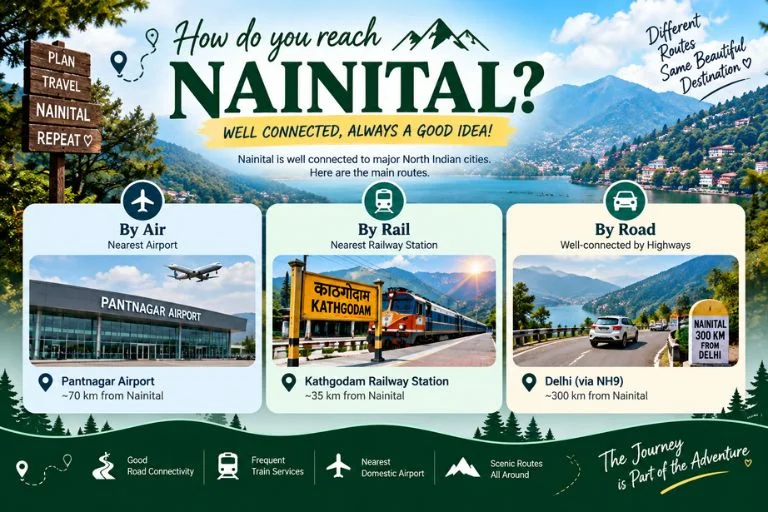
Nainital is well connected to major North Indian cities. Here are the main routes.

ModeNearest HubDistance to Nainital
AirPantnagar Airport~70 km
RailKathgodam Railway Station~35 km
RoadDelhi (via NH9)~300 km

From Kathgodam, shared taxis and buses run regularly to Nainital. If you’re driving from Delhi, the journey takes around 7 to 8 hours and offers scenic hill views as you climb.

How many days do you need in Nainital?

Two to three days is enough to cover the main Nainital tourist places comfortably. A quick weekend trip lets you tick off Naini Lake, the temples, and the major viewpoints. Add an extra day or two if you want to explore Bhimtal, Sattal, and the quieter surrounding lakes without rushing.

If you’d like help building a full itinerary that combines Nainital with nearby Himalayan destinations, the local experts at Explore Hills can craft a customized plan for you.

Tips for making the most of your Nainital trip

A little planning goes a long way. Keep these pointers in mind before you set off:

  • Book accommodation early during summer and long weekends, when hotels fill up fast.
  • Carry cash for boat rides, small shops, and pony fees, as not every vendor accepts cards.
  • Wear comfortable shoes, since several attractions involve walking or light climbing.
  • Respect local customs, especially at temples—remove footwear and dress modestly.
  • Start early to beat the crowds at popular spots like Snow View Point and the Mall Road.

For safety updates on hill roads and weather advisories, it helps to check official resources like Uttarakhand Tourism before you travel.

Plan your Nainital getaway

Nainital packs a remarkable range of experiences into one small hill town—glassy lakes, sacred temples, forest trails, and viewpoints that stretch all the way to the snow-capped Himalayas. Whether you come for a lazy boating weekend or an action-packed few days of viewpoints and treks, the town delivers.

Use this guide to shortlist the places that excite you most, then build an itinerary around your travel style and time. And if you’d rather have experts handle the details, reach out to Explore Hills to turn your Nainital plans into a smooth, memorable trip.

Frequently Asked Questions

What is Nainital famous for?

Nainital is famous for Naini Lake, its scenic boating experiences, the Naina Devi Temple, and colonial-era charm. It’s one of Uttarakhand’s most popular hill stations, known for cool weather, Himalayan viewpoints, and lively markets like the Mall Road.

Is Nainital worth visiting?

Yes. Nainital offers a rare mix of lake activities, temples, forest walks, and mountain views in a compact area. It suits families, couples, and solo travelers, making it one of the most versatile Nainital Uttarakhand tourist places.

What is the best time to visit Nainital for snowfall?

For snowfall, visit between late December and February. Winter brings cold temperatures and occasional snow, especially at higher points like Snow View Point and Naina Peak. Pack heavy woolens and check road conditions before traveling.

How many days are enough for a Nainital trip?

Two to three days are enough to cover the main attractions like Naini Lake, Naina Devi Temple, and the key viewpoints. Add an extra day or two if you want to explore nearby lakes such as Bhimtal, Sattal, and Naukuchiatal.

Which are the must-visit places in Nainital for families?

Families should prioritize Naini Lake boating, the Nainital Zoo, Snow View Point via ropeway, and the Mall Road. These spots are easy to access, safe, and enjoyable for both children and adults.

Best Places to Visit in Ooty for an Unforgettable Trip

Places to Visit in Ooty

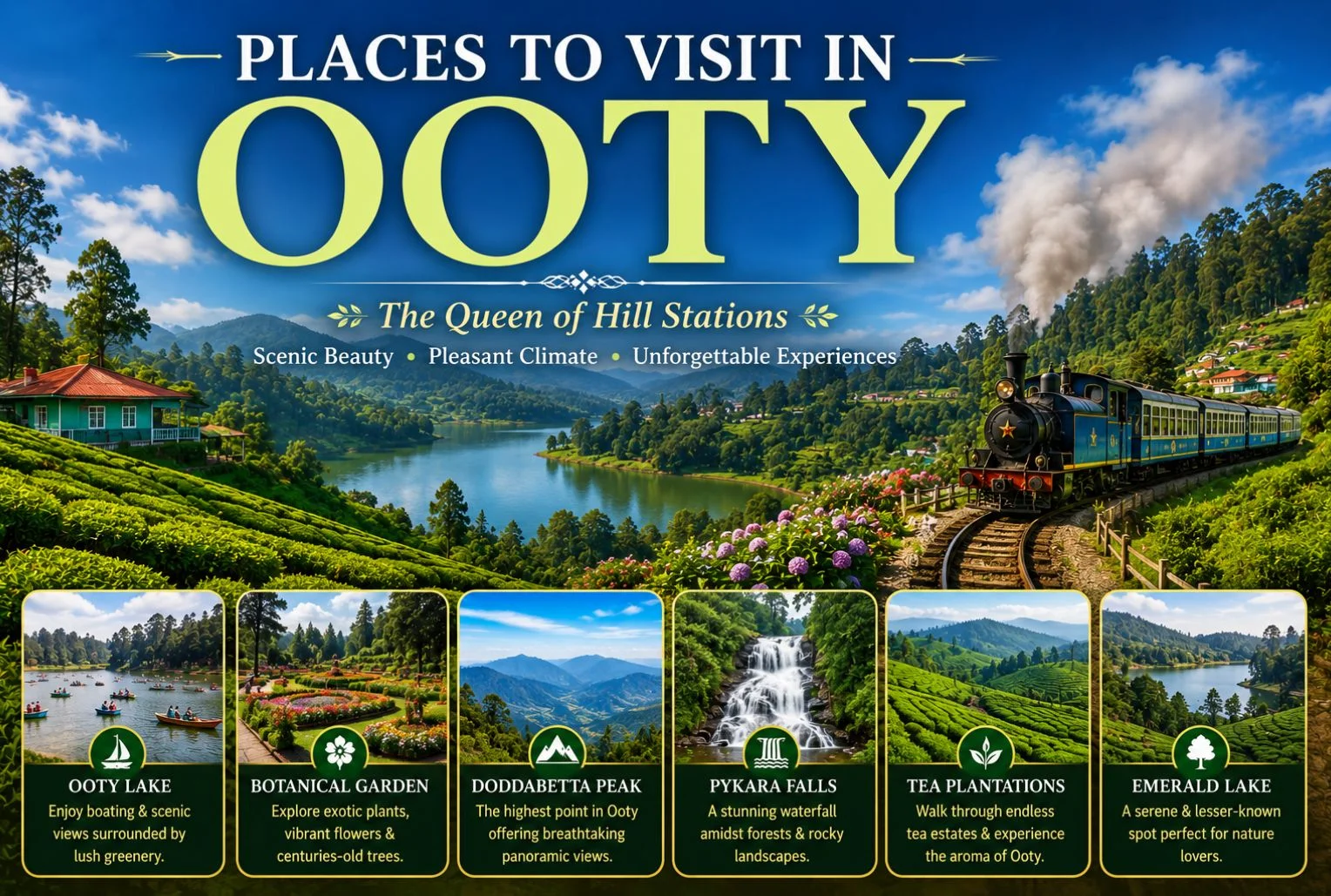
Quick answer: The best places to visit in Ooty include Ooty Lake, the Government Botanical Garden, Doddabetta Peak, Nilgiri Mountain Railway, and Emerald Lake. Ooty’s top tourist spots blend colonial charm, tea gardens, misty viewpoints, and boating lakes—perfect for families, couples, and nature lovers alike.

Perched in the Nilgiri Hills of Tamil Nadu, Ooty (officially Udhagamandalam) has earned its title as the “Queen of Hill Stations.” Rolling tea estates, cool weather, and colonial-era charm draw millions of travelers here every year. But with so much to see, planning your itinerary can feel overwhelming.

That’s where this guide comes in. Below, you’ll find the best places to visit in Ooty, along with practical details like Ooty Lake timings, the top Ooty view points, and ideas for families and couples. Whether you’re chasing quiet mountain sunrises or bustling markets, this list covers the must-sees.

By the end, you’ll have a clear picture of how to spend your days in Ooty—and where to go next. Let’s dive in.

What are the top places to visit in Ooty?

Ooty packs a surprising number of attractions into a compact hill station. Here’s a quick snapshot of the top Ooty tourist places before we explore each in detail.

PlaceBest ForHighlight
Ooty LakeFamilies, couplesBoating and paddle rides
Government Botanical GardenNature lovers650+ plant species
Doddabetta PeakPhotographersHighest point in the Nilgiris
Nilgiri Mountain RailwayFamilies, heritage fansUNESCO-listed toy train
Rose GardenCouples20,000+ rose varieties
Emerald LakePeace seekersQuiet, offbeat scenery
Pykara Lake & FallsDay trippersWaterfalls and boating
Tea Museum & FactoryFirst-timersLive tea processing

Which Ooty tourist places are must-sees?

If you only have a day or two, these Ooty places deserve top priority.

Government Botanical Garden

Spread across 55 acres, the Government Botanical Garden is one of Ooty’s most-loved attractions. It’s home to over 650 species of plants, trees, and ferns, including a fossilized tree trunk believed to be around 20 million years old. The terraced lawns make it a favorite for morning strolls and family picnics.

Nilgiri Mountain Railway

The Nilgiri Mountain Railway, a UNESCO World Heritage Site, is one of the most memorable ways to experience the hills. This iconic “toy train” chugs through tunnels, over bridges, and past tea gardens between Mettupalayam and Ooty. Book the Ooty–Coonoor stretch for the best views in a shorter ride.

Rose Garden

The Government Rose Garden holds one of the largest collections of roses in India, with more than 20,000 varieties in bloom. Set on a gentle slope, it offers sweeping views of Ooty town. Visit between May and June to see the flowers at their peak.

Tea Museum and Factory

Ooty and tea go hand in hand. At the Tea Museum, you can watch the full process—from plucking to packaging—and sample fresh Nilgiri brews. It’s a great first stop to understand the region’s history and culture.

What are the best Ooty view points?

Ooty’s viewpoints reward you with sweeping vistas of the Nilgiris. Here are the best Ooty view point options for photographers and sunrise chasers.

Doddabetta Peak

At 2,637 meters, Doddabetta is the highest peak in the Nilgiri range and the top Ooty view point overall. On a clear day, the telescope house at the summit lets you gaze across the surrounding valleys and plains. Arrive early to beat the crowds and the afternoon mist.

Dolphin’s Nose

Located near Coonoor, Dolphin’s Nose is a rock formation offering dramatic views of deep valleys and the distant Catherine Falls. The lookout is named for its shape, which resembles a dolphin’s snout.

Needle View Point

Also near Coonoor, Needle View Point (Lamb’s Rock) gives you panoramic views of the plains below and the tea-covered slopes. It’s a quieter alternative to Doddabetta for those seeking calm.

What are the Ooty Lake timings and boating hours?

Ooty Lake is the beating heart of the town and one of the most popular places to visit in Ooty. This artificial lake, built in 1824, is famous for its boat rides framed by eucalyptus trees.

Here are the current Ooty Lake timings:

ActivityTiming
Lake entry9:00 AM – 6:00 PM daily
Boating9:00 AM – 5:30 PM daily

Rowboats, paddle boats, and motorboats are all available. Weekends and holidays can get busy, so mornings are the best time for a relaxed ride. A children’s park and pony rides nearby make it especially fun for families.

What are the best Ooty places for families and couples?

Ooty suits every kind of traveler. Here’s how to plan based on who you’re with.

Best Ooty places for families

  • Ooty Lake: Boating, toy train rides, and a children’s park keep kids entertained.
  • Thread Garden: A unique indoor attraction featuring flowers made entirely from thread—no machines used.
  • Deer Park: One of the highest-altitude zoos in India, great for spotting spotted deer and other wildlife.
  • Wax World: Fun, quirky wax statues that appeal to all ages.

Best Ooty places for couples

  • Rose Garden: Romantic walks among thousands of blooms.
  • Emerald Lake: A tranquil, offbeat spot away from the crowds, perfect for quiet time together.
  • Pykara Lake: Serene boating surrounded by forests and grasslands.
  • Sim’s Park (Coonoor): A lush, peaceful garden ideal for slow afternoons.

Which nearby attractions make good day trips from Ooty?

If you have extra time, several nearby spots make for excellent day trips.

  • Coonoor: Just 19 km away, this smaller hill town offers tea estates, Sim’s Park, and viewpoints like Dolphin’s Nose.
  • Pykara: Around 20 km from Ooty, Pykara Lake and Pykara Falls are known for their calm boating and cascading water.
  • Avalanche Lake: A pristine, less-crowded spot roughly 28 km away, popular for its natural beauty and trout fishing.
  • Mudumalai National Park: About 65 km away, this wildlife sanctuary is home to elephants, tigers, and deer.

For those who love mountain trails and cooler climates, Ooty can also spark a bigger appetite for hill adventures. If you’re drawn to trekking and high-altitude escapes, explore the guided weekend trips and popular treks offered by Explore Hills.

When is the best time to visit Ooty?

Ooty is a year-round destination, but the experience changes with the seasons.

SeasonMonthsWhat to Expect
SummerApril – JunePleasant weather, peak tourist season, ideal for sightseeing
MonsoonJuly – SeptemberLush greenery, misty views, fewer crowds
WinterOctober – MarchCool and crisp, great for viewpoints and gardens

Summer is the most popular time, especially for families escaping the heat of the plains. If you prefer quiet and don’t mind the rain, the monsoon paints the hills a vivid green. For detailed travel information, you can also check the official Tamil Nadu Tourism page for Ooty.

Start planning your Ooty adventure

From misty viewpoints to serene boating lakes, the places to visit in Ooty offer something for every kind of traveler. Prioritize Ooty Lake, Doddabetta Peak, and the Nilgiri Mountain Railway, then fill your days with gardens, tea estates, and easy day trips to Coonoor and Pykara.

If the mountains have you hooked, take it further. Explore Hills offers guided treks, weekend getaways, and scenic mountain trips designed for every fitness level. Browse the travel packages at Explore Hills and start planning your next hill escape today.

Frequently Asked Questions

How many days are enough to explore Ooty?

Two to three days are enough to cover the main places to visit in Ooty, including Ooty Lake, the Botanical Garden, Doddabetta Peak, and a ride on the Nilgiri Mountain Railway. Add an extra day if you want to explore Coonoor or Pykara.

What are the Ooty Lake timings?

Ooty Lake is open daily from 9:00 AM to 6:00 PM. Boating operates from 9:00 AM to 5:30 PM. Mornings are the best time to avoid crowds, especially on weekends.

What is the best time to visit Ooty?

The best time to visit Ooty is between April and June for pleasant summer weather. October to March is ideal for cool, clear days, while the monsoon (July to September) offers lush greenery and fewer tourists.

Which is the highest Ooty view point?

Doddabetta Peak, at 2,637 meters, is the highest Ooty view point and the tallest peak in the Nilgiri range. It offers panoramic views of the surrounding valleys, plus a telescope house at the summit.

Is Ooty good for a family trip?

Yes. Ooty is one of the most family-friendly hill stations in South India. Attractions like Ooty Lake, the Botanical Garden, Thread Garden, and the toy train appeal to travelers of all ages.

How do I reach Ooty?

The nearest airport is Coimbatore (about 88 km away), and the nearest major railway station is Mettupalayam, connected to Ooty via the scenic Nilgiri Mountain Railway. Ooty is also well connected by road from Bangalore, Coimbatore, and Mysore.

Adiyogi: The World’s Largest Bust Sculpture Dedicated to Shiva

Adiyogi

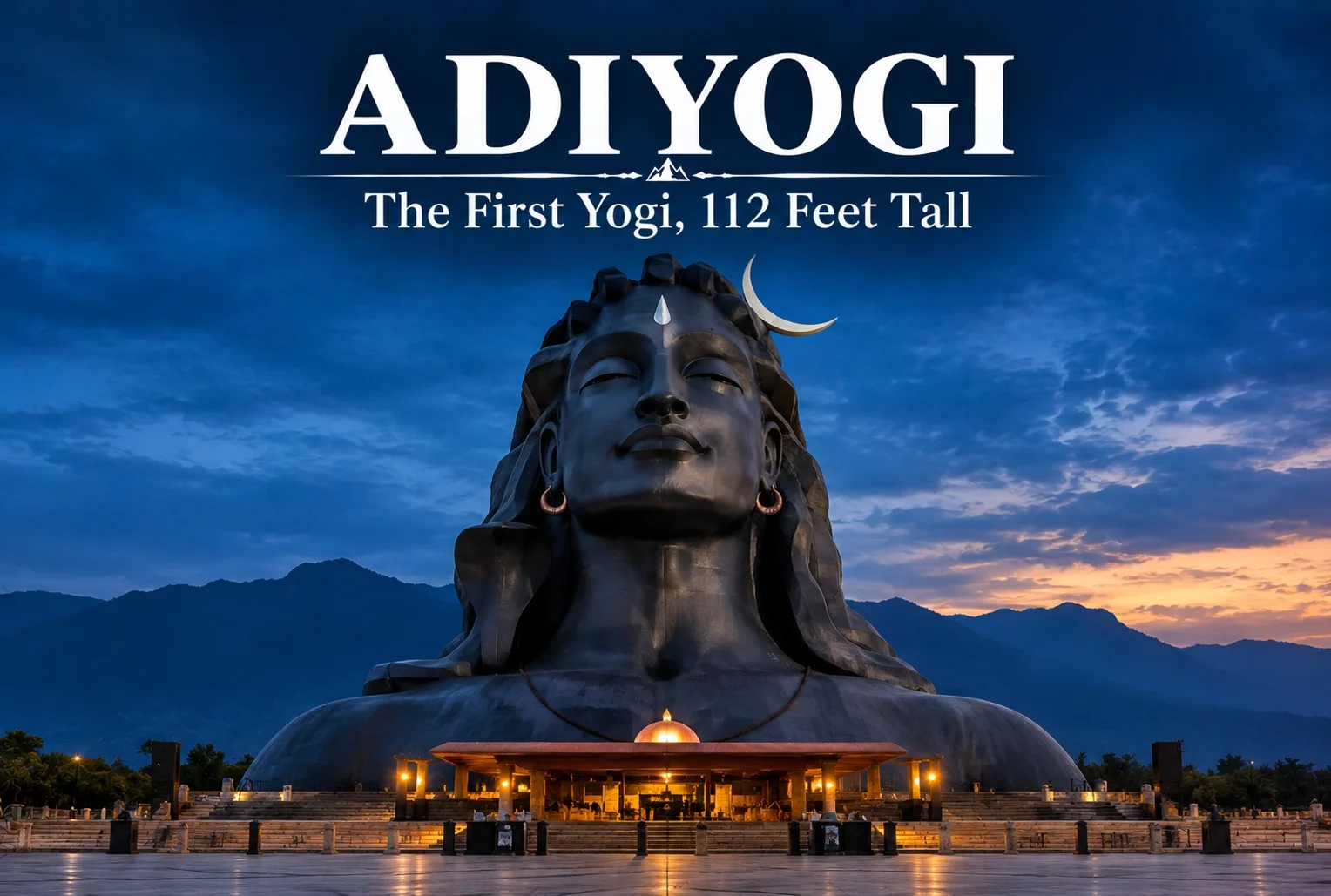
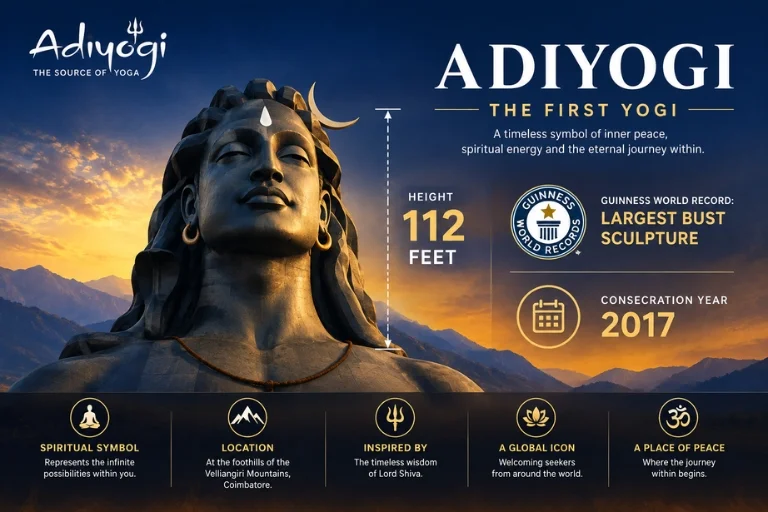
At 112 feet tall, there’s a face carved into the landscape near Coimbatore that’s visible from kilometers away — and once you’re standing beneath it, the scale genuinely stops most visitors mid-sentence. This is Adiyogi, and it’s become one of South India’s most recognized modern spiritual landmarks in a remarkably short span of time.

What Is the Adiyogi Statue?

The Adiyogi statue is a massive bust depicting Lord Shiva as the “first yogi” — the primordial source of yogic wisdom in Indian tradition. Built at the Isha Yoga Center in Coimbatore, Tamil Nadu, the statue was consecrated in 2017 and stands at 112 feet, a height deliberately chosen to represent the 112 methods of self-transformation described in yogic scripture. It’s constructed from steel and holds the Guinness World Record for the largest bust sculpture in the world.

The Adiyogi Temple Complex

Surrounding the statue is the Adiyogi temple complex, which includes the Dhyanalinga, a meditative shrine considered one of the most powerful energy spaces at the Isha center, along with several other consecrated spaces designed for meditation and yogic practice. Unlike a conventional temple built around ritual worship, this space is designed primarily around meditation and stillness, drawing visitors who come specifically to sit and experience the space rather than perform traditional puja.

Adiyogi—The First Yogi

Why 112 Feet? The Significance Behind the Number

The height isn’t arbitrary. In yogic tradition, the number 112 represents the total pathways available for a human being to transcend physical limitations, according to teachings associated with the Isha Foundation. The statue’s face is also intentionally designed to be visible from a significant distance, symbolizing Shiva’s watchful presence over the surrounding Velliangiri foothills.

Best Time to Visit

The site is open year-round, though the most comfortable months to visit fall between October and February, when Coimbatore’s weather is noticeably cooler than the peak summer months of April and May. Evenings are particularly popular, since the statue is illuminated after dark and hosts a light-and-sound show that draws large crowds, especially around Maha Shivaratri, when the site sees its highest footfall of the year.

How to Reach

Coimbatore International Airport is the nearest airport, roughly 30 km from the Isha Yoga Center, and Coimbatore Junction serves as the primary railway station for visitors arriving by train. From either point, the center is easily reached by taxi or local transport. For travelers whose Himalayan pilgrimage circuit already includes other major Shiva shrines, Explore Hills’ Kedarnath Yatra offers a very different but equally significant Shiva pilgrimage experience in the high Himalayas, and the Panch Kedar Trek covers all five sacred Kedar shrines in one extended journey.

For official tourism information and travel advisories for the Coimbatore region, you can refer to the Tamil Nadu Tourism Department, the state government body overseeing tourist infrastructure in the area.

Conclusion

Adiyogi isn’t an ancient monument, but it’s already carved out a permanent place among India’s most striking spiritual landmarks. Between the sheer scale of the statue, the symbolism packed into its design, and the surrounding meditative spaces, it’s a site that manages to feel both modern and deeply rooted in tradition at the same time.

Frequently Asked Questions

What is the height of the Adiyogi statue?

The Adiyogi statue stands at 112 feet, a height chosen to represent the 112 methods of transformation described in yogic tradition.

Where is the Adiyogi temple located?

It is located at the Isha Yoga Center in Coimbatore, Tamil Nadu, at the foothills of the Velliangiri mountains.

When was the Adiyogi statue consecrated?

The statue was consecrated in 2017 and has since become a recognized Guinness World Record holder for the largest bust sculpture globally.

What is the best time to visit the Adiyogi statue?

October to February is considered the most comfortable period, thanks to cooler weather compared to the peak summer months.

18 Best Places to Visit in Kodaikanal for Your Next Trip

places to visit in kodaikanal

Quick answer: The best places to visit in Kodaikanal include Kodaikanal Lake, Coaker’s Walk, Bryant Park, Pillar Rocks, Silver Cascade Falls, and Guna Caves. Together they cover the hill station’s lakes, viewpoints, gardens, and forest trails—giving you a full mix of things to do in Kodaikanal across two or three days.

Planning a trip to Kodaikanal and not sure where to start? It’s a common situation. The hill station is packed with lakes, viewpoints, waterfalls, and gardens, and the list of options can feel overwhelming when you only have a few days.

This guide fixes that. Below you’ll find the best places to visit in Kodaikanal, grouped so you can plan your route without backtracking across the hills. You’ll get a clear sense of what each spot offers, who it suits, and how it fits into a short or longer trip.

Kodaikanal sits in the Palani Hills of Tamil Nadu and is one of South India’s most loved summer escapes. If you enjoy exploring India’s hills, you might also want to browse our collection of best treks in India for your next adventure. The cool weather, misty mornings, and pine forests make it a favorite for families, couples, and solo travelers alike. Whether you want quiet walks or lively markets, there’s room for both here.

Let’s walk through the Kodaikanal tourist places worth your time.

What are the top places to visit in Kodaikanal?

If you only have limited time, start with the central attractions. Most sit close to the town center, so you can cover several in a single day.

Kodaikanal Lake

Kodaikanal Lake is the heart of the town and usually the first stop for most visitors. This star-shaped lake is surrounded by walking paths and shaded trees, making it easy to spend a relaxed morning here.

You can rent a pedal boat or rowboat, hire a cycle to ride around the perimeter, or simply sit by the water. Families with children love it because there’s plenty of space to move and no rush.

Pro Tip: Visit early in the morning when the mist still hangs over the water and the crowds haven’t arrived yet.

Coaker’s Walk

Coaker’s Walk is a paved pedestrian path that hugs the edge of a steep slope. On clear days, you get sweeping views of the valley below and, sometimes, a rare optical phenomenon called Brocken spectre.

The walk is short and gentle, which makes it good for older travelers and kids. There’s a small telescope house along the way if you want a closer look at the surrounding hills.

Bryant Park

Right next to Kodaikanal Lake, Bryant Park is a landscaped botanical garden filled with flowering plants, trees, and seasonal blooms. It’s a calm, easy stop that pairs well with a lake visit.

The park hosts a flower show during summer, drawing crowds of families and photographers. If you enjoy gardens or just want a slow afternoon, this is a comfortable place to unwind.

Which Kodaikanal view points are worth the trip?

Half the appeal of any hill station is the view. Kodaikanal view points range from easy roadside stops to spots that need a short drive out of town. Here are the ones worth planning around. If you’re drawn to dramatic Himalayan vistas, you might also enjoy our guide to the best autumn treks in India for a completely different kind of viewpoint experience.

Pillar Rocks

Pillar Rocks is a set of three giant granite boulders standing side by side. The viewpoint gives you a dramatic look at the rock faces, often wrapped in mist that rolls in and out within minutes.

There’s a small garden near the viewing area, so you can pause and take photos without feeling rushed. Go on a clear day for the best chance of an open view.

Dolphin’s Nose

Dolphin’s Nose is a flat rock that juts out over a deep valley, shaped a little like a dolphin’s snout. Reaching it takes a short trek downhill, so wear proper shoes.

The reward is one of the most striking views in the region. This spot suits travelers who don’t mind a bit of walking in exchange for a quieter, less crowded outlook.

Green Valley View (Suicide Point)

Green Valley View overlooks a deep gorge and the Vaigai Dam in the distance. The name comes from the sheer drop, but the fenced viewing area keeps things safe.

It’s an easy stop by car, which makes it good for families and anyone short on time. Small stalls nearby sell snacks and hot corn, handy on a chilly day.

Moir Point

Moir Point marks the start of the road into the deeper forests around Kodaikanal. It’s a calm viewpoint with fewer crowds, named after a British engineer who helped build local roads.

If you’re driving toward Berijam Lake, this is a natural place to stop and stretch your legs.

What are the best waterfalls and natural spots in Kodaikanal?

Waterfalls, caves, and forests make up some of the most memorable things to do in Kodaikanal. These spots reward travelers who want more than a town stroll. If forest trails and mountain nature have caught your attention, take a look at our top monsoon treks in India for more ideas on experiencing India’s wild side.

Silver Cascade Falls

Silver Cascade Falls is a roadside waterfall you’ll likely pass on your way into Kodaikanal. The water drops from a good height, and the spot is easy to reach without any walking.

It gets busy, especially on weekends, but it’s a quick and worthwhile stop. Keep your belongings safe and watch your step on the wet rocks.

Bear Shola Falls

Bear Shola Falls sits within a reserve forest a short distance from the town center. The falls are seasonal, so they’re fullest during and just after the monsoon.

The surrounding shola forest is quiet and shaded, making it a pleasant walk for nature lovers. It’s a good escape from the busier central attractions.

Guna Caves

Guna Caves, also known as Devil’s Kitchen, is a network of deep rock crevices surrounded by dense pine forest. The caves became famous after appearing in a popular Tamil film.

For safety, the deep sections are fenced off, but the viewing area and the surrounding forest are worth the visit. The tall pine trees here are a photographer’s favorite.

Pine Forest

The Kodaikanal Pine Forest is a thick plantation of towering pine trees planted in neat rows. Walking through it feels calm and cool, with soft light filtering through the canopy.

It’s a favorite for photos and a popular film shooting location. Plan a short stop here on your way to or from Pillar Rocks.

What are the quieter, offbeat places to visit in Kodaikanal?

The main attractions are worth every minute, but Kodaikanal rewards travelers who go a little further. These spots trade convenience for calm.

Berijam Lake

Berijam Lake is a pristine reservoir set deep in a reserve forest, about an hour’s drive from town. The area is protected, so you’ll need a permit to enter, arranged through the forest department.

The drive is scenic, passing through dense woods where you might spot bison or deer. If you want untouched nature over crowds, this is the trip to make.

Kurinji Andavar Temple

Kurinji Andavar Temple is dedicated to Lord Murugan and named after the Kurinji flower, which blooms only once every twelve years. The temple sits on a hilltop with wide views of the surrounding valleys.

It’s a peaceful stop that combines a bit of local culture with a good vantage point. The setting suits travelers who like a slower, reflective pace. If sacred mountain journeys interest you, our guide to the Kedarnath sacred Himalayan shrine is worth a read.

Mannavanur Lake

Mannavanur Lake lies near a small village around 35 kilometers from Kodaikanal. The area is known for its sheep farm, rolling grasslands, and quiet lakeside setting.

It’s an offbeat pick for travelers who want fewer tourists and a taste of village life. Pack a picnic and give yourself unhurried time here.

What are the best things to do in Kodaikanal beyond sightseeing?

things to do in kodaikanal

Kodaikanal isn’t only about viewpoints. A few simple activities can round out your trip and give you a real feel for the place.

  • Boating on Kodaikanal Lake: Rent a pedal boat or rowboat and take in the town from the water. It’s a relaxed, family-friendly way to spend an hour.
  • Cycling around the lake: Hire a bicycle near the boathouse and ride the loop around Kodaikanal Lake at your own pace.
  • Horse riding: Guided pony rides are available near the lake, popular with kids and first-time visitors.
  • Shopping for homemade chocolates: Kodaikanal is known for its handmade chocolates. Pick up a box from the local shops as a treat or a gift.
  • Trying local eucalyptus and homemade products: The markets sell eucalyptus oil, plum jams, and cheeses made by the local community.
  • Trekking through shola forests: Several short trails wind through the surrounding forests, ideal for travelers who want to stretch their legs. If trekking has caught your interest, our guide to the best spring treks in India covers some excellent options for your next hill adventure.

For official travel information, permits, and seasonal updates, check the Tamil Nadu Tourism site for Kodaikanal before you go.

How many days do you need to visit Kodaikanal?

Two to three days is enough to cover the main Kodaikanal tourist places without rushing. Here’s a simple way to split your time:

  1. Day one: Kodaikanal Lake, Bryant Park, Coaker’s Walk, and Bear Shola Falls. These sit close together near the town center.
  2. Day two: Pillar Rocks, Guna Caves, Pine Forest, Green Valley View, and Dolphin’s Nose. This route covers the main Kodaikanal view points in one loop.
  3. Day three (optional): A longer trip to Berijam Lake or Mannavanur Lake for a quieter, forest-heavy day.

If you only have a weekend, focus on day one and day two. The offbeat spots reward those who can spare an extra day.

Plan your Kodaikanal trip with confidence

Kodaikanal packs a lot into a small hill station—lakes to circle, viewpoints to chase, waterfalls to hear, and forests to wander. The best places to visit in Kodaikanal cover all of it, and grouping them by area keeps your trip smooth instead of scattered.

Start with the central attractions, save a day for the viewpoints, and add an offbeat spot if you can. Pack warm layers, comfortable shoes, and a bit of patience for the mist. The views are worth the wait.

If you’re planning to add a Himalayan trek to your India travel calendar, browse Explore Hills’ upcoming trek packages to find a guided option that fits your schedule and fitness level.

Frequently Asked Questions

What is the best time to visit Kodaikanal?

The most popular time to visit Kodaikanal is between April and June, when the weather is cool and pleasant. September to October is also a good window, with clear skies after the monsoon. Winter months bring colder temperatures and heavier mist, which some travelers enjoy for the moody views.

Which are the must-visit places to visit in Kodaikanal for first-timers?

For a first trip, focus on Kodaikanal Lake, Coaker’s Walk, Bryant Park, Pillar Rocks, Guna Caves, and Silver Cascade Falls. These cover the town’s signature lake, gardens, viewpoints, and waterfalls, and they’re easy to reach in two days.

Is Kodaikanal good for families with children?

Yes. Kodaikanal suits families well. Kodaikanal Lake offers boating and cycling, Bryant Park is easy to walk, and Green Valley View is a quick stop by car. Most central attractions involve little to no strenuous walking, which works for kids and older travelers.

Do you need a permit to visit any places in Kodaikanal?

Yes, Berijam Lake requires a permit because it sits inside a reserve forest. You arrange it through the local forest department, and entry numbers are limited each day. Most other Kodaikanal tourist places are open without any permit.

How many days are enough for a Kodaikanal trip?

Two to three days is enough to see the main attractions and viewpoints without rushing. A weekend covers the central spots and the main Kodaikanal view points. Add a third day if you want to visit offbeat places like Berijam Lake or Mannavanur Lake.

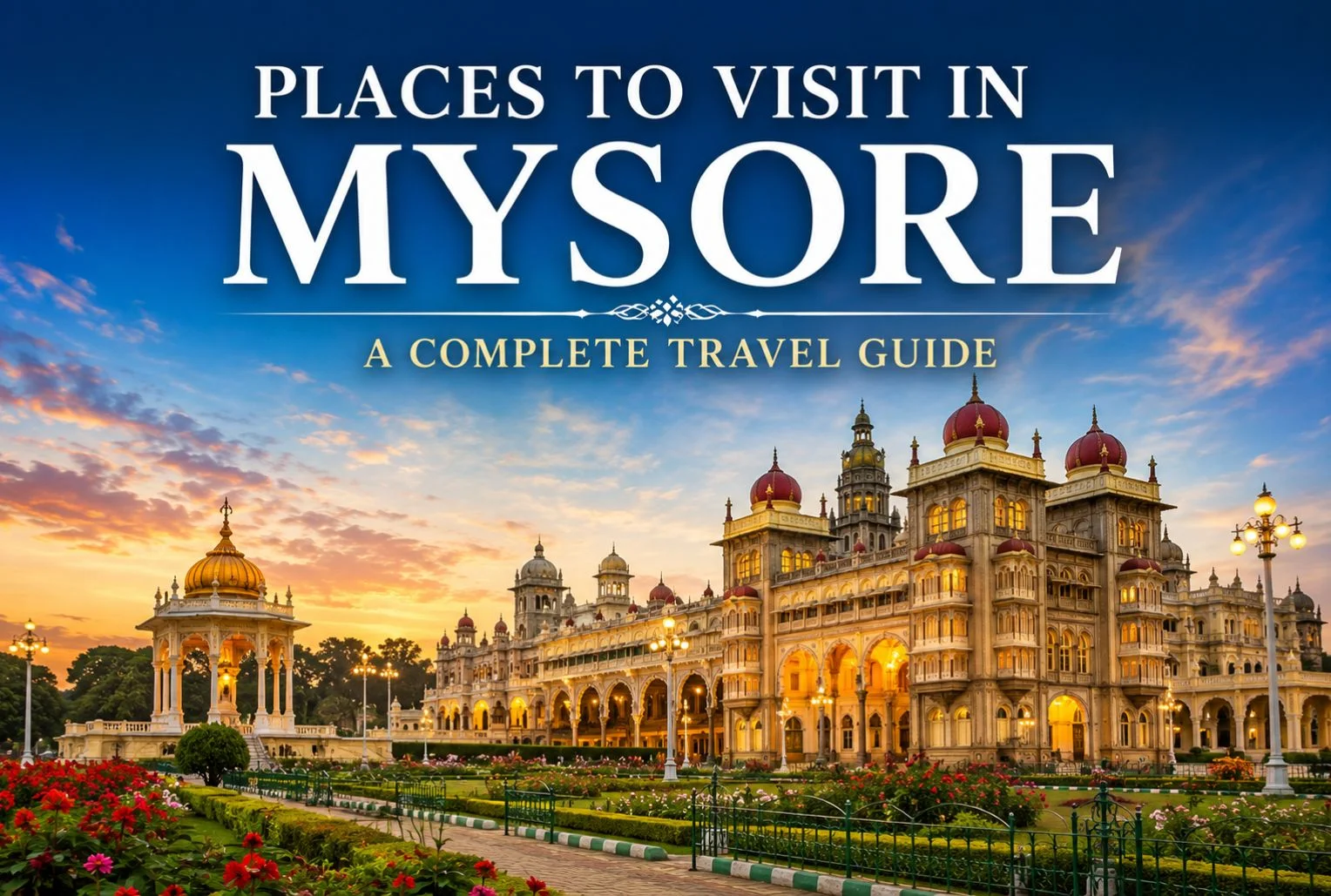
Places to Visit in Mysore: A Complete Travel Guide

places to visit in mysore

Quick answer: The best places to visit in Mysore include Mysore Palace, Chamundi Hills, Brindavan Gardens, St. Philomena’s Church, and Mysore Zoo. Most attractions sit within the city or a short drive away, making Mysore an easy 2–3 day trip for heritage, gardens, and nearby day trips.

Planning a trip to Mysore and not sure where to start? It’s a common situation. Mysore packs royal palaces, hill temples, sprawling gardens, and vibrant markets into a compact, walkable city—so the challenge isn’t finding things to do, it’s deciding what to skip.

This guide solves that. You’ll get a clear rundown of the top Mysore tourist places, practical details like timings and entry fees, and a section on day trips for when you want to venture out. Whether you have a weekend or a full week, you’ll leave with a plan that fits your schedule. If you’re also exploring other Indian destinations, check out our popular destinations guide for ideas beyond the south.

Mysore (officially Mysuru) sits about 145 km from Bengaluru in Karnataka. It’s known as the “City of Palaces,” and once you see the skyline lit up, you’ll understand why. Let’s get into the best sightseeing places in Mysore, one by one.

Why Visit Mysore?

Short answer: it’s one of South India’s most rewarding heritage cities. Mysore offers a mix of history, culture, and greenery that few destinations match.

Here’s what makes it worth your time:

  • Royal heritage: The Wadiyar dynasty ruled from here, leaving behind palaces, temples, and traditions that still shape the city.
  • Compact layout: Most Mysore attractions are close together, so you spend less time in transit and more time exploring.
  • Year-round appeal: The weather stays pleasant for most of the year, and the Dasara festival in autumn is a spectacle worth planning around.
  • Great base for day trips: Several Mysore near tourist places, like Srirangapatna and Nagarhole, are within easy reach.

According to Karnataka Tourism, Mysore remains one of the state’s most visited destinations—and for good reason.

Top Places to Visit in Mysore

sightseeing places mysore

Here are the must-see sightseeing places in Mysore, ranked by popularity and travel value.

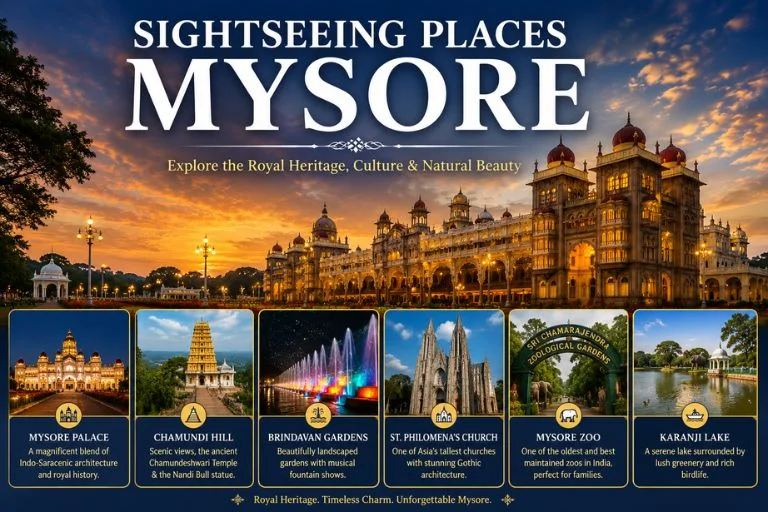
1. Mysore Palace (Amba Vilas Palace)

No trip is complete without the Mysore Palace. It’s the star of every list of Mysore tourist places, and it earns that spot. Built in the Indo-Saracenic style, the palace blends Hindu, Muslim, Rajput, and Gothic influences into one stunning structure.

Visit in the evening if you can. Every Sunday and on public holidays, nearly 100,000 bulbs light up the palace, turning it into a glowing fairytale.

  • Timings: 10:00 AM – 5:30 PM (daily)
  • Entry fee: ₹100 for adults; lower rates for children and students
  • Pro Tip: Reach early to beat the crowds, and carry a valid ID for the ticket counter.

2. Chamundi Hills and Chamundeshwari Temple

Sitting atop Chamundi Hills, this temple is dedicated to Goddess Chamundeshwari, the patron deity of the Wadiyar family. The drive up offers sweeping views of the city, and the giant Nandi statue on the way is a highlight in itself. If you enjoy temple treks like this, you might also love the Chopta Tungnath Trek in Uttarakhand—a different kind of sacred climb.

If you’re up for a workout, climb the 1,000 stone steps to the top. If not, a road leads straight up.

  • Distance from city: About 13 km
  • Best time: Early morning for cooler weather and fewer crowds
  • What to see: The temple, the Nandi statue, and panoramic city views

3. Brindavan Gardens

One of the most photographed Mysore attractions, Brindavan Gardens sits below the KRS Dam. The terraced gardens, fountains, and the musical fountain show draw visitors every evening.

Time your visit for sunset so you catch the illuminated fountains and the light-and-sound show.

  • Distance from city: About 21 km
  • Best time: Evening, for the musical fountain
  • Entry fee: Nominal charge, with extra for boating

4. St. Philomena’s Church

This neo-Gothic church is one of the tallest in Asia. Its twin spires rise nearly 175 feet, and the stained-glass windows inside are worth a slow look. It’s a quiet, peaceful stop away from the busier tourist places in Mysore.

  • Timings: 5:00 AM – 6:00 PM
  • Entry fee: Free
  • Best for: History, architecture, and quiet reflection

5. Mysore Zoo (Sri Chamarajendra Zoological Gardens)

One of India’s oldest and best-maintained zoos, Mysore Zoo is home to a wide range of animals, including elephants, tigers, giraffes, and gorillas. It’s a great stop if you’re traveling with kids. Looking for more family-friendly travel ideas? Our guide to best places to go on a family trip covers destinations that work well for all ages.

  • Timings: 8:30 AM – 5:30 PM (closed Tuesdays)
  • Entry fee: ₹80 for adults; lower for children
  • Pro Tip: Set aside at least two hours to walk the full loop.

Once a royal residence, this palace now houses one of South India’s largest collections of artifacts and paintings, including works by Raja Ravi Varma. Art lovers shouldn’t miss it.

  • Timings: 8:30 AM – 5:30 PM
  • Entry fee: Nominal
  • Best for: Art, paintings, and royal memorabilia

7. Karanji Lake

If you want a break from palaces and temples, Karanji Lake offers a calm, green escape. It has a walk-through aviary—one of the largest in India—and plenty of birdlife around the water.

  • Timings: 8:30 AM – 5:30 PM (closed Tuesdays)
  • Best for: Nature walks, birdwatching, and boating

8. Devaraja Market

For a taste of local life, head to Devaraja Market. This bustling bazaar sells flowers, spices, fruits, and the famous Mysore silk and sandalwood products. It’s a photographer’s delight and a good place to pick up souvenirs.

  • Best time: Morning, when the flower stalls are at their most colorful
  • Best for: Shopping, photography, and local culture

Quick Comparison of Mysore Attractions

Here’s a snapshot to help you plan your route.

AttractionDistance from CityIdeal TimeBest For
Mysore PalaceCity centerEveningHeritage, lights
Chamundi Hills13 kmMorningTemple, views
Brindavan Gardens21 kmEveningFountains, family
St. Philomena’s ChurchCity centerMorningArchitecture
Mysore ZooCity centerMorningWildlife, kids
Karanji LakeCity centerMorningNature, boating
Devaraja MarketCity centerMorningShopping

Mysore Near Tourist Places and Day Trips

Done with the city and want to explore more? Several Mysore near tourist places make excellent day trips. Each is within a two-hour drive, so you can head out in the morning and return by evening. If you’re open to longer adventures in the mountains, our Uttarakhand trips and Himachal trips are worth a look once you’re back from the south.

Srirangapatna

Just 18 km from Mysore, Srirangapatna is a historic island town on the Cauvery River. It was the capital of Tipu Sultan, and you can visit Daria Daulat Bagh, the Ranganathaswamy Temple, and Tipu’s fort.

  • Distance: 18 km
  • Best for: History and temples

Nagarhole National Park

For wildlife, Nagarhole is a top pick. This national park is part of the Nilgiri Biosphere Reserve and shelters tigers, elephants, and leopards. Book a safari to make the most of your visit.

  • Distance: About 90 km
  • Best for: Wildlife safaris

Somnathpur

Home to the Chennakeshava Temple, Somnathpur showcases some of the finest Hoysala architecture in Karnataka. The carvings here are intricate and well-preserved.

  • Distance: About 35 km
  • Best for: Architecture and photography

Coorg (Kodagu)

If you have an extra day, Coorg is worth the drive. Known for its coffee plantations, misty hills, and waterfalls, it’s a favorite among nature lovers looking for hill station charm near Mysore. If hill destinations like this appeal to you, browse our collection of Himachal trips for similar mountain escapes in the north.

  • Distance: About 120 km
  • Best for: Hills, coffee estates, and cool weather

How Many Days Do You Need in Mysore?

For most travelers, two to three days is enough to cover the main sightseeing places in Mysore.

  • 1 day: Mysore Palace, Chamundi Hills, and Brindavan Gardens
  • 2 days: Add Mysore Zoo, St. Philomena’s Church, Karanji Lake, and Devaraja Market
  • 3 days: Include a day trip to Srirangapatna, Somnathpur, or Coorg

Plan your route by location to save time. Group city-center attractions on one day and outlying spots on another.

Best Time to Visit Mysore

The best time to visit Mysore is between October and February, when the weather is cool and pleasant.

  • October to February: Ideal for sightseeing; also covers the Dasara festival
  • March to May: Hot, but fewer crowds
  • June to September: Monsoon brings greenery, but plan for rain

If you can, time your trip with Dasara. The city comes alive with processions, the illuminated palace, and cultural events. For travelers who enjoy exploring India by season, our guide to the best autumn treks in India is a great next read.

Wrap Up Your Mysore Trip with Explore Hills

Mysore rewards travelers who plan a little. With its palaces, temples, gardens, and nearby day trips, you get history and nature in one compact destination. Start with the Mysore Palace and Chamundi Hills, then branch out to the gardens and markets—and set aside a day for Srirangapatna or Coorg if your schedule allows.

Ready to map out your journey? Explore more travel guides and upcoming trek packages with Explore Hills and make your next trip effortless.

Start planning your Mysore trip today.

Frequently Asked Questions

What is the most famous place to visit in Mysore?

The Mysore Palace (Amba Vilas Palace) is the most famous attraction. Built in the Indo-Saracenic style, it draws millions of visitors each year and is especially stunning when lit up on Sundays and public holidays.

How many days are enough to explore Mysore?

Two to three days are enough to cover the main Mysore tourist places. One day covers the palace, Chamundi Hills, and Brindavan Gardens, while extra days let you add museums, lakes, markets, and a day trip.

What are the best day trips from Mysore?

The top Mysore near tourist places include Srirangapatna (18 km), Somnathpur (35 km), Nagarhole National Park (90 km), and Coorg (120 km). Each works as a comfortable day trip.

What is the best time to visit Mysore?

October to February offers the best weather for sightseeing. This window also includes the famous Dasara festival, when the city and palace are at their most vibrant.

Is Mysore good for a family trip?

Yes. Mysore is family-friendly, with attractions like Mysore Zoo, Karanji Lake, and Brindavan Gardens that appeal to children and adults alike. Most sights are close together, which makes travel with kids easier.

Best Places to Go on a Family Trip in India (2026 Guide)

best places to go on a family trip

Quick answer: The best places to go on a family trip in India include hill stations like Nainital, Manali, Mussoorie, and Gulmarg, plus spiritual destinations such as Haridwar, Rishikesh, and the Char Dham Yatra. These spots offer easy travel, kid-friendly activities, and options for both summer and winter holidays.

Planning a family trip in India can feel overwhelming. You want somewhere scenic, safe, and easy to reach—but also fun for kids and relaxing for parents. Add in different age groups, school vacation timing, and long travel hours, and the whole thing starts to feel like a puzzle.

It’s a common struggle. Most families end up circling the same few destinations without knowing which one actually fits their kids’ ages or the season they’re traveling in.

This guide fixes that. You’ll find the best family vacation places in India sorted by hill stations, spiritual destinations, summer picks, and winter picks. Each one includes what makes it work for families, how hard it is for young kids, and when to go. There’s also a quick comparison table and practical planning tips at the end, so you can make a confident choice without hours of research.

Most of these destinations sit in the Himalayan belt—Uttarakhand, Himachal Pradesh, and Kashmir—which means clean air, cooler weather, and short flights or drives from Delhi. Let’s break it down.

What Makes a Great Family Trip Destination in India?

Not every beautiful place makes a good family tour. A stunning high-altitude trek might thrill two adults but exhaust a six-year-old.

Here’s what actually matters when you’re traveling with kids:

  • Easy accessibility: Look for destinations within a comfortable drive or short flight from major hubs like Delhi. Long, winding mountain roads can be rough on young children.
  • Safe, gentle activities: Boating, cable car rides, gentle nature walks, and short sightseeing loops work better than steep hikes or high-risk adventure sports.
  • Comfortable weather: Pleasant temperatures matter more with kids. Extreme heat or bitter cold cuts trips short fast.
  • Family-friendly stays: Hotels and homestays with room to move, decent food, and easy access to essentials make a big difference.
  • Variety for all ages: The best spots balance activities for kids, relaxation for parents, and photo-worthy views for everyone.

Keep these five factors in mind, and picking the right destination becomes much simpler. Now let’s look at the top choices.

Best Hill Stations for Family Trips

Hill stations are the classic Indian family holiday—cool weather, gorgeous views, and plenty to do at a relaxed pace. These four are among the best hill stations for family tour planning.

Nainital, Uttarakhand

Nainital is one of the most popular family destinations in India, and for good reason. The town wraps around a beautiful lake, and boating on Naini Lake is a hit with kids of every age.

Best for: Families with young children who want low-effort sightseeing.

Kids love the cable car ride up to Snow View Point, the ropeway, and feeding fish by the lakeside. Parents get gentle walks around Mall Road, easy cafes, and cool weather most of the year. It’s roughly a 7–8 hour drive from Delhi, making it an accessible weekend or short-break option.

Difficulty for kids: Very easy. Almost everything is walkable or reachable by cable car.

Manali, Himachal Pradesh

Manali offers a bit of everything—snow, rivers, adventure, and scenery. It’s ideal for families with slightly older kids who want more action.

Best for: Families with kids aged 8 and up who enjoy light adventure.

In Solang Valley, older children can try ziplining, cable rides, and playing in the snow (seasonal). Younger ones enjoy river-side spots, easy nature trails, and Hadimba Temple set among tall cedar trees. Manali also works as a base for a relaxed Himachal trip. If you’re combining it with nearby spots, a guided Manali Kasol adventure trip takes the planning stress off your plate.

Difficulty for kids: Easy to moderate, depending on the activities you pick.

Mussoorie, Uttarakhand

Known as the “Queen of the Hills,” Mussoorie is one of the easiest hill stations to reach and one of the most relaxing to enjoy. It’s only about 6–7 hours from Delhi.

Best for: Families wanting a low-stress, scenic getaway with minimal travel.

The Gun Hill ropeway, Kempty Falls, and the long stretch of Mall Road keep everyone happy. It pairs well with Rishikesh and Haridwar for a fuller trip. A ready-made Mussoorie Rishikesh Haridwar trip combines mountains and spirituality in one smooth itinerary—handy when you don’t want to juggle bookings.

Difficulty for kids: Very easy. Great for first-time family travelers.

Gulmarg / Pahalgam, Kashmir

For families ready to travel a little farther, Kashmir delivers some of the most stunning scenery in the country. Gulmarg and Pahalgam are both gentle, family-friendly, and jaw-droppingly beautiful.

Best for: Families wanting a memorable, once-in-a-while special trip.

In Gulmarg, the Gondola cable car (one of the highest in the world) is a highlight kids never forget. Pahalgam offers meadows, gentle pony rides, and riverside picnics. The best access point is a flight to Srinagar, followed by a scenic drive. If you’d rather have everything arranged, browse the Kashmir trips options for family-suited itineraries.

Difficulty for kids: Easy, though the longer travel suits kids aged 5 and up better.

Best Spiritual Destinations for Families

India’s spiritual destinations aren’t just for pilgrims. Many double as scenic, culturally rich family trips—especially in Uttarakhand, where the mountains and the Ganges meet.

Haridwar & Rishikesh

Haridwar and Rishikesh sit close together on the banks of the Ganges, and they’re among the most accessible spiritual spots for families.

Best for: Families wanting culture, calm, and a touch of adventure in one trip.

The Ganga Aarti at Har Ki Pauri in Haridwar is a moving experience kids remember for years. In Rishikesh, older children can try gentle rafting, walk the Ram Jhula and Laxman Jhula bridges, and spot the surrounding hills. Both are roughly 5–6 hours from Delhi.

Difficulty for kids: Very easy for sightseeing; supervise closely near the river.

Kedarnath

Kedarnath is more demanding, so it suits families with older, active kids. The temple sits at 11,758 feet, reached by a trek (or pony/palki) from Gaurikund.

Best for: Families with teenagers who enjoy a spiritual trek with a sense of achievement.

The journey is stunning, but the altitude and walking distance make it unsuitable for very young children. A guided approach helps a lot with logistics, safety, and pacing—see the Kedarnath Yatra package if this is on your list.

Difficulty for kids: Moderate to challenging. Best for kids aged 12 and up.

Char Dham Yatra

The Char Dham Yatra covers four sacred sites—Yamunotri, Gangotri, Kedarnath, and Badrinath. It’s a longer, more involved journey, ideal for multi-generational families with a spiritual focus.

Best for: Extended families and older travelers wanting a complete pilgrimage.

Because it spans several days and higher altitudes, it works best with careful planning. A structured Char Dham Yatra package handles the route, stays, and permits, so you can focus on the experience. For a shorter version, the Do Dham Yatra covers two of the four sites.

Difficulty for kids: Moderate to challenging. Better suited to older children and adults.

Best Summer Family Tour Destinations in India

Indian summers get intense, which is exactly why hill stations top the list for April, May, and June—right when school vacations begin.

Here are the best places to go on a family tour during summer:

  • Nainital & Mussoorie: Cool lakeside towns, easy to reach, perfect for younger kids.
  • Manali: Pleasant days, light adventure, and snow still lingering in higher spots early in the season.
  • Gulmarg & Pahalgam: Lush green meadows and mild weather make Kashmir a summer favorite.
  • Shimla & Kinnaur belt: Classic hill charm with scenic drives. A Shimla Kalpa Sangla Chitkul trip is a family-friendly way to explore the wider region.

Summer is also peak season, so book early. Prices rise and popular stays fill up fast once schools close.

Pro Tip: Travel in early June rather than mid-May if you want fewer crowds and slightly better rates, while still catching pleasant weather.

Best Winter Family Trip Destinations in India

Winter turns the Himalayas into a snow-covered playground. For families, this is the season for snow-play, cozy stays, and unforgettable scenery.

The best winter family trip destinations include:

  • Manali: Reliable snowfall and easy snow-play zones make it a top winter pick for kids.
  • Gulmarg: One of India’s best snow destinations, with the Gondola offering breathtaking winter views.
  • Auli, Uttarakhand: Gentle slopes, cable cars, and beginner-friendly snow fun. It pairs well with a scenic Chopta Tungnath Auli trek for families with older kids.
  • Shimla: A festive winter atmosphere with easy access and plenty of walkable sights.

Winter travel needs a bit more prep. Pack proper layers, check road conditions, and keep itineraries flexible—snowfall can occasionally delay drives.

If your family loves the idea of snow but wants everything organized, an Uttarakhand tour package can bundle stays, transport, and sightseeing into one easy plan.

Quick Comparison Table

Use this table to match a destination to your family’s season and your kids’ ages at a glance.

DestinationBest SeasonBest ForDifficulty for Kids
NainitalSummerYoung kids, easy sightseeingVery easy
MussoorieSummerFirst-time family travelersVery easy
ManaliSummer & WinterLight adventure, snow-playEasy to moderate
GulmargSummer & WinterScenic views, cable car ridesEasy
PahalgamSummerMeadows, pony ridesEasy
AuliWinterSnow fun, beginner slopesEasy to moderate
ShimlaSummer & WinterClassic hill charmVery easy
Haridwar & RishikeshAutumn & WinterCulture, gentle raftingVery easy
KedarnathSummer & AutumnTeens, spiritual trekModerate to challenging
Char Dham YatraSummer & AutumnExtended families, pilgrimageModerate to challenging

Tips for Planning a Family Trip in India

A great family trip comes down to smart planning. These tips help you avoid the common headaches—overpacked days, tired kids, and last-minute booking stress.

  1. Match the destination to your kids’ ages: Pick easy hill stations for toddlers and light-adventure spots for older kids. A mismatch here derails a trip fast.
  2. Book around school vacations early: Summer and winter breaks are peak season. Reserve stays and transport weeks ahead to lock in better rates.
  3. Keep travel days short: Long mountain drives tire kids quickly. Break up journeys with breaks, snacks, and scenic stops.
  4. Pack for the weather: Layers for the hills, sunscreen for summer, and proper warm gear for snow trips. Carry basic medication too.
  5. Don’t overschedule: Two or three activities a day is plenty. Leave room for rest, play, and spontaneous fun.
  6. Consider a guided package: For spiritual routes or snow destinations, a planned itinerary removes the stress of permits, stays, and logistics.

Pro Tip: Build in one “buffer day” with nothing scheduled. Kids need downtime, and it saves the whole trip if weather or fatigue throws off your plans.

Little adjustments like these make the difference between a chaotic trip and a smooth one.

Plan Your Family Tour with Confidence

Choosing the best places to go on a family tour doesn’t have to be complicated. Match the destination to your kids’ ages, pick the right season, and keep travel days short—and you’re most of the way there. Hill stations like Nainital, Manali, and Mussoorie are hard to beat for younger families, while spiritual spots like Haridwar and Rishikesh add culture and calm.

The easiest way to skip the planning stress is to let local experts handle the details. Explore Hills designs family-friendly, safe, and well-paced trips across Uttarakhand, Himachal Pradesh, and Kashmir, with transparent pricing and small groups.

Take a look at the family-friendly trips and start planning your next Himalayan family holiday.

Frequently Asked Questions

What is the Best Places to Go on a Family Trip?

Nainital, Mussoorie, and Manali are among the best places for a family trip in India. They offer cool weather, easy accessibility from Delhi, and gentle activities that suit kids of all ages. For a special once-in-a-while trip, Gulmarg in Kashmir is hard to beat.

Which is better for a family trip—hill stations or spiritual destinations?

It depends on your family. Choose hill stations like Nainital or Manali if you have young kids and want relaxed sightseeing. Choose spiritual destinations like Haridwar and Rishikesh if you want culture and calm, with light adventure like gentle rafting for older children.

What is the best time to plan a family trip in India?

Summer (April to June) is ideal for hill stations, since they escape the heat and align with school vacations. Winter (December to February) is best for snow destinations like Manali, Gulmarg, and Auli. Autumn also brings clear skies and pleasant weather in the mountains.

Is a family trip to Kashmir safe with kids?

Yes. Family-friendly spots like Gulmarg and Pahalgam are gentle and scenic, with activities such as cable car rides and pony rides that kids enjoy. The longer travel suits children aged 5 and up better. A guided package makes logistics and pacing much easier.

Can we take young kids on the Char Dham or Kedarnath Yatra?

Kedarnath and the Char Dham Yatra involve treks and high altitudes, so they suit older kids and teenagers rather than toddlers. If you’re traveling with younger children, gentler spiritual spots like Haridwar and Rishikesh are a better fit.

How many days do you need for a family trip in India?

A short hill-station trip works well in 4 to 5 days. Combined trips—like Mussoorie with Rishikesh and Haridwar—usually need 5 to 6 days. Longer journeys such as the Char Dham Yatra can take 7 days or more.

What’s the easiest family trip destination from Delhi?

Nainital, Mussoorie, Haridwar, and Rishikesh are the easiest family destinations from Delhi, all within a comfortable 5 to 8 hour drive. They require minimal travel effort and offer plenty of gentle, kid-friendly activities.

Places to Visit in Dehradun: A Complete Travel Guide

Places to Visit in Dehradun

Nestled in the Doon Valley at the foothills of the Himalayas, Dehradun is far more than just a gateway to the mountains. The capital of Uttarakhand blends colonial-era charm, spiritual heritage, and natural beauty into one compact, easy-to-explore destination. Whether you’re passing through on your way to Mussoorie or planning a dedicated trip, there are plenty of places in Dehradun that deserve a spot on your itinerary.

From ancient cave temples to colonial institutions, misty hill viewpoints to hidden riverside picnic spots, this guide covers the best of what Dehradun and its surrounding hills have to offer. If you’re looking to extend your trip into the mountains afterward, our Mussoorie, Rishikesh & Haridwar trip is a great way to see even more of the region in one go.

1. Mussoorie

No list of places to visit near Dehradun is complete without Mussoorie, the “Queen of the Hills.” Just about 35 km from Dehradun, Mussoorie is one of India’s most beloved hill stations, known for its cool climate, colonial architecture, and sweeping Himalayan views. Mall Road, Kempty Falls, Camel’s Back Road, and Lal Tibba are among its most popular attractions. Many travellers use Dehradun as a base before heading up to Mussoorie for a day trip or a longer mountain retreat.

2. FRI (Forest Research Institute)

The Forest Research Institute, popularly known as FRI, is one of Dehradun’s most iconic landmarks. Built in 1906 during the British era, this majestic Greco-Roman style building is considered one of the largest office buildings in Asia. Spread across sprawling green lawns, FRI houses six museums covering topics like forest botany, timber, and social forestry, making it a fascinating stop for history buffs, architecture lovers, and families alike. The building has also featured in several Bollywood films, adding to its popularity among visitors.

3. Robbers Cave (Guchhupani)

Locally known as Guchhupani, Robbers Cave is a natural limestone cave formation located about 8 km from the city centre. A narrow stream flows through the cave, and visitors can wade through the cool water while walking between towering rock walls. Legend has it that dacoits once used this cave as a hideout, which is how it earned its English name. It’s a popular spot for families and adventure seekers, especially during the summer months.

4. Maldevta

For a quieter, nature-focused experience, Maldevta is a scenic picnic spot located on the banks of the Song River, not far from FRI. Surrounded by dense forest and gentle hills, it’s a favourite among locals for riverside picnics, short treks, and simply unwinding away from the city noise. The clear river water and peaceful surroundings make it especially popular during the monsoon and post-monsoon months.

5. Tapkeshwar Temple

One of Dehradun’s most revered religious sites, Tapkeshwar Temple is an ancient cave temple dedicated to Lord Shiva, located on the banks of the Tons River. The temple gets its name from the natural phenomenon of water continuously dripping (“tapak”) onto the Shivling inside the cave. According to local legend, the temple is associated with Guru Dronacharya and his son Ashwatthama from the Mahabharata. The temple sees a massive influx of devotees during Maha Shivaratri, and its serene cave setting makes it worth visiting any time of year.

6. Itharna

For travellers looking to go off the beaten path, Itharna is a hidden gem tucked away near Bhogpur village, roughly 50 km from Dehradun city. Set amid lush green meadows and forested hills, the Itharna Temple here is primarily dedicated to Lord Shiva, with a peaceful, uncrowded atmosphere that’s perfect for those seeking solitude. The panoramic views, especially after monsoon rainfall when clouds drift through the valley, make Itharna a rewarding detour for nature lovers and offbeat travellers.

7. Dalai Hills

Located near Happy Valley in Mussoorie, close to the Dehradun–Mussoorie route, Dalai Hills is home to a striking golden statue of Lord Buddha and the Shedup Choephelling Tibetan Temple. A short walk of around 400 metres from the temple takes you to the hilltop, where you’re rewarded with sweeping views of the Doon Valley and the Garhwal Himalayan range. The area holds historical significance tied to the Dalai Lama’s presence in the region and is a peaceful spot for reflection and photography.

8. George Everest House

Perched on a ridge near Hathipaon, not far from Mussoorie, the George Everest House was once the residence of Sir George Everest, the Surveyor General of India after whom Mount Everest was named. Though now in ruins, the site offers some of the most spectacular panoramic views in the region, with the Doon Valley on one side and the snow-capped Himalayas on the other. It’s a favourite among trekkers and photographers looking for a quiet, historically significant viewpoint away from the crowds.

9. Bhadraj Temple

Set atop Bhadraj Hill near Mussoorie, this temple is dedicated to Bhadraj, believed to be a form of Balbhadra (Balaram), the elder brother of Lord Krishna. Reaching the temple involves a short trek through dense oak and pine forest, rewarding visitors with uninterrupted views of the Himalayan peaks and the Doon Valley below. The trek is moderately easy, making it accessible for most fitness levels, and the temple’s tranquil setting makes it a favourite for both pilgrims and casual hikers.

Planning Your Dehradun Trip

Dehradun’s biggest advantage is its accessibility — it’s well connected by rail, road, and air via Jolly Grant Airport, and its mix of city comforts and nearby natural attractions makes it easy to plan a trip of any length. Whether you have a single day or a full week, you can easily combine a few of these spots into a well-rounded itinerary.

  • Best time to visit: March to June and September to November offer the most pleasant weather
  • How to reach: Dehradun is connected by the Dehradun Railway Station, ISBT Dehradun for buses, and Jolly Grant Airport for flights
  • Ideal trip length: 2 to 4 days to cover the city’s key attractions along with a short trip up to Mussoorie

For official travel advisories, updated attraction details, and verified tourism information, you can refer to the Uttarakhand Tourism Department, the state government’s official tourism portal.

If you’re planning to venture further into the hills after Dehradun, our Chakrata Adventure Tour is a great way to explore the quieter, less-crowded side of the region — dense forests, remote villages, and untouched viewpoints just a few hours from the city.

Frequently Asked Question’s

  1. What are the top places to visit in Dehradun?

    Some of the top places include FRI, Robbers Cave, Tapkeshwar Temple, Maldevta, and nearby attractions like Mussoorie, Dalai Hills, George Everest House, and Bhadraj Temple.

  2. Is Dehradun good for a day trip?

    Yes, many of Dehradun’s key attractions like FRI, Robbers Cave, and Tapkeshwar Temple can comfortably be covered in a single day, though 2–3 days lets you explore more thoroughly.

  3. How far is Mussoorie from Dehradun?

    Mussoorie is approximately 35 km from Dehradun, roughly a 1 to 1.5-hour drive depending on traffic and road conditions.

  4. What is the best time to visit Dehradun?

    March to June and September to November are the most pleasant months, with cooler temperatures and clearer skies.

  5. Are Dalai Hills and George Everest House in Dehradun or Mussoorie?

    Both are located closer to Mussoorie, but they’re commonly visited together with Dehradun as part of the same regional trip.