



Explore Hills Blog

Travel guides, trekking tips, destinations, yatra guides and useful travel information from ExploreHills.

Explore by Category

150 articles
Udayagiri and Khandagiri Caves
Heritage, Forts and Monuments

Udayagiri and Khandagiri Caves: Bhubaneswar’s Ancient Rock-Cut Hills

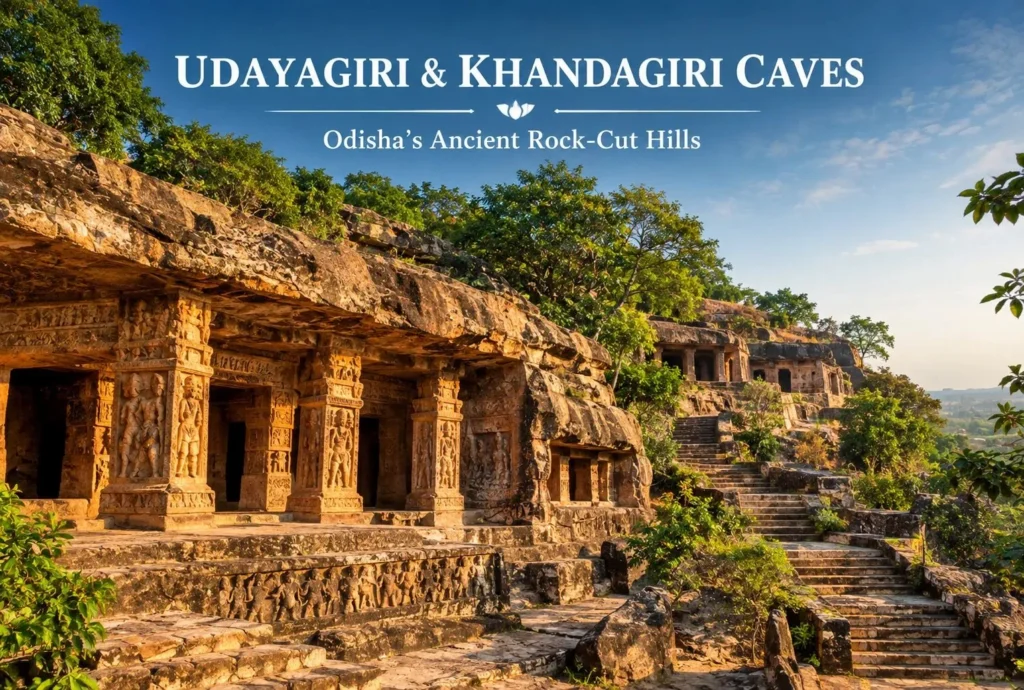
Just outside Bhubaneswar, two low sandstone hills face each other across a road, and both are honeycombed with carved caves. The Udayagiri and Khandagiri Caves are among Odisha’s oldest surviving rock-cut monuments, and they reward visitors who enjoy reading history in stone.…
October 16, 20265 min read
Shakti Peeth
Temples and Spiritual Places

Shakti Peeth: Where the Goddess Fell to Earth, and How to Find All 51

Few ideas in Hinduism have shaped the map of a whole subcontinent the way the Shakti Peeth tradition has. The legend says the body of the goddess Sati was scattered across the land, and every spot where a part of her fell…
October 15, 20268 min read
Neer Waterfall
Nature, Lakes and Waterfalls

Neer Waterfall Rishikesh: A Short Forest Walk to a Hidden Cascade

Rishikesh is better known for its bridges, ghats, and rafting, but a quieter option sits just outside town. Neer Waterfall, also called Neer Garh Waterfall, is a cascade you reach by walking through forest and along a stream. This guide covers how…
October 15, 20264 min read
Dakshineswar Kali Temple
Temples and Spiritual Places

Dakshineswar Kali Temple: A Guide to Kolkata’s Riverside Shrine

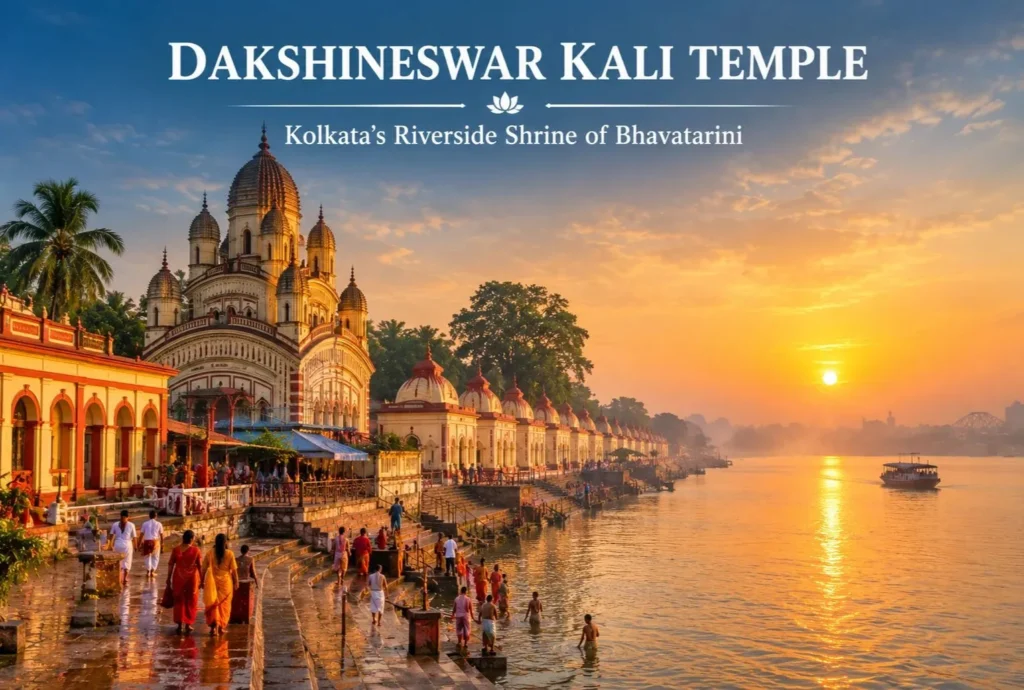
On the eastern bank of the Hooghly River, a short distance north of central Kolkata, stands one of Bengal’s best-known temples. Dakshineswar draws devotees, history readers, and curious travelers every day, and its tall spired shrine is easy to spot from the…
October 15, 20266 min read
Lingaraj Temple
Temples and Spiritual Places

Lingaraj Temple: Bhubaneswar’s Ancient Shrine of Harihara

Bhubaneswar is often called the Temple City of India, and no shrine anchors that reputation more firmly than Lingaraj Temple. Its tall sandstone tower rises above the lanes of the Old Town, surrounded by smaller shrines and a large sacred tank. For…
October 14, 20266 min read

Best Places to Visit in Ooty for an Unforgettable Trip

Places to Visit in Ooty

Quick answer: The best places to visit in Ooty include Ooty Lake, the Government Botanical Garden, Doddabetta Peak, Nilgiri Mountain Railway, and Emerald Lake. Ooty’s top tourist spots blend colonial charm, tea gardens, misty viewpoints, and boating lakes—perfect for families, couples, and nature lovers alike.

Perched in the Nilgiri Hills of Tamil Nadu, Ooty (officially Udhagamandalam) has earned its title as the “Queen of Hill Stations.” Rolling tea estates, cool weather, and colonial-era charm draw millions of travelers here every year. But with so much to see, planning your itinerary can feel overwhelming.

That’s where this guide comes in. Below, you’ll find the best places to visit in Ooty, along with practical details like Ooty Lake timings, the top Ooty view points, and ideas for families and couples. Whether you’re chasing quiet mountain sunrises or bustling markets, this list covers the must-sees.

By the end, you’ll have a clear picture of how to spend your days in Ooty—and where to go next. Let’s dive in.

What are the top places to visit in Ooty?

Ooty packs a surprising number of attractions into a compact hill station. Here’s a quick snapshot of the top Ooty tourist places before we explore each in detail.

PlaceBest ForHighlight
Ooty LakeFamilies, couplesBoating and paddle rides
Government Botanical GardenNature lovers650+ plant species
Doddabetta PeakPhotographersHighest point in the Nilgiris
Nilgiri Mountain RailwayFamilies, heritage fansUNESCO-listed toy train
Rose GardenCouples20,000+ rose varieties
Emerald LakePeace seekersQuiet, offbeat scenery
Pykara Lake & FallsDay trippersWaterfalls and boating
Tea Museum & FactoryFirst-timersLive tea processing

Which Ooty tourist places are must-sees?

If you only have a day or two, these Ooty places deserve top priority.

Government Botanical Garden

Spread across 55 acres, the Government Botanical Garden is one of Ooty’s most-loved attractions. It’s home to over 650 species of plants, trees, and ferns, including a fossilized tree trunk believed to be around 20 million years old. The terraced lawns make it a favorite for morning strolls and family picnics.

Nilgiri Mountain Railway

The Nilgiri Mountain Railway, a UNESCO World Heritage Site, is one of the most memorable ways to experience the hills. This iconic “toy train” chugs through tunnels, over bridges, and past tea gardens between Mettupalayam and Ooty. Book the Ooty–Coonoor stretch for the best views in a shorter ride.

Rose Garden

The Government Rose Garden holds one of the largest collections of roses in India, with more than 20,000 varieties in bloom. Set on a gentle slope, it offers sweeping views of Ooty town. Visit between May and June to see the flowers at their peak.

Tea Museum and Factory

Ooty and tea go hand in hand. At the Tea Museum, you can watch the full process—from plucking to packaging—and sample fresh Nilgiri brews. It’s a great first stop to understand the region’s history and culture.

What are the best Ooty view points?

Ooty’s viewpoints reward you with sweeping vistas of the Nilgiris. Here are the best Ooty view point options for photographers and sunrise chasers.

Doddabetta Peak

At 2,637 meters, Doddabetta is the highest peak in the Nilgiri range and the top Ooty view point overall. On a clear day, the telescope house at the summit lets you gaze across the surrounding valleys and plains. Arrive early to beat the crowds and the afternoon mist.

Dolphin’s Nose

Located near Coonoor, Dolphin’s Nose is a rock formation offering dramatic views of deep valleys and the distant Catherine Falls. The lookout is named for its shape, which resembles a dolphin’s snout.

Needle View Point

Also near Coonoor, Needle View Point (Lamb’s Rock) gives you panoramic views of the plains below and the tea-covered slopes. It’s a quieter alternative to Doddabetta for those seeking calm.

What are the Ooty Lake timings and boating hours?

Ooty Lake is the beating heart of the town and one of the most popular places to visit in Ooty. This artificial lake, built in 1824, is famous for its boat rides framed by eucalyptus trees.

Here are the current Ooty Lake timings:

ActivityTiming
Lake entry9:00 AM – 6:00 PM daily
Boating9:00 AM – 5:30 PM daily

Rowboats, paddle boats, and motorboats are all available. Weekends and holidays can get busy, so mornings are the best time for a relaxed ride. A children’s park and pony rides nearby make it especially fun for families.

What are the best Ooty places for families and couples?

Ooty suits every kind of traveler. Here’s how to plan based on who you’re with.

Best Ooty places for families

  • Ooty Lake: Boating, toy train rides, and a children’s park keep kids entertained.
  • Thread Garden: A unique indoor attraction featuring flowers made entirely from thread—no machines used.
  • Deer Park: One of the highest-altitude zoos in India, great for spotting spotted deer and other wildlife.
  • Wax World: Fun, quirky wax statues that appeal to all ages.

Best Ooty places for couples

  • Rose Garden: Romantic walks among thousands of blooms.
  • Emerald Lake: A tranquil, offbeat spot away from the crowds, perfect for quiet time together.
  • Pykara Lake: Serene boating surrounded by forests and grasslands.
  • Sim’s Park (Coonoor): A lush, peaceful garden ideal for slow afternoons.

Which nearby attractions make good day trips from Ooty?

If you have extra time, several nearby spots make for excellent day trips.

  • Coonoor: Just 19 km away, this smaller hill town offers tea estates, Sim’s Park, and viewpoints like Dolphin’s Nose.
  • Pykara: Around 20 km from Ooty, Pykara Lake and Pykara Falls are known for their calm boating and cascading water.
  • Avalanche Lake: A pristine, less-crowded spot roughly 28 km away, popular for its natural beauty and trout fishing.
  • Mudumalai National Park: About 65 km away, this wildlife sanctuary is home to elephants, tigers, and deer.

For those who love mountain trails and cooler climates, Ooty can also spark a bigger appetite for hill adventures. If you’re drawn to trekking and high-altitude escapes, explore the guided weekend trips and popular treks offered by Explore Hills.

When is the best time to visit Ooty?

Ooty is a year-round destination, but the experience changes with the seasons.

SeasonMonthsWhat to Expect
SummerApril – JunePleasant weather, peak tourist season, ideal for sightseeing
MonsoonJuly – SeptemberLush greenery, misty views, fewer crowds
WinterOctober – MarchCool and crisp, great for viewpoints and gardens

Summer is the most popular time, especially for families escaping the heat of the plains. If you prefer quiet and don’t mind the rain, the monsoon paints the hills a vivid green. For detailed travel information, you can also check the official Tamil Nadu Tourism page for Ooty.

Start planning your Ooty adventure

From misty viewpoints to serene boating lakes, the places to visit in Ooty offer something for every kind of traveler. Prioritize Ooty Lake, Doddabetta Peak, and the Nilgiri Mountain Railway, then fill your days with gardens, tea estates, and easy day trips to Coonoor and Pykara.

If the mountains have you hooked, take it further. Explore Hills offers guided treks, weekend getaways, and scenic mountain trips designed for every fitness level. Browse the travel packages at Explore Hills and start planning your next hill escape today.

Frequently Asked Questions

How many days are enough to explore Ooty?

Two to three days are enough to cover the main places to visit in Ooty, including Ooty Lake, the Botanical Garden, Doddabetta Peak, and a ride on the Nilgiri Mountain Railway. Add an extra day if you want to explore Coonoor or Pykara.

What are the Ooty Lake timings?

Ooty Lake is open daily from 9:00 AM to 6:00 PM. Boating operates from 9:00 AM to 5:30 PM. Mornings are the best time to avoid crowds, especially on weekends.

What is the best time to visit Ooty?

The best time to visit Ooty is between April and June for pleasant summer weather. October to March is ideal for cool, clear days, while the monsoon (July to September) offers lush greenery and fewer tourists.

Which is the highest Ooty view point?

Doddabetta Peak, at 2,637 meters, is the highest Ooty view point and the tallest peak in the Nilgiri range. It offers panoramic views of the surrounding valleys, plus a telescope house at the summit.

Is Ooty good for a family trip?

Yes. Ooty is one of the most family-friendly hill stations in South India. Attractions like Ooty Lake, the Botanical Garden, Thread Garden, and the toy train appeal to travelers of all ages.

How do I reach Ooty?

The nearest airport is Coimbatore (about 88 km away), and the nearest major railway station is Mettupalayam, connected to Ooty via the scenic Nilgiri Mountain Railway. Ooty is also well connected by road from Bangalore, Coimbatore, and Mysore.
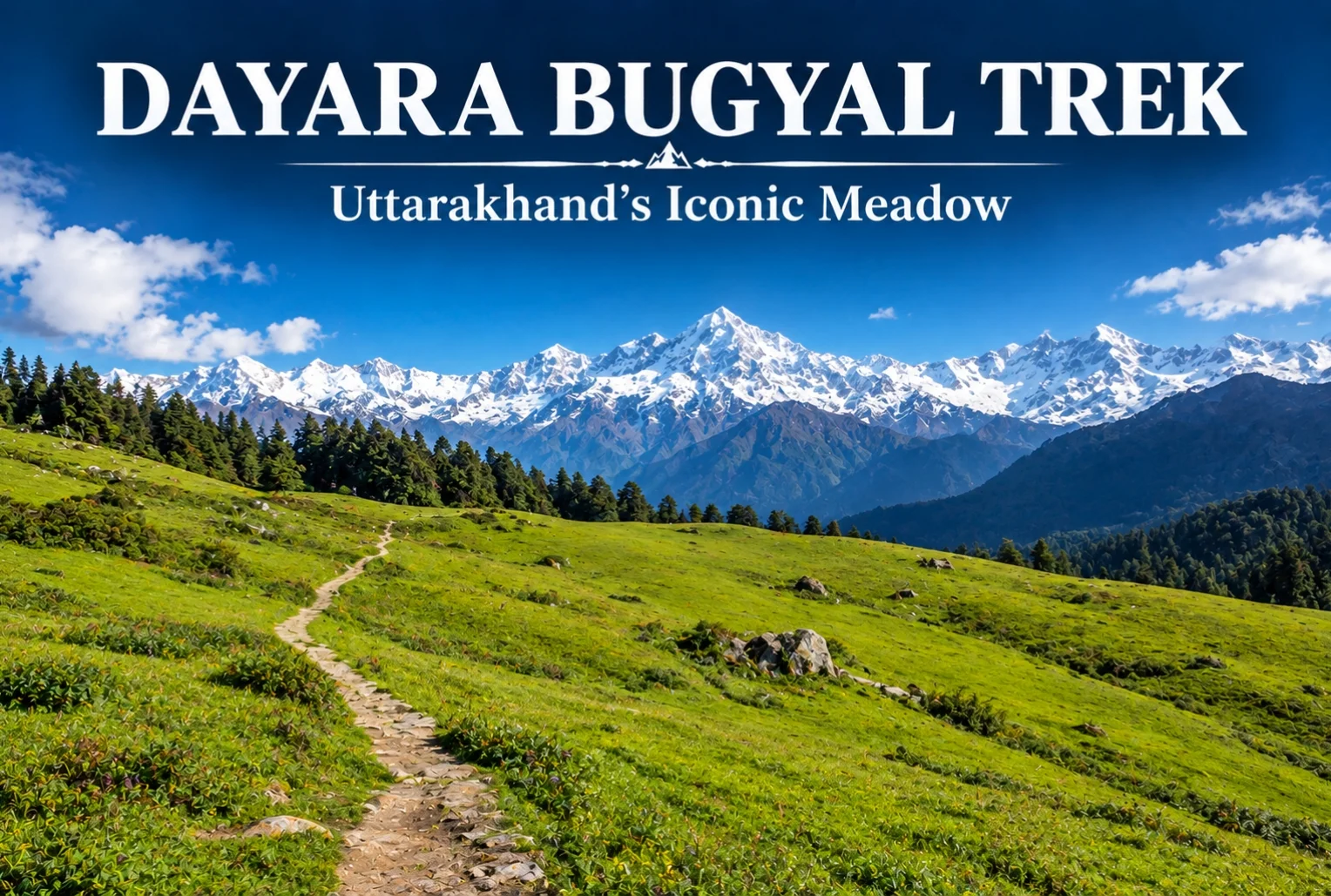

Dayara Bugyal Trek: The Meadow That Made Uttarakhand Famous

Dayara Bugyal Trek

If you ask seasoned trekkers to name the one meadow that convinced them Uttarakhand deserved its reputation, a lot of them will point to the same place. The Dayara Bugyal trek has earned that status honestly—it’s one of the most forgiving, rewarding introductions to Himalayan trekking that exists in the Garhwal region.

What Is Dayara Bugyal?

Dayara Bugyal is one of the largest high-altitude meadows in the Indian Himalayas, sitting in the Uttarkashi district of Uttarakhand. The trail moves through thick alpine forest and small mountain villages before opening into these sprawling grasslands, which stretch far enough that the horizon feels almost impossibly wide for a single trek. It’s this scale that’s made the meadow a fixture on nearly every “best beginner trek” list in the state.

Dayara Bugyal Height

The meadow itself sits at an elevation of roughly 3,048 meters (about 10,000 feet), with Dayara Top — the highest point most trekkers reach — going up to around 3,600 meters. That elevation is high enough to deliver genuine panoramic views without pushing into the kind of altitude that demands serious acclimatization planning.

Dayara Bugyal Trek Distance

The total Dayara Bugyal trek distance covers roughly 15-18 km round trip, depending on the exact route and starting point, typically completed over 3-4 days including acclimatization and return. The trek begins from Raithal or Barsu village, both accessible by road from Uttarkashi, making the approach itself fairly manageable compared to treks that require longer drives into more remote trailheads.

Dayara Bugyal - Two Seasons

Dayara Bugyal Trek Best Time to Visit

The Dayara Bugyal trek best time genuinely depends on what kind of experience you’re after, since this meadow transforms completely across seasons. In winter (December to February), the entire landscape turns white, and the trek becomes a proper snow trek, often recommended for those wanting snow without extreme technical difficulty. Come back in spring, and the same meadow fills with wildflowers instead.

Dayara Bugyal in Summer

Dayara Bugyal in summer (May to June) looks like an entirely different trek altogether — lush green grasslands replace the snow cover, and the weather is noticeably milder, making it a popular window for families and first-time trekkers who’d rather skip the cold. Monsoon months (July to September) are generally avoided due to slippery trails and reduced visibility, but the meadow bounces back with fresh greenery once the rains clear in early autumn.

Views from Dayara Top

From the highest point on the trek, the views stretch out toward Bandarpoonch, Srikanth, Jaonli, the Gangotri Range, and Draupadi Ka Danda II — an impressive lineup for a trek that remains genuinely manageable for most fitness levels. Along the route, campsites like Natin Village, Gui, Chilapada, and Nayata each offer their own distinct feel, tucked between forest edge and open snowfield or meadow depending on the season. For trekkers who enjoy this kind of meadow trekking, Explore Hills’ Ali Bedni Bugyal Trek offers a similar high-altitude grassland experience elsewhere in the Garhwal Himalayas.

How to Reach the Trailhead

Getting to Raithal or Barsu involves reaching Uttarkashi first, which is well-connected by road from Dehradun and Rishikesh, with Jolly Grant Airport in Dehradun serving as the nearest airport. From Uttarkashi, it’s a further drive to the trailhead village. Since the trek falls along a broader Uttarakhand travel circuit, Explore Hills’ Uttarakhand Tour Package can help combine this trek with other regional highlights in a single trip.

For official weather forecasts and travel advisories for the Uttarkashi region, you can refer to the India Meteorological Department, the Government of India’s official weather agency.

Conclusion

Dayara doesn’t try to impress with technical difficulty or extreme altitude — its appeal is simpler than that. It’s a meadow that looks completely different depending on when you show up, and manageable enough that almost anyone with reasonable fitness can experience it. Whether you catch it under snow or in full summer green, it’s easy to see why this trek keeps coming up in every beginner’s Himalayan trekking list.

Frequently Asked Questions

What is the Dayara Bugyal trek distance?

The trek covers roughly 15-18 km round trip, typically completed over 3-4 days depending on the chosen route and starting village.

What is the Dayara Bugyal height?

The meadow sits at around 3,048 meters, with Dayara Top reaching approximately 3,600 meters at its highest point.

What is the Dayara Bugyal trek best time to visit?

Winter (December-February) offers a snow-covered experience, while summer (May-June) brings green meadows and milder weather, making both good options depending on preference.

What does Dayara in summer look like compared to winter?

In summer, the meadow turns lush green with mild weather, a stark contrast to the snow-covered winter landscape, offering an entirely different trekking experience.

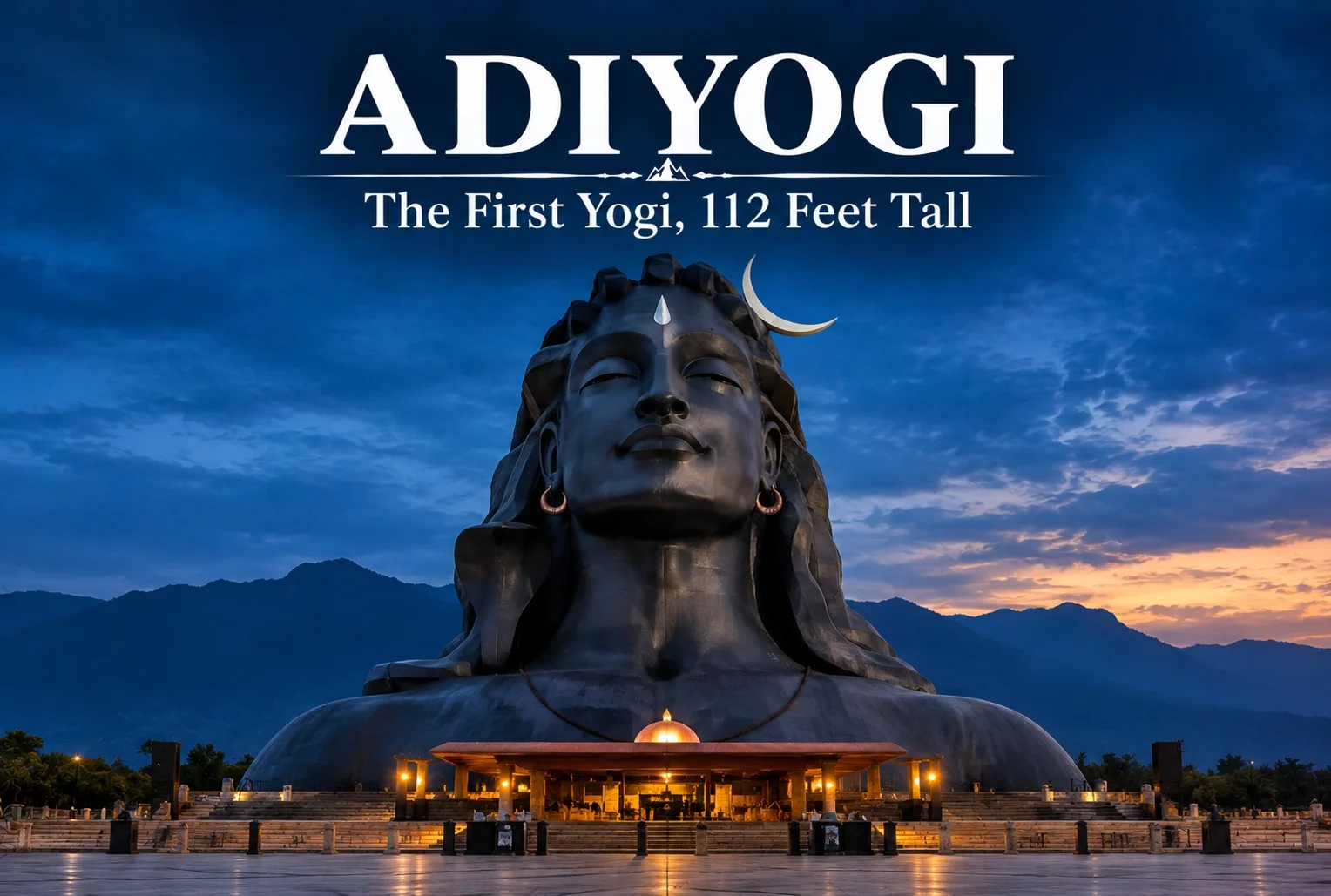
Adiyogi: The World’s Largest Bust Sculpture Dedicated to Shiva

Adiyogi

At 112 feet tall, there’s a face carved into the landscape near Coimbatore that’s visible from kilometers away — and once you’re standing beneath it, the scale genuinely stops most visitors mid-sentence. This is Adiyogi, and it’s become one of South India’s most recognized modern spiritual landmarks in a remarkably short span of time.

What Is the Adiyogi Statue?

The Adiyogi statue is a massive bust depicting Lord Shiva as the “first yogi” — the primordial source of yogic wisdom in Indian tradition. Built at the Isha Yoga Center in Coimbatore, Tamil Nadu, the statue was consecrated in 2017 and stands at 112 feet, a height deliberately chosen to represent the 112 methods of self-transformation described in yogic scripture. It’s constructed from steel and holds the Guinness World Record for the largest bust sculpture in the world.

The Adiyogi Temple Complex

Surrounding the statue is the Adiyogi temple complex, which includes the Dhyanalinga, a meditative shrine considered one of the most powerful energy spaces at the Isha center, along with several other consecrated spaces designed for meditation and yogic practice. Unlike a conventional temple built around ritual worship, this space is designed primarily around meditation and stillness, drawing visitors who come specifically to sit and experience the space rather than perform traditional puja.

Adiyogi—The First Yogi

Why 112 Feet? The Significance Behind the Number

The height isn’t arbitrary. In yogic tradition, the number 112 represents the total pathways available for a human being to transcend physical limitations, according to teachings associated with the Isha Foundation. The statue’s face is also intentionally designed to be visible from a significant distance, symbolizing Shiva’s watchful presence over the surrounding Velliangiri foothills.

Best Time to Visit

The site is open year-round, though the most comfortable months to visit fall between October and February, when Coimbatore’s weather is noticeably cooler than the peak summer months of April and May. Evenings are particularly popular, since the statue is illuminated after dark and hosts a light-and-sound show that draws large crowds, especially around Maha Shivaratri, when the site sees its highest footfall of the year.

How to Reach

Coimbatore International Airport is the nearest airport, roughly 30 km from the Isha Yoga Center, and Coimbatore Junction serves as the primary railway station for visitors arriving by train. From either point, the center is easily reached by taxi or local transport. For travelers whose Himalayan pilgrimage circuit already includes other major Shiva shrines, Explore Hills’ Kedarnath Yatra offers a very different but equally significant Shiva pilgrimage experience in the high Himalayas, and the Panch Kedar Trek covers all five sacred Kedar shrines in one extended journey.

For official tourism information and travel advisories for the Coimbatore region, you can refer to the Tamil Nadu Tourism Department, the state government body overseeing tourist infrastructure in the area.

Conclusion

Adiyogi isn’t an ancient monument, but it’s already carved out a permanent place among India’s most striking spiritual landmarks. Between the sheer scale of the statue, the symbolism packed into its design, and the surrounding meditative spaces, it’s a site that manages to feel both modern and deeply rooted in tradition at the same time.

Frequently Asked Questions

What is the height of the Adiyogi statue?

The Adiyogi statue stands at 112 feet, a height chosen to represent the 112 methods of transformation described in yogic tradition.

Where is the Adiyogi temple located?

It is located at the Isha Yoga Center in Coimbatore, Tamil Nadu, at the foothills of the Velliangiri mountains.

When was the Adiyogi statue consecrated?

The statue was consecrated in 2017 and has since become a recognized Guinness World Record holder for the largest bust sculpture globally.

What is the best time to visit the Adiyogi statue?

October to February is considered the most comfortable period, thanks to cooler weather compared to the peak summer months.

Tungnath: The Complete Guide to India’s Highest Shiva Temple

Chopta Tungnath

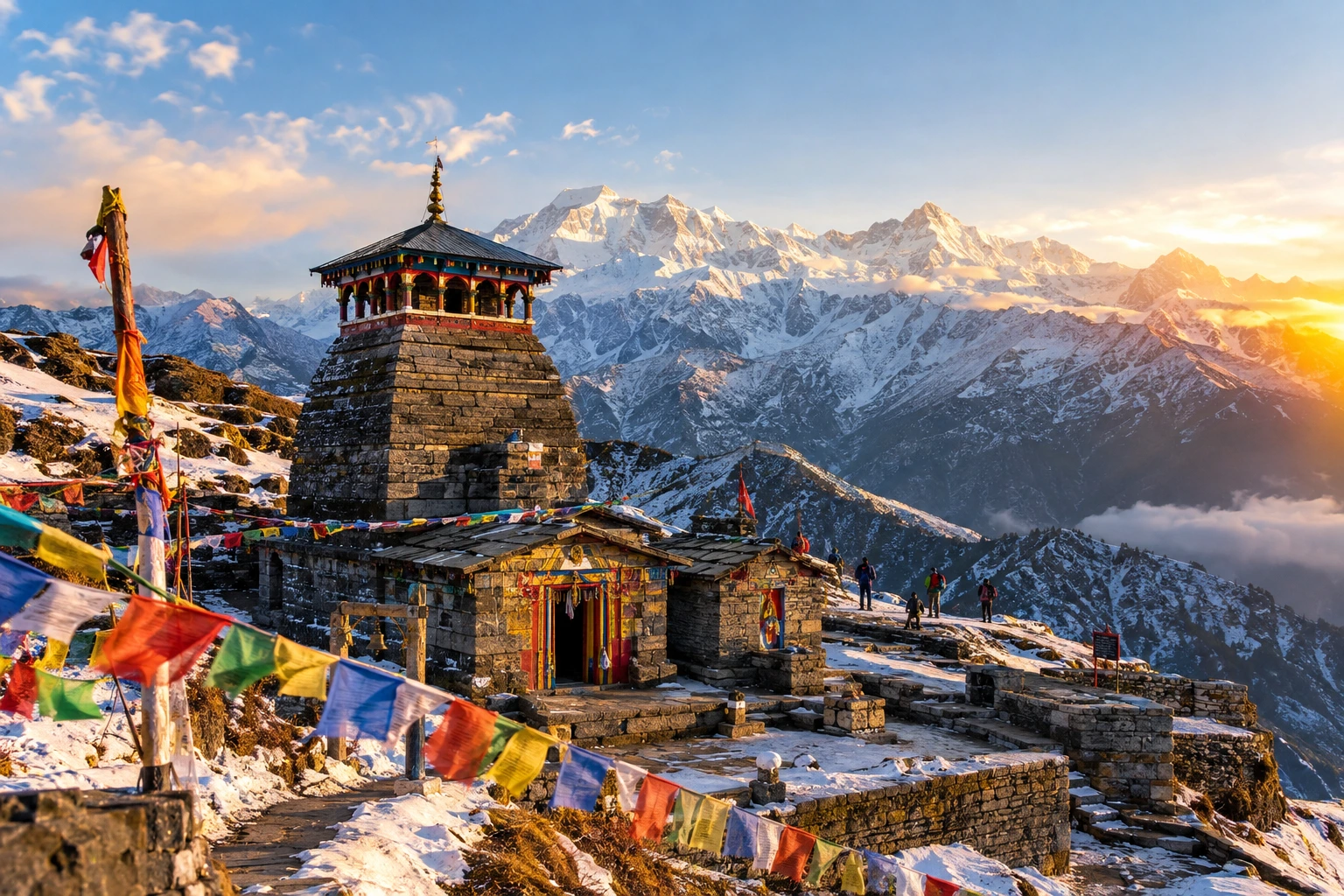
High in the Garhwal Himalayas of Uttarakhand, Tungnath stands as one of the most awe-inspiring pilgrimage and trekking destinations in India. As the highest Shiva temple in the world, it draws pilgrims seeking spiritual blessings and trekkers chasing some of the most breathtaking Himalayan views accessible on a relatively short trail. Set against a backdrop of snow-capped peaks and alpine meadows, this ancient shrine is as much a natural wonder as it is a sacred one.

If you’re planning a visit, our own Chopta Tungnath Trek package covers the complete journey, but before you set out, here’s everything worth knowing about Tungnath — its temple, height, distance from Chopta, trekking difficulty, and the best time to visit.

What Is Tungnath?

This ancient Hindu temple is dedicated to Lord Shiva and located in the Rudraprayag district of Uttarakhand. It holds the unique distinction of being the highest Shiva temple in the world and is also considered the highest among the five Panch Kedar temples scattered across the Garhwal Himalayas. According to mythology, this is where Lord Shiva’s arms are believed to have appeared after he took the form of a bull to avoid the Pandavas — a legend shared across the entire Panch Kedar circuit.

Believed to be well over a thousand years old, the shrine has stood through centuries of harsh Himalayan weather, drawing devotees who make the trek not just for its religious significance, but also for the sense of peace and scale that comes from standing at such a remote, high-altitude location.

Tungnath Temple: History and Significance

The Tungnath temple is built in the traditional North Indian Nagara architectural style, using stone construction suited to withstand extreme mountain conditions. Unlike the more heavily visited Kedarnath, it offers a quieter, more contemplative pilgrimage experience, largely because of its relative remoteness and shorter trekking season.

Devotees believe that worshipping here completes an essential part of the broader Panch Kedar pilgrimage, which also includes Kedarnath, Rudranath, Madhyamaheshwar, and Kalpeshwar. The temple’s priesthood traditionally comes from the Maithili Brahmin community, a practice that has continued for generations. During the harsh winter months, when the shrine closes and access becomes nearly impossible due to heavy snowfall, the symbolic deity is moved to Mukumath village, where worship continues until it reopens in spring.

Tungnath Height and Altitude

One of the most frequently asked questions by trekkers is the exact Tungnath height above sea level. The temple is situated at an altitude of approximately 3,680 metres (around 12,073 feet), making it a genuine high-altitude destination despite the relatively short trekking distance required to reach it.

This altitude is significant because it means trekkers should take basic precautions against altitude-related discomfort, even though the trail itself is short. Staying hydrated, pacing your ascent, and carrying warm layers are all recommended, since temperatures at this height can drop sharply, particularly in the early morning and evening.

For those continuing further, the nearby Chandrashila Peak rises even higher, to around 3,860–4,000 metres, offering one of the most complete 360-degree Himalayan panoramas in the entire region, including views of Nanda Devi, Trishul, and the Chaukhamba massif on clear days.

Chopta to Tungnath Distance

The trek begins from the small village of Chopta, often nicknamed the “Mini Switzerland of India” for its lush meadows and cool climate. The Chopta to Tungnath distance is approximately 3.5 kilometres one way, making it one of the shortest routes to any high-altitude Himalayan temple in the country.

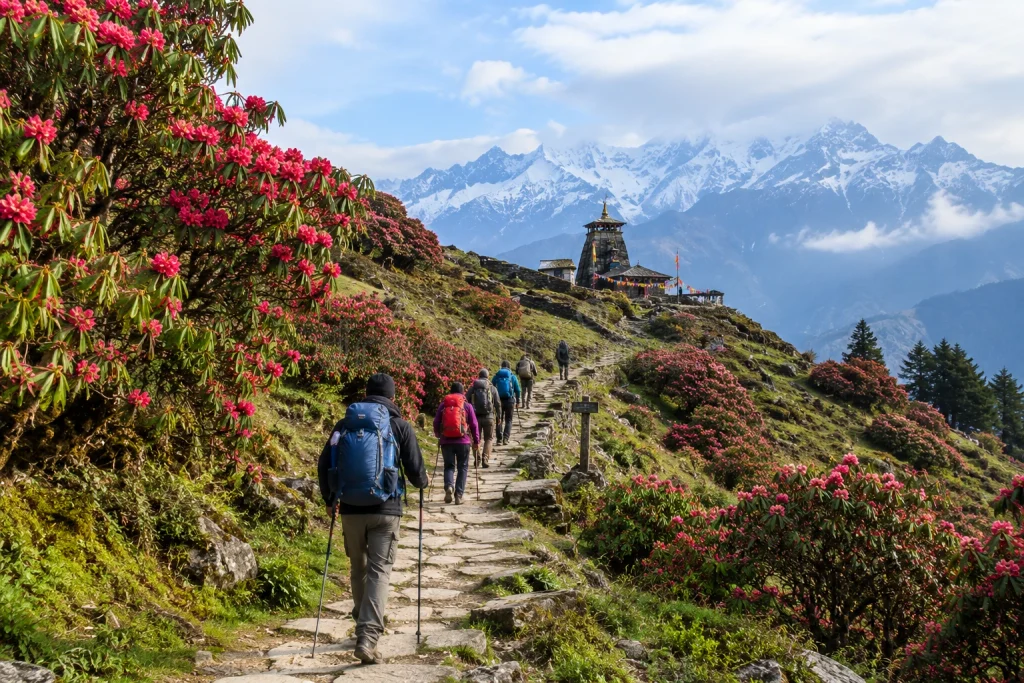
Most trekkers complete this stretch in around 2 to 4 hours, depending on fitness level and pace. The trail is well-defined, largely paved with stone steps, and passes through a mix of forested sections and open alpine meadows before reaching the shrine. For those wanting to extend the journey, an additional 1.5 km climb beyond it leads to the summit of Chandrashila Peak, adding roughly another 1 to 2 hours to the round trip.

Tungnath Trek: Route and Difficulty

The Tungnath trek is widely regarded as easy to moderate in difficulty, making it one of the most accessible high-altitude treks in the entire Himalayan region. Unlike many multi-day treks that demand technical skills or advanced fitness, this route is manageable for beginners, families, and even senior citizens with reasonable stamina.

That said, the altitude does add a layer of difficulty that shouldn’t be underestimated. While the trail isn’t technically challenging, the final stretch can feel steeper and more tiring than expected due to thinning air at this elevation. Beginners are advised to walk at a steady pace, take short breaks as needed, and avoid rushing the ascent.

For trekkers looking for a slightly longer and more immersive itinerary that combines this destination with its neighbouring summit and surrounding meadows, our Chopta Tungnath Chandrashila Trek package extends the journey for those seeking a bigger challenge and even more expansive views.

Best Time to Visit Tungnath

Figuring out the best time to visit Tungnath depends largely on the kind of experience you’re looking for. The peak season runs from April to June, when the weather is pleasant, rhododendrons are in full bloom along the trail, and the path is generally clear of snow. This window is ideal for first-time trekkers, families, and anyone prioritising comfort and easier trail conditions.

September to November offers a second excellent window, with crisp autumn air and some of the clearest, most dramatic mountain views of the year, once the monsoon clouds have fully cleared.

Winter, spanning December to March, transforms the trek into a snow-covered adventure best suited for experienced trekkers comfortable with cold-weather conditions and the additional gear it requires. During this period, the temple itself remains closed, typically shutting by early November and reopening around April or May. The monsoon months of July and August are generally best avoided altogether, since the trail can become slippery, and cloud cover often obscures the very views that make the trek worthwhile.

How to Reach

Since there’s no direct railway station or airport at Chopta, most trekkers begin their journey from Rishikesh, Haridwar, or Dehradun. The nearest major railhead is Rishikesh, while the nearest airport is Jolly Grant Airport in Dehradun. From either point, the drive to Chopta covers roughly 200 to 215 km and takes approximately 8 to 9 hours by road, passing through towns like Rudraprayag and Ukhimath along the way.

Most travellers choose to break the journey with an overnight stay near Chopta before beginning the trek early the next morning, allowing enough daylight to comfortably complete the ascent and descent, especially if extending the trip to Chandrashila Peak.

Planning Your Trip

  • Base village: Chopta, accessible by road from Rishikesh, Haridwar, and Dehradun
  • Trek distance: Approximately 3.5 km one way from Chopta
  • Altitude: 3,680 metres (12,073 feet)
  • Difficulty level: Easy to moderate
  • Ideal duration: A single day is enough for the temple alone; 2 to 3 days if combined with Chandrashila Peak and nearby Deoriatal Lake
  • What to carry: Sturdy trekking shoes, warm layers, sufficient water, and basic first-aid essentials
  • Temple closure: Typically closes by early November and reopens around April or May

For official travel advisories and up-to-date trekking conditions in the region, you can refer to the Uttarakhand Tourism Department, the state government’s official tourism portal.

Frequently Asked Question’s

  1. What is the height of Tungnath?

    It sits at an altitude of approximately 3,680 metres, or around 12,073 feet, making it the highest Shiva temple in the world.

  2. What is the Chopta to Tungnath distance?

    The trek covers approximately 3.5 kilometres one way from Chopta to the Tungnath temple, taking around 2 to 4 hours depending on pace.

  3. How difficult is the Tungnath trek?

    The trek is considered easy to moderate, with a well-defined, stone-paved trail suitable for beginners, families, and experienced trekkers alike.

  4. What is the best time to visit Tungnath?

    April to June and September to November are considered the best months, offering pleasant weather and clear mountain views. Winter offers a snow trekking experience for those prepared for colder conditions.

  5. Is Tungnath temple open throughout the year?

    No, the temple typically closes by early November and reopens around April or May, with the deity moved to Mukumath village during the winter closure.

Char Dham Yatra: The Ultimate Guide to Uttarakhand’s Sacred Pilgrimage

Char Dham Yatra

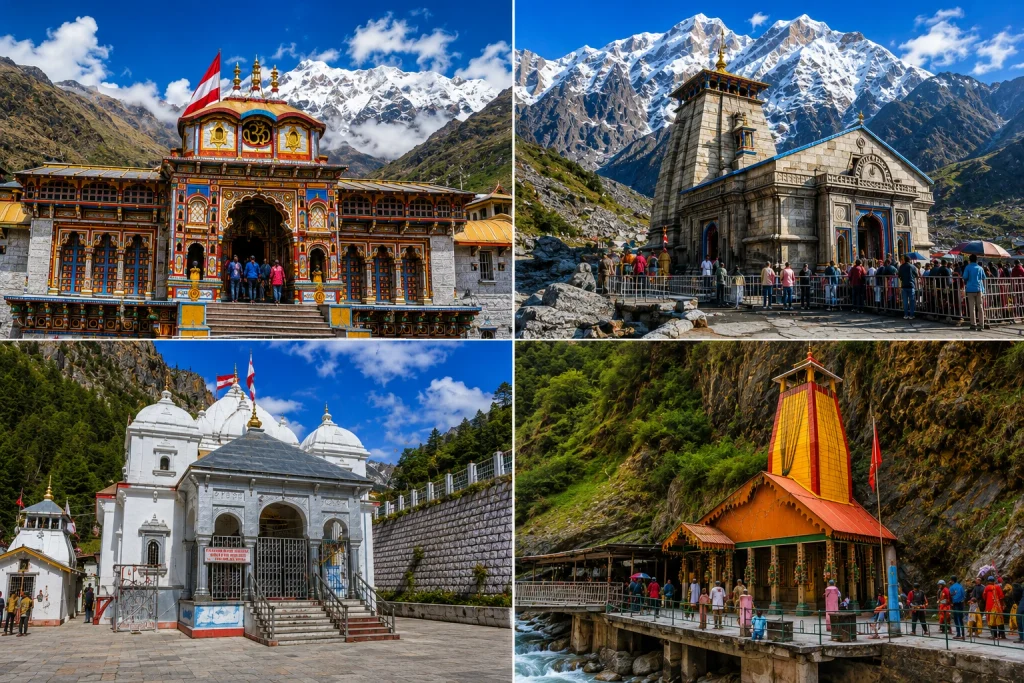
Tucked into the folds of the Garhwal Himalayas, the Char Dham Yatra is one of Hinduism’s most revered pilgrimage circuits, drawing lakhs of devotees to four sacred shrines every year. The journey takes pilgrims through Yamunotri, Gangotri, Kedarnath, and Badrinath — each set against a backdrop of snow-capped peaks, glacial rivers, and centuries of devotion. For many, completing this circuit isn’t just a trip; it’s a spiritual milestone.

If you’re planning your own Char Dham Yatra, our Char Dham Yatra package covers the complete route, but before you set out, here’s a detailed guide to help you understand the significance, route, and everything else you’ll need to know.

What Is Char Dham Yatra?

The term “Char Dham” translates to “four abodes,” referring to four sacred sites in Uttarakhand: Yamunotri, Gangotri, Kedarnath, and Badrinath. The Char Dham Yatra is often called the “Chota Char Dham” to distinguish it from the original, pan-India Char Dham established by the philosopher-saint Adi Shankaracharya, which includes Badrinath in the north, Dwarka in the west, Puri in the east, and Rameswaram in the south. While the two circuits share the name and the site of Badrinath, most people today, when referring to this journey, mean the Uttarakhand version.

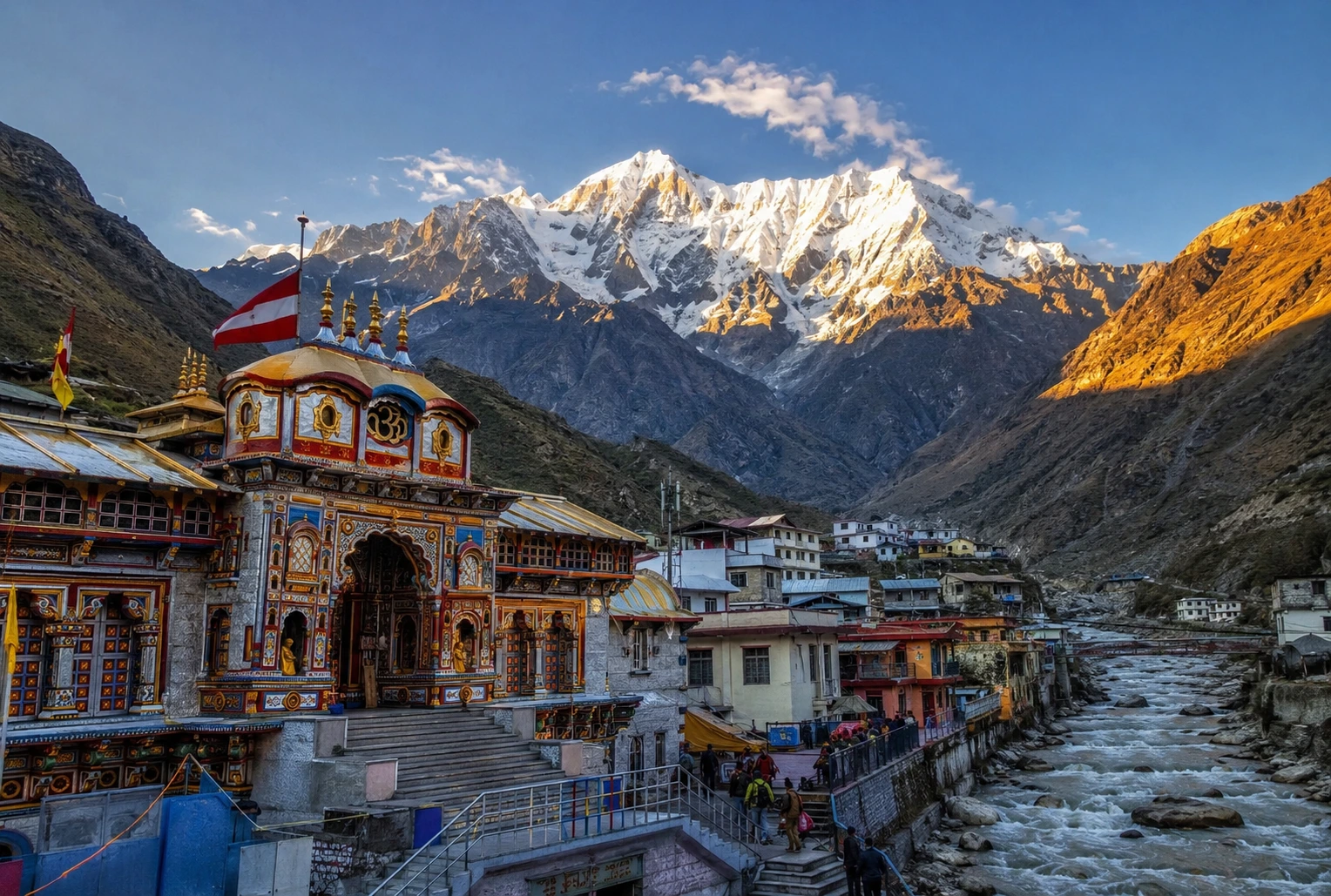
Each of the four shrines holds distinct religious significance. Yamunotri is dedicated to the goddess Yamuna and marks the source of the Yamuna River. Gangotri honours the goddess Ganga at the origin point of the sacred Ganges. Kedarnath is one of the twelve Jyotirlingas of Lord Shiva, and Badrinath, the final stop, is dedicated to Lord Vishnu. Together, these four shrines form a journey that touches on multiple strands of Hindu devotion within a single circuit.

The Traditional Route and Order

The Char Dham Yatra follows a fixed, traditional sequence. Pilgrims begin at Yamunotri, move on to Gangotri, then Kedarnath, and finally conclude at Badrinath — a west-to-east, roughly clockwise route through the Garhwal Himalayas. This order isn’t arbitrary; it also helps the body acclimatise gradually as pilgrims move toward the higher-altitude shrines of Kedarnath and Badrinath later in the journey.

Most pilgrims begin and end their trip from Haridwar, Rishikesh, or Dehradun, which serve as the main gateway cities. From there, the route typically flows through Barkot (base for Yamunotri), Uttarkashi (base for Gangotri), Guptkashi (base for Kedarnath), and Joshimath (en route to Badrinath), before looping back toward Haridwar via Rudraprayag and Devprayag.

The Four Shrines in Detail

Yamunotri requires a final stretch of trekking, typically 5 to 6 km from Janki Chatti, with ponies and palanquins available for those who prefer not to walk the full distance.

Gangotri is comparatively easier to reach, being directly connected by road via Uttarkashi, making it one of the more accessible stops on the route.

Kedarnath is widely regarded as the most physically demanding leg. Pilgrims travel by road up to Gaurikund and then undertake a steep 16 to 18 km trek to reach the temple. A helicopter service is also available, though bookings must go through IRCTC’s official portal.

Badrinath, the final destination, is the easiest of the four to access, since the road leads directly to the temple. This makes it especially suitable for elderly pilgrims or those with limited mobility.

For travellers who’d like a shorter, more focused pilgrimage instead of the full Char Dham Yatra circuit, our Kedarnath Yatra package is a great alternative that covers one of the most significant shrines in the journey.

Best Time for the Pilgrimage

The most favourable window for the Char Dham Yatra falls between May and June, offering clear skies and comfortable temperatures. A second good window opens from September to October, after the monsoon clears. The monsoon months are best avoided, as landslides and road blockages are common in the hill sections during this period.

The four shrines only remain open for a limited season each year, typically opening between April and May and closing around October or November as winter sets in. For 2026, Yamunotri and Gangotri opened on April 19, Kedarnath on April 22, and Badrinath on April 23, with all four shrines expected to close by mid-November ahead of the winter snowfall.

Registration and Permits

Registration is mandatory for all pilgrims undertaking the Char Dham Yatra, regardless of whether you’re travelling by road or helicopter. The registration process is free but compulsory, and typically opens in early March through the official Uttarakhand government portal. Pilgrims are advised to carry a printed yatra pass along with a valid government-issued photo ID, such as an Aadhaar card or passport.

In recent years, several additional rules have also come into effect, including mandatory medical check-ups for pilgrims above 55 years of age or with pre-existing health conditions, along with real-time tracking systems and expanded medical support across the route. It’s worth checking the latest guidelines closer to your travel dates, since rules and requirements can be updated from year to year.

Duration and Budget

A full Char Dham Yatra by road typically takes 10 to 12 days, while helicopter packages can shorten the journey to around 5 to 6 days, making them a popular option for pilgrims short on time or looking to avoid the physically demanding treks. Budgets can vary widely depending on the mode of travel and comfort level chosen, ranging from more modest road-trip packages to significantly higher-cost helicopter itineraries covering all four shrines.

If you’d prefer to explore a smaller, equally meaningful circuit before attempting the full Char Dham Yatra, our Do Dham Yatra package is worth considering as a shorter introduction to Uttarakhand’s sacred geography.

Tips for a Smooth Char Dham Yatra

  • Book accommodation early: Guesthouses in Barkot, Uttarkashi, Guptkashi, and Joshimath fill up weeks in advance during peak season
  • Pack for variable weather: Even in summer, temperatures near the shrines can drop sharply, especially early morning and evening
  • Carry essential documents: Yatra pass, photo ID, and medical certificates if applicable
  • Stay physically prepared: The Kedarnath trek in particular requires reasonable fitness
  • Respect entry guidelines: Certain temples have specific rules around entry and photography, so it helps to check current guidelines beforehand

For the latest registration details and official updates, you can visit the Uttarakhand government’s official registration portal, the authorised source for Char Dham Yatra registration.

Frequently Asked Question’s

  1. What is the correct order to complete the Char Dham Yatra?

    The traditional order is Yamunotri, followed by Gangotri, Kedarnath, and finally Badrinath.

  2. Is registration compulsory for the Char Dham Yatra?

    Yes, registration is mandatory for all pilgrims and is free to complete through the official Uttarakhand government portal.

  3. What is the best time of year for the Char Dham Yatra?

    May to June and September to October are considered the most favourable months, offering clearer weather and safer road conditions.

  4. How long does the full circuit take?

    By road, the journey typically takes 10 to 12 days, while helicopter packages can shorten it to around 5 to 6 days.

  5. Which shrine is the most physically demanding to reach?

    Kedarnath is generally considered the toughest, requiring a 16 to 18 km trek from Gaurikund, though helicopter services are available as an alternative.

Chandratal Lake: The Moon Lake of Spiti Valley

Chandratal Lake

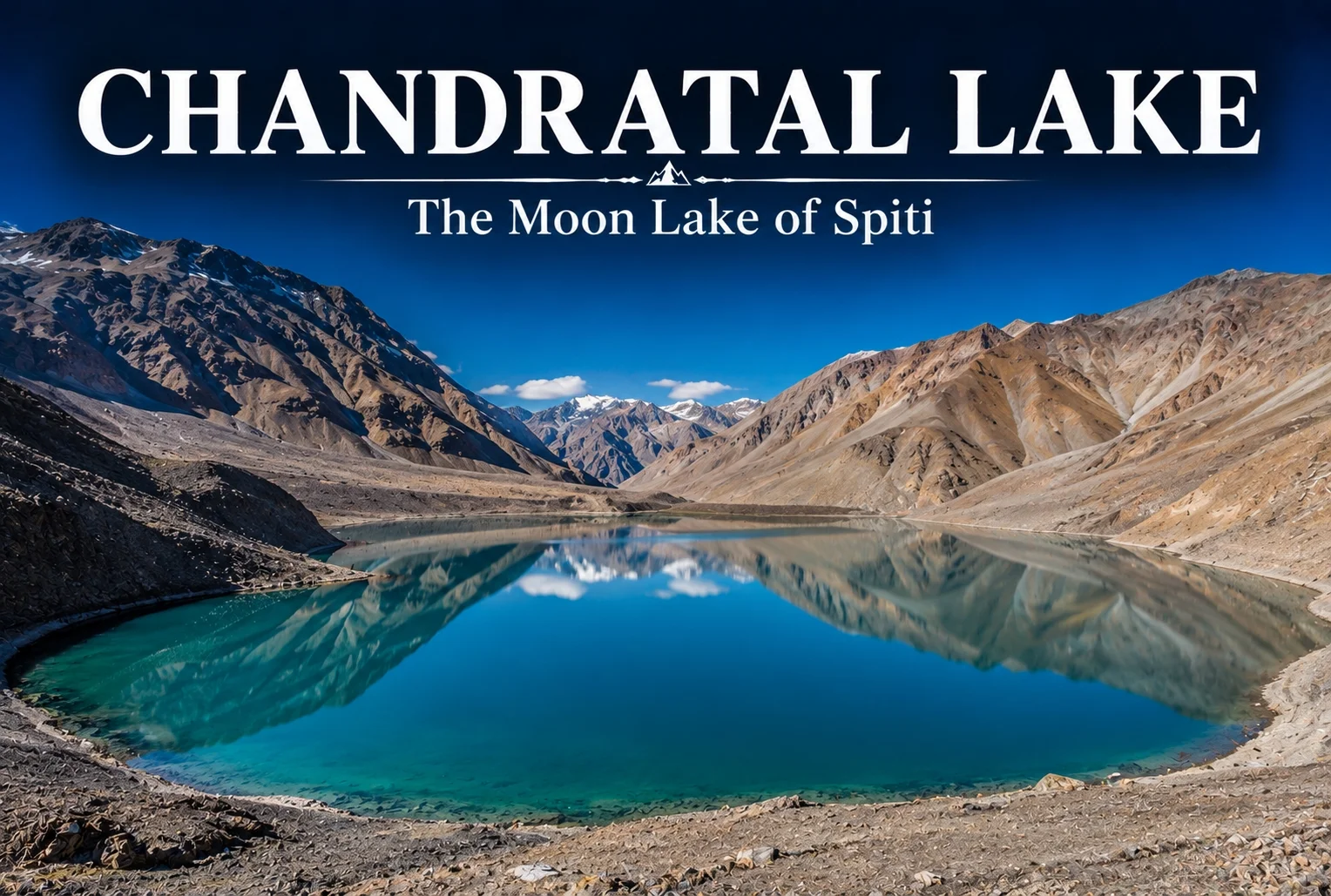
At nearly 4,300 meters, tucked into the cold desert landscape of Himachal Pradesh’s Spiti region, there’s a lake so perfectly crescent-shaped that its name literally translates to “Moon Lake.” That’s Chandratal Lake — and once you see the water’s shifting color against the barren mountains around it, the name stops feeling like poetic exaggeration.

Where Is Chandratal Located?

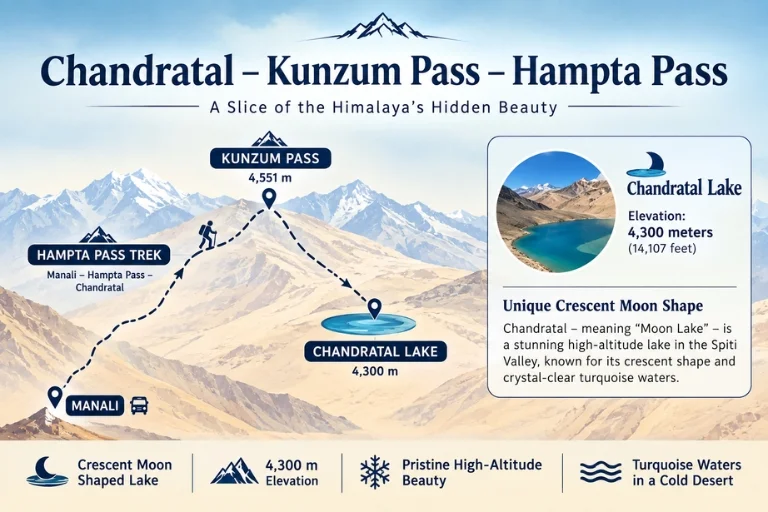
Chandratal sits in the Lahaul and Spiti district of Himachal Pradesh, close to the Kunzum Pass, roughly midway between the Kullu and Spiti valleys. The lake’s crescent shape gives it the name “Moon Lake,” and its remote, high-altitude setting is exactly what makes the drive and trek to reach it feel like entering an entirely different landscape from the green valleys most people associate with Himachal.

Chandratal - Kunzuma Pass - Hampta pass

Chandratal Trek: Getting There

Reaching this lake usually happens one of two ways — by road, via a motorable track from the Kunzum Pass side, or on foot, through the Chandratal trek, a shorter but genuinely rewarding walk that most trekkers pair with the broader Hampta Pass route. The trek itself is relatively short, typically completed in a day from the roadhead, but the high altitude means acclimatization matters more than distance. Many travelers extend their Spiti circuit into this route, since Chandratal often serves as an extension point rather than a standalone destination. Explore Hills’ Hampta Pass Trek includes this lake as part of its extended itinerary for trekkers who want both landscapes in one trip.

Best Time to Visit Chandratal

Timing here matters more than almost anywhere else in Himachal. The best time to visit Chandratal is between mid-June and early October, when the Kunzum Pass road is open and accessible. Outside this window, heavy snowfall cuts the region off entirely, and the roads remain closed through winter and much of spring. Within that season, late June and September tend to offer the clearest water reflections and the fewest crowds, while July and August bring more travelers but also greener surrounding slopes.

Why the Lake’s Color Keeps Changing

One of the most talked-about details about Chandratal is how dramatically its color shifts throughout the day — from a deep turquoise in the morning light to a more muted grey-blue by evening. This happens due to the mineral content in the glacial water combined with how sunlight hits the lake at different angles, and it’s part of why photographers often plan to spend a full day here rather than a quick stop.

Camping by the Lake

Camping directly on the lake’s edge used to be common, though environmental regulations have since pushed designated campsites slightly further away to protect the fragile ecosystem. Even with that shift, spending a night near Chandratal remains one of the most memorable parts of a Spiti trip—clear night skies, near-total silence, and a level of stargazing that’s hard to match closer to any city. Travelers looking to combine this experience with a broader Spiti itinerary can check out Explore Hills’ Spiti Valley Tour, which covers the wider region beyond just the lake.

For official permit requirements and updated road conditions in the Lahaul-Spiti region, you can refer to the Himachal Pradesh Tourism Department, the state government body overseeing this area.

Conclusion

Chandratal doesn’t need much dressing up — a crescent lake, a barren cold-desert backdrop, and water that changes mood with the light throughout the day. Whether you reach it by road or via the trek, it’s the kind of stop that tends to outlast the memory of everything else on a Spiti trip.

Frequently Asked Questions

What is the best time to visit Chandratal?

The best time to visit Chandratal is between mid-June and early October, when the Kunzum Pass road is open and the region is accessible.

How difficult is the Chandratal trek?

The trek is relatively short and moderate in difficulty, though the high altitude means proper acclimatization is important before attempting it.

Why is Chandratal called the Moon Lake?

Chandratal gets its name from its distinct crescent moon shape, which is especially visible from higher viewpoints around the lake.

Can you camp near Chandratal Lake?

Yes, though camping is now restricted to designated sites slightly away from the lake’s edge to help protect the surrounding ecosystem.

18 Best Places to Visit in Kodaikanal for Your Next Trip

places to visit in kodaikanal

Quick answer: The best places to visit in Kodaikanal include Kodaikanal Lake, Coaker’s Walk, Bryant Park, Pillar Rocks, Silver Cascade Falls, and Guna Caves. Together they cover the hill station’s lakes, viewpoints, gardens, and forest trails—giving you a full mix of things to do in Kodaikanal across two or three days.

Planning a trip to Kodaikanal and not sure where to start? It’s a common situation. The hill station is packed with lakes, viewpoints, waterfalls, and gardens, and the list of options can feel overwhelming when you only have a few days.

This guide fixes that. Below you’ll find the best places to visit in Kodaikanal, grouped so you can plan your route without backtracking across the hills. You’ll get a clear sense of what each spot offers, who it suits, and how it fits into a short or longer trip.

Kodaikanal sits in the Palani Hills of Tamil Nadu and is one of South India’s most loved summer escapes. If you enjoy exploring India’s hills, you might also want to browse our collection of best treks in India for your next adventure. The cool weather, misty mornings, and pine forests make it a favorite for families, couples, and solo travelers alike. Whether you want quiet walks or lively markets, there’s room for both here.

Let’s walk through the Kodaikanal tourist places worth your time.

What are the top places to visit in Kodaikanal?

If you only have limited time, start with the central attractions. Most sit close to the town center, so you can cover several in a single day.

Kodaikanal Lake

Kodaikanal Lake is the heart of the town and usually the first stop for most visitors. This star-shaped lake is surrounded by walking paths and shaded trees, making it easy to spend a relaxed morning here.

You can rent a pedal boat or rowboat, hire a cycle to ride around the perimeter, or simply sit by the water. Families with children love it because there’s plenty of space to move and no rush.

Pro Tip: Visit early in the morning when the mist still hangs over the water and the crowds haven’t arrived yet.

Coaker’s Walk

Coaker’s Walk is a paved pedestrian path that hugs the edge of a steep slope. On clear days, you get sweeping views of the valley below and, sometimes, a rare optical phenomenon called Brocken spectre.

The walk is short and gentle, which makes it good for older travelers and kids. There’s a small telescope house along the way if you want a closer look at the surrounding hills.

Bryant Park

Right next to Kodaikanal Lake, Bryant Park is a landscaped botanical garden filled with flowering plants, trees, and seasonal blooms. It’s a calm, easy stop that pairs well with a lake visit.

The park hosts a flower show during summer, drawing crowds of families and photographers. If you enjoy gardens or just want a slow afternoon, this is a comfortable place to unwind.

Which Kodaikanal view points are worth the trip?

Half the appeal of any hill station is the view. Kodaikanal view points range from easy roadside stops to spots that need a short drive out of town. Here are the ones worth planning around. If you’re drawn to dramatic Himalayan vistas, you might also enjoy our guide to the best autumn treks in India for a completely different kind of viewpoint experience.

Pillar Rocks

Pillar Rocks is a set of three giant granite boulders standing side by side. The viewpoint gives you a dramatic look at the rock faces, often wrapped in mist that rolls in and out within minutes.

There’s a small garden near the viewing area, so you can pause and take photos without feeling rushed. Go on a clear day for the best chance of an open view.

Dolphin’s Nose

Dolphin’s Nose is a flat rock that juts out over a deep valley, shaped a little like a dolphin’s snout. Reaching it takes a short trek downhill, so wear proper shoes.

The reward is one of the most striking views in the region. This spot suits travelers who don’t mind a bit of walking in exchange for a quieter, less crowded outlook.

Green Valley View (Suicide Point)

Green Valley View overlooks a deep gorge and the Vaigai Dam in the distance. The name comes from the sheer drop, but the fenced viewing area keeps things safe.

It’s an easy stop by car, which makes it good for families and anyone short on time. Small stalls nearby sell snacks and hot corn, handy on a chilly day.

Moir Point

Moir Point marks the start of the road into the deeper forests around Kodaikanal. It’s a calm viewpoint with fewer crowds, named after a British engineer who helped build local roads.

If you’re driving toward Berijam Lake, this is a natural place to stop and stretch your legs.

What are the best waterfalls and natural spots in Kodaikanal?

Waterfalls, caves, and forests make up some of the most memorable things to do in Kodaikanal. These spots reward travelers who want more than a town stroll. If forest trails and mountain nature have caught your attention, take a look at our top monsoon treks in India for more ideas on experiencing India’s wild side.

Silver Cascade Falls

Silver Cascade Falls is a roadside waterfall you’ll likely pass on your way into Kodaikanal. The water drops from a good height, and the spot is easy to reach without any walking.

It gets busy, especially on weekends, but it’s a quick and worthwhile stop. Keep your belongings safe and watch your step on the wet rocks.

Bear Shola Falls

Bear Shola Falls sits within a reserve forest a short distance from the town center. The falls are seasonal, so they’re fullest during and just after the monsoon.

The surrounding shola forest is quiet and shaded, making it a pleasant walk for nature lovers. It’s a good escape from the busier central attractions.

Guna Caves

Guna Caves, also known as Devil’s Kitchen, is a network of deep rock crevices surrounded by dense pine forest. The caves became famous after appearing in a popular Tamil film.

For safety, the deep sections are fenced off, but the viewing area and the surrounding forest are worth the visit. The tall pine trees here are a photographer’s favorite.

Pine Forest

The Kodaikanal Pine Forest is a thick plantation of towering pine trees planted in neat rows. Walking through it feels calm and cool, with soft light filtering through the canopy.

It’s a favorite for photos and a popular film shooting location. Plan a short stop here on your way to or from Pillar Rocks.

What are the quieter, offbeat places to visit in Kodaikanal?

The main attractions are worth every minute, but Kodaikanal rewards travelers who go a little further. These spots trade convenience for calm.

Berijam Lake

Berijam Lake is a pristine reservoir set deep in a reserve forest, about an hour’s drive from town. The area is protected, so you’ll need a permit to enter, arranged through the forest department.

The drive is scenic, passing through dense woods where you might spot bison or deer. If you want untouched nature over crowds, this is the trip to make.

Kurinji Andavar Temple

Kurinji Andavar Temple is dedicated to Lord Murugan and named after the Kurinji flower, which blooms only once every twelve years. The temple sits on a hilltop with wide views of the surrounding valleys.

It’s a peaceful stop that combines a bit of local culture with a good vantage point. The setting suits travelers who like a slower, reflective pace. If sacred mountain journeys interest you, our guide to the Kedarnath sacred Himalayan shrine is worth a read.

Mannavanur Lake

Mannavanur Lake lies near a small village around 35 kilometers from Kodaikanal. The area is known for its sheep farm, rolling grasslands, and quiet lakeside setting.

It’s an offbeat pick for travelers who want fewer tourists and a taste of village life. Pack a picnic and give yourself unhurried time here.

What are the best things to do in Kodaikanal beyond sightseeing?

things to do in kodaikanal

Kodaikanal isn’t only about viewpoints. A few simple activities can round out your trip and give you a real feel for the place.

  • Boating on Kodaikanal Lake: Rent a pedal boat or rowboat and take in the town from the water. It’s a relaxed, family-friendly way to spend an hour.
  • Cycling around the lake: Hire a bicycle near the boathouse and ride the loop around Kodaikanal Lake at your own pace.
  • Horse riding: Guided pony rides are available near the lake, popular with kids and first-time visitors.
  • Shopping for homemade chocolates: Kodaikanal is known for its handmade chocolates. Pick up a box from the local shops as a treat or a gift.
  • Trying local eucalyptus and homemade products: The markets sell eucalyptus oil, plum jams, and cheeses made by the local community.
  • Trekking through shola forests: Several short trails wind through the surrounding forests, ideal for travelers who want to stretch their legs. If trekking has caught your interest, our guide to the best spring treks in India covers some excellent options for your next hill adventure.

For official travel information, permits, and seasonal updates, check the Tamil Nadu Tourism site for Kodaikanal before you go.

How many days do you need to visit Kodaikanal?

Two to three days is enough to cover the main Kodaikanal tourist places without rushing. Here’s a simple way to split your time:

  1. Day one: Kodaikanal Lake, Bryant Park, Coaker’s Walk, and Bear Shola Falls. These sit close together near the town center.
  2. Day two: Pillar Rocks, Guna Caves, Pine Forest, Green Valley View, and Dolphin’s Nose. This route covers the main Kodaikanal view points in one loop.
  3. Day three (optional): A longer trip to Berijam Lake or Mannavanur Lake for a quieter, forest-heavy day.

If you only have a weekend, focus on day one and day two. The offbeat spots reward those who can spare an extra day.

Plan your Kodaikanal trip with confidence

Kodaikanal packs a lot into a small hill station—lakes to circle, viewpoints to chase, waterfalls to hear, and forests to wander. The best places to visit in Kodaikanal cover all of it, and grouping them by area keeps your trip smooth instead of scattered.

Start with the central attractions, save a day for the viewpoints, and add an offbeat spot if you can. Pack warm layers, comfortable shoes, and a bit of patience for the mist. The views are worth the wait.

If you’re planning to add a Himalayan trek to your India travel calendar, browse Explore Hills’ upcoming trek packages to find a guided option that fits your schedule and fitness level.

Frequently Asked Questions

What is the best time to visit Kodaikanal?

The most popular time to visit Kodaikanal is between April and June, when the weather is cool and pleasant. September to October is also a good window, with clear skies after the monsoon. Winter months bring colder temperatures and heavier mist, which some travelers enjoy for the moody views.

Which are the must-visit places to visit in Kodaikanal for first-timers?

For a first trip, focus on Kodaikanal Lake, Coaker’s Walk, Bryant Park, Pillar Rocks, Guna Caves, and Silver Cascade Falls. These cover the town’s signature lake, gardens, viewpoints, and waterfalls, and they’re easy to reach in two days.

Is Kodaikanal good for families with children?

Yes. Kodaikanal suits families well. Kodaikanal Lake offers boating and cycling, Bryant Park is easy to walk, and Green Valley View is a quick stop by car. Most central attractions involve little to no strenuous walking, which works for kids and older travelers.

Do you need a permit to visit any places in Kodaikanal?

Yes, Berijam Lake requires a permit because it sits inside a reserve forest. You arrange it through the local forest department, and entry numbers are limited each day. Most other Kodaikanal tourist places are open without any permit.

How many days are enough for a Kodaikanal trip?

Two to three days is enough to see the main attractions and viewpoints without rushing. A weekend covers the central spots and the main Kodaikanal view points. Add a third day if you want to visit offbeat places like Berijam Lake or Mannavanur Lake.

Places to Visit in Mysore: A Complete Travel Guide

places to visit in mysore

Quick answer: The best places to visit in Mysore include Mysore Palace, Chamundi Hills, Brindavan Gardens, St. Philomena’s Church, and Mysore Zoo. Most attractions sit within the city or a short drive away, making Mysore an easy 2–3 day trip for heritage, gardens, and nearby day trips.

Planning a trip to Mysore and not sure where to start? It’s a common situation. Mysore packs royal palaces, hill temples, sprawling gardens, and vibrant markets into a compact, walkable city—so the challenge isn’t finding things to do, it’s deciding what to skip.

This guide solves that. You’ll get a clear rundown of the top Mysore tourist places, practical details like timings and entry fees, and a section on day trips for when you want to venture out. Whether you have a weekend or a full week, you’ll leave with a plan that fits your schedule. If you’re also exploring other Indian destinations, check out our popular destinations guide for ideas beyond the south.

Mysore (officially Mysuru) sits about 145 km from Bengaluru in Karnataka. It’s known as the “City of Palaces,” and once you see the skyline lit up, you’ll understand why. Let’s get into the best sightseeing places in Mysore, one by one.

Why Visit Mysore?

Short answer: it’s one of South India’s most rewarding heritage cities. Mysore offers a mix of history, culture, and greenery that few destinations match.

Here’s what makes it worth your time:

  • Royal heritage: The Wadiyar dynasty ruled from here, leaving behind palaces, temples, and traditions that still shape the city.
  • Compact layout: Most Mysore attractions are close together, so you spend less time in transit and more time exploring.
  • Year-round appeal: The weather stays pleasant for most of the year, and the Dasara festival in autumn is a spectacle worth planning around.
  • Great base for day trips: Several Mysore near tourist places, like Srirangapatna and Nagarhole, are within easy reach.

According to Karnataka Tourism, Mysore remains one of the state’s most visited destinations—and for good reason.

Top Places to Visit in Mysore

sightseeing places mysore

Here are the must-see sightseeing places in Mysore, ranked by popularity and travel value.

1. Mysore Palace (Amba Vilas Palace)

No trip is complete without the Mysore Palace. It’s the star of every list of Mysore tourist places, and it earns that spot. Built in the Indo-Saracenic style, the palace blends Hindu, Muslim, Rajput, and Gothic influences into one stunning structure.

Visit in the evening if you can. Every Sunday and on public holidays, nearly 100,000 bulbs light up the palace, turning it into a glowing fairytale.

  • Timings: 10:00 AM – 5:30 PM (daily)
  • Entry fee: ₹100 for adults; lower rates for children and students
  • Pro Tip: Reach early to beat the crowds, and carry a valid ID for the ticket counter.

2. Chamundi Hills and Chamundeshwari Temple

Sitting atop Chamundi Hills, this temple is dedicated to Goddess Chamundeshwari, the patron deity of the Wadiyar family. The drive up offers sweeping views of the city, and the giant Nandi statue on the way is a highlight in itself. If you enjoy temple treks like this, you might also love the Chopta Tungnath Trek in Uttarakhand—a different kind of sacred climb.

If you’re up for a workout, climb the 1,000 stone steps to the top. If not, a road leads straight up.

  • Distance from city: About 13 km
  • Best time: Early morning for cooler weather and fewer crowds
  • What to see: The temple, the Nandi statue, and panoramic city views

3. Brindavan Gardens

One of the most photographed Mysore attractions, Brindavan Gardens sits below the KRS Dam. The terraced gardens, fountains, and the musical fountain show draw visitors every evening.

Time your visit for sunset so you catch the illuminated fountains and the light-and-sound show.

  • Distance from city: About 21 km
  • Best time: Evening, for the musical fountain
  • Entry fee: Nominal charge, with extra for boating

4. St. Philomena’s Church

This neo-Gothic church is one of the tallest in Asia. Its twin spires rise nearly 175 feet, and the stained-glass windows inside are worth a slow look. It’s a quiet, peaceful stop away from the busier tourist places in Mysore.

  • Timings: 5:00 AM – 6:00 PM
  • Entry fee: Free
  • Best for: History, architecture, and quiet reflection

5. Mysore Zoo (Sri Chamarajendra Zoological Gardens)

One of India’s oldest and best-maintained zoos, Mysore Zoo is home to a wide range of animals, including elephants, tigers, giraffes, and gorillas. It’s a great stop if you’re traveling with kids. Looking for more family-friendly travel ideas? Our guide to best places to go on a family trip covers destinations that work well for all ages.

  • Timings: 8:30 AM – 5:30 PM (closed Tuesdays)
  • Entry fee: ₹80 for adults; lower for children
  • Pro Tip: Set aside at least two hours to walk the full loop.

Once a royal residence, this palace now houses one of South India’s largest collections of artifacts and paintings, including works by Raja Ravi Varma. Art lovers shouldn’t miss it.

  • Timings: 8:30 AM – 5:30 PM
  • Entry fee: Nominal
  • Best for: Art, paintings, and royal memorabilia

7. Karanji Lake

If you want a break from palaces and temples, Karanji Lake offers a calm, green escape. It has a walk-through aviary—one of the largest in India—and plenty of birdlife around the water.

  • Timings: 8:30 AM – 5:30 PM (closed Tuesdays)
  • Best for: Nature walks, birdwatching, and boating

8. Devaraja Market

For a taste of local life, head to Devaraja Market. This bustling bazaar sells flowers, spices, fruits, and the famous Mysore silk and sandalwood products. It’s a photographer’s delight and a good place to pick up souvenirs.

  • Best time: Morning, when the flower stalls are at their most colorful
  • Best for: Shopping, photography, and local culture

Quick Comparison of Mysore Attractions

Here’s a snapshot to help you plan your route.

AttractionDistance from CityIdeal TimeBest For
Mysore PalaceCity centerEveningHeritage, lights
Chamundi Hills13 kmMorningTemple, views
Brindavan Gardens21 kmEveningFountains, family
St. Philomena’s ChurchCity centerMorningArchitecture
Mysore ZooCity centerMorningWildlife, kids
Karanji LakeCity centerMorningNature, boating
Devaraja MarketCity centerMorningShopping

Mysore Near Tourist Places and Day Trips

Done with the city and want to explore more? Several Mysore near tourist places make excellent day trips. Each is within a two-hour drive, so you can head out in the morning and return by evening. If you’re open to longer adventures in the mountains, our Uttarakhand trips and Himachal trips are worth a look once you’re back from the south.

Srirangapatna

Just 18 km from Mysore, Srirangapatna is a historic island town on the Cauvery River. It was the capital of Tipu Sultan, and you can visit Daria Daulat Bagh, the Ranganathaswamy Temple, and Tipu’s fort.

  • Distance: 18 km
  • Best for: History and temples

Nagarhole National Park

For wildlife, Nagarhole is a top pick. This national park is part of the Nilgiri Biosphere Reserve and shelters tigers, elephants, and leopards. Book a safari to make the most of your visit.

  • Distance: About 90 km
  • Best for: Wildlife safaris

Somnathpur

Home to the Chennakeshava Temple, Somnathpur showcases some of the finest Hoysala architecture in Karnataka. The carvings here are intricate and well-preserved.

  • Distance: About 35 km
  • Best for: Architecture and photography

Coorg (Kodagu)

If you have an extra day, Coorg is worth the drive. Known for its coffee plantations, misty hills, and waterfalls, it’s a favorite among nature lovers looking for hill station charm near Mysore. If hill destinations like this appeal to you, browse our collection of Himachal trips for similar mountain escapes in the north.

  • Distance: About 120 km
  • Best for: Hills, coffee estates, and cool weather

How Many Days Do You Need in Mysore?

For most travelers, two to three days is enough to cover the main sightseeing places in Mysore.

  • 1 day: Mysore Palace, Chamundi Hills, and Brindavan Gardens
  • 2 days: Add Mysore Zoo, St. Philomena’s Church, Karanji Lake, and Devaraja Market
  • 3 days: Include a day trip to Srirangapatna, Somnathpur, or Coorg

Plan your route by location to save time. Group city-center attractions on one day and outlying spots on another.

Best Time to Visit Mysore

The best time to visit Mysore is between October and February, when the weather is cool and pleasant.

  • October to February: Ideal for sightseeing; also covers the Dasara festival
  • March to May: Hot, but fewer crowds
  • June to September: Monsoon brings greenery, but plan for rain

If you can, time your trip with Dasara. The city comes alive with processions, the illuminated palace, and cultural events. For travelers who enjoy exploring India by season, our guide to the best autumn treks in India is a great next read.

Wrap Up Your Mysore Trip with Explore Hills

Mysore rewards travelers who plan a little. With its palaces, temples, gardens, and nearby day trips, you get history and nature in one compact destination. Start with the Mysore Palace and Chamundi Hills, then branch out to the gardens and markets—and set aside a day for Srirangapatna or Coorg if your schedule allows.

Ready to map out your journey? Explore more travel guides and upcoming trek packages with Explore Hills and make your next trip effortless.

Start planning your Mysore trip today.

Frequently Asked Questions

What is the most famous place to visit in Mysore?

The Mysore Palace (Amba Vilas Palace) is the most famous attraction. Built in the Indo-Saracenic style, it draws millions of visitors each year and is especially stunning when lit up on Sundays and public holidays.

How many days are enough to explore Mysore?

Two to three days are enough to cover the main Mysore tourist places. One day covers the palace, Chamundi Hills, and Brindavan Gardens, while extra days let you add museums, lakes, markets, and a day trip.

What are the best day trips from Mysore?

The top Mysore near tourist places include Srirangapatna (18 km), Somnathpur (35 km), Nagarhole National Park (90 km), and Coorg (120 km). Each works as a comfortable day trip.

What is the best time to visit Mysore?

October to February offers the best weather for sightseeing. This window also includes the famous Dasara festival, when the city and palace are at their most vibrant.

Is Mysore good for a family trip?

Yes. Mysore is family-friendly, with attractions like Mysore Zoo, Karanji Lake, and Brindavan Gardens that appeal to children and adults alike. Most sights are close together, which makes travel with kids easier.

Mehandipur Balaji Temple: A Complete Pilgrimage Guide

mehandipur balaji temple

Quick answer: Mehandipur Balaji Temple is a famous Hindu shrine in Rajasthan dedicated to Lord Hanuman (Balaji). Located in Dausa district, it is widely known among devotees for rituals believed to relieve spiritual afflictions. The temple welcomes visitors daily, with specific darshan and aarti timings that are best confirmed before you travel.

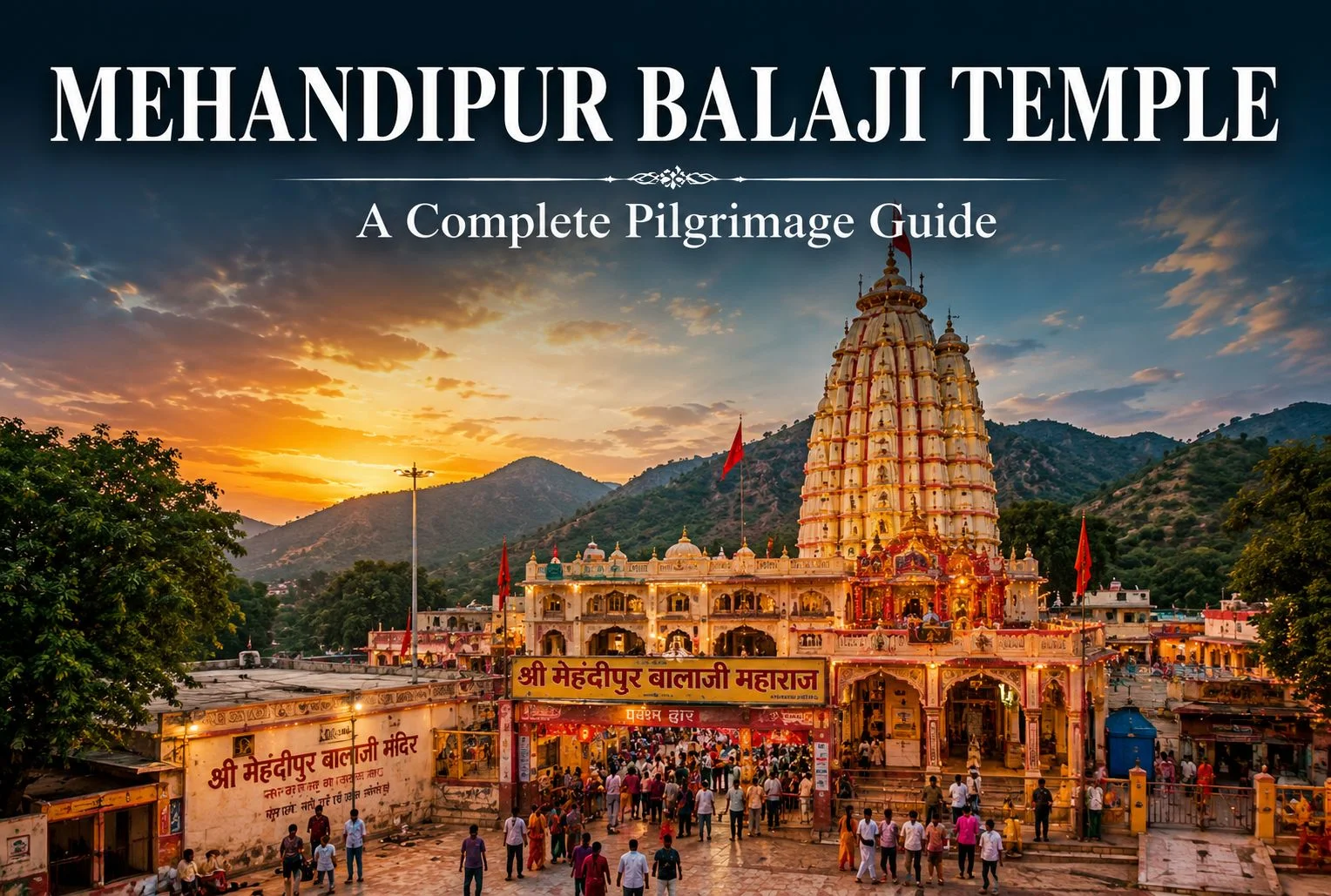
Mehandipur Balaji Temple sits in the rocky hills between Dausa and Karauli districts of Rajasthan. For many pilgrims, it is one of the most talked-about Hanuman temples in India—not just for its devotion, but for the unique rituals performed here. Thousands of visitors arrive each week, some seeking blessings and others drawn by curiosity about the temple’s reputation.

This guide walks you through everything you need to plan a smooth trip: what the temple means to devotees, darshan and aarti timings, how to reach it, local rules, nearby places, and the best time to visit. Where beliefs are involved, we’ve clearly separated faith and local tradition from verifiable facts, so you know exactly what to expect.

Whether you’re a first-time visitor or returning for another darshan, this practical guide will help you prepare with confidence.

What Is Mehandipur Balaji Temple Known For?

Mehandipur Balaji Temple is dedicated to Lord Hanuman, affectionately called “Balaji” by devotees. The temple is set among natural rock formations, which adds to its distinctive atmosphere. It falls within the Dausa district of Rajasthan, close to the border with Karauli.

The presiding deity is a self-manifested (swayambhu) image of Balaji, according to local belief. Alongside Balaji, two other deities are worshipped here: Pretraj Sarkar and Bhairav Baba (Kotwal Kaptan). Together, these three form the spiritual core of the temple for its followers.

Important note on beliefs: Devotees believe the temple has the power to relieve people from negative spiritual influences through prayer and ritual. These beliefs are part of local faith and tradition. They are religious convictions held by followers, not scientifically established facts. Visitors should approach the temple respectfully, regardless of personal belief.

Why Do Pilgrims Travel to Balaji Mehandipur?

Pilgrims visit Balaji Mehandipur for several reasons rooted in devotion and tradition:

  • Seeking blessings from Lord Hanuman: Balaji is revered as a protector and a symbol of strength and devotion.
  • Participating in special rituals: The temple is known for prayer rituals that devotees believe bring relief from spiritual distress.
  • Fulfilling vows (mannat): Many visitors come to offer prayers or return after a wish has been fulfilled.
  • Experiencing the spiritual environment: The chanting, aarti, and collective devotion create a deeply immersive atmosphere.

For anyone planning a spiritual trip through Rajasthan, Mehandipur Balaji pairs well with other heritage and hill destinations in the state. If you’re looking to extend your Rajasthan journey, check out the Udaipur and Mount Abu tour on Explore Hills for a curated itinerary that combines lakes, heritage, and hill station charm.

Quick Facts About Mehandipur Balaji Temple

DetailInformation
LocationMehandipur, Dausa district, Rajasthan
Presiding deityLord Hanuman (Balaji)
Other deities worshippedPretraj Sarkar, Bhairav Baba
StateRajasthan, India
Nearest major cityJaipur (approx. 100 km)
Best time to visitOctober to March
Entry feeFree
PhotographyGenerally restricted inside; verify locally

Distances are approximate. Please confirm current details before your visit.

Mehandipur Balaji Timing: When Is the Temple Open?

Understanding the mehandipur balaji timing helps you plan your darshan without disappointment. The temple generally opens early in the morning and remains accessible through the day, with a break in the afternoon. Timings can shift on festivals, special days, and during peak pilgrim seasons.

SessionApproximate Timing
Morning darshan6:00 AM – 1:00 PM
Afternoon break1:00 PM – 3:00 PM (temple may close)
Evening darshan3:00 PM – 9:00 PM

Please note: These timings are indicative and may change based on the season, festivals, or temple administration decisions. Always verify the current mehandipur balaji timing with the temple or a trusted local source before you travel.

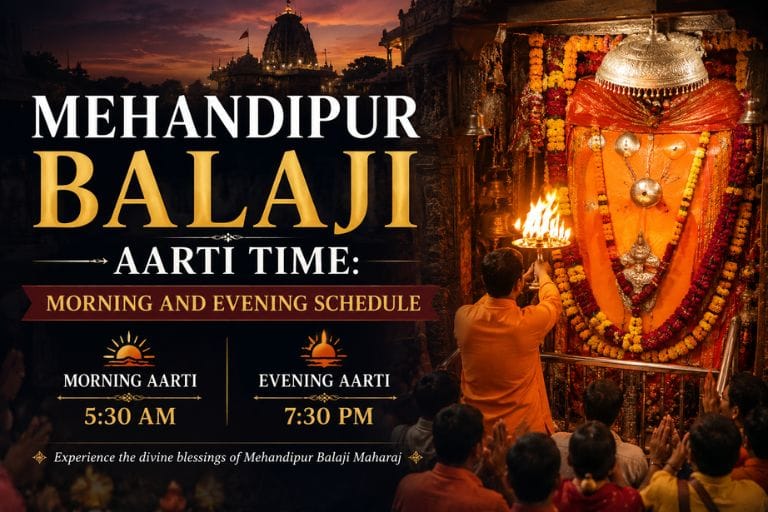
Mehandipur Balaji Aarti Time: Morning and Evening Schedule

mehandipur balaji aarti time

The aarti is one of the most moving experiences for visitors. Arriving in time for the ceremony lets you witness the temple at its most devotional. The mehandipur balaji aarti time typically follows a morning and evening pattern.

AartiApproximate Time
Morning aarti (Mangala aarti)Early morning, around 6:00 AM – 7:00 AM
Evening aarti (Sandhya aarti)Evening, around 6:00 PM – 7:00 PM

Please note: The mehandipur balaji aarti time can vary with the season and on festival days. Confirm the exact schedule before your visit so you don’t miss the ceremony.

How to Reach Mehandipur Balaji

Mehandipur Balaji is well connected to major cities in Rajasthan. Here’s how to get there by different modes of travel.

By Air

The nearest airport is Jaipur International Airport, roughly 100 km away. From Jaipur, you can hire a taxi or take a bus to reach the temple in about two to three hours, depending on traffic and road conditions.

By Train

The nearest railway stations are Bandikui Junction and Dausa. Both connect to Jaipur and other cities. From the station, local taxis and buses are available to complete the journey to Mehandipur.

By Road

The temple lies on the Jaipur–Agra highway (National Highway 21), which makes road travel convenient. Regular buses run from Jaipur, Dausa, and nearby towns. Many pilgrims also travel by private car or shared cabs.

Things to Know Before You Visit

A little preparation goes a long way at Mehandipur Balaji. Keep these practical points in mind.

Dress Code

There is no strict official dress code, but modest and respectful clothing is expected at a place of worship. Choose comfortable clothes suitable for standing in queues and walking.

Photography

Photography and videography are generally restricted inside the temple premises. Rules can change, so check with temple staff before taking any pictures.

Food Offerings (Prasad)

The temple has specific customs around prasad. In particular, followers observe rules about not eating certain offerings on temple grounds and not carrying them home. Local guides and signboards explain these traditions. Follow the instructions of temple authorities.

Behavior and Respect

The temple can feel intense for first-time visitors due to its rituals. Maintain a calm, respectful attitude. Keep your belongings secure, especially during crowded darshan hours.

Facilities

Basic facilities such as dharamshalas (guest houses), eateries, and shops are available near the temple for pilgrims. Amenities can be simple, so plan accordingly.

What Are the Best Nearby Attractions?

If you have extra time, several attractions around Mehandipur Balaji are worth exploring:

  • Abhaneri (Chand Baori stepwell): One of India’s most stunning stepwells, located near Dausa.
  • Bhandarej: Known for its heritage architecture and ancient ruins.
  • Dausa town: Offers local temples, markets, and a glimpse of Rajasthani culture.
  • Jaipur: The Pink City, with its forts, palaces, and bazaars, is an easy add-on to your trip.

For more ideas on combining temple visits with heritage sightseeing, take a look at the Udaipur and Mount Abu tour on Explore Hills—a great way to round off a Rajasthan pilgrimage trip with lakes, palaces, and cool hill air.

When Is the Best Time to Visit Mehandipur Balaji?

The best time to visit Mehandipur Balaji is from October to March, when the weather in Rajasthan is pleasant and comfortable for travel. Summers (April to June) can be extremely hot, which makes long queues and outdoor waiting tiring.

Festival days and Tuesdays and Saturdays—considered special for Hanuman worship—tend to draw large crowds. If you prefer a quieter darshan, visit on a weekday outside festival periods. If you want to experience the temple at its most vibrant, plan around a festival, but be ready for heavy footfall.

Plan Your Visit to Mehandipur Balaji

Mehandipur Balaji Temple offers a unique blend of devotion, tradition, and Rajasthani culture. Whether you come for spiritual reasons or to understand one of the region’s most distinctive shrines, a little planning makes the trip far smoother. Before you travel, confirm the latest darshan timings and travel advisories through the Rajasthan Tourism official website, which is a reliable starting point for current destination information. Dress respectfully, arrive early for aarti, and give yourself time to soak in the atmosphere.

Frequently Asked Questions

Where is Mehandipur Balaji Temple located?

Mehandipur Balaji Temple is located in Mehandipur village, in the Dausa district of Rajasthan, India. It sits close to the border with Karauli district and is roughly 100 km from Jaipur.

What is the Mehandipur Balaji Aarti time?

The morning aarti is usually held around 6:00 AM to 7:00 AM, and the evening aarti around 6:00 PM to 7:00 PM. These times can change on festivals and special days, so verify locally.

Is there an entry fee for Mehandipur Balaji Temple?

No, entry to the temple is free. Devotees may make voluntary offerings, but there is no ticket required for darshan.

Is Mehandipur Balaji Temple safe to visit?

Yes, the temple is visited by thousands of pilgrims regularly. First-time visitors may find the rituals intense, so it helps to know what to expect. Keep your belongings secure and follow the guidance of temple authorities.

How many days do I need for a Mehandipur Balaji trip?

A single day is usually enough for darshan if you’re traveling from Jaipur. If you want to explore nearby attractions like Abhaneri or Dausa, plan for two days.

Best Places to Go on a Family Trip in India (2026 Guide)

best places to go on a family trip

Quick answer: The best places to go on a family trip in India include hill stations like Nainital, Manali, Mussoorie, and Gulmarg, plus spiritual destinations such as Haridwar, Rishikesh, and the Char Dham Yatra. These spots offer easy travel, kid-friendly activities, and options for both summer and winter holidays.

Planning a family trip in India can feel overwhelming. You want somewhere scenic, safe, and easy to reach—but also fun for kids and relaxing for parents. Add in different age groups, school vacation timing, and long travel hours, and the whole thing starts to feel like a puzzle.

It’s a common struggle. Most families end up circling the same few destinations without knowing which one actually fits their kids’ ages or the season they’re traveling in.

This guide fixes that. You’ll find the best family vacation places in India sorted by hill stations, spiritual destinations, summer picks, and winter picks. Each one includes what makes it work for families, how hard it is for young kids, and when to go. There’s also a quick comparison table and practical planning tips at the end, so you can make a confident choice without hours of research.

Most of these destinations sit in the Himalayan belt—Uttarakhand, Himachal Pradesh, and Kashmir—which means clean air, cooler weather, and short flights or drives from Delhi. Let’s break it down.

What Makes a Great Family Trip Destination in India?

Not every beautiful place makes a good family tour. A stunning high-altitude trek might thrill two adults but exhaust a six-year-old.

Here’s what actually matters when you’re traveling with kids:

  • Easy accessibility: Look for destinations within a comfortable drive or short flight from major hubs like Delhi. Long, winding mountain roads can be rough on young children.
  • Safe, gentle activities: Boating, cable car rides, gentle nature walks, and short sightseeing loops work better than steep hikes or high-risk adventure sports.
  • Comfortable weather: Pleasant temperatures matter more with kids. Extreme heat or bitter cold cuts trips short fast.
  • Family-friendly stays: Hotels and homestays with room to move, decent food, and easy access to essentials make a big difference.
  • Variety for all ages: The best spots balance activities for kids, relaxation for parents, and photo-worthy views for everyone.

Keep these five factors in mind, and picking the right destination becomes much simpler. Now let’s look at the top choices.

Best Hill Stations for Family Trips

Hill stations are the classic Indian family holiday—cool weather, gorgeous views, and plenty to do at a relaxed pace. These four are among the best hill stations for family tour planning.

Nainital, Uttarakhand

Nainital is one of the most popular family destinations in India, and for good reason. The town wraps around a beautiful lake, and boating on Naini Lake is a hit with kids of every age.

Best for: Families with young children who want low-effort sightseeing.

Kids love the cable car ride up to Snow View Point, the ropeway, and feeding fish by the lakeside. Parents get gentle walks around Mall Road, easy cafes, and cool weather most of the year. It’s roughly a 7–8 hour drive from Delhi, making it an accessible weekend or short-break option.

Difficulty for kids: Very easy. Almost everything is walkable or reachable by cable car.

Manali, Himachal Pradesh

Manali offers a bit of everything—snow, rivers, adventure, and scenery. It’s ideal for families with slightly older kids who want more action.

Best for: Families with kids aged 8 and up who enjoy light adventure.

In Solang Valley, older children can try ziplining, cable rides, and playing in the snow (seasonal). Younger ones enjoy river-side spots, easy nature trails, and Hadimba Temple set among tall cedar trees. Manali also works as a base for a relaxed Himachal trip. If you’re combining it with nearby spots, a guided Manali Kasol adventure trip takes the planning stress off your plate.

Difficulty for kids: Easy to moderate, depending on the activities you pick.

Mussoorie, Uttarakhand

Known as the “Queen of the Hills,” Mussoorie is one of the easiest hill stations to reach and one of the most relaxing to enjoy. It’s only about 6–7 hours from Delhi.

Best for: Families wanting a low-stress, scenic getaway with minimal travel.

The Gun Hill ropeway, Kempty Falls, and the long stretch of Mall Road keep everyone happy. It pairs well with Rishikesh and Haridwar for a fuller trip. A ready-made Mussoorie Rishikesh Haridwar trip combines mountains and spirituality in one smooth itinerary—handy when you don’t want to juggle bookings.

Difficulty for kids: Very easy. Great for first-time family travelers.

Gulmarg / Pahalgam, Kashmir

For families ready to travel a little farther, Kashmir delivers some of the most stunning scenery in the country. Gulmarg and Pahalgam are both gentle, family-friendly, and jaw-droppingly beautiful.

Best for: Families wanting a memorable, once-in-a-while special trip.

In Gulmarg, the Gondola cable car (one of the highest in the world) is a highlight kids never forget. Pahalgam offers meadows, gentle pony rides, and riverside picnics. The best access point is a flight to Srinagar, followed by a scenic drive. If you’d rather have everything arranged, browse the Kashmir trips options for family-suited itineraries.

Difficulty for kids: Easy, though the longer travel suits kids aged 5 and up better.

Best Spiritual Destinations for Families

India’s spiritual destinations aren’t just for pilgrims. Many double as scenic, culturally rich family trips—especially in Uttarakhand, where the mountains and the Ganges meet.

Haridwar & Rishikesh

Haridwar and Rishikesh sit close together on the banks of the Ganges, and they’re among the most accessible spiritual spots for families.

Best for: Families wanting culture, calm, and a touch of adventure in one trip.

The Ganga Aarti at Har Ki Pauri in Haridwar is a moving experience kids remember for years. In Rishikesh, older children can try gentle rafting, walk the Ram Jhula and Laxman Jhula bridges, and spot the surrounding hills. Both are roughly 5–6 hours from Delhi.

Difficulty for kids: Very easy for sightseeing; supervise closely near the river.

Kedarnath

Kedarnath is more demanding, so it suits families with older, active kids. The temple sits at 11,758 feet, reached by a trek (or pony/palki) from Gaurikund.

Best for: Families with teenagers who enjoy a spiritual trek with a sense of achievement.

The journey is stunning, but the altitude and walking distance make it unsuitable for very young children. A guided approach helps a lot with logistics, safety, and pacing—see the Kedarnath Yatra package if this is on your list.

Difficulty for kids: Moderate to challenging. Best for kids aged 12 and up.

Char Dham Yatra

The Char Dham Yatra covers four sacred sites—Yamunotri, Gangotri, Kedarnath, and Badrinath. It’s a longer, more involved journey, ideal for multi-generational families with a spiritual focus.

Best for: Extended families and older travelers wanting a complete pilgrimage.

Because it spans several days and higher altitudes, it works best with careful planning. A structured Char Dham Yatra package handles the route, stays, and permits, so you can focus on the experience. For a shorter version, the Do Dham Yatra covers two of the four sites.

Difficulty for kids: Moderate to challenging. Better suited to older children and adults.

Best Summer Family Tour Destinations in India

Indian summers get intense, which is exactly why hill stations top the list for April, May, and June—right when school vacations begin.

Here are the best places to go on a family tour during summer:

  • Nainital & Mussoorie: Cool lakeside towns, easy to reach, perfect for younger kids.
  • Manali: Pleasant days, light adventure, and snow still lingering in higher spots early in the season.
  • Gulmarg & Pahalgam: Lush green meadows and mild weather make Kashmir a summer favorite.
  • Shimla & Kinnaur belt: Classic hill charm with scenic drives. A Shimla Kalpa Sangla Chitkul trip is a family-friendly way to explore the wider region.

Summer is also peak season, so book early. Prices rise and popular stays fill up fast once schools close.

Pro Tip: Travel in early June rather than mid-May if you want fewer crowds and slightly better rates, while still catching pleasant weather.

Best Winter Family Trip Destinations in India

Winter turns the Himalayas into a snow-covered playground. For families, this is the season for snow-play, cozy stays, and unforgettable scenery.

The best winter family trip destinations include:

  • Manali: Reliable snowfall and easy snow-play zones make it a top winter pick for kids.
  • Gulmarg: One of India’s best snow destinations, with the Gondola offering breathtaking winter views.
  • Auli, Uttarakhand: Gentle slopes, cable cars, and beginner-friendly snow fun. It pairs well with a scenic Chopta Tungnath Auli trek for families with older kids.
  • Shimla: A festive winter atmosphere with easy access and plenty of walkable sights.

Winter travel needs a bit more prep. Pack proper layers, check road conditions, and keep itineraries flexible—snowfall can occasionally delay drives.

If your family loves the idea of snow but wants everything organized, an Uttarakhand tour package can bundle stays, transport, and sightseeing into one easy plan.

Quick Comparison Table

Use this table to match a destination to your family’s season and your kids’ ages at a glance.

DestinationBest SeasonBest ForDifficulty for Kids
NainitalSummerYoung kids, easy sightseeingVery easy
MussoorieSummerFirst-time family travelersVery easy
ManaliSummer & WinterLight adventure, snow-playEasy to moderate
GulmargSummer & WinterScenic views, cable car ridesEasy
PahalgamSummerMeadows, pony ridesEasy
AuliWinterSnow fun, beginner slopesEasy to moderate
ShimlaSummer & WinterClassic hill charmVery easy
Haridwar & RishikeshAutumn & WinterCulture, gentle raftingVery easy
KedarnathSummer & AutumnTeens, spiritual trekModerate to challenging
Char Dham YatraSummer & AutumnExtended families, pilgrimageModerate to challenging

Tips for Planning a Family Trip in India

A great family trip comes down to smart planning. These tips help you avoid the common headaches—overpacked days, tired kids, and last-minute booking stress.

  1. Match the destination to your kids’ ages: Pick easy hill stations for toddlers and light-adventure spots for older kids. A mismatch here derails a trip fast.
  2. Book around school vacations early: Summer and winter breaks are peak season. Reserve stays and transport weeks ahead to lock in better rates.
  3. Keep travel days short: Long mountain drives tire kids quickly. Break up journeys with breaks, snacks, and scenic stops.
  4. Pack for the weather: Layers for the hills, sunscreen for summer, and proper warm gear for snow trips. Carry basic medication too.
  5. Don’t overschedule: Two or three activities a day is plenty. Leave room for rest, play, and spontaneous fun.
  6. Consider a guided package: For spiritual routes or snow destinations, a planned itinerary removes the stress of permits, stays, and logistics.

Pro Tip: Build in one “buffer day” with nothing scheduled. Kids need downtime, and it saves the whole trip if weather or fatigue throws off your plans.

Little adjustments like these make the difference between a chaotic trip and a smooth one.

Plan Your Family Tour with Confidence

Choosing the best places to go on a family tour doesn’t have to be complicated. Match the destination to your kids’ ages, pick the right season, and keep travel days short—and you’re most of the way there. Hill stations like Nainital, Manali, and Mussoorie are hard to beat for younger families, while spiritual spots like Haridwar and Rishikesh add culture and calm.

The easiest way to skip the planning stress is to let local experts handle the details. Explore Hills designs family-friendly, safe, and well-paced trips across Uttarakhand, Himachal Pradesh, and Kashmir, with transparent pricing and small groups.

Take a look at the family-friendly trips and start planning your next Himalayan family holiday.

Frequently Asked Questions

What is the Best Places to Go on a Family Trip?

Nainital, Mussoorie, and Manali are among the best places for a family trip in India. They offer cool weather, easy accessibility from Delhi, and gentle activities that suit kids of all ages. For a special once-in-a-while trip, Gulmarg in Kashmir is hard to beat.

Which is better for a family trip—hill stations or spiritual destinations?

It depends on your family. Choose hill stations like Nainital or Manali if you have young kids and want relaxed sightseeing. Choose spiritual destinations like Haridwar and Rishikesh if you want culture and calm, with light adventure like gentle rafting for older children.

What is the best time to plan a family trip in India?

Summer (April to June) is ideal for hill stations, since they escape the heat and align with school vacations. Winter (December to February) is best for snow destinations like Manali, Gulmarg, and Auli. Autumn also brings clear skies and pleasant weather in the mountains.

Is a family trip to Kashmir safe with kids?

Yes. Family-friendly spots like Gulmarg and Pahalgam are gentle and scenic, with activities such as cable car rides and pony rides that kids enjoy. The longer travel suits children aged 5 and up better. A guided package makes logistics and pacing much easier.

Can we take young kids on the Char Dham or Kedarnath Yatra?

Kedarnath and the Char Dham Yatra involve treks and high altitudes, so they suit older kids and teenagers rather than toddlers. If you’re traveling with younger children, gentler spiritual spots like Haridwar and Rishikesh are a better fit.

How many days do you need for a family trip in India?

A short hill-station trip works well in 4 to 5 days. Combined trips—like Mussoorie with Rishikesh and Haridwar—usually need 5 to 6 days. Longer journeys such as the Char Dham Yatra can take 7 days or more.

What’s the easiest family trip destination from Delhi?

Nainital, Mussoorie, Haridwar, and Rishikesh are the easiest family destinations from Delhi, all within a comfortable 5 to 8 hour drive. They require minimal travel effort and offer plenty of gentle, kid-friendly activities.