
Explore Hills Blog

Travel guides, trekking tips, destinations, yatra guides and useful travel information from ExploreHills.

Explore by Category

150 articles
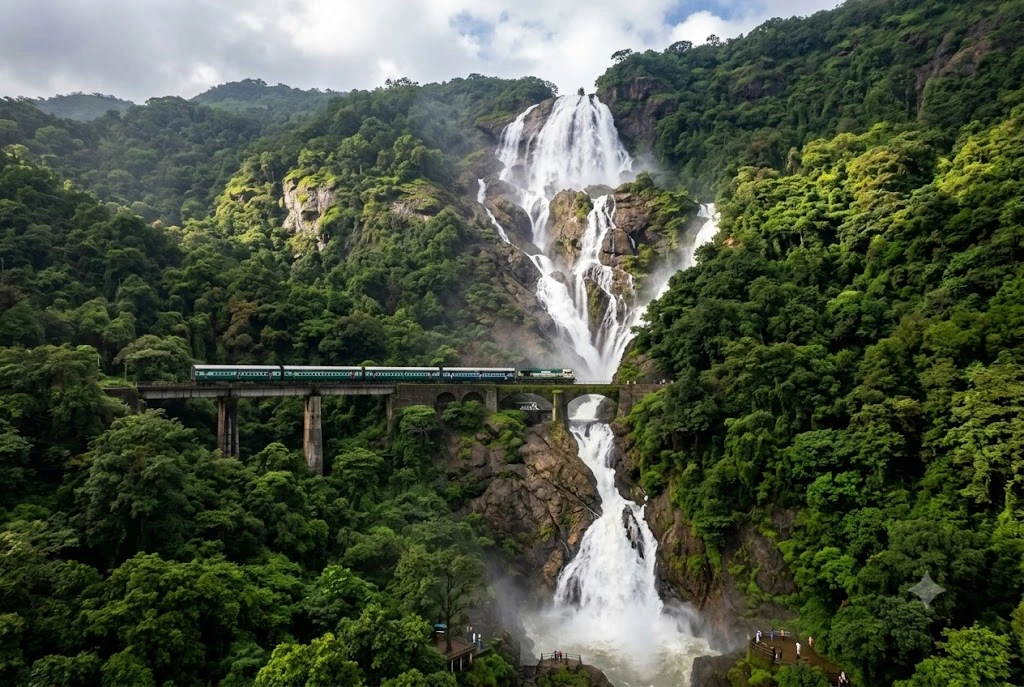
Dudhsagar Waterfalls
Nature, Lakes and Waterfalls

Dudhsagar: Where a Train Line Meets a 310-Metre Waterfall

Somewhere between Goa’s beaches and Karnataka’s forested hills, a train line cuts straight across the face of a waterfall tumbling more than 300 metres down a sheer cliff. That’s Dudhsagar — a sight so unlikely that most first-time visitors assume the photos…
October 12, 20269 min read
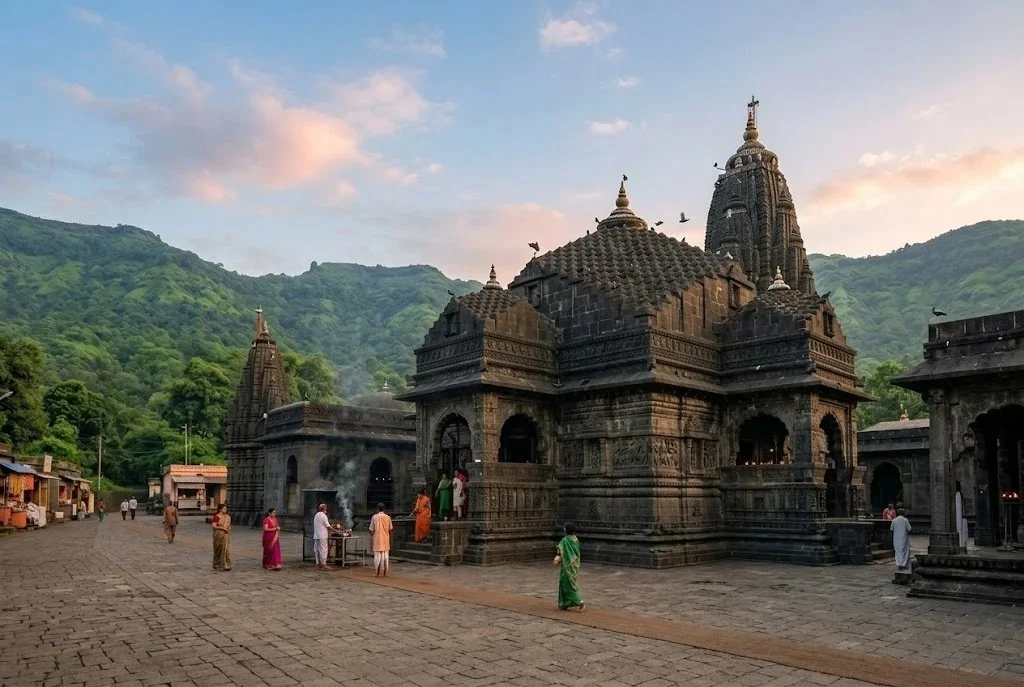
Trimbakeshwar Temple
Temples and Spiritual Places

Trimbakeshwar Temple: The Jyotirlinga With Three Faces

Most Shiva temples give you a single linga to focus your prayers on. Trimbakeshwar Temple, set against the Sahyadri hills just outside Nashik, gives you three faces carved into one — a detail so unusual that it’s the very reason the temple…
October 9, 20269 min read
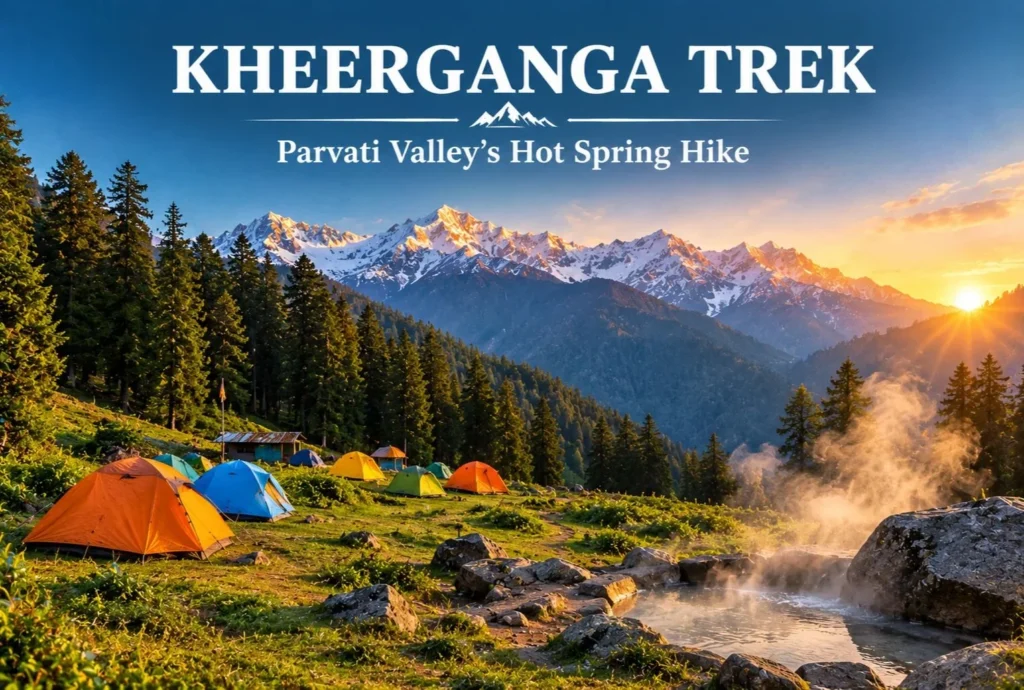
Kheerganga Trek
Nature, Lakes and Waterfalls

Kheerganga Trek: A Hot Spring Hike Through Parvati Valley

Few trails end with a soak in a natural hot spring surrounded by pine forest and snow peaks. That is a big reason the Kheerganga trek has become one of Himachal Pradesh’s most popular short routes. It starts near Kasol in the…
October 9, 20265 min read
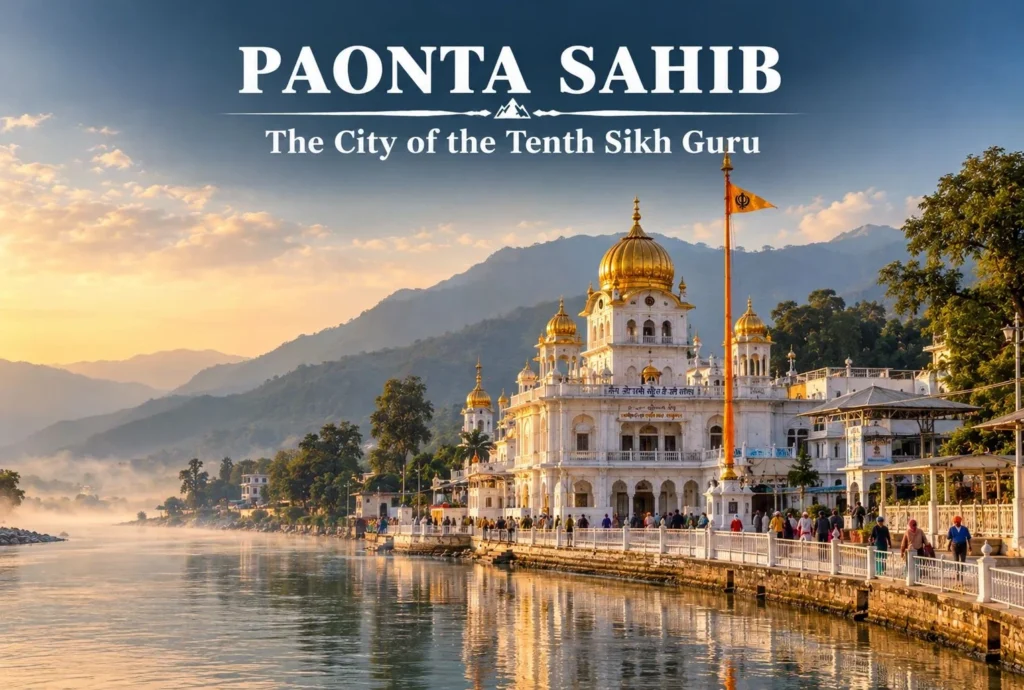
Paonta Sahib
Temples and Spiritual Places

Paonta Sahib: The City Of Tenth Sikh Guru

Himachal Pradesh is also known as “The land in the lap of the snowy Himalayas”, is one of the most famed hill stations in India. Himachal is not only famous for its snowy mesmerizing topography, Paonta Sahib the town of tenth Sikh…
October 9, 20266 min read
Kangra Fort
Heritage, Forts and Monuments

Kangra Fort: A Himalayan Stronghold That Outlasted Empires

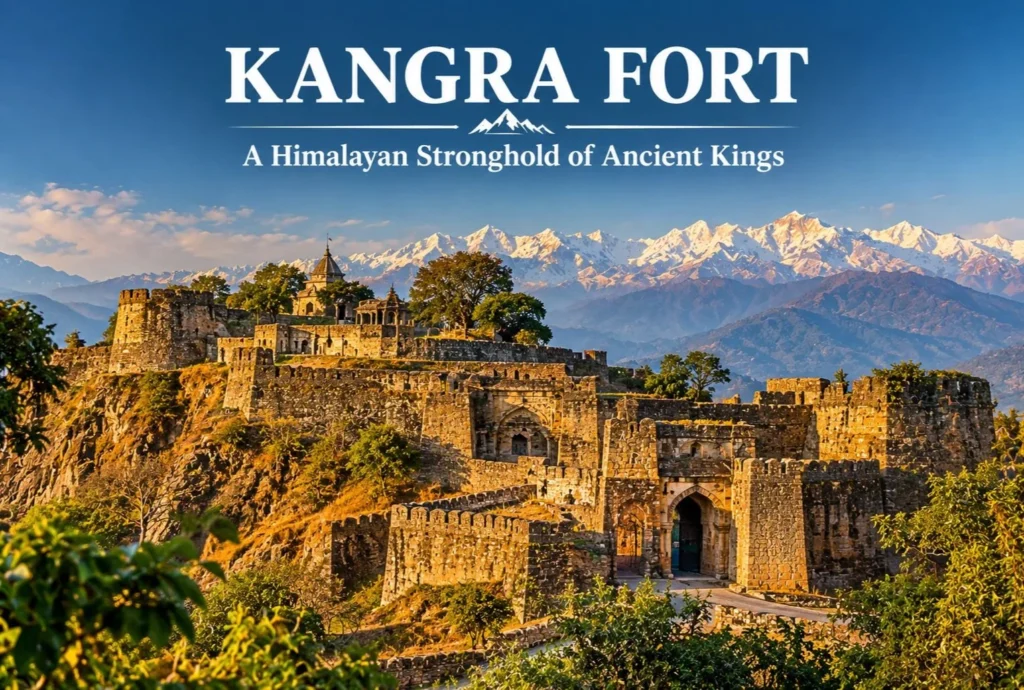
Few forts in India have been attacked, looted, and rebuilt as many times as this one. Perched on a rocky ridge between two rivers, Kangra Fort is among the oldest and most contested strongholds in the Himalayan foothills, and its long record…
October 8, 20266 min read

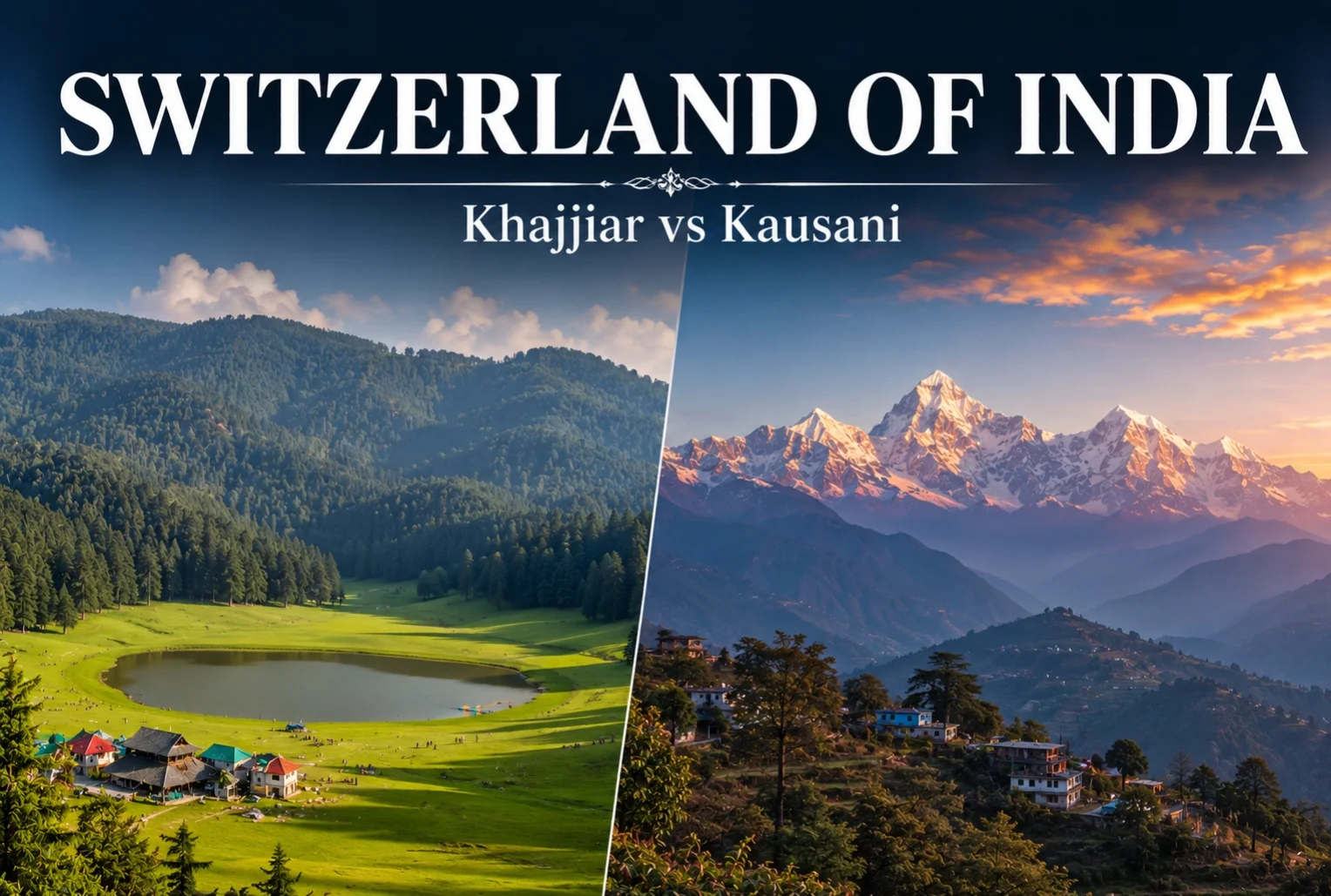
Switzerland of India: Which Place Truly Deserves the Title?

switzerland of india

Which Place is the Switzerland of India? India is a home to rich diversity and landscapes. Its destinations are perfect and have some of the world’s most beautiful places. Each region has something so special to say, from majestic snow-covered mountains, to peaceful beaches. One such beautiful place is a hill station that can be termed as the Switzerland of India. This is nature’s haven for the peace seekers and will be unparalleled experience. Are you interested to know which place it is? Whether it’s a beautiful snow covered mountain or a tranquil beach, here are all the things you will learn about this perfect place on earth!

Which Place Is Known as the Switzerland of India?

The small hill town of Khajjiar in the district of Chamba in the state of Himachal Pradesh is the most common home to the title Switzerland of India. At an elevation of approximately 6500 ft Khajjiar is known for its ring of saucer like meadows surrounded by thick deodar forests and a small lake in the middle. It’s not only a marketing tag line, it was officially announced as “Mini Switzerland of India” in 1992 when the Swiss Ambassador to India officially unveiled a signboard in the town.

With a single travel, Khajjiar became a must-visit in India and one of the top travel slogans. Travelers wanting to explore more of this region can check out Explore Hills’ Shimla-Kalpa-Sangla-Chitkul Trip.

Which State Is Called Switzerland of India

Now the fun begins. If you ask the question “which state is known as Switzerland of India” you will receive two correct answers, as there are two states with such destinations…

  • Himachal Pradesh — Home to the most popular Switzerland in India, Khajjiar, which has been endorsed by the Swiss government.
  • Uttarakhand — the Mini Switzerland of India as Kausani is famously known, which is even older and more personal endorsement from Mahatma Gandhi than the other two.

It is not a state exclusive and both places proudly use it in their tourism marketing. Instead of choosing one “right” answer, it’s better to know what you’ll find at each location.

Kausani: The Switzerland of India in Uttarakhand

Before Khajjiar could earn its name as the Switzerland of India, Kausani was known for its rich heritage and culture. In 1929 Gandhi visited this place and stayed there. He liked the place and spoke about it’s beauty by comparing it to Switzerland. He also stayed there at Anasakto Ashram and meditated, continued to compose his commentary on Bhagavad Gita. Kausani today has a great attraction for its panoramic view of Himalayan peaks which includes the Trishul, Nanda Devi and Panchachuli stretching more than 300km across.

Due to it exuberant views and great attraction for its panoramic views this town is termed as the Mini Switzerland of India or Mini Switzerland of Uttarakhand offering more dramatic terrain of the towering Himalayan peaks. For a broader Uttarakhand itinerary that pairs well with Kausani, see Explore Hills’ Uttarakhand Tour Package.
Khajjiar vs Kausani

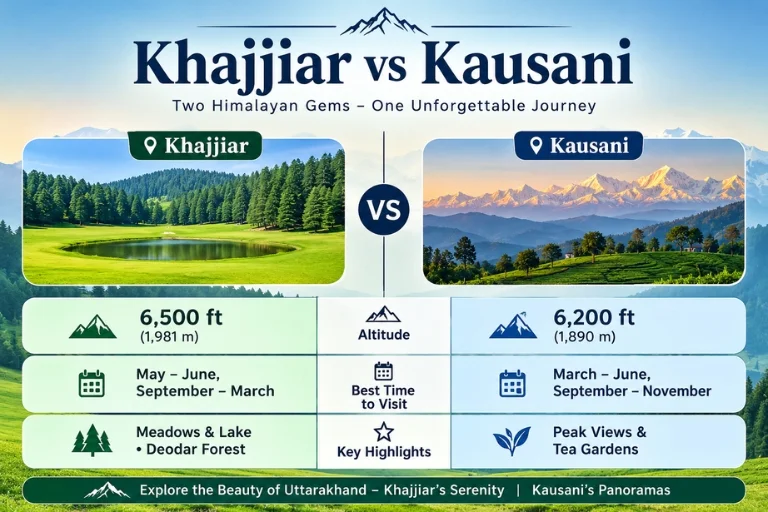
Khajjiar vs Kausani: A Quick Comparison

FeatureKhajjiar (Himachal Pradesh)Kausani (Uttarakhand)
Nickname originSwiss Ambassador’s visit, 1992Mahatma Gandhi’s remark, 1929
Altitude~6,500 feet~6,200 feet
Known forMeadows, lake, deodar forestsHimalayan peak views, tea gardens
Nearest airportGaggal Airport, Kangra (~120 km)Pantnagar Airport (~167 km)
Best time to visitMarch–June, Dec–Feb for snowApril–June, Sept–Nov
Ideal forAdventure activities, picnicsPeaceful retreats, photography

How to Reach Khajjiar and Kausani

Both hill stations have roads, rail and air connections that are quite good but each station has its own access point.

  • The usual route to Khajjiar is through Dalhousie and the nearest major railway station and airport is Pathankot.
  • Kausani can be reached via road from Almora, Nainital and Kathgodam with the nearest major railhead being Kathgodam Railway Station.

For official train schedules and routes to either region, you can check the Indian Railways IRCTC portal.

Top Experiences in Kausani

The tourist attraction, ‘Switzerland of India’ has everything it takes to captivate the visitors with its sweeping Himalayan views, a peaceful atmosphere and a few experiences that will last long after they have been back. Here are some things to include in your travel itinerary: See the sunrise in the Himalayas. Get up early to see the dawn break over mountains such as Trishul, Nanda Devi and Panchachuli; enjoy with a cup of hot tea. Walk around Anasakti Ashram. This is a place of calm and reflection where Mahatma Gandhi once stayed to ponder and write. The ashram premises also have a historical value and have some of the best views of mountains in town.

Go on a tea garden walk. The rolling tea estates of Kausani are a pleasant and scenic walk with crisp mountain air, green terraces and very few crowds. Go to Rudradhari Falls & Temple. Waterfalls, secret caves and a quiet spiritual spot, just outside the town, are all worth the detour. Enter the Sumitranandan Pant Gallery. This gallery is dedicated to the great Hindi poet from Kausani, talks about his life and work. If you enjoy this kind of scenic Himalayan drive, Explore Hills’ Manali-Kasol Adventure Trip offers a similar mix of meadows and mountain views in Himachal Pradesh.

WHICH ONE TO PICK

Both the location are referred to as the Switzerland of India but they offer different views and diversity. The open meadows and perfect lakeside in the Khajjiar makes it an ideal destination for those who are seeking for perfect adventure activities and open spaces. Whereas Kausani is perfect for people who want a quiet place, historic background. These both the spots are a proof that ever mountain has a long story to tell, making you feel alive anytime you visit.

CONCLUSION

The green meadows and picturesque views of Khajjiar to the majestic landscapes of the Himalayas at Kausani are just some of the reasons that make these places comparable to the landscapes of Switzerland. Khajjiar is a great place if you are a nature lover and like adventure activities, open meadows and beautiful lakes. Kausani is ideal for those who like a quiet environment, historic sites and views of the mountains. You can find breath-taking alpine scenery all the way to the end of the world, in either destination.

This can be done here in the beautiful hills of Himachal Pradesh and Uttarakhand. If Khajjiar’s meadows and lakes appeal to you, Explore Hills’ Kareri Lake Trek is a great way to experience more of the Himachal Himalayas up close.

Frequently Asked Question’s

Why is Khajjiar known as the Mini Switzerland of India?

The beautiful meadows, deodar forests and wonderful lakes makes Khajjiar as the Mini Switzerland of India.

Which is better, Khajjiar or Dalhousie?

Both offer different experiences, as Dalhousie is known for colonial buildings, markets and sightseeing. Khajjiar is quieter and famous for its beautiful meadow and forests.

What is special about Khajjiar?

It’s a small hill station in Himachal Pradesh built almost entirely around one striking meadow, a little lake, and thick deodar forest on all sides.

What is the best time to visit Khajjiar?

Generally, March is considered as one of the most suitable weather to visit Khajjiar. The Temperatures usually sit somewhere between 10°C and 25°C making it easy for you to commute.
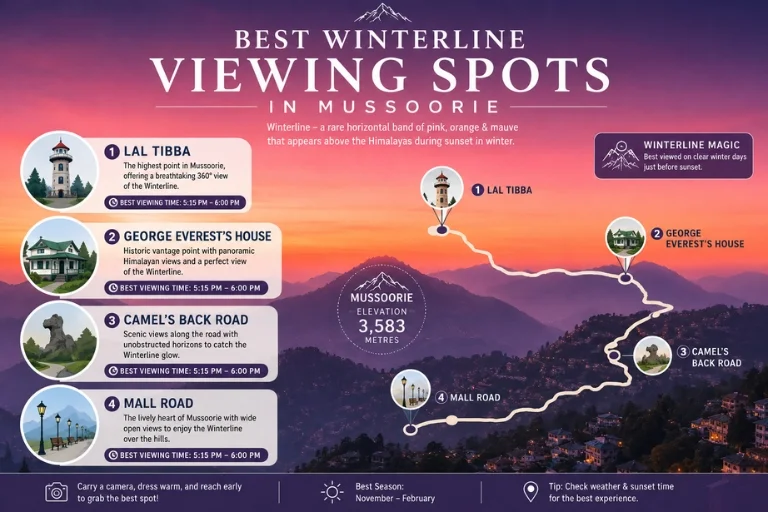
Mussoorie Winterline: The Rare Sunset Magic You Must Witness

Mussoorie Winterline

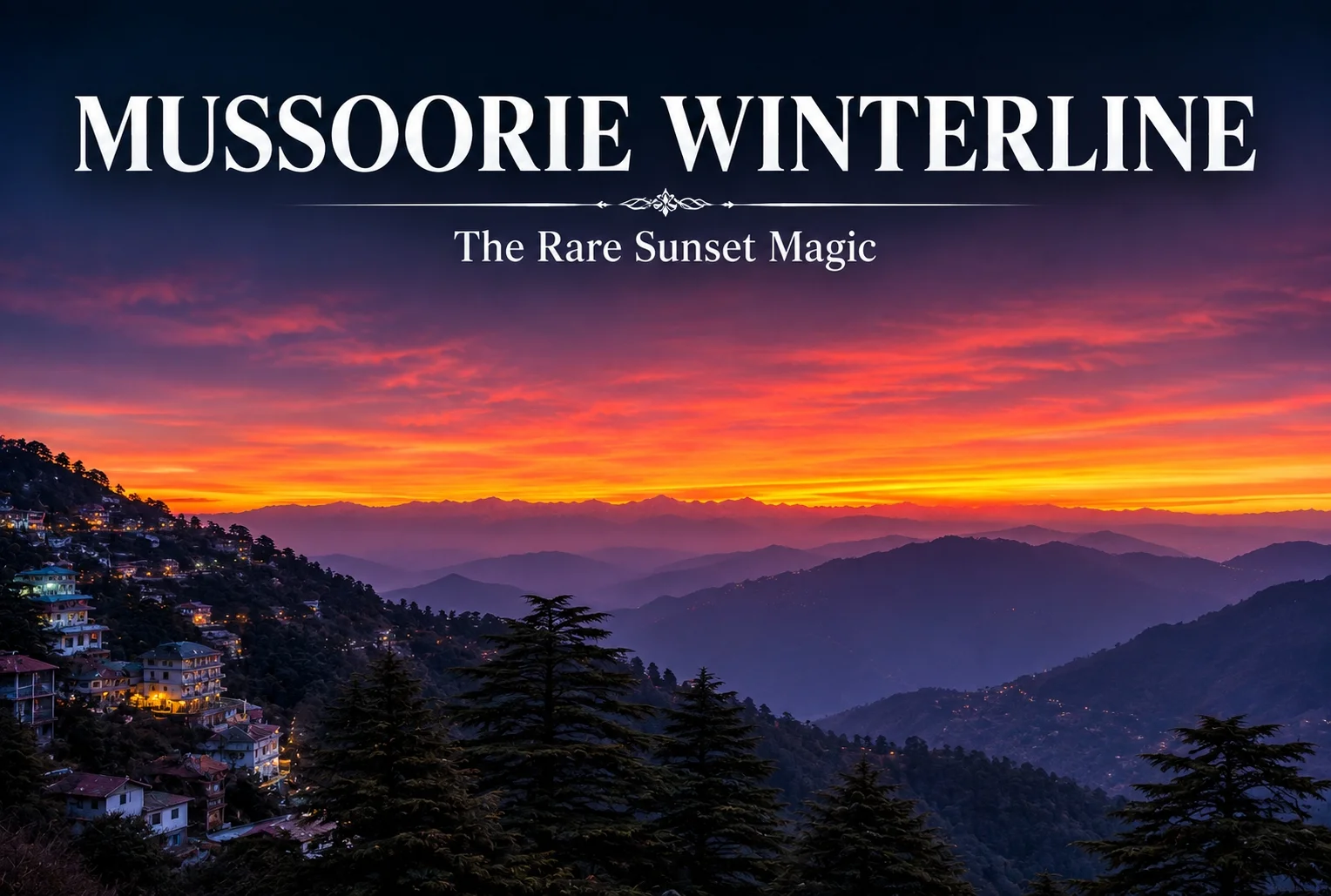
Have you ever watched a Himalayan sunset and noticed a mysterious band of colors stretching across the sky, almost as if the horizon had been painted with a glowing line? This breathtaking spectacle is known as the Winterline, one of Mussoorie’s most fascinating natural phenomena. During the winter months, the sky above the Queen of Hills can transform into vivid shades of orange, pink, red and mauve, creating the illusion of a second horizon. But what causes this magical phenomenon, when can you see it, and where are the best viewpoints to witness it?

In this blog, we’ll explore everything you need to know about the Mussoorie Winterline and discover why this fleeting Himalayan sunset has become one of the hill station’s most captivating attractions. If you’re planning a trip from Delhi, Explore Hills’ Mussoorie-Rishikesh-Haridwar Trip covers this route along with two other iconic destinations.

What Is the Mussoorie Winterline?

The Winterline is one of the Mussoorie’s most remarkable things you can ever come across. During the Winterline Mussoorie when cold mountain air form a rare optical like phenomenon creating a false or second horizon at dusk that is visible only in Mussoorie and parts of the Swiss Alps. This often appears in dark grey, mauve or golden band of light. This line is frequently referred as certain mysticism, describing it as an almost magical energy line in the sky.

Scientifically, this phenomenon is caused by light refraction and temperature inversion a phenomenon that requires geographical and atmospheric conditions. This is the reason why Mussoorie winter line is a rare sight. It’s not something that cannot be experienced from any hill station.

Winterline in World: Why It’s So Rare

One of the most interesting aspects of the phenomenon is its rarity. Popularly believed and longtime local lore is that there are only two world Winterlines to be seen the Swiss Alps in Switzerland and this very place in Mussoorie, India. The conditions in the atmosphere may be similar at other places, but few places can boast of the clarity and uniformity that makes the Winterline at Mussoorie a celebrated phenomenon. It has now become an integral part of the identity of Mussoorie as a travel destination and has drawn many people from across the globe to the town, especially photographers, nature lovers and curious travelers to the town.

Best Time to Witness the Winterline

Time plays a crucial role if you want to experience the Winterline in its crissis, at Mussoorie. This phenomenon occurs seasonally and cannot be seen in the summer or monsoon months.

  • Season: Mid October to January (best sky and temperature inversion in November and December).
  • Time of Day: 15-20 minutes before sunset and about 15 minutes after, mostly around 5:15 PM – 6:00 PM in winter.

One useful tip is to get away from the sun as soon as it goes down. Patience is the key with the Mussoorie Winterline as the colors get more intense some 10 minutes after dark falls.

Best Winterline Viewing Sports

Best Spots to See the Winterline

The following are some of the best places to catch sight of the Winterline: The highest point of this road are:

  1. Lal Tibba, Winterline Landour: As the highest point in the region, this spot offers a sweeping, unobstructed view of the horizon. The winterline Landour experience at Lal Tibba is calm, old-world, and perfect for photographers who want a clean shot without clutter. Grab a coffee nearby before you settle in for the show.
  2. George Everest’s House: Open skies stretch in every direction here, with the valley on one side and the Himalayas on the other. It takes a short hike to reach, but the vastness of the view makes the Mussoorie winterline look like it stretches endlessly across the sky.
  3. Camel’s Back Road: This gentle, three-kilometer stretch faces the sunset directly, making it ideal for a relaxed evening walk while watching the winterline mussoorie unfold gradually in front of you.
  4. Mall Road, Gun Hill, and Library Chowk: For families and casual travelers, these accessible, bustling spots let you enjoy the scenic beauty while snacking on roasted corn or hot momos.

If you’d like to extend your trip with an offbeat adventure nearby, Explore Hills’ Chakrata Adventure Tour is a great add-on to a Mussoorie visit.

The Mussoorie Winterline Carnival

If you choose to go for a trip in late December, than I must tell you it’s a double celebration! The Mussoorie Winterline Carnival is organized by the Uttarakhand Tourism Development Board and runs from 25th December to 30th December. Look forward to Garhwali folk shows, Pahadi delicacies like Gahad soup and Mandua roti, heritage walk through Landour and gazing at the stars near George Everest. The festival brings the whole town alive, and complementing the natural light show of the winterline in India’s most iconic hill station even more special. For official event details and travel advisories, check the Uttarakhand Tourism Development Board website.
Photography Tips

Taking a good picture of the mussoorie winterline requires a little skill as there is a lot of contrast:

  • Underexpose slightly to prevent too bright a line from washing out.
  • Use a telephoto lens or zoom in with the zoom feature on your phone to make the line appear thicker, more dramatic.
  • Adjust white balance setting on the camera to make the warm orange and mauve colors stand out, such as “Cloudy” or “Shade”.

CONCLUSION

This Mussoorie winterline is not a mere pretty sunset but a scarce geographical gift offered by few places on the earth. From taking the ultimate photo to enjoying the Winterline Carnival to a stroll through Camel’s Back Road on a quiet evening in Mussoorie, the sight of the winterline in Mussoorie is a moment that will endure for a long time. For a longer Himalayan getaway from Delhi, Explore Hills’ Delhi-Chakrata Adventure Tour is worth considering, and travelers wanting a broader circuit can browse Explore Hills’ full Uttarakhand Tour Package options.
Frequently Asked Question’s

In which Month I can see Winterline in Mussoorie?

The Winterline is a rare and colorful band of color visible in the horizon during sunset season in Mussoorie, from mid-October to January.

When not to visit Mussoorie?

The best time to visit Mussoorie is in the late spring and autumn when the monsoons have passed. It is also not advisable to visit during the monsoons as heavy rainfall and slippery trails on the mountain, as well as possible landslides on the road to Dehradun, make the season a risky one.

Is it good to visit Mussoorie during winter?

Mussoorie in winter (December to February) is a wonderful place to visit for those who enjoy cold weather, quiet streets and the possibility of snow.

What is the time when Winter Line is available in Mussoorie?

The winter line can be seen around sunset time in Mussoorie, which is usually between 5 PM and 6 PM.

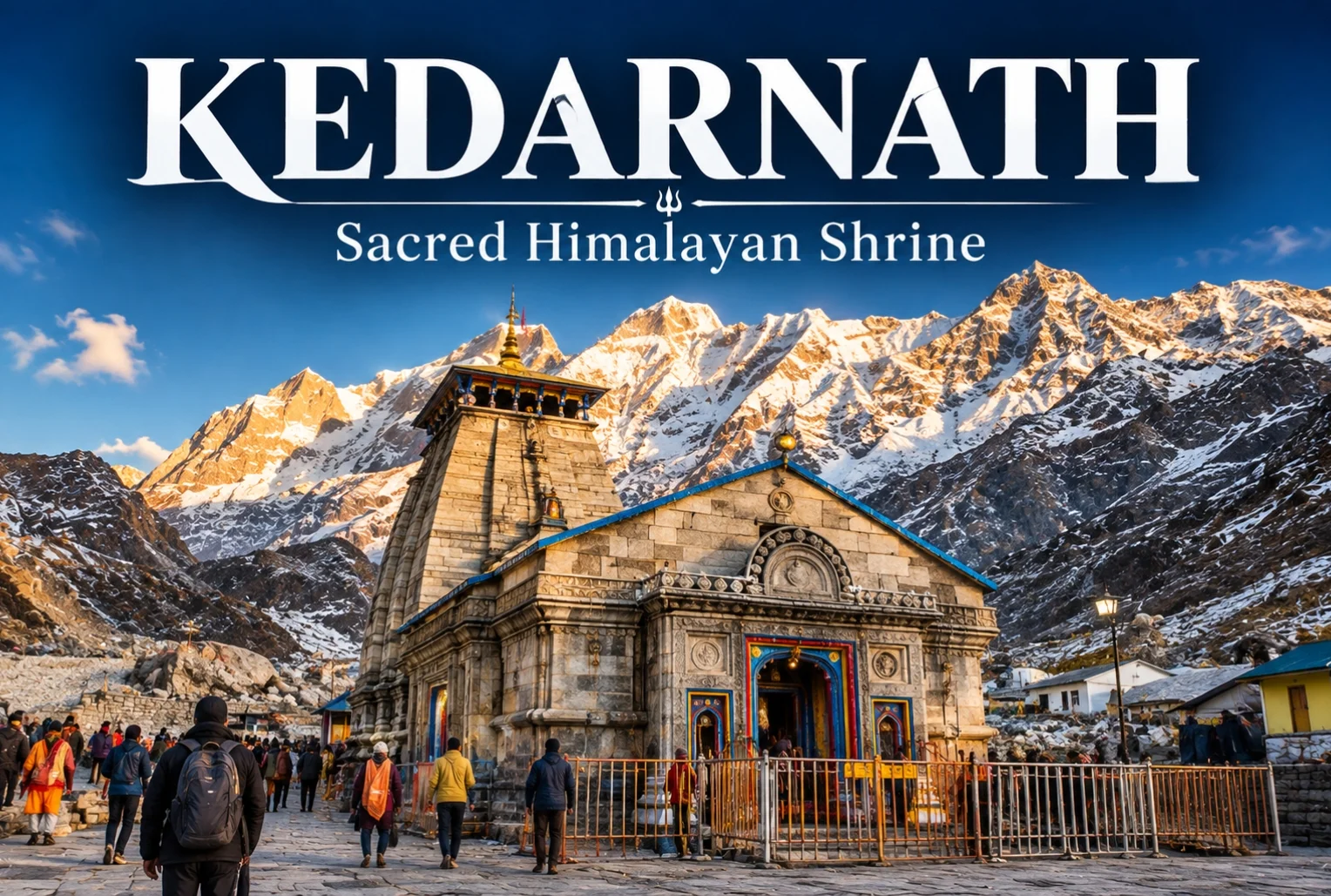
Kedarnath: A Traveler’s Guide to India’s Sacred Himalayan Shrine

Kedarnath - Sacred Himalayan Shrine

Nestled in the lap of Garhwal Himalayas, it is one of the most divine and deeply honored jyotirlingas in Hinduism. Every year hundreds of thousands devotees come here to receive the blessing of Lord Shiva. Some come for faith, some to explore and some to discover the powerful connection with nature and Himalayas. Before you plan your next journey, make sure you know what’s so special about this beautiful and divine trek. Travelers looking to combine Kedarnath with the wider Himalayan pilgrimage circuit can explore Explore Hills’ Char Dham Yatra package.

The history behind the temple

The story of the temple can be traced back to Mahabharata. The Pandavas were plagued by remorse after the war that they had slained their own kin, and were seeking Shiva for forgiveness. Shiva was not to be found he changed into a bull and left his hump in the mountains. The Pandavas finally found him and when he was trying to disappear into the ground, he appeared again in five different places also known as Panch Kedar. This is the most important site considering that his hump lies here at Kedarnath. Later on, temples were erected at all five places; however, the great temple at Kedarnath still stands.

It is one of the four Chota Char Dham sites (with Badrinath, Gangotri and Yamunotri), and is also the highest-altitude of the twelve recognised jyotirlinga sites all over India. For those wanting to visit all five Panch Kedar shrines, Explore Hills’ Panch Kedar Trek covers the complete circuit.

Where is Kedarnath Located?

Kedarnath is located in the midst of Garhwal Himalayas, in the district of Rudraprayag, Uttarakhand. Seated on the bank of Mandakini river and Chorabari Glacier at an elevation of 3,583 metres (11,755 feet). This pilgrimage receives heavy snow leading to route blockage and zero-temperature. As you draw closer to this spiritual place you faith grows much deeper.

When does the Kedarnath Temple open and close?

Because it follows the Hindu lunar calendar, the exact opening date shifts a bit year to year, but the pattern is fairly consistent:

  • Opens on the first day of Vaishakh usually late April into early May
  • Closes around Diwali, on the first day of Karthik (October or November)
  • Once winter sets in, snow makes the whole area inaccessible and the shrine shuts down completely

On a normal day, darshan runs from 4 AM to 3 PM, breaks, then picks back up from 5 to 9 PM. Morning aarti happens between 4 and 7 AM; evening aarti runs roughly 6 to 7:30 PM.

Kedarnath Weather & Temperature: What to Expect Each Season?

Don’t trust a single forecast here the temperature can swing wildly within the same day thanks to the altitude.

SeasonRough TemperatureWhat to Expect
May–June5°C to 18°CNice by day, cold once the sun drops
July–August (monsoon)8°C to 16°CHeavy rain, real landslide risk
September–October2°C to 15°CClear skies, the best visibility of the year
November onwardSub-zeroSnowed in, temple closed

Bring proper woollens and waterproof layers no matter which month you go. Even in June, once the sun’s gone, it gets cold fast.

Kedarnath Trek Route

How to Reach Kedarnath: Getting There

Your first real destination is Guptakashi it’s the last town with proper hotel infrastructure before things get rural.

  • Fly into Jolly Grant Airport in Dehradun
  • Or take a train to Rishikesh (Haridwar works too as a backup)
  • From either, grab a taxi, tempo traveller, or state bus heading toward Guptakashi, then on to Sonaprayag

Kedarnath Trek from Gaurikund

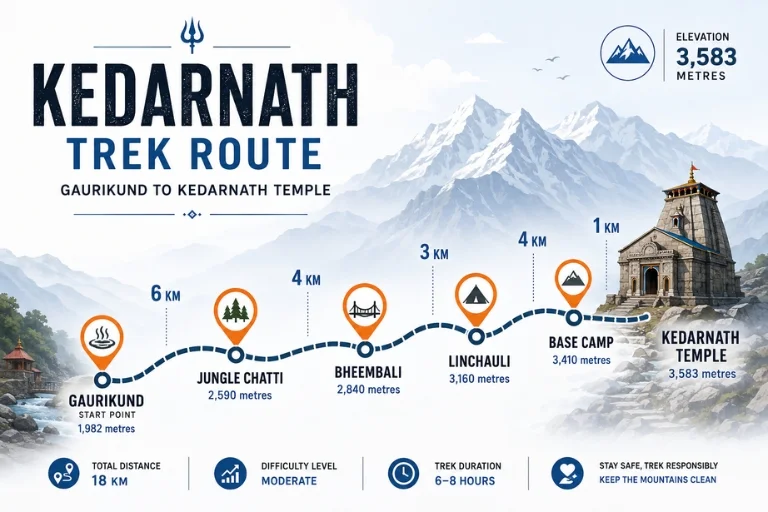
This is the classic route, the one pilgrims have walked for generations. A short shared jeep ride from Sonaprayag drops you at Gaurikund, and that’s where the actual climb starts.

Roughly, the trail breaks down like this:

  1. Gaurikund to Jungle Chatti — 6 km
  2. Jungle Chatti to Bheembali — 4 km
  3. Bheembali to Linchauli — 3 km
  4. Linchauli to Kedarnath Base Camp — 4 km
  5. Base Camp to the temple — 1 km

That’s about 18 km one way, and it’s no casual stroll even if you’re in decent shape. Ponies, palanquins, and porters (locally called “pitthu”) are available if walking the whole thing isn’t realistic for you, though rates climb fast once peak season hits. If you’d rather combine Kedarnath with the nearby Tungnath temple trek, check out Explore Hills’ Kedarnath-Tungnath Tour.

Kedarnath Helicopter Service: Booking, Bases & Important Tips

If time is tight or the trek just isn’t an option, flying in has become the go-to alternative. Helicopters run out of three bases near Guptakashi Phata, Sersi, and Guptakashi town operated by a handful of licensed private companies. Pricing depends on which base you fly from, and it climbs noticeably during high season and around festivals. Slots typically open about a month out and disappear within minutes, so book through the official government portal the moment it opens, or go through a local agent you trust. Bookings can be made directly through the official IRCTC Heli Yatra portal, the government-authorized platform for Char Dham helicopter services.

A few things worth knowing before you fly:

  • Show up at the helipad at least two hours before your slot
  • Weather grounds flights often always have a backup plan
  • Round-trip charters from Dehradun cost a lot more than a straight joyride from Guptakashi

CONCLUSION

Kedarnath tests you as much as it moves you. Between the mythology behind it, the scale of the mountains around it, and the sheer physical effort it takes to get there, it leaves a mark that’s hard to shake. Plan around the opening dates, lock in your transport and stay early, and pack for weather that won’t cooperate do that, and the Himalayas will give you something worth the trip. If you are serious about visiting this spiritual and divine place, start your reservation now. Explore Hills’ Kedarnath Yatra package handles the full journey end-to-end.

Frequently Asked Question’s

How many days are considered to be an optimum duration for a Kedarnath tour?

Approximately 3-5 days are often considered appropriate to complete the Kedarnath Trek.

Will the Kedarnath trek be hard for the beginners?

Due to the tough pathway, this trek is often considered risky for beginners.

Do I have to get permission to visit Kedarnath?

Yes, you should book your slot before visiting Kedarnath.

Is it possible to go to Kedarnath during winter?

Due to heavy snowfall, traveling to Kedarnath can often be risky.

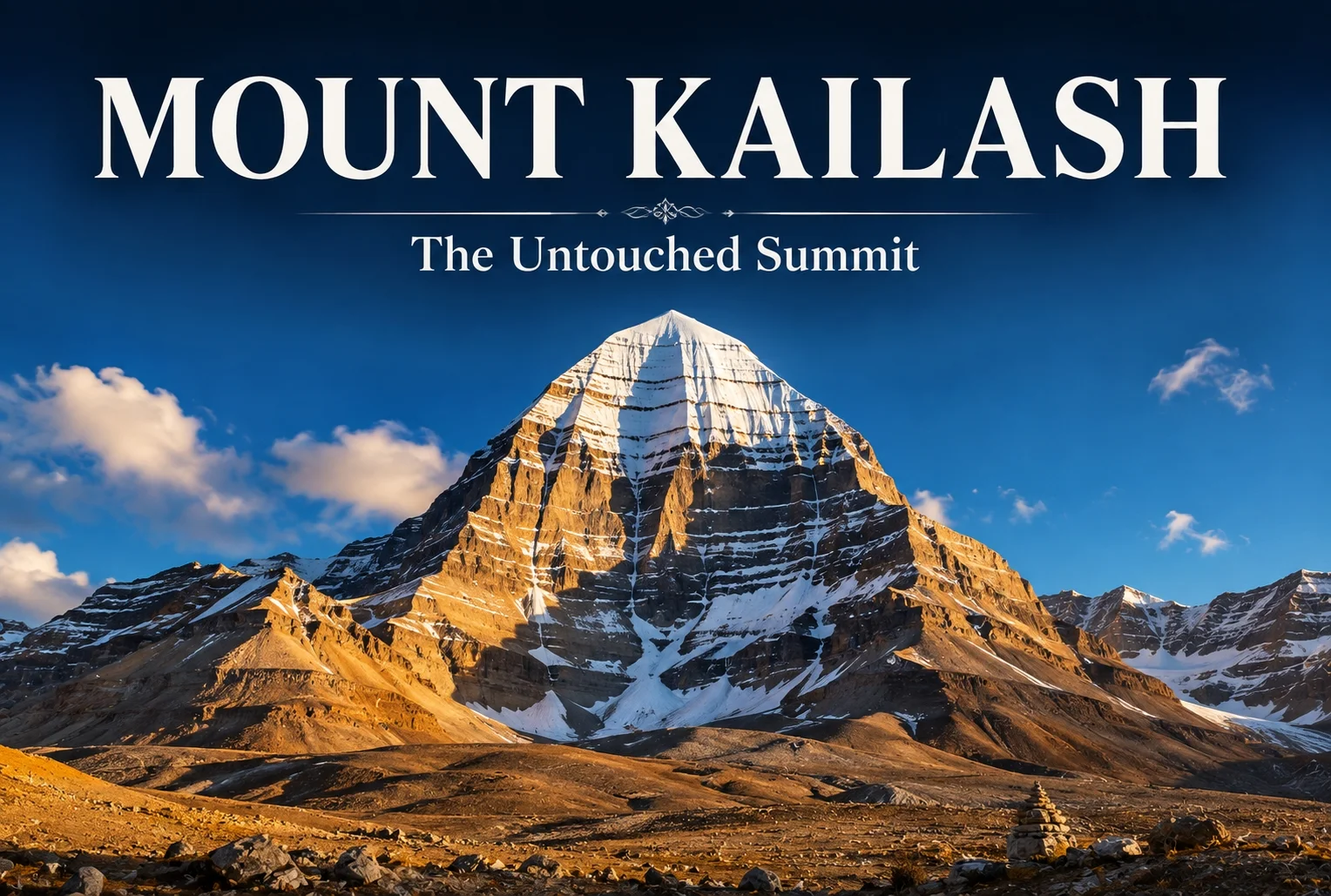
Mount Kailash: The Untouched Summit

Mount Kailash

Don’t be surprised when Mount Kailash Parvat comes to your mind when you think of the most mysterious place on earth. Sitting in the remote stretch of western Tibet’s Ngari region, this peak has puzzled the scientist, pulls in across thousands of pilgrims. Or have you ever typed where Kailash Parvat is in your Google search bar or wanted to know the mystery behind the Kailash Parvat, than you are not alone. Seated at 6,638 meters height this mountain is incredibly amazing letting you fall for its immense spiritual experience and cultural important.

Due to the divine abode of Lord this Mountain marks a spiritual significance where nobody has ever reached. For those inspired by Himalayan pilgrimages closer to home, Explore Hills’ Adi Kailash Om Parvat Yatra offers a chance to experience “Chhota Kailash” in the Indian Kumaon Himalayas.

Where Is Mount Kailash, Exactly?

The Mount Kailash is seated in the remote Ngari Prefecture of the Tibet Autonomous Region of China. Far from any city of real size, and that isolation is a big part of why it’s remained so untouched for so long. Getting there usually means a long overland trip through Lhasa and Shigatse, then across the high Tibetan plateau not something you’re doing over a long weekend. There are no roads to the summit, no cable cars, none of the usual trappings of a “climbable” mountain. Just windswept plains, high-altitude lakes, and a peak that seems to rise up out of nowhere.

Travelers interested in the official Kailash Mansarovar pilgrimage process can refer to the Kailash Mansarovar Yatra portal, run by India’s Ministry of External Affairs.

What is the height of Kailash Parvat?

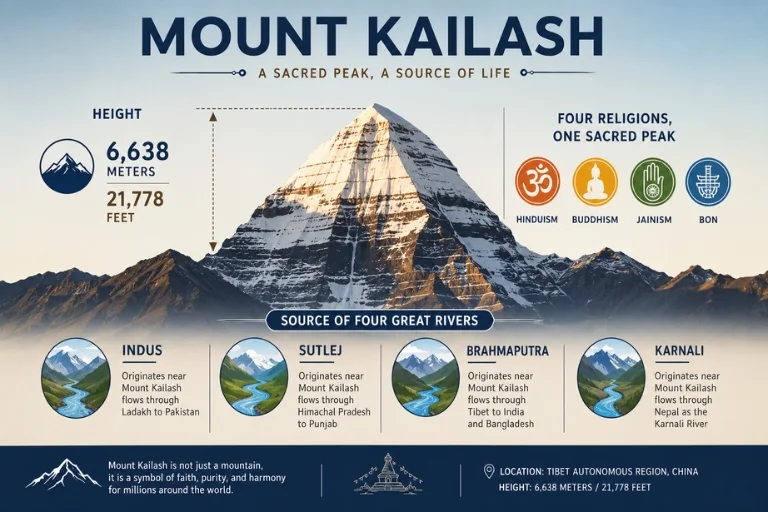
Kailash stands roughly 6,638 meters (about 21,778 feet) above sea level again, not a record-breaker in terms of elevation. What actually sets it apart is its shape. Most Himalayan summits have that jagged, irregular look you’d expect from millions of years of erosion. Kailash doesn’t. It has an almost geometric, four-sided profile that narrows to a point, which is why so many people describe it as looking pyramid-like. Geologists explain this as ordinary rock stratification combined with natural weathering nothing supernatural about it. But if you’ve ever stood at the base of it, plenty of visitors will tell you it’s hard not to feel like there’s something more deliberate going on.

Who Climbed Kailash Parvat? The Answer Might Surprise You

There is no such record of someone climbing the 6,638 meters tall Kailash Parwat yet. This mountain is one of the 4 major peaks that hasn’t been summited by anyone till date. One of the major reason that is responsible for no one climbing this summit yet is the Steep icy trails, weather that can turn without any warning, high winds and intense heat during day. Another reason responsible for it is the cultural and spiritual beliefs of 4 religion including Hindu, Buddhist, Jains and followers of Bon tradition who view it as a divine abode of Lord Shiva, due to which the government has strictly banned it.

Mount Kailash A Sacred Peak

Why Four Religions Claim the Same Mountain

What makes Kailash’s story unusual is that it isn’t just one tradition’s holy site it’s four.

  • Hindus consider it the dwelling place of Lord Shiva.
  • Tibetan Buddhists know it as Kang Rinpoche, tied to powerful protector deities.
  • Jains regard it as the place where their first spiritual teacher achieved liberation.
  • Followers of Bon, a tradition that predates Buddhism in Tibet, see it as the literal center of their spiritual world.

Very few places on Earth carry that kind of overlapping reverence, and it’s a big part of why pilgrims keep showing up, year after year, from such different corners of the world. Pilgrims seeking a similar Shiva-centered spiritual journey within India often turn to the Kedarnath Yatra.

A Quick Look at the History

The history here goes back thousands of years, well before any written records from the region exist. Kailash has functioned as a pilgrimage site across multiple civilizations and faiths, and the tradition of walking around its base known as the kora dates back centuries. It’s a roughly 52-kilometer trek, and for many people it’s considered one of the most spiritually significant journeys they’ll ever undertake, believed to bring purification and a kind of fresh start. The mountain is also the source of several major rivers that shape life across South Asia the Indus, Sutlej, Brahmaputra, and Karnali all originate near here.

For millions of people living downstream, this peak matters for reasons that go well beyond myth; it’s tied directly to the water their regions depend on. This tradition of sacred Himalayan pilgrimage circuits is mirrored in India’s own Char Dham Yatra.

The Legends People Can’t Stop Talking About

Search “Kailash Parvat mystery” and you’ll run into a long list of claims some old folklore, some newer retellings that have picked up steam online. A few of the most common:

  • Snow that supposedly never melts. The rest of the mountain thaws seasonally, but the summit is said to stay permanently white, feeding rivers below without ever fully disappearing itself.
  • A face in the rock. Pilgrims walking the traditional clockwise route around the mountain sometimes report seeing what looks like a calm, smiling face in the shadows of the cliffs.
  • Time acting strange. Some travelers say their hair and nails seem to grow faster while they’re near the mountain. There’s no science behind this claim, but it keeps getting repeated.
  • Symbols at sunset. As the sun drops low, certain rock formations reportedly cast shadows that resemble a swastika (a symbol of good fortune in several cultures) and the “Om” symbol.
  • Hidden cities underneath. Local legend points to Shambhala and Agartha mythical underground realms said to lie somewhere beneath the range, home to enlightened beings cut off from the outside world.

None of this has any verified evidence behind it. But that’s often the appeal with a mountain like this the stories are part of what keeps it feeling alive rather than just another geographic coordinate.

What the Weather Is Actually Like

If you’re seriously considering a trip, the climate is worth planning around. Given the elevation, conditions are harsh. Summer roughly June through September, and the main pilgrimage window can feel almost mild in direct sunlight but still drops close to freezing once the sun goes down. Winters are brutal: temperatures regularly fall well below freezing, and heavy snow makes the region largely inaccessible. Most pilgrims and trekkers time their visit for the warmer months specifically to avoid the worst of the cold. Trekkers planning a broader Himalayan spiritual journey can also explore Explore Hills’ Uttarakhand Yatra packages.

CONCLUSION

Mount Kailash rises to 6,638 meters next to its Himalayan neighbors yet no one has ever stood on its summit and that may be because of its odd symmetry of its shape or the spiritual context. What draws people isn’t the summit but the “Kora”, a 52-kilometer walk around its base at altitudes that make breathing feel like effort, where pilgrims sometimes spend weeks prostrating the entire distance. Science has tried to explain the pull the mountain’s near-perfect pyramidal shape, its odd position feeding four major rivers but none of it accounts for why people keep circling instead of climbing.

Maybe that’s the actual mystery: not an unclimbed peak, but a mountain that convinced centuries of pilgrims that walking around something that can matter more than conquering it.

Frequently Asked Question’s

Why is Mount Kailash unclimbable?

Mount Kailash is unclimbable as it’s strictly prohibited in 4 religions due to its personal beliefs and legally protected by the government.

Has anyone touched Mount Kailash?

No one has touched Mount Kailash till now due to its religious significance and being strictly banned by the government.

Has any Indian climbed Mount Kailash?

No, there is no such record of any Indian climbing Mount Kailash.

Who owns Mount Kailash?

Mt. Kailash is owned and administered by the People’s Republic of China, located within Burang County of the Ngari Prefecture in the Tibet Autonomous Region.

Best Treks in December

Best Treks in December

A cloak of winter snow, ice upon the branches and snow upon the ground, where days turn into nights and perfect stillness calms the view. Treks in December carry that kind of magic the sort that stays with you long after you’re back home. Here are a few December treks worth putting on your list.

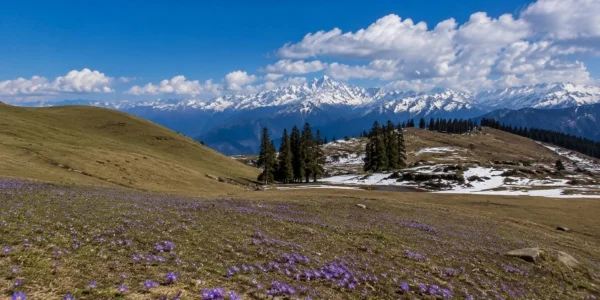
Panwali Kantha Trek

Panwali Kantha Trek

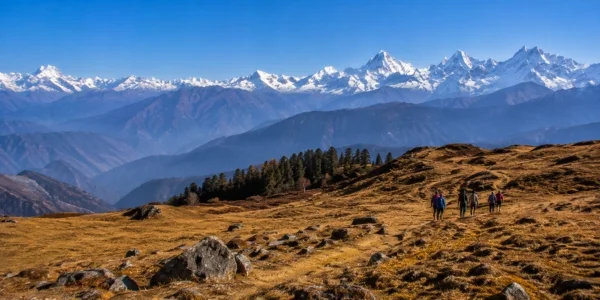
The Panwali Kantha trek is a trek which is less talked about. The trek passes through oak and rhododendron woods, pine and deodar, crosses some icy little streams and dips between villages that feel untouched by time before going out into meadows, so wide you can’t help but lose track of where they end. But what remains is the peaks of Chaukhamba, Nanda Devi, Kedar Dome, Neelkanth, Trishul, Thalaysagar and the long ridgelines which head towards Kedarnath, Badrinath and Gangotri. They can be caught at dawn or dusk and the entire range is gilded for several minutes. There’s history in this walk too.

Local legend says it’s connected to the last day of the Pandavas and you will pass by the Kedarnath and Gangotri temples on the way, so it is not only a walk through scenic beauty but with a spiritual load as well. The wildflowers, the strange shepherd’s hut, the foothills of the Himalayas and the ability to see the Milky Way through the night sky, plus campsites for those who want to get away from the city for a bit, rather than just the pictures of it, make this trek perfect for anyone who wants to get away from the city.

Deoban Weekend Trek

Deoban Weekend Trek

or those who don’t have a week to spare, but still want to experience some cold and clean mountain air, Deoban is the answer. It’s close to the hill town of Chakrata, which becomes a snowy wonderland in the winter, and the drive in itself is worth it; past the waterfalls and the crumbled valleys. Once you are on the trail however, there is little noise except your own footsteps and the Himalayan ranges can be seen through the trees.

A particular attention is required here for the bird lovers: Deoban is a place where sightings of the Himalayan Monal and Kalij Pheasant are not uncommon; there are several species, which are not found anywhere else. The slow pace, snow, birds and the short drive makes it an excellent choice for novices, families and those who simply want to take a break from a long voyage.

Chirbatiya Weekend Trek

Chirbatiya Weekend Trek

Chirbatiya is a small village in Rudraprayag district and, truth be told, this trek should be better known. You pass through thickets of rhododendron, oak, deodar trees, waterfalls, open fields and terraced fields, where you can observe the lifestyle and agriculture of local residents. Patangnia meadow is the high point with view of Nanda Devi, Chaukhamba, Kedarnath, Trishul, Dronagiri, Neelkanth and Chang Bang all in a go. It’s an easy grade, so it’s suitable for the first trek or the fiftieth, and for most of the Himalayan trails, it’s walkable year-round with rhododendrons in bloom in summer, and snow covering the trails in winter.

In the process you get to meet locals, enjoy authentic Garhwali cuisine and get a chance to sleep under the open sky. For those who wish to have a quick introduction to the trekking experience in the Himalayas without sacrificing the scenery, this may be a good choice.

Binsar Weekend Trek

Binsar Weekend Trek

Binsar is located in the wildlife sanctuary of Almora district and it is a convenient weekend getaway due to its 2-day format. During November to February the place is an actual winter wonderland with snow-covered forest, biting cold and crisp views up to Nanda Devi, Trishul and the Panchachuli range. There is also a possibility of wildlife sightings since the trail passes through a sanctuary, as well as barking deer, leopards (from afar, please) and many other species of birds, making it a birders delight. It’s hidden away but not too hard to get.

Whether it’s for the families or the first-time trekkers or someone who has been trekking in the Himalayas for a long time, the trekking in Binsar is truly worth chasing for.

Brahmatal Trek

Brahmatal Trek

Brahmatal shows up on pretty much every “best winter treks in India” list, and once you’ve walked it, that’s not hard to understand. Snow-covered trails, frozen lakes, wide-open Himalayan views it all comes together in a way that almost feels staged. The two lakes on this route, Brahmatal and Bekaltal, freeze solid by winter. There’s something oddly calming about standing next to a lake that’s gone completely still under a layer of ice. The best views, though, come from Tilandi Top and Jhandi Top, where Trishul, Nanda Ghunti, Mrigthuni, and Maiktoli line up across the horizon.

Between the viewpoints, the trail cuts through oak and rhododendron forest, past the Gujreni campsite, and across meadows that are worth slowing down for great for photos, or just for sitting and watching the light shift. There’s some local mythology tied to the place too: Brahmatal Lake is said to be where Lord Brahma once meditated, which is a nice bit of backstory to have in mind while you’re up there. Difficulty-wise, it sits comfortably in the middle doable for a determined beginner, still rewarding if you’ve already done a dozen treks.

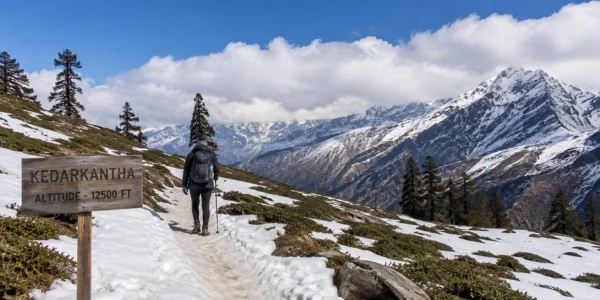
Kedarkantha Trek

Kedarkantha Trek 3

Kedarkantha gets called the “Queen of Winter Treks,” and it earns the title this is probably the most popular winter trek in India, and it delivers on nearly every count. Starting from Sankri, the trail winds through pine, oak, maple, and rhododendron forest before the snow really takes over. Juda Ka Talab, a small lake with its own Shiva mythology attached, freezes over in winter and makes for a memorable early stop. Higher up, the Kedarkantha Base and Hargaon campsites are known for genuinely dark, light-pollution-free skies the kind of stargazing that’s hard to find closer to home.

The summit tops out at 12,500 feet, with a full 360-degree view: Swargarohini, Bandarpoonch, Black Peak, and Draupadi Ka Danda, with the Har Ki Dun and Rupin valleys stretching out below. One thing worth knowing before you go the trek enters a no-network zone past Sankri, so you’re properly cut off for the duration. For a lot of trekkers, that’s not a downside at all; it’s kind of the point.

Frequently Asked Question’s

What are the best treks in December?

The best treks to go on in December include the Kedarkantha trek, the Brahmatal trek, the Dayara Bugyal trek, the Kuari Pass trek, and the Nag Tibba trek, all characterized by snow-covered trails, beautiful views and perfect itineraries.

Are December treks suitable for beginners?

Yes, December treks are suitable for beginners as the Kedarkantha, Brahmatal and Dayara Bugyal are the treks that offer less difficulty level, all you need is decent fitness level.

What is the temperature in December on treks?

Usually, during the day time the temperature is around 5°C to 12°C under clear skies but during night it drops drastically to -5°C to -15°C, depending on weather conditions.

What makes the Kedarkantha trek special in December?

The perfect beauty, snow-covered mountains, frozen Juda ka Talab, beautiful sunrise and sunset make this place truly worth visiting.


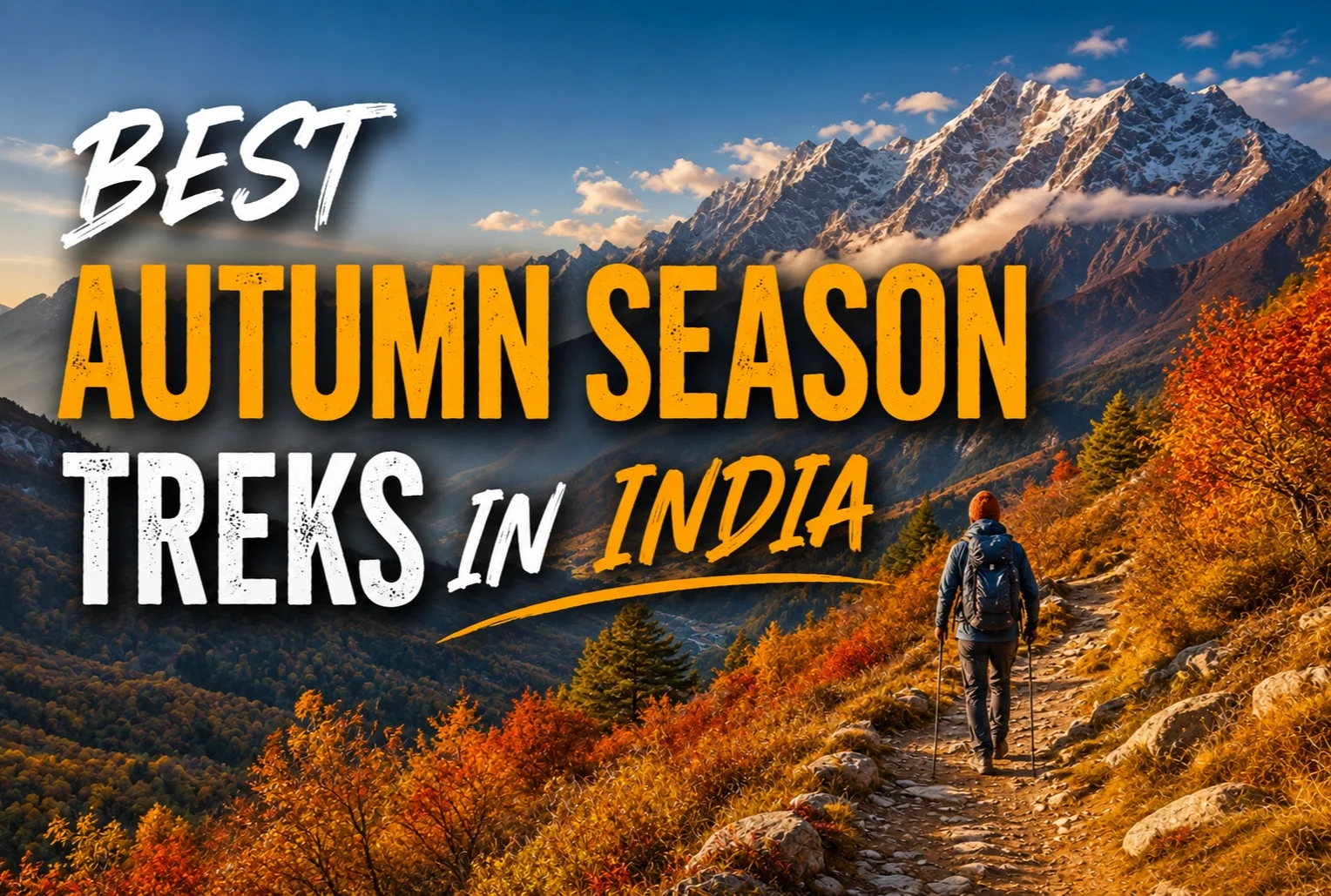
Discover The Best Autumn Season Treks In India

Autumn Treks in India

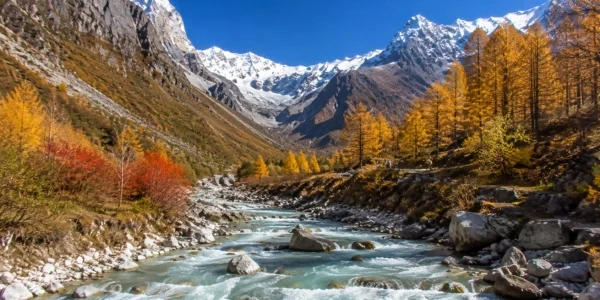
If you want to experience the most magical Autumn Treks in India in the Himalayas, then the Spring and the Autumn seasons are the best for you. As the Monsoon bids farewell it marks the beginning of the Autumn season.  The clear blue sky, peaks that were hidden behind the clouds now show their appearance, rhododendrons starts blooming  across the hills in the vibrant shades of red and pink. These best autumn seasons trek is a complete bliss and offers a treat to your eyes. Here are a few recommendations of the bet autumn season treks that you should experience once in a life time.

Gaumukh Tapovan Trek

Gaumukh Tapovan Trek

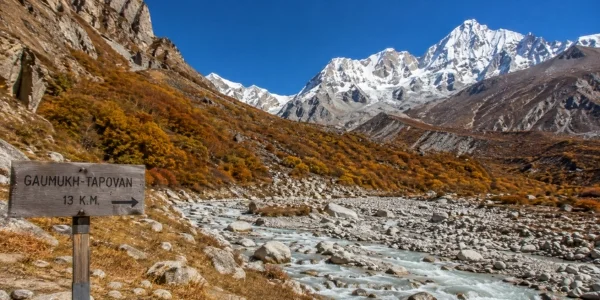
The trek to Gaumukh-Tapovan is not similar to most of the trekking routes in the Himalayas. This journey is a total bliss to your eyes connecting your inner self too spiritually and naturally. The journey of this holy pilgrimage begins from Gangotri where every pilgrim from all across the India visits the holy temple. This trek is an 8 day Himalayan expedition that begins at Gangotri, leads past the sacred source of the Rive Ganga at Gaumukh, ending at the alpine meadows of Tapovan. Standing at the peak altitude of 14,203 to 14,600 feet this trek is a pure bliss to Himalayan expedition leaving you breathless.

Kuari Pass Trek

Kuari Pass Trek

If you want a trek that’s basically a highlight reel of the Garhwal Himalayas, Kuari Pass delivers. Also called the Curzon Trail (after the British viceroy who once used it), this is a six-day, roughly 22-km route through Chamoli district that mixes dense oak-and-pine forest with open snow meadows the kind that make the trail feel like it belongs in a different season entirely. There’s history baked into this one too, which makes the walking feel a bit less routine. You’ll pass Tali Lake, frozen solid most winters, camp under skies where the stars feel unusually close, and get a proper look at Auli along the way.

But the real reward is standing at the pass itself, where the view opens up across roughly 280 degrees of skyline Nanda Devi, Dronagiri, Chaukhamba, Kamet, Changabang, Neelkanth, Hathi Parbat, Kunti Bhandar, one after another. The trail also cuts through the edge of the Nanda Devi Sanctuary, a UNESCO World Heritage site, before dropping down through the snow meadows of Gorson Bugyal and somehow the views only get better from there, with Nanda Devi towering over the whole descent. Few things compare to being that close to Uttarakhand’s tallest peak.

Gaumukh Gangotri Trek

Gaumukh Gangotri Trek

There’s a reason Gaumukh keeps pulling trekkers back: it’s not really about the summit, it’s about the source. The trail starts at Gangotri, one of the four Char Dham sites, and threads through the Uttarkashi district following the Bhagirathi River all the way to Gaumukh the snout of the Gangotri Glacier, where the river quite literally begins. For a country where rivers hold deep spiritual weight, reaching the birthplace of one of the Ganga’s main headstreams is something else entirely.

Along the way you’ll pass through Chirbasa’s pine forest and camp at Bhojbasa, ringed by birch trees with the Himalayas opening up around you. Bhagirathi I, II, and III rise up on one side, Meru on the other. It’s a gentle, well-worn trail as far as Himalayan treks go, which is why it draws such a wide mix of people including plenty of trekkers in their 50s who’ve been waiting to make this particular walk. Glaciers, river, mountain, and a strong dose of faith that combination is what makes Gaumukh linger in memory long after you’re backing home.

Buran Ghati Trek

Buran Ghati Trek

Buran Ghati isn’t a trek you do just for fun instead it’s a lot more than that.  You start out under thick cover of birch, maple, pine, and oak, and for a while it’s just you, the crunch of the trail, and whatever birds happen to be around that day, until the trees fall away and Dayara Meadows opens up in front of you, this huge stretch of grassland with horses wandering around and snow peaks sitting right there in the distance, the kind of view that makes people stop walking for a second.

Along the route you’ll also pass through Janglik and Barua, a couple of old villages that still feel untouched in a lot of ways, timber houses, fruit orchards, life moving at its own pace, worth slowing down for. Then things get serious at Buran Ghati Pass itself, sitting at around 15,000 feet, steep and tiring, and if you happen to catch it early season, there’s a snow wall you can actually rappel down, not something that comes up on most treks.

From there the trail leads down to Chandranahan Lake, a glacial lake set in stark, dramatic terrain that holds real spiritual meaning for locals, and before it’s all over there’s Litham, a campsite sitting right where two valleys meet, with waterfalls pouring down from the Chandranahan glacier close by, a hard place to leave, honestly. Add in the views of the Dhauladhar range and a string of remote peaks scattered along the way, and it’s easy to see why people who’ve done this trek keep bringing it up long after they’re back home.

Har Ki Dun Trek

Har Ki Dun Trek

Har Ki Dun is one of those treks that stays with you locals often call it the “Valley of Gods,” and once you’re there, it’s easy to see why. There’s real mythology attached to this trail: legend has it the Pandavas walked this very path on their way to heaven, and that story trails alongside you the whole way, giving the trek a weight that goes beyond the scenery, good as the scenery is. You start from Sankri, a small village that already feels miles removed from anything urban. From there the trail moves through thick forest, open meadow, and streams clear enough that you’ll want to stop just to look at them.

You’ll pass through Osla and Seema too, villages where day-to-day life hasn’t shifted much in generations. Osla especially is worth slowing down for; the old wooden houses are striking, and there’s a temple there once dedicated to Duryodhana, now home to Lord Someshwar a small but telling reminder of how layered this region’s history is. The Supin River stays with you for most of the walk, and every so often the tree line breaks just enough to reveal Swargarohini I and II, Bandarpoonch, the dark bulk of Kala Nag (Black Peak), and eventually the Jaundar Glacier.

There’s also a modest Mahadev temple tucked along the route easy to walk past if you’re not paying attention, but worth the pause. Between the birdsong, the wind, and the sound of water the whole way, Har Ki Dun is an easy-to-moderate trek that suits beginners looking for both scenery and a bit of quiet spirituality.

Ranthan Kharak Trek

Ranthan Kharak Trek

For trekkers who’d rather skip the crowded routes, Ranthan Kharak is a good find tucked into the lesser-explored Kumaon region, it’s got green meadows, dense oak and rhododendron forest, and Himalayan views without the usual foot traffic. Come spring, the rhododendrons bloom red and pink across the hillsides, turning the whole trail into something out of a painting. The trek starts from Gogina, a small village where you get a real feel for Kumaoni life before heading into the hills. From there it’s forest trails, river crossings, and open clearings locally called kharaks that make up most of the journey.

The standout moment is the ridge walk up to Ranthan Top, which opens up views of Nanda Devi, Sunanda Devi, Nanda Kot, Mt. Mrigthuni, Trishul, and the Panchachuli range, all at once. Balchan Kund, a quiet lake ringed by forest and birdsong, adds another peaceful stop along the way, and the Bajimanian Kharak campsite is about as good as it gets for stargazing. If you’re after untouched trails and don’t mind doing a bit more research to get there, this is one of the better-kept secrets in Uttarakhand.

Dayara Bugyal Trek

Dayara Bugyal Trek

Dayara Bugyal is often recommended as a first Himalayan trek where you can witness some of the best meadows in Uttarakhand. During the Autumn season you can witness the crisp blue skies, clean air and sharp edgy mountain peaks. The views are often hard to beat: Bandarpoonch, Srikanth, Jaonli, the Gangotri Range and Draupadi Ka Danda 2 all show up along the horizon at different points on the trail.  The trek begins in Natin, a village that gives a good first taste of Himalayan life before the climb starts in earnest. 

This trek begins in Natin, a village that gives a beautiful taste of the Himalayan life. The campsite at Gui and Chilapada sit right in the middle of forest and meadow and the night skies that are worth staying up for. Dayara Tip itself is the payoff – an open, snow-covered expanse with mountains on every side. Not only this but this trail runs through the maple and rhododendron forest, past Barnala Lake and through the quiet Nayata campsite. So, weather   it is your first trek or the 15th one, the Dayara Bugyal ha the lot more to offer you.

Frequently Asked Question’s

Which Autumn Treks in India are for beginners?

If you’re just starting out, Dayara Bugyal and Har Ki Dun are both solid picks. They’re not too demanding, but you still get that classic Himalayan feel meadows, forests, mountain views without needing prior experience.

What’s the best time for spring trekking?

Generally, March through May is when spring treks are at their best. The snow starts melting, trails become more accessible, and the weather is pleasant enough to enjoy the views without freezing.

Which trek offers the best Himalayan views?

Kuari Pass is hard to top for this. The panoramic views you get up there peaks stretching out in every direction are honestly one of the best payoffs for the effort.

Do I need prior trekking experience?

Not necessarily. It really depends on which trek you pick. A lot of the spring treks are designed with beginners in mind, so if it’s your first time, you can still find something manageable.

What should I pack for a spring trek?

Good trekking shoes are non-negotiable, and it’s worth carrying something for rain since mountain weather can flip quickly. Beyond that, just the usual essentials: water, snacks, a basic first-aid kit, and a headlamp.

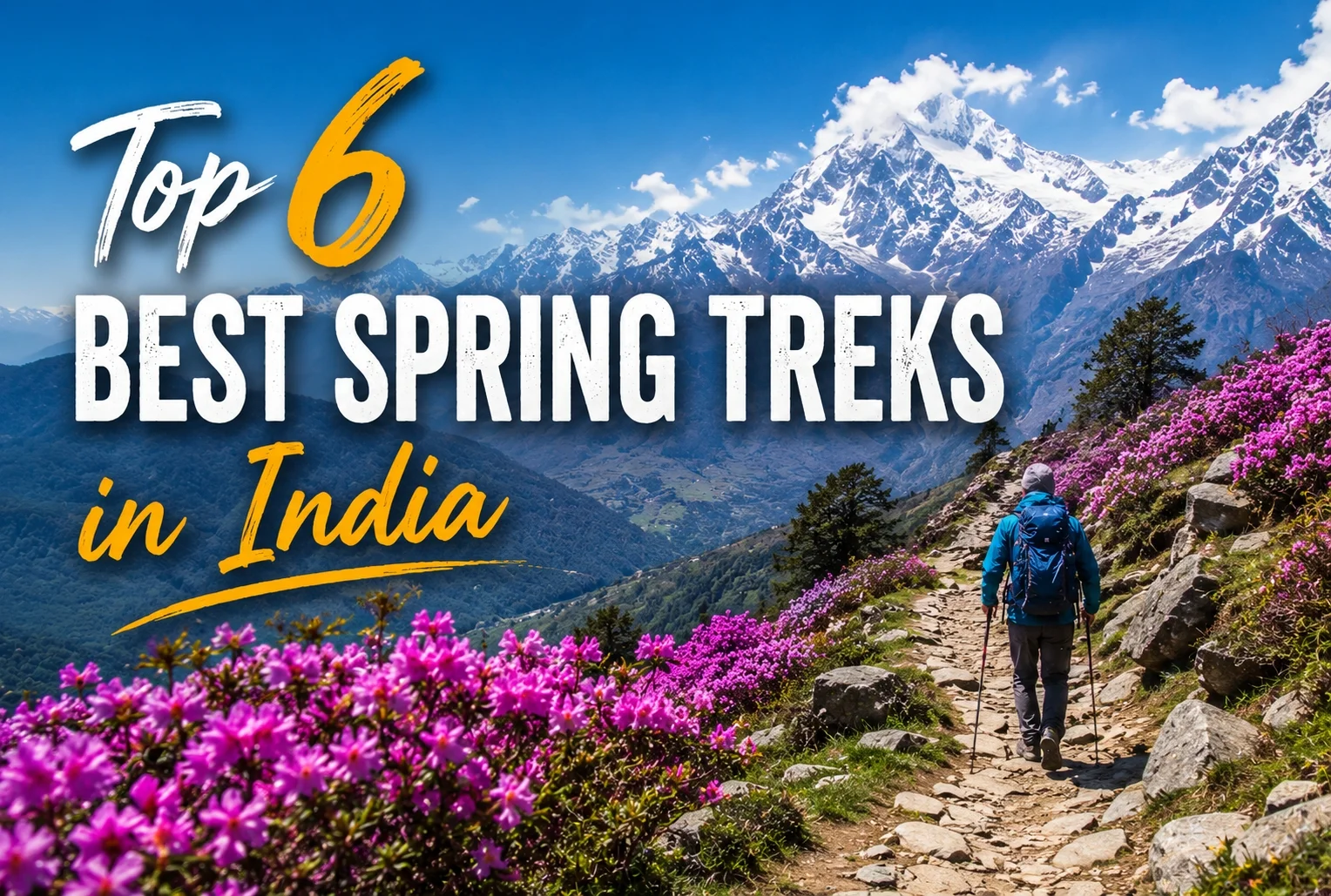
Top 6 Best Spring Treks in India

Top 6 Best Spring Treks in India

When the winters begin to end and the snow starts to melt, spring emerges as one of the most rewarding seasons to explore the Himalayas. The Beautiful meadows that are green, the rhododendrons that blossom and the sky marking the arrival of the beautiful vibrant-floral season.  Whether you are a first time trekker or a seasoned hiker watching these serial views are worth every step. Here are some of the best spring treks in India to add to your list this season that will make your journey worth remembering.

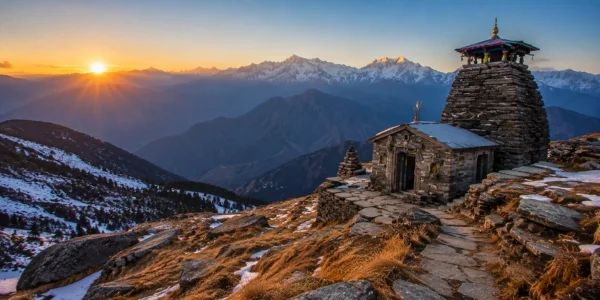
Chopta Chandrashila Tungnath Trek 

Chopta Chandrashila Tungnath Trek 2

Are your looking for the best spring treks in Uttarakhand? Chopta Chandrashila Tungnath Trek is the one for you. At a stretch this route strings together four very different experiences Chopta, Tungnath, Chandrashila and Deoriatal each having unique scenic expertise. The exuberant moments like the sunrise from Chandrashila summit, with the first rays of the sun beautifully commenting on the snow that turns golden and orange in colour. On the clear mornings you can see the Nanda Devi, Chaukhamba, Trishul and Kedar Dome from the top, which is a lot of Himalayan royalty in one frame.

On the way up you’ll pass through Tungnath Temple, the highest Shiva temple in the world and one of the Panch Kedar shrines. Deoriatal adds another layer to this trek with a clear alpine lake that mirrors the Chaukhamba range on a still day surrounded by a dense forest. Expect long stretches of rhododendron and pine, quiet meadows and in case if you are lucky, you will have a glimpse of the Himalayan Monal darting the undergrowth.

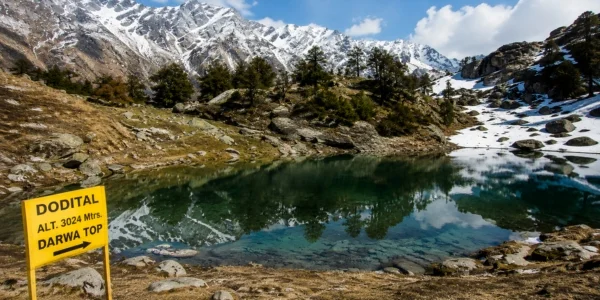
Dodital Darwa Top Trek

Dodital Darwa Top Trek 2

If you want a trek in the Himalayas without the requisite mountaineer’s skills, but still a little winded, then make sure to add Dodital to your list. The walk concludes at a quiet lake whose emerald green water framed by a dense deodar, oak and rhododendron forest. It’s a place that seems a lot further away than the trek difficulty suggests. The journey begins at Sangamchatti, a small village close to Uttarkashi, and passes through a series of tiny hamlets in the Himalayas – Agoda, Bebra, Manjhi; the river, the Asi Ganga, follows for much of the way.

It’s not excessively steep, but it’s not something you’d want to knock yourself out for, either, so it’s a popular choice for those who are just starting out in the Himalayas. It is still popular, however, among seasoned trekkers simply for the beauty. The lake also has its fair share of mythology, too; it is said to be the birthplace of Lord Ganesha, and there’s a small temple on its banks to commemorate that fact. Residents also speak about the Himalayan trout that is found here – the “Dodi”, which is how the lake came by its name. Birdwatchers will overstay their welcome.

Watch for sightings of the Himalayan Monal, pink finches, whistling thrushes, grey shrikes, bush robins and tree pies; sightings of these birds are relatively common with patience. Those who want to go the extra mile can travel to the Darwa Pass about 4200 metres, which is an extension. A good attempt, but a broad open vista of the Greater Himalayan range which most people miss on the basic trek.

The walk is quite different in the different seasons. Summer has an abundance of green foliage and pleasant weather, and then winter transforms the entire landscape to white and much more dramatic – colder, quieter, and really pretty if you’re up for the cold. But, no matter which way you look at it, Dodital is still a wonderful place to enjoy forest, wildlife, a dash of legend, and real mountain views – without relying on technical climbing skills – and it continues to appear on folks’ “first big trek” lists.

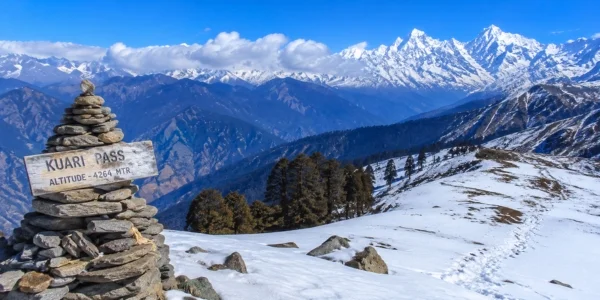
Kuari Pass Trek

Kuari Pass Trek2

Excited for a thrill? Well, Kuari pass trek has got you covered. Packed with panoramic views, stunning landscape, old trade routes and mountain villages this trek has got you covered. The Kuari Pass trek also known as the Curzon Trails is 6 day-22km expedition in the Chamoli District, Uttarakhand covered with a dense oak and pine forest, snow-covered meadows that transform the trails into magical wonderlands. There’s a bit of history under your boots along with the snow, one of the most scenic stretches you’ll ever find in Uttarakhand.

The payoff comes at the top. On the way you’ll pass Tali Lake (it freezes over most winters), camp somewhere the stars actually feel close, and get a good look at Auli. But the real attention seeker is the  Kuari Pass itself,  from where you can get a proper 280 degree view Nanda Devi, Dronagiri, Chaukhamba, Kamet, Changabang, Neelkanth, Hathi Parbat, Kunti Bhandar, all lined up across the skyline. Not only this, in this journey you will come across the remarkable Nanda Devi Sanctuary, a UNESCO World heritage site known for  its rich heritage and biodiversity.

Then comes the descent through Gorson Bugyal’s snow-covered meadows and somehow these panoramic views takes you through the stunning mountains of the Nanda Devi towering over everything.    Getting close to Uttarkahand’s highest peak isn’t something you will forget easily.

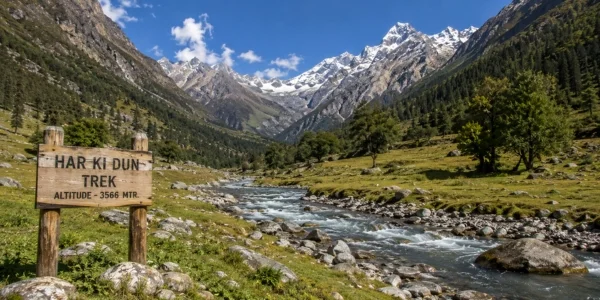
Har Ki Dun Trek

Har Ki Dun Trek 2

Har Ki Dun is one of those treks that stay in your core memory often known as the “Valley of Gods” by the localities. It’s got everything good stories, real mountain culture, and views that genuinely earn all the hype. Local legend says this was the very path the Pandavas walked on their journey to heaven, and that bit of mythology follows you the whole way, giving the trek a weight that goes beyond just the scenery. You set off from Sankri, a small village that already feels like a world away from anything urban. From there, the trail winds through thick forest, open meadows, and streams so clear you’ll want to stop and just look at them.

You’ll pass through villages like Osla and Seema too, places where daily life hasn’t really changed much in generations. Osla in particular is worth slowing down for the old wooden houses are striking, and there’s a temple there, once dedicated to Duryodhana, now home to Lord Someshwar. It’s a small, quiet reminder of how layered this region’s history really is. The Supin River basically becomes your walking companion for most of the trek, and every so often the trees part just enough to give you a glimpse of what’s ahead Swargarohini I and II, Bandarpoonch, the imposing Kala Nag (Black Peak), and eventually the Jaundar Glacier.

There’s also a small Mahadev temple along the route, tucked away, easy to miss if you’re not paying attention, but worth the pause. What really sets Har Ki Dun apart is its rich culture and spiritually. Get your ears feel blessed by the sounds of birds chirping, wind blowing and water babbling. This trek is an easy to moderate trek that is perfect for the beginners who wants to seek spirituality and natural beauty all at once.

Kedarkantha Trek

Kedarkantha Trek 2

Kedarkantha gets called the “Queen of Winter Treks,” and it earns the title this is probably the most popular winter trek in India, and it delivers on nearly every count. Starting from Sankri, the trail winds through pine, oak, maple, and rhododendron forest before the snow really takes over. Juda Ka Talab, a small lake with its own Shiva mythology attached, freezes over in winter and makes for a memorable early stop. Higher up, the Kedarkantha Base and Hargaon campsites are known for genuinely dark, light-pollution-free skies the kind of stargazing that’s hard to find closer to home.

The summit tops out at 12,500 feet, with a full 360-degree view: Swargarohini, Bandarpoonch, Black Peak, and Draupadi Ka Danda, with the Har Ki Dun and Rupin valleys stretching out below. One thing worth knowing before you go the trek enters a no-network zone past Sankri, so you’re properly cut off for the duration. For a lot of trekkers, that’s not a downside at all; it’s kind of the point. 

Ali Bedni Bugyal Trek

Ali Bedni Bugyal Trek 2

Wanting to see what a Himalayan meadow trek looks like at its best? Well, Ali Bedni Bugyal is the one for you.  This trek covers two of  the Uttarakhand’s  most beautiful high-altitude grassland Ali Bugyal and Bedni Bugyal located away in the Garhwal Himalayas with views that stretch out towards  Trishul, Nanda Ghunti, Chaukhamba and Neelkanth. You start out under the cover of oak and rhododendron  forest and then almost  without warning, the trees fall away and the meadows open up in front  of you rolling, endless and framed by a sky that feels bigger than usual. 

Come in spring or summer and it’s all green grass and wildflowers. Come in winter and the whole place turns white and still, which honestly might be the best time to go the AMS risk stays relatively low here even at altitude, so it’s a good pick if you want a winter trek without the usual worry. Somewhere along the trail you’ll reach Bedni Kund, a small alpine lake that locals consider sacred, and it’s got its own set of stories attached to it. In winter it freezes over completely, snow and all. In the warmer months, it turns into a mirror, catching the peaks around it the kind of spot that’s genuinely hard to photograph badly.

There are old temples scattered along the route too, and parts of the trail actually follow the historic Nanda Devi Raj Jat Yatra path, which adds a nice layer of history to what’s already a beautiful walk. Along the way you’ll probably run into local shepherds grazing their animals in the bugyals, and if you get talking to them, you’ll pick up a little of the culture and rhythm of life in this part of Garhwal something you won’t find in a guidebook. What makes this trek work for almost anyone is the balance.

It’s got serious mountain views without being a technically hard trek, so beginners can manage it, and experienced trekkers still come away impressed. Add in the sacred lake, the old pilgrimage route, and meadows that change character with every season, and it’s easy to see why Ali Bedni Bugyal keeps showing up on people’s “must-do” lists photographers, nature lovers, and casual trekkers alike.

Frequently Asked Question’s

Which trek is Best Spring Treks in India for beginners?

The following are the best treks for the beginners Kedarkantha, Chopta-Tungnath- Chandrashila and Dodital.

When’s the best time to trek in Uttarakhand?

The best time to trek in Uttarakhand’s includes are the sweet spots for must routes. If you want snow, aim for December through Februray.

Do I need prior trekking experience?

Not really. A number of these treks are built with beginners in mind just make sure you’re reasonably fit before you go.

Which is the best trek in April?

Deoriatal Chandrashila, Har Ki Dun, and Sar Pass is considered as the best treks in April offering you better spring blooms and clear mountain views.  

Top 7 Best Monsoon Treks

7 Best Monsoon Treks

The Himalayas have a unique way to call you during monsoon. Trails that looked tired and brown a month earlier turn into meadows full of wildflowers, waterfalls go from trickle to roar, and the whole forest smells like rain and wet pine. No crowd, no waiting for your turn to click your best shots, just you and your best moments. These slippery trails have a lot more to tell you. Leeches are a real nuisance in the forest sections, landslides are a genuine risk on certain roads, and the weather can turn on you with almost no warning.

So picking the right trek isn’t optional this time of year; it’s the difference between a good trip and a miserable one, possibly dangerous but full of adventures. These best monsoon treks in India tell you a lot more in every drop of rain that pours on you. Here are some of the treks listed below that are a must to visit during June and September that can leave you stunned!

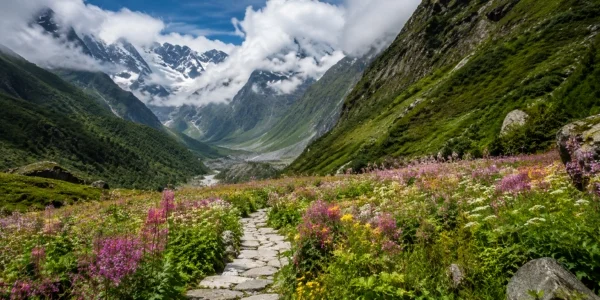
Valley of Flowers Trek

Valley of Flowers Trek 1

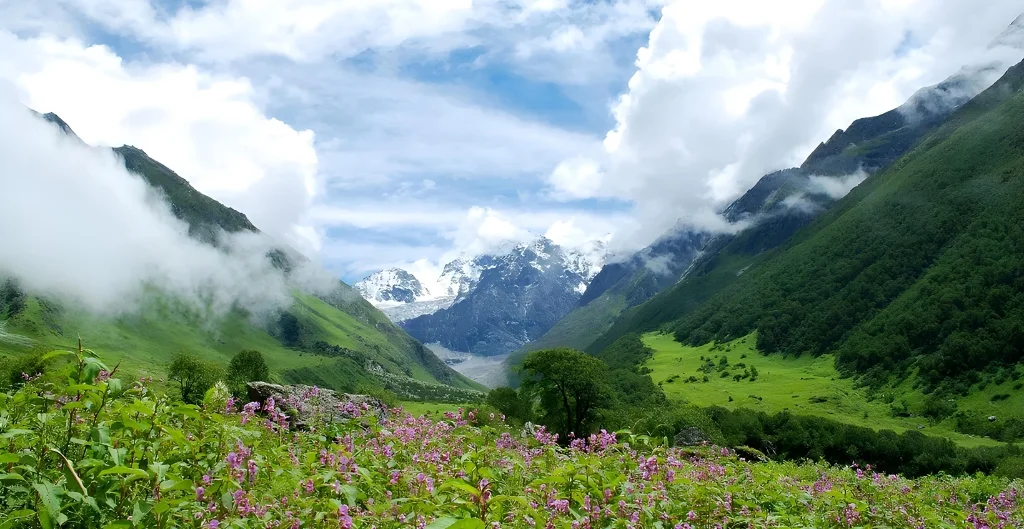
One of the most beautiful and vibrant treks is the Valley of Flowers Trek. Tucked inside Uttarakhand’s Nanda Devi Biosphere Reserve, the Valley of Flowers is a UNESCO World Heritage Site that only really opens up for a few months a year, and monsoon is when it puts on its best show. Over 500 species of alpine flowers carpet the valley floor, including the Brahma Kamal and the Himalayan Blue Poppy, both of which you’ll rarely spot anywhere else. The walk in isn’t just about the flowers, though.

You’ll pass through forest, cross a few streams, catch waterfalls tumbling off the ridgelines, and move through green meadows before reaching Ghangaria, the little base camp that serves both the valley and Hemkund Sahib. Most people take on a visit to Hemkund, one of the highest Gurudwaras in the world; walking through it adds spiritual experience to the trek. Walking through the vibrant carpets of wildflowers makes the Valley of Flowers one of the best trek experiences you will ever come across.

Hampta Pass Trek

Hampta Pass Trek 1

Hampta Pass is one of the most beautiful and unique Himalayan adventures, offering an unforgettable journey through two different landscapes. Here, you’ll start out in the green, forested valleys around Kullu, waterfalls, wildflowers, and the whole lush Himachal package, and then you will cross the 14,000-ft Hampta Pass into the barren landscape of Lahaul, which looks completely insane. The serial views are what make the trek completely exciting. Not only this, but the panoramic views of Mt. Indrasan and Mt. Deo Tibba make this trek truly exuberant along with campsites like Chika, Balu Ka Ghera, and Shea Goru that all come with proper mountain views.

Many trekkers extend the trip to include Chandratal Lake with its crystal-clear blue waters. Despite being a bit challenging, the Hampta Pass trek is considered a bit challenging for the beginners with good fitness looking for an adventure-filled experience.

Madmaheshwar Trek

Madmaheshwar Trek (1)

This is the quieter, more contemplative option on this list, as the Madmaheshwar Trek is one of the breathtaking pilgrimages Himalayan adventure. This trek takes you through the fourth of the Panch Kedar temples, sitting at 3,497 metres, and the walk up from Ransi village, through the Garhwali villages, dense forest, streams, and open meadow before reaching the Madmaheshwar temple set against the Chaukhamba massif. The route also passes through the Kedarnath Wildlife Sanctuary, making sure you experience the rich biodiversity. Don’t skip the short add-on hike to Budha Madmaheshwar if you are ready to explore much of it.

The real payoff of the trek is a wide, unbroken 360-degree view where viewers might witness the beauty of Chaukhamba, Kedarnath, and Neelkanth all at once. All you need is the moderate fitness for this trek if you want to experience the ultimate solitude.

Ali Bedni Bugyal Trek

Ali Bedni Bugyal Trek 1

If you’re a meadow person, this one’s for you. Ali Bugyal and Bedni Bugyal are among the largest alpine grasslands you’ll find anywhere in the Indian Himalayas, and honestly, walking across them with Trishul and Nanda Ghunti standing on the horizon isn’t something photos or descriptions really do justice to. The trail itself takes you through dense oak and rhododendron forest before it breaks into these wide, rolling meadows with mountain views in every direction. Somewhere along the route you’ll hit Bedni Kund a small, still alpine lake so clear it mirrors the snow peaks around it. Photographers tend to lose track of time here.

What makes this trek stand out among the rest is the stunning scenic beauty and perfect views. You’ll pass through Garhwali villages, get a chance to interact with the local shepherds, stop at temples that have been standing for generations, and even walk part of the old route once used for the Nanda Devi Raj Jat Yatra a pilgrimage with a pretty fascinating history if you dig into it. It’s a solid blend of big views, slower pace, and a perfect calmness all around. So, whether you’re a first-time trekker, bringing family along, or just someone chasing that classic Himalayan meadow this trek is surely the one for you.

Nag Tibba Trek

Nag Tibba Trek 1

The Nag Tibba is one of the best weekend treks in the Uttarakhand, offering you the complete exposure of adventure and thrill all together.  This trek becomes one of the most go to weekend trek amongst the people staying near to Mussoorie.  Starting from the peaceful village of Pantwari all the way long from Mussoorie, the trail passes through the dense oak and rhododendron forest, open meadows and beautiful campsites, beautiful sunsets and unforgettable stargazing experiences. The Nag Tibba summit is a delight for the trekkers who will come across the mind-blowing Himalayan Peaks such as bandarpoonch, Swargorohini, Nanda devi, Gangotri and Jaonli.

Not only this but in this trek, you will get chance to visit the historic Naag Tibba Temple where you can get a complete glimpse of this temple which makes this a perfect weekend getaway in the Garhwal valleys away from the noise of the city.

Chandrakhani Pass Trek

Chandrakhani Pass Trek 1

The Chandrakhani Trek is one of the best choices for the ones seeking for perfect adventure. This trek starts from the traditional village of Rumsu a village known for a perfect blend of Kathkuni wooden architecture and then slight moving through the meadows and forest topping the 3,700 meters Chandrakhani Pass.  Experience the traditional-folklores of the ancient village of Malana while enjoying the beautiful 360-degree views of the Pir Panjal, Dhauladhar and Parvati Ranges. 

Not only this but you will also come across the iconic peaks like Hanuman Tibba, Friendship Peak, deo Tibba, Indrasan and Shikhar beh. The ashtonishing campsites at Naya Tapru and Chaklani gives you a front-row view of the sunrise. In short, this trek is one of the best choices for the ones seeking for unforgettable experiences.

The Darma Valley Panchachuli Base Camp Trek

The Darma Valley Panchachuli Base Camp Trek1

Wanting to experience one of the most spectacular expeditions in the Himalayas than the Darma valley Panchachuli base Camp is the one for you. In this trek you can come across the spectacular scenery, rich cultural heritage, and spiritual base.  The trek passes through the high meadows, dense forest and traditional villages of the Kumaon Himalayas before arriving the iconic Panchachuli Base Camp. The trail starts in the small village of Dar, near the village of Munsiyari and heads for about 40 km across the pristine wilderness in the eastern region of Uttarakhand, offering trekker seeking for panoramic views of snow-clad mountains, the magnificent Panchachuli glaciers and the extraordinary views of the Himalayas.

This trek is a great chance to experience the Shauka (Bhotiya) community, famous for their ancient trade with Tibet. It is recommended to visit here between March-June and mid-September- Late October, when you can see the vies clearly. This trek is suitable for the ones who want to explore and experience beauty with spirituality.

Frequently Asked Question’s

Which are the best monsoon treks in India?

The Valley of Flowers, Hampta Pass, Madmaheshwar, Ali Bedni Bugyal, Nag Tibba, Chandrakhani Pass and the Panchachuli Base Camp through the Darma Valley are the few monsoon treks in India.

Is it actually safe to trek during monsoon?

Trekking during the monsoon is only safe when you check the right trail, track real-time weather forecasts before going.

What’s a good monsoon trek if I’m just starting out?

The Chopta-Tungnath-Chandrashila Trek and the Valley of Flowers are considered some of the best treks for beginners.

What should I carry in my bag for the monsoon trek?

You must carry a rain jacket, a poncho, quick drying anti-skid and a waterproof backpack.

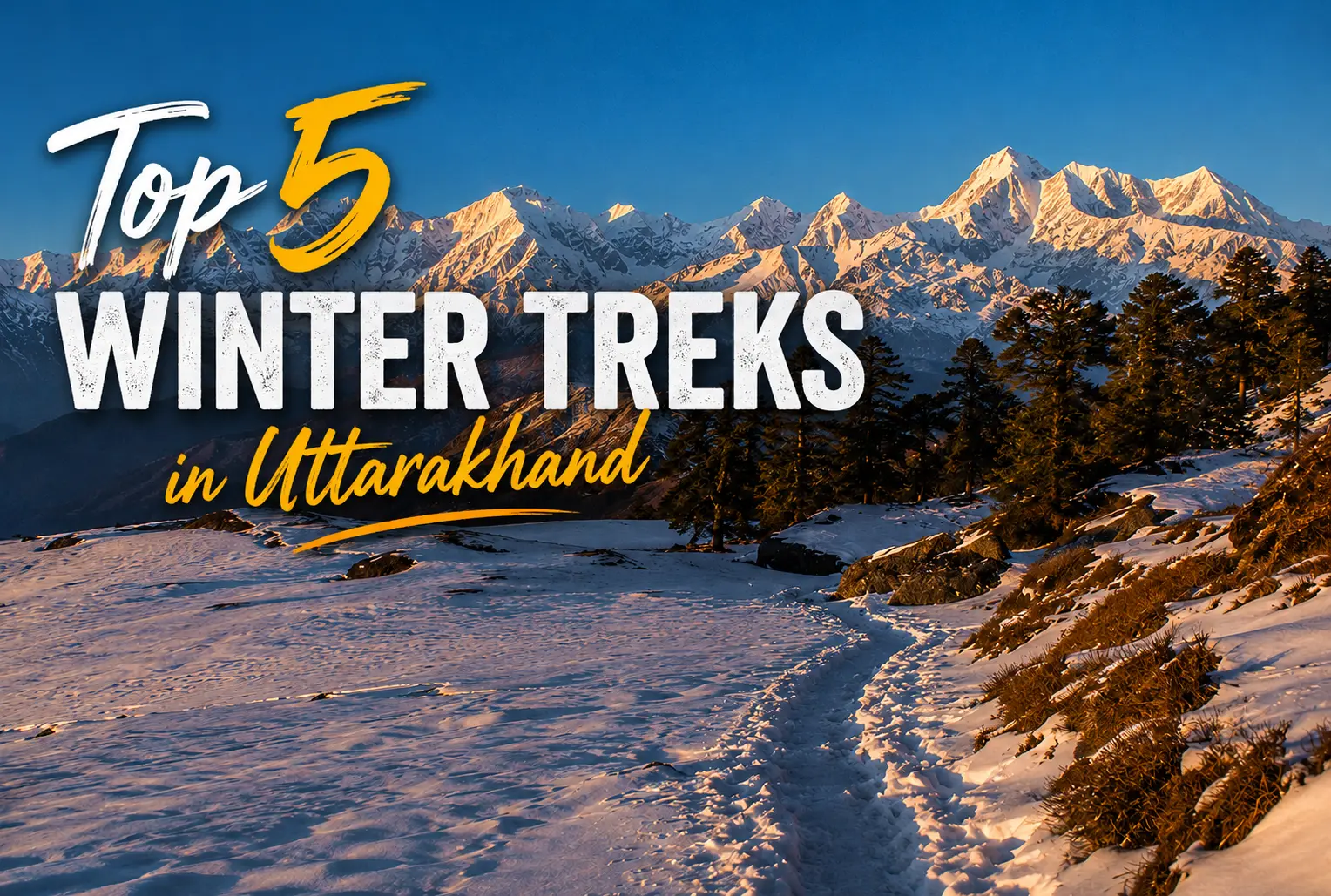
Top 5 Best Winter Treks in Uttarakhand for Snow Adventures (2026 Guide)

Featured image of best winter trek in uttrakhand

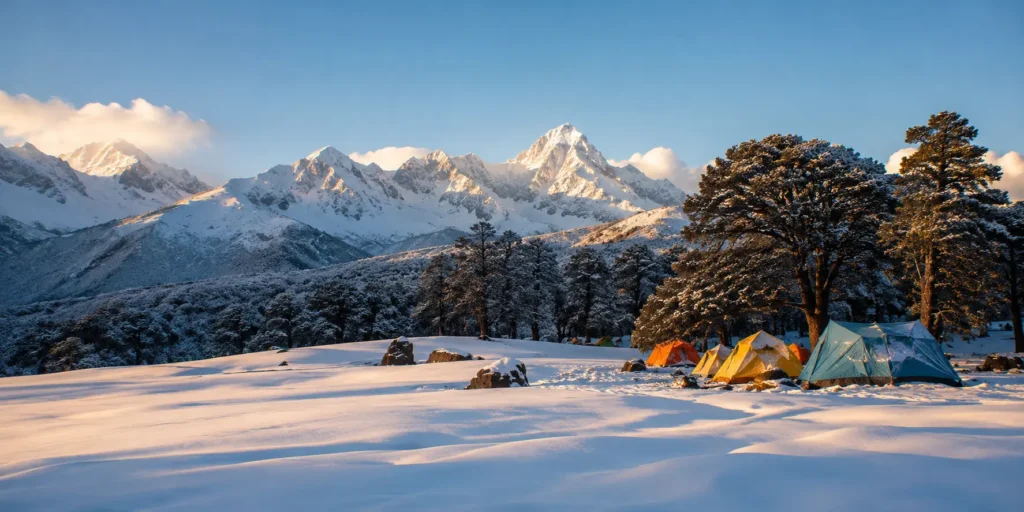
Winter changes Uttarakhand into something you have to see to actually believe. The trails turn white, the ridgelines go quiet, and the whole state slows down into this crisp, still version of itself. If you’ve ever wanted to walk through snow with nothing but mountain air and your own footsteps for company, this is the season and the place for you. Uttarakhand sits right in the lap of the Himalayas, and it doesn’t hold back when it comes to winter trekking options.

There’s something here whether you’ve never strapped on a pair of trekking shoes or you’ve already got a few summits under your belt alpine meadows buried under fresh snow, ridge walks with views that stop conversations, and sunrises over peaks that make the 5 a.m. wake-up calls feel worth it. Here’s a real breakdown of the winter treks worth your time.

Chopta Chandrashila Tungnath Trek

winter trek in Chopta Chandrashila Tungnath Trek

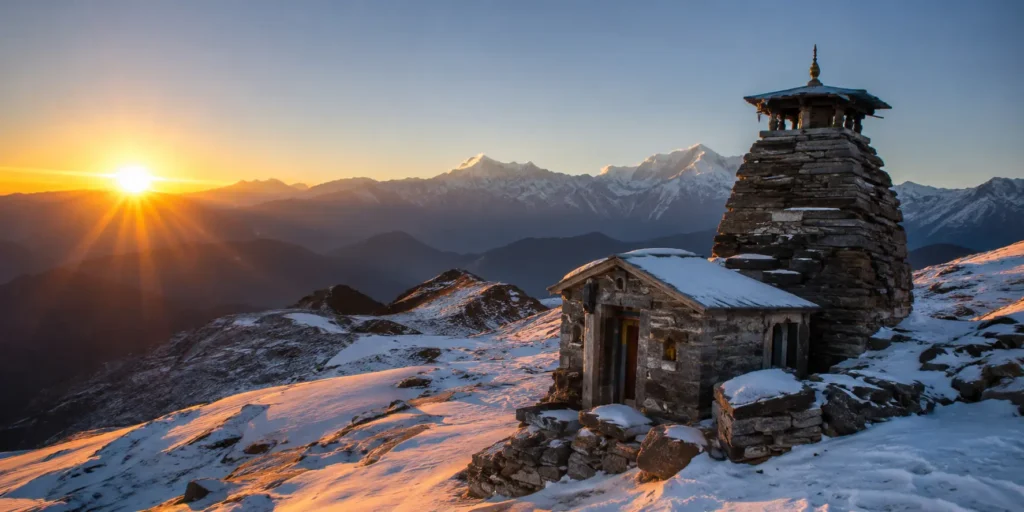
If you are looking for winter treks in Uttarakhand, this is one that is much often recommended. At a stretch this route strings together covers   four very different experiences — Chopta, Tungnath, Chandrashila and Deoriatal each having unique scenic expertise. The exuberant moments like the sunrise from Chandrashila summit, with the first rays of the sun beautifully commenting on the snow that turns golden and orange in colour. On the clear mornings the you can see the Nanda Devi, Chaukhamba, Trishul and Kedar Dome from the top, which is a lot of Himalayan royalty in one frame.

On the way up you’ll pass through Tungnath Temple, the highest Shiva temple in the world and one of the Panch Kedar shrines. Deoriatal adds another layer to this trek with a clear alpine lake that mirrors the Chaukhamba range on a still day surrounded by a dense forest. Expect long stretches of rhododendron and pine, quiet meadows and in case if you are lucky, you will have a glimpse of the Himalayan Monal darting the undergrowth.

Dayara Bugyal Trek

Dayara Bugyal Trek

Dayara Bugyal has a reputation as one of the more forgiving treks in the Garhwal Himalayas, and it mostly lives up to it. The trail moves through thick alpine forest and small villages before opening into some of the biggest meadows you’ll find anywhere in Uttarakhand. Come in winter, though, and those same meadows vanish under snow — the whole landscape turns white and goes strangely quiet. Come back in spring or summer and it’s a completely different trip: the same ground fills with wildflowers instead. Same trail, two very different experiences depending on the season.

From Dayara Top, the views stretch out to Bandarpoonch, Srikanth, Jaonli, the Gangotri Range, and Draupadi Ka Danda II — an impressive lineup for a trek that’s genuinely manageable for most fitness levels. Along the route, campsites like Natin Village, Gui, Chilapada, and Nayata each have their own feel, tucked between the forest edge and open snowfields. It’s an easy one to recommend to first-timers, but plenty of experienced trekkers come back too — usually just for those meadow views.

Brahmatal Trek

winter trek in Brahmatal Trek

Brahmatal shows up on pretty much every “best winter treks in India” list, and once you’ve walked it, that’s not hard to understand. Snow-covered trails, frozen lakes, wide-open Himalayan views — it all comes together in a way that almost feels staged. The two lakes on this route, Brahmatal and Bekaltal, freeze solid by winter. There’s something oddly calming about standing next to a lake that’s gone completely still under a layer of ice.

The best views, though, come from Tilandi Top and Jhandi Top, where Trishul, Nanda Ghunti, Mrigthuni, and Maiktoli line up across the horizon. Between the viewpoints, the trail cuts through oak and rhododendron forest, past the Gujreni campsite, and across meadows that are worth slowing down for — great for photos, or just for sitting and watching the light shift. There’s some local mythology tied to the place too: Brahmatal Lake is said to be where Lord Brahma once meditated, which is a nice bit of backstory to have in mind while you’re up there. Difficulty-wise, it sits comfortably in the middle — doable for a determined beginner, still rewarding if you’ve already done a dozen treks.

Kuari Pass Trek

winter trek in Kuari Pass Trek

Kuari Pass follows the old Curzon Trail, and that history shows in the route — you move through Garhwal villages like Tugasi, dense oak and pine cover, open snowfields, and eventually into the Nanda Devi Biosphere Reserve, which is a UNESCO World Heritage Site.  In the winter the Tali lake freezes making it a good rest stop, and the campsites along the way giving you clearer skies most of the nights. The true beauty is the Kauri Pass itself which is close to a 280-degree sweep of the Himalayas with Nanda devi, Dronagiri, Chaukhamba, Kamet, Changabang, Neelkanth, Hathi Parbat, and Kunti Bhandar all visible at once. 

Once you come down through Gorson Bugyal’s snow covered meadows near Auli, Nanda devi stays in view the whole way, rising above everything else on the skyline. This kind of view will make you stop in the mid of the trek regardless of how many time you have seen mountain in your lifetime.  These views are worth capturing and serial.

Kedarkantha Trek

winter trek in Kedarkantha Trek

Kedarkantha gets called the “Queen of Winter Treks,” and it earns the title — this is probably the most popular winter trek in India, and it delivers on nearly every count. Starting from Sankri, the trail winds through pine, oak, maple, and rhododendron forest before the snow really takes over. Juda Ka Talab, a small lake with its own Shiva mythology attached, freezes over in winter and makes for a memorable early stop.

Higher up, the Kedarkantha Base and Hargaon campsites are known for genuinely dark, light-pollution-free skies — the kind of stargazing that’s hard to find closer to home. The summit tops out at 12,500 feet, with a full 360-degree view: Swargarohini, Bandarpoonch, Black Peak, and Draupadi Ka Danda, with the Har Ki Dun and Rupin valleys stretching out below. One thing worth knowing before you go — the trek enters a no-network zone past Sankri, so you’re properly cut off for the duration. For a lot of trekkers, that’s not a downside at all; it’s kind of the point.

Frequently Asked Question’s

Which is the best winter trek for beginners? 

Kedar Kantha and Dayara Bugyal are best winter treks in Uttarakhand that are highly recommended for beginners.

When is the best time to see snow? 

The best time to witness snow is from December to February as these months receives the heaviest snowfall, that covers the alpine meadows and leaves the high-altitude lake like Brahmatal 
completely frozen.

What should I pack for a winter trek in Uttarakhand?

The Winter might be freezing and you must dress up properly to stay safe. It is very important to dress up in multiple layers. You must carry thermal innerwear, heavy insulated or down jacket, 
balaclava, waterproof trekking pants, UV protected sunglasses and fleece gloves.

Is prior trekking experience required?

No, beginner-friendly winter treks like Kedarkantha and Brahmatal don’t require prior experience, but good fitness is essential, while tougher treks like Kuari Pass are better suited for experienced 
trekkers.

Are these treks safe for solo travelers?

Yes, these treks are safe for solo travelers when undertaken with proper guidance and support. Joining a trusted trekking organization like Explore Hills makes the journey much safer, more comfortable, and hassle-free, with experienced trek leaders, well-planned itineraries, and assistance throughout the trek.

Unlock the 10 best treks in India for Ultimate Adventure

10 best treks in india

Trekking has become one of the most popular activities in India, that nature enthusiasts and the thrill-seekers to the country’s most breathtaking mountains. Straight from the serenity of the mountain tracks and peaceful valleys to challenging the Himalayas highest-peaks, every track route offers an exploding blast of unforgettable landscapes and freezing moments. No matter if you are looking for a beginner-friendly trekking point or a demanding high-altitude adventure, traverse through the countless trekking places across the country. Planning you next outdoor escape? This guide will brief you about the best treks in India that promises stunning landscapes, memorable adventures and experiences.

Valley of Flowers Trek

  • Region: Uttarakhand 
  • Duration: 6 days 
  • Grade: Easy to moderate 
  • Best time: Monsoon 
  • Distance: 37 km

As the name suggest “Valley of Flower” well-known for the stunning valley adorned with beautiful flowers that are widely spreaded across the landscape.  This trek is the perfect blend of beauty, adventure and spirituality. This UNESCO World Heritage Site is located in the Uttarakhand’s Chamoli district and comes alive during the monsoon season around 500 species of colorful alpine forests including the rare Brahma Kamal and Himalayan blue Poppy. This one of the most beautiful treks in India takes you through lush forests views, sparkling waterfalls, flowing streams and scenic mountain valleys before reaching the breathtaking views of Valleys of Flowers. Along this journey, will also offer you the chance to vitness one of the world’s highest Sikh’s Shrines “Hemkund Sahib” set beside a crystal-clear glacial lake. Suitable for beginners with a reasonable level of fitness, this easy-to -moderate trek offers unforgettable views of the Himalayas and stands as one of the most beautiful trekking places in India.  Although this place is open only for few months this special experience should be enjoyed by every trekking enthusiast atleast once in a lifetime.

Valley of Flowers Trek Package

Tarsar Marsar Trek

  • Region: Kashmir 
  • Duration: 7 days 
  • Grade: Moderate 
  • Best time: Monsoon 
  • Distance: 48 km

Marsar Trek is one of the most beautiful alpine treks in Kashmir, passing through crystal clear glacial lakes, green meadows, pine forests and stunning mountain landscapes. This trek is of moderate level and is about 48 km long, it will take you 7 days from the beautiful Aru Valley, starting on foot from Srinagar. You’ll be passing through the rolling meadows of Shekwas enroute, and the beautiful Tarsar Lake, where you can camp next to the water. This journey also takes you to Sundarsar and the viewpoint with a view of the enigmatic Marsar Lake, set against dramatic scenery and towering cliffs. The final stretch takes you into the Overa-Aru Wildlife Sanctuary where you’ll head back down to the Sind Valley. The ultimate time to enjoy this walk is between July and September when the valleys are full of wildflowers, the weather is good and mountains are at their best. Marsar Trek is a Tarsar trek which is suitable for the trekkers with good fitness level and provides an unspoiled and memorable natural beauty to Kashmir.

Rupin Pass Trek

Rupin Pass Trek
  • Region: Himachal Pradesh 
  • Duration: 7 days 
  • Grade: Moderate to difficult 
  • Best time: Summer 
  • Distance: 41 km 

The Rupin Pass Trek is one of the most exciting crossover treks in the Indian Himalayas, connecting Himachal Pradesh and The Rupin Pass Trek is one of the most adventurous treks that traverses the Indian Himalayas and crosses from Himachal to Uttarakhand with changing landscape. The walk, which starts at Jiskun in HP, ends at the beautiful Sangla Valley, spanning about 43 km in 7 days. Each day offers something new, from the picturesque hanging villages to the lush pine forests, to coloured meadows, snow bridges and the amazing 1,500-foot-tall Rupin Waterfall. The best part of the hike is the crossing of the Rupin Pass at about 15,350 ft where the trekker is rewarded by spectacular views of the adjacent Himalayan peaks. A challenging to difficult hike, appropriate for those with some prior trekking experience and good fitness level. For snow trails the best time to visit is May – June and for clear skies, pleasant weather and beautiful mountain views, it is September – October.

Rupin Pass Trek Package

Ranthan Kharak Trek

  • Region: Uttarakhand 
  • Duration: 7 days 
  • Grade: Moderate 
  • Best time: Summer/Autumn 
  • Distance: 37 km 

This 7-day trek is accessible on moderate grade trek, the best time to vitness it during summer/autumn season, a distance of 37km in region Uttarakhand. Ranthan Kharak Trek is one of the most less crowed treks in the Kumaon region in Uttarakhand. This is also one of the most peaceful trek which lasts from approximately 6 to 7 days, covering a distance of approximately 36-38 km and ends at Gogina Village reaching the altitude of approximately 12,900-13,300 ft.  As you will through the thick woods you will experience the full beauty of the breathtaking views of well-known Himalayan summits like Nanda devi, Nanda kot and Panchachuli range. The ideal visiting period is from March to June, During the green spring and flowering of the forests or from September to November during the clear skies.  

 Sandakphu Trek

  • Region: West Bengal 
  • Duration: 7 days 
  • Grade: Moderate 
  • Best time: Spring/Summer/Autumn/Winter 
  • Distance: 68 km 

The Sandakphu is the tallest peak of West Bengal and the highest peak of Singalila Ridge, Sandakphu is the most favourite peak among the trekkers. From here the iconic silhouette of the “Sleeping Buddha” is visible as well as a unique four-in-one shot of some of the highest mountains in the world: Everest, Kanchenjunga, Lhotse and Makalu. However, you will also be able to spot the typical view of the Himalayas and small villages that will give you a true to life experience of the culture and heritage. The one thing which makes this trek different is that you have comfortable teahouses to stay in, where you don’t get to see on most Indian treks. Infact it is on both sides of Indo-Nepal Border, you begin in Sepi, India and before you know it, you are in Nepal. Sunrises and sunsets here are second to none and even from the top the sun is seen rising or setting in a cloudy sea.  

Bali Pass Trek

Bali Pass Trek
  • Region: Uttarakhand 
  • Duration: 8 days 
  • Grade: Difficult 
  • Best time: Summer/Autumn 
  • Distance: 60 km 

Bali Pass trek is one of the most thrilling treks and one of the toughest treak in Uttarakhand which connects Har Ki Dun Valley with the holy town of Yamunotri. The trek covers about 55 km, takes 8 to 9 days and goes up to a staggering altitude of 16207 ft which is ideal for the advanced trekkers with superb fitness. The path also runs through the clean and green Govind Pashu Vihar National Park which witnesses the majestic Himalayas peaks like Mt. Swargarohini, Bandarpoonch and Kala Nag. As one goes, they will pass through numerous valleys and at the top of the mountain the alpine meadows, glacial lakes such as Ruinsara Tal, snow, and the rugged Bali Pass at the end. The steep ascent, and narrow ridges and technical descents create a fun and challenging experience for experienced trekkers. The walk from Sankri is one of the most rewarding hikes in the Indian Himalayas and will give you some of the most beautiful views, a feeling of remoteness and many interesting experiences.

Bali Pass Trek Package

Doodhpathri Trek

  • Region: Kashmir 
  • Duration: 7 days 
  • Grade: Moderate to difficult 
  • Best time: Monsoon/Autumn 
  • Distance: 49 km 

The Doodhpathri Trek is a hidden gem in Kashmir, perfect for trekkers who want to explore peaceful trails away from the crowds. The journey is a moderate trek of 6-7 days that commences near Doodhpathri, 2 hours’ drive from Srinagar, passing through the scenic Pir Panjal Range. En route, you will cross through the rich and fertile alpine meadows, cross sparkling glacial streams, visit the scenic Ashtaar Valley, and the spectacular high-altitude lakes – Gurwansar & Damamsar. The white rivers running through Doodhpathri are frothy and hence it is called “Valley of Milk”, the landscape is stunning, wildflowers are in vibrant colors and the camp sites are quiet, surrounded by mountains. The climb will take you to approximately 13,060 feet, which is a moderate level of fitness and proper acclimatization. The ideal time is the start of mid-July through mid-August when the meadows will be green and the flowers will be blooming and the weather will be perfect for hiking. 

Surya Top

  • Region: Uttarakhand 
  • Duration: 7 days 
  • Grade: Moderate 
  • Best time: Summer/Autumn 
  • Distance: 32 km

Hidden in the valleys of Garhwal region of Uttarakhand, Surya-Top is a beautiful 7-days trek that covers around 31km. This trek leaves you witnessing the serene villages of Raithal to the wide alpine meadows of Dayara Bugyal, and the 12,900-ft Surya Top summit. This view offers a God’s eye perspective leaving you astonished through the stunning views of the Gangotri mountain range and the majestic Mt. Bandar Poonch.  This is a moderate-level trek, making it a perfect choice for beginners with good fitness so if you are looking for one of the best options for Trekking in India Surya top is Surely the one for you.  

Goechala Trek

  • Region: Sikkim 
  • Duration: 11 days 
  • Grade: Difficult 
  • Best time: Spring/Summer/Autumn 
  • Distance: 90 km

One of the best treks in India is the Goechala Trek where “Goechala translates to “Goecha Pass” in which “la” means mountain pass in the Tibetan and Sikkimese languages). This high-altitude trek is located in the west Sikkim, India is known for offering one of the closest views of Mt. Kanchenjunga sitting at an elevation of 4,940 meters. This trip covers approx. 90km in 11 days where you can experience the true beauty of nature with vibrant pink, purple, white and red rhododendrons making your trek truly exuberant. Not only this but the trek passes through Alpine meadows. Quiet monastery and a Kanchenjunga National Park, a UNESCO world Heritage, which is also a home to Red Pandas, Blue Sheeps, Himalayan Tahr and many more. On the way you will pass through a beautiful camp site such as Tshoka, Dzongiri, Thansing, a crystal-clear Samiti Lake and finally reach the famous Goechala viewpoint. From there the trekkers seems to have a beautiful view of the sunrise over Kanchenjunga and other wonderful peaks like Pandim, Kabru, Rathong and Goecha Peak of the Himalayas. This is one of the best mountains treks is perfectly suitable for fit and seasoned trekkers, with the best time to do it in autumn season (September to November) and Spring (March to May). In Short, this trek is a complete package of dramatic typography, rich biodiversity, Sikkimese culture and all the Himalayan views that will worth freezing the moment.  

Chandrakhani Pass Trek

  • Region: Himachal Pradesh 
  • Duration: 4 days 
  • Grade: Easy to moderate 
  • Best time: Summer/Monsoon 
  • Distance: 20 km

For the beginners who wants to experience the perfect blend of adventure, scenic beauty and culture of the Himalayas the Chanderkhani Pass Trek is the one. This Trek covers a distance of about 26km and takes 5 days to finish, starting from Rumsu village, nearer to Manali, to the Chanderkhani Pass (12185 ft) at the end of the trail. This trail offers various break taking views of Pir Panjab and Dhauladhar mountain ranges and traverses thick deodar forests, abundant alpine meadows and serene mountain ridges. On the way, you can also enjoy the beautiful Magic Valley and see the historic village of  Naggar that is rich in heritage and culture. This easy to moderate trek is ideal for beginners and those who are a nature enthusiast who want to see the beauty of the Himalayas without taking on an extremely difficult challenge with gradually ascents and well-defined trails.

Frequently Asked Question’s

What is the most beautiful trek?

The Kashmir Great Lakes Trek is considered as one of the most beautiful treks in India. Here you can cover 74-kmof distance discovering across 5 distinct valleys and 7 pristine, high-altitude 
glacial lakes.

What are the top 10 toughest treks in India?

The top toughest treks in India that lets the trekkers push his/her limits mentally as well as physically are:  
1.Kalindi Khal Trek, Uttarakhand 
2.Chadar Trek, Ladakh 
3.Pin Parvati Pass Trek, Himachal Pradesh to Spiti 
4.Auden’s Col Trek, Uttarakhand 
5.Traill’s Pass Trek, Uttarakhand 
6.Panpatia Col Trek, Uttarakhand 
7.Stok Kangri Trek, Ladakh 
8.Kang La Trek, Ladakh to Zanskar 
9.Lamkhaga Pass Trek, Himachal to Uttarakhand 
10.Dhumdhar Kandi Pass, Uttarakhand 

What are the top 10 best treks in India for beginners?

The top 10 best treks in India that are beginners friendly includes:  
1.Nag Tibba Trek, Uttarakhand 
2.Dayara Bugyal Trek, Uttarakhand 
3.Triund Trek, Himachal Pradesh 
4.Beas Kund Trek, Himachal Pradesh 
5.Chopta Chandrashila & Deoriatal Trek, Uttarakhand 
6.Kedarkantha Trek, Uttarakhand 
7.Ali Bedni Bugyal Trek, Uttarakhand 
8.Sandakphu Phalut Trek, West Bengal 
9.Chandrakhani Pass Trek, Himachal Pradesh 
10.Hampta Pass Trek, Himachal Pradesh 

Which is the easiest trek?

 Nag Tibba Trek, is one of the easiest and most suitable Himalayan treks for the beginners, sitting at an altitude of 9,915km letting you cover 8km in 2 days

Which time is best for trekking?  

The best time for trekking is usually recommended during autumn season (September to November), as during these months the post-monsoon weather is crisp and clear letting you experience the 
panoramic views and snow-capped peaks.