


Temples and Spiritual Places

Explore India’s famous temples, sacred destinations, pilgrimage routes, and spiritual places. Find travel guides covering temple history, religious significance, darshan timings, how to reach, nearby attractions, accommodation, and essential travel information for planning a spiritual journey.

Explore by Category

60 articles
Koteshwar Mahadev Temple
Temples and Spiritual Places

Koteshwar Mahadev Temple: Three Shiva Shrines Behind One Name

Search for the Koteshwar Mahadev Temple and you will find results from three different corners of India. The name is shared by several Shiva shrines, each with its own setting, legend, and travel route. This guide separates them so you can plan…
October 19, 20265 min read
Annapurna
Temples and Spiritual Places

Annapurna: The Goddess of Plenty and the Treks Built Around Her

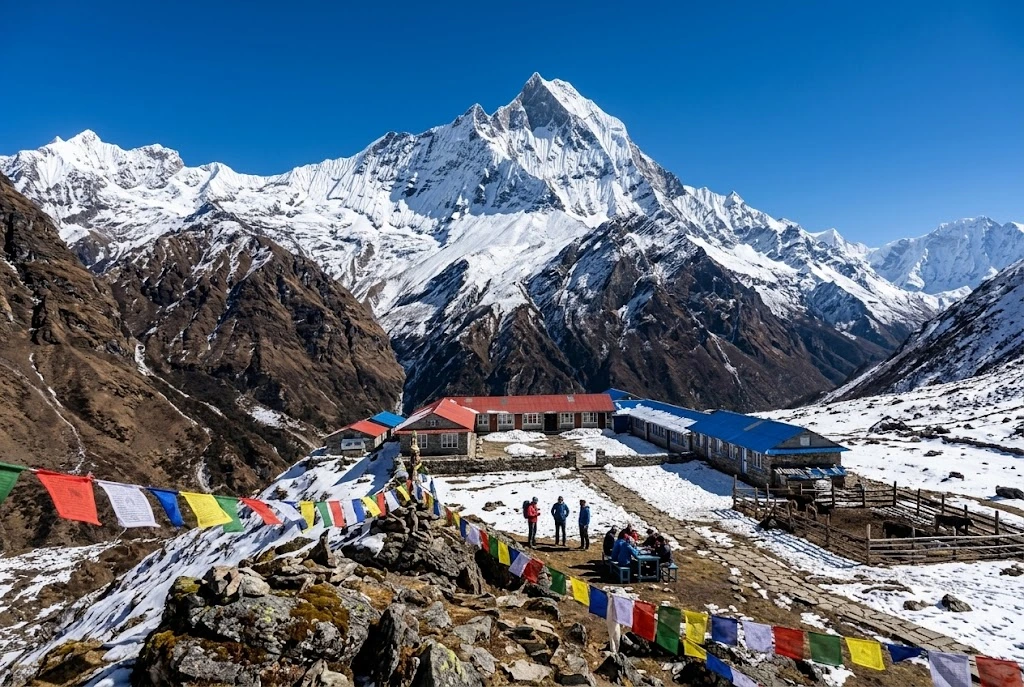
There is a moment on the way up to a high Himalayan basin when the clouds drop away and a wall of rock and ice appears so close that it feels like a mistake. For most people who walk the Annapurna region,…
October 16, 20269 min read
Chitai Golu Devta Temple
Temples and Spiritual Places

A Glimpse of the Chitai Golu Devta Temple

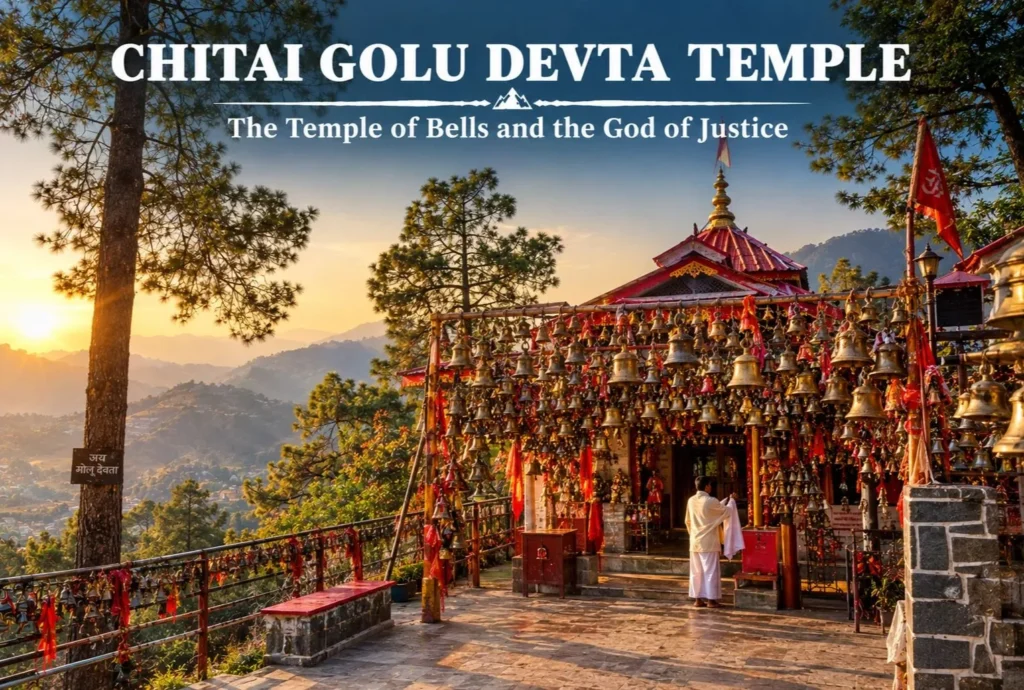
Chitai Golu Devta Temple is a sacred Hindu temple dedicated to Golu Devta, who is popularly known as Goljyu Devta. Golu Devata is a deity of the Kumaon region as well as the eastern Garhwal region of Uttarakhand. He is also referred…
October 16, 20267 min read
Shakti Peeth
Temples and Spiritual Places

Shakti Peeth: Where the Goddess Fell to Earth, and How to Find All 51

Few ideas in Hinduism have shaped the map of a whole subcontinent the way the Shakti Peeth tradition has. The legend says the body of the goddess Sati was scattered across the land, and every spot where a part of her fell…
October 15, 20268 min read
Dakshineswar Kali Temple
Temples and Spiritual Places

Dakshineswar Kali Temple: A Guide to Kolkata’s Riverside Shrine

On the eastern bank of the Hooghly River, a short distance north of central Kolkata, stands one of Bengal’s best-known temples. Dakshineswar draws devotees, history readers, and curious travelers every day, and its tall spired shrine is easy to spot from the…
October 15, 20266 min read

Two Temples, One Name: The Complete Story of Akshardham Temple

Akshardham Temple

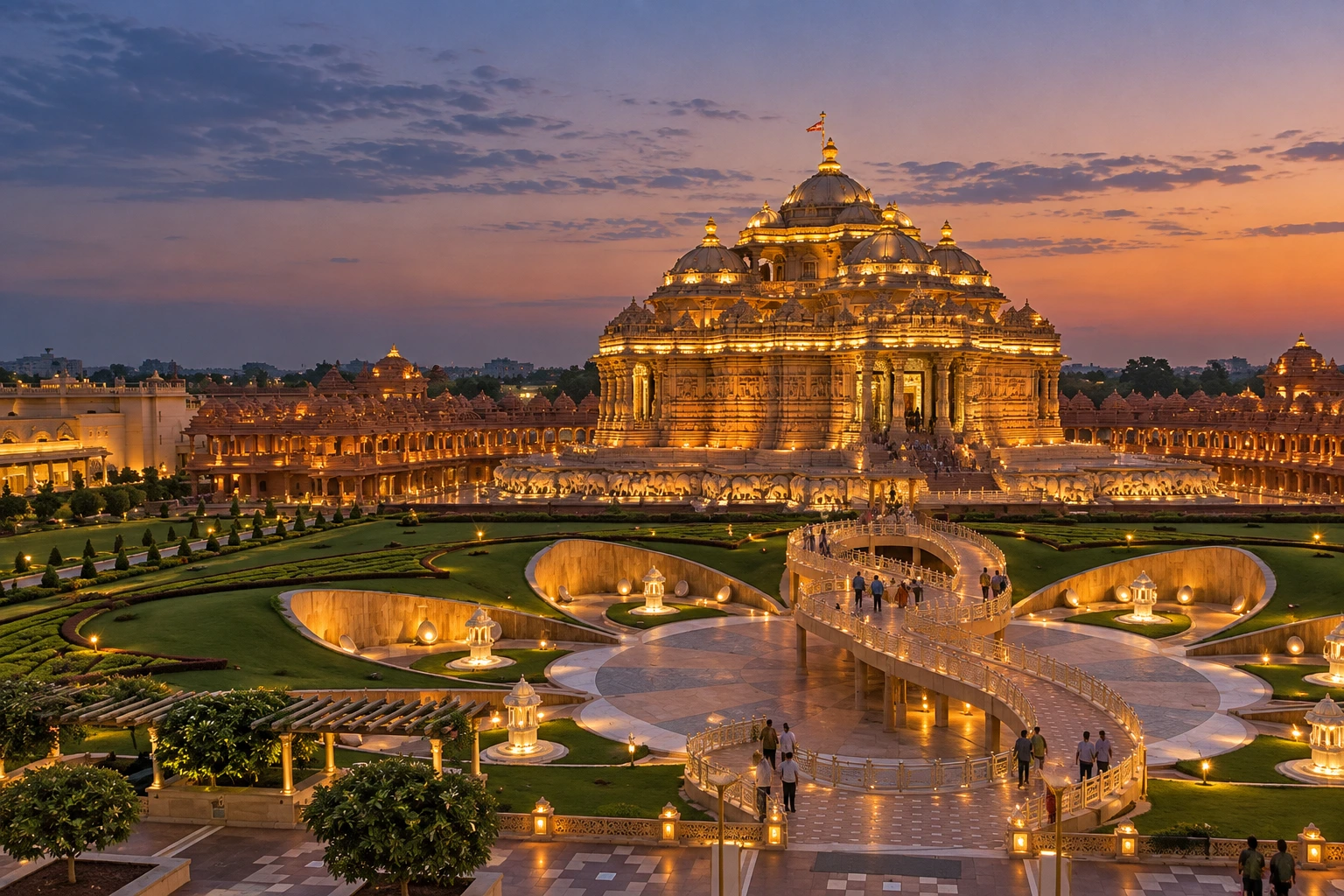
Say the words “Akshardham Temple” to ten different travellers, and you’ll likely get two different mental images. Some picture the vast pink sandstone complex rising beside the Yamuna in Delhi. Others think first of Gujarat, where the very first Akshardham was built — and where, in 2002, the complex became the site of one of India’s most devastating terror attacks. Both places share the name, the spiritual tradition, and an extraordinary architectural ambition. This guide untangles both stories, and gives you everything you need to know before visiting Akshardham Temple.

Two Akshardhams, One Tradition

Before diving into details, it helps to clear up the confusion at the source. Akshardham is not one single Akshardham Temple — it’s a name shared by two major temple complexes built by the BAPS Swaminarayan Sanstha, a Hindu spiritual organisation.

The original, Akshardham Gujarat, opened in Gandhinagar in 1992, conceived by Pramukh Swami Maharaj as a tribute to his predecessor, Yogiji Maharaj. Over a decade later, Akshardham Delhi opened in 2005, on a far larger scale, eventually earning a Guinness World Record as the largest comprehensive Hindu temple on the planet. Both are dedicated to Bhagwan Swaminarayan, the 18th-century spiritual figure at the heart of the Swaminarayan tradition, but the two complexes differ significantly in scale, layout, and the experiences they offer visitors today.

Building the Delhi Complex: A Record-Breaking Temple

The idea for this Akshardham Temple in Delhi traces back to 1968, when Yogiji Maharaj first envisioned it. It wasn’t until 1982 that his successor, Pramukh Swami Maharaj, began actively pursuing the project, and construction finally began in November 2000, after the Delhi Development Authority and the Uttar Pradesh government allocated 60 and 30 acres of land respectively.

What followed was a genuinely remarkable construction effort. Roughly 11,000 artisans and volunteers worked on the project, building the entire complex from pink sandstone and white marble without using any steel or concrete — a deliberate choice rooted in traditional temple-building methods. The complex was completed in about five years and officially inaugurated on 6th November 2005, with a ceremony attended by then-President A.P.J. Abdul Kalam, Prime Minister Manmohan Singh, and opposition leader L.K. Advani.

In 2007, Guinness World Records formally recognised the achievement, naming Akshardham Temple the world’s largest comprehensive Hindu temple — a title that continues to draw visitors from across India and abroad.

Visitor Essentials: Hours and Entry Costs

For anyone planning a trip to Akshardham Temple, the Akshardham Temple timings and pricing structure are fairly straightforward, though it helps to know the details in advance.

The complex is open from 10:00 AM to 8:00 PM, Tuesday through Sunday, and remains closed every Monday. Last entry into the main complex is typically around 6:30 PM, though this can shift slightly on festival days.

Temple darshan itself is completely free at Akshardham Temple. Where the Akshardham Temple ticket price comes in is for the exhibitions and shows: combined exhibition tickets generally run between ₹170 and ₹260 for adults, with separate pricing for children and senior citizens. The Sahaj Anand Water Show, a 24-minute multimedia performance combining lasers, water jets, and underwater flames, typically begins around sunset, between 7:15 and 7:45 PM, with its own separate ticket.

A few practical notes worth knowing before you go: mobile phones, cameras, smartwatches, and USB drives are strictly not allowed inside, and there are no exceptions at security. It’s best to travel light and store valuables elsewhere.

What You’ll Find Inside

The Akshardham Temple complex is far more than a single shrine. Visitors move through beautifully landscaped gardens, open courtyards, and water bodies, alongside exhibition halls designed to walk you through roughly 10,000 years of Indian history and spiritual thought. A cultural boat ride, detailed sculptural work, and the central mandir itself — intricately carved with depictions of deities, dancers, and musicians — make up a visit that easily stretches across several hours.

For travellers looking to pair a Delhi trip with a Himalayan pilgrimage circuit afterward, our Char Dham Yatra package offers a completely different but equally profound spiritual journey through Uttarakhand.

Where the Story Began: The Original Complex in Gujarat

While the Delhi complex draws the larger crowds today, this Akshardham Temple in Gandhinagar remains deeply significant as the original site and a major pilgrimage destination in its own right. Spread across expansive grounds, it draws an estimated 2.2 million visitors annually and includes its own exhibition halls, gardens, and the central mandir dedicated to Bhagwan Swaminarayan.

It was here, rather than in Delhi, that Indian history took a tragic turn in 2002, when the Akshardham attack unfolded — an event that remains part of the complex’s story to this day.

A Dark Chapter: The 2002 Siege

On 24th September 2002, the Gandhinagar Akshardham Temple became the target of a terrorist attack that shocked the country. Two gunmen, later identified as operatives linked to Lashkar-e-Taiba, entered the complex around 4:45 PM carrying automatic weapons and grenades, opening fire on pilgrims and staff.

The siege lasted through the night, with Gujarat Police, the National Security Guard, and other security forces eventually neutralising both attackers by the following morning. By the end of the attack, 33 people had lost their lives, including both terrorists, and more than 80 were injured. BAPS volunteers inside the complex were credited with quickly securing entrances to the main temple, preventing the attackers from reaching the inner sanctum and likely saving many more lives.

In the aftermath, Pramukh Swami Maharaj appealed publicly for calm and peace, and remarkably, the complex reopened to the public just two weeks later, on 7th October 2002. Several individuals were later arrested in connection with the attack, though the Supreme Court acquitted all six accused in 2014, citing insufficient evidence. The event remains one of the most significant instances of temple security being tested and ultimately strengthened at major religious sites across India.

Getting There

The Delhi Akshardham Temple is easily reached by metro, with Akshardham Station on the Blue Line sitting just a short walk from the main gate. For those travelling by road, it’s located near Noida Mor on NH 24, making it accessible from most parts of the city.

For official information on visiting hours, security guidelines, and any temporary closures, it’s worth checking directly with the Swaminarayan Akshardham official website before you travel, since timings can shift around major festivals.

Frequently Asked Questions

  1. What are the Akshardham Temple timings?

    The complex is open from 10:00 AM to 8:00 PM, Tuesday through Sunday, and remains closed every Monday. Last entry is typically around 6:30 PM.

  2. What is the Akshardham Temple ticket price?

    Temple darshan is free. Exhibition tickets generally cost between ₹170 and ₹260 for adults, with separate pricing for the water show and for children and senior citizens.

  3. What happened in the Akshardham attack?

    On 24th September 2002, two terrorists attacked the Akshardham complex in Gandhinagar, Gujarat, killing 33 people and injuring more than 80 before being neutralised by security forces the following morning.

  4. What is the difference between Akshardham Delhi and Akshardham Gujarat?

    Akshardham Gujarat, in Gandhinagar, opened in 1992 and was the first of its kind, while Akshardham Delhi opened in 2005 on a much larger scale and holds the Guinness World Record for the largest comprehensive Hindu temple.

  5. How do I reach Akshardham Delhi?

    The easiest way is by metro, with Akshardham Station on the Blue Line located a short walk from the entrance. It’s also accessible by road near Noida Mor on NH 24.
Where Shiva Wed Parvati: The Story of Baijnath Temple

Baijnath temple

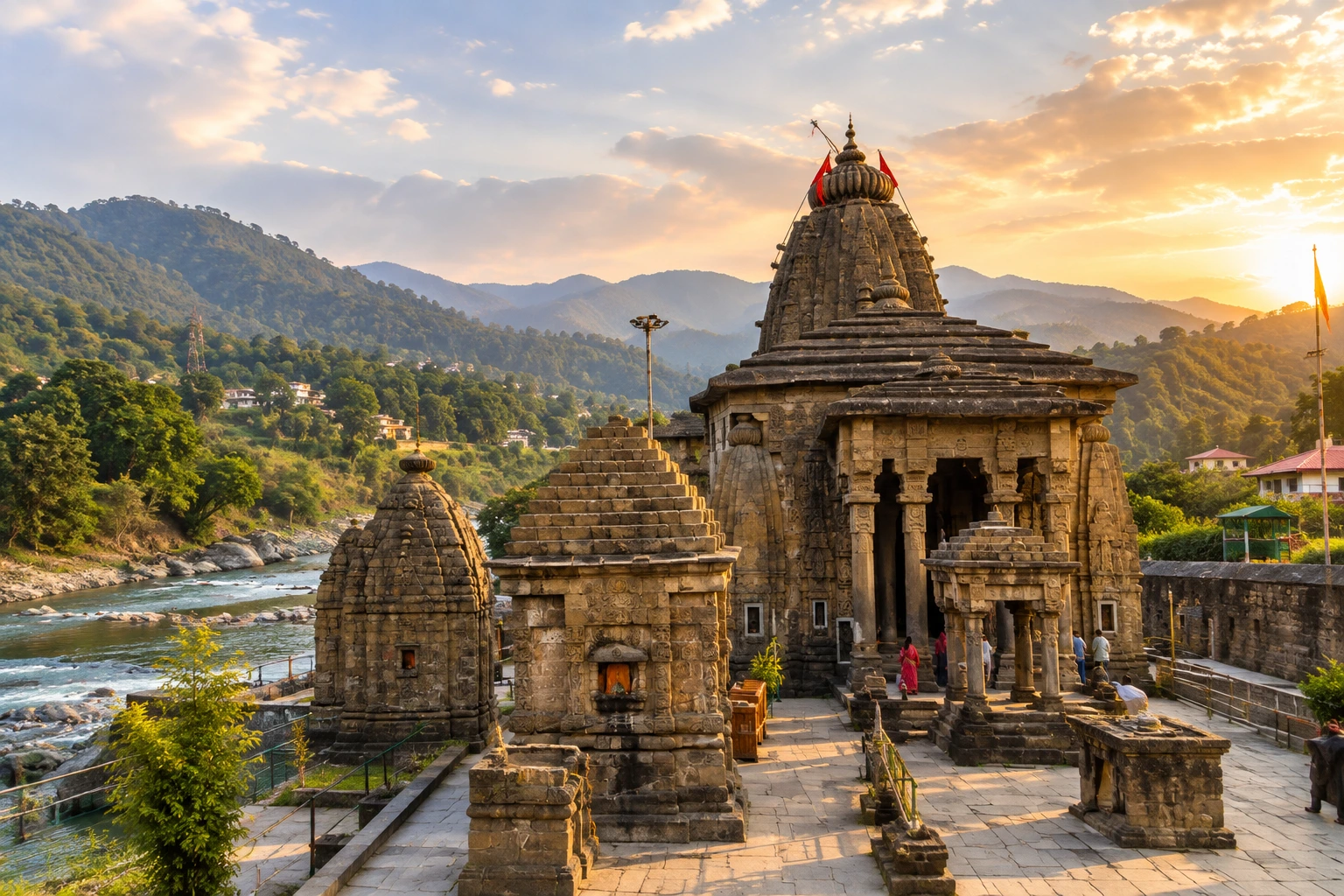
On the quiet banks of the Gomati River, in a valley overshadowed by the more famous peaks of Kumaon, stands a temple that most travellers rush past on their way to Kausani. That’s a shame, because Baijnath Temple holds one of the richest concentrations of history, mythology, and stone artistry in all of Uttarakhand — and it rewards anyone willing to slow down long enough to notice.

This isn’t your typical single-shrine pilgrimage stop. It’s an entire complex, a former royal capital, and, according to legend, the very spot where Shiva and Parvati were married. Let’s walk through what makes Baijnath Temple worth the detour.

At a Glance: Baijnath Temple

  • Dedicated to: Vaidyanath, a form of Lord Shiva known as “Lord of Physicians”
  • Location: Baijnath town, Bageshwar district, Uttarakhand
  • Elevation: Approximately 1,125 metres (3,691 feet)
  • Number of shrines: 17 to 18 temples within the complex
  • Built by: The Katyuri dynasty
  • Architectural style: Nagara
  • Protected by: Archaeological Survey of India

The Marriage of Shiva and Parvati

Every great temple has a story, and Baijnath Temple’s is tied directly into one of Hinduism’s most celebrated divine unions. According to local tradition, this is the exact spot where Lord Shiva and Goddess Parvati were married, at the confluence of the Gomati and Garur Ganga rivers. That single detail explains why the site carries such deep emotional weight for pilgrims — this isn’t simply a place to worship Shiva, but a place tied to his most personal moment.

The name itself reflects this connection. “Vaidyanath,” the form of Shiva enshrined here, translates roughly to “Lord of Physicians,” a title that adds a layer of healing symbolism to the site’s already rich mythology.

Baijnath Temple History: A Katyuri Capital

Understanding Baijnath Temple history means understanding the Katyuri dynasty, the rulers who shaped much of Kumaon’s early medieval landscape. Baijnath, once known as Kartikeyapura, served as the capital of the Katyuri kingdom, which governed large parts of present-day Uttarakhand — and at times, stretched into Himachal Pradesh — between roughly the 7th and 13th centuries.

Most sources place the construction of the main Baijnath Temple complex around 1150 CE, credited to a Katyuri king, with some traditions specifically naming King Jaichand. Interestingly, local legend adds a more poetic layer to this history: some accounts credit a Brahmin woman with commissioning the original temple, while others claim the entire complex was built by the Katyuri kings in a single night. Whichever version you prefer, the consistent thread is the deep religious devotion the Katyuris held for Shiva, expressed through architecture across the entire region.

The approach to the temple itself carries its own story — a flight of stone steps leading up from the riverside, said to have been constructed on the orders of a Katyuri queen, still forms the traditional pilgrim’s path to the complex today.

Inside the Complex: Stone, Sculpture, and Sacred Geometry

Baijnath

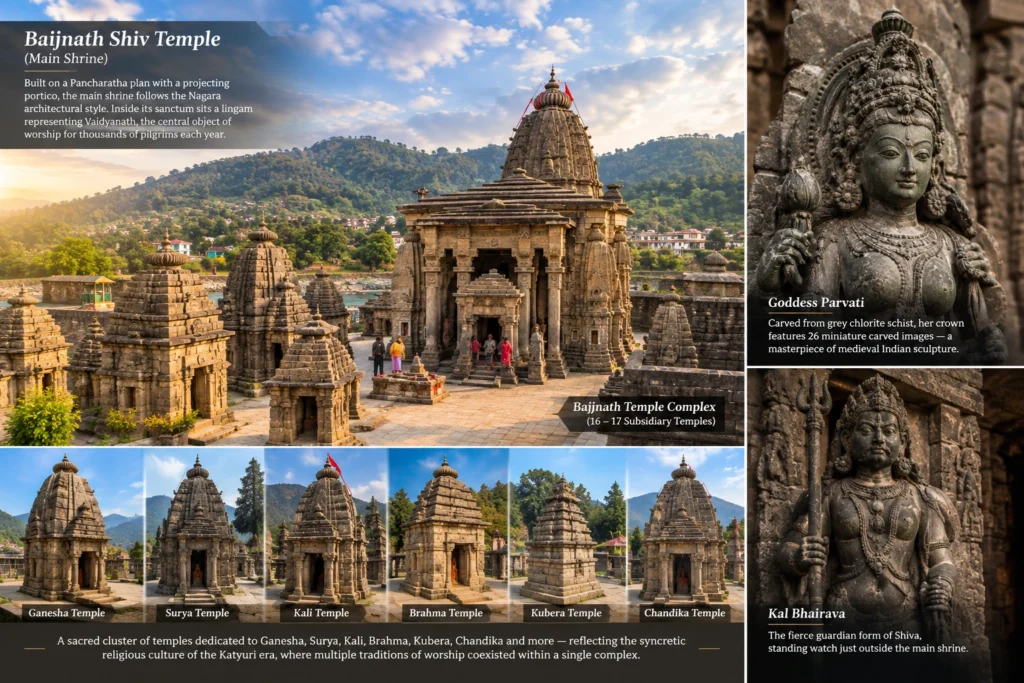
The heart of the site is the Baijnath Shiv Temple, the main shrine of the Baijnath Temple complex, built on a Pancharatha plan with a projecting portico, following the Nagara architectural style that defines the site. Inside its sanctum sits a lingam representing Vaidyanath, the central object of worship for the thousands of pilgrims who visit each year.

Surrounding this main shrine are 16 to 17 subsidiary temples within the Baijnath Temple complex, forming a dense cluster of stone shikharas dedicated to a wide range of deities — Ganesha, Surya, Kali, Brahma, Kubera, and Chandika among them. This variety reflects the syncretic religious culture of the Katyuri era, when multiple traditions of worship coexisted within a single sacred complex.

Two sculptures stand out even among this crowded field of artistry. The first is a striking image of Goddess Parvati, carved from grey chlorite schist, crowned with a headpiece featuring 26 miniature carved images — widely regarded as one of the finest examples of medieval Indian stone sculpture. The second is a life-size figure of Kal Bhairava, the fierce guardian form of Shiva, standing watch just outside the main shrine.

A Living Heritage Site

Unlike some ancient temples that have faded into ruin, Baijnath Temple remains an active place of worship, drawing devotees for Shivratri and other major festivals throughout the year. It has been recognised by the Archaeological Survey of India as a Monument of National Importance, and forms part of the government’s Shiva Heritage Circuit initiative across the Kumaon region, connecting it with other significant Shiva sites nearby.

What makes this site particularly appealing for travellers is its accessibility. Unlike Himalayan shrines that demand strenuous treks to reach, this temple sits right beside the road, offering the same spiritual and historical richness without any physical exertion required — making it a comfortable stop for pilgrims of every age.

Getting There

Baijnath Temple sits roughly 16 km from Kausani and 22 km from Bageshwar, at the junction of the Bageshwar–Gwaldam and Almora–Gopeshwar roads, making it an easy addition to any Kumaon itinerary. The nearest railway station is Kathgodam, while Pantnagar serves as the closest airport, both well connected to major cities.

For travellers looking to combine this stop with a larger Himalayan pilgrimage circuit, our Kedarnath Yatra package offers a deeper dive into Uttarakhand’s Shiva heritage, from ancient temple towns to high-altitude shrines.

For official heritage details and verified travel information, you can refer to Incredible India, the Government of India’s official tourism portal.

Frequently Asked Question’s

  1. What is Baijnath Temple famous for?

    Baijnath Temple is famous for being one of Kumaon’s most significant Shiva shrines, believed to mark the spot where Shiva and Parvati were married, and for its cluster of 17 to 18 ancient stone temples built by the Katyuri dynasty.

  2. What is the history behind Baijnath Temple?

    Baijnath Temple history traces back to around 1150 CE, when the complex was built under Katyuri patronage in what was then their capital, Kartikeyapura. Some local legends also credit a Brahmin woman or claim the temple was built by the Katyuri kings in a single night.

  3. What is the significance of the Baijnath Shiv Temple?

    The Baijnath Shiv Temple is the main shrine of the complex, dedicated to Vaidyanath, a form of Lord Shiva known as the “Lord of Physicians.” It houses a sacred lingam and remains the spiritual centre of the entire site.

  4. Is Baijnath Temple difficult to visit?

    No, unlike high-altitude shrines such as Kedarnath, Baijnath Temple is easily accessible by road, requiring no trekking or physical exertion, making it suitable for pilgrims of all ages.

  5. How many temples are there in the Baijnath Temple complex?

    The complex consists of 17 to 18 temples in total, with the main Vaidyanath shrine surrounded by subsidiary temples dedicated to deities including Ganesha, Surya, Kali, Brahma, Kubera, and Chandika.

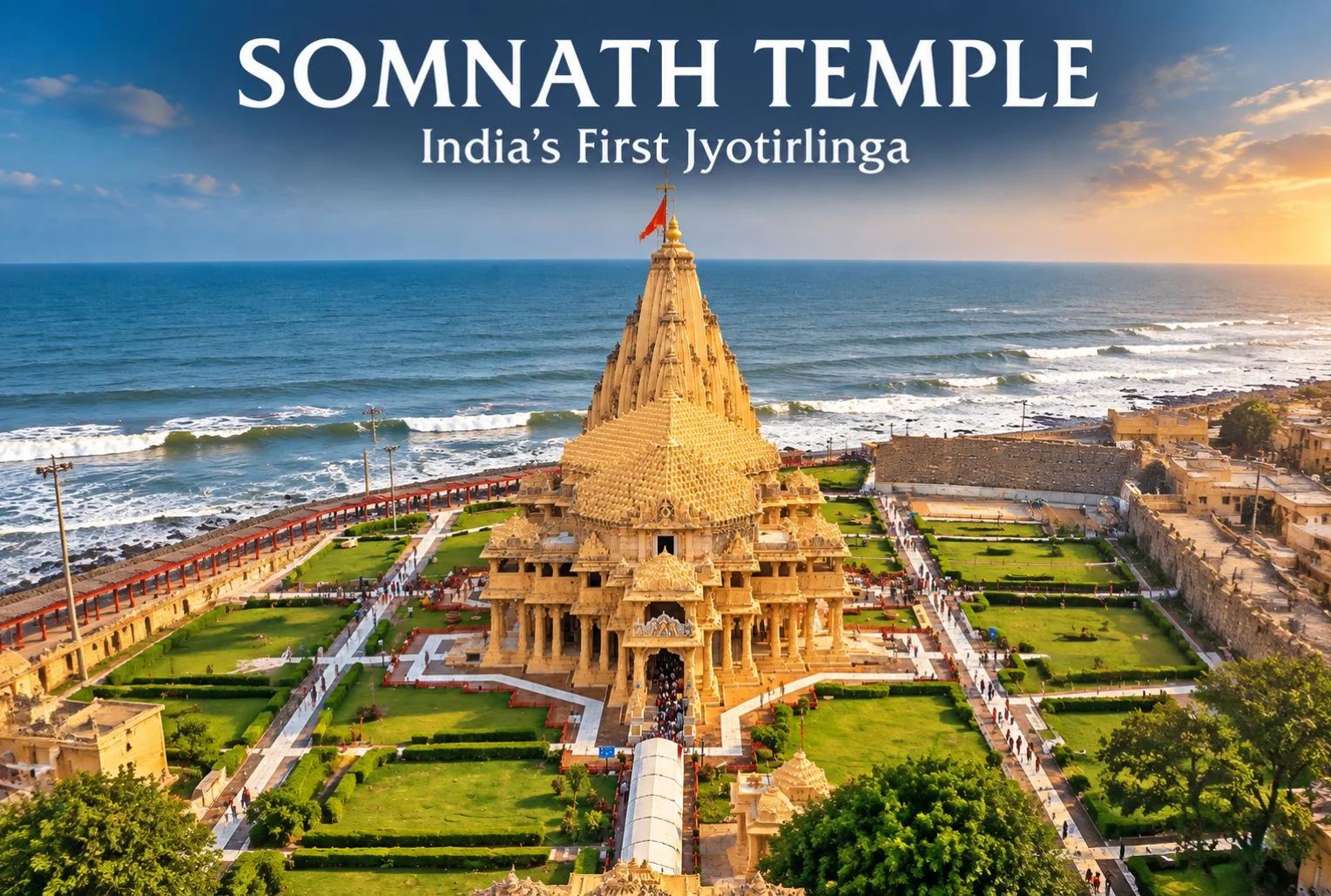
Somnath Temple: India’s First Jyotirlinga on the Shores of the Arabian Sea

Somnath Temple

Few temples in India carry a history as layered as this one — destroyed and rebuilt across centuries, standing today as both a place of worship and a symbol of resilience. Somnath Temple sits on the Gujarat coast, and its story is as significant as the shrine itself.

What Is Shree Somnath Temple?

Shree Somnath Temple is dedicated to Lord Shiva and is considered the first among the twelve Jyotirlingas in India, located at Prabhas Patan near Veraval in Gujarat, right along the Arabian Sea coastline. Its location — where temple architecture meets open ocean — has made it one of the most visually striking pilgrimage sites on India’s western coast.\

Somnath Temple - History

Somnath Jyotirling Temple: Why It Holds the First Position

The Somnath Jyotirling temple is regarded in Hindu tradition as the foremost of the twelve Jyotirlingas, sacred shrines believed to be self-manifested forms of Lord Shiva. This ranking gives the temple a significance that extends well beyond Gujarat, drawing pilgrims from across India who specifically plan their Jyotirlinga circuit starting or ending at this coastal shrine.

Somnath Temple History

The Somnath temple history is one of repeated destruction and reconstruction, spanning centuries of invasions and rebuilding efforts. The temple was destroyed and rebuilt multiple times through history, with the most significant modern reconstruction beginning after India’s independence, championed by Sardar Vallabhbhai Patel, who saw the temple’s rebuilding as a symbol of national restoration. The current structure, completed in the mid-20th century, reflects Chaulukya-style architecture and stands as the temple most visitors see and photograph today.

Somnath Temple Timings

Somnath temple timings generally follow a structured daily schedule, though visitors should always confirm details locally before traveling.

Time SlotApproximate Hours
Morning darshan6:00 AM – 12:00 PM
Afternoon darshan12:00 PM – 6:00 PM
Evening darshan and aarti6:00 PM – 9:00 PM
Light and sound showEvening, timing varies seasonally

These timings can shift around major festivals, Shivaratri, and temple maintenance periods, so it’s worth confirming the current schedule with temple management or an official source shortly before your visit.

Best Time to Visit Somnath Temple

October to March is generally considered the most comfortable period, covering Gujarat’s coastal winter when temperatures stay moderate and humidity is lower than the summer months. Summer (April to June) brings intense heat, while monsoon (July to September) brings heavy rainfall that can affect outdoor sightseeing around the temple complex, though the temple itself remains open year-round.

Nearest Station to Somnath Temple

The nearest station to Somnath temple is Veraval Railway Station, located roughly 7 km from the temple complex, well-connected to major Gujarat cities and other parts of the country. For air travel, Diu Airport, roughly 60 km away, and Rajkot Airport, further out, serve as the nearest airports, with road transport required to complete the journey to the temple.

The Temple Complex and Surroundings

Beyond the main shrine, the complex includes a museum displaying artifacts and sculptures recovered from earlier iterations of the temple, giving visitors a tangible sense of its long history. The nearby Triveni Sangam, where three rivers are believed to meet before joining the sea, is also considered a significant spot for ritual bathing among pilgrims visiting the area.

Extending Your Pilgrimage

For travelers whose interest in Jyotirlinga and major Shiva shrines extends to the Himalayas, Explore Hills’ Kedarnath Yatra covers one of the most significant Himalayan Shiva pilgrimages in the country, and the Char Dham Yatra bundles four of Uttarakhand’s most sacred shrines into a single extended journey for those planning a broader multi-region pilgrimage circuit.

For official visitor information, current darshan timings, and travel advisories, you can refer to the Gujarat Tourism Department, the official state government tourism body.

What to Keep in Mind Before Visiting

  • Dress modestly, with shoulders and knees covered, as is standard at Hindu temple complexes
  • Footwear isn’t permitted inside the sanctum; carrying a small bag for shoes helps
  • The evening light and sound show is worth timing your visit around, if schedules allow
  • Weekends and major festival days bring noticeably larger crowds

Conclusion

Somnath isn’t just another stop on a Jyotirlinga circuit—it’s a temple whose very existence today reflects centuries of resilience. Between its coastal setting, its historical weight, and its place as the first of the twelve Jyotirlingas, it remains one of the most significant pilgrimage destinations in the country for those willing to make the journey to Gujarat’s shoreline.

Frequently Asked Questions

What is Shree Somnath Temple famous for?

It is famous as the first of the twelve Jyotirlingas dedicated to Lord Shiva and for its dramatic coastal location along the Arabian Sea.

What is the history behind Somnath Temple history and its reconstructions?

The temple has been destroyed and rebuilt multiple times through history, with the current structure completed in the mid-20th century under efforts led by Sardar Vallabhbhai Patel.

What are the current Somnath temple timings?

The temple generally follows morning, afternoon, and evening darshan slots, though timings can shift around festivals, so confirming locally before travel is recommended.

What is the nearest station to Somnath Temple?

Veraval Railway Station, located roughly 7 km away, is the nearest railway station to the temple.

Why is Somnath Jyotirling Temple considered the first among the twelve Jyotirlingas?

Hindu tradition places it first in the sequence of Jyotirlingas, giving it particular significance for pilgrims undertaking the full Jyotirlinga circuit.

What is the best time to visit Somnath Temple?

October to March offers the most comfortable weather, avoiding both the summer heat and monsoon rains along the Gujarat coast.

Jageshwar Dham: The Complete Guide to Kumaon’s Ancient Temple Valley

Jageshwar Dham

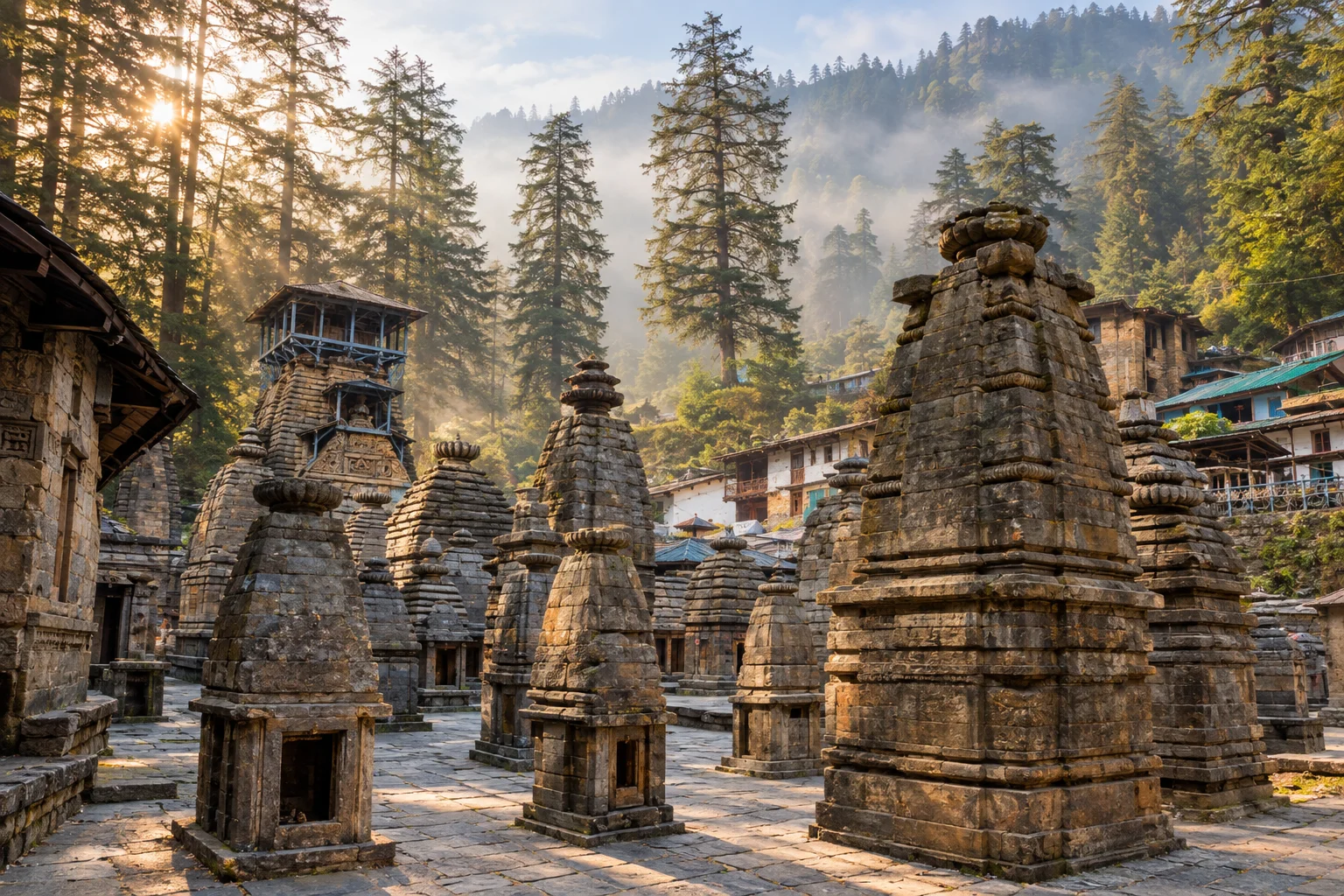
Hidden inside a forest of towering deodar trees in Uttarakhand’s Kumaon region lies one of India’s most remarkable clusters of ancient architecture — Jageshwar Dham. Unlike most pilgrimage sites built around a single grand structure, this destination is an entire valley of stone shrines, with over a hundred temples packed into one serene, forested clearing beside a gently flowing stream. For history lovers, architecture enthusiasts, and devotees of Lord Shiva alike, few places in the Himalayas offer quite this density of heritage in one spot.

If you’re planning a visit to Jageshwar Dham, this guide covers everything worth knowing — the temple’s history, its Jyotirlinga status, the story of Vridh Jageshwar, and practical details for your trip.

What Is Jageshwar Dham?

Jageshwar, often referred to as Jageshwar Dham, is a temple town located in the Almora district of Uttarakhand, roughly 35 to 37 km from Almora city. The site is home to a complex of approximately 124 large and small stone temples, most dating between the 7th and 14th centuries, with many built during the reign of the Katyuri dynasty who established much of what stands as Jageshwar Dham today.

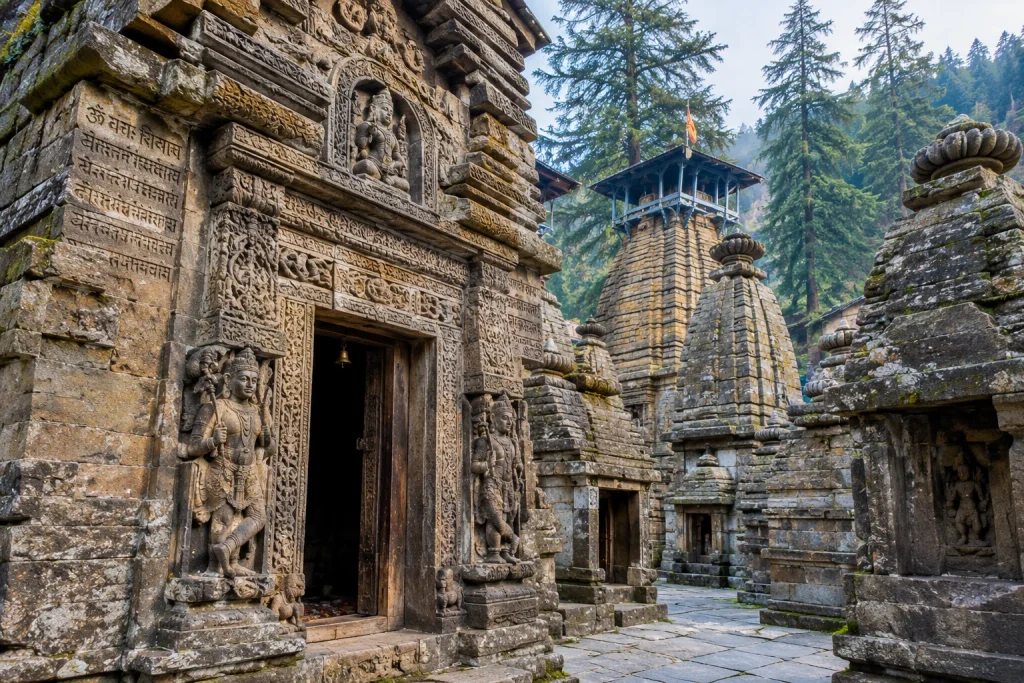
The two largest clusters within the complex are locally known as the Dandeshwar group, comprising 15 temples, and the Jageshwar group itself, comprising 124 temples. Of the 124 main shrines, 108 are dedicated to Lord Shiva, making this one of the densest concentrations of Shiva temples found anywhere in India. The temples follow the Nagara style of architecture, recognisable by their tall, curved spires and finely carved stone doorways, and many are protected today by the Archaeological Survey of India.

Set against a backdrop of thick deodar forest, with the Jata Ganga stream flowing quietly behind the complex, Jageshwar Dham has long been considered one of the most spiritually significant and visually striking sites in the Kumaon region, drawing pilgrims and history lovers who come specifically to walk through Jageshwar Dham’s forested temple lanes.

Jageshwar Temple: A Jyotirlinga of Debated Status

The central shrine, known as the Jageshwar Temple or Jageshwar Mahadev, holds a special place in Hindu tradition. According to many scriptural references, Jageshwar is counted among the twelve Jyotirlingas of Lord Shiva, specifically identified with Nagesha, associated with the sacred forest of Daruka-vana mentioned in the Shiva Purana. This identification isn’t universally agreed upon among scholars and other claimant sites, but for the millions who visit each year, the temple’s Jyotirlinga status is central to its draw.

Inside the main sanctum sits a distinctive Shivalinga, said by local tradition to be uniquely shaped, and the temple is guarded at its entrance by figures of Nandi and Skanda. Legend holds that this is where Lord Shiva once meditated alongside the Saptarishis, the seven sages, and that the worship of the Shiva Linga itself originated at this very site.

The Legend of Vridh Jageshwar

A short distance up the surrounding hillside sits another significant shrine: Vridh Jageshwar, meaning “Old Shiva,” as distinct from the main temple below, which is associated with Bal Jageshwar, or Child Shiva.

According to local tradition, Lord Shiva came to this forest to meditate, and when the women of the village learned of his presence, they left their household duties to seek his darshan. The men of the village, angered by this, are said to have confronted the ascetic figure who had so captivated their wives, unaware of who he truly was. This story is central to how the temple complex is understood locally, with the “old” and “young” forms of Shiva reflecting different stages of the same divine presence across the valley.

Vridh Jageshwar sits on higher ground overlooking the main complex, offering a quieter, less crowded alternative for those wanting a more contemplative visit away from the main pilgrim crowds.

Other Temples Worth Visiting

Beyond the two principal shrines, the wider Jageshwar Dham complex includes several other significant structures. The Mrityunjaya Temple is considered the oldest stone shrine on the site, while the Dandeshwar Temple, part of the separate 15-temple cluster near the entrance to the valley, is the largest single structure in the complex. Other notable shrines include the Kuber Temple, the Navagraha Temple dedicated to the nine celestial bodies, the Chandi-ka Temple, and a small temple to Nanda Devi.

Walking through the complex, visitors will also find intricate carvings and inscriptions in Brahmi and Sanskrit scripts etched into pillars and walls, offering a tangible link to the artisans and dynasties who shaped this site over multiple centuries.

Best Time to Visit and Festivals

Jageshwar Dham remains open throughout the year, and its forested setting makes it a pleasant destination in almost any season. That said, two periods stand out for travellers. Maha Shivratri draws thousands of devotees for elaborate celebrations centred on the main temple, while the Jageshwar Monsoon Festival, held in July and August, adds cultural performances and festivities to the pilgrimage experience.

For those who enjoy snowfall, mid-December to the end of January can bring light snow to the valley, adding a different character to the site’s already atmospheric setting. Summer months, from March to June, offer the most comfortable trekking and walking weather for exploring the wider complex at a relaxed pace.

How to Reach Jageshwar Dham

The nearest major town to Jageshwar Dham is Almora, roughly 35 km away, well connected by road to other parts of Uttarakhand. The nearest railway stations are Kathgodam and Haldwani, both a few hours’ drive away, while Pantnagar Airport serves as the closest airport, with regular flights connecting to Delhi.

Our Kedarnath Yatra package offers a similarly profound Shiva pilgrimage experience for travellers looking to combine multiple sacred sites across Uttarakhand in a single trip.

For official heritage information and travel details, you can refer to the Almora district administration’s official tourism page, a government resource for the region.

Frequently Asked Question’s

What is Jageshwar Dham known for?

Jageshwar Dham is known for its cluster of roughly 124 ancient stone temples, most dating from the 7th to 14th centuries, and its status as one of the twelve Jyotirlingas of Lord Shiva. Jageshwar Dham also draws visitors for its serene, forested setting.

What is the difference between Jageshwar Temple and Vridh Jageshwar?

The main Jageshwar Temple is associated with Bal Jageshwar, or Child Shiva, while Vridh Jageshwar, located on higher ground nearby, represents Old Shiva, according to local legend.

How far is Jageshwar from Almora?

Jageshwar Dham is located approximately 35 to 37 km from Almora city in Uttarakhand’s Kumaon region.

Is Jageshwar considered a Jyotirlinga?

According to several traditional scriptures, Jageshwar is counted among the twelve Jyotirlingas, though its status is debated among scholars, as other sites also claim this identification.

What is the best time to visit Jageshwar Dham?

The site is open year-round, but Maha Shivratri and the Jageshwar Monsoon Festival in July-August are particularly significant times to visit for cultural and religious experiences.

Murudeshwar Temple: Timings, History & Complete Visit Guide

Murudeshwar Temple

Quick answer: Murudeshwar Temple sits on Kanduka Hill in Uttara Kannada district, Karnataka, facing the Arabian Sea. It’s known for a towering Shiva statue and a 20-story gopura, both built in recent decades around a much older shrine. The temple generally opens early morning and closes late evening with a midday break, though you should confirm exact Murudeshwar temple timings locally before you travel.

If you’ve seen a photograph of a giant Shiva statue standing against the sea with waves breaking below it, there’s a good chance you were looking at Murudeshwar Temple. This coastal shrine in Karnataka has become one of the most recognizable temple images in the country, and for good reason — the statue, the hilltop gopura, and the setting all come together in a way that’s genuinely hard to replicate elsewhere on India’s western coast.

This guide covers what you actually need before visiting: the temple’s history and the legend behind its name, how tall the statue and gopura really are, current timing patterns, when to plan your trip, and how to get there from nearby cities. Along the way, we’ll flag where religious tradition and verified history diverge, since Murudeshwar’s story involves both.

Murudeshwar Temple - Karnataka's Coastal Shiva Shrine

What Makes Murudeshwar Temple So Well Known?

Murudeshwar Temple owes its fame to two structures that dominate its skyline: a Shiva statue standing at approximately 123 feet, and a Raja Gopura with 20 stories, often cited as one of the tallest temple towers in India. Both structures are relatively modern additions, built by industrialist R.N. Shetty as part of a large-scale redevelopment of the temple complex in the 1990s and 2000s, funded through the Naveen Shetty Trust.

What sets Murudeshwar Shiva temple apart from most large temple statues in India is its setting. The statue and temple stand on Kanduka Hill, a small rocky headland surrounded by the Arabian Sea on three sides. You get the scale of the statue and the backdrop of open water in the same frame — which explains why this site shows up so often in Karnataka tourism photography.

The gopura includes a lift that takes visitors up several floors for a panoramic view of the coastline. It’s a paid ride, and it’s genuinely worth doing if you’re not pressed for time, since the view from the top floors gives you a sense of the surrounding coast that you don’t get from ground level.

What Is the History of Murudeshwar Temple?

Here’s where it’s worth separating verified history from religious tradition, since both play a role in how the temple is understood today.

According to Hindu tradition, Murudeshwar’s name and sanctity trace back to the Ramayana. The story goes that Ravana obtained the Atma Linga from Lord Shiva and was carrying it toward Lanka. To stop him, Lord Ganesha tricked Ravana into setting the linga down at what is now Gokarna, where it became fixed to the ground. In the version of the legend associated with Murudeshwar, the cloth covering (or kavacha) that wrapped the linga was flung away and landed at this coastal spot, which is why the site came to be called Mrideshwara, later shortened to Murudeshwar. This is a devotional account passed down through local and regional tradition, not a historically documented event, and it’s worth treating it as such.

As verified history, the original Murudeshwar temple is considerably older than the statue and gopura you see in photographs today. The core shrine has existed on this stretch of the Uttara Kannada coast for generations as a functioning Shiva temple, well before its 20th-century expansion. The large-scale statue, the gopura, and much of the visitor infrastructure — including the elevator, surrounding gardens, and museum — were developed under R.N. Shetty’s initiative, transforming a regional pilgrimage site into one of Karnataka’s most visited temple destinations.

Both threads matter here. The devotional story explains why the temple is significant to Shiva worshippers. The modern development explains why it looks the way it does in every photo you’ve likely seen.

How Tall Are the Murudeshwar Statue and Gopura?

The Shiva statue at Murudeshwar stands at approximately 123 feet (around 37 meters), making it one of the tallest Shiva statues in India, though not the tallest — that distinction belongs to statues built more recently elsewhere in the country. The statue depicts Shiva in a seated meditative posture, facing out toward the Arabian Sea.

The Raja Gopura next to the statue rises across 20 stories and is frequently described as one of the tallest temple towers in the country. An elevator inside the gopura carries visitors up to a viewing level, from where you can see the statue at close range along with a wide stretch of coastline.

What Are the Murudeshwar Temple Timings?

Murudeshwar Temple typically follows a split schedule, opening early in the morning, closing for a few hours around midday, and reopening in the afternoon through the evening. Here’s the general pattern travelers report:

Time SlotApproximate Hours
Morning darshan6:00 AM – 1:00 PM
Midday break1:00 PM – 3:00 PM
Evening darshan3:00 PM – 9:00 PM
Gopura elevator rideGenerally available during daytime hours, subject to a separate ticket

These Murudeshwar temple timings can shift around major festivals, Shivaratri, and temple maintenance days. Confirm the current schedule with the temple management or a verified local source shortly before you travel, rather than relying solely on this or any other online guide.

When Is the Best Time to Visit Murudeshwar?

October to March is the best time to visit Murudeshwar. This stretch covers Karnataka’s coastal winter, when temperatures stay moderate and the sea is generally calm enough for a comfortable visit to the statue viewpoint and nearby beach.

SeasonMonthsWeatherWhat to Expect
Winter (best time)October – MarchPleasant, dryComfortable sightseeing, clearer skies, better sea conditions
SummerApril – MayHot and humidManageable early morning or evening visits, midday heat can be intense
MonsoonJune – SeptemberHeavy rainfallRough sea conditions, reduced watersports, some outdoor areas less enjoyable

The monsoon along Karnataka’s coast isn’t a light drizzle — it’s a defining feature of the region’s climate, and it genuinely affects how much you can do at Murudeshwar beyond the temple itself. If your trip includes watersports or a boat ride toward Netrani Island, plan around the winter window rather than the rains.

How Do You Reach Murudeshwar Temple?

Murudeshwar sits on the Konkan Railway line, which makes train travel one of the most convenient ways to arrive.

By train: Murudeshwar has its own railway station on the Konkan Railway route, located close enough to the temple that many visitors walk or take a short auto ride from the platform.

By air: The nearest airport is Mangalore International Airport, roughly 90 km to the south. From there, you’ll need a taxi or bus connection to reach Murudeshwar.

By road: Murudeshwar lies along National Highway 66, the main coastal highway connecting Mangalore to Goa. This makes it an easy stop if you’re already driving along Karnataka’s coastline, whether you’re coming from Udupi, Gokarna, or further south from Mangalore.

If you’re combining this with a wider Karnataka coastal trip, Gokarna is close enough (roughly 80 km) to pair the two in a single itinerary, giving you both the Ramayana-linked pilgrimage sites in one stretch.

What Else Is There to Do Near Murudeshwar Temple?

Murudeshwar isn’t a one-stop pilgrimage visit — the area has a few other things worth building into your day.

  • Murudeshwar Beach: Right below the temple complex, this beach offers jet skiing, banana boat rides, and other watersports, weather permitting.
  • Netrani Island: A small island off the coast known for scuba diving and snorkeling, reachable by boat from Murudeshwar. Diving conditions depend heavily on the season, so this is best planned for the winter window.
  • RNS Museum: Located within the temple complex, this museum displays wax figures and exhibits related to Hindu mythology and the temple’s development.
  • Bhatkal town: A short drive away, worth a stop if you’re interested in the region’s older mosques and trading-port history.

Quick Facts: Murudeshwar Temple at a Glance

DetailInformation
LocationKanduka Hill, Murudeshwar, Bhatkal taluk, Uttara Kannada district, Karnataka
Main deityLord Shiva
Statue heightApproximately 123 feet
Gopura20 stories, with visitor elevator
Nearest railway stationMurudeshwar (Konkan Railway)
Nearest airportMangalore International Airport (~90 km)
Best time to visitOctober to March
Nearby attractionNetrani Island, Gokarna

What Should You Keep in Mind Before You Visit?

A few practical points that don’t always make it into shorter guides:

  • Dress modestly, as is standard at Hindu temples — shoulders and knees covered.
  • The gopura elevator ride usually involves a separate ticket and a queue during peak season, so budget extra time if you want the view from the top.
  • Footwear isn’t permitted inside the temple sanctum; carrying a bag for your shoes makes this easier.
  • If you’re combining the visit with watersports at the beach, keep a change of clothes handy.
  • Weekends and festival days bring larger crowds, so a weekday visit outside peak season gets you a calmer experience at both the temple and the statue viewpoint.

According to the Karnataka State Tourism Department, travelers should confirm current visiting hours and any entry requirements directly before planning their trip, since schedules can change around festivals and maintenance periods.

Planning Your Coastal Karnataka Temple Trip

Murudeshwar rewards travelers who give it more than a quick photo stop. Between the statue, the gopura view, the beach below, and Netrani Island a boat ride away, there’s enough here to fill a full day without feeling rushed.

If temple architecture and pilgrimage history are what draw you to destinations like this, it’s worth exploring how other Indian temples handle scale and symbolism differently — from the sun-facing design of the Konark Sun Temple in Odisha to the rock-cut ambition of the Kailasa Temple at Ellora. Each site tells a different story about how devotion and architecture come together across the country, and Murudeshwar’s blend of legend and modern scale earns its place firmly among them.

Frequently Asked Questions

What are the Murudeshwar temple timings?

Murudeshwar Temple generally operates from around 6:00 AM to 1:00 PM and again from 3:00 PM to 9:00 PM, though these hours can shift around festivals. Confirm the current schedule locally before you travel.

How tall is the Shiva statue at Murudeshwar?

The statue stands at approximately 123 feet, making it one of the tallest Shiva statues in India, seated on Kanduka Hill facing the Arabian Sea.

What is the history behind Murudeshwar temple’s name?

According to Hindu tradition tied to the Ramayana, the site is named after the cloth covering of Shiva’s Atma Linga, which is said to have landed here after Ravana was tricked into setting the linga down at nearby Gokarna. This is a devotional account rather than a documented historical event.

When is the best time to visit Murudeshwar?

October to March is the best time to visit Murudeshwar, when the coastal weather is dry and pleasant, and sea conditions are more favorable for watersports and boat trips to Netrani Island.

How do I reach Murudeshwar temple?

Murudeshwar has its own railway station on the Konkan Railway line, making train travel the most convenient option. The nearest airport is Mangalore International Airport, about 90 km away, and the temple is also accessible by road via NH 66.

Is Murudeshwar temple different from Gokarna’s Mahabaleshwar temple?

Yes. Both temples are connected through the same Ramayana legend involving Ravana’s Atma Linga, but they are separate shrines in different towns along the Karnataka coast, each with its own architecture and pilgrimage tradition.

Can I combine a Murudeshwar visit with other nearby destinations?

Yes. Gokarna is roughly 80 km away and pairs naturally with Murudeshwar given their shared legend, while Netrani Island offers a scuba diving detour for those visiting between October and March.

Is the gopura elevator ride worth doing?

Most visitors find it worthwhile for the panoramic coastal view it offers, though it involves a separate ticket and can have a queue during peak travel months.

Srirangam Temple: A Complete Guide to Sri Ranganathaswamy

Srirangam Temple

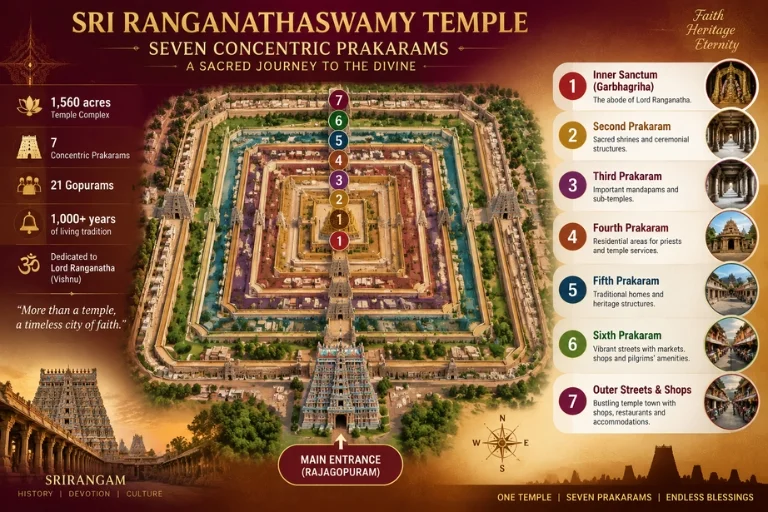
Quick answer: Srirangam Temple — formally known as Sri Ranganathaswamy Temple — is a Vaishnavite pilgrimage site in Tiruchirappalli, Tamil Nadu, dedicated to Lord Vishnu in his reclining form as Ranganatha. It is the largest functioning Hindu temple complex in the world, covering 156 acres with seven concentric enclosure walls and 21 gopurams. October to March is the best time to visit.

Sri Ranganathaswamy Temple sits on a river island formed by the Kaveri and Kollidam rivers, and calling it a temple undersells it. Inside its seven concentric walls you’ll find streets, shops, residences, and shrines — an entire functioning settlement organized around one sanctum. Few religious sites in India blur the boundary between monument and living town as completely as this one does.

This guide covers the Srirangam Temple history, architecture, deities, key rituals, and the practical details — timings, dress code, how to get there, where to stay — that you’ll actually need to plan your visit.


Quick Facts: Srirangam Temple

InformationDetails
LocationSrirangam island, Tiruchirappalli, Tamil Nadu
DeityLord Vishnu as Ranganatha (reclining form)
Temple Area156 acres
Gopurams21
Rajagopuram HeightApprox. 236 feet
Enclosure Walls7 prakarams
Best Time to VisitOctober to March
Nearest AirportTiruchirappalli International Airport (~15 km)
Nearest Railway StationSrirangam Railway Station (on site); Tiruchirappalli Junction (~10 km)
Entry FeeFree for outer prakarams; nominal fee for special darshan

sri ranganathaswamy temple

Srirangam Temple History

The origins of Srirangam Temple combine religious tradition with more than a thousand years of documented dynastic history — and both layers matter to understanding why it carries such weight in Vaishnavite belief.

How Was the Temple Founded?

According to temple tradition, the idol of Ranganatha was originally worshipped by Brahma, passed down through successive rulers including King Ikshvaku (an ancestor of Lord Rama), and finally installed at Srirangam by Vibhishana — the brother of Ravana — after the events of the Ramayana. As the tradition holds, Vibhishana was carrying the idol toward Lanka when he set it down briefly on the banks of the Kaveri, and it became immovable, choosing Srirangam as its permanent home. Devotees believe this founding myth explains why the temple is considered among the holiest Vishnu shrines in existence.

How Did the Temple Develop Over the Centuries?

The documented Srirangam Temple history spans more than a millennium. The Cholas, Pandyas, Hoysalas, and the Vijayanagara Empire each contributed phases of construction, adding gopurams, mandapams, and subsidiary shrines across successive centuries. The temple endured serious disruption during 14th-century invasions, after which the main idol was reportedly hidden and later reinstated. What you see today is not the product of a single era but a layered accumulation of architecture, theology, and restoration built up over nearly a thousand years.

Why Does It Matter in Hindu Tradition?

Srirangam Temple holds the top rank among the 108 Divya Desams — the sacred Vishnu temples celebrated in the devotional verses of the Alvars, the Tamil poet-saints of Vaishnavism. It is often called “Bhoologa Vaikuntam,” meaning heaven on earth. For Sri Vaishnavites, a pilgrimage to the Ranganathaswamy Temple is among the most spiritually significant journeys a devotee can undertake.


Architecture: What Makes Srirangam Temple Distinctive

The temple follows the Dravidian style, but its scale separates it from every other temple in that tradition.

The Rajagopuram and the 21 Gopurams

The complex has 21 gopurams in total. The tallest, the Rajagopuram at the main entrance, stands at approximately 236 feet — one of the tallest temple towers in Asia. Construction on it began centuries ago but was only completed in 1987. Each gopuram is covered in carved figures of deities, mythological scenes, and decorative motifs, with the intricacy of the carvings increasing as you move deeper into the complex toward the sanctum.

The Seven Concentric Prakarams

The Ranganathaswamy Temple is structured as seven concentric rectangular enclosures, known as prakarams, with the inner sanctum at the center. The outer prakarams function as active streets — people live and trade here — while the inner enclosures are reserved for worship and ritual. Moving inward means moving through progressively more sacred and restricted space. It’s a physical representation of a spiritual journey, and walking that progression is part of what makes a visit to Srirangam genuinely different from a typical temple stop.

Other Structural Highlights

Two features deserve specific attention: the Sesharayar Mandapam, known for its rearing horse sculptures carved from single granite blocks, and the Hall of a Thousand Pillars (Ayiram Kaal Mandapam), which actually contains 953 intricately carved columns. These aren’t incidental details — they represent generations of stone-working expertise executed at a scale that’s hard to appreciate until you’re standing inside.


Deities and Rituals at Sri Ranganathaswamy Temple

The Principal Deity: Ranganatha

The main deity is Lord Vishnu depicted in his reclining form as Ranganatha, resting on the coils of the serpent Adisesha. This posture — called the shayana or reclining form — is less common in Vishnu temples than the standing or seated forms, and it gives this temple its name and much of its iconographic distinctiveness.

Other Deities and Shrines

Goddess Ranganayaki, a form of Lakshmi, has her own shrine within the complex and is worshipped alongside Ranganatha. The temple also honors Sri Ramanuja, the 11th–12th century Vaishnavite philosopher whose Vishishtadvaita (qualified non-dualism) theology was closely tied to his time at Srirangam. His shrine here remains a pilgrimage point for devotees interested in the philosophical tradition as much as the ritual one. Smaller shrines to various forms of Vishnu and associated Alvars are distributed across the prakarams.

Daily Worship and Festivals

Daily ritual follows a structured sequence of pujas maintained according to Vaishnavite Agama tradition — from the early-morning Suprabhatam (waking ritual) through to the Ekanta Seva that closes the temple at night. These rites have been performed in an unbroken continuity for centuries.

The major annual event is Vaikunta Ekadashi, typically observed in December or January. During this festival, the Paramapada Vasal — the Gateway to Heaven — is opened, and devotees believe passing through it on this day brings moksha (liberation). The crowds during Vaikunta Ekadashi are large, sometimes reaching hundreds of thousands over the festival window. Other significant events include the Chithirai Festival and Vaikasi Utsavam, both involving elaborate processions of temple deities through Srirangam’s streets.


Places to Visit in Srirangam

The temple complex itself contains several distinct sites worth seeking out. A few nearby destinations also combine well into the same trip.

PlaceWhat to Know
Main Sanctum (Garbhagriha)Houses the reclining Ranganatha idol; some inner sections are restricted to Hindus
RajagopuramMain entrance tower, approx. 236 feet tall
Hall of a Thousand Pillars953 carved granite pillars; a highlight of Dravidian stone craftsmanship
Theerthams (Temple Tanks)Sacred water tanks including the Chandra Pushkarani; used for ritual bathing
Sesharayar MandapamKnown for its granite horse sculptures
Temple GardensQuieter green areas in the outer prakarams; useful for a slower circuit
Jambukeswarar TempleA short distance away in Thiruvanaikaval; dedicated to Shiva; commonly visited alongside Srirangam
Rock Fort TempleAbout 8 km away in central Tiruchirappalli; good to combine into the same day trip

Srirangam rewards a slow visit. If you move too quickly toward the sanctum, you’ll miss the smaller shrines and carvings in the outer prakarams — and those are where a lot of the temple’s character actually lives.


Best Time to Visit Srirangam Temple

October to March is the best window. Tiruchirappalli sits in a climate zone where April through June can be punishing — temperatures regularly exceed 40°C — and the post-monsoon and winter months bring noticeably more manageable conditions for walking the prakarams and exploring the complex on foot.

If your schedule is flexible, plan around Vaikunta Ekadashi in December or January. The atmosphere during this period is unlike any other time of year. Just be prepared for significant crowds — the festival draws visitors from across Tamil Nadu and beyond.

SeasonConditionsSuitability
October–MarchMild and dryBest for all visitors
April–JuneVery hot (often 38–42°C)Manageable with early morning visits; avoid midday
July–SeptemberMonsoon rainsFeasible but check road conditions; humidity is high
December–JanuaryCool and festive (Vaikunta Ekadashi)Best for festival experience; expect large crowds

How to Reach Srirangam Temple

By Air

Tiruchirappalli International Airport is approximately 15 km from the temple. It has regular connections to major Indian cities including Chennai, Bengaluru, Mumbai, and Delhi, as well as some international routes. Confirm current schedules before travel.

By Train

Srirangam has its own railway station with direct connectivity to several Tamil Nadu cities. Tiruchirappalli Junction — a major rail hub — is about 10 km away and connects to most major Indian cities. The train option is often the most practical for travelers coming from Chennai or Madurai.

By Road

Tiruchirappalli is well connected by national highways. Local buses and autorickshaws run regularly between the city center and Srirangam. The island is easily accessible by road, though parking near the main gopuram can be congested during festival periods.


Entry, Dress Code, and Photography

General entry to the outer prakarams is free. Special darshan tickets at a nominal fee are available to reduce queue time — exact pricing varies and is best confirmed directly at the temple counter.

Modest dress is expected throughout the complex. Avoid shorts and sleeveless tops. Footwear must be removed before entering the inner areas — shoe storage is available near the entrance points.

Some inner sanctum sections restrict entry to Hindus only. This is consistent with standard practice at many traditional South Indian temples.

Photography is generally restricted inside the inner sanctum and certain prakarams. Check posted signs or ask staff before using a camera. Exterior shots of the gopurams and outer courtyards are typically permitted.


Where to Stay and Eat

Tiruchirappalli has accommodation across all budget ranges — from basic guesthouses near the temple to full-service hotels in the city center. For most travelers, staying closer to the city center gives better transport access while keeping the temple about 10–15 minutes away.

For food, vegetarian Tamil restaurants around Srirangam are your best option near the temple. Many serve traditional thali meals on banana leaves — worth trying at least once if you’re visiting the region for the first time. Non-vegetarian options are more readily available in central Tiruchirappalli rather than in the temple town itself.


The Spiritual Experience at Srirangam

For pilgrims, Srirangam is not simply a heritage site — it’s one of the most direct paths to spiritual merit within Vaishnavite belief. Many devotees make a full circuit of all seven prakarams as a deliberate act of devotion, and the experience of moving from the busy outer streets inward toward the sanctum has a rhythm and structure that’s unique to this temple.

Sri Ramanuja’s presence looms large here. His philosophical framework — Vishishtadvaita, or qualified non-dualism — was developed in close connection with Srirangam, and his shrine remains a point of focus for those interested in the intellectual tradition that underpins the ritual.

For visitors who aren’t approaching the site as pilgrims, the experience is different but similarly hard to replicate. The sheer fact that this is a functioning town — not a preserved monument — means the energy here is continuous. Rituals that began centuries ago continue every morning and evening, and the streets between the prakarams carry the kind of daily activity that most ancient religious sites lost long ago.


Planning Your Visit: Final Tips

Give Srirangam Temple at least half a day. Three to four hours covers the main sanctum, gopurams, and Hall of a Thousand Pillars comfortably. Set aside more time if you want to walk the outer prakarams at a slower pace, visit the temple tanks, or explore nearby sites like Jambukeswarar Temple in Thiruvanaikaval.

Combine the trip with Rock Fort Temple in central Tiruchirappalli — about 8 km away — if you’re spending a full day in the area. Time your visit for October through March, arrive early to beat the midday heat, and check the temple’s festival calendar before finalizing your dates.

If temple architecture and pilgrimage travel are interests you want to explore further, Explore Hills covers sacred destinations across India through its pilgrimage and yatra travel guides — including mountain shrines like Kedarnath that share a similar tradition of devoted pilgrimage across challenging terrain.


Frequently Asked Questions

What is Srirangam Temple famous for?

Srirangam Temple is the largest functioning Hindu temple in the world, covering 156 acres with seven concentric enclosure walls and 21 gopurams. It is dedicated to Lord Vishnu as Ranganatha and holds the foremost position among the 108 Divya Desams in Vaishnavite tradition.

How much time do you need to visit Srirangam Temple?

Three to four hours covers the main sanctum, Rajagopuram, and Hall of a Thousand Pillars. Give yourself half a day if you want to explore the outer prakarams and nearby temples without rushing.

Is Srirangam Temple open to non-Hindus?

The outer prakarams and most of the complex are open to all visitors. Certain inner sanctum areas restrict entry to Hindus only — this is standard practice at traditional South Indian temples.

What is the difference between Srirangam Temple and Ranganathaswamy Temple?

There is no difference. Both names refer to the same site. Srirangam is the name of the island and town, while Sri Ranganathaswamy Temple is the formal name of the temple complex.

What is the best time to visit Srirangam Temple?

October to March is the most comfortable window, avoiding the peak heat of summer. Visiting during Vaikunta Ekadashi in December or January adds a festival dimension, though crowds will be significantly larger.

Is photography allowed inside Srirangam Temple?

Photography is restricted in the inner sanctum and some prakarams. Exterior shots of the gopurams are generally permitted. Always check posted signs or ask temple staff before photographing.

How do I reach Srirangam Temple from Chennai?

By train from Chennai, Tiruchirappalli Junction is roughly 6–7 hours away on express services. From there, Srirangam is about 10 km by auto or local bus. Flying from Chennai to Tiruchirappalli International Airport takes under an hour and is the faster option.

Kamakhya Temple: The Powerful Heart of Shakti Worship in Assam

Kamakhya Temple

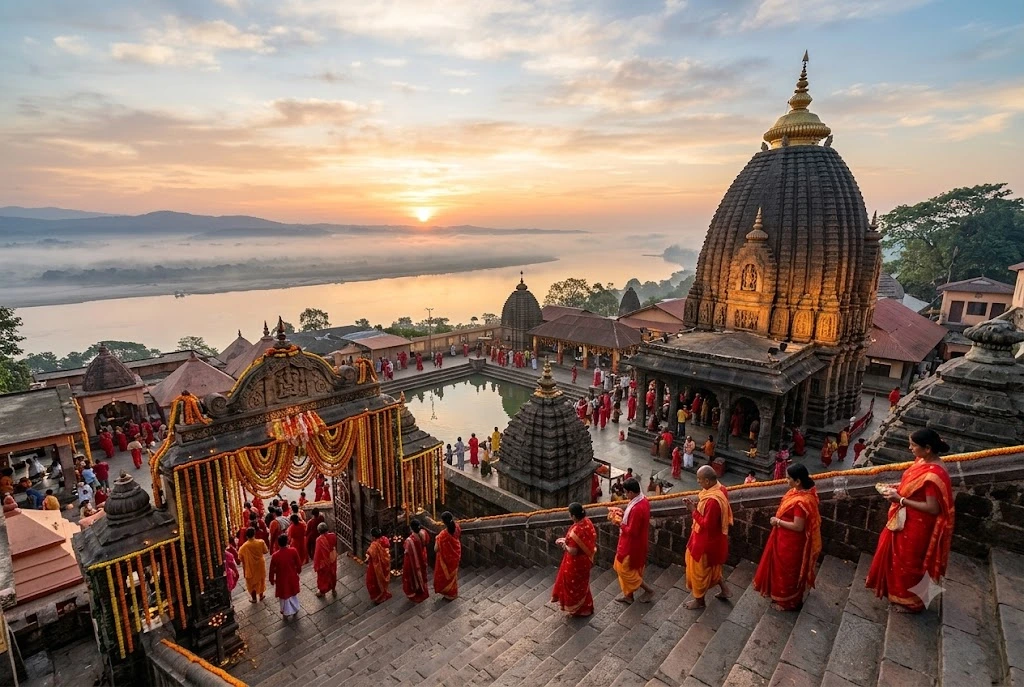
Perched atop Nilachal Hill in Guwahati, there’s a temple that doesn’t follow the usual rules of Hindu iconography — no idol to bow before, no conventional deity image at its core. This is Kamakhya Temple, one of the most revered Shakti Peethas in India, and its unconventional form of worship is exactly what draws pilgrims and scholars from across the country.

What Is Kamakhya Temple?

Maa Kamakhya temple is dedicated to the goddess Kamakhya Devi, a form of Shakti representing creation and fertility. Unlike most temples built around a carved idol, the sanctum here houses a natural rock formation shaped like a yoni, considered the symbolic womb of the goddess. It’s this distinction that sets Kamakhya devi temple apart from nearly every other major shrine in the country and places it firmly among the most significant Tantric worship centers in India.

Kamakhya Temple - Shakti Peetha

Kamakhya Temple History

The Kamakhya temple history stretches back over a thousand years, though the structure visible today was largely rebuilt in the 16th century by King Naranarayana of the Koch dynasty, after an earlier temple was destroyed during invasions. The site’s origins as a place of worship, however, are believed to predate this reconstruction by centuries, rooted in older tribal and tantric traditions of the region long before formal temple architecture arrived.

Kamakhya Temple Story: The Legend of Sati

The Kamakhya temple story connects directly to one of Hinduism’s most well-known myths. According to legend, when Lord Shiva carried the body of Sati across the sky in grief after her death, Vishnu dismembered the body to ease his sorrow, and her body parts fell across different locations in India — each becoming a Shakti Peetha. At this particular site, it’s believed that Sati’s womb and reproductive organs fell, which is why the temple centers around fertility and creation rather than a conventional deity form.

Architecture and the Sanctum

The temple’s architecture blends beehive-shaped shikharas typical of the region with intricate carvings depicting various deities and mythological scenes across its outer walls. Inside, the sanctum sits below ground level, reached by a narrow stone stairway, where the natural rock formation remains perpetually moist from an underground spring — a detail that’s central to the temple’s rituals and symbolism.

The Ambubachi Mela

Every June, this temple hosts the Ambubachi Mela, one of the largest tantric festivals in India, drawing tens of thousands of pilgrims and sadhus, including many from tantric traditions who travel here specifically for this period. The temple closes for three days during the festival, symbolizing the goddess’s menstrual cycle, before reopening with elaborate rituals that mark the occasion as one of the most significant events on the region’s religious calendar.

Best Time to Visit

The temple is open year-round, but many pilgrims specifically plan trips around the Ambubachi Mela in June for the full festival experience, while others prefer the quieter months between October and March, when Guwahati’s weather is more comfortable for travel and temple visits.

How to Reach

Guwahati is well-connected by air, rail, and road, with Lokpriya Gopinath Bordoloi International Airport serving as the region’s main airport. From the city center, Nilachal Hill is a short drive away, with the temple accessible by road or a moderate uphill walk for those who prefer it. For travelers whose pilgrimage circuit includes other major Shakti and Shiva shrines across India, Explore Hills’ Do Dham Yatra covers two of Uttarakhand’s most significant pilgrimage sites, and the broader Yatra Packages collection covers several other Himalayan pilgrimage routes for those planning a multi-region spiritual trip.

For official tourism information and travel advisories for Guwahati and the Nilachal Hill region, you can refer to the Assam Tourism Department, the state government body overseeing tourist infrastructure in the area.

Conclusion

This temple doesn’t fit the mold of a typical pilgrimage stop, and that’s precisely its appeal. Between its unconventional sanctum, its deep tantric roots, and the intensity of the Ambubachi Mela each year, it remains one of the most distinctive and spiritually significant sites in the country — a place where mythology, ritual, and geography come together in a way few other temples manage.

Frequently Asked Questions

What is Kamakhya Temple famous for?

It is famous for housing a natural rock formation representing the goddess Kamakhya Devi, rather than a conventional idol, and for being one of the most significant Shakti Peethas in India.

What is the history behind Kamakhya Temple?

The temple’s history dates back over a thousand years, with the current structure largely rebuilt in the 16th century by King Naranarayana after an earlier temple was destroyed.

What is the story connecting Kamakhya Temple to Hindu mythology?

According to legend, Sati’s womb fell at this site after Vishnu dismembered her body, making it one of the Shakti Peethas associated with different parts of her body.

When is the best time to visit Maa Kamakhya temple?

Many pilgrims visit during the Ambubachi Mela in June for the full festival experience, while October to March offers cooler, more comfortable weather for a regular visit.

Tungnath: The Complete Guide to India’s Highest Shiva Temple

Chopta Tungnath

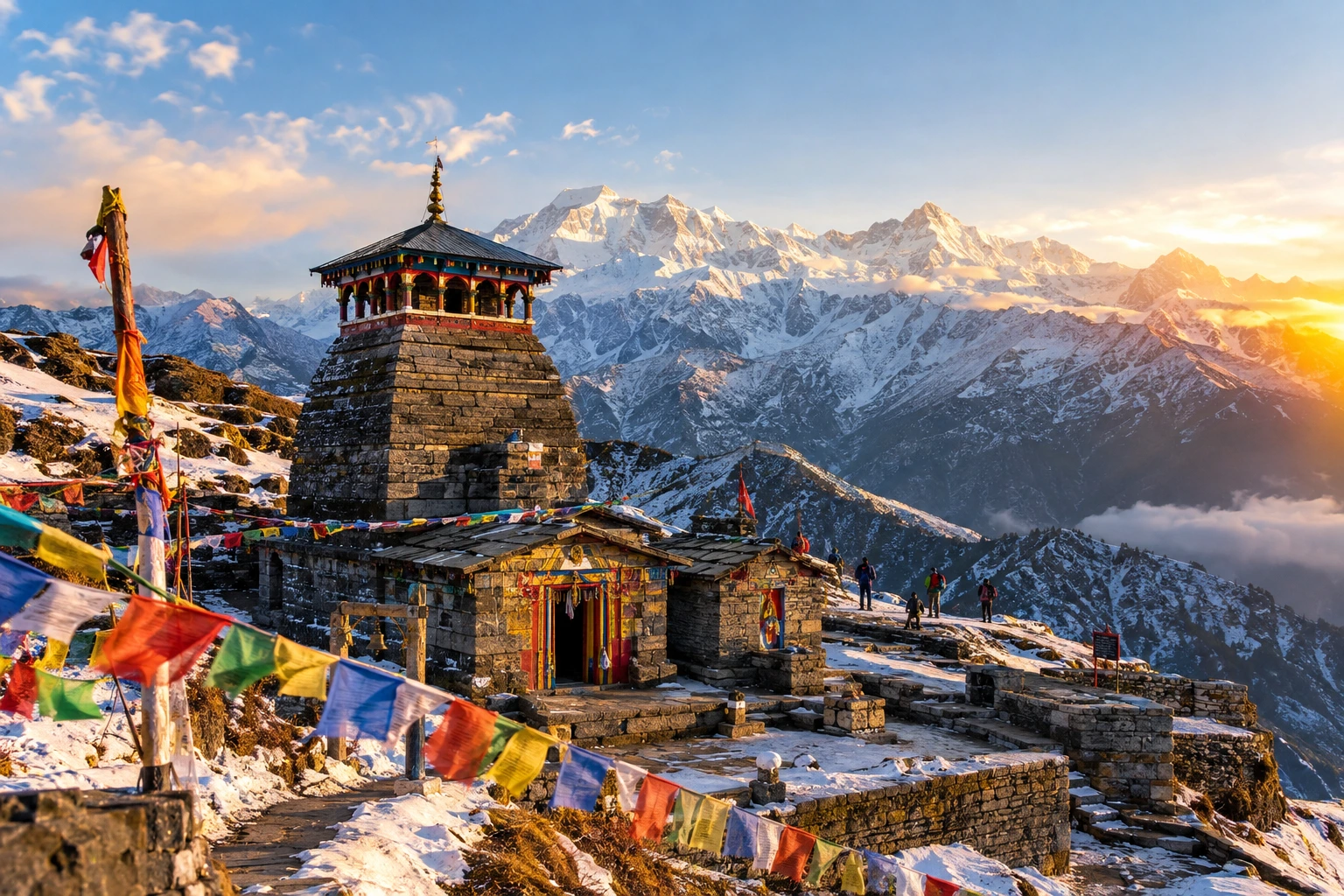
High in the Garhwal Himalayas of Uttarakhand, Tungnath stands as one of the most awe-inspiring pilgrimage and trekking destinations in India. As the highest Shiva temple in the world, it draws pilgrims seeking spiritual blessings and trekkers chasing some of the most breathtaking Himalayan views accessible on a relatively short trail. Set against a backdrop of snow-capped peaks and alpine meadows, this ancient shrine is as much a natural wonder as it is a sacred one.

If you’re planning a visit, our own Chopta Tungnath Trek package covers the complete journey, but before you set out, here’s everything worth knowing about Tungnath — its temple, height, distance from Chopta, trekking difficulty, and the best time to visit.

What Is Tungnath?

This ancient Hindu temple is dedicated to Lord Shiva and located in the Rudraprayag district of Uttarakhand. It holds the unique distinction of being the highest Shiva temple in the world and is also considered the highest among the five Panch Kedar temples scattered across the Garhwal Himalayas. According to mythology, this is where Lord Shiva’s arms are believed to have appeared after he took the form of a bull to avoid the Pandavas — a legend shared across the entire Panch Kedar circuit.

Believed to be well over a thousand years old, the shrine has stood through centuries of harsh Himalayan weather, drawing devotees who make the trek not just for its religious significance, but also for the sense of peace and scale that comes from standing at such a remote, high-altitude location.

Tungnath Temple: History and Significance

The Tungnath temple is built in the traditional North Indian Nagara architectural style, using stone construction suited to withstand extreme mountain conditions. Unlike the more heavily visited Kedarnath, it offers a quieter, more contemplative pilgrimage experience, largely because of its relative remoteness and shorter trekking season.

Devotees believe that worshipping here completes an essential part of the broader Panch Kedar pilgrimage, which also includes Kedarnath, Rudranath, Madhyamaheshwar, and Kalpeshwar. The temple’s priesthood traditionally comes from the Maithili Brahmin community, a practice that has continued for generations. During the harsh winter months, when the shrine closes and access becomes nearly impossible due to heavy snowfall, the symbolic deity is moved to Mukumath village, where worship continues until it reopens in spring.

Tungnath Height and Altitude

One of the most frequently asked questions by trekkers is the exact Tungnath height above sea level. The temple is situated at an altitude of approximately 3,680 metres (around 12,073 feet), making it a genuine high-altitude destination despite the relatively short trekking distance required to reach it.

This altitude is significant because it means trekkers should take basic precautions against altitude-related discomfort, even though the trail itself is short. Staying hydrated, pacing your ascent, and carrying warm layers are all recommended, since temperatures at this height can drop sharply, particularly in the early morning and evening.

For those continuing further, the nearby Chandrashila Peak rises even higher, to around 3,860–4,000 metres, offering one of the most complete 360-degree Himalayan panoramas in the entire region, including views of Nanda Devi, Trishul, and the Chaukhamba massif on clear days.

Chopta to Tungnath Distance

The trek begins from the small village of Chopta, often nicknamed the “Mini Switzerland of India” for its lush meadows and cool climate. The Chopta to Tungnath distance is approximately 3.5 kilometres one way, making it one of the shortest routes to any high-altitude Himalayan temple in the country.

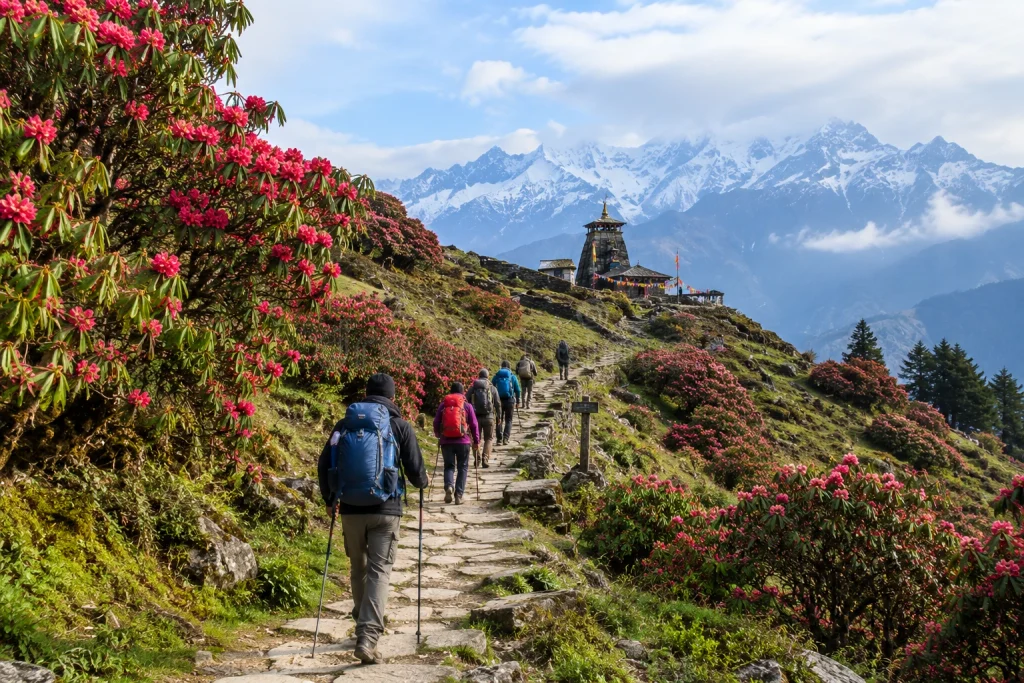
Most trekkers complete this stretch in around 2 to 4 hours, depending on fitness level and pace. The trail is well-defined, largely paved with stone steps, and passes through a mix of forested sections and open alpine meadows before reaching the shrine. For those wanting to extend the journey, an additional 1.5 km climb beyond it leads to the summit of Chandrashila Peak, adding roughly another 1 to 2 hours to the round trip.

Tungnath Trek: Route and Difficulty

The Tungnath trek is widely regarded as easy to moderate in difficulty, making it one of the most accessible high-altitude treks in the entire Himalayan region. Unlike many multi-day treks that demand technical skills or advanced fitness, this route is manageable for beginners, families, and even senior citizens with reasonable stamina.

That said, the altitude does add a layer of difficulty that shouldn’t be underestimated. While the trail isn’t technically challenging, the final stretch can feel steeper and more tiring than expected due to thinning air at this elevation. Beginners are advised to walk at a steady pace, take short breaks as needed, and avoid rushing the ascent.

For trekkers looking for a slightly longer and more immersive itinerary that combines this destination with its neighbouring summit and surrounding meadows, our Chopta Tungnath Chandrashila Trek package extends the journey for those seeking a bigger challenge and even more expansive views.

Best Time to Visit Tungnath

Figuring out the best time to visit Tungnath depends largely on the kind of experience you’re looking for. The peak season runs from April to June, when the weather is pleasant, rhododendrons are in full bloom along the trail, and the path is generally clear of snow. This window is ideal for first-time trekkers, families, and anyone prioritising comfort and easier trail conditions.

September to November offers a second excellent window, with crisp autumn air and some of the clearest, most dramatic mountain views of the year, once the monsoon clouds have fully cleared.

Winter, spanning December to March, transforms the trek into a snow-covered adventure best suited for experienced trekkers comfortable with cold-weather conditions and the additional gear it requires. During this period, the temple itself remains closed, typically shutting by early November and reopening around April or May. The monsoon months of July and August are generally best avoided altogether, since the trail can become slippery, and cloud cover often obscures the very views that make the trek worthwhile.

How to Reach

Since there’s no direct railway station or airport at Chopta, most trekkers begin their journey from Rishikesh, Haridwar, or Dehradun. The nearest major railhead is Rishikesh, while the nearest airport is Jolly Grant Airport in Dehradun. From either point, the drive to Chopta covers roughly 200 to 215 km and takes approximately 8 to 9 hours by road, passing through towns like Rudraprayag and Ukhimath along the way.

Most travellers choose to break the journey with an overnight stay near Chopta before beginning the trek early the next morning, allowing enough daylight to comfortably complete the ascent and descent, especially if extending the trip to Chandrashila Peak.

Planning Your Trip

  • Base village: Chopta, accessible by road from Rishikesh, Haridwar, and Dehradun
  • Trek distance: Approximately 3.5 km one way from Chopta
  • Altitude: 3,680 metres (12,073 feet)
  • Difficulty level: Easy to moderate
  • Ideal duration: A single day is enough for the temple alone; 2 to 3 days if combined with Chandrashila Peak and nearby Deoriatal Lake
  • What to carry: Sturdy trekking shoes, warm layers, sufficient water, and basic first-aid essentials
  • Temple closure: Typically closes by early November and reopens around April or May

For official travel advisories and up-to-date trekking conditions in the region, you can refer to the Uttarakhand Tourism Department, the state government’s official tourism portal.

Frequently Asked Question’s

  1. What is the height of Tungnath?

    It sits at an altitude of approximately 3,680 metres, or around 12,073 feet, making it the highest Shiva temple in the world.

  2. What is the Chopta to Tungnath distance?

    The trek covers approximately 3.5 kilometres one way from Chopta to the Tungnath temple, taking around 2 to 4 hours depending on pace.

  3. How difficult is the Tungnath trek?

    The trek is considered easy to moderate, with a well-defined, stone-paved trail suitable for beginners, families, and experienced trekkers alike.

  4. What is the best time to visit Tungnath?

    April to June and September to November are considered the best months, offering pleasant weather and clear mountain views. Winter offers a snow trekking experience for those prepared for colder conditions.

  5. Is Tungnath temple open throughout the year?

    No, the temple typically closes by early November and reopens around April or May, with the deity moved to Mukumath village during the winter closure.

Char Dham Yatra: The Ultimate Guide to Uttarakhand’s Sacred Pilgrimage

Char Dham Yatra

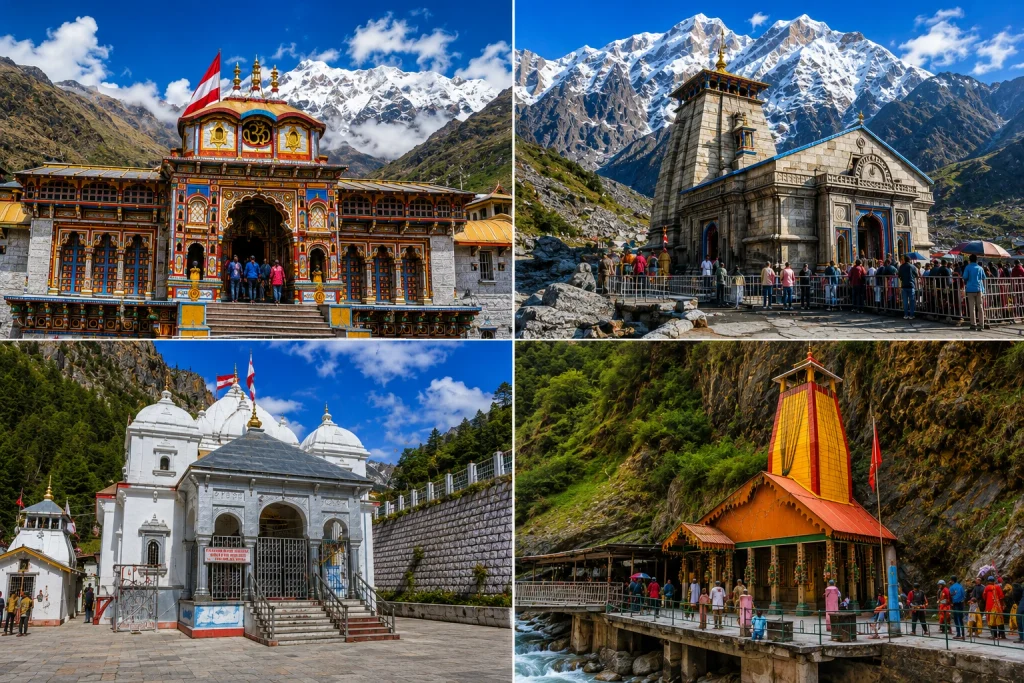
Tucked into the folds of the Garhwal Himalayas, the Char Dham Yatra is one of Hinduism’s most revered pilgrimage circuits, drawing lakhs of devotees to four sacred shrines every year. The journey takes pilgrims through Yamunotri, Gangotri, Kedarnath, and Badrinath — each set against a backdrop of snow-capped peaks, glacial rivers, and centuries of devotion. For many, completing this circuit isn’t just a trip; it’s a spiritual milestone.

If you’re planning your own Char Dham Yatra, our Char Dham Yatra package covers the complete route, but before you set out, here’s a detailed guide to help you understand the significance, route, and everything else you’ll need to know.

What Is Char Dham Yatra?

The term “Char Dham” translates to “four abodes,” referring to four sacred sites in Uttarakhand: Yamunotri, Gangotri, Kedarnath, and Badrinath. The Char Dham Yatra is often called the “Chota Char Dham” to distinguish it from the original, pan-India Char Dham established by the philosopher-saint Adi Shankaracharya, which includes Badrinath in the north, Dwarka in the west, Puri in the east, and Rameswaram in the south. While the two circuits share the name and the site of Badrinath, most people today, when referring to this journey, mean the Uttarakhand version.

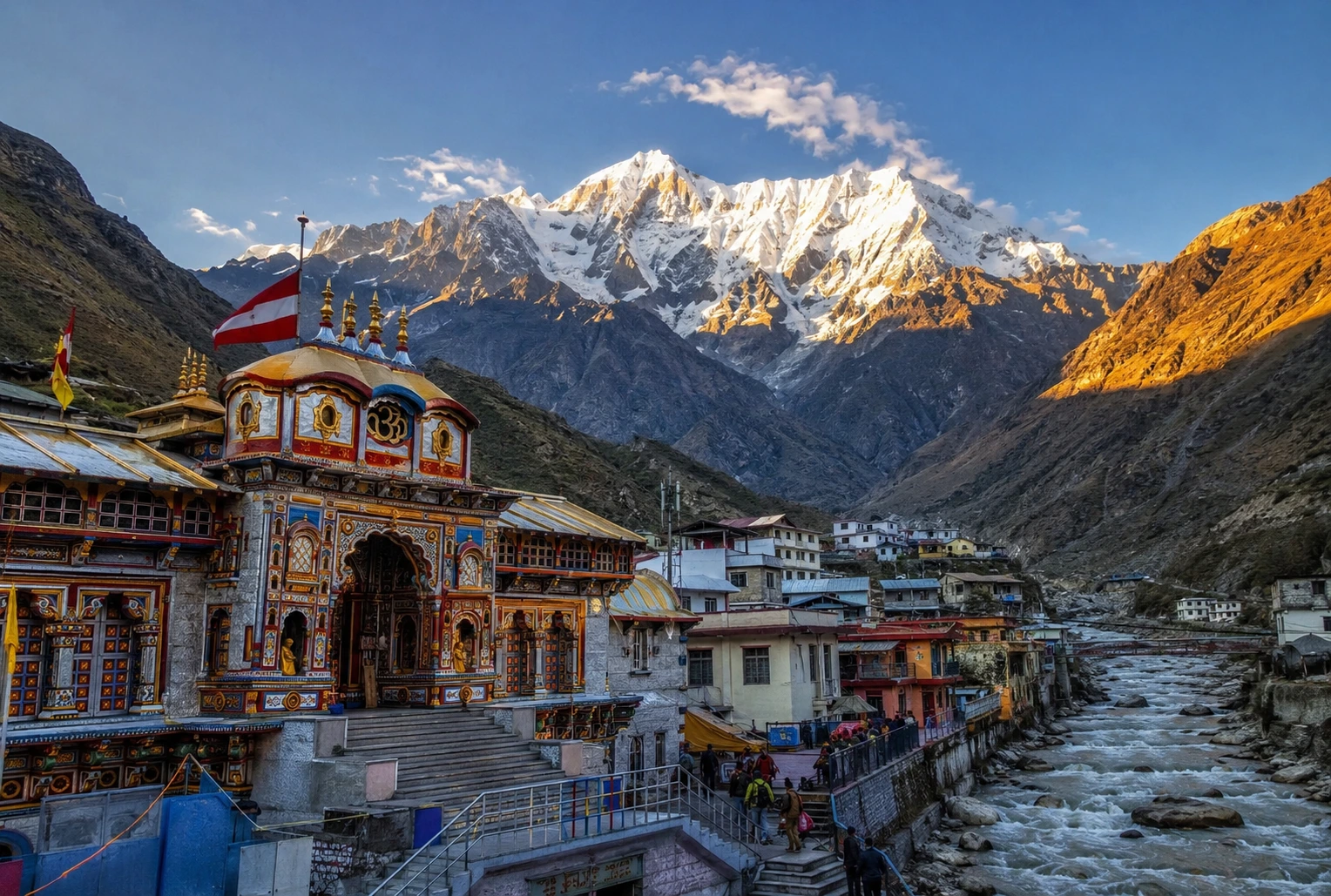
Each of the four shrines holds distinct religious significance. Yamunotri is dedicated to the goddess Yamuna and marks the source of the Yamuna River. Gangotri honours the goddess Ganga at the origin point of the sacred Ganges. Kedarnath is one of the twelve Jyotirlingas of Lord Shiva, and Badrinath, the final stop, is dedicated to Lord Vishnu. Together, these four shrines form a journey that touches on multiple strands of Hindu devotion within a single circuit.

The Traditional Route and Order

The Char Dham Yatra follows a fixed, traditional sequence. Pilgrims begin at Yamunotri, move on to Gangotri, then Kedarnath, and finally conclude at Badrinath — a west-to-east, roughly clockwise route through the Garhwal Himalayas. This order isn’t arbitrary; it also helps the body acclimatise gradually as pilgrims move toward the higher-altitude shrines of Kedarnath and Badrinath later in the journey.

Most pilgrims begin and end their trip from Haridwar, Rishikesh, or Dehradun, which serve as the main gateway cities. From there, the route typically flows through Barkot (base for Yamunotri), Uttarkashi (base for Gangotri), Guptkashi (base for Kedarnath), and Joshimath (en route to Badrinath), before looping back toward Haridwar via Rudraprayag and Devprayag.

The Four Shrines in Detail

Yamunotri requires a final stretch of trekking, typically 5 to 6 km from Janki Chatti, with ponies and palanquins available for those who prefer not to walk the full distance.

Gangotri is comparatively easier to reach, being directly connected by road via Uttarkashi, making it one of the more accessible stops on the route.

Kedarnath is widely regarded as the most physically demanding leg. Pilgrims travel by road up to Gaurikund and then undertake a steep 16 to 18 km trek to reach the temple. A helicopter service is also available, though bookings must go through IRCTC’s official portal.

Badrinath, the final destination, is the easiest of the four to access, since the road leads directly to the temple. This makes it especially suitable for elderly pilgrims or those with limited mobility.

For travellers who’d like a shorter, more focused pilgrimage instead of the full Char Dham Yatra circuit, our Kedarnath Yatra package is a great alternative that covers one of the most significant shrines in the journey.

Best Time for the Pilgrimage

The most favourable window for the Char Dham Yatra falls between May and June, offering clear skies and comfortable temperatures. A second good window opens from September to October, after the monsoon clears. The monsoon months are best avoided, as landslides and road blockages are common in the hill sections during this period.

The four shrines only remain open for a limited season each year, typically opening between April and May and closing around October or November as winter sets in. For 2026, Yamunotri and Gangotri opened on April 19, Kedarnath on April 22, and Badrinath on April 23, with all four shrines expected to close by mid-November ahead of the winter snowfall.

Registration and Permits

Registration is mandatory for all pilgrims undertaking the Char Dham Yatra, regardless of whether you’re travelling by road or helicopter. The registration process is free but compulsory, and typically opens in early March through the official Uttarakhand government portal. Pilgrims are advised to carry a printed yatra pass along with a valid government-issued photo ID, such as an Aadhaar card or passport.

In recent years, several additional rules have also come into effect, including mandatory medical check-ups for pilgrims above 55 years of age or with pre-existing health conditions, along with real-time tracking systems and expanded medical support across the route. It’s worth checking the latest guidelines closer to your travel dates, since rules and requirements can be updated from year to year.

Duration and Budget

A full Char Dham Yatra by road typically takes 10 to 12 days, while helicopter packages can shorten the journey to around 5 to 6 days, making them a popular option for pilgrims short on time or looking to avoid the physically demanding treks. Budgets can vary widely depending on the mode of travel and comfort level chosen, ranging from more modest road-trip packages to significantly higher-cost helicopter itineraries covering all four shrines.

If you’d prefer to explore a smaller, equally meaningful circuit before attempting the full Char Dham Yatra, our Do Dham Yatra package is worth considering as a shorter introduction to Uttarakhand’s sacred geography.

Tips for a Smooth Char Dham Yatra

  • Book accommodation early: Guesthouses in Barkot, Uttarkashi, Guptkashi, and Joshimath fill up weeks in advance during peak season
  • Pack for variable weather: Even in summer, temperatures near the shrines can drop sharply, especially early morning and evening
  • Carry essential documents: Yatra pass, photo ID, and medical certificates if applicable
  • Stay physically prepared: The Kedarnath trek in particular requires reasonable fitness
  • Respect entry guidelines: Certain temples have specific rules around entry and photography, so it helps to check current guidelines beforehand

For the latest registration details and official updates, you can visit the Uttarakhand government’s official registration portal, the authorised source for Char Dham Yatra registration.

Frequently Asked Question’s

  1. What is the correct order to complete the Char Dham Yatra?

    The traditional order is Yamunotri, followed by Gangotri, Kedarnath, and finally Badrinath.

  2. Is registration compulsory for the Char Dham Yatra?

    Yes, registration is mandatory for all pilgrims and is free to complete through the official Uttarakhand government portal.

  3. What is the best time of year for the Char Dham Yatra?

    May to June and September to October are considered the most favourable months, offering clearer weather and safer road conditions.

  4. How long does the full circuit take?

    By road, the journey typically takes 10 to 12 days, while helicopter packages can shorten it to around 5 to 6 days.

  5. Which shrine is the most physically demanding to reach?

    Kedarnath is generally considered the toughest, requiring a 16 to 18 km trek from Gaurikund, though helicopter services are available as an alternative.

Mehandipur Balaji Temple: A Complete Pilgrimage Guide

mehandipur balaji temple

Quick answer: Mehandipur Balaji Temple is a famous Hindu shrine in Rajasthan dedicated to Lord Hanuman (Balaji). Located in Dausa district, it is widely known among devotees for rituals believed to relieve spiritual afflictions. The temple welcomes visitors daily, with specific darshan and aarti timings that are best confirmed before you travel.

Mehandipur Balaji Temple sits in the rocky hills between Dausa and Karauli districts of Rajasthan. For many pilgrims, it is one of the most talked-about Hanuman temples in India—not just for its devotion, but for the unique rituals performed here. Thousands of visitors arrive each week, some seeking blessings and others drawn by curiosity about the temple’s reputation.

This guide walks you through everything you need to plan a smooth trip: what the temple means to devotees, darshan and aarti timings, how to reach it, local rules, nearby places, and the best time to visit. Where beliefs are involved, we’ve clearly separated faith and local tradition from verifiable facts, so you know exactly what to expect.

Whether you’re a first-time visitor or returning for another darshan, this practical guide will help you prepare with confidence.

What Is Mehandipur Balaji Temple Known For?

Mehandipur Balaji Temple is dedicated to Lord Hanuman, affectionately called “Balaji” by devotees. The temple is set among natural rock formations, which adds to its distinctive atmosphere. It falls within the Dausa district of Rajasthan, close to the border with Karauli.

The presiding deity is a self-manifested (swayambhu) image of Balaji, according to local belief. Alongside Balaji, two other deities are worshipped here: Pretraj Sarkar and Bhairav Baba (Kotwal Kaptan). Together, these three form the spiritual core of the temple for its followers.

Important note on beliefs: Devotees believe the temple has the power to relieve people from negative spiritual influences through prayer and ritual. These beliefs are part of local faith and tradition. They are religious convictions held by followers, not scientifically established facts. Visitors should approach the temple respectfully, regardless of personal belief.

Why Do Pilgrims Travel to Balaji Mehandipur?

Pilgrims visit Balaji Mehandipur for several reasons rooted in devotion and tradition:

  • Seeking blessings from Lord Hanuman: Balaji is revered as a protector and a symbol of strength and devotion.
  • Participating in special rituals: The temple is known for prayer rituals that devotees believe bring relief from spiritual distress.
  • Fulfilling vows (mannat): Many visitors come to offer prayers or return after a wish has been fulfilled.
  • Experiencing the spiritual environment: The chanting, aarti, and collective devotion create a deeply immersive atmosphere.

For anyone planning a spiritual trip through Rajasthan, Mehandipur Balaji pairs well with other heritage and hill destinations in the state. If you’re looking to extend your Rajasthan journey, check out the Udaipur and Mount Abu tour on Explore Hills for a curated itinerary that combines lakes, heritage, and hill station charm.

Quick Facts About Mehandipur Balaji Temple

DetailInformation
LocationMehandipur, Dausa district, Rajasthan
Presiding deityLord Hanuman (Balaji)
Other deities worshippedPretraj Sarkar, Bhairav Baba
StateRajasthan, India
Nearest major cityJaipur (approx. 100 km)
Best time to visitOctober to March
Entry feeFree
PhotographyGenerally restricted inside; verify locally

Distances are approximate. Please confirm current details before your visit.

Mehandipur Balaji Timing: When Is the Temple Open?

Understanding the mehandipur balaji timing helps you plan your darshan without disappointment. The temple generally opens early in the morning and remains accessible through the day, with a break in the afternoon. Timings can shift on festivals, special days, and during peak pilgrim seasons.

SessionApproximate Timing
Morning darshan6:00 AM – 1:00 PM
Afternoon break1:00 PM – 3:00 PM (temple may close)
Evening darshan3:00 PM – 9:00 PM

Please note: These timings are indicative and may change based on the season, festivals, or temple administration decisions. Always verify the current mehandipur balaji timing with the temple or a trusted local source before you travel.

Mehandipur Balaji Aarti Time: Morning and Evening Schedule

mehandipur balaji aarti time

The aarti is one of the most moving experiences for visitors. Arriving in time for the ceremony lets you witness the temple at its most devotional. The mehandipur balaji aarti time typically follows a morning and evening pattern.

AartiApproximate Time
Morning aarti (Mangala aarti)Early morning, around 6:00 AM – 7:00 AM
Evening aarti (Sandhya aarti)Evening, around 6:00 PM – 7:00 PM

Please note: The mehandipur balaji aarti time can vary with the season and on festival days. Confirm the exact schedule before your visit so you don’t miss the ceremony.

How to Reach Mehandipur Balaji

Mehandipur Balaji is well connected to major cities in Rajasthan. Here’s how to get there by different modes of travel.

By Air

The nearest airport is Jaipur International Airport, roughly 100 km away. From Jaipur, you can hire a taxi or take a bus to reach the temple in about two to three hours, depending on traffic and road conditions.

By Train

The nearest railway stations are Bandikui Junction and Dausa. Both connect to Jaipur and other cities. From the station, local taxis and buses are available to complete the journey to Mehandipur.

By Road

The temple lies on the Jaipur–Agra highway (National Highway 21), which makes road travel convenient. Regular buses run from Jaipur, Dausa, and nearby towns. Many pilgrims also travel by private car or shared cabs.

Things to Know Before You Visit

A little preparation goes a long way at Mehandipur Balaji. Keep these practical points in mind.

Dress Code

There is no strict official dress code, but modest and respectful clothing is expected at a place of worship. Choose comfortable clothes suitable for standing in queues and walking.

Photography

Photography and videography are generally restricted inside the temple premises. Rules can change, so check with temple staff before taking any pictures.

Food Offerings (Prasad)

The temple has specific customs around prasad. In particular, followers observe rules about not eating certain offerings on temple grounds and not carrying them home. Local guides and signboards explain these traditions. Follow the instructions of temple authorities.

Behavior and Respect

The temple can feel intense for first-time visitors due to its rituals. Maintain a calm, respectful attitude. Keep your belongings secure, especially during crowded darshan hours.

Facilities

Basic facilities such as dharamshalas (guest houses), eateries, and shops are available near the temple for pilgrims. Amenities can be simple, so plan accordingly.

What Are the Best Nearby Attractions?

If you have extra time, several attractions around Mehandipur Balaji are worth exploring:

  • Abhaneri (Chand Baori stepwell): One of India’s most stunning stepwells, located near Dausa.
  • Bhandarej: Known for its heritage architecture and ancient ruins.
  • Dausa town: Offers local temples, markets, and a glimpse of Rajasthani culture.
  • Jaipur: The Pink City, with its forts, palaces, and bazaars, is an easy add-on to your trip.

For more ideas on combining temple visits with heritage sightseeing, take a look at the Udaipur and Mount Abu tour on Explore Hills—a great way to round off a Rajasthan pilgrimage trip with lakes, palaces, and cool hill air.

When Is the Best Time to Visit Mehandipur Balaji?

The best time to visit Mehandipur Balaji is from October to March, when the weather in Rajasthan is pleasant and comfortable for travel. Summers (April to June) can be extremely hot, which makes long queues and outdoor waiting tiring.

Festival days and Tuesdays and Saturdays—considered special for Hanuman worship—tend to draw large crowds. If you prefer a quieter darshan, visit on a weekday outside festival periods. If you want to experience the temple at its most vibrant, plan around a festival, but be ready for heavy footfall.

Plan Your Visit to Mehandipur Balaji

Mehandipur Balaji Temple offers a unique blend of devotion, tradition, and Rajasthani culture. Whether you come for spiritual reasons or to understand one of the region’s most distinctive shrines, a little planning makes the trip far smoother. Before you travel, confirm the latest darshan timings and travel advisories through the Rajasthan Tourism official website, which is a reliable starting point for current destination information. Dress respectfully, arrive early for aarti, and give yourself time to soak in the atmosphere.

Frequently Asked Questions

Where is Mehandipur Balaji Temple located?

Mehandipur Balaji Temple is located in Mehandipur village, in the Dausa district of Rajasthan, India. It sits close to the border with Karauli district and is roughly 100 km from Jaipur.

What is the Mehandipur Balaji Aarti time?

The morning aarti is usually held around 6:00 AM to 7:00 AM, and the evening aarti around 6:00 PM to 7:00 PM. These times can change on festivals and special days, so verify locally.

Is there an entry fee for Mehandipur Balaji Temple?

No, entry to the temple is free. Devotees may make voluntary offerings, but there is no ticket required for darshan.

Is Mehandipur Balaji Temple safe to visit?

Yes, the temple is visited by thousands of pilgrims regularly. First-time visitors may find the rituals intense, so it helps to know what to expect. Keep your belongings secure and follow the guidance of temple authorities.

How many days do I need for a Mehandipur Balaji trip?

A single day is usually enough for darshan if you’re traveling from Jaipur. If you want to explore nearby attractions like Abhaneri or Dausa, plan for two days.